
数字化转型

Search documents
战略转型与产业链布局:全球贵金属新材料巨头业务调整与国际化扩张经验借鉴
Sou Hu Cai Jing· 2026-01-07 06:46
Core Insights - The article discusses the dual flow of globalization in the precious metals new materials sector, with international companies entering the Chinese market while Chinese companies seek global opportunities and face challenges [1] - It emphasizes the need for Chinese precious metals companies to move beyond a single trade mindset and build a global circular system for resources, materials, and recycling [1] Business Layout - Focus on core segments of the precious metals value chain and develop a diversified collaborative growth model [2] Industry Chain Integration - Companies like Umicore and Heraeus are enhancing their global presence and refining their industry chain layout, serving as models for domestic companies [1] - The full industry chain loop includes upstream resource control, midstream material manufacturing, and downstream battery recycling [3] Strategic Focus - Leading companies are increasingly focusing on core business areas and shedding non-core assets to enhance competitiveness [11] - Umicore has exited certain projects to concentrate on cash-generating core businesses [11] Technological Collaboration - Companies are leveraging technological synergies to drive innovation, such as Umicore's extension of catalytic coating technology from automotive catalysts to fuel cell applications [13] Capital Operations - Strategic investments are crucial for acquiring key technologies and driving product commercialization [14] - Heraeus is investing millions in Chinese companies to quickly access critical technologies [14] Regional Cooperation - Joint ventures, such as the one between Tanaka Precious Metals and Chengdu Guangming Pait, enhance resource control capabilities and establish a recycling network [15] Market Strategy in China - Global leaders are intensifying their investments in the Chinese market through production bases and R&D centers [17] - Companies like Heraeus are expanding their production capabilities in China to meet high-end industry demands [18] Global Resource Assurance - Leading companies are building global recycling networks to enhance resource security in the Chinese market [19] Local Management - Companies are establishing localized management structures to improve regional market capabilities, such as the upgrade of the Shanghai Songjiang factory by Johnson Matthey [21] Future Outlook - The industry is poised for transformation driven by green initiatives and technological innovation, with hydrogen, battery materials, and circular economy sectors expected to be key growth areas [22]
城市高质量发展与国际合作大会探寻多元协同创新实践路径
Xin Lang Cai Jing· 2026-01-07 04:51
Group 1 - The conference focused on high-quality urban development and international cooperation, emphasizing the importance of innovation in urban planning and development [1] - Key themes included technological innovation, industrial upgrading, and opening up to external markets, aiming to create a platform for cross-regional and cross-sector dialogue [1] - The goal of building modern urban cities was highlighted, with innovation being placed at the forefront of urban development objectives [1] Group 2 - Guiyang and Guian New Area are recognized for their digital economy, with continuous growth leading the nation for eight consecutive years [2] - Changsha is accelerating its development as a global R&D center, boasting seven trillion-level industrial clusters and over 3,400 innovation platforms [2] - Weifang is advancing energy transition with significant projects in nuclear power and offshore wind energy, emphasizing green and low-carbon development [3] Group 3 - Ordos is enhancing its business environment through policy innovation and a focus on service quality, aiming to support healthy business growth [4] - Yibin is strengthening its industrial ecosystem by ensuring resource availability and optimizing services for enterprises [5] - Haikou is leveraging its status as a high-tech industrial zone to attract investment in biomedicine and advanced food processing, achieving nearly 20% growth in key economic indicators [6] Group 4 - The conference showcased diverse practices and innovative outcomes from various cities, illustrating multiple pathways for high-quality urban development [6] - Participants agreed that high-quality urban development encompasses not only economic growth but also social, environmental, and cultural advancements [6]
一年退出上万家,银行网点去哪了?
36氪· 2026-01-07 04:12
以下文章来源于中新经纬 ,作者魏薇 中新经纬 . 中新经纬是由中国新闻社主办的财经新媒体,拥有中国互联网新闻信息采编发布服务资质。以手机客户端(APP)等为主要传播平台,以"权威、前瞻、 专业、亲和"为特色宗旨,传播财经资讯、解读经济政策、讲述商界故事,打造精英的财经资讯平台。 商业银行线下网点加速退出的同时, 网点的新设步伐并未停歇。 文 | 魏薇 编辑 | 李晓萱 来源| 中新经纬(ID:jwview) 封面来源 | Unsplash 2025 年,银行线下网点数量有何变化?1月5日,中新经纬根据国家金融监督管理总局网站"金融许可证信息"栏目披露的信息统计,去年国内共有 11249 家银行线下网点获准退出, 8548 家线下网点获准设立。这意味着, 2025 年全年净退出的银行网点数量达 2701 家。 业内人士 指出, 去年 银行网点大量退出主要 由于银行主动调整以及 银行业改革化险进程持续深化。在关闭低效网点的同时,银行需警惕并防止在特定 区域出现金融服务空白,履行好普惠金融的社会责任。 超1.1万家网点获准退出 据国家金融监督管理总局网站, 2025 年国内共有 11249 家银行(统计机构类型包括 ...


2025年石油和化工行业智能制造十大新闻
Zhong Guo Hua Gong Bao· 2026-01-07 02:37
Group 1 - The year 2025 marks the end of the "14th Five-Year Plan" and the beginning of the "15th Five-Year Plan," with a focus on achieving new industrialization and deep integration of information technology and industrialization in China's petroleum and chemical industry [1] - The industry is advancing towards a new and optimized development through the application of AI large models and industrial internet technologies [1] Group 2 - China Petrochemical Corporation launched its first AI digital employee on January 18, 2025, which is being piloted at over 40 gas stations nationwide, enhancing customer service efficiency [2] - The AI digital employee utilizes algorithms and computing power from iFLYTEK's large model, providing real-time interaction and personalized marketing recommendations [2] Group 3 - The Ministry of Industry and Information Technology and the National Standardization Administration issued the "National Intelligent Manufacturing Standard System Construction Guide (2024 Edition)" on March 7, 2025, aiming to revise over 100 national and industry standards by 2026 [3] - The guide includes new application standards for the chemical industry, focusing on safety, quality control, and energy management [3] Group 4 - The first vertical large model in the hydrogen energy field was released at the International Hydrogen Energy Conference on March 26-27, 2025, featuring a comprehensive patent model library covering nearly 340,000 patent data [4] - This model supports various data functions and provides capabilities for patent analysis and navigation [4] Group 5 - The ChemActor model, launched on June 30, 2025, is the first framework for generating experimental instructions in the industry, capable of translating unstructured experimental descriptions into structured operational instructions [5][6] - It has shown an average performance improvement of over 10% in generating experimental instructions compared to existing methods [6] Group 6 - The first digital transformation assessment standard for the petrochemical industry was approved on July 18, 2025, which includes a maturity assessment model with 30 capability subdomains [7] - The standard categorizes digital transformation maturity into five levels, with increasing requirements for higher maturity levels [7] Group 7 - China National Petroleum Corporation released its first integrated dynamic simulation engine software, HiSimPro, on July 29, 2025, aimed at enhancing energy security and supply chain resilience [8] - The software supports comprehensive simulation across various oil and gas reservoir types and development methods [8] Group 8 - The State Council issued an opinion on August 26, 2025, to promote the deep integration of AI across various sectors, with a goal to achieve widespread application of AI in six key areas by 2027 [9] - The opinion emphasizes enhancing AI literacy and skills across industries and accelerating the development of intelligent manufacturing equipment [9] Group 9 - The global first fully autonomous factory system was applied in October 2025, capable of self-sensing anomalies and executing control decisions, significantly improving production efficiency [11][12] - The system has reduced workforce requirements and enhanced safety through automation [12] Group 10 - The intelligent chemical large model 3.0 was released on November 4, 2025, featuring enhanced understanding and reasoning capabilities in the chemical field [13] - The model has shown a significant improvement in accuracy for core chemical dimensions and multimodal question-answering tasks [13] Group 11 - Several petrochemical companies were recognized as national-level smart factories on November 27, 2025, with a focus on integrated operations and green low-carbon initiatives [14] - The petrochemical industry has the highest proportion of recognized smart factories, indicating a strong push towards digital and intelligent transformation [14]


这家国有大行合并旗下直销银行
Zheng Quan Shi Bao· 2026-01-07 02:15
Core Viewpoint - Postal Savings Bank of China has received approval from financial regulators to absorb and merge its wholly-owned subsidiary, Postal Huinong Bank, marking the end of the first independent legal direct bank controlled by a state-owned bank in China [1][2] Group 1: Merger Announcement - The merger aims to optimize resource allocation, reduce management costs, and enhance operational efficiency [2][3] - Postal Huinong Bank's financial statements have been fully integrated into Postal Savings Bank's consolidated reports, with no adverse impact on the bank's financial status or shareholder interests [2][4] Group 2: Background and Performance - Postal Huinong Bank was established in January 2022 with a registered capital of 5 billion yuan, focusing on serving agriculture, small and micro enterprises, and promoting inclusive finance [4] - Since its inception, Postal Huinong Bank has not achieved profitability, reporting revenues of 101 million yuan, 355 million yuan, and 243 million yuan from 2022 to 2024, with net losses of 162 million yuan, 263 million yuan, and 415 million yuan during the same period [4] Group 3: Digital Transformation Strategy - Postal Savings Bank is focusing on digital customer management, using its mobile banking app as the core online entry point to enhance customer acquisition and service integration [5] - The bank has shut down its independent credit card app, consolidating functions into the Postal Savings Bank app to improve user experience and resource efficiency [5] Group 4: Industry Context - The independent legal direct bank model was once seen as a path for digital transformation in the banking sector, but the rise of mobile banking apps has led to increased overlap in functionality and product offerings [6][7] - Currently, only one independent legal direct bank, Citic Baixin Bank, remains operational after the merger of Postal Huinong Bank, with Citic Baixin Bank having turned profitable in 2021 after initial losses [6][7]

链动 2+1 新玩法,企元数智驱动业绩指数级增长
Sou Hu Cai Jing· 2026-01-07 02:13
模式创新的背后,是企元数智强大的数智技术支撑。依托SORA-2 AI工具与全流程合规分销系统,链动2+1新玩法实现"效率提升+风险可控"的双重突破。在 内容赋能上,SORA-2可快速生成产品实测、场景演示等高质量营销视频,从脚本创作、素材匹配到剪辑渲染全程自动化,最快1小时出片,使企业视频产出 效率提升5倍以上,沟通成本降低60%,为链动裂变提供充足内容弹药。某电商企业借助该工具制作推广素材后,24小时内转化率提升25%,单月销售额突 破百万。 在数字化转型进入深水区、流量红利逐渐消退的当下,企业如何突破获客瓶颈、实现业绩高效增长成为核心命题。近日,企元数智推出升级迭代的链动2+1 新玩法,融合AI技术与合规分销机制,构建"模式创新+数智赋能"双驱动体系,为各行业企业提供低成本、高效率的增长解决方案,助力企业实现业绩指数 级跃升。 作为社交电商与分销领域的经典模式,链动2+1凭借裂变效率高、操作门槛低的优势备受青睐。此次企元数智对该模式进行全面升级,形成兼具激励性、合 规性与可持续性的新玩法,核心亮点集中在三大维度。在等级激励上,新增一星、二星合伙人体系,代理商可通过直推数量或升级礼包晋升,享受团队管理 津贴 ...
浪潮英信NF5468M5 高性能机架服务器订购赠卡
Xin Lang Cai Jing· 2026-01-07 01:51
Core Viewpoint - The Inspur Yingxin NF5468M5 server is being promoted at a discounted price by Beijing Kechuang Tengda, showcasing its advanced capabilities tailored for modern data centers, particularly in AI, virtualization, and large-scale database applications [1][4][9]. Group 1: Product Features - The NF5468M5 server is a 4U dual-socket rack server powered by dual Intel Xeon Gold 5218 processors, offering exceptional parallel processing capabilities and system stability [1][7]. - It features a high-density architecture with flexible I/O configurations, supporting up to 20 PCIe 3.0 expansion slots for AI accelerator cards, high-speed network cards, and storage controllers [1][7]. - The server utilizes ECC DDR4 memory technology to ensure data integrity and supports hot-swappable storage configurations, balancing capacity and performance for critical business operations [1][7]. Group 2: Application Scenarios - The NF5468M5 is suitable for various enterprise-level scenarios, including AI training and inference, virtualization platforms, large-scale database clusters, and real-time data analytics [4][9]. - In the AI domain, it supports multiple GPU topologies, seamlessly integrating with mainstream accelerator cards to efficiently support deep learning model training and deployment [4][9]. - Its multi-core, high-concurrency characteristics significantly enhance resource utilization in virtualized environments, aiding cloud platform elasticity [4][9]. Group 3: Company Overview - Inspur is recognized as a leading provider of computing platforms and IT application solutions in China, and it is the largest server manufacturer and server solution provider in the country [6][10]. - The company operates two publicly listed entities in China, "Inspur Information" and "Inspur Software," along with a listing on the Hong Kong Stock Exchange [6][10].


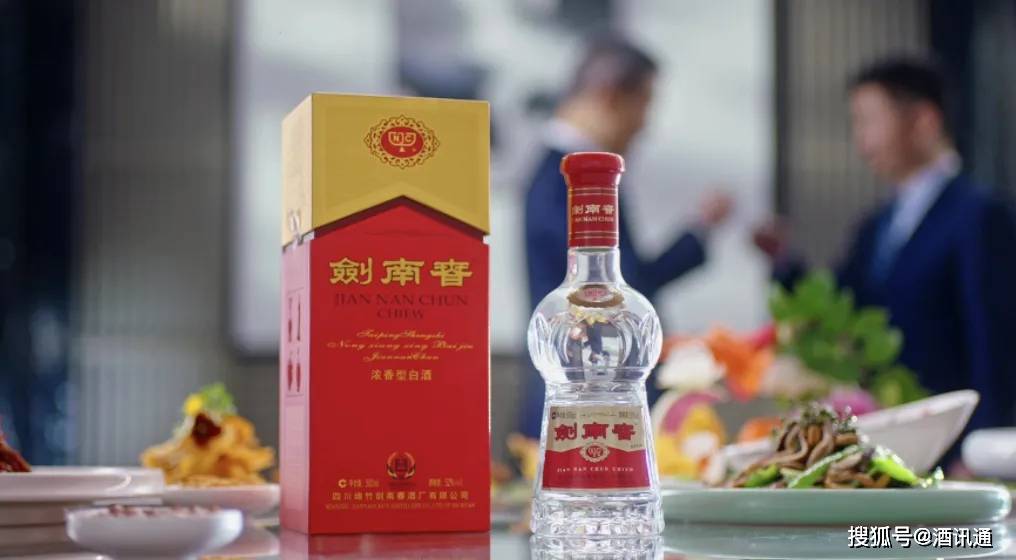
稳中有进,破局增长!剑南春2025年多维布局激活品牌动能
Sou Hu Cai Jing· 2026-01-07 01:48
Core Viewpoint - In 2025, Jian Nan Chun aims to solidify its foundation while innovating to navigate challenges in the liquor industry, focusing on product innovation, capacity upgrades, scene expansion, brand outreach, and social responsibility [2][12]. Group 1: Product Strategy - Jian Nan Chun maintains strategic stability and resilience amidst industry adjustments, being one of the most stable brands in terms of pricing and product sales, particularly with its flagship product, Crystal Jian Nan Chun [2][6]. - The company has successfully launched cultural creative products in collaboration with top historical museums, which have gained significant market attention [4]. - During the 2025 Double 11 shopping festival, Jian Nan Chun achieved the highest transaction volume in the liquor industry, showcasing its strong market appeal through effective online and offline strategies [6][8]. Group 2: Quality and Innovation - Quality is emphasized as the foundation of Jian Nan Chun's brand, with a commitment to integrating traditional craftsmanship with modern technology, including a new production facility with an investment exceeding 1.6 billion yuan [9][11]. - The company has been recognized for its digital transformation efforts, being listed as a typical case in the Ministry of Industry and Information Technology's "Digital Three Products" application scenarios [11]. Group 3: Brand Expansion and Engagement - Jian Nan Chun is actively breaking traditional consumption scenarios by creating a youthful brand ecosystem through various initiatives, including partnerships with media and sports events [12][17]. - The brand has increased its visibility through continuous exposure on major platforms and collaborations with authoritative media, enhancing its public trust and market influence [14][19]. - Cultural and entertainment initiatives, such as micro-variety shows and concerts, have been developed to engage younger audiences and promote traditional culture [20]. Group 4: Social Responsibility - Jian Nan Chun is committed to social responsibility, particularly in education, by launching initiatives to support students during the college entrance examination period and establishing scholarships for youth [22][24]. - The company has participated in industry events to promote high-quality development in the liquor sector and has been recognized with multiple industry awards [24].
宣亚国际1月6日获融资买入5617.68万元,融资余额2.19亿元
Xin Lang Cai Jing· 2026-01-07 01:29
Group 1 - The core viewpoint of the news is that Xuan Ya International's stock experienced a decline of 2.72% on January 6, with a trading volume of 634 million yuan, indicating a significant market activity [1] - On January 6, Xuan Ya International had a financing buy amount of 56.18 million yuan and a financing repayment of 54.70 million yuan, resulting in a net financing buy of 1.48 million yuan [1] - As of January 6, the total balance of margin trading for Xuan Ya International was 219 million yuan, which accounts for 6.66% of its circulating market value, indicating a high level compared to the past year [1] Group 2 - As of September 30, the number of shareholders of Xuan Ya International was 20,800, a decrease of 5.46% from the previous period, while the average circulating shares per person increased by 5.78% to 8,638 shares [2] - For the period from January to September 2025, Xuan Ya International reported an operating income of 257 million yuan, a year-on-year decrease of 40.10%, while the net profit attributable to the parent company was -19.17 million yuan, an increase of 14.55% year-on-year [2] Group 3 - Since its A-share listing, Xuan Ya International has distributed a total of 90 million yuan in dividends, but there have been no dividend distributions in the past three years [3]

江苏出台指南促进电动汽车行业升级
Xin Hua Ri Bao· 2026-01-07 00:16
Core Viewpoint - The newly released "Implementation Guidelines for Intelligent Transformation and Digitalization in the Electric Vehicle Industry of Jiangsu Province" aims to guide electric vehicle companies in continuous upgrades across emerging technologies, key techniques, business processes, and core elements to further promote industry transformation and development [1] Summary by Sections Target Audience - The guidelines primarily target midstream companies within the electric vehicle industry chain in Jiangsu Province, recognizing the varying digitalization foundations and resources of large, medium, and small enterprises [1] Implementation Paths - Different implementation paths are suggested based on company size: - Large vehicle manufacturers should aim to set industry benchmarks and lead upgrades - Medium-sized enterprises should focus on key areas for collaborative breakthroughs - Processing and supporting enterprises, along with small and micro enterprises, should concentrate on core needs for low-cost transformation [1] Common Paths for Industry Transformation - Four common paths for industry transformation are outlined: 1. During the planning phase, companies can utilize the integration of informatization and industrialization management system along with digital transformation maturity models for systematic diagnosis and assessment 2. In the organizational implementation phase, emphasis should be placed on the deep integration of digital projects with core business, promoting digital transformation of operational models through customized development and continuous optimization 3. In the effectiveness evaluation phase, companies should leverage digital capability assessment systems and multi-dimensional data analysis to accurately identify weak links in the transformation process and propose targeted improvement suggestions 4. In the iterative optimization phase, continuous improvement of solutions should be pursued, forming a closed-loop management model of "assessment—optimization—re-assessment" to advance intelligent transformation and digitalization to higher levels [1]