可持续发展

Search documents
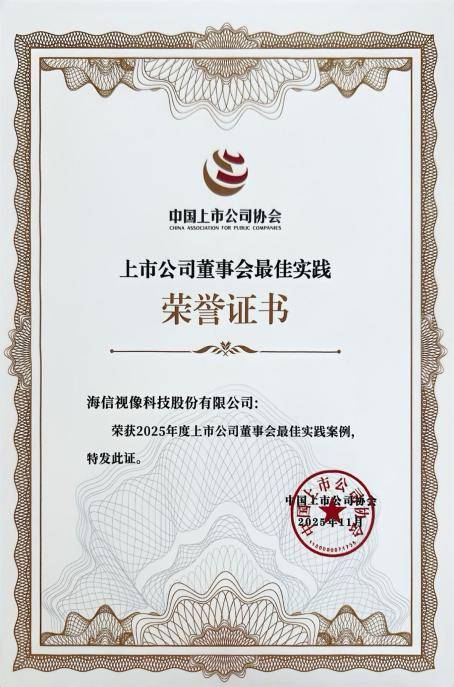
海信视像荣获“2025上市公司董事会最佳实践案例”,稳健经营实现高质量发展
Sou Hu Cai Jing· 2025-11-25 07:29
Core Viewpoint - Hisense Visual has been recognized for its governance practices by winning the "2025 Best Practice Case for Listed Company Boards" award, reflecting its strong governance system and commitment to sustainable development [1][6]. Group 1: Governance and Recognition - The award aims to promote compliance and effective operation of listed company boards, enhancing governance efficiency and serving as a model for other companies [3]. - Hisense Visual has established a robust governance framework, focusing on transparency and professionalism, which has led to improved information disclosure and strategic understanding in the market [3][6]. - The company has received multiple accolades this year, including the "Tianma Award" and "Golden Bull Award," showcasing its high-level recognition from regulatory bodies and the capital market [1]. Group 2: Financial Performance - For the first three quarters of 2025, Hisense Visual achieved a revenue of 42.83 billion yuan, representing a year-on-year growth of 5.4%, and a net profit attributable to shareholders of 1.63 billion yuan, with a growth of 24.3% [2][4]. - The improvement in profitability underscores the synergy between optimized governance and effective strategic execution [2]. Group 3: Technological Innovation - Hisense Visual has launched the "RGB 3D Color Control LCD Display Technology," overcoming key technological challenges and enhancing its competitive edge in the high-end market [4]. - The company has introduced the world's first RGB light color control AI quality chip and a new generation of RGB-Mini LED light-emitting chips, marking a significant advancement in display technology [4]. - The U7S Pro model quickly became a top seller within six weeks of its launch, contributing to a market share increase of 60.43% for Hisense's RGB-Mini LED televisions during the Double Eleven shopping festival [4]. Group 4: Future Outlook - Moving forward, Hisense Visual plans to deepen its board operations, enhancing strategic leadership, risk supervision, and sustainable development capabilities to create long-term value for shareholders, customers, and society [6].


强强携手!旭阳集团与宁德时代达成全面战略合作
鑫椤锂电· 2025-11-25 07:08
Core Viewpoint - The strategic cooperation agreement between Xuyang Group and CATL aims to enhance collaboration in renewable energy investment, new energy storage applications, electric transportation transformation, charging infrastructure layout, and zero-carbon park construction, contributing to the development of a new blueprint for the renewable energy industry [2][3]. Group 1: Strategic Cooperation - Xuyang Group and CATL will work together to explore new models and business formats for the deep integration of chemical and renewable energy industries, aiming to create a national and global benchmark for green, low-carbon, and intelligent innovation in energy and chemicals [3]. - The partnership will leverage Xuyang's expertise in modern green coal coking, basic chemicals, and the entire renewable energy industry chain, alongside CATL's leading position in renewable energy technology research and global market layout [3]. Group 2: Market Position and Innovation - CATL is a global leader in renewable energy innovation, with a market share of 37.9% in power batteries and 40% in energy storage batteries as of 2024, maintaining its position as the top supplier for eight consecutive years in power batteries and four years in energy storage [3]. - The collaboration is expected to create new momentum for the development of the renewable energy industry by exploring new pathways for the new energy transformation of the coke and chemical industries [3]. Group 3: Operational Mechanism - Both parties will establish a long-term and stable strategic partnership, focusing on creating an efficient and pragmatic operational mechanism that penetrates specific operational levels, ensuring collaboration in technology development, market expansion, and industrial ecosystem reshaping [5].

特种建筑化学品市场重塑增长格局
Zhong Guo Hua Gong Bao· 2025-11-25 03:11
Core Insights - The global specialty construction chemicals market is undergoing significant structural changes driven by rapid urbanization, sustainability requirements, and technological innovation [1] - The compound annual growth rate (CAGR) for the global construction industry is projected to reach 2.7% from 2025 to 2030, while the demand for specialty construction chemicals is expected to grow at an annual rate of 1.9% during the same period [1] Market Overview - By 2025, the specialty construction chemicals market size is expected to reach $46 billion, and if general products like waterproof asphalt membranes and grouts are included, the total market size could rise to $74 billion, indicating strong industry resilience [1] - Emerging regions such as India, the Middle East, Africa, and Latin America are becoming key growth engines due to rapid urbanization and major infrastructure projects [2] Regional Dynamics - China remains the dominant market for specialty construction chemicals, accounting for 61% of global consumption by volume and 28% by market value in 2025, with a projected consumption of 8.65 million tons and a market size of approximately $12.9 billion [2] - India is expected to be the fastest-growing core market with a CAGR of 4.3% from 2025 to 2030, driven by the "Make in India" initiative and significant infrastructure projects [2] - North America and Western Europe exhibit a "stable volume, high price" characteristic, with North America benefiting from economic resilience and land availability, while Western Europe faces challenges from high interest rates and cost pressures [2][3] Market Trends - The Asia-Pacific region is supported by large-scale infrastructure projects and a growing middle-class demand for high-end housing, while North America's growth is driven by the need for large-scale infrastructure renovations [3] - The European market focuses on sustainability, with policies promoting low volatile organic compounds (VOCs) and recyclable products becoming mainstream [3] Segment Analysis - Concrete admixtures represent the largest category of specialty construction chemicals, expected to account for 65% of consumption and 32.4% of value by 2025, with a shift towards high-efficiency agents and sustainable formulations [4] - The specialty coatings market is projected to maintain steady growth, with consumption expected to reach 11% by 2025, driven by renovation demands in mature markets [4] - Specialty adhesives and sealants are anticipated to account for 10% of the market by 2025, with high-performance bonding needs arising from the use of large panels and tiles [4] Future Outlook - The industry is expected to continue evolving towards high-end and green solutions driven by technological advancements and sustainability constraints, further enhancing overall growth resilience [4]
行业聚焦:全球建筑陶瓷行业头部企业市场份额及排名情况(附厂商名单)
QYResearch· 2025-11-25 02:49
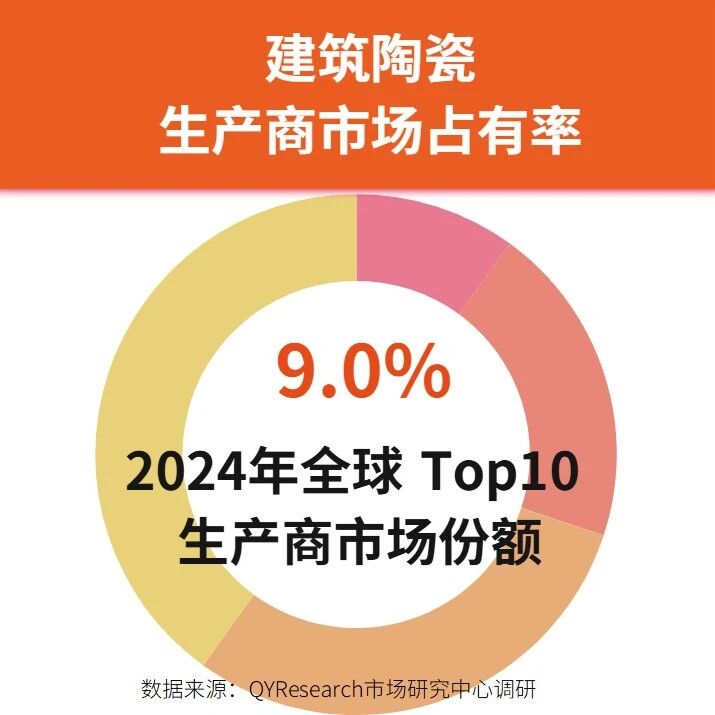
Core Viewpoint - The global building ceramics market is projected to reach a size of $137.44 billion by 2031, with a compound annual growth rate (CAGR) of 2.4% in the coming years [4]. Market Overview - Building ceramics include various ceramic products used in construction, such as wall tiles, floor tiles, and glazed tiles, characterized by high strength, fire resistance, moisture resistance, frost resistance, acid and alkali resistance, and color retention [2]. - The global market for building ceramics is currently undergoing a strategic transformation, shifting from scale expansion to value-driven and sustainable development [13]. Market Size and Trends - The global production of tiles is expected to decline to 14.95 billion square meters in 2024, a decrease of 6.2% from 2023 [11]. - Asia is the largest production region for building ceramics, accounting for 72.8% of global production, while Europe contributes 10.9% [11]. Key Market Players - Major global manufacturers include Mohawk Industries, LAMOSA, Grupo Pamesa, Marco Polo, Dongpeng Holdings, and Mona Lisa, with the top ten companies holding approximately 9.0% of the market share in 2024 [7]. Product Segmentation - Ceramic tiles are the primary product segment, holding about 71.2% of the market share [9]. Market Drivers - The demand for aesthetically pleasing and durable building materials is increasing, particularly for natural stone tiles, which offer rich design options and exceptional durability [18]. - The ongoing expansion of the construction and real estate sectors, especially in emerging economies, is a significant driver for the building ceramics market [19]. - Advances in manufacturing technology, such as digital printing and automation, are enhancing product quality and design possibilities while optimizing production costs [20]. Challenges Facing the Industry - The building ceramics industry faces environmental pressures and rising production costs due to the need for compliance with carbon neutrality and stricter environmental policies [22]. - The application of new technologies, such as foamed ceramics, is hindered by technical and standardization barriers, limiting their market adoption [23]. - Intense competition and market fragmentation, particularly in developing countries, lead to price competition and compressed profit margins [24].
欧盟发布《欧洲电池协议》,其主旨与用意何在?
Zhong Guo Qi Che Bao Wang· 2025-11-25 02:48
Core Insights - The European Battery Agreement aims to establish a sustainable and inclusive battery industry chain, ensuring Europe's technological sovereignty and industrial competitiveness in the global market [3][4]. Group 1: Key Objectives - The agreement focuses on four pillars: innovation, production, procurement, and security, to create a unified battery industry strategy [4]. - It emphasizes the importance of lifecycle management for batteries, complementing the EU's new battery law to enhance environmental regulation and resource recovery [5]. Group 2: Strategic Importance - The agreement is seen as a strategic move to reshape the battery industry landscape, addressing environmental and economic goals while enhancing global competitiveness [6]. - It aims to reduce reliance on imports of critical metals like lithium, cobalt, and nickel, thereby mitigating risks associated with price volatility and supply chain autonomy [6][7]. Group 3: Innovation and Sustainability - The agreement encourages R&D investments to drive breakthroughs in battery technology, targeting a 40% increase in energy density and a 30% reduction in production costs by 2030 [5]. - It introduces a digital "battery passport" to ensure traceability of raw materials and compliance with environmental standards throughout the battery lifecycle [5]. Group 4: Market Dynamics - The agreement sets regulatory barriers that may increase the cost of compliance for non-European battery manufacturers, potentially providing a competitive edge to local companies [7]. - It highlights the need for European companies to adapt to regional regulations and innovate to remain competitive in the global electric vehicle market [8].

中国旭阳集团稳健经营 获南下资金持续关注
Zhi Tong Cai Jing· 2025-11-25 02:20
Core Insights - China Xuyang Group has seen significant growth in its stock holdings, with a total of 352 million shares held through Hong Kong Stock Connect, representing 7.88% of total equity, an increase of 50 million shares since the beginning of 2025, marking an 88-fold increase since its listing [1] - The company has received multiple awards for its investor relations, information disclosure, ESG practices, and corporate governance, including recognition in the Fortune China 500 list, where it ranked 322nd in 2025, up 17 places from the previous year [1] Group 1: Company Performance - In 2024, China Xuyang Group reported a revenue of 47.543 billion yuan, a 3.2% increase, and has shown continuous growth in total assets and net assets since its listing, with total assets reaching 59.841 billion yuan (+11.2%) and net assets at 15.877 billion yuan (+9.7%) [3] - The company maintained profitability with a net profit of 0.98 billion yuan in 2024, demonstrating strong market competitiveness despite industry-wide losses [3] - In the first half of 2025, the company achieved record high production volumes in its coke and chemical new materials businesses, with 10.88 million tons and 2.85 million tons produced, respectively, reflecting a significant increase in profitability metrics [3] Group 2: Business Expansion and Strategy - China Xuyang Group has established nine production parks across various regions, including Hebei, Shandong, and Inner Mongolia, and has provided operational management services to 18 coking and chemical companies [2] - The company has developed a unique chemical industry chain starting from coke, expanding into carbon materials, aromatics, and alcohol amines, while also venturing into hydrogen energy and new materials [2] - The operational scale of the company has reached 28.64 million tons per year, with a production capacity of 22.6 million tons of coke and 6.04 million tons of chemicals [2] Group 3: Future Outlook - As China Xuyang Group approaches its 30th anniversary in 2025, it aims to continue its strategic expansion from coke and chemicals to new energy and materials, increasing R&D investment and promoting digital transformation [4] - The company aspires to be a world-leading energy and chemical company, focusing on innovation and contributing to social progress, while maintaining its commitment to high-quality sustainable development [4]
申万宏源荣获2025年上市公司可持续发展最佳实践案例
申万宏源证券上海北京西路营业部· 2025-11-25 02:10
Core Viewpoint - The article highlights the recognition of Shenwan Hongyuan's sustainable development practices, emphasizing its commitment to integrating financial services with national strategies and enhancing ESG (Environmental, Social, and Governance) ratings [1][4]. Group 1: Sustainable Development Initiatives - Shenwan Hongyuan's report titled "Financial Empowerment + Industrial Support: Effectively Addressing Three Major Challenges of Rural Revitalization" was selected as a best practice case at the China Listed Companies Sustainable Development Conference [1]. - The China Listed Companies Association has been collecting ESG practice cases since 2021 to promote best practices among listed companies [1]. Group 2: Company Milestones and Strategies - 2025 marks the 40th anniversary of Shenwan Hongyuan's establishment and the 10th anniversary of its merger and restructuring [4]. - The company aims to enhance its management mechanisms and governance to strengthen its role as a "gatekeeper" of the capital market [4]. - Shenwan Hongyuan is optimizing its "research + investment + investment banking" strategy to create a comprehensive financial service system for corporate clients [4]. Group 3: Technological Integration and ESG Ratings - The company is embracing financial technology, utilizing AI models to improve the quality and efficiency of its financial services [4]. - Shenwan Hongyuan has achieved a four-year consecutive improvement in its ESG external ratings, with its MSCI ESG rating rising to A, and other ratings from S&P CSA, Wind, and CSI ranking among the industry leaders [4]. Group 4: Future Commitments - The company plans to continue collaborating with stakeholders to deeply integrate sustainable development and ESG principles into its value framework [4]. - Shenwan Hongyuan is committed to enhancing corporate governance and fulfilling social responsibilities while supporting the high-quality development of the real economy [4].


专访阿美亚洲总裁:期待扩大在华投资规模,重点布局三大领域
2 1 Shi Ji Jing Ji Bao Dao· 2025-11-24 23:38
阿美亚洲总裁赛乐·扎伊德(Saleh Y. Al Zaid) 南方财经21世纪经济报道记者郑青亭 北京报道 近日,阿美亚洲总裁赛乐·扎伊德(Saleh Y. Al Zaid)在接受21世纪经济报道独家书面专访时表示,沙特 阿美在中国市场的投资已超过2400亿元人民币,其中沙特阿美出资逾900亿元,公司期待继续扩大在华 投资规模,并聚焦先进石化、新能源与低碳技术、先进材料三大重点领域,以践行其"未来50年甚至更 久"的长期承诺。 扎伊德在今年9月荣获2025年度中国政府友谊奖。这是中国政府授予为中国经济和社会发展作出突出贡 献的外国专家的最高国家荣誉。他在采访中谈到,这份荣誉不仅是对其个人工作的认可,更是对沙特阿 美与中国多年来深度合作与战略协同的肯定。"在中沙关系全面深化的关键阶段,这一奖项具有特殊意 义。"他表示。 近年来,沙特阿美不断加强在华炼化布局,通过入股和合作项目在中国石化领域大规模投资。扎伊德表 示,通过投资炼化一体化项目,沙特阿美与中方伙伴实现了优势互补。沙特阿美在合作中充分发挥其在 能源供应、全产业链整合与低碳技术方面的优势,不仅助力中国提升能源安全水平,也推动其在经济发 展与气候目标之间实现 ...

北京市属公园绿化废弃物循环利用率不断提升
Ren Min Ri Bao· 2025-11-24 22:31
Core Viewpoint - The article discusses innovative methods for recycling garden waste, particularly fallen leaves and branches, in Beijing's parks, emphasizing the transformation of waste into valuable resources through sustainable practices [1][2][3]. Group 1: Waste Management Practices - Traditional methods of handling garden waste, such as burning and landfilling, are no longer suitable for green and low-carbon development needs [2]. - The use of crushing and composting technology to convert garden waste into organic resources reduces secondary pollution and aligns with sustainable development goals [2]. - Most parks in Beijing are currently utilizing high-temperature composting to process garden waste, which improves soil quality by adding essential nutrients [1]. Group 2: Creative Utilization of Waste - Garden waste can be creatively repurposed for aesthetic enhancements, such as combining it with ecological materials for landscape art [3]. - Specific examples include the use of waste wood in the "Colorful Galaxy" garden at Yuyuantan Park and the transformation of tree trunks into benches and insect hotels in Zhongshan Park [3]. - The Beijing Park Management Center aims to further explore new pathways for resource utilization of garden waste to support ecological construction and achieve a circular economy goal of "turning waste into treasure" [3].
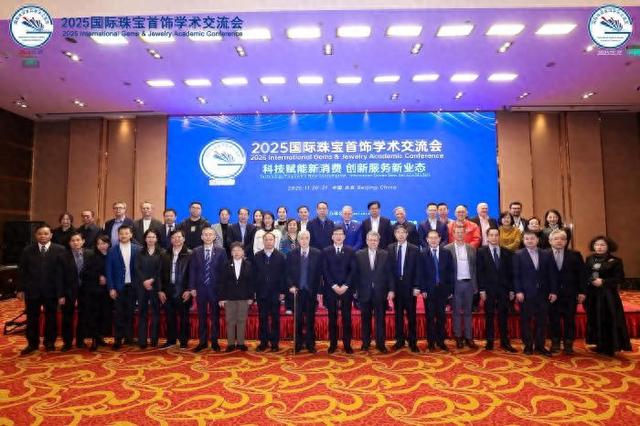
当珠宝遇见科技 系列变革正重塑行业生态
Zhong Guo Xin Wen Wang· 2025-11-24 10:59
Core Viewpoint - The jewelry industry is undergoing profound changes driven by technological innovation and sustainable development, which are seen as essential for future growth and competitiveness [3][4]. Group 1: Technological Innovation - Industry experts emphasize the necessity for the jewelry sector to rely on technological innovation to enhance product quality and sustainability [3]. - The global jewelry industry must embrace technological advancements to modernize manufacturing processes, marketing strategies, and supply chain management [3]. Group 2: Sustainable Development - The integration of sustainable practices is crucial for the jewelry industry to address environmental challenges and ensure long-term viability [3]. - The focus on ethical sourcing and environmental, social, and governance (ESG) performance measurement is becoming increasingly important in the industry [3]. Group 3: Industry Collaboration - There is a call for deeper collaboration among industry stakeholders, including academia and research institutions, to foster innovation and translate research outcomes into practical applications [3]. - The need for a collective effort to reshape the industry ecosystem and tackle emerging opportunities and challenges is highlighted [3]. Group 4: Cultural and Social Value - The unique value of gemstones is not only in their physical and aesthetic properties but also in their connection to technology, culture, and social development [4]. - The jewelry industry is encouraged to explore development paths from multiple dimensions, including technological and cultural perspectives [4].