
数字化转型升级

Search documents
铁锋区工商联:“五位一体”服务,精准对接企业需求
Xin Lang Cai Jing· 2026-02-23 21:43
Group 1 - The core focus of the Iron Peak District Federation of Industry and Commerce is to innovate and establish a "five-in-one" service system aimed at creating a supportive environment for private enterprises, enhancing the vitality of the regional private economy [1][2] - Legal protection is emphasized as a key measure to optimize the business environment, with the establishment of a "knowledge property dispute mediation mechanism" recognized by Heilongjiang Province, providing efficient dispute resolution services for multiple enterprises [1] - The Federation is shifting its service approach from "post-event mediation" to "pre-event prevention," conducting intellectual property risk assessments in local enterprises and organizing legal awareness activities that have reached over 50 participants [1] Group 2 - A three-dimensional empowerment system has been constructed, focusing on financial, digital, and market support, with partnerships established with banks to facilitate services for over 20 enterprises [2] - Digital empowerment initiatives include specialized training on AI for over 100 enterprises, aiding them in seizing opportunities for digital transformation [2] - Market empowerment efforts have led to the signing of e-commerce agreements between vocational colleges and local businesses, resulting in 150 live broadcasts and sales of 180,000 yuan [2] Group 3 - The Federation has implemented a "rotating chairman" system to enhance organizational cohesion, with over 200 enterprises participating in community activities [3] - Social responsibility is promoted among member enterprises, with various charitable activities organized, including the establishment of a care station for sanitation workers and a series of public welfare events benefiting multiple community groups [3] - A total of 9 public welfare activities were organized throughout the year, mobilizing 14 member enterprises to contribute nearly 80,000 yuan in aid and materials to support various vulnerable groups [3]
报喜鸟:公司一直高度重视数字化转型升级工作
Zheng Quan Ri Bao Wang· 2026-01-30 10:45
Group 1 - The company emphasizes the importance of digital transformation and upgrading, actively introducing intelligent equipment to enhance production efficiency and automation levels [1] - The company continuously monitors technological developments and the link between technology and industry [1] - Currently, the company has not implemented robots for sewing operations [1]

报 喜 鸟:目前公司未应用机器人进行缝纫操作
Mei Ri Jing Ji Xin Wen· 2026-01-30 07:39
Group 1 - The company is focusing on digital transformation and upgrading by actively introducing intelligent equipment to enhance production efficiency and automation levels [2] - Currently, the company has not implemented robots for sewing operations [2]


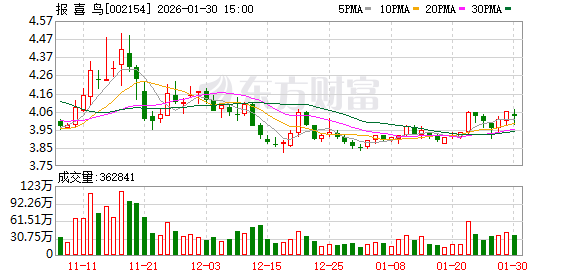
报喜鸟(002154.SZ):公司未应用机器人进行缝纫操作
Ge Long Hui· 2026-01-30 07:20
Core Viewpoint - The company emphasizes its commitment to digital transformation and upgrading, actively introducing intelligent equipment to enhance production efficiency and automation levels, while continuously monitoring technological developments and the connection between technology and industry [1] Group 1 - The company has not yet implemented robots for sewing operations [1]
上工申贝业绩预亏,转型之路遇挑战
Xin Lang Cai Jing· 2026-01-28 09:49
Core Viewpoint - The company, Shangong Shenbei Group, has announced an expected loss in its performance, indicating it is facing significant challenges in the sewing equipment and smart manufacturing sectors [1][4]. External Environment - The global economic growth is slowing down, leading to weakened demand in key markets, which directly impacts Shangong Shenbei's core high-end equipment manufacturing business [1][4]. - Downstream customers are becoming more cautious in their investment decisions, resulting in delays or reductions in orders, thereby exerting pressure on the company's short-term revenue [1][4]. Industry Competition - The ongoing intensification of competition within the industry is identified as a contributing factor to the company's expected losses [1][4]. - Market competition is not only focused on pricing but also on technological innovation, service responsiveness, and comprehensive solution capabilities [1][4]. - Despite maintaining a technological lead in certain niche areas, the fierce competition is continuously squeezing profit margins [1][4]. Internal Operations and Strategic Transition - The company's internal operations and investments in strategic transformation are reflected in the performance forecast [1][4]. - Shangong Shenbei has been advancing its transition towards smart manufacturing and digitalization, which requires sustained funding and resource support for R&D, new business development, and global resource integration [1][4]. - Such strategic investments typically have long payback periods, which may burden overall profit performance in the short term [1][4]. Historical Investments and Asset Adjustments - Some of the company's historical investments or asset projects may be in a phase of adjustment and digestion, as part of the natural growth process involving exploration of emerging fields [2][5]. - Certain projects have not met expected return targets under specific market conditions, necessitating restructuring and adjustments to optimize asset structure and focus on core business areas [2][5]. Management Response - In response to current performance pressures, the management has shown a proactive stance by enhancing internal operational efficiency through refined management and cost control [2][6]. - The company is also adjusting its market strategy to focus more on business segments and market areas with competitive advantages and high growth potential [2][6]. Long-term Outlook - The short-term fluctuations in performance have not diminished the industry's recognition of Shangong Shenbei's long-term technological accumulation and brand value [2][6]. - The company's core technological capabilities in industrial sewing automation and aerospace equipment remain crucial assets for risk mitigation and future market recovery [2][6]. - The future trajectory of the global economy and manufacturing cycles, along with the effectiveness of the company's strategic adjustments, will be key determinants of whether Shangong Shenbei can quickly emerge from its current downturn and return to a growth path [2][6].

锚定项目赋能年,建设综合立体交通网
Qi Lu Wan Bao· 2026-01-21 13:41
Core Viewpoint - In 2026, Jinan's transportation sector aims to focus on "Project Empowerment Year" by advancing 115 key transportation projects, including the Jinan-Binzhou High-speed Railway and the second phase of Jinan Airport expansion, to enhance the quality of urban mobility for citizens [1][2]. Group 1: Key Transportation Projects - Jinan will accelerate the construction of the Jizhao High-speed Railway and ensure the completion of the Jinan-Binzhou High-speed Railway, while also starting the comprehensive passenger transport hub project at Jinan Railway Station [1]. - The second phase of Jinan Airport expansion will be completed this year, establishing a solid hardware foundation for the regional aviation hub [1]. - Seven highway projects, including the expansion of the southern ring road, will be promoted to ensure the Jinan to Ningjin highway is operational [2]. Group 2: Urban Road Network Improvement - The city will enhance its urban road network by constructing the Phoenix Yellow River Bridge south extension and the second phase of Huanghe Avenue, ensuring the completion of the industrial northern road extension [3]. - A total of 58 urban roads will be newly constructed or renovated, and 20 congestion points will be optimized to improve traffic flow [3]. - Eleven pedestrian overpasses will be built to facilitate smoother commuting for citizens [4]. Group 3: Public Transport and Integration - Jinan's rail transit will continue to expand, with the western section of Line 6 expected to open this year and the first phase of Line 9 aimed for completion within the same timeframe [3]. - The city will enhance the integration of public transport systems, focusing on a "three-network integration" approach that combines rail, bus, and non-motorized transport [3][4]. - A variety of bus services will be introduced, including community buses and "five-minute buses," to cater to diverse commuting needs [3]. Group 4: Digital Transformation and Smart Transportation - Jinan will focus on governance efficiency and smart upgrades in transportation, launching initiatives to modernize industry governance and improve the business environment [6]. - The city plans to implement a digital transportation system that includes a unified travel service platform, enabling data sharing between public transport and rail systems [6]. - Efforts will be made to develop low-altitude transportation services and conduct trials for various low-altitude applications [6]. Group 5: Commitment to Public Service - Jinan's transportation strategy emphasizes continuous improvement in public service, with a commitment to addressing issues through a problem-oriented approach and integrating development efforts [7]. - The city aims to enhance the overall quality of transportation services to meet the needs of its citizens and support the modernization of the province [7].
研判2025!中国卡丁车俱乐部行业发展背景、产业链、市场规模、重点品牌及前景展望:消费观念转变推动新兴运动发展,卡丁车俱乐部规模达44.3亿元[图]
Chan Ye Xin Xi Wang· 2026-01-15 01:14
Core Insights - The karting industry in China is experiencing rapid growth due to increased car ownership and a shift in consumer preferences towards outdoor entertainment, with the market size expected to reach 4.43 billion yuan by 2024, recovering from a decline to 2.53 billion yuan in 2020 due to the pandemic [1][8]. Industry Overview - Karting clubs provide essential services for training and competitions, gaining popularity as a new sports activity in China [3]. - The industry is categorized into adult and children's karting venues, with adult venues typically larger and located in suburban areas, while children's venues are often found in malls [3][5]. Market Dynamics - The karting club industry is projected to benefit from rising disposable income and consumer spending, with per capita disposable income reaching 32,500 yuan in the first three quarters of 2025, a 5.1% increase year-on-year [6]. - The primary revenue source for karting clubs is ticket sales, with some clubs expanding into event management and training [5]. Industry Chain - The karting industry chain includes manufacturing, parts production, and material supply, which are crucial for product quality and cost control [6][7]. Competitive Landscape - The market features a mix of large chain brands and smaller local clubs, with larger brands leveraging their scale and experience to maintain a competitive edge [9][10]. - Notable brands in the industry include K1 Speed, iKart, and Red1 Karting, among others [10]. Future Trends - The karting industry is expected to evolve towards immersive entertainment experiences, integrating themes and advanced technologies like VR/AR to enhance customer engagement [12]. - Data-driven and personalized services will become prevalent, with real-time analytics providing tailored driving improvement suggestions for users [13]. - Community-driven operations and a more accessible event system will transform karting clubs into social hubs, fostering loyalty and ongoing revenue through regular events [14].

民企显身手 奋进正当时|京津冀协同发展下,格雷时尚与热景生物的产业跃迁之路
Bei Jing Shang Bao· 2025-12-30 08:56
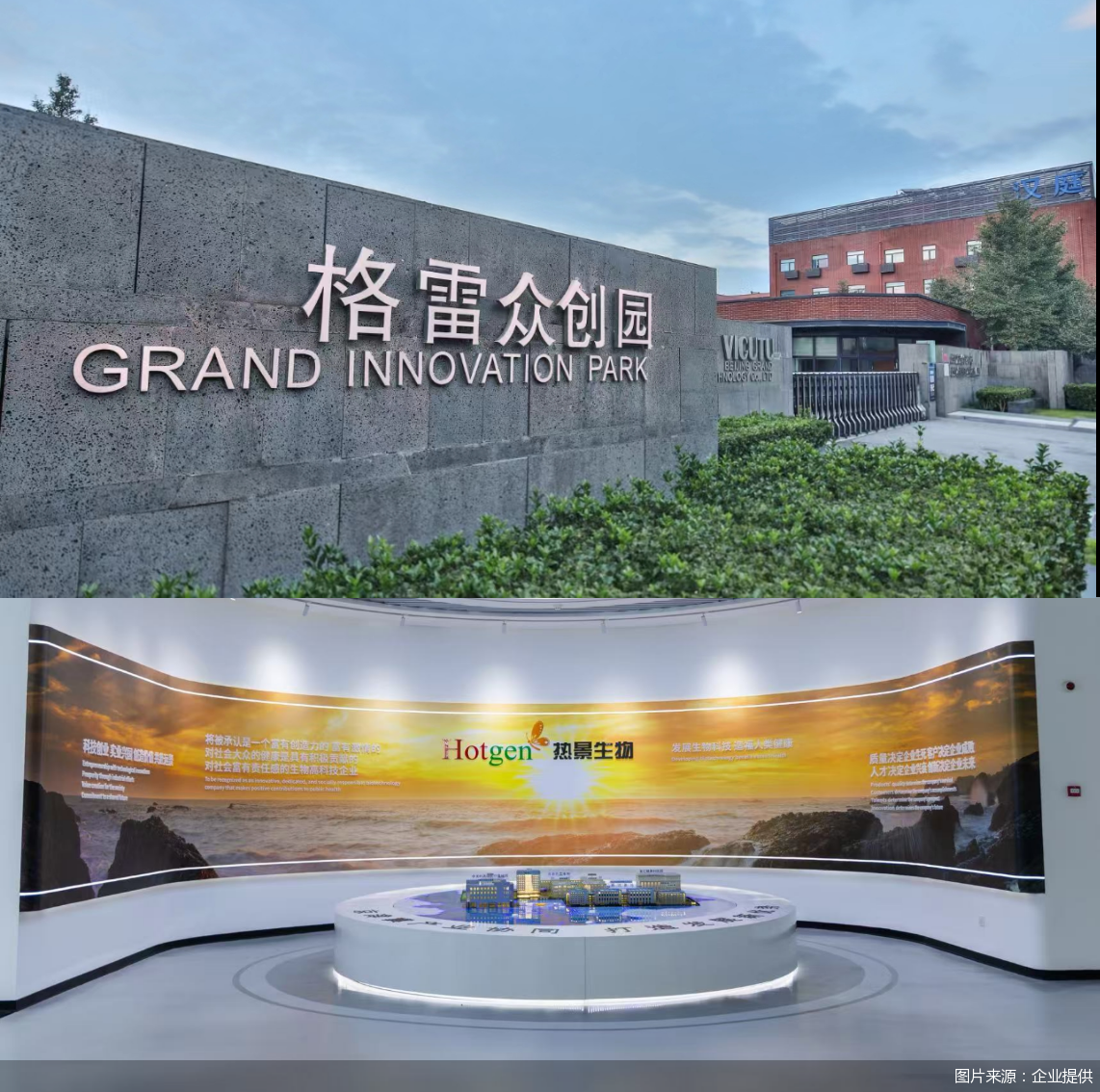
Core Insights - The article discusses the ongoing industrial upgrades in the Beijing-Tianjin-Hebei region, highlighting how local private enterprises are responding to national strategies through proactive layouts and collaborations [2] Group 1: Grey Fashion Technology Co., Ltd. - Grey Fashion relocated its production center to Hebei in 2015, investing 1.5 billion yuan to build a modern industrial park, which has led to a significant restructuring of its supply chain [3] - The company transformed its original production site in Beijing into an innovation incubator called "Grey Innovation Park," attracting over 170 enterprises and becoming a key platform for industrial upgrades and innovation [3][5] - Since 2017, Grey Fashion has invested over 35 million yuan in digital transformation, resulting in a significant increase in revenue from its high-end customization business, which grew from 30 million yuan to 100 million yuan [5] Group 2: Hotgen Biotech Co., Ltd. - Hotgen Biotech, established in 2005, has developed a clear growth path through the Beijing-Tianjin-Hebei collaborative development strategy, establishing a production base in Langfang in 2016 [6] - The Langfang base has become a crucial site for the production and commercialization of over 200 in vitro diagnostic products, significantly increasing the company's production capacity from millions to tens of millions [6] - Hotgen has expanded from diagnostics to innovative drugs, with over 100 diagnostic products and a focus on developing antibody and nucleic acid drugs, including a first-in-class drug for acute myocardial infarction [7]

建发致新(301584):全国性高值医疗器械流通商
Dongguan Securities· 2025-12-24 11:07
Group 1 - The report gives the company an "Accumulate" rating for the first time [2][55] - The company is a national high-value medical device distributor, established in 2010, focusing on direct sales and distribution of medical devices, and providing centralized operation services for medical consumables (SPD) [5][11] - The SPD management model for medical devices has significant growth potential, with a current penetration rate of approximately 15.29% in public hospitals, indicating a vast market opportunity [5][47] Group 2 - The company has maintained stable revenue and net profit growth from 2020 to 2024, with revenue increasing from 8.542 billion to 17.923 billion yuan, and net profit rising from 160 million to 228 million yuan [24][26] - The medical device market in China is expanding steadily, with the market size growing from 370 billion yuan in 2016 to 1,032.8 billion yuan in 2023, reflecting a compound annual growth rate (CAGR) of 15.79% [31][39] - The high-value medical consumables market in China has also shown steady growth, with a market size increase from 72.4 billion yuan in 2016 to 156.1 billion yuan in 2023, achieving a CAGR of 11.60% [39][40] Group 3 - The company leverages innovation to address industry challenges, focusing on technology, service, and management model improvements to enhance operational efficiency [48][49] - The company has developed a comprehensive SPD management system that integrates logistics information technology to optimize the management of medical consumables within hospitals [52] - The company aims to create a "national integrated medical device distribution hub," enhancing collaboration with major manufacturers and hospitals to streamline operations and improve service efficiency [53][54] Group 4 - The investment forecast estimates earnings per share of 0.66 yuan and 0.76 yuan for 2025 and 2026, respectively, with corresponding valuations of 48 times and 42 times [55][56] - The company is positioned to benefit from the ongoing trends of industry consolidation and increased efficiency in medical device distribution [44][45]
海峡股份总经理蔡泞检: 把握历史机遇 锻造优质轮渡运输服务商
Zhong Guo Zheng Quan Bao· 2025-12-17 22:08
Core Viewpoint - The establishment of the Hainan Free Trade Port's full island closure operation presents a historic strategic opportunity for the company, which aims to become one of China's leading ferry transportation service providers [1] Group 1: Market Demand and Policy Benefits - The Qiongzhou Strait is crucial for transporting over 90% of the production and living materials to and from Hainan, and the new policies will significantly increase the flow of people and vehicles to and from the island [2] - As the only state-controlled, A-share listed, and integrated port and shipping operator in the Qiongzhou Strait, the company is positioned to be the first to benefit from these policy changes [2] Group 2: Infrastructure and Fleet Development - The company has launched the new Haike Passenger Comprehensive Hub, designed to handle 35 million passengers and 5.6 million vehicles annually, facilitating a one-stop customs clearance process [2] - Plans to purchase four flat cargo ships by 2025 to support the transportation of new energy vehicles, and to build two green intelligent roll-on/roll-off ships to replace older vessels, enhancing service quality [2] Group 3: Route Expansion and Strategic Initiatives - The company is implementing a multi-channel strategy by introducing two large roll-on/roll-off vessels on the Haikou-Beihai route and opening a new route from Haikou to Fangchenggang to enhance trade cooperation and support the Free Trade Port's development [3] - Continuous transformation and upgrades have been made since 2017, including the acquisition of ferry terminal assets and the integration of shipping resources, aiming to enhance service capabilities in the Qiongzhou Strait [4] Group 4: Digital Transformation and Operational Efficiency - The company is focusing on digital transformation, utilizing information technology to create efficient and intelligent production models in port operations, and enhancing safety and operational efficiency in shipping through advanced monitoring systems [4] - Future plans include developing cargo sources in Beihai and Fangchenggang, enhancing customer engagement through new platforms, and diversifying revenue streams through tourism and cultural initiatives [5]
