
数字化转型

Search documents
南网数字(301638) - 2026-001投资者关系活动记录表0106
2026-01-06 08:38
Group 1: Business Model and Revenue Generation - The "Dianhong" IoT operating system is the first domestic power IoT operating system developed based on the national open-source system, primarily generating revenue through the sale of "Dianhong" core modules and providing customized technical services for industry-specific components [2] - The company aims to continuously build the "Dianhong" ecosystem by expanding its market share in smart hardware and software systems within the power grid sector [2] Group 2: Investment and Project Significance - The total investment for the "Spatiotemporal Intelligent Digital Twin Platform Construction Project" is 339.5493 million yuan, focusing on digital grid twin main platform system construction and foundational computing power [3] - This project aims to enhance decision-making efficiency and management levels in the energy sector by addressing traditional data integration and dynamic simulation challenges [3] Group 3: Digital Infrastructure and Client Base - The company's digital infrastructure business is widely applicable, providing customized digital transformation technology bases for large state-owned enterprises [3] - The company plans to strengthen digital infrastructure construction and optimize cloud services, including the establishment of a "3+1+X" cloud data center and enterprise-level data lakes [3] Group 4: Order Status and Future Expansion - As of June 30, 2025, the total orders on hand amount to 8.037 billion yuan, with non-related customer orders at 810 million yuan [3] - The company intends to gradually expand its business into the State Grid region and overseas, leveraging its accumulated technology and experience in the digital transformation of the power industry [3]
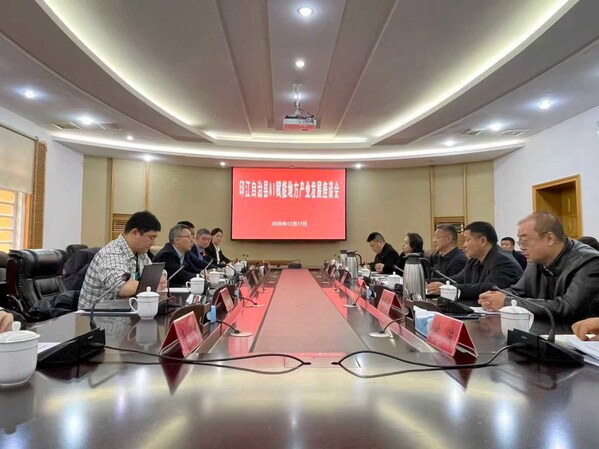
走进贵州印江,联想控股联动多方开展人工智能公益培训
Zhong Guo Jin Rong Xin Xi Wang· 2026-01-06 08:02
Core Insights - Lenovo Holdings, in collaboration with various educational and research institutions, is conducting AI training programs in Tongren City, Guizhou Province, aimed at enhancing digital literacy and skills among local vocational school students, young teachers, and government officials [1][3]. Group 1: AI Training Initiatives - The training for young officials includes insights from experts on the future of AI and digital talent development, emphasizing the need for composite talents in the next five to ten years [3]. - The focus on education highlights how AI can empower teaching, address resource shortages, and facilitate personalized education that aligns with market demands [3]. Group 2: Local Talent Development - Experts from Lenovo and the Higher Education Press conducted hands-on demonstrations of AI capabilities, encouraging students to integrate AI tools into their professional studies [5]. - Training for teachers emphasizes the transition from knowledge transmitters to facilitators of learning and environment designers, focusing on capability development [5]. Group 3: Strategic Collaborations - Lenovo Holdings engaged with local government and business representatives to discuss AI industry development and provide references for planning industrial growth in the region [5]. - The company’s Assistant President introduced its AI industry layout and ecological investments, suggesting a demand-driven approach for early AI integration in local development [5]. Group 4: Ongoing Initiatives - The activities are part of Lenovo's "Rural AI Empowerment Plan," aimed at making AI technology accessible and applicable to local contexts, thereby driving rural revitalization [6]. - Lenovo plans to maintain communication with local stakeholders to support the high-quality economic and social development of the region [6].

山东高速集团创新驱动助力智慧出行
Zhong Guo Jin Rong Xin Xi Wang· 2026-01-06 07:55
Group 1 - The Shandong Highway Group has been recognized for its innovative achievements, including the "Key Technologies and Comprehensive Detection Equipment for Multi-source Disease and Hazard Precise Spatiotemporal Collaborative Perception" and the "AI-based Highway Operation Monitoring and Early Warning Release" [1] - The company operates over 84% of the highways in Shandong Province and has assets exceeding 1.7 trillion yuan, ranking among the Fortune Global 500 [1] - The construction of the BIM digital foundation on the Jitai Expressway is expected to improve toll station efficiency by over 30%, significantly alleviating congestion during peak hours [1] Group 2 - The deployment of 73 cloud toll systems has achieved a 99.9% success rate in ETC transactions and a 99.99% accuracy rate in vehicle type recognition, reducing vehicle passage time to 3 seconds and improving overall efficiency by 35% [2] - The "Smart Brain" initiative integrates AI and big data across the entire lifecycle of road management, achieving over 90% accuracy in congestion prediction and providing 25 minutes of advance warning [2] - The company has established the longest and most diverse closed testing base for autonomous driving in China, covering 34 testing scenarios and providing services for over 40 automotive companies, with a cumulative testing mileage exceeding 25 million kilometers [2]

互联网赋能烟台葡萄酒产业:特色产区品牌迈向全域市场!
Sou Hu Cai Jing· 2026-01-06 07:44
Core Insights - The Chinese wine industry is undergoing a significant transformation driven by consumption upgrades and industrial transitions, moving from scale expansion to quality enhancement [1] - Yantai, as a key wine production area, is leveraging its historical winemaking heritage and quality resources to become a benchmark for industry transformation [1] Industry Trends - The domestic wine market is in a deep adjustment phase, with domestic wine production decreasing by 24.3% and imported wine volumes down by 20.1% from January to August 2025 [1] - Despite overall market challenges, segments like low-alcohol and non-alcoholic wines are experiencing growth, with non-alcoholic wine sales on Meituan increasing by over 200% in early 2025 [1] - Yantai's online export value grew by 47% from January to September 2025, with the Southeast Asian market seeing an 82% growth [1] Digital Transformation - The "Internet+" wave is providing critical pathways for Yantai's wine industry to overcome development bottlenecks, enabling direct access to consumers and restructuring the value chain [2] - The integration of "digital planting + online marketing" has become mainstream, enhancing wine quality stability and providing digital support for product traceability [2] - Local enterprises are utilizing e-commerce platforms for brand promotion, with sales of premium domestic wines priced over 1,000 yuan increasing by over 200% [2] Strategic Directions - Yantai wine industry practitioners need to focus on three core areas for business growth: precise demand matching, visualizing brand stories, and optimizing distribution efficiency [4] - Data analysis on online platforms can help identify consumer preferences, leading to the development of innovative products targeting younger demographics [4] - The platform aims to enhance brand visibility, improve supply-demand matching, and effectively communicate brand culture [4] Support Initiatives - The Yantai Wine Public Platform has launched diverse support policies for industry participants, offering free information services and online training courses to enhance operational capabilities [5] - A regional partner program has been established to provide localized operational support, including marketing strategies and customer resource connections [6] - The platform has integrated third-party resources to offer comprehensive services, including low-interest loans, customized logistics, and quality assurance [6] Future Outlook - The digital integration in the wine industry is expected to deepen, with quality stability, cultural uniqueness, digital penetration, and low-carbon levels becoming core competitive dimensions [6] - The Yantai Wine Public Platform aims to enhance data empowerment and cross-border service capabilities, facilitating better global market access for Yantai wines [6]

2026年网站建设十强企业深度解析,实力领先的网站制作公司综合测评榜单
Xin Lang Cai Jing· 2026-01-06 06:01
Core Insights - The article highlights the ongoing trend of digital transformation in 2026, emphasizing the importance of website quality and service levels in shaping a company's digital strategy [1] - The annual awards aim to help businesses select suitable website development partners based on technical strength, service completeness, case implementation, and customer feedback [1] Group 1: Top Website Development Companies - **Company 1: Vango Network** Established in 2013, Vango Network has become a comprehensive service provider in website development, serving over 3,000 clients across 12 major cities in China [2] The company focuses on brand website construction and high-end customization, providing full-chain digital solutions for various sectors including energy and education [2] Vango Network's technical team comprises 85% of its workforce, with core members having 22 years of industry experience [3] - **Company 2: Night Owl Network** Founded in 2012, Night Owl Network has served over 2,000 clients, specializing in multilingual foreign trade websites and corporate websites [7] The company emphasizes a full-cycle service model and high cost-performance solutions, ensuring compliance with international standards [7] Night Owl Network has developed a unique security mechanism to protect websites from common risks [8] - **Company 3: Junhe Digital** Junhe Digital focuses on high-end website customization and digital platform development, aiming to assist businesses in their digital transformation [11] The company offers flexible solutions tailored to different business scales and complexities, ensuring compliance with industry standards [11] Group 2: Industry Trends and Partner Selection - The website development industry is evolving towards deeper technology integration, service scenario segmentation, and stricter compliance requirements [21] - AI technology is becoming a standard feature in website development solutions, enhancing user interaction and operational efficiency [21] - Companies are advised to choose partners based on their scale, industry characteristics, and long-term plans, with larger enterprises favoring those with strong technical capabilities [22] - For small and medium-sized enterprises, cost-effectiveness and rapid deployment are key considerations when selecting service providers [22] - The article emphasizes the importance of aligning website development with business needs to support brand upgrades and growth [22]
“精准画像”预判办税缴费需求|强基·微镜头
Xin Lang Cai Jing· 2026-01-06 04:00
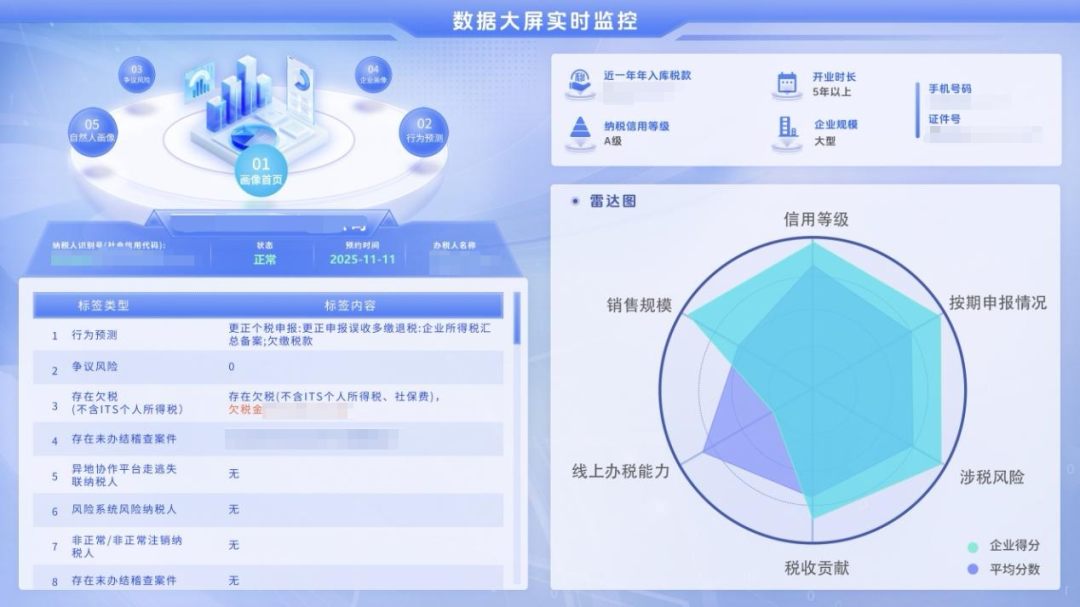
南山区税务局辖区内经营主体近40万户,其中高新技术企业超5500家,纳税人办税需求呈现高频、多元的特征。在传统服务模式下,部分纳税人因不熟悉 业务流程、准备资料不全或选择办理渠道不当,常常遇到"多次跑""来回跑"的困扰;办税服务厅也因人流时段集中、业务类型繁杂,面临窗口资源调度与 服务效率提升的双重压力。 "应通过优化服务,为纳税人缴费人解难题。"谈及"精准画像"智慧服务的初衷,南山区税务局办税服务厅负责人曾汉龙说,随着税收征管数字化转型的推 进,利用数字化手段系统化解传统办税痛点,成为优化服务的必然选择。基于此,南山区税务局整合多系统数据资源,创新推出"精准画像"系统,着力通 过对纳税人数据的深度挖掘与分析,实现需求预判、风险预警,推动服务模式从"被动响应"向"主动治理"转变。 据介绍,"精准画像"系统全面整合了纳税人涉税风险等级、线上业务办理能力等多维度信息,构建起涵盖61项关键指标的"数据池"。系统围绕日常办税高 频场景,预设发票申领、税务登记、减免退税等34个业务预测场景。当纳税人通过线上渠道预约线下办税号源后,系统便自动触发分析机制,为纳税人生 成个性化的"画像报告",不仅清晰标注出纳税人潜在业务需 ...
思特奇:主导规划建设运营庆阳数字服务华池试点项目
Sou Hu Cai Jing· 2026-01-06 03:56
Core Viewpoint - The article discusses the implementation of the Qinyang Digital Service (Shu Lian Wang) pilot project in Huachi, highlighting its significance in promoting digital transformation and smart cultural tourism development, with the involvement of the company in planning, construction, and operation [1] Group 1: Project Overview - The Qinyang Digital Service Huachi pilot project is guided by the local governments of Qinyang City and Huachi County, with the government opening up scenarios for the project [1] - The project is a county-level digital economy initiative led by the company, utilizing its computing power scheduling station, data security system, AI public service platform, and digital economy middle platform [1] - It focuses on integrating red cultural tourism with agricultural and consumer scenarios in Nanliang Town, marking the first practical application of national data infrastructure at the county level [1] Group 2: System Significance - The "One Code Tour" system is described as a significant leap in the cultural tourism industry, serving as a digital platform that empowers market entities and enhances government governance efficiency [1] - The project is seen as a vital measure to implement provincial and municipal requirements for digital transformation and smart cultural tourism development [1] Group 3: Future Prospects - There is an inquiry about the potential for nationwide promotion and application of the "One Code Tour" system by the company, indicating interest in scalability and broader impact [1]

十五五期间中小银行最紧迫的五件大事
Jin Rong Jie· 2026-01-06 03:19
Core Viewpoint - The five most urgent tasks for small and medium-sized banks during the 14th Five-Year Plan period are risk resolution, corporate governance, digital transformation, differentiated operations, and capital replenishment, which collectively drive high-quality development [1]. Risk Resolution: Establishing a Safety Bottom Line for Survival and Development - During the 14th Five-Year Plan, the number of high-risk banking institutions was significantly reduced through mergers and restructuring, but small and medium-sized banks still face challenges such as difficulty in disposing of non-performing assets and high reliance on real estate and local government financing platforms [2]. - Lessons from the U.S. and Japan highlight the importance of early warning systems and market-based risk resolution methods, such as asset securitization and targeted credit allocation [2]. - Key measures for the 15th Five-Year Plan include reducing the number of legal entities, categorizing strategies for non-performing asset disposal, strengthening concentration and liquidity management, and improving risk warning and disposal mechanisms using AI and big data [3]. Corporate Governance: Strengthening the Foundation of Modern Banking Systems - The 14th Five-Year Plan saw the removal of over 3,600 illegal shareholders, but issues such as suboptimal equity structure and weak internal controls persist in small and medium-sized banks [4]. - U.S. community banks utilize a "small but refined" equity structure and independent directors to enhance checks and balances, while Japanese local banks leverage stable equity structures and external supervision [4]. - The 15th Five-Year Plan's core initiatives include optimizing equity structure, standardizing corporate governance operations, strictly controlling related transactions, and improving incentive mechanisms [5][6]. Digital Transformation: Building Core Competencies for Efficient Operations - The 14th Five-Year Plan accelerated the cloud transformation of core systems, but challenges such as fragmented technology investment and weak data governance remain [7]. - U.S. community banks effectively deploy digital tools through partnerships with fintech companies, while Japanese local banks create regional fintech alliances to develop specialized digital products [7]. - Key initiatives for the 15th Five-Year Plan include building a centralized digital infrastructure, enhancing scenario-based applications, improving digital risk control and operational capabilities, and establishing a compliance system for digital operations [8]. Differentiated Operations: Creating Competitive Advantages - The 14th Five-Year Plan encouraged banks to focus on their core businesses and local markets, yet many still engage in homogeneous competition with large banks, leading to weak profitability [9]. - U.S. community banks focus on relationship-based financing for small businesses and local residents, while Japanese local banks bind closely with local industries to enhance customer loyalty [9]. - The 15th Five-Year Plan emphasizes defining market positioning, innovating specialized products and services, deepening regional ecosystem integration, and establishing differentiated risk control systems [10][11]. Capital Replenishment: Strengthening the Capital Foundation for Sustainable Development - During the 14th Five-Year Plan, small and medium-sized banks faced challenges in capital replenishment compared to large banks, with pressures on capital adequacy ratios [12]. - U.S. community banks enhance market confidence through deposit insurance and various capital replenishment methods, while Japan supports capital tool issuance through government initiatives [12]. - The 15th Five-Year Plan's core measures include broadening external capital replenishment channels, strengthening internal capital accumulation, and improving capital utilization efficiency [13]. Supporting Measures - To ensure the implementation of the above tasks, policy coordination, resource integration, and talent cultivation are essential [14].
全省“三优两重”名单揭晓 聊城26个项目入选
Da Zhong Ri Bao· 2026-01-06 03:11
Core Viewpoint - The Shandong Provincial Department of Industry and Information Technology has announced the list of "Three Excellence and Two Key" projects for the big data industry by 2025, with 26 projects including the carbon comprehensive management platform application case from Liaocheng City being selected, ranking third in the province [1] Group 1: Project Overview - The "Three Excellence and Two Key" projects aim to cultivate new productive forces through data elements and empower new industrialization by selecting a batch of benchmark projects in the big data field that demonstrate outstanding innovation capabilities, good application effects, and significant demonstration roles [1] - The projects include excellent big data products, excellent big data solutions, excellent big data application cases, key data factories, and key data merchants [1] Group 2: Liaocheng City Initiatives - In recent years, Liaocheng City has actively promoted the digital transformation of its manufacturing industry, strengthening policy support and enhancing service levels [1] - The city has continuously conducted supply-demand matching, policy promotion, and specialized training activities, while also focusing on scenario creation and benchmark cultivation to improve the digitalization level of its manufacturing sector [1] Group 3: Future Plans - Liaocheng City plans to further implement digital transformation actions to stimulate innovation vitality in the digital economy [1] - The city aims to leverage the exemplary role of the "Three Excellence and Two Key" projects to cultivate a number of replicable and promotable application scenarios, accelerating the digital transformation and upgrading of enterprises and promoting high-quality development of the digital economy [1]
化工建设:创新绿色发展成就斐然
Zhong Guo Hua Gong Bao· 2026-01-06 03:05
Core Viewpoint - During the "14th Five-Year Plan" period, the chemical construction industry emphasizes technological innovation and green low-carbon development, providing strong technical and construction support for the high-quality development of the chemical industry [1][2]. Group 1: Technological Innovation - The industry focuses on technological innovation as a top priority, enhancing research and development efficiency, and optimizing the research layout around six major industrial chains including nylon and biodegradable materials [1]. - Key projects such as nylon 46, nylon 6T, and flame-retardant nylon have been steadily implemented, with national funding support for projects like ultra-high molecular weight polyethylene [1]. Group 2: Green and Low-Carbon Development - The industry actively responds to carbon peak and carbon neutrality goals, achieving breakthroughs in green low-carbon technology applications, with many projects adopting green processes to reduce energy consumption and pollutant emissions [2]. - In the hydrogen energy sector, the industry participates in national hydrogen energy demonstration projects and promotes green hydrogen electrolysis technology [2]. - Advanced hydrogenation cracking technology is adopted in the petrochemical sector to improve product quality and production efficiency while reducing energy consumption [2]. Group 3: Digital Transformation and Smart Upgrades - The industry accelerates digital transformation and smart upgrades, applying digital twin and BIM technologies in large projects for lifecycle management, enhancing engineering efficiency [2]. - AI and big data technologies are utilized to optimize processes, predict equipment failures, and reduce maintenance costs [2]. Group 4: New Technology Development in Engineering Construction - The industry promotes the development and application of new technologies in engineering construction, establishing a solid foundation for "T+EPC" and "T+Industry" models [3]. - The introduction of an AI-based pipeline welding management platform enhances intelligent welding management through real-time data collection and analysis [3]. - The industry successfully expands into overseas markets, promoting technologies in ammonia processing and gas storage, achieving breakthroughs in projects in Morocco and Indonesia [3].