量子计算

Search documents
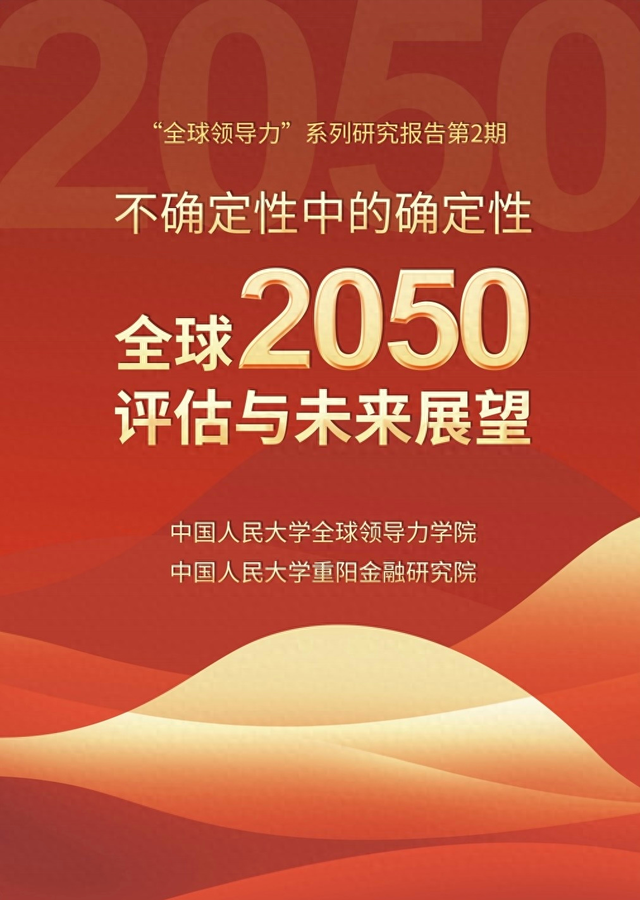
智库报告为人类2050蓝图提供中国智慧
Bei Jing Ri Bao Ke Hu Duan· 2025-10-18 01:16
Core Insights - The event "Mingde Strategic Dialogue (2025)" focused on "Chinese-style modernization and new global dynamics," gathering leaders and scholars from multiple countries to discuss global governance and future development [1][3]. Research Reports and Publications - The "Uncertainty in Certainty: Global 2050 Assessment and Future Outlook" report outlines the consensus on 2050's significance for sustainable development and technological advancement [3]. - The report highlights a profound restructuring of the international order over the next 25 years, with emerging economies becoming the main growth engines and energy transition leading a new growth cycle [3]. - It emphasizes China's "2050 modernization strategy," showcasing systematic layouts in key areas like manufacturing, technology independence, and infrastructure [3][4]. - Four new books were released, focusing on dialogues between Chinese and Western scholars regarding China's development model and its global impact [4][6]. - The publication "National Compound Development and China's Development Advantages" analyzes China's long-term stable development through a "compound interest" logic [6]. Contributions to Global Governance - The research outputs from Renmin University of China aim to provide intellectual frameworks for global governance and policy-making amid uncertainty [8]. - The collective findings underscore the role of Chinese think tanks in reshaping global discourse and contributing to the construction of a community with a shared future for humanity [8].

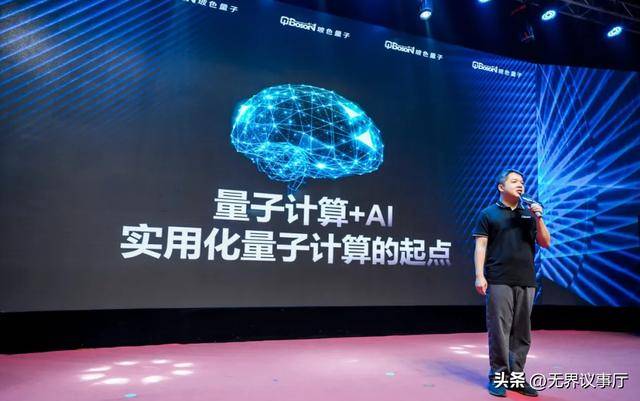
玻色量子获数亿 A++ 轮融资:五年六轮融资,机构持续加码
Sou Hu Cai Jing· 2025-10-17 13:48
Core Insights - The quantum computing sector is experiencing significant activity, highlighted by the recent Nobel Prize awarded to three quantum researchers and the substantial A++ funding round completed by Boson Quantum [1][3] Company Overview - Boson Quantum, established in late 2020 in Beijing, is the only company in the city focused on optical quantum computing devices, having completed six funding rounds in five years [3] - The latest funding round was led by Huade Innovation and Nanshan Zhanxin, with participation from various institutional investors including Guangfa Xinde and Hunan Caixin Industrial Fund, indicating strong institutional confidence [3] Funding Utilization - The funds raised will be allocated towards four main areas: development of specialized and general-purpose coherent optical quantum computers, building quantum computing chip manufacturing capabilities, establishing China's first large-scale specialized optical quantum computer manufacturing facility in Shenzhen, and expanding the quantum computing + AI commercial ecosystem [5] Competitive Advantage - Institutions are inclined to invest in optical quantum technology due to its operational advantages over superconducting quantum systems, which require extremely low temperatures and high operational costs; optical quantum systems can operate in normal environmental conditions, facilitating scalability [7] - Boson Quantum's product offerings include a newly released 1000-qubit coherent optical quantum computer, complete with tools for problem mapping and resource scheduling, and a range of open-source quantum AI training kits based on PyTorch to lower entry barriers [7] Market Dynamics - Boson Quantum's Five Mountains Quantum Computing Cloud Platform has been accessed over 68 million times, covering more than 900 educational institutions and attracting over 10,000 developers, contributing to a growing ecosystem that encourages continued investment [9] - The current investment signals a shift in focus from theoretical discussions about qubit superiority to practical solutions that address real-world problems, emphasizing the importance of quantum computing in reducing R&D cycles for enterprises [9] Global Landscape - The global quantum computing industry is rapidly evolving, with over 400 companies worldwide, of which more than 300 were established after 2014; the U.S. leads with 107 companies, while China has 42, positioning both countries as key players [11] - Chinese companies are advised to focus on specialized machines rather than competing directly with the U.S. in general-purpose machines, leveraging opportunities in AI, pharmaceuticals, and chemical simulations [11] Market Potential - McKinsey predicts that the global quantum technology market could reach $97 billion by 2035, with quantum computing alone accounting for $28 to $72 billion, indicating substantial market potential for specialized machines [13] - The industry acknowledges that achieving a million-qubit fault-tolerant general-purpose machine by 2035 will require over 1 billion RMB in investment, necessitating collaboration across the entire supply chain [13] Strategic Recommendations - For Chinese quantum enterprises, the focus should be on refining specialized machines and thoroughly understanding application scenarios, rather than pursuing the superficial goal of increasing qubit counts, to establish a strong foothold in the global competition [15]
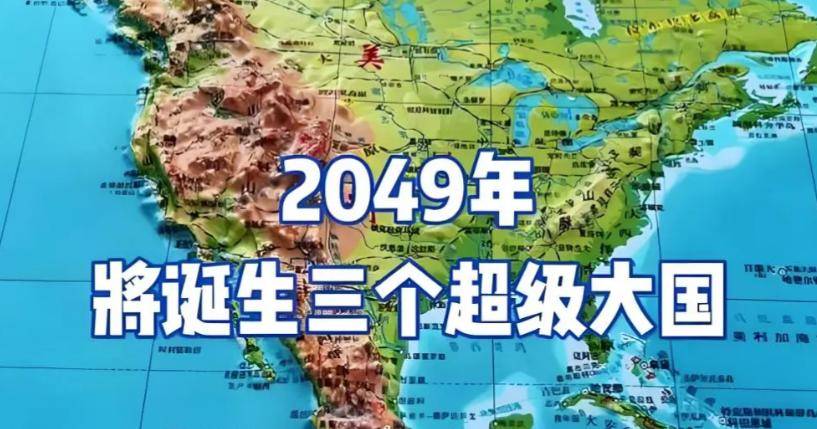
到2049年全球将出现3个超级大国?美国预测名单上,日俄竟落榜
Sou Hu Cai Jing· 2025-10-17 05:11
Group 1: United States - The United States maintains its core hegemony primarily through its financial system, with the dollar being a robust protective barrier [3] - Despite discussions around "de-dollarization," the dollar's dominance in international payments, foreign exchange reserves, and global commodity pricing is expected to remain unchallenged in the foreseeable future [3] - The U.S. possesses a unique "exceptional" power, allowing it to transfer crises globally through monetary policy and utilize financial sanctions as a form of "financial weapon" against adversaries [3] - New York and Wall Street continue to be the ultimate destinations for global capital, supported by unparalleled market depth, liquidity, and complexity [3] Group 2: China - China's economic transformation is fundamental to its status as a superpower, characterized by both scale and quality improvements [5] - Predictions suggest that China may become the world's largest economy by around 2030, with its economic lead expected to widen thereafter [6] - China is advancing up the industrial and value chains, transitioning from basic manufacturing to leading in sectors like new energy vehicles, photovoltaic products, and lithium batteries [6] - The country aims to dominate core supply nodes in the global economy through sustained investments in cutting-edge fields such as artificial intelligence, biotechnology, and quantum computing [8] - With a unified market of 1.4 billion people and over 400 million in the middle-income group, China has a vast internal consumption market that provides significant opportunities for businesses [8] Group 3: Brazil - Brazil's inclusion alongside the U.S. and China as a superpower is surprising but supported by several advantages [10] - The country is experiencing a demographic dividend with a population of 215 million and a median age of only 32, with over 68% of the population being of working age [10] - Brazil holds a dominant position in strategic resources, ranking fifth globally in iron ore reserves, with 8% of the world's uranium and 12% of freshwater reserves [10] - The nation has successfully transitioned from being a "coffee kingdom" to the world's leading exporter of soybeans and the second-largest exporter of chicken, with modern agricultural technology doubling production in a decade [10] - Brazil is also a leader in clean energy, with hydropower meeting two-thirds of its electricity needs and top-tier biofuel technology [10] Group 4: Changing Definition of Superpowers - The definition of superpowers is evolving from military dominance and ideological influence to a focus on comprehensive national strength, sustainable development, and resilience [12] - Brazil's rise highlights that countries with young populations, abundant resources, and a foundation in clean energy may emerge as future winners in the context of climate change and energy transition [12]
天阳科技发布“量子增强计划”多方合作共筑“量子金融”新生态
Zheng Quan Ri Bao Zhi Sheng· 2025-10-16 12:38
Core Insights - The seminar focused on the integration of quantum computing and AI in the financial sector, aiming to establish a self-controlled "quantum finance" ecosystem [1][2] - Tianyang Technology announced the "Quantum Enhancement Plan" to explore deep integration of technology and financial services, positioning itself strategically in the financial market [1] - The collaborative model formed during the seminar is expected to enhance resource integration and innovation within the financial technology sector [2] Company Developments - Tianyang Technology has acquired exclusive permanent licensing for Algo market risk software and source code in mainland China, marking its entry into the financial market [1] - The company plans to increase investments in next-generation computing and AI to strengthen its competitive edge in the financial sector [1] - The chairman of Tianyang Technology emphasized the need for a comprehensive industry chain layout to build competitive barriers and secure a favorable position in the future [2] Industry Trends - The competition in the financial technology industry has evolved from single product or solution competition to a comprehensive ecosystem competition covering core technologies, application scenarios, and industry empowerment [2] - The collaborative efforts aim to reduce reliance on external technologies and accelerate the self-sufficiency of core technologies within the financial sector [2]
天阳科技:多方聚力共筑“量子金融”新生态 重塑金融科技下一代变革新优势
Zhong Zheng Wang· 2025-10-16 11:25
Core Viewpoint - The recent seminar hosted by Tianyang Technology focused on the integration of quantum computing and AI in the financial sector, aiming to establish a self-controlled "quantum finance" computing ecosystem, which is expected to drive the next generation of financial technology development [1][2]. Group 1: Seminar Highlights - The seminar addressed two main themes: "Quantum Computing + AI: Building the 'Next Engine' for Financial Markets" and "Empowering New Productive Forces: Creating a Quantum Technology Industry Corps" [1]. - Participants engaged in deep discussions to identify key upgrades in the industry, providing a clear path for the transition from traditional computing power to a "quantum + AI integrated" approach [1]. Group 2: Strategic Initiatives - Tianyang Technology announced the "Quantum Enhancement Plan" to explore the deep integration of technology and financial services, with a focus on the financial market as a strategic direction [1]. - The company has secured exclusive permanent licensing for Algo market risk software and source code in mainland China, and launched the Tianyang Technology Innovation Version in the financial market [1]. Group 3: Competitive Positioning - The company plans to increase investments in next-generation computing and AI to enhance its competitive edge in the financial market, while also deepening collaborations in semiconductors and AI [2]. - Tianyang Technology's strategic layout includes acquiring Algo market risk software, investing in AI unicorns, and establishing joint ventures, forming a comprehensive strategy around "data + algorithms + computing power" [2]. Group 4: Industry Evolution - The competition in the industry has evolved from focusing on single products or solutions to a comprehensive ecosystem that covers core technologies, application scenarios, computing support, and industrial empowerment [2]. - The collaborative construction of a self-controlled quantum finance ecosystem is expected to reduce reliance on external technologies and accelerate the realization of core technology autonomy and intelligent business scenarios [3].
芯片股引领纳指,全球科技巨头与资本市场激烈博弈
Sou Hu Cai Jing· 2025-10-16 08:16
Group 1: Chip Industry - The Nasdaq futures rose by 1%, indicating a strong performance in tech stocks, particularly driven by chip giants' earnings reports [1] - ASML reported a significant increase in third-quarter orders, leading to a 4% pre-market stock price surge, with an expected 15% growth in annual net sales [2] - The new generation of EUV lithography machines is projected to sell for 50%-100% more than current models, potentially pushing ASML's annual revenue beyond €60 billion by 2030 [2] Group 2: Financial Sector - Morgan Stanley's net revenue of $18.22 billion exceeded market expectations, with trading revenue significantly higher than analyst forecasts [3] - Bank of America also reported strong performance in investment banking, leading to a 4% increase in its stock price during pre-market trading [3] - The positive earnings from these financial giants suggest a stable economic outlook, potentially signaling a forthcoming interest rate cut [3] Group 3: Technology Developments - Nscale announced plans to build a 240MW AI data center for Microsoft, utilizing 104,000 of NVIDIA's latest GB300 chips, expected to be operational by 2026 [4] - Apple's COO visited a factory in Jiangsu to oversee the production of iPhone 17 components, highlighting Apple's meticulous supply chain management [4] - HSBC raised NVIDIA's target price from $200 to $320, suggesting a potential market capitalization of $7.78 trillion, indicating NVIDIA's GPUs as essential for future AI demand [5] Group 4: Global Market Trends - European stock markets showed mixed results, with France's CAC40 up 2.24% while Germany's DAX and the UK's FTSE 100 experienced slight declines, reflecting economic disparities [6] - Coinbase's investment in Indian and Middle Eastern exchanges indicates growing Western interest in emerging market crypto ecosystems [6] - Ericsson signed a $3 billion cooperation agreement with the Canadian Export Development Agency, emphasizing the competitive landscape in 5G and quantum computing technologies [6]


谁导演了“1011”加密货币大崩盘? | 巴伦精选
Tai Mei Ti A P P· 2025-10-16 07:34
Core Insights - The global financial markets experienced significant turbulence following the National Day holiday in 2025, with the A-share Shanghai Composite Index dropping by 0.94% and the Nasdaq index falling by 3.56% on October 10. The cryptocurrency market faced even harsher conditions, with a record liquidation amount of $13.475 billion within 24 hours on October 11, marking the highest single-day liquidation in history [1][2]. Group 1: Market Reactions and Causes - The "1011 Black Swan" event was triggered by macroeconomic risks, market structure imbalances, and a crisis of technical trust, rather than being an isolated incident [1]. - The immediate catalyst for the market crash was the announcement by former President Trump on October 10 regarding a 100% tariff on Chinese goods and expanded export controls, which led to a global risk-off sentiment and a downgrade in the World Trade Organization's 2026 global goods trade growth forecast to 0.5%, the lowest since 2009 [1][2]. Group 2: Cryptocurrency Market Dynamics - In 2025, the correlation between cryptocurrencies and traditional financial assets reached a historical peak, with Bitcoin's 30-day correlation with the S&P 500 rising to 0.78, indicating that 40% of cryptocurrency price fluctuations could be explained by S&P 500 volatility [2][6]. - The leverage in the market significantly increased, with retail investors' average leverage ratio soaring to 10 times, and the overall market leverage ratio reaching a high of 38% since May 2022 [2][3]. Group 3: Technical and Structural Issues - The USDe stablecoin's 12% subsidy policy led to a leveraged entry into the market, creating a false sense of prosperity. However, this model's vulnerability became apparent when collateral prices fell, triggering a "death spiral" in the leveraged market as forced liquidations exacerbated price declines [3][5]. - The absence of major market makers during the crash period contributed to a liquidity crisis, as algorithmic trading triggered stop-loss orders at critical support levels, leading to a rapid price decline [3][4]. Group 4: Trust and Security Concerns - The market faced a trust collapse due to technical security anxieties, particularly regarding quantum computing threats. Over 60% of Bitcoin supply is stored in addresses vulnerable to quantum attacks, raising concerns about the security of digital assets [4][5]. - The USDe de-pegging incident, where it fell to $0.62 (a 38% drop), highlighted the risks associated with stablecoin mechanisms and the lack of liquidity during extreme market conditions [5][7]. Group 5: Regulatory and Market Sentiment - The tightening of global regulatory policies was evident, with the SEC and other international bodies initiating actions against unregulated crypto exchanges, leading to a significant drop in trading volumes [8]. - Despite the recent downturn, the underlying drivers of the cryptocurrency bull market, such as global liquidity easing, remain intact, suggesting that the market may be undergoing a deep adjustment rather than a complete reversal [9][10].
官宣更名丨海愿资本:紫金港资本品牌升级了!
Sou Hu Cai Jing· 2025-10-16 03:53
Core Viewpoint - The company, formerly known as Zijin Port Capital, has officially rebranded to "Haiyuan Capital," reflecting its commitment to long-term investment in hard technology and a global innovation perspective [1][3]. Group 1: Company Background and Achievements - Haiyuan Capital has been focused on hard technology investments for 11 years, managing a total scale of 7 billion yuan and successfully investing in over 120 innovative companies, with 8 of them having gone public [1][3]. - The firm has maintained a core investment philosophy of "invest early, invest small, invest well, and invest in hard technology," particularly in sectors such as semiconductors, artificial intelligence, new energy materials, and life sciences [1][3]. Group 2: Strategic Vision and Internationalization - The rebranding signifies a deeper understanding of the brand and an exploration of international strategies in hard technology investment, aiming to establish deep collaborations with top overseas institutions like MIT and Imperial College [3][5]. - The company plans to enhance its global resource and innovation network, focusing on technology collaboration and market integration between domestic and international enterprises [8][10]. Group 3: Investment Approach and Future Commitments - Haiyuan Capital will adhere to three main commitments: focusing on hard technology, upgrading global resources, and strengthening investment capabilities to achieve long-term win-win outcomes with limited partners and invested companies [8][10]. - The firm emphasizes a dual-core model of "investment + empowerment," providing comprehensive support from technology transformation to global expansion for its portfolio companies [6][8]. Group 4: Market Outlook and Innovation - The company recognizes the challenges and opportunities presented by the era of artificial intelligence and aims to continue discovering resilient entrepreneurs and innovative companies [12][14]. - Haiyuan Capital is optimistic about transformative forces in artificial intelligence, quantum computing, and life sciences, believing that innovation will shine through passion and persistence [14][16].

官宣更名丨海愿资本:紫金港资本品牌升级了!
创业邦· 2025-10-16 03:23
Core Viewpoint - The company has officially rebranded from "Zijin Port Capital" to "Haiyuan Capital," reflecting its commitment to long-term investment in hard technology and a global perspective on innovation [3][9]. Group 1: Company History and Achievements - Over the past 11 years, the company has focused on hard technology investments, managing a total of 7 billion yuan and successfully investing in over 120 innovative enterprises, with 8 of them having gone public [6]. - The company has maintained a core investment philosophy of "invest early, invest small, invest well, and invest in hard technology," particularly in sectors such as semiconductors, artificial intelligence, new energy materials, and life sciences [6]. Group 2: New Brand Significance - The new name "Haiyuan" symbolizes a global vision and the intention to expand international hard technology investments through partnerships with top overseas institutions like MIT and Imperial College [9]. - The brand change also signifies a commitment to an open ecosystem, integrating industrial resources, academic wisdom, and capital power to enhance global innovation [9]. Group 3: Team and Operational Strength - The company boasts a core team with an average of 20 years of experience in investment and enterprise management, combining engineering and financial expertise to identify valuable investment opportunities [12]. - The dual-core model of "investment + empowerment" provides comprehensive support for enterprises, from technology transformation to global expansion [12]. Group 4: Future Commitments - Haiyuan Capital will focus on three main commitments: maintaining a long-term focus on hard technology, enhancing global resource networks, and strengthening investment capabilities to achieve long-term win-win outcomes with partners [15]. - The company aims to help Chinese hard technology influence the global market and become a bridge connecting Chinese innovation with the world [15].

海愿资本:紫金港资本品牌升级了
投中网· 2025-10-16 03:14
Core Viewpoint - The article announces the rebranding of Zijin Port Capital to Haiyuan Capital, emphasizing a commitment to hard technology investment with a global perspective and a long-term vision [3][7]. Group 1: Company History and Achievements - Over the past 11 years, the company has focused on hard technology investments, managing a total scale of 7 billion yuan and successfully investing in over 120 innovative enterprises, with 8 companies already listed [5]. - The company has maintained its core philosophy of investing early, small, well, and in hard technology, navigating through multiple market cycles [5]. Group 2: New Brand Significance - The new name "Haiyuan" symbolizes a global vision and a commitment to international hard technology investment, aiming to establish deep collaborations with top overseas institutions [7][8]. - The brand change reflects a deepened understanding of the brand and an exploration of international strategies in hard technology investment [7]. Group 3: Future Commitments - Haiyuan Capital will focus on two main lines: "Top Three in Domestic Substitution" and "Globally Leading Innovation," while continuing to identify hidden champions in niche sectors [10]. - The company aims to enhance its global resource and innovation network, facilitating technology collaboration and market integration between domestic and international enterprises [10]. Group 4: Team and Operational Strength - The core team possesses an average of 20 years of experience in investment and enterprise management, combining technical and financial expertise to identify valuable investment opportunities [9]. - Haiyuan Capital employs a dual-core model of "Investment + Empowerment," providing comprehensive support for enterprises from technology transformation to global expansion [9]. Group 5: Vision for the Future - The company envisions becoming a bridge connecting Chinese innovation with global markets, believing in the potential of Chinese hard technology to shine on the world stage [10][11]. - Haiyuan Capital is committed to nurturing resilient entrepreneurs and fostering innovation that can change the world, particularly in fields like artificial intelligence, quantum computing, and life sciences [12][14].