
双碳目标

Search documents
刘宁到鹤壁市鹤山区山城区调研时强调:统筹好高质量发展和高水平安全 坚决完成经济社会发展目标任务
He Nan Ri Bao· 2025-12-20 11:40
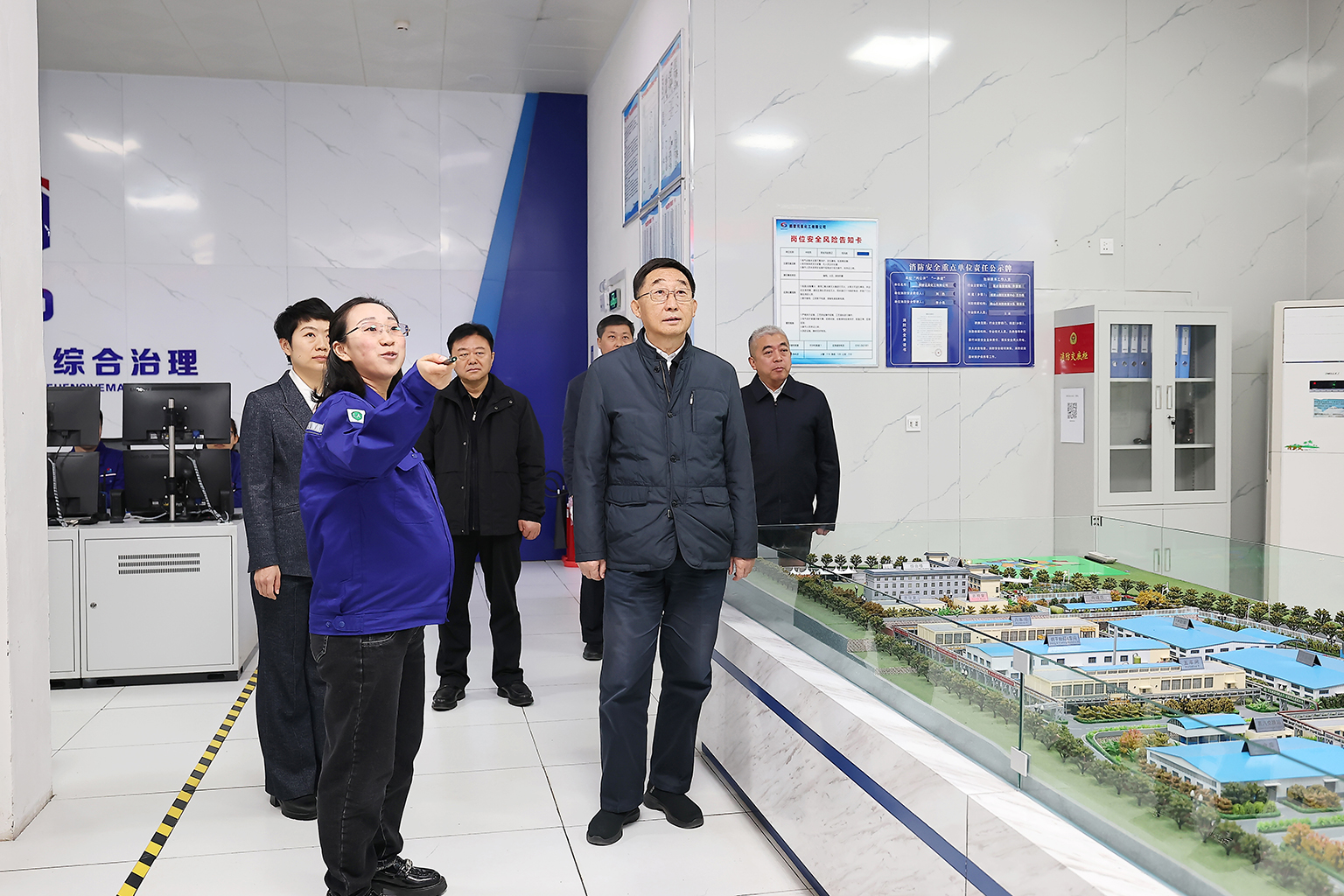
Group 1: Industry Development - Liu Ning emphasized the importance of integrating intelligent, green, and collaborative development in the chemical industry, urging companies to seize industrial development opportunities and strengthen technological research and development platforms to promote sustainable growth [2] - The focus on "Industrial Internet + Hazardous Chemical Safety Production" was highlighted during the visit to Hebi Yuanhao Chemical Co., Ltd., which specializes in the research and production of rubber additives [2] - At Meirui Technology (Henan) Co., Ltd., Liu Ning acknowledged the company's commitment to the full industrial chain development of polyurethane new materials and encouraged collaboration across the supply chain [2] Group 2: Safety and Environmental Standards - Liu Ning stressed the need to establish a safety development philosophy, implement corporate safety production responsibilities, and enhance the dual prevention mechanism for hazardous chemical enterprises [2] - The importance of advancing green and low-carbon technology and upgrading equipment was underscored, with a call to increase the supply of green and environmentally friendly products [2] - Liu Ning called for a focus on the "dual carbon" goals, promoting the transition to greener and newer production methods [2] Group 3: Community and Governance - Liu Ning visited community facilities to understand grassroots governance, emphasizing the need for effective resolution of various conflicts and enhancing community services [3] - The importance of prioritizing people's well-being and addressing the needs of vulnerable groups was highlighted, especially in ensuring the supply of essential goods during the winter [3] - Liu Ning called for a comprehensive understanding of the new development philosophy and the integration of technological and industrial innovation to foster emerging pillar industries [3]

【高端访谈】引租赁“活水”润绿色经济——专访兴业金租党委书记、董事长李小东
Zhong Guo Jin Rong Xin Xi Wang· 2025-12-20 09:01
Core Insights - Green leasing plays a significant role in China's transition to a green economy, with Xinyi Jinzuo being a pioneer in this sector, having invested over 300 billion yuan in green leasing over 15 years [1][2] Group 1: Company Development and Strategy - Xinyi Jinzuo has established a comprehensive green leasing business model, focusing on energy conservation and emission reduction as key areas since its inception [2] - The company has developed a product system that includes clean energy, pollution prevention, ecological restoration, and more, creating a virtuous cycle of funding, technology implementation, and environmental improvement [2][3] - The company aims to implement a "regional + industry" asset construction strategy to consolidate its existing business while exploring new growth areas in traditional and emerging industries [7] Group 2: Financial Performance and Market Position - As of November this year, Xinyi Jinzuo's green leasing asset balance is nearly 100 billion yuan, with cumulative investments exceeding 300 billion yuan, marking significant growth from 100 billion yuan in 2017 and 200 billion yuan in 2022 [2][3] - The company has successfully launched innovative financial products linked to carbon emissions, such as the first "carbon emission rights pledge" case, providing 180 million yuan in funding to a paper company [3] Group 3: Industry Challenges and Future Outlook - The green leasing market in China is projected to reach 10 trillion yuan by 2060, given a 10% penetration rate, indicating substantial growth potential [6] - Challenges include the lack of specific standards for green leasing, as existing standards primarily cater to banking, which may not fully address the unique attributes of leasing [6] - Xinyi Jinzuo plans to focus on sectors like renewable energy, traditional industry upgrades, and green logistics, while enhancing its capabilities in asset selection and management [4][5][7]

国四淘汰潮来袭!中国重汽预测:52万辆国四重卡待“消化”!多家商用车企对明年预期乐观
Mei Ri Jing Ji Xin Wen· 2025-12-20 08:29
Core Viewpoint - The upgrade of emission standards and safety regulations in China is raising the technical barriers in the commercial vehicle industry, leading to the accelerated elimination of outdated production capacity [1] Group 1: Market Trends and Regulations - The Ministry of Transport reported that 260,000 "National III" and "National IV" diesel trucks have been eliminated in the transportation sector as of the first half of this year [1] - The commercial vehicle market is experiencing structural growth driven by the old vehicle scrapping policy and the transition to new energy vehicles, with sales reaching 3.87 million units in the first 11 months of this year, a year-on-year increase of 10.4% [1] - The Central Economic Work Conference emphasized the need to optimize the implementation of policies for large-scale equipment updates and consumer goods replacement [1] Group 2: Company Projections and Sales Goals - China National Heavy Duty Truck Group aims for domestic sales of 340,000 units in 2026, with heavy truck sales projected at 170,000 units and light truck sales at 150,000 units [2] - The company forecasts a total sales volume of 450,000 units for 2025, representing a year-on-year growth of 25% [2] - Heavy truck sales are expected to grow by 33% to 150,000 units, while light truck sales are projected to increase by 29% to 120,000 units [2] Group 3: Export and Product Diversification - China National Heavy Duty Truck Group is expanding its export product range, with light truck exports expected to grow by 161% in 2025 and aftermarket parts sales projected to increase by 53% [3] - The company is enhancing its overseas marketing strategy for a full range of products, including mining trucks, pickups, and specialized vehicles [5] Group 4: Production Capacity and Challenges - The company has increased its monthly production capacity by 25% through adaptive modifications to production lines, achieving a daily production capacity of 1,300 units [6] - The company is facing delivery challenges due to rising domestic and export orders, necessitating a proactive sales forecasting approach [5] Group 5: New Energy Vehicle Strategy - The penetration rate of new energy vehicles in the heavy truck market is expected to reach 35% next year, driven by policy and market demands [7] - The company is committed to maintaining its presence in the traditional energy market while also advancing technology upgrades and ecological collaboration [8] Group 6: Future Goals and Financial Projections - By 2030, the company aims to achieve total revenue exceeding 400 billion yuan and vehicle sales surpassing 800,000 units, effectively doubling its performance compared to projected figures for 2025 [10]

推动金融“活水”精准灌溉工业绿色转型,需要做好哪些文章?
Ren Min Wang· 2025-12-20 08:18
Core Viewpoint - The issuance of the "Notice on Utilizing Green Financial Policies to Support the Construction of Green Factories" by the Ministry of Industry and Information Technology and the People's Bank of China aims to integrate green finance with industrial green manufacturing, providing strong support for high-quality development in the manufacturing sector [1]. Group 1: Green Finance and Industrial Transformation - The "Notice" establishes mechanisms to ensure financial services for green factories, focusing on risk prevention and funding support for green sectors [1]. - The document emphasizes the importance of directing funds towards clean energy, energy conservation, and green transportation, contributing to the transition towards a low-carbon economy [1]. Group 2: Investment Project Categories - The "Notice" identifies three key investment project categories: 1. Encouraging "incremental" projects focusing on R&D and industrial application of green low-carbon technologies [2]. 2. Addressing "stock" issues through technological upgrades to enhance energy efficiency and resource recycling [2]. 3. Promoting "reduction" by supporting zero-carbon factory construction projects [2]. Group 3: Collaborative Financial Support - A comprehensive green financial support system is necessary, involving collaboration among various stakeholders to ensure effective funding allocation [2]. - Financial institutions are encouraged to enhance support by optimizing internal management, streamlining approval processes, and developing suitable financial products [3]. Group 4: Role of Green Finance - Green finance is positioned as a crucial tool for converting ecological value into economic value, addressing the challenges of high investment and long return cycles in ecological protection [3]. - The continuous improvement of green financial systems in China is expected to inject momentum into industrial green manufacturing, promoting sustainable development [3].
11月我国规上工业发电量同比增长2.7%,天然气产量同比增长5.7%
Xinda Securities· 2025-12-20 07:12
Investment Rating - The investment rating for the utility sector is "Positive" [2] Core Insights - In November, the industrial power generation in China increased by 2.7% year-on-year, while natural gas production rose by 5.7% year-on-year [4] - The report indicates a potential for profit improvement and value reassessment in the power sector due to previous supply-demand tensions [4] - The ongoing market reforms in electricity pricing are expected to lead to a slight increase in electricity prices, benefiting power operators [4] Summary by Sections Market Performance - As of December 19, the utility sector declined by 0.6%, underperforming the broader market [11] - The electricity sector fell by 0.66%, while the gas sector saw a slight increase of 0.11% [12] Electricity Industry Data Tracking - The price of thermal coal at Qinhuangdao Port (Q5500) was 711 CNY/ton as of December 19, down 42 CNY/ton week-on-week [20] - Coal inventory at Qinhuangdao Port decreased to 7.28 million tons, a decline of 20,000 tons week-on-week [26] - The average daily coal consumption for inland power plants was 3.758 million tons, down 166,000 tons/day week-on-week [29] Natural Gas Industry Data Tracking - The LNG ex-factory price index in China was 4,075 CNY/ton as of December 18, down 10.91% year-on-year [55] - Domestic natural gas apparent consumption in October was 34.77 billion cubic meters, a decrease of 1.6% year-on-year [4] - In November, LNG imports reached 6.94 million tons, an increase of 12.8% year-on-year [4] Key Industry News - The report highlights that the industrial power generation maintained growth, with November's output at 779.2 billion kWh, a 2.7% increase year-on-year [4] - The natural gas production in November was 21.9 billion cubic meters, reflecting a stable growth trend [4] Investment Recommendations - For the electricity sector, it is suggested to focus on leading coal power companies such as Guodian Power, Huaneng International, and Huadian International [4] - In the natural gas sector, companies with low-cost long-term gas sources and receiving station assets are recommended, such as Xin'ao Co. and Guanghui Energy [4]
清陶云能 市场总监 盛健:瓦特和比特——AI时代绿色数据中心的储能电池需求
起点锂电· 2025-12-20 07:04
Core Viewpoint - The article discusses the importance of energy storage and battery technology in the context of the AI era, emphasizing the need for green data centers and efficient energy solutions to meet carbon reduction goals [2][6][29]. Group 1: Industry Trends and Challenges - The rapid growth of AI and data technologies is leading to an increase in data center power consumption, projected to reach 525.76 billion kWh by 2030, accounting for 2.4% of total social electricity consumption [6][8]. - Data centers face three main challenges: reliance on grid power leading to uncontrollable carbon emissions, inefficiencies in traditional power supply architectures, and excessive redundancy in power configurations [8][9][10]. Group 2: Solutions and Innovations - Solutions to these challenges include regional collaborative development to enhance green energy usage, the adoption of high-voltage direct current (HVDC) architectures to improve power efficiency, and integrating energy storage systems to optimize redundant configurations [9][10][11][15]. - The article highlights the role of solid-state lithium batteries in addressing these challenges, particularly in enhancing safety and efficiency in energy storage applications [21][28]. Group 3: Company Positioning and Advantages - The company, QingTao Energy, has developed semi-solid lithium iron phosphate batteries that are commercially viable and have been implemented in projects like the Inner Mongolia energy storage project [21][32]. - The advantages of lithium batteries include high energy density, compact size, and intelligent features that allow for precise monitoring of battery health, making them suitable for data center applications [26][23]. - The company emphasizes the importance of safety in energy solutions, particularly in the context of data centers and energy storage systems, ensuring that all innovations are grounded in safety considerations [29][30].
“交能融合”暨“新能源+”产业联盟在天津成立
Xin Lang Cai Jing· 2025-12-20 06:43
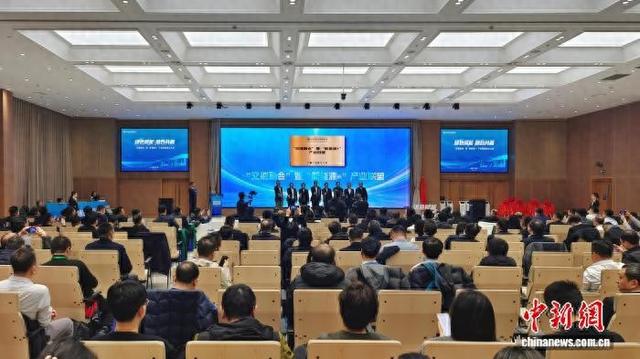
Group 1 - The "Transportation-Energy Integration" and "New Energy+" Industry Alliance was established in Tianjin to promote the deep integration of new energy with transportation, urban development, and industry, aiding in achieving carbon neutrality and green transformation goals [1][3] - The alliance is led by China Communications Construction Company Electromechanical Engineering Bureau and includes various stakeholders such as enterprises, financial institutions, universities, and research institutes, with over 400 representatives from more than 100 companies participating in the founding conference [3][4] - The establishment of the alliance is seen as a crucial step for Tianjin in promoting energy transition and industrial upgrading, aiming to create replicable and scalable new business models in smart energy economics [3][4] Group 2 - Strategic cooperation agreements were signed between China Communications Construction Company Electromechanical Engineering Bureau and local government entities, including the Tianjin Rail Transit Group, alongside the establishment of innovation laboratories [4] - A series of intelligent energy solutions were launched, including AI detection models, comprehensive energy management platforms, commercial energy storage products, and bladeless wind turbines [4] - The alliance plans to advance its initiatives in phases over the next three years, focusing on three main areas: "Transportation + New Energy," "Urban + New Energy," and "Industry + New Energy," with an emphasis on creating demonstration projects and building an industrial ecosystem [4]
“水电王国”四川 率先迈进“亿千瓦”时代丨川报早读
Xin Lang Cai Jing· 2025-12-19 22:31
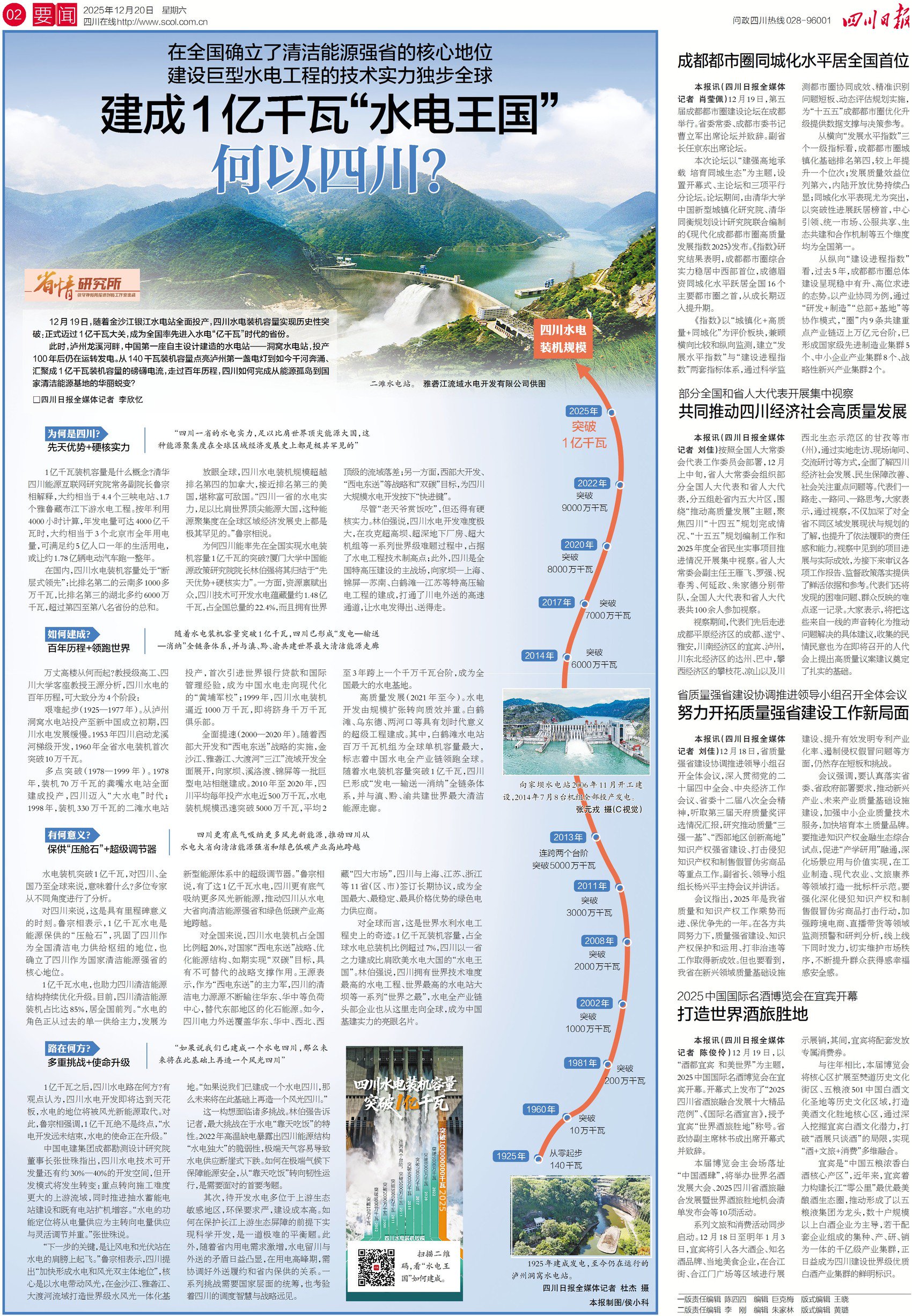
Core Insights - Sichuan province has officially surpassed 100 million kilowatts in hydropower installed capacity, becoming the first province in China to enter the "100 million kilowatt" era in hydropower generation [1][4] - This capacity is equivalent to 4.4 Three Gorges dams, with an annual generation potential of 400 billion kilowatt-hours, sufficient to meet the electricity needs of 500 million people for a year or power 178 million electric vehicles for a year [1] - Sichuan's hydropower development has grown over 700,000 times since the first hydropower station was established, showcasing its significant advancements in hydropower engineering technology [1][8] Resource Endowment and Historical Development - Sichuan has the largest technically exploitable hydropower resources in China, estimated at approximately 148 million kilowatts [1] - The province's hydropower development began slowly in the early years of the People's Republic of China, with significant milestones achieved from 1978 to 1999, marking the transition to a "large hydropower" era [4] - Major hydropower stations, such as Gongzui and Ertan, were completed during this period, contributing to the rapid increase in installed capacity [4] Strategic Importance and Future Directions - The achievement of 100 million kilowatts is seen as a milestone for Sichuan, reinforcing its position as a clean energy hub in China and supporting the national "West-East Power Transmission" strategy [6] - Sichuan's clean energy structure is currently 85% hydropower, and the province aims to further integrate wind and solar energy into its energy mix, creating a "Wind and Solar Sichuan" [5][6] - Experts suggest that while hydropower development may face limitations, there remains 30-40% of exploitable capacity, with a shift towards more challenging upstream projects and energy storage solutions [4][5] Challenges and Considerations - The reliance on hydropower poses risks, particularly in extreme weather conditions, which can lead to significant fluctuations in energy supply [6][7] - Environmental concerns and high construction costs in ecologically sensitive areas present challenges for future hydropower development [7] - Balancing local electricity demand with the need to export power during peak periods is becoming increasingly complex, necessitating strategic planning and coordination at the national level [7]
建成1亿千瓦“水电王国” 何以四川?
Xin Lang Cai Jing· 2025-12-19 22:31
四川水电 装机规模 2025年 突破 1亿千瓦 2013年 连跨两个台阶 突破5000万千瓦 2011年 突破 3000万千瓦 2008年 突破 2000万千瓦 2002年 突破 1000万千瓦 1981年 突破 200万千瓦 1960年 突破 10万千瓦 从零起步 1925年 140千瓦 1925年建成发电,至今仍在运行的 泸州洞窝水电站。 四川日报全媒体记者 杜杰 摄 本报制图/侯小科 2022年 突破 9000万千瓦 2020年 突破 8000 万十四 2017年 突破 7000万千瓦 突破 2014年 6000万千瓦 HE TISTANT 向家坝水电站2006年11月开工建 设,2014年7月8台机组全部投产发电。 张元戎 摄(C视觉) □四川日报全媒体记者 李欣忆 12月19日,随着金沙江银江水电站全面投产,四川水电装机容量实现历史性突破:正式迈过1亿千瓦大关,成为全 国率先进入水电"亿千瓦"时代的省份。 此时,泸州龙溪河畔,中国第一座自主设计建造的水电站——洞窝水电站,投产100年后仍在运转发电。从140千 瓦装机容量点亮泸州第一盏电灯到如今千河奔涌、汇聚成1亿千瓦装机容量的磅礴电流,走过百年历程 ...

国务院部署开展固体废物综合治理行动
Xin Lang Cai Jing· 2025-12-19 20:27
Group 1 - The State Council has deployed a comprehensive solid waste management action plan to curb the growth of solid waste and promote resource utilization and recycling [1][2] - The "14th Five-Year Plan" emphasizes improving resource management and waste classification to support the development of a circular economy [1] - The meeting aims to establish a comprehensive solid waste management system that prioritizes waste reduction, resource recovery, and harmless disposal, particularly for waste closely related to public safety and living conditions [1] Group 2 - Under the "dual carbon" goals, the economic value of solid waste is increasingly recognized, with resource utilization at its core driving the development of the circular economy [2] - By the end of 2024, approximately 150,000 waste recycling points and 1,800 sorting centers are expected to be established, with a target utilization rate of 59% for seven major types of solid waste, an increase of 3 percentage points from 2020 [2] - The meeting emphasizes the need for a long-term management mechanism that holds polluters accountable and enhances infrastructure for harmless storage, transportation, and disposal of solid waste [2]