商业航天

Search documents
我国商业航天火箭将加速升级,行业迎来多重共振
Xuan Gu Bao· 2026-01-29 14:38
Industry Overview - China Aerospace Science and Technology Corporation plans to enhance commercial launch capabilities by developing internationally competitive commercial launch vehicles for regular transportation [1] - The goal includes achieving reusable rocket capabilities for near-Earth orbit with a capacity of 20 tons and completing heavy-lift rocket development with a capacity of 100 tons for near-Earth orbit [1] - The commercial space industry in China faces a long-standing issue of "many satellites but few rockets," which limits the deployment of satellite networks [1] Market Dynamics - By 2026, the industry is expected to experience a convergence of technological advancements, order releases, and capital appreciation [1] - The upcoming launches of reusable rockets such as Long March 10 and Zhuque-3 will coincide with SpaceX's Starship V3 test flight in early 2026, marking a strategic acceleration for China's commercial space sector [1] Company Insights - Chaojie Co., Ltd. specializes in manufacturing structural components for commercial rockets, including major sections, fairings, fuel tanks, and engine valves, serving leading private aerospace companies in China [1] - Dongfang Risen has successfully delivered small batches of its P-type ultra-thin HJT solar cells for rollable satellite solar wings in Europe and North America [1]

晚报 | 1月30日主题前瞻
Xuan Gu Bao· 2026-01-29 14:26
Group 1: Tourism - The State Council has issued a plan to accelerate the cultivation of new growth points in service consumption, emphasizing travel services and encouraging the development of travel destination cities [1] - Leading tourism companies are expected to benefit from policy support, with anticipated short-term gains and long-term performance growth due to increased employee cultural and sports consumption [1] - Policies are projected to bring an annual increase of 50 billion to 165 billion yuan to the domestic tourism market by 2026, significantly boosting industry growth [1] Group 2: Commercial Aerospace - The China Aerospace Science and Technology Corporation plans to enhance commercial launch capabilities, aiming to develop internationally competitive commercial rockets for regular transportation [2] - The company aims to achieve reusable rocket capabilities for 20-ton payloads in low Earth orbit and complete the development of heavy-lift rockets capable of delivering 100 tons to orbit [2] - The commercial aerospace sector is expected to experience a convergence of technological advancements, order releases, and capital appreciation by 2026, marking a strategic acceleration in the industry [2] Group 3: Robotics - Beijing has launched its first humanoid robot testing and verification platform, which includes production lines and testing laboratories for humanoid robots [3] - The rise in humanoid robot sales is expected to lead to a gradual decrease in prices, with potential cost reductions for products like Tesla's humanoid robot [3] - Companies with strong manufacturing and management capabilities in related sectors are likely to capture higher market shares as the industry expands [3] Group 4: Dyes - Domestic dye prices have been rising, with disperse dyes averaging 19 yuan per kilogram and reactive dyes at 23 yuan per kilogram as of January 29 [4] - The price increase is attributed to surging costs of key upstream raw materials and the optimization of industry structure, benefiting leading companies [4] - The current market dynamics suggest a potential turning point for the chemical industry, particularly in the dye sector, driven by improved supply-demand relationships [4] Group 5: Antiferromagnetic Materials - Researchers at Fudan University have discovered a new class of low-dimensional antiferromagnetic materials that can flip uniformly under a magnetic field, enhancing their usability [5] - Antiferromagnetic materials are expected to play a crucial role in next-generation information storage and processing technologies due to their fast response times and low energy consumption [5] - The development of new material systems, including two-dimensional antiferromagnetic materials, is anticipated to broaden applications in fields like spintronics and quantum computing [5]


科技向善凝共识!AI治理登顶“2025十大科技热词”榜首
Nan Fang Du Shi Bao· 2026-01-29 13:37
Group 1: AI Governance - The term "AI governance" ranks first among the "Top Ten Technology Buzzwords" for 2025, indicating a recognition within the Chinese tech community that technological excellence must align with governance wisdom for sustainable development [1] - The emphasis on AI governance reflects public concerns regarding AI ethics and safety, marking a global shift from "technology catching up" to "rule shaping" [1][2] - AI governance is described as a systematic project that integrates technological control, legal regulations, industry collaboration, and public education, aiming to guide AI development in alignment with human common interests [1] Group 2: Emerging Technologies - "Embodied intelligence" is included in the government work report for the first time in 2025, signaling a positive policy direction aimed at advancing AI technology and fostering new industrial development [4] - The International Thermonuclear Experimental Reactor (ITER) organization announced a milestone achievement in controlled nuclear fusion technology, with China playing a crucial role in this international collaboration [5] - Significant progress has been made in the brain-computer interface industry in 2025, with breakthroughs in core technologies and applications, laying a solid foundation for large-scale development [6] Group 3: Commercial Space and Deep Technologies - China's commercial space industry has gained attention, with operational capabilities established at various launch sites and a growing number of private rocket companies achieving successful launches [7] - "Deep-sea technology" is highlighted in the government work report as a new industry to be promoted, particularly in the context of the Hainan Free Trade Port [8] - The successful launch of the Tianwen-2 probe marks a significant step in China's deep space exploration efforts, following previous lunar and Mars missions [9] Group 4: Aging Population and Smart Technology - The intersection of aging population and technological revolution is driving innovation in "silver economy" technologies, with the establishment of a technology park in Shanghai aimed at enhancing elderly care services [10] - 2025 is projected to be the year of industrialization for "intelligent agents," with IDC predicting that by 2026, about 50% of data teams in China's top 500 companies will utilize intelligent agents for data preparation and analysis [11] Group 5: Innovation Recognition - "Chinese innovation" is recognized as a global buzzword in 2025, with China's innovation index ranking among the top ten worldwide, showcasing remarkable achievements in technology [12]
航天科技1月29日全情报分析报告:「池州构建商业航天产业生态」对股价有积极影响
36氪· 2026-01-29 13:31
以下文章来源于36氪企业舆情报告 ,作者36氪 36氪企业舆情报告 . 舆情大数据,帮你看清市场全貌、看懂涨跌原因。 航天科技公司日报 来源| 36氪企业舆情报告(ID:EV36kr) 航天科技1月29日放 量上涨9.98% 28.09 +2.55 +9.98% 昨日收盘价25.54;当日收盘价:28.09 当日开盘价25.54;交易量139.77万手 换手率17.51%;放量幅度2.69% 3日涨幅 +11.20% ;5日涨幅 +5.6% 成交额:38.36亿;总市值:224.21亿 较过去一年的平均收盘价 +0.76% ;较过去一年的日均交易量 -0.97% " 池州构建商业航天产业生态 " 舆情分析 |事件正负面性质分析 截止1月29日,此事件匹配的到全网舆情信息总量为 203条 ,正面信息 145条 ,占比 71.4% ,负面信息 0条 ,占比 0.0% ,中性信息 58条 ,占比 28.6% , 事件舆论呈现出显著正面的倾向 。 |渠道传播分析 该事件全网传播篇次为 203 条 ,事件主要传播渠道为今日头条平台,传播篇次 16条 ,占比 7.88% 。 近期舆情影响力排名 |事件影响分析 技术创新影 ...

保利联合(002037.SZ):目前公司开展的业务与商业航天领域无关联,也暂无军工产品的生产、销售等
Ge Long Hui· 2026-01-29 13:18
Core Viewpoint - Poly United (002037.SZ) primarily engages in the production and sales of civil explosives and blasting engineering services, with no current involvement in the commercial aerospace sector or military products [1] Group 1 - The company's main business activities include the production and sale of civil explosives [1] - The company provides blasting engineering services as part of its core operations [1] - There is no current association with the commercial aerospace field in the company's business activities [1] Group 2 - The company does not produce or sell military products at this time [1]

光弘科技:公司子公司AC公司目前正在导入相关领域客户,有望在年内涉足航天航空领域
Mei Ri Jing Ji Xin Wen· 2026-01-29 13:12
Core Viewpoint - The company, Guanghong Technology, is exploring opportunities in the commercial aerospace sector, indicating a potential expansion of its business into this rapidly growing field [1]. Group 1: Company Overview - Guanghong Technology (300735.SZ) is a professional electronic manufacturing service provider, with its current business primarily focused on various sectors including consumer electronics, automotive electronics, servers and computing power, new energy, industrial control, and medical electronics [1]. Group 2: Aerospace Sector Engagement - The commercial aerospace industry has been developing rapidly, encompassing spacecraft manufacturing, launch services, ground equipment manufacturing, and spacecraft services, all of which rely on specialized industrial manufacturing [1]. - The company's subsidiary, AC Company, is currently onboarding clients in the aerospace sector and is expected to enter the aerospace field within the year [1].

中国和菲律宾就涉海等问题举行双边对话
券商中国· 2026-01-29 13:02
公众号截图 来源:边海纵横微信公众号 2026年1月29日,外交部边海司司长侯艳琪同菲律宾外交部副部长艾雷拉-林、部长助理兼亚太司司长阿尔费雷 斯在菲律宾宿务举行双边会见。双方就涉海等共同关心的问题坦诚深入交换意见,同意继续通过外交渠道保持 沟通。 突发!超2900架次航班,紧急取消!这一品种狂飙70%!特大风暴,突袭美国 跨界并购!牛股尾盘,封死涨停!A股又一信号闪现 尾盘异动!A股,三大信号"闪现" 违法和不良信息举报电话:0755-83514034 邮箱:bwb@stcn.com 责 编:汪 云 鹏 校 对: 王 锦 程 百万用户都在看 利好突袭!马斯克,重大宣布!欧盟也有大动作!事关商业航天 直线拉升!光刻机巨头,传来重磅利好!AI,再度引爆! ...

最新指示!不能喜新厌旧
Datayes· 2026-01-29 12:30
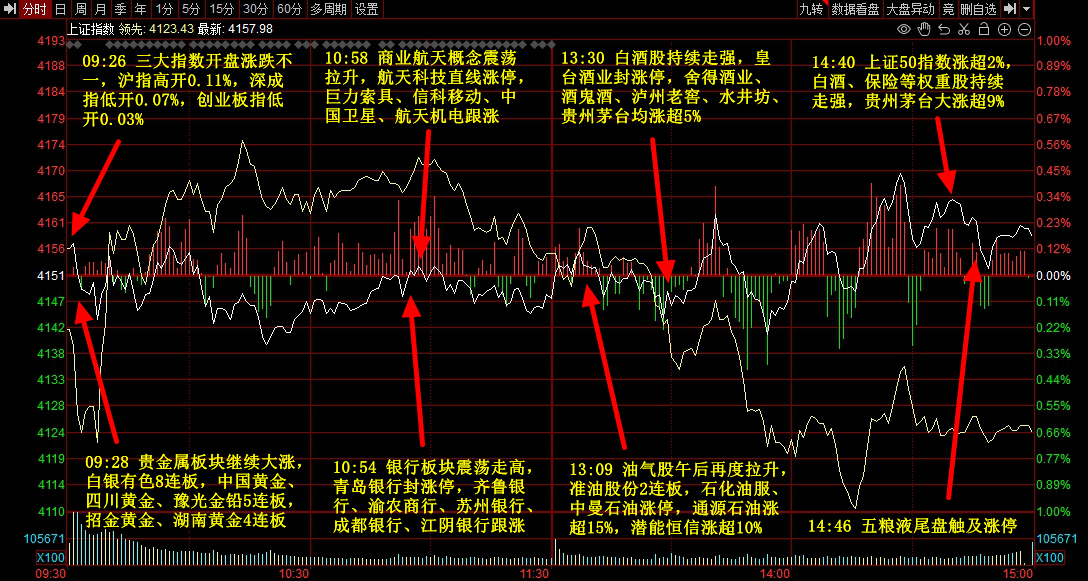
Core Viewpoint - The article discusses the recent surge in the price of Moutai liquor, highlighting its significant market impact and the factors contributing to this price increase, including demand dynamics and company strategies [4][7]. Moutai Price Dynamics - Moutai's "Flying Moutai" price has risen to approximately 1610 RMB per bottle, marking a 20 RMB increase from previous levels, with wholesale prices stabilizing after a 23-month decline [4]. - The price increase is attributed to pre-holiday stockpiling by retailers and Moutai's controlled supply strategy, rather than a sudden spike in market demand [4]. - Analysts suggest that if the wholesale price reaches 2000 RMB per bottle, Moutai could achieve a price increase of about 30%, which would positively impact the company's profitability [7]. Market Performance - On January 29, the A-share market showed mixed results, with the Shanghai Composite Index rising by 0.16% while the Shenzhen Component and ChiNext indices fell by 0.30% and 0.57%, respectively [12]. - The total trading volume across the three markets was approximately 32.6 billion RMB, indicating a significant increase in trading activity compared to the previous day [12]. - The precious metals sector, particularly gold and silver, experienced notable gains, with gold prices surpassing 5600 USD per ounce [12]. Real Estate Sector Insights - The real estate sector is expected to perform well ahead of the upcoming political meetings, as indicated by Morgan Stanley's research, despite the lack of new regulatory announcements [11]. - The government has introduced a plan to promote service consumption growth, which includes initiatives to revitalize rural real estate and improve infrastructure for travel destinations [18]. Oil Services Sector - WTI crude oil prices have reached approximately 65 USD per barrel, marking a significant increase, while Brent crude has also surpassed 70 USD per barrel [19]. - The oil services sector is benefiting from rising oil prices, with companies in this sector showing strong performance in the stock market [19]. Company Earnings Forecasts - Several companies have announced optimistic earnings forecasts for 2025, with expected net profits for Jiangbolong projected to grow by 150.66% to 210.82% year-on-year [20]. - Other companies, such as BlueFocus and Sichuan Gold, also anticipate substantial profit increases, indicating a positive outlook for various sectors [20].

2月金股报告:指数震荡,行业关注资源、出海、科技
ZHONGTAI SECURITIES· 2026-01-29 11:18
Group 1 - The report indicates that the A-share market is experiencing a typical spring rally characterized by initial strength followed by stabilization and structural differentiation, with major indices recording positive returns as of January 28, 2026 [6] - The average daily trading volume in January reached 3.04 trillion yuan, an increase of 1.16 trillion yuan month-on-month, indicating a significant influx of new capital and a loose liquidity environment driving the index upward [2] - Regulatory measures, including raising the minimum margin requirement from 80% to 100%, have led to fluctuations in market sentiment and a deceleration in the index's upward momentum [3] Group 2 - The report highlights that technology assets are experiencing a rotation between thematic and cyclical investments, with thematic investments (e.g., commercial aerospace, AI applications) initially favored but cooling off due to increased margin requirements [4] - In the cyclical sector, non-ferrous metals, basic chemicals, and oil & petrochemicals have shown strong performance driven by three factors: demand from high-end manufacturing, proactive supply-side adjustments, and external geopolitical risks [4] - The report anticipates a structural market characterized by a focus on "resources + technology + overseas expansion," with low-risk preference assets potentially outperforming in certain phases [5] Group 3 - The investment strategy emphasizes focusing on "external demand cyclical + AI industry chain," highlighting the potential for global manufacturing recovery to support resource prices and opportunities for Chinese manufacturing to expand overseas [5] - The AI industry remains a clear investment theme, with a shift from thematic to performance-driven investments, particularly in areas with supply shortages such as power supply and semiconductor sectors [5] - The report recommends a selection of stocks across various sectors, including Invesco's Nonferrous ETF, Dongpeng Beverage, and Huazhong Precision, among others, reflecting a diversified investment approach [10]




谨慎调仓?
第一财经· 2026-01-29 10:53
Core Viewpoint - The A-share market is experiencing volatility with a divergence between large-cap and small-cap stocks, indicating a cautious sentiment among investors as they prepare for the upcoming holiday season [4][7]. Market Performance - The Shanghai Composite Index showed a slight increase of 0.16%, while the overall market saw 1,801 stocks rise and 39 stocks hit the daily limit up, contrasting with 36 stocks that hit the limit down [5][6]. - The trading volume in both markets reached 0.23 trillion yuan, reflecting an 8.92% increase, suggesting heightened market activity and significant trading disputes between bulls and bears [7]. Capital Flow - There is a notable outflow of institutional funds, while retail investors are showing a net inflow, indicating a shift in investment strategies. Institutions are moving away from high-valuation growth sectors like semiconductors and new energy, while increasing positions in defensive sectors such as liquor, precious metals, and high-dividend financial blue chips [8]. - Retail investors are generally adopting a wait-and-see approach, with many choosing to hold cash during the holiday, while a small number are following trends in liquor and precious metals [8]. Investor Sentiment - The sentiment among retail investors is cautious, with 36.45% increasing their positions, 18.28% reducing them, and 36.45% remaining inactive [13]. - A significant portion of investors (45.95%) reported being in a position of profit, while 37.16% are facing losses of up to 20% [19].