
算力

Search documents
顺网科技:近年来持续投入算力和人工智能业务
Quan Jing Wang· 2025-11-05 00:57
Core Viewpoint - Shunwang Technology is actively seeking high-quality investment projects that align with its strategic development while emphasizing investment risk control [1] Group 1 - The company has been continuously investing in computing power and artificial intelligence businesses in recent years [1] - Shunwang Technology plans to maintain its investment in these areas moving forward [1]

认清差距,美股七大科技企业总市值已比中国经济规模高很多
Xin Lang Cai Jing· 2025-11-04 16:45
Core Insights - The market capitalization of the seven major U.S. tech giants has surpassed $22.2 trillion, highlighting a significant shift in global economic power dynamics [1][2] - Nvidia's market value has exceeded $5 trillion, surpassing Japan's GDP, symbolizing a new economic paradigm [5][8] - The combined market capitalization of these tech giants exceeds China's GDP by approximately 15% [3][8] Group 1: Economic Disparities - The market values of China, Japan, and European economies lag behind those of tech companies, revealing a disconnect between national growth logic and technological innovation returns [8][12] - Japan's economic stagnation is characterized by an aging population and a lack of global network effects, leading to a situation where corporate valuations surpass GDP [9] - China possesses a wealth of tech talent but lacks platform-level enterprises, exacerbated by Huawei's restrictions and a deficiency in AI computing ecosystems [10][11] Group 2: The Rise of Digital Sovereignty - The "tech seven" have established a new form of power based on global data control, computational dominance, and capital accumulation, which transcends traditional national boundaries [3][4] - The competition is shifting from "nation against nation" to a coalition of "nations plus tech giants" [4] Group 3: Nvidia's Dominance - Nvidia's rise is attributed to three core factors: the critical importance of computational power in the AI era, the establishment of software barriers that create a global moat, and the capital frenzy surrounding AI investments [6][7] - Nvidia is positioned not merely as a chip manufacturer but as a new global infrastructure entity, controlling the "world's cognitive engine" [7] Group 4: Systemic Risks and Inequality - The misalignment between tech giants and national economic power introduces both unprecedented innovation and potential dangers, such as financialization risks and the concentration of wealth among super enterprises [13][14] - The increasing capital returns compared to labor income may exacerbate social inequality, leading to heightened risks of societal fragmentation [14] - The future of global competition and fairness is at stake, as the dominance of tech giants raises questions about governance and economic security [14]







【公告全知道】钍基熔盐堆+可控核聚变+芯片+核电+第三代半导体+光伏!公司核电设备供应堆型包括钍基熔盐堆
财联社· 2025-11-04 15:37
Group 1 - The article highlights the importance of tracking major announcements in the stock market, including suspensions, investments, acquisitions, and performance reports, to identify investment opportunities and mitigate risks [1] - The company is involved in various advanced nuclear technologies, including thorium molten salt reactors and controlled nuclear fusion, positioning itself as a key player in the nuclear power sector [1] - The company participates in the International Thermonuclear Experimental Reactor (ITER) project, contributing significant technological equipment for nuclear power [1] Group 2 - The company has signed a memorandum of understanding for a 5GWh grid-level battery energy storage system, indicating its engagement in energy storage solutions [1]

主动权益型规模显著增长,业绩比较基准改革落地:——2025Q3公募基金季报分析暨基金市场周报20251104-20251104
EBSCN· 2025-11-04 12:53
1. Report Industry Investment Rating - There is no information provided regarding the report industry investment rating. 2. Core Viewpoints of the Report - In Q3 2025, the overall scale of public - offering funds continued to rise, with a 6.61% increase compared to the previous quarter and a 14.36% increase year - on - year. QDII and stock - hybrid funds were the main drivers of the scale growth [1][11]. - The scale of active equity funds increased significantly in Q3 2025, with the scale of active stock - biased funds rising by 20.57% quarter - on - quarter. Their stock positions continued to rise, and they increased their allocation to the STAR Market and ChiNext, while reducing their allocation to the Main Board [1][21]. - The reform of the performance comparison benchmark has been implemented, and the performance deviation of funds in Q3 has shown a convergence trend [3][61]. 3. Summary According to the Directory 3.1 2025 Q3 Public - Offering Fund Quarterly Report Analysis 3.1.1 Public - Offering Funds - The overall scale of public - offering funds reached 36.7 trillion yuan by the end of Q3 2025, with QDII, stock - type, and hybrid - type funds driving the growth, while the growth of fixed - income products was limited [11]. - After stripping out the impact of fund net value increases, some bond - type products maintained high allocation willingness, the enthusiasm for overseas asset allocation remained high, passive equity products in stock - hybrid funds were more attractive, and the shares of active equity funds shrank [15]. 3.1.2 Active Stock - Biased Funds - **Asset Allocation**: The median stock position of active stock - biased funds continued to rise, reaching 91.45%, at the 97.70% quantile since 2015 and the 96.40% quantile since 2019 [24]. - **Holding Sectors**: Active funds increased their allocation to the STAR Market and ChiNext and mainly reduced their allocation to the Main Board [28]. - **Industry Allocation**: They mainly increased their positions in the TMT and new energy sectors, with strong active allocation willingness in the electronics, communication, and retail sectors. After excluding market impacts, the sectors with the most obvious increase in positions were electronics, communication, etc., while the sectors with more reductions were banks, automobiles, etc. [30][32]. - **Concept Hotspots**: The allocation market value in the AI and computing power fields increased significantly, while the main directions of reduction were banks, cross - border payments, etc. [35]. - **Heavy - Holding Stocks**: The top 5 companies with the highest market value of holdings were CATL, Tencent Holdings (H), etc. The concentration of the top 20 holdings increased significantly, and the holdings tended to be concentrated. Industrial Fupeng, Zhongji Innolight, etc. were favored by investors [38]. - **Degree of Herding**: The investment main line was clear, and the herding trend of active stock - biased funds increased significantly [42]. 3.1.3 Asset Allocation Views of Active Fund Managers at the End of Q3 - **Balanced Allocation**: Future investment may focus on stock selection to find alpha, and pay attention to both dividend value and quality growth styles [46]. - **Technology Growth**: Be optimistic about the long - term semiconductor industry trend, but also pay attention to the mean - reversion pressure after the valuation expansion cycle [48]. - **Dividend Low - Volatility**: The trough of the cycle often corresponds to low valuations and good long - term returns, and be optimistic about undervalued assets and dividend stocks [51]. - **Cyclical Resource Products**: Pay attention to the supply - demand contradictions brought about by "resource nationalism" and focus on resource - themed investments [53]. - **Consumption and Medicine**: The improvement of the consumption situation needs positive signals, and innovative drugs are still the main line of pharmaceutical investment [55]. - **Gold**: The price is expected to remain high under the background of resource protectionism [58]. 3.1.4 Performance Comparison Benchmark Reform - The reform of the performance comparison benchmark for public - offering funds has been implemented, and active stock - biased funds in Q3 showed the characteristics of "diversified benchmarks and concentrated performance" [61]. 3.2 Market Performance Overview 3.2.1 Performance of Major Asset Classes - In the week of October 27 - 31, 2025, the domestic equity market index fluctuated and diverged, with the CSI 500 rising 1% and the gold price correcting [68]. 3.2.2 Industry Index Performance - In the same week, the power equipment, non - ferrous metals, and steel industries led the gains, while the communication, beauty care, and banking industries led the losses [72]. 3.2.3 Fund Market Performance - In the same week, the net values of all types of funds rose, with first - level hybrid bond funds performing the best [74]. 3.3 Fund Product Issuance Situation 3.3.1 Newly Established Funds - In the week, 64 new funds were established in the domestic market, with a total issuance share of 45.52 billion shares. The fund with the largest issuance share was Huatai - Peregrine Yingtai Stable 3 - Month Holding A [79].



高位波动后止跌企稳?新易盛逆市收涨,创业板人工智能ETF(159363)频获资金加仓,看多逻辑有哪些?
Xin Lang Ji Jin· 2025-11-04 11:39
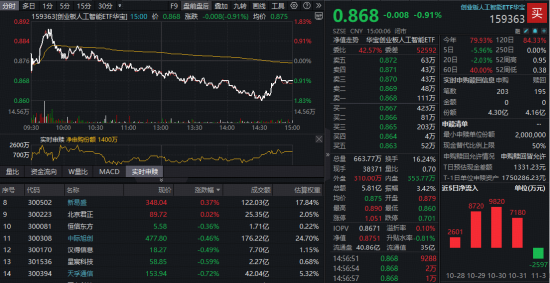
Core Viewpoint - The A-share market experienced a volume contraction and a pullback in the artificial intelligence (AI) sector, with the ChiNext AI index falling by 0.89%, while other AI indices showed resilience [1] Group 1: Market Performance - The ChiNext AI ETF (159363) saw a decline of 0.91% with a trading volume of 581 million yuan, despite a net subscription of 14 million units on the same day, accumulating over 250 million yuan in the past five days, leading among similar products [1][3] - The AI application sector showed localized activity, with BlueFocus leading gains over 3%, while Mango Excellent Media and Runhe Software also saw increases [1] Group 2: Industry Developments - A significant development in the computing power sector occurred with Amazon Web Services (AWS) signing a $38 billion (approximately 270 billion yuan) partnership with OpenAI, marking a historic collaboration between a leading cloud computing company and an AI giant [3] - The North American cloud service providers (Microsoft, Amazon, Meta, and Google, collectively known as MAMG) reported a 68% year-on-year increase in capital expenditures, reaching $96.4 billion in Q3 2025, with an expected annual capital expenditure of $363.3 billion, a 63% increase [3][4] Group 3: Future Outlook - Despite short-term performance fluctuations, the long-term outlook for computing power hardware remains positive, driven by key indicators such as CAPEX, token consumption, and ARR [4] - The light communication industry is expected to maintain a high level of prosperity in the AI era, with leading companies likely to strengthen their positions through technological innovation and next-generation technology research [4] - The ChiNext AI ETF (159363) is highlighted as a key investment opportunity, with over 70% of its portfolio allocated to computing power and over 20% to AI applications, effectively capturing AI market trends [4]
通信行业周观点:英伟达公布芯片出货预期,北美云商财报表现亮眼-20251104
Changjiang Securities· 2025-11-04 10:41
Investment Rating - The report maintains a "Positive" investment rating for the communication industry [11]. Core Insights - In the 44th week of 2025, the communication sector experienced a decline of 3.77%, ranking 32nd among primary industries in the Yangtze River region. However, since the beginning of 2025, the sector has risen by 61.65%, ranking 2nd among primary industries [2][6]. - NVIDIA announced that it expects to ship approximately 20 million units of its Blackwell and Rubin series GPUs, raising its sales guidance for GPUs to over $500 billion for the next five quarters. The company also revealed several collaborations for computing power development [2][9]. - The financial performance of the four major cloud service providers in North America was strong, with continued increases in capital expenditures and accelerated global computing investments [2][8]. Summary by Sections Market Performance - The communication sector's performance in the 44th week of 2025 showed a decline of 3.77%, while it has increased by 61.65% since the start of the year [2][6]. - Among companies with a market capitalization above 8 billion, the top three gainers were Guodun Quantum (+38.4%), LianTe Technology (+20.7%), and Kesi Technology (+13.5%). The top three decliners were Kehua Data (-17.3%), Dekeli (-13.9%), and Huafeng Technology (-13.7%) [6]. NVIDIA's GPU Forecast - At GTC 2025, NVIDIA projected that the combined shipments of its Blackwell and Rubin series GPUs would reach around 20 million units, significantly higher than the 4 million units of the previous Hopper series. The company is also collaborating with Oracle and the U.S. Department of Energy to build supercomputing systems with a total computing power of approximately 2200 EFLOPS, expected to be operational in the first half of 2026 [7][9]. North American Cloud Providers' Financials - Google reported Q3 2025 revenue of $102.35 billion, a year-on-year increase of 16%, with cloud revenue up 34% to $15.16 billion. Capital expenditures were raised to $91-93 billion [8][24]. - Meta's Q3 2025 revenue was $51.24 billion, up 26% year-on-year, with capital expenditures adjusted to $70-72 billion [8][24]. - Microsoft's Q3 2025 revenue reached $77.67 billion, a year-on-year increase of 18%, with Azure services growing by 40% [8][24]. - Amazon's Q3 2025 revenue was $180.17 billion, up 13% year-on-year, with AWS revenue increasing by 20% [8][24]. Investment Recommendations - The report recommends several companies based on their sectors: - Telecom Operators: China Mobile, China Telecom, China Unicom - Optical Modules: Zhongji Xuchuang, Xinyi Sheng, Tianfu Communication - Liquid Cooling: Yingweike - Hollow Core Fiber: Fenghuo Communication, Hengtong Optic-Electric - Domestic Computing: Runze Technology, Guanghuan New Network - AI Applications: Boshi Jie, Heertai - Satellite Applications: Huace Navigation, Haige Communication [9].

流光溢彩,智算成城——从三季报看通信如何布局?
Mei Ri Jing Ji Xin Wen· 2025-11-04 09:13
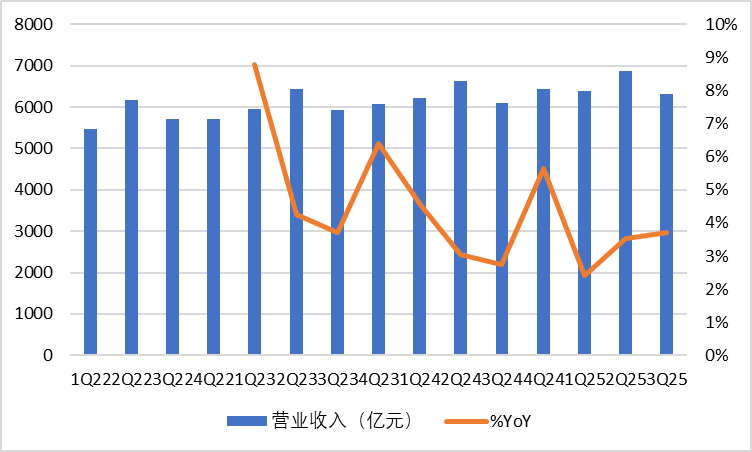
Core Viewpoint - The communication industry is experiencing an upward trend driven by the powerful engine derived from the AI wave, with significant performance differentiation across various segments [1]. Communication Industry Summary - In Q3 2025, the total revenue reached 632.1 billion yuan, representing a year-over-year increase of 3.7% [2]. - The net profit for the same quarter was 60.305 billion yuan, showing a year-over-year growth of 12.3% [2]. - Profitability metrics for Q3 2025 indicated a gross margin of 27.97% and a net margin of 9.54%, with a gross margin decrease of 0.40 percentage points and a net margin increase of 0.73 percentage points year-over-year [2]. Optical Module Industry Summary - The Wind Optical Module Concept Index reported a revenue of 29.590 billion yuan in Q3 2025, reflecting a year-over-year increase of 56.0% [5]. - The net profit for the optical module sector in Q3 2025 was 7.336 billion yuan, which is a remarkable year-over-year increase of 118.8% [6]. - Profitability for the optical module sector showed a gross margin of 39.07% and a net margin of 24.79%, with increases of 5.59 percentage points and 7.12 percentage points year-over-year, respectively [7]. Inventory Insights - As of the end of Q3 2025, the inventory balance stood at 33.212 billion yuan, marking a year-over-year increase of 47.6% and a quarter-over-quarter increase of 7.44% [8]. Investment Opportunities - Investors are encouraged to consider the communication ETF (515880) and the ChiNext AI ETF (159388) as potential investment vehicles in light of the strong performance in the optical module sector [1].
四中全会精神在基层|Vlog:给AI供能,离不开这个“力”!
Xin Hua She· 2025-11-04 07:50
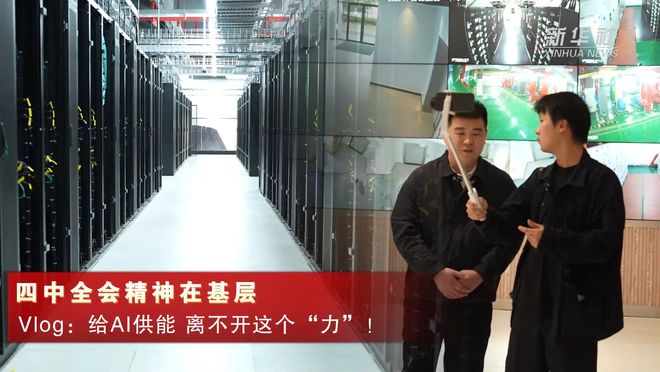
Core Viewpoint - Anhui Province's Suzhou City is accelerating the optimization and adjustment of its industrial structure, actively laying out the computing power industry to support the Yangtze River Delta region [2] Group 1 - Suzhou City has established key projects such as the Huaihai Artificial Intelligence Computing Center, Bianshui Scientific Computing Center, Computing Power Interconnection Intelligent Computing Center, and Guochuang Intelligent Computing Center [2]
破解“算不起、算不了、算不完”难题 孝感高新区投资超百亿元打造超算新引擎
Zhong Guo Jing Ying Bao· 2025-11-04 06:52
Core Insights - The development of the digital economy and the demand for supercomputing power present significant opportunities, with addressing issues like insufficient computing power and long processing times being crucial for industry breakthroughs [1][3] - The "15th Five-Year Plan" emphasizes the need for advanced infrastructure, including integrated computing networks and efficient utilization of technology [1][4] Group 1: Computing Power Industry - The Yangtze 3D Scientific Computing Center, a core project of the Xianggan Computing Power Industrial Park with a total investment of 11.2 billion yuan, has provided services to over 200 top scientists and innovation teams globally since its operation [3][4] - The center's computing power exceeds traditional supercomputing centers by over 100 times, while its energy consumption is only 1/150 of those centers, effectively addressing the industry's challenges [3][4] - The center has secured computing orders exceeding 100 million yuan, supporting significant computational tasks in fields such as biomedicine and advanced manufacturing [3][4] Group 2: High-tech Enterprises in Xianggan - Xianggan High-tech Zone has developed two main industrial clusters: optoelectronic information and high-end equipment manufacturing, fostering a "2+2+2" industrial system with emerging high-tech companies [2][5] - The zone has nurtured 265 high-tech enterprises, including 106 provincial-level "specialized, refined, and innovative" companies, and has received multiple national recognitions for its industrial clusters [5][6] - Huagong Gaoli, a leading player in the global sensor market, has achieved significant advancements in PTC heater technology for electric vehicles, enhancing power density by 30% and reducing size by 10% [6][7] Group 3: Future Developments - The Yangtze 3D Scientific Computing Center is set to expand to a scale of 100 machines, with the project expected to commence in April 2024, further solidifying Xianggan's position as a global hub for scientific computing [4][5] - Yinglian Technology, established in Xianggan, aims to increase its production capacity significantly by 2027, targeting an output value exceeding 10 billion yuan [7]

通信ETF(515880)年内涨幅近100%居两市第一,连续5日净流入超23亿元,回调或可布局
Mei Ri Jing Ji Xin Wen· 2025-11-04 06:43
Core Viewpoint - The Communication ETF (515880) has seen a year-to-date increase of nearly 100%, leading the market, with over 2.3 billion yuan net inflow over the past five days, suggesting potential for further investment opportunities during any market corrections [1] Group 1: Market Performance - As of the writing date, the Communication ETF (515880) has achieved a year-to-date market increase of over 98%, ranking first among all ETFs in the market [1] - The ETF has experienced a continuous net inflow exceeding 2.3 billion yuan over the last five days [1] Group 2: Industry Developments - Longjiang Securities reports that Anthropic is collaborating with Google to deploy one million TPUs, aiming to build a computing power cluster exceeding 1GW, expected to be operational by 2026 [1] - Google has introduced the Ironwood super point with new OCS switch cabinets in the Scale-Up architecture, while Tengjing Technology has received significant orders for vanadium acid yttrium, indicating accelerated implementation of OCS [1] - NVIDIA plans to provide loan guarantees for OpenAI to support its data center expansion, coinciding with OpenAI's release of the Atlas browser featuring built-in ChatGPT, which continues to extend the AI application ecosystem [1] Group 3: Market Outlook - With ongoing investments in computing infrastructure both domestically and internationally, the optical module market is expected to maintain a high level of prosperity [1] - The Communication ETF (515880) holds the largest scale in its category, with optical modules accounting for 52% and servers for 22% of its portfolio, alongside fiber and copper connections making up over 81%, reflecting the fundamental strength of overseas computing power [1]