多边主义

Search documents
越南天塌了!刚被美国抢完,欧盟又来了:将要求其取消非关税壁垒
Sou Hu Cai Jing· 2025-09-25 10:09
Core Points - Vietnam is facing significant pressure from both the United States and the European Union, leading to a series of concessions that highlight its precarious position in global trade dynamics [1][2][19] - The EU's visit to Vietnam is not a spontaneous event but a calculated move, as evidenced by the growing trade deficit, which surpassed $50 billion in 2024 and is projected to approach $30 billion in the first half of 2025 [2][4] - The EU's demands focus on the removal of non-tariff barriers in various sectors, particularly agriculture and automotive, reflecting long-standing grievances from European producers [5][19] Trade Dynamics - The trade relationship between the EU and Vietnam has been imbalanced since the signing of the EU-Vietnam Free Trade Agreement in 2019, with Vietnam's exports surging while imports from the EU have remained stagnant [4][5] - The EU's approach has shifted from multilateralism to a more aggressive stance, leveraging its market size to impose demands on Vietnam, mirroring tactics previously employed by the United States [7][19] Economic Strategy - Vietnam's economy is heavily reliant on exports, with nearly one-third of its total exports going to the United States, limiting its negotiating power and forcing it to make concessions [9][10] - In response to external pressures, Vietnam's government has initiated a strategy to diversify its export markets, aiming to establish free trade agreements with regions such as the Middle East, Africa, and Latin America by the end of 2025 [12][14] Challenges Ahead - Despite the strategic shift towards market diversification, the new markets may not offer the same economic benefits as the US and EU, posing challenges for Vietnam's export growth [14][17] - Vietnam's ability to negotiate effectively with the EU is hampered by its limited bargaining power, making it vulnerable to more stringent demands in future negotiations [17][21] Broader Implications - The situation in Vietnam serves as a cautionary tale for other developing countries, illustrating the harsh realities of global trade where power dynamics often dictate terms [19][21] - The erosion of multilateralism in favor of bilateral agreements signifies a shift in global trade practices, compelling developing nations to navigate a complex landscape of competing interests [19][21]

《区域全面经济伙伴关系协定》(RCEP)生效实施后第四次部长级会议在马来西亚吉隆坡举行
Sou Hu Cai Jing· 2025-09-25 08:40
Core Viewpoint - The RCEP ministerial meeting emphasizes the importance of multilateralism and regional economic integration amidst significant challenges and uncertainties in the global economy [1] Group 1: RCEP Implementation and Trade Facilitation - The meeting discussed enhancing RCEP implementation to support free trade and a rules-based multilateral trading system [1] - Participants committed to avoiding measures inconsistent with RCEP obligations, aiming to maintain an open, free, and rules-based market [1] - There is a focus on eliminating unnecessary trade barriers and strengthening trade and investment facilitation [1] Group 2: Membership Expansion and Inclusivity - RCEP is reaffirmed as an open and inclusive regional agreement, welcoming the establishment of working groups for new member applications [1] - The RCEP Joint Committee is urged to expedite the processing of membership applications while ensuring high standards are maintained [1] Group 3: Challenges and Future Directions - The current regional economic integration process faces unprecedented challenges and uncertainties, necessitating a commitment to multilateralism [1] - There is a call for RCEP members to actively create a stable and diverse cooperation platform and to explore the potential of regional free trade cooperation [1] - The aim is to leverage the inherent stability and long-term growth of the region to address uncertainties in the international economic and trade environment [1]
外交部:联合国的地位必须维护 不能取代
Yang Shi Xin Wen Ke Hu Duan· 2025-09-25 08:36
9月25日,外交部发言人郭嘉昆主持例行记者会。有记者提问,在日前拉开帷幕的第80届联合国大会一 般性辩论上,多数国家领导人发言支持维护联合国的核心作用,但也有个别国家发出了不一样的声音, 请问中方对此有何评论? 郭嘉昆表示,作为世界上最具普遍性、代表性、权威性的政府间组织,过去80年来,联合国为维护和平 与安全、促进经济社会发展发挥了不可替代的重要作用。在本届联大一般性辩论上,绝大多数国家发出 了捍卫多边主义、支持联合国作用的正义声音,也代表了国际社会的普遍共识和共同心声。 当今世界发生种种乱象,并不是因为联合国过时了,恰恰是因为联合国宪章的宗旨原则不断地遭到歪曲 破坏。近年来一系列重大危机挑战一再警示我们,要想解决当今世界面临的问题,联合国的作用只能加 强、不能削弱,联合国的地位必须维护,不能取代。联合国要发挥应有作用,关键在于广大会员国特别 是大国应该秉持团结合作精神,把国际社会的共同利益摆在最前面,切实遵守宪章宗旨和原则,按照国 际法和国际关系基本准则作出客观公正判断,发挥积极正面作用。 作为联合国创始会员国和安理会常任理事国,中国全面参与联合国各领域工作,自觉承担自身国际义 务,坚定捍卫多边主义。前不 ...
外交部:中国是世界上履行减排承诺意志最坚决、行动最有力、落实最有效的国家
Yang Shi Xin Wen· 2025-09-25 08:05
Core Points - The Chinese government announced a new round of Nationally Determined Contributions (NDCs) at the UN Climate Change Summit, emphasizing its commitment to multilateralism and support for the United Nations [1] - This marks the first time China has proposed absolute reduction targets that cover the entire economy and include all greenhouse gases [1] - China is recognized as one of the most determined and effective countries in fulfilling its emission reduction commitments [1] Group 1 - The announcement reflects China's commitment to addressing climate change and its intention to work towards a global green and low-carbon transition [1] - The achievement of these targets will require significant domestic efforts from China, as well as a favorable and open international environment [1] - China expresses willingness to collaborate with other nations to promote international cooperation in combating climate change and to support the comprehensive and effective implementation of the Paris Agreement [1]
专访丨全球治理倡议是推动国际合作体系现代化的重要一步——访联合国前副秘书长索尔海姆
Xin Hua Wang· 2025-09-25 06:21
新华社布鲁塞尔9月25日电 专访丨全球治理倡议是推动国际合作体系现代化的重要一步——访联合国 前副秘书长索尔海姆 新华社记者殷晓圣 陈斌杰 联合国前副秘书长兼环境规划署执行主任埃里克·索尔海姆日前在接受新华社记者专访时表示,中国提 出的全球治理倡议是推动国际合作体系现代化的重要一步,正为推动多边合作、加强南南合作注入新的 动力。 他认为,中方提出的一系列全球倡议为推动国际合作提供了清晰框架,这些倡议正在把理想转化为实实 在在的成果,为全球南方国家带来新的发展机遇。 "中国的全球治理倡议通过推动对话、发展与合作,正在帮助全球南方在国际事务中发出更强声音,为 建设更加公平、包容和可持续的世界秩序提供方案。"索尔海姆说。 索尔海姆认为,全球治理倡议主张真正的多边主义,强调主权平等、尊重国际法和广泛协商,推动国际 关系走出少数西方国家主导的格局,迈向真正的多边合作。在地缘政治不确定性上升的背景下,中国的 倡议为建设更具包容性、伙伴精神和务实导向的国际合作指明了方向,增强了各方对全球机制的信心。 "这一倡议的突出意义在于注重务实,把崇高理念转化为对现实世界的改善。"目前担任欧盟亚洲中心主 席的索尔海姆说。他强调,世界秩 ...
联合国召开首届可持续、包容和有韧性全球经济峰会
Yang Shi Xin Wen· 2025-09-25 06:11
Core Points - The first United Nations Global Summit on Sustainable, Inclusive, and Resilient Global Economy was held to address challenges in development financing and to call for reforms in the global financing framework [2] - UN Secretary-General António Guterres emphasized the need for reform in the international financial architecture due to the declining share of wealthy countries and the rising importance of emerging economies [2] - The funding gap for sustainable development goals is estimated at $4 trillion annually, highlighting the need for greater representation of developing countries in international financial institutions [2] - IMF President Kristalina Georgieva noted that global public debt could approach 100% of GDP by 2030, necessitating structural reforms to unlock private sector investment [3] - The WTO Director-General emphasized the need for deep reforms in the global trade system to allocate scarce resources more effectively [3] - South African President Cyril Ramaphosa called for coordinated efforts among global financial institutions to ensure that global rules are established collectively, not just by a few countries [3][4] Additional Context - The summit was proposed by Guterres in the 2021 report "Our Common Agenda" [5]
特朗普的要求,冯德莱恩一口回绝!中方的告诫,欧洲这次听明白了
Sou Hu Cai Jing· 2025-09-25 05:53
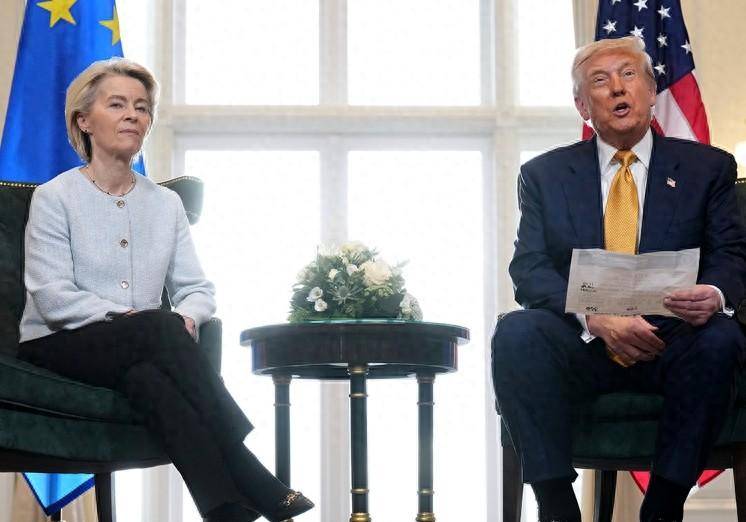
Group 1 - The U.S. government is planning to impose punitive tariffs of up to 100% on countries like China and India that purchase Russian oil, aiming to cut off Russia's energy export lifeline amid the Ukraine conflict [1] - The U.S. has set a condition for this policy, stating it will only follow if European allies take action first, indicating a strategy to avoid risks [1] - European Commission President Ursula von der Leyen responded firmly, stating that the EU will make independent decisions based on its own interests, rejecting the notion of being a pawn for the U.S. [1] Group 2 - The recent trade agreement between the EU and the U.S. has been criticized as imbalanced, requiring the EU to eliminate tariffs on U.S. industrial goods and commit to purchasing significant amounts of U.S. energy products [1] - The EU's unusual refusal to comply with U.S. pressure may stem from a growing realization of being treated as expendable by the U.S. despite making significant concessions [3] - Von der Leyen faces political pressure, with 75% of Europeans calling for her resignation, prompting a reassessment of the EU's policy towards the U.S. [3] Group 3 - The EU is reflecting on its relationship with China, recognizing the importance of the Chinese market for European industries, such as automotive and luxury goods [3] - Recent anti-dumping investigations initiated by China against EU products highlight the potential repercussions for EU industries if they align with U.S. pressures against China [6] - The current geopolitical landscape emphasizes the urgency for the EU to achieve strategic autonomy, impacting its future development and the global multipolar order [6]
古特雷斯呼吁改革国际金融体系,借全球发展倡议推动2030议程
2 1 Shi Ji Jing Ji Bao Dao· 2025-09-25 05:17
Group 1 - The core message emphasizes the need for international cooperation to achieve sustainable development goals, as highlighted by Secretary-General Guterres during the Global Development Initiative High-Level Meeting [1] - The global development landscape is facing severe challenges, including fiscal constraints, geopolitical tensions, unilateral trade measures, and climate risks, leading to a fragile economic outlook [2] - The COVID-19 pandemic continues to impact economic recovery, with many economies experiencing weak growth and insufficient investment, exacerbating inequality and poverty [2] Group 2 - The "Seville Commitment" established at the Fourth International Conference on Financing for Development provides a comprehensive framework to bridge the $4 trillion financing gap for sustainable development [3] - There is a critical need to implement the agreement into actionable steps, such as expanding concessional financing and reforming the international financial system to better reflect the needs of developing countries [3] - Guterres calls for increased participation of developing countries in capital and decision-making processes to achieve a fair global financial architecture [3] Group 3 - The Global Development Initiative aligns closely with sustainable development goals, particularly in poverty eradication, food security, climate change response, and promoting inclusive growth [4] - Guterres praises China's proposed mechanisms to enhance the initiative's effectiveness and urges countries to revitalize cooperation to advance the 2030 sustainable development agenda [4] - A call for reaffirming multilateralism based on unity and results, leveraging the UN Charter and the Global Development Initiative to build an inclusive, resilient, and sustainable future for all [4]
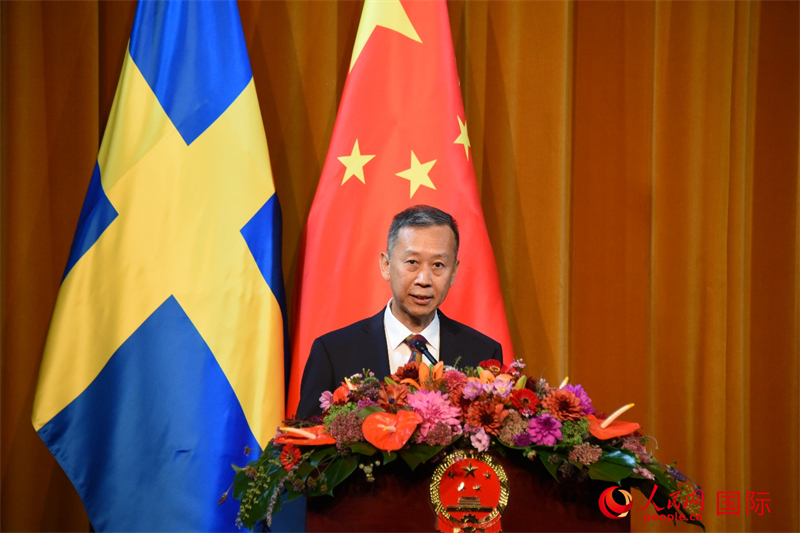
中国驻瑞典使馆举行庆祝中华人民共和国成立76周年招待会
人民网-国际频道 原创稿· 2025-09-25 04:52
Group 1 - The event celebrated the 76th anniversary of the founding of the People's Republic of China, attended by over 800 guests including diplomats and representatives from various sectors [1][4] - Chinese Ambassador to Sweden, Cui Aimin, highlighted China's significant development achievements over the past 76 years, emphasizing economic growth and social stability [2][4] - This year marks the 75th anniversary of diplomatic relations between China and Sweden, with both countries enhancing cooperation in areas such as green economy, digital economy, and biomedicine [4][2] Group 2 - The event featured a performance of the classic Peking opera "The Legend of the White Snake," showcasing the artistic talents of renowned performers and students [12] - Guests expressed admiration for China's contributions to global peace and development, indicating a strong desire for further practical cooperation between China and Sweden [4][2]
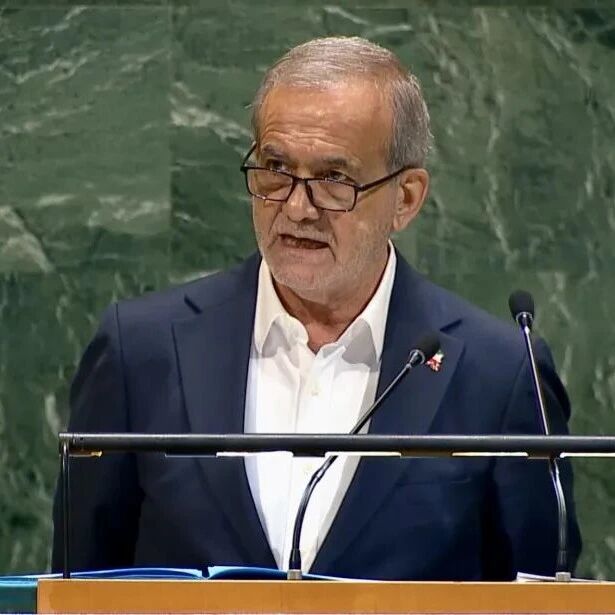
伊朗总统:不会追求拥有核武器
中国能源报· 2025-09-25 01:49
Core Viewpoint - The Iranian President emphasized that Iran will not pursue the development of nuclear weapons or any weapons of mass destruction, asserting that this stance is rooted in the beliefs and moral principles of the Iranian people [3]. Group 1 - The Iranian President, Pezeshkian, reiterated during the 80th United Nations General Assembly that Iran has never sought and will never seek to develop nuclear weapons [3]. - He called for the international community to ensure transparent and fair oversight of nuclear facilities, opposing the targeting of scientists and experts in conflicts [3]. - Pezeshkian criticized the misuse of multilateral mechanisms by certain members of the Security Council, highlighting the double standards that undermine the foundation of multilateralism and international law [3].