
双碳目标

Search documents
中部水运大省湖北,盯上了下一个新能源“风口”
Mei Ri Jing Ji Xin Wen· 2025-12-18 13:15
Core Insights - The penetration rate of electric vehicles in China has surpassed 50%, marking a significant milestone for the next wave of opportunities in the shipping industry, particularly in electric vessels [1] - The electric vessel market in China is projected to exceed 36 billion yuan by 2026, with a global market share of electric vessels expected to reach 15% by 2030 [1] Group 1: Industry Developments - Hubei province, a major water transport hub, is accelerating its investment in the electric vessel industry, aiming for a shipbuilding output value of over 130 billion yuan by 2027, with an annual growth rate exceeding 15% [2] - The Yangtze River Economic Belt is increasingly recognized for its importance, with cargo throughput at Yangtze River ports expected to reach 3.06 billion tons in the first three quarters of this year, a year-on-year increase of 4.9% [3] - The transition to green energy in the Yangtze River shipping sector is anticipated to create a trillion-yuan market, driven by the dual carbon goals [4] Group 2: Technological Advancements - The world's first 10,000-ton pure electric bulk carrier, "Gezhouba," was launched in Hubei, featuring a battery system equivalent to the energy of 500 electric vehicles, capable of replacing approximately 617.5 tons of fuel annually and reducing CO2 emissions by about 2,052 tons [6] - Currently, less than 1% of China's inland vessels are powered by new energy, indicating significant potential for green transformation in the sector [6] Group 3: Policy and Strategic Initiatives - The "Hubei Plan" outlines a strategy for the province's inland vessel industry to focus on green, intelligent, standardized, high-end, and international development, aiming to maintain a leading market share in electric vessel core power systems [12] - The plan emphasizes the need for collaboration among Hubei's cities to form a cohesive industrial cluster, enhancing the province's competitive edge in the electric vessel market [14][15] Group 4: Market Position and Competitiveness - Hubei has established a comprehensive industrial chain with 53 shipbuilding enterprises and over 300 supporting companies, leading the nation with a 62% market share in electric vessel core power systems [9] - The province's shipbuilding industry achieved an output value of 72.71 billion yuan in the first three quarters of 2025, reflecting a year-on-year growth of 17.3% [11]
“高冷”经济看发展丨云端守望!瓦里关绘就气候曲线
Xin Hua Wang· 2025-12-18 13:00
Core Insights - The "Wali Guan Curve," a globally recognized carbon dioxide variation curve, originates from Wali Guan, located in the harsh climate of the Tibetan Plateau, which is uninhabited for ten kilometers around [1] - The Wali Guan baseline station can conduct all-weather, high-density observations of 30 observation projects covering over 60 observation elements, accumulating the longest continuous greenhouse gas concentration data series in China [1] - China's ecological priority leads development, with the "dual carbon" goals driving high-quality economic transformation, while the climate change trajectory illustrated by the Wali Guan Curve serves as a practical example of green "Belt and Road" construction and cross-border meteorological disaster prevention cooperation [1] Summary by Categories - **Observation Capabilities** - Wali Guan baseline station provides comprehensive monitoring of major atmospheric components with high-density data collection [1] - It has established the longest continuous greenhouse gas concentration data series in China [1] - **Environmental and Economic Impact** - The Wali Guan Curve reflects unprecedented governance efforts and demonstrates the synergy between ecological protection and economic development [1] - The "dual carbon" goals are pivotal in facilitating a high-quality economic transition in China [1]
协合新能源联手泰康18亿基金探路:“产业+金融+专业管理”闭环怎么跑通?
3 6 Ke· 2025-12-18 12:14
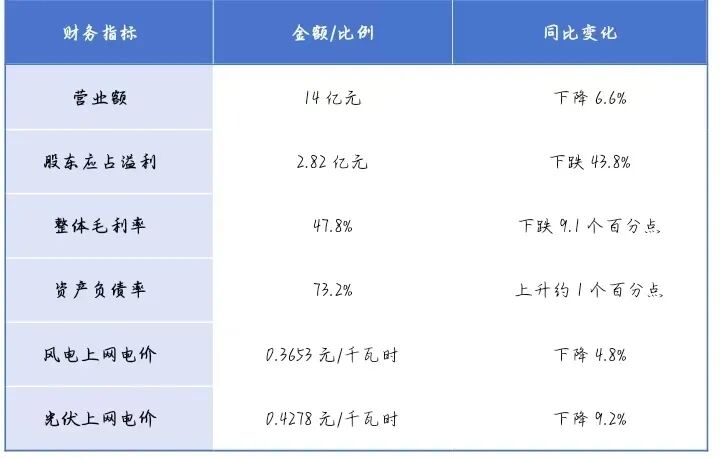
Core Viewpoint - The collaboration between insurance funds and renewable energy assets is creating a new investment model that combines industry expertise, financial support, and professional management, aiming for sustainable development in the renewable energy sector [1][5][6]. Group 1: Investment Initiatives - China Life Insurance has invested 9 billion yuan in Qinghai Huanghe Company to support the construction of the world's largest photovoltaic power plant, demonstrating a successful synergy between long-term insurance funds and stable renewable energy assets [1]. - A new renewable energy investment fund with a total scale of 1.811 billion yuan has been established by Xiehe New Energy Group and Taikang Insurance, marking a shift from traditional industry funds to deeper involvement of insurance capital in renewable energy investments [1][5]. Group 2: Financial Performance - Xiehe New Energy reported a 6.6% decline in revenue to 1.4 billion yuan and a 43.8% drop in net profit attributable to shareholders to 282 million yuan in the first half of 2025, highlighting the challenges faced by the company [2][3]. - The average on-grid electricity price for wind power decreased by 4.8%, while for photovoltaic power, it fell by 9.2%, contributing to the company's financial struggles [2][3]. Group 3: Strategic Shift - Xiehe New Energy is transitioning from a heavy asset model of "power station investment and operation" to a lighter asset model of "professional asset management" to ensure sustainable development amid industry challenges [4][6]. - The collaboration aims to address two core issues in the renewable energy sector: acquiring and nurturing quality assets and matching them with long-term stable funding [6][8]. Group 4: Market Dynamics - The renewable energy industry is shifting from policy-driven growth to market-driven quality improvement, with Xiehe New Energy and Taikang's partnership representing a market-oriented response to this transition [6][8]. - The success of the new investment model will depend on the asset management capabilities of the industry partner and the patience of the funding partner in navigating the inherent volatility of the renewable energy sector [7][8].

新华鲜报|电力“天路”贯通!西藏首个特高压工程投运
Xin Hua She· 2025-12-18 12:04
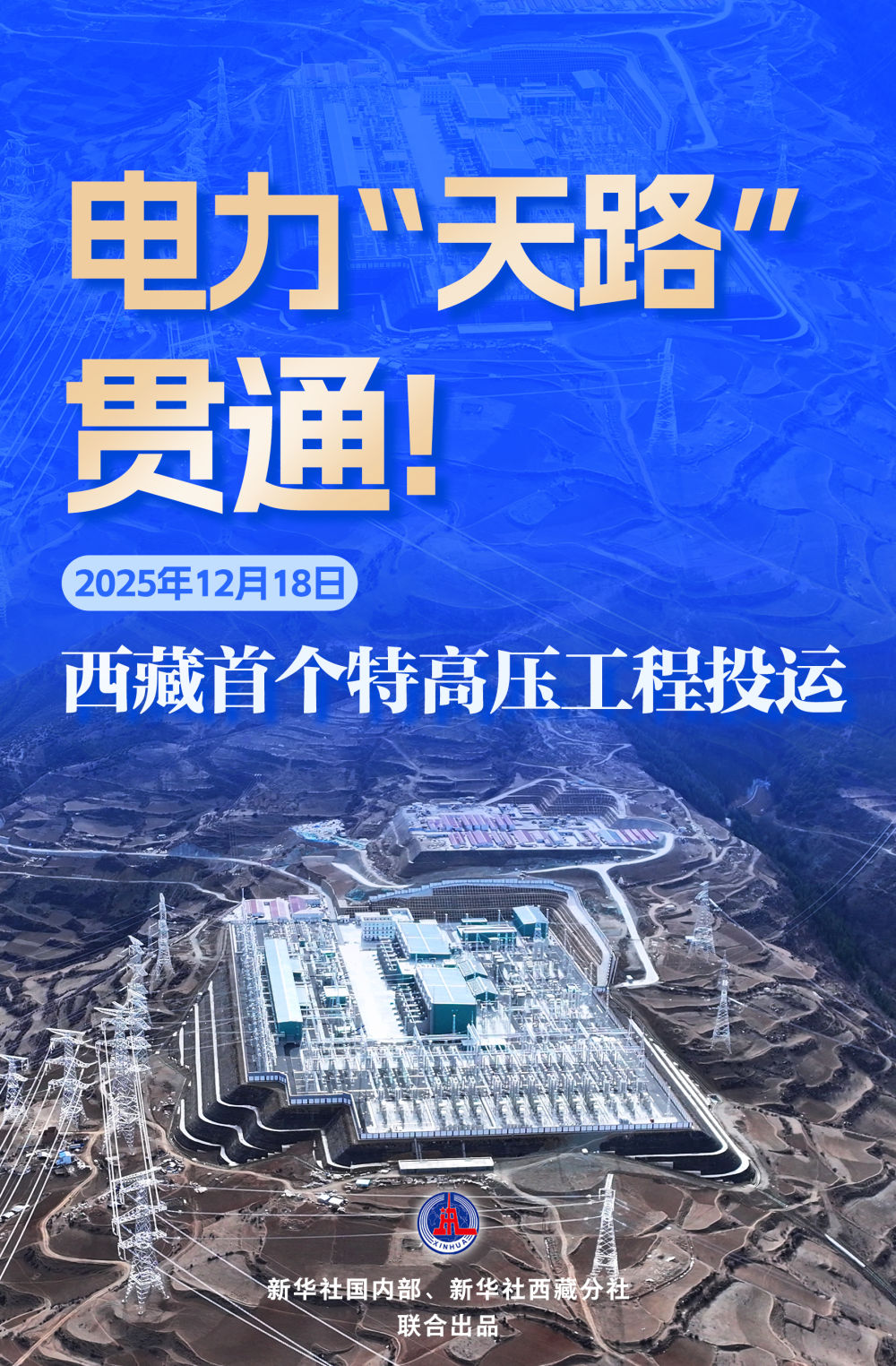
Core Viewpoint - The successful commissioning of the Jinshang-Hubei ±800 kV UHVDC transmission project marks the beginning of a new era for the large-scale delivery of clean energy from Tibet, enhancing the region's energy export capabilities and contributing significantly to environmental benefits [1][5][6]. Group 1: Project Overview - The project officially commenced operations on December 18, with the Kamei converter station completing a 168-hour trial run [1]. - The Kamei converter station, located at an altitude of approximately 3720 meters, is the highest UHV converter station in the world [3]. - The total investment for the Jinshang-Hubei project is approximately 34.3 billion yuan, with a rated voltage of ±800 kV and a capacity of 8 million kW [5]. Group 2: Technical Innovations - The project employs the first domestic "site-level cascading" UHVDC technology to address challenges in high-altitude environments [5]. - Innovations include systematic enhancements to insulation distances to cope with the thin air at high altitudes, which affects the insulation performance of key equipment [5]. Group 3: Environmental and Economic Impact - The design annual electricity transmission capacity is 40 billion kWh, which is expected to replace approximately 12 million tons of coal annually and reduce carbon dioxide emissions by about 30 million tons [5]. - The project has created over 3000 auxiliary and service jobs annually for local farmers and herdsmen, contributing to an income increase of 425 million yuan over five years [6]. Group 4: Operational Efficiency - The Kamei converter station is equipped with over 2000 cameras and automated inspection robots to enhance operational efficiency and reduce the workload on staff [8]. - The project integrates Tibet more deeply into the national energy framework, supporting the optimization of the national energy structure and aiding in achieving carbon neutrality goals [8].
“多圈层”的地球系统预报要来了!将怎样改变你的生活?
2 1 Shi Ji Jing Ji Bao Dao· 2025-12-18 11:57
Core Viewpoint - The "Earth System Forecast Development Strategy (2025-2035)" aims to establish an advanced, self-controlled Earth system forecasting system in China by 2035, focusing on eight key tasks to enhance forecasting capabilities across multiple spheres [1][3]. Group 1: Earth System Forecasting vs Traditional Forecasting - Earth system forecasting integrates various spheres (atmosphere, ocean, land, cryosphere, and biosphere) into a cohesive model, contrasting with traditional forecasting that primarily focuses on atmospheric conditions [1][2]. - The new approach utilizes advanced technologies such as numerical models, artificial intelligence, and digital twins to better represent interactions and feedback mechanisms among different spheres, enhancing risk assessment and disaster response capabilities [2][3]. Group 2: Key Technological Breakthroughs Required - Development of a fully coupled Earth system model that integrates atmosphere, ocean, land, cryosphere, biosphere, and socio-economic factors is essential, with a focus on achieving global kilometer-level and regional hundred-meter-level atmospheric modeling [2][3]. - Innovations in artificial intelligence forecasting models are necessary, particularly in the integration of weather and climate models and multi-sphere coupling [2]. - A deep integration of numerical forecasting and artificial intelligence is required to improve forecasting accuracy and computational efficiency [2][3]. Group 3: Digital Infrastructure for Earth System Forecasting - The Earth system digital infrastructure is crucial for high-quality forecasting development, comprising a multi-sphere data foundation, coupled models, and an open data-sharing platform [4][5]. - The data foundation will utilize various observational tools to collect comprehensive data across multiple spheres, supporting research and operational applications [4]. - The coupled models will leverage advanced computational capabilities to accurately simulate past, present, and future states of the Earth system [4][5]. Group 4: Strategic Value and Applications - The strategy aims to enhance forecasting capabilities significantly, improving the precision, richness, and reliability of weather forecasts, which will directly support disaster prevention and mitigation efforts [6][7]. - The expanded forecasting capabilities will empower economic and social development by extending meteorological services to various industries, including low-altitude aviation and transportation [6][7]. - Reliable Earth system forecasting will provide essential scientific support for climate change adaptation and ecological civilization initiatives, aiding in carbon emission assessments and reduction strategies [7].
中国首单酿酒葡萄园碳汇交易落地宁夏 葡萄园变身“绿色银行”
Zhong Guo Xin Wen Wang· 2025-12-18 11:37
中新网银川12月18日电 (记者 李佩珊)据宁夏银川市公共资源交易中心18日披露,中国首笔酿酒葡萄园 碳汇交易日前在宁夏贺兰山东麓葡萄酒产区完成,标志着中国将农业生态价值转化为市场价值的探索取 得突破性进展,为全球葡萄酒产业绿色转型提供了创新范例。 作为中国葡萄酒产业的核心产区,贺兰山东麓葡萄酒产区近年来持续推进葡萄酒产业生态建设,酿酒葡 萄园在提升植被覆盖率、防治土地沙化、减轻风沙危害等方面成效显著,助力荒漠逐步向绿洲转型。交 易涉及的葡萄园位于永宁县闽宁镇,总面积约179公顷。这片曾为半荒漠的土地,通过科学种植与生态 修复,如今年均碳汇量可达1000吨,潜在年经济价值约8万元。 为推动这一创新实践落地,宁夏自2023年起联合高校与专业机构,参照联合国清洁发展机制(CDM)等标 准,研发出中国首个酿酒葡萄园碳汇核算方法学,为碳汇价值市场化提供了关键技术支撑。如今,葡萄 园不仅产出优质葡萄酒,更通过光合作用和土壤固碳形成生态资产,在防治沙化、提升区域生态质量的 同时,带动当地就业与产业链发展。 在全球绿色经济规模持续扩大、中国积极推进"双碳"目标的背景下,这笔首单交易构建了"生态种植— 碳汇开发—市场交易"的 ...

电话会议纪要(20251214)
CMS· 2025-12-18 11:31
Macro Analysis - The central economic work conference highlighted ongoing challenges in the economy, including external environmental changes and risks in key sectors, while emphasizing the need to balance domestic economic work and international trade struggles [2][3] - The conference introduced five "musts" for economic work, focusing on the integration of investment in physical and human capital and the importance of internal strengthening to address external challenges [2] Policy Orientation - The policy tone for the upcoming year shifts from "strengthening extraordinary counter-cyclical adjustments" to "increasing counter-cyclical and cross-cyclical adjustment efforts," indicating a decrease in urgency but maintaining a proactive fiscal and moderately loose monetary policy [3] - Fiscal policy will maintain necessary levels of deficit, debt, and total expenditure, while monetary policy will focus on stabilizing growth and promoting inflation, with expectations for adjustments in interest rates and reserve requirements [3] Key Economic Work Areas - The economic work for the next year will focus on eight key areas, with an emphasis on expanding domestic demand through urban renewal policies and increasing investment scale to counteract negative growth in investment [7] - The conference reiterated the importance of stabilizing the real estate market through targeted measures, including inventory reduction and supply optimization, indicating a potentially more proactive stance on real estate policies [8][18] Real Estate Market Insights - The conference emphasized "high-quality urban renewal" as a crucial strategy for expanding investment and stimulating domestic demand, with expectations for financial tools to support urban renewal projects [17] - The focus on stabilizing the real estate market has shifted from aggressive measures to a more balanced approach, with an emphasis on controlling supply and inventory while encouraging the acquisition of existing properties for affordable housing [18][20] ESG Developments - The report highlighted significant ESG policies, including the expansion of the national carbon trading market and the promotion of integrated development in the renewable energy sector, which are crucial for achieving carbon neutrality goals [21][22] - The issuance of green financial bonds and the successful launch of digital green bonds in Hong Kong reflect growing market recognition and support for sustainable finance initiatives [24][25]
赛英电子:北交所审议上市申请,功率半导体核心部件赛道迎标杆
Zheng Quan Shi Bao Wang· 2025-12-18 10:37
Core Viewpoint - The listing application of Saiying Electronics, a national-level "specialized and innovative" enterprise in the power semiconductor sector, will be reviewed by the Beijing Stock Exchange, marking a significant milestone as it could become the first power semiconductor-related company listed on the exchange [1] Group 1: Company Performance - Saiying Electronics has demonstrated strong market competitiveness, with revenue projected to grow from 219 million yuan to 457 million yuan between 2022 and 2024, reflecting a compound annual growth rate (CAGR) of 44.50% [1] - The net profit attributable to the parent company is expected to increase from 43.92 million yuan to 73.90 million yuan during the same period, showing a cumulative growth of 68.4% [1] - In the first half of 2025, the company achieved revenue of 289 million yuan and a net profit of 43.87 million yuan, laying a solid foundation for annual performance growth [1] Group 2: Market Position - Saiying Electronics has established a leading position in its core product markets, with a global market share of approximately 30.0% and a domestic market share of about 32.6% for ceramic shell products [2] - The company’s packaging and heat dissipation substrate products are in a rapid growth phase, with global and domestic market shares of approximately 3.6% and 14.3%, respectively, indicating significant future growth potential [2] Group 3: Technological Strength - The company has significantly invested in product and technology upgrades, completing the development of advanced welding and forging techniques, and has established long-term collaborations with research institutions like Huazhong University of Science and Technology [2] - Saiying Electronics has 44 authorized patents as of June 30, 2025, including 9 invention patents and 35 utility model patents, providing a strong technical foundation for competing in the domestic substitution market [3] Group 4: Future Outlook - The company plans to raise 270 million yuan through its IPO, primarily for the construction of a production base for power semiconductor module heat dissipation substrates, upgrading its R&D center, and supplementing working capital [3] - The production base project is expected to add 12 million flat-type and 6 million pin-type heat dissipation substrates, enhancing the company's supply capacity in core product areas [3] - With the steady progress of its listing on the Beijing Stock Exchange, Saiying Electronics aims to broaden its financing channels and deepen collaborative innovation within the industry chain, positioning itself to capture market opportunities amid the domestic substitution wave and growing demand from emerging industries [3]
业界:促进分布式储能多元化和市场化发展
Huan Qiu Wang· 2025-12-18 10:20
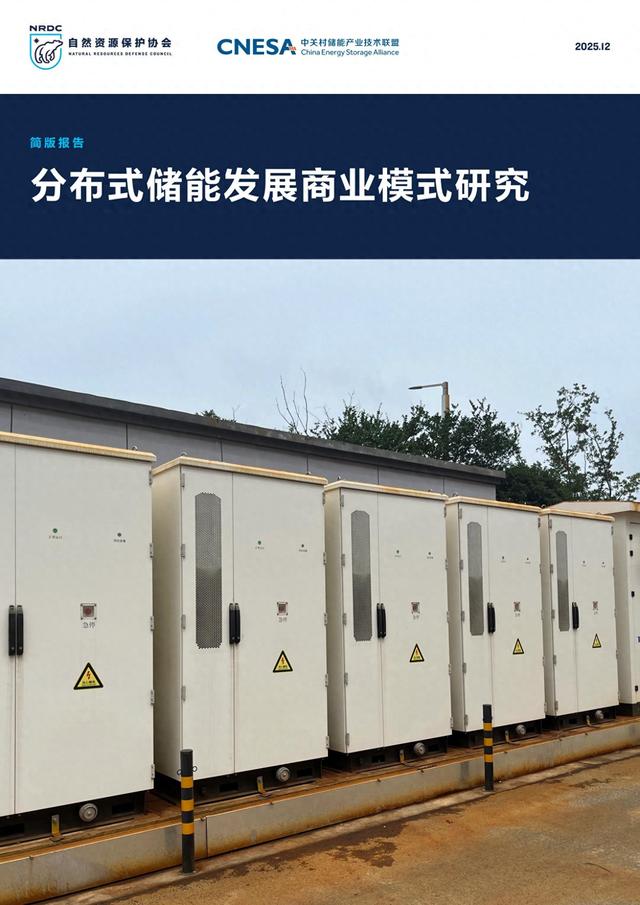
Core Viewpoint - Distributed energy storage is rapidly developing as a key component in building a new power system driven by "dual carbon" goals, with significant growth expected in the coming years [1][3]. Group 1: Market Trends and Growth - Distributed energy storage, defined as small-scale storage systems located on the user side or at distribution network nodes, is becoming crucial for addressing the challenges of local renewable energy consumption [3]. - From 2019 to the third quarter of 2025, China's cumulative installed capacity of distributed energy storage is projected to grow over fivefold, from 570 MW to 3,638 MW [3]. - Six major application scenarios have emerged, including industrial and commercial storage, distributed photovoltaic storage, green electricity direct connection, area storage, virtual power plants, and charging and swapping stations [3][4]. Group 2: Application Scenarios - The most mature application is industrial and commercial storage, which relies on time-of-use electricity price arbitrage, significantly influenced by regional price differences [4]. - Green electricity direct connection projects include both grid-connected and off-grid types, with storage playing a dual role in reducing electricity wastage and participating in price arbitrage [4]. - Recent policies have driven rapid growth in scenarios like green electricity direct connection and zero-carbon parks, emphasizing the need for stable power supply from renewable sources [4]. Group 3: Economic and Technological Factors - The gradual opening of market mechanisms for user-side participation and diversified revenue streams are key factors promoting the development of distributed energy storage [5]. - Future trends indicate a shift towards market-oriented investments, diverse technological routes, localized microgrid development, convenience in deployment, and the integration of AI for load and price forecasting [6][7]. Group 4: Challenges and Recommendations - The current commercial model for distributed energy storage is still in the exploratory phase, facing challenges such as insufficient policy continuity, single revenue sources, and inadequate safety standards [8]. - Recommendations for enhancing the utilization and economic viability of distributed energy storage include widening time-of-use price differences, improving demand response mechanisms, and deepening electricity market reforms by 2030 [8][9]. - The industry aims to build a diversified revenue channel to enhance the economic competitiveness of distributed energy storage [8][9].
天气预报要“开挂”?人工智能打破算力瓶颈,15天全球预报3分钟生成
Mei Ri Jing Ji Xin Wen· 2025-12-18 10:09
Core Insights - The Earth System Forecast Development Strategy (2025-2035) aims to enhance weather and climate forecasting capabilities by considering interactions among various Earth system layers, benefiting national strategies and public needs [1] Group 1: Disaster Prevention and Mitigation - The development of Earth system forecasting capabilities will significantly improve early warning systems for extreme weather, thereby protecting lives and property [1] - Enhanced forecasting will support disaster response actions, such as personnel evacuation and resource allocation before typhoons or heavy rainfall [4] Group 2: Industry Services - The strategy will provide precise meteorological services to various sectors, including agriculture, renewable energy, transportation, and financial insurance [1] - Advanced forecasting capabilities will empower low-altitude economic activities, optimize maritime route planning, and enhance traffic management during adverse weather [5] Group 3: Ecological Civilization and Climate Change - The Earth system forecasting will serve as a scientific basis for achieving carbon peak and carbon neutrality goals, aiding in climate change response [1] - Long-term climate forecasting capabilities will support scientific assessments of climate change risks and the formulation of national adaptation strategies [5]