
AI泡沫

Search documents
还在辩 AI 是不是泡沫?泡沫早已泄气 OpenAI 恐面临2种命运
Jing Ji Ri Bao· 2025-11-01 23:29
投资人此刻最想问的是,人工智能(AI)究竟是不是泡沫,会不会爆?财经评论员认为,这根本问错 问题,事实上,AI泡沫早已开始泄气了,只是不像当年达康泡沫那样猛烈爆开。 财经评论员杜莫维奇表示,此刻AI泡沫确实存在,但独立研究机构MacroStrategy Partnership估计,AI泡 沫比2000年爆掉的达康泡沫大17倍,绝对是误导人,那项分析衡量的是所有资产类别的总资本配置,并 不是针对AI而已。 更重要的是,众人都问错问题。这场辩论不应是"AI泡沫会不会爆"--事实上早已发生,只是泡沫慢慢泄 气,不像轰然大爆炸那般引人瞩目。然而,一连串慢动作泄气,正悄悄重塑整个AI市场生态。 杜莫维奇指出,伤亡数字正日积月累。2024年,新创公司关门家数暴增;2025年,有95%的企业AI试验 计划未能在推出六个月内,达成可评量的损益(P&L)目标;而且,今年来,募资失败率占所有创业投 资交易比率达到15.9%,是十年来最高。 但相较于2000年达康泡沫爆破,AI泡沫的威胁不是被夸大,就是被误解。AI泡沫并非达康泡沫翻版, 反倒更有趣且获利前景更可观,但必须押对宝。 超大规模云端服务业者(hyperscalers)指 ...
OpenAI上市进程将被迫加速!
Sou Hu Cai Jing· 2025-11-01 14:11
Core Insights - OpenAI is considering an IPO with a valuation of up to $1 trillion, potentially filing as early as mid-2026 and aiming for a public listing in 2027 [2][3] - OpenAI's projected expenses are significant, with an expected consumption of $115 billion by 2029, while revenue for this year is anticipated to be only $13 billion, indicating a substantial funding gap [2][3] - Microsoft reported a quarterly loss related to OpenAI of approximately $31 billion, with OpenAI's net loss for the quarter estimated at around $126 billion, marking one of the largest quarterly losses in history [3][4] Financial Performance - OpenAI's cash and liquid securities stood at about $17.5 billion as of Q2 2025, but with a quarterly loss of $12.6 billion, the cash reserves are projected to drop to around $5 billion [4][6] - OpenAI's revenue for the first half of the year was reported at $4.3 billion, with an estimated revenue of $3.5 billion for Q3 [3][7] - The company is burning cash at an alarming rate, with a loss of $3.6 for every $1 of revenue generated [7][8] Strategic Developments - Microsoft and OpenAI have restructured their partnership, marking the end of a significant collaboration that began in 2019, allowing both companies to pursue independent paths while maintaining core cooperation [4][5] - SoftBank has committed to investing an additional $22.5 billion in OpenAI, contingent upon the company's restructuring into a profit-driven entity by the end of the year [6][7] - OpenAI's future funding appears uncertain, with the company needing to consider an IPO to address its substantial funding shortfall, especially given the reluctance of the market to provide new financing [8][9]

美银警告:标普AI泡沫太大 黄金和中国股票或是最佳对冲工具
智通财经网· 2025-11-01 13:07
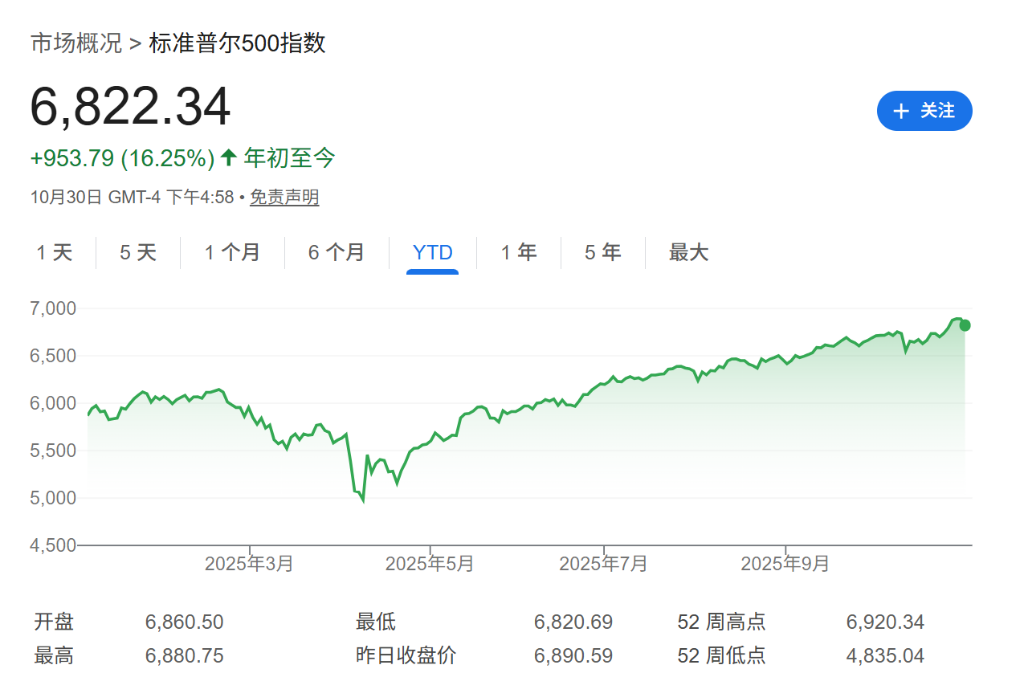
Core Viewpoint - The current market environment, driven by the AI boom, presents potential risks of an AI bubble, with gold and Chinese stocks identified as the best hedging tools against this risk [1]. Group 1: Market Valuation and AI Bubble Concerns - The S&P 500 index has surged by $17 trillion since its low in early April, with Nvidia's market capitalization surpassing $5 trillion, indicating continued optimism in the market [1]. - The forward P/E ratio of the S&P 500 has reached 23 times, significantly above the 20-year average of 16 times, raising concerns about overvaluation [2]. - The "Mag7" tech giants hold over one-third of the S&P 500's weight, with an overall forward P/E ratio of 31 times, highlighting the valuation issues within this segment [4]. Group 2: Gold as a Hedge Against Inflation - Gold is viewed as an effective tool to hedge against potential inflation risks arising from economic expansion and loose monetary policies [5]. - Despite a recent decline from its historical high of over $4,300 per ounce, gold's role as a hedging instrument remains valid [6]. - There was a record outflow of $7.5 billion from global gold funds after four months of inflows, indicating shifting investor sentiment [7]. Group 3: Chinese Stocks as an Alternative Investment - Chinese stocks have significantly outperformed the S&P 500 this year, with the MSCI China Index soaring by 33%, driven by optimism regarding China's competitiveness in generative AI [10]. - The previous successful predictions by Bank of America regarding international markets following Trump's election highlight the potential for similar trends in the current environment [10].
当前AI泡沫究竟多大?瑞银:三大见顶信号尚未出现
Hua Er Jie Jian Wen· 2025-11-01 12:02
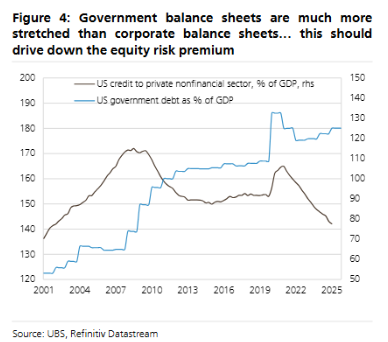
Group 1 - UBS believes that despite the current U.S. stock market meeting all seven conditions for a bubble, the "rationality" of the current AI bubble far exceeds that of the 2000 period, and key peak events have yet to occur [1][2] - The report highlights that the strong productivity enhancement potential of generative AI, along with the current higher risk in government balance sheets compared to corporations, provides a more solid foundation for valuation expansion than during the 2000 internet bubble [1][4] Group 2 - UBS identifies three key signals indicating that the bubble has not yet peaked: extreme valuations, long-term overheating catalysts, and short-term peak events have not yet appeared [1][8] - Current market estimates suggest a 20% probability of a bubble, emphasizing the need for investors to understand key signals that may indicate a bubble burst [1] Group 3 - The adoption speed of generative AI is unprecedented, with OpenAI attracting 800 million users in just three years, compared to Google's 13 years for the same scale [3] - If generative AI can temporarily boost productivity growth by 2%, it could support a 20-25% upside in the stock market [3] Group 4 - The macro risk structure has fundamentally changed since the 2000 internet bubble, with the U.S. government now having a debt-to-GDP ratio twice that of the past, while corporate balance sheets, especially among tech giants, remain relatively strong [4][7] - This "weak government, strong corporate" dynamic may lead investors to shift funds from nominal assets like bonds to real assets like stocks, thereby lowering the equity risk premium (ERP) requirement and supporting higher stock valuations [7] Group 5 - Current valuations in the AI sector are not extreme, with the price-to-earnings (P/E) ratio of major tech companies at 35 times, significantly below bubble levels [9][11] - The ERP is still around 3%, indicating that the market has not completely ignored risks due to excessive optimism [11] Group 6 - There are no signs of excessive investment or leverage that typically precede a bubble burst; ICT investment as a percentage of GDP remains below the peak levels of 2000 [18][21] - The capital expenditure to sales ratio for major data center operators is approaching levels seen in 2000, but these companies primarily rely on strong cash flows rather than debt for investments [21][24] Group 7 - The current breadth of the market is not as narrow as in 1999, where the number of declining stocks was nearly double that of advancing stocks during the Nasdaq's rise [24][27] - Overall corporate profits in the U.S. remain robust, contrasting with the decline seen during the internet bubble, indicating a healthier market environment [27] Group 8 - No short-term peak events have been triggered, such as major merger and acquisition activity comparable to the significant deals during the internet bubble [28][29] - Current monetary policy is not at a level that would severely impact growth, with the expected nominal GDP growth for 2026 at 5.2% [32] - Profit momentum for tech stocks remains strong, and price momentum has not reached extreme levels, suggesting that the market is not yet at a peak [33][36] Group 9 - UBS provides a detailed "bubble map" indicating that despite the AI frenzy, key indicators across valuation, macro catalysts, and short-term triggers suggest that this market phase may not be nearing its end [36] - However, potential bubbles may exist within the tech sector, particularly in the semiconductor industry, where high profit margins could face pressure from increasing capital intensity and competition [36][38]
当前AI泡沫究竟多大?瑞银:已具备泡沫周期的七大前提条件!但三大见顶信号尚未出现
美股IPO· 2025-11-01 10:18
Core Viewpoint - UBS reports that the market is in the early stages of a potential bubble, but key signals indicating a peak—extreme valuations, long-term overheating catalysts, and short-term peak signals—have not yet emerged [1][3][4]. Group 1: Current Market Conditions - UBS identifies that the current U.S. stock market meets all seven prerequisites for a bubble, including a 14% annual outperformance of stocks over bonds in the past decade and significant new technology emergence [5]. - The report emphasizes that the rationale behind the current AI bubble is more robust than that of the 2000 internet bubble, as the key peak events have not yet occurred [3][5]. Group 2: Generative AI Potential - The disruptive potential of generative AI and its unprecedented adoption speed are unique, with OpenAI attracting 800 million users in just three years, compared to Google's 13 years for the same scale [6][7]. - If generative AI can temporarily boost productivity growth by 2%, it could support a 20-25% upside in the stock market [7]. Group 3: Macro Risk Structure - The macro risk structure has fundamentally changed; during the 2000 internet bubble, the U.S. government had a budget surplus, while now the government debt-to-GDP ratio is double that of the past, with high fiscal deficits [8][11]. - This "weak government, strong corporate" dynamic may lead investors to shift funds from nominal assets to real assets, lowering the equity risk premium (ERP) and supporting higher stock valuations [11]. Group 4: Valuation Signals - UBS notes that extreme valuations typically accompany bubble peaks, but current valuations in AI-related sectors are not at dangerous levels [12]. - The absolute valuation levels are still distant from historical peaks, where at least 30% of stocks had P/E ratios soaring to 45-73 times [12]. - The current ERP is around 3%, indicating that the market has not completely ignored risks due to excessive optimism [14]. Group 5: Long-term Catalysts - There are currently no clear long-term structural factors, such as over-investment and excessive leverage, that typically trigger bubble bursts [22]. - ICT investment as a percentage of GDP remains below the peak levels of 2000, suggesting that a capital expenditure frenzy has not yet formed [22][26]. - The risk of excessive debt financing is low, as major tech companies rely on strong cash flows rather than debt for investments [26]. Group 6: Short-term Peak Signals - No short-term peak signals have emerged, such as major merger and acquisition activity comparable to the internet bubble's peak [32][34]. - Current market conditions do not exhibit extreme price momentum, with semiconductor stocks only 35% above their 200-day moving average, compared to 70% at the peak in 2000 [40]. Group 7: Conclusion - UBS provides a detailed "bubble map" for investors, indicating that despite the AI boom, key indicators across valuation, macro catalysts, and short-term triggers suggest that the current market may not be nearing its end [43].

美银Hartnett:标普AI泡沫太大,黄金与中国股票或是最佳对冲工具
美股IPO· 2025-11-01 10:18
估值高企,AI泡沫隐忧浮现 美银的警告主要基于当前美股过高的估值水平。数据显示,标普500指数的远期市盈率已达到23倍,远高于过去二十年16倍的平均水平。今年 迄今,标普500指数上涨逾16%。 Hartnett警告,标普500远期市盈率达23倍、AI巨头估值偏离历史均值,泡沫风险上升。黄金可对冲通胀回升风险,而中国股票在生成式AI崛起 推动下表现强劲,成为资金多元配置的重要方向。 随着人工智能热潮将美股估值推至高位,美银策略师Michael Hartnett认为,黄金和中国股票是当前市场环境下最佳的对冲工具,以应对潜在的 AI泡沫风险。 Hartnett在一份最新报告中认为, "短期内AI股票的领导地位不会动摇,我们喜欢将黄金和中国股票作为繁荣/泡沫的最佳对冲。" 标普500指数 市值自4月初低点以来飙升17万亿美元,近日,芯片巨头英伟达公司市值突破5万亿美元。 市场情绪似乎依然乐观。亚马逊和苹果公司近期公布的强劲财报提振了周五的美股期货,投资者普遍预期美国将在2026年迎来稳健的经济增 长、利率下降以及特朗普可能带来的市场支持政策。然而,Hartnett的建议揭示了在乐观情绪之下潜藏的风险,即AI驱动的上 ...

当前AI泡沫究竟多大?瑞银:本轮泡沫比TMT时期更具“合理性”,三大见顶信号尚未出现
Hua Er Jie Jian Wen· 2025-11-01 07:35
Core Viewpoint - UBS believes that while the current US stock market exhibits seven conditions indicative of a bubble cycle, the "reasonableness" of the current AI bubble far exceeds that of the 2000 period, and key peak events have yet to occur [1][3]. Group 1: Bubble Characteristics - UBS identifies three key signals that typically indicate a bubble peak: extreme valuations, long-term overheating catalysts, and short-term peak events, which are currently absent [1][2]. - The current market perceives a 20% probability of a bubble, emphasizing the need for investors to understand key signals that may indicate a bubble burst [2]. Group 2: Valuation Analysis - UBS notes that the current valuations in the AI sector are not extreme, with the price-to-earnings (P/E) ratio of major tech companies at 35 times, significantly lower than the bubble levels seen in previous cycles [9][12]. - The equity risk premium (ERP) is currently around 3%, indicating that the market has not completely ignored risks due to excessive optimism [12]. - The potential market for semiconductors is deemed reasonable, with projections suggesting that by 2030, semiconductor spending could reach 1.3% of global GDP, up from approximately 0.7% [12][15]. Group 3: Macro Risk Structure - The macroeconomic risk structure has fundamentally changed since the 2000 internet bubble, with the US government currently facing higher debt-to-GDP ratios and significant fiscal deficits compared to the past [5][7]. - The "weak government, strong corporate" dynamic may lead investors to shift funds from nominal assets to real assets, thereby supporting higher stock valuations [7]. Group 4: Long-term Catalysts - There are currently no signs of excessive investment or leverage that typically precede a bubble burst, with ICT investment as a percentage of GDP remaining below the peak levels of 2000 [18][21]. - The capital expenditure to sales ratio for major tech companies is supported by strong cash flows rather than debt, contrasting sharply with the high debt levels seen during the internet bubble [21][24]. Group 5: Short-term Peak Events - UBS highlights that no significant short-term peak events have occurred, such as large-scale mergers and acquisitions that characterized the peak of the internet bubble [28][31]. - Current earnings momentum for tech stocks remains strong, and price momentum has not reached extreme levels, indicating that the market is not yet at a peak [32][34]. Group 6: Future Considerations - UBS warns that potential bubbles may exist within the tech sector, particularly in the semiconductor industry, where high profit margins could face pressure due to increasing capital intensity and competition [36].
狂飙!2.6万亿亚马逊暴涨9%创新高!美股十月全线飘红!科技巨头财报能否驱散AI泡沫疑云?
雪球· 2025-11-01 03:55
Core Viewpoint - The article discusses the recent performance of major U.S. stock indices and highlights the mixed results of the "Tech Seven" companies, emphasizing the cautious market outlook due to various economic factors [1][3]. Group 1: Market Performance - As of October 31, U.S. stock indices closed higher, with the Nasdaq up 0.61% and a cumulative increase of 4.7% for October, while the S&P 500 and Dow Jones rose 0.26% and 0.09%, respectively, with cumulative increases of 2.27% and 2.51% for the month [1]. - The Nasdaq has seen a seven-month consecutive increase, while the Dow and S&P 500 have experienced six consecutive months of growth [1]. Group 2: Tech Giants' Earnings - Most of the "Tech Seven" companies saw declines, with Amazon rising 9.58% and Tesla up 3.74%, while Google A, Nvidia, Apple, Microsoft, and Meta experienced slight declines [3][4]. - Amazon reported a 20% growth in its cloud computing division for Q3, exceeding Wall Street expectations, and its overall net sales increased by 12% to $180.2 billion, with a net profit of $21.2 billion, up 38.6% year-over-year [9][12][13]. - Apple's strong Q4 performance and optimistic outlook were noted, contributing to a temporary alleviation of market concerns regarding an AI bubble [3][13]. Group 3: Economic Factors - The Nasdaq China Golden Dragon Index rose 0.53% but recorded a cumulative decline of 4.19% for October, ending a five-month streak of increases [5]. - The 10-year U.S. Treasury yield stabilized above 4%, closing at 4.09%, as traders reduced expectations for interest rate cuts following hawkish signals from the Federal Reserve [15]. - Recent comments from Federal Reserve officials indicate a debate on whether to support the labor market with further easing or to remain vigilant against inflation, impacting market sentiment [15].


商务部回应安世半导体相关问题
证券时报· 2025-11-01 02:21
Core Viewpoint - The Chinese government emphasizes the importance of maintaining stability in global supply chains and expresses concern over the Dutch government's interference in corporate affairs, which has contributed to current disruptions [2]. Group 1: Government Response - The Chinese Ministry of Commerce has previously addressed concerns regarding Anshi Semiconductor and welcomes companies facing difficulties to reach out for assistance [2]. - The Ministry will consider the actual circumstances of companies and may grant exemptions for exports that meet certain conditions [2]. Group 2: Industry Impact - The interference by the Dutch government is highlighted as a factor leading to chaos in the global supply chain, indicating potential risks for companies operating internationally [2].

张陆、武飞、张洪章领命出征!
证券时报· 2025-10-31 14:48
Core Viewpoint - The Shenzhou-21 manned spaceflight mission has officially commenced with the launch ceremony held at the Jiuquan Satellite Launch Center, featuring astronauts Zhang Lu, Wu Fei, and Zhang Hongzhang [2]. Group 1 - The launch ceremony took place on the evening of October 31, marking the beginning of the Shenzhou-21 mission [2]. - The astronauts selected for the mission are Zhang Lu, Wu Fei, and Zhang Hongzhang [2].
