
具身智能

Search documents
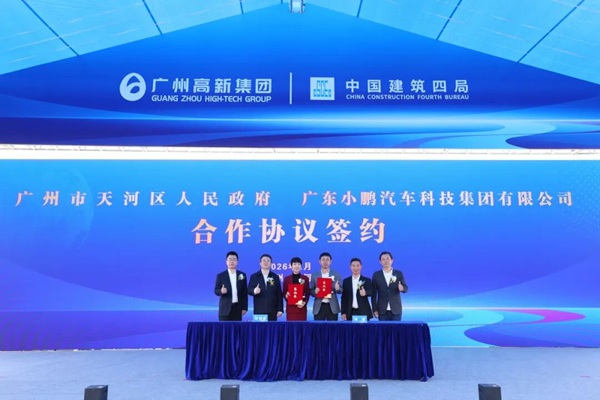
小鹏:人形机器人全链条量产基地正式提报 广棠科创城相关项目同步开工
Zhong Guo Qi Che Bao Wang· 2026-02-26 09:48
Core Viewpoint - The establishment of Xiaopeng's humanoid robot mass production base is a significant step towards achieving the goal of mass-producing advanced humanoid robots by 2026, supported by strategic partnerships and a robust AI development framework [1][5]. Group 1: Project Overview - Xiaopeng's humanoid robot mass production base will be located in the Guangtang Science and Technology Innovation City, covering a total construction area of approximately 110,000 square meters [3]. - The project aims to meet the spatial needs of companies in the embodied intelligence sector, facilitating research, small-batch production, and large-scale manufacturing [3]. - The first phase of the industrial park will focus on constructing high-standard robot factories and related facilities to support the industrialization of Xiaopeng's advanced humanoid robots [3]. Group 2: Technological Advancements - Xiaopeng has been developing its robotics capabilities for seven years, evolving from quadrupedal forms to humanoid robots, achieving rapid breakthroughs in both form and intelligence [3][4]. - The new generation humanoid robot, IRON, features a highly human-like appearance and advanced capabilities, powered by three Turing AI chips with a total computing power of 2250 TOPS [3][4]. - The robot incorporates Xiaopeng's second-generation VLA model, enabling high-level intelligent functions such as dialogue, walking, and complex interactions through a combination of VLT, VLA, and VLM technologies [3]. Group 3: Industry Challenges and Competitive Edge - The humanoid robot industry faces two main challenges: a shortage of high-quality training data and difficulties in achieving large-scale production due to the immature supply chain [4]. - Xiaopeng's unique competitive advantage lies in its fully self-developed physical AI system and its synergy with core technologies from smart vehicles, positioning it to lead in the mass production of advanced humanoid robots [4]. - The CEO of Xiaopeng has set a target for the company to become the first in the world to achieve large-scale production of advanced humanoid robots by the end of 2026 [4].


蔚来芯片子公司获超22亿首轮融资:估值近百亿,合肥国投、IDG、中芯聚源等多家头部机构参投
智通财经网· 2026-02-26 09:48
Core Viewpoint - NIO's chip subsidiary, Anhui Shenqi Technology Co., Ltd., has completed its first round of equity financing, raising over 2.2 billion RMB, with a post-financing valuation nearing 10 billion RMB [1] Group 1: Financing Details - The financing round attracted several industry capital and leading institutions, including Hefei Guotou, Hefei Haiheng, IDG Capital, and others [1] - The funds raised will support Shenqi's ongoing research and development of high-end, competitive chip products [1] Group 2: Product and Market Position - Anhui Shenqi is the first company in China to develop 5nm automotive-grade chips and achieve large-scale commercialization [1] - The Shenqi NX9031 chip offers performance equivalent to four traditional chips, leading the domestic automotive chip market [1] - Since its production began in 2024, over 150,000 units have been shipped, successfully deployed across NIO's entire vehicle lineup [1] Group 3: Future Developments - Following this financing, Shenqi plans to launch next-generation high-performance chips for smart driving and other applications [1] - The company is actively expanding into emerging businesses such as embodied robotics and agent reasoning, aiming to provide comprehensive chip and intelligent hardware solutions for various clients in the AGI era [1]

蔚来宣布芯片子公司完成首轮股权融资协议签署 融资金额超22亿元人民币
Xin Lang Cai Jing· 2026-02-26 09:45
转自:智通财经 【蔚来宣布芯片子公司完成首轮股权融资协议签署 融资金额超22亿元人民币】智通财经2月26日电,据 蔚来官微,2月26日,蔚来宣布芯片子公司安徽神玑技术有限公司完成首轮股权融资协议签署,融资金 额超22亿元人民币,投后估值近百亿。本轮融资汇集了合肥国投、合肥海恒、IDG资本、中芯聚源、元 禾璞华等多家产业资本和行业头部机构。此次融资将有利于神玑公司持续地研发和推广高端、高竞争力 的芯片产品,支撑蔚来在自动驾驶、具身智能等领域的长远布局。安徽神玑是国内首家研发5nm车规芯 片、并首家做到规模化商用的公司。「神玑 NX9031」芯片「一颗抵四颗」的运行性能一直位居国内车 载芯片首位。自2024年投产以来已累计出货超15万套,成功部署在蔚来品牌的全系车型上。本轮融资之 后,神玑公司还将推出面向下一代智能驾驶的超强性能芯片以及多款其他领域的芯片。神玑公司前期订 单主要来源于蔚来公司,同时也在积极拓展具身机器人、Agent推理等新兴业务,为AGI时代的各类客 户提供完整的芯片和智能硬件解决方案。 ...
商务部:今年春节租车游、具身智能机器人火了
Nan Fang Du Shi Bao· 2026-02-26 09:45
Core Insights - The Ministry of Commerce reported significant growth in consumer spending during the extended Spring Festival holiday, highlighting unique local events that boosted service consumption [1] Group 1: Consumer Trends - The rental car industry saw a 51% increase in orders compared to last year's Spring Festival, reflecting a shift in public travel preferences and consumption attitudes [1] - Sales of smart glasses and embodied intelligent robots increased by 47.3% and 32.7% respectively, indicating a growing preference for "tech gifts" among consumers [1] - Traditional cultural products, particularly those featuring "Chinese elements," gained popularity among younger consumers, with notable sales of time-honored brands and "Year of the Horse" themed creative products [1] Group 2: Retail and Dining Performance - The average daily sales of key retail and catering enterprises increased by 5.7% compared to the same period last year, with a growth rate improvement of 1.6 percentage points [1] - Foot traffic and sales in 78 monitored pedestrian streets (business districts) rose by 6.7% and 7.5% respectively during the holiday period [1]
人形机器人,竞相晋级独角兽
3 6 Ke· 2026-02-26 09:35
Core Insights - The article highlights the rapid growth and investment activity in the embodied intelligence sector, with four companies achieving unicorn status during the Spring Festival period [1][2]. Group 1: Company Financing and Valuation - Four companies in the "embodied brain" segment have recently completed significant financing rounds, each reaching a valuation of over 10 billion yuan [1][2]. - Ziyuan announced a new financing round led by SAIC Capital and others, becoming the highest-valued company in the sector with over 3 billion yuan raised in total [3][4]. - Qianxun Intelligent completed two financing rounds totaling nearly 2 billion yuan, with a post-investment valuation exceeding 10 billion yuan [3][4]. - Zhihui Square raised over 1 billion yuan in its latest round, also surpassing a valuation of 10 billion yuan, with notable investors including CRRC Capital and Baidu [5][6]. - Xinghaitu secured 1 billion yuan in its B round, attracting investments from various institutions, and has completed a total of 8 financing rounds since its establishment [6][7]. Group 2: Company Background and Technology - Ziyuan focuses on a multi-modal input-output architecture and has developed proprietary robotic components, emphasizing its technological advancements [3][4]. - Qianxun Intelligent's main focus is on data scaling and adaptation, having launched the Moz1 humanoid robot and achieved operational deployment in retail environments [4][5]. - Zhihui Square is recognized for its end-to-end VLA technology and has plans to deploy over 1,000 robots in collaboration with Huike, with significant order values [5][6]. - Xinghaitu has developed an upgraded VLA model aimed at enhancing cross-scenario task capabilities, with thousands of orders already realized [6][7]. Group 3: Market Trends and Future Outlook - The investment focus in the embodied intelligence sector has shifted from "body" companies to "brain" companies, with the latter gaining traction as technology matures [7][8]. - The long-term goal for embodied brain companies is to achieve highly generalizable robotic intelligence, although current technological maturity remains a challenge [8]. - Funding for these companies is primarily directed towards long-term technological development rather than immediate scale expansion, indicating a strategic focus on model training and capability enhancement [8].
氪星晚报 |魅族手机或将成为历史:业务实质性停摆,3月正式退市;英伟达黄仁勋:年内将寻机进行资本运作
3 6 Ke· 2026-02-26 09:24
Group 1: Major Companies - NVIDIA's CEO Jensen Huang announced plans for capital operations within the year, including ongoing stock buybacks and dividends, while focusing on ecosystem investments as a core part of capital allocation [1] - Samsung Electronics will cease production of 2D NAND flash memory by March, reallocating the production line to 1c nm DRAM memory manufacturing [1] - C3.ai announced a 26% workforce reduction as part of a restructuring plan under new CEO Stephen Elwood, with revenue expectations for the current quarter falling below projections, leading to a 20% drop in stock price [3] - AMD and Nutanix are collaborating on a $250 million AI infrastructure platform, with AMD investing $150 million in Nutanix stock and providing up to $100 million for joint engineering and marketing efforts [3] - Gree Electric's largest shareholder plans to reduce its stake by up to 2% through block trades to repay bank loans [3] - BMW is negotiating with the EU for tariff exemptions on electric MINI models produced in China, following a similar agreement reached with Volkswagen [4] - Meizu's mobile phone business is reportedly ceasing operations, with plans to officially delist by March 2026, while its FlymeAuto business will operate independently [5] Group 2: Investment and Financing - "Tianyuanxing," a general industrial embodied intelligence platform, has completed several million yuan in angel financing, with funds aimed at R&D and team expansion [6] Group 3: New Products - ByteDance's PICO is expected to launch a new VR headset, emphasizing efficiency and openness in its upcoming product [6] Group 4: Industry Trends - The demand for AI is driving a price increase in passive components, with major Japanese manufacturer Murata discussing price hikes for MLCCs, indicating a broader trend of price increases across various passive components due to rising material costs and demand [6]

具身智能年度回望:泡沫与现实的激烈碰撞
腾讯研究院· 2026-02-26 09:03
Core Viewpoint - The year 2025 is characterized as a pivotal year for embodied intelligence, marked by significant advancements in technology and increased capital investment, despite ongoing challenges in supply chain restructuring and business model validation [4][5]. Investment Landscape - In 2025, the investment events in China's embodied intelligence and robotics sector reached 325, with a total amount of 39.832 billion RMB, indicating a substantial increase compared to 2024 [7]. - The investment landscape has shifted, with corporate venture capital (CVC) gaining prominence over traditional financial venture capital (VC), as major internet companies actively invest in the sector [6][8]. - Major players like Alibaba, Meituan, and Tencent have invested in numerous companies within the embodied intelligence supply chain, focusing on strategic alignment with their business needs [8]. Market Dynamics - The top 10 companies in the sector captured nearly 41% of the total financing, highlighting a growing disparity in resource allocation [8]. - Startups lacking core technological advantages face increased difficulty in securing funding, as investor focus shifts from team backgrounds to delivery capabilities [9]. Technological Advancements - The maturity of Vision-Language-Action (VLA) models has significantly enhanced robots' ability to understand natural language commands and perform tasks, marking a major technological breakthrough [13][14]. - Despite advancements, challenges remain in execution capabilities, particularly in physical execution and adaptability in unstructured environments [16][17]. Industry Challenges - The industry faces a mismatch between supply and demand, with many orders directed towards educational projects rather than industrial applications, leading to cautious attitudes from potential industrial clients [10][11]. - The current state of embodied intelligence products reflects gaps in engineering reliability and industrial standards, necessitating further development [11]. Future Outlook - By 2026, the industry is expected to transition from a technology competition phase to a commercial realization phase, with a focus on cost-effectiveness and return on investment [20][21]. - The geographical distribution of resources is likely to concentrate in regions like the Pearl River Delta and Yangtze River Delta, which have advantages in hardware supply chains and talent density [23]. - The market is anticipated to undergo a significant reshaping, with weaker companies facing elimination as the capital market returns to rationality [24].

现场观看机器人格斗、高管和机器人跳舞,德国总理率团参访宇树科技,王兴兴:深感荣幸
Hua Xia Shi Bao· 2026-02-26 08:58
Group 1 - German Chancellor Merz's visit to China includes a delegation of approximately 30 executives from leading German companies in sectors such as automotive, chemicals, biopharmaceuticals, mechanical manufacturing, and circular economy, indicating a strong willingness from the German side to deepen bilateral economic relations [5][6] - During the visit, the German delegation will engage with 10 Chinese companies from industries including artificial intelligence, humanoid robots, and new energy vehicles, showcasing a shift towards strategic emerging sectors [5][6] - The visit is seen as an opportunity to enhance cooperation with more German enterprises and promote the development of the intelligent robotics industry globally, as stated by the chairman of Yushutech [3] Group 2 - The focus of German companies' collaboration in China is shifting from traditional industries like automotive and chemicals to emerging fields such as artificial intelligence, embodied intelligence, biotechnology, and industrial digitalization [6][7] - Notable German companies like Mercedes-Benz and Volkswagen are actively engaging in projects related to AI and new energy vehicles in China, indicating a trend towards innovation and technological advancement [7][8] - The visit is expected to foster mutual understanding and practical cooperation between China and Germany, contributing to global peace and prosperity [5]

大出海时代“分水岭”:2026中国企业出海十二大趋势
3 6 Ke· 2026-02-26 08:27
Core Insights - The narrative of Chinese companies going global has fundamentally changed in 2026, shifting from "exporting products" to "embedding brands" and from "single-point breakthroughs" to "systematic rooting" in foreign markets [1] Group 1: Trends in Chinese Companies Going Global - Trend 1: The focus of Chinese exports is rapidly shifting towards emerging markets, with high-end manufacturing expected to dominate future growth [2] - Trend 2: Due to increasing tariff uncertainties, the strategy has evolved from using "jumping boards" to establishing "satellite" factories directly in target markets [7][13] - Trend 3: Technological innovation is becoming the backbone, while emotional value is the soul, as Chinese brands capture the global Gen Z market [14][19] Group 2: Changes in Trade and E-commerce - Trend 4: The cross-border e-commerce landscape is undergoing a major reshuffle, with small sellers exiting the market and competition shifting from volume to value-driven strategies [20][23] - Trend 5: The AI era is redefining the landscape, with AI applications becoming a primary reason for consumer purchases, marking a shift from cost reduction to user experience enhancement [24][25] Group 3: Gaming and AI Developments - Trend 6: The Chinese gaming industry is expanding internationally with a dual strategy of producing high-quality games and lightweight casual games [26][29] - Trend 7: AI is transitioning from being a single-point technology tool to becoming an ecosystem player that empowers various industries [30][34] Group 4: Manufacturing and Supply Chain - Trend 8: Chinese overseas factories are leading the world in smart manufacturing, with a significant number of "lighthouse factories" recognized globally [35][38] - Trend 9: AI integration is set to ignite the next generation of traffic battles, reshaping how users interact with information and brands [41][44] Group 5: Market Dynamics and Regional Focus - Trend 10: The focus of Chinese companies is shifting from a "single-center" approach to a "multi-polar" strategy, with emerging markets like Southeast Asia and the Middle East becoming key growth areas [54][59] - The competitive landscape is evolving, with a shift from merely exporting products to embedding production and supply chains in local markets, emphasizing the importance of local adaptation and intelligent manufacturing capabilities [60]

清华陈建宇×斯坦福Chelsea团队世界模型Ctrl-World具身能力全球第一
Bei Jing Shang Bao· 2026-02-26 08:19
Core Insights - The Ctrl-World model, developed by a team from Tsinghua University led by Jianyu Chen and in collaboration with Stanford's Chelsea Finn, achieved the top ranking in the global evaluation of embodied intelligence by WorldArena [1] - The model excelled in four key dimensions: subject consistency, trajectory accuracy, depth accuracy, and strategy evaluation consistency [1] - In video generation capabilities, Ctrl-World ranked second globally, surpassing leading models from Google and NVIDIA, only behind Alibaba's Wan 2.6 [1] - Ctrl-World is recognized as a top-tier model in both "video generation quality" and "embodied tasks," indicating its dual strength in producing realistic videos and practical usability [1]