人车家全生态

Search documents
格力电器第三季营收399亿:同比降15%,净利70亿,小米正成劲敌
3 6 Ke· 2025-10-31 10:57
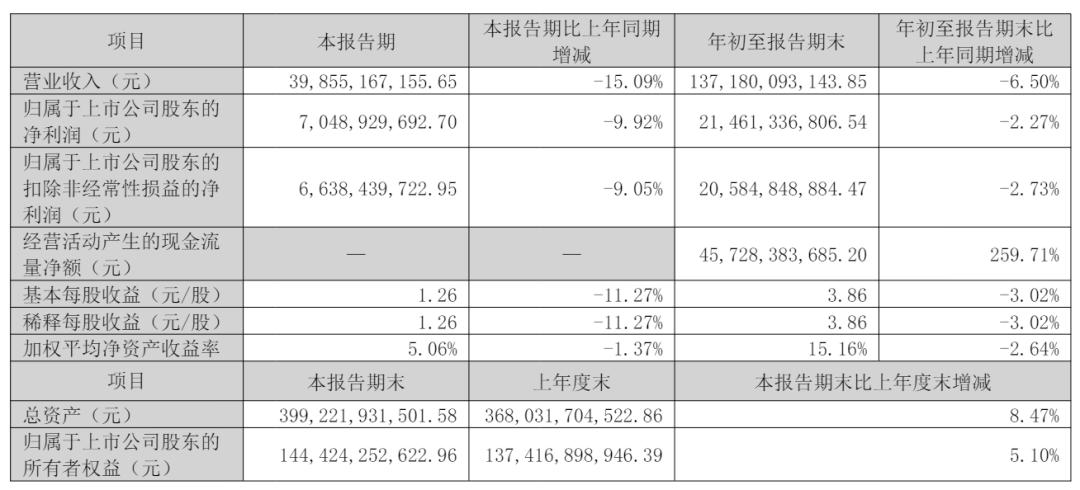
Core Viewpoint - Gree Electric Appliances is experiencing a decline in revenue and net profit, facing significant competition from Xiaomi in the home appliance market [12][14]. Financial Performance - For Q3 2025, Gree's revenue was 39.855 billion yuan, a decrease of 15% year-on-year; net profit was 7.049 billion yuan, down 10% year-on-year; and net profit after deducting non-recurring items was 6.638 billion yuan, down 9% year-on-year [1]. - For the first nine months of 2025, Gree's revenue was 137.18 billion yuan, a decline of 6.5% year-on-year; net profit was 21.461 billion yuan, down 2.27% year-on-year; and net profit after deducting non-recurring items was 20.585 billion yuan, down 2.73% year-on-year [3]. Government Subsidies - Gree recorded government subsidies of 700 million yuan for the first nine months of 2025, with 387 million yuan recognized in Q3 [2]. Shareholding Structure - As of September 30, 2025, major shareholders included Zhuhai Mingjun Investment Partnership (16.11%), Jinghai Internet Technology Development Co., Ltd. (7.83%), and Hong Kong Central Clearing Limited (3.93%) [3][6]. - Gree's stock structure shows that Dong Mingzhu holds 1.8% of shares, while various investment funds hold smaller percentages [10]. Competitive Landscape - Gree is facing increasing competition from Xiaomi, which is rapidly expanding its home appliance business and has recently achieved significant sales milestones in air conditioning [12][16]. - Xiaomi's new smart appliance factory is set to produce 700,000 units annually, indicating a strong push into the high-end appliance market [14][16].



雷军一直想撕掉小米“组装厂”的标签
Xin Lang Cai Jing· 2025-10-31 08:17
Core Insights - Xiaomi's new smart home appliance factory in Wuhan has officially commenced production, marking the company's third large-scale smart factory following its smartphone and automotive factories [1][3] - The factory, covering 500,000 square meters, has a planned peak annual production capacity of 7 million units and represents a significant investment of 2.5 billion yuan, achieving production in just 336 days [1][3] - The factory is expected to enhance Xiaomi's position in the air conditioning market, which has seen a competitive "water battle" with Gree, highlighting Xiaomi's growing influence in the industry [1][4] Production and Technology - The Wuhan factory has established a complete industrial chain of "design, research and development, production, and verification," positioning it as a core manufacturing hub for Xiaomi's home appliances [3][5] - The factory's production efficiency is notable, with a high-end air conditioner rolling off the line every 6.5 seconds, and it employs 100% AI visual inspection for key components [3][5] - This development signifies Xiaomi's transition from a traditional assembly model to a more integrated manufacturing approach, emphasizing core technology and smart manufacturing [7][8] Market Position and Strategy - Xiaomi's air conditioning products have seen significant growth, with shipments expected to exceed 5.4 million units by Q2 2025, reflecting a growth rate of over 50% for three consecutive quarters [4] - The introduction of a "10-year free repair" service aims to strengthen Xiaomi's market position, although it has sparked competitive responses from Gree [4][5] - The ongoing debate about Xiaomi's identity as a "contract manufacturer" versus a technology company is central to its strategic positioning and market perception [8][17] Leadership and Vision - Xiaomi's leadership, including Lei Jun and Lu Weibing, has publicly addressed the company's commitment to innovation and technology, aiming to reshape perceptions of Xiaomi as merely an assembly factory [9][17] - Lei Jun's personal narrative reflects a desire to prove that Chinese companies can produce world-class technology products, moving beyond the "assembly factory" label [16][18] - The establishment of self-built factories and in-house chip development is part of a broader strategy to enhance Xiaomi's technological capabilities and market valuation [17][18]
小米雷军:孤注一掷的“最后一战”?
Sou Hu Cai Jing· 2025-10-31 07:53
Core Insights - Lei Jun's venture into the automotive industry represents a significant gamble, marking it as his "last major entrepreneurial project" and intertwining his personal and corporate fate with Xiaomi's future in a highly competitive market [3][4][5] Strategic Decisions - Lei Jun established a wholly-owned subsidiary for car manufacturing with an initial investment of 10 billion RMB, planning to invest 10 billion USD over ten years, showcasing a commitment to unify the company's efforts and instill confidence in stakeholders [4][5] - The strategy aims to replicate Xiaomi's successful business model in the automotive sector, focusing on creating a "mobile intelligent space" that integrates with Xiaomi's broader ecosystem [5][9] Market Positioning - Xiaomi's entry into the automotive market is characterized by a focus on "smart electric vehicles + new retail and service systems + software and ecosystem services," aiming to position its cars as core components of its ecosystem [5][9] - The pricing strategy for the Xiaomi SU7 aims to balance between high-end competitors like NIO and lower-end models, emphasizing value through technology and user experience rather than just low pricing [7][10] Technological Capabilities - Lei Jun's background as a programmer allows him to integrate technology and ecosystem capabilities effectively, opting for a fully self-researched approach in key areas such as electric drive, battery technology, and intelligent driving [9][10] - A significant investment of 3.3 billion RMB is planned for research and development in autonomous driving, indicating a commitment to achieving industry-leading technology [10] Market Challenges - The automotive sector poses unique challenges, particularly regarding safety and quality, which are critical for brand reputation. Xiaomi must establish rigorous quality control to avoid potential crises [11][12] - The timeline for market validation and profitability is extended, with competitors like Tesla and BYD continuously innovating, creating a narrow window for Xiaomi to adapt and succeed [12][13] Financial Performance - Recent data indicates that Xiaomi's automotive business achieved a gross margin of 26.4% in Q2, significantly higher than competitors, with projections suggesting a potential for quarterly profitability by Q3 2025 [13][15] - The operating loss for Xiaomi's innovative business segment, which includes automotive, has decreased from 1.5 billion RMB in Q3 2024 to 300 million RMB in Q2 2025, reflecting improved financial health [13][15] Conclusion - Lei Jun's automotive venture is a complex endeavor that seeks to merge internet methodologies with traditional manufacturing, presenting both opportunities and challenges for Xiaomi's future [15]
002337签大单!机构大幅抢筹3股
Zheng Quan Shi Bao· 2025-10-28 14:40
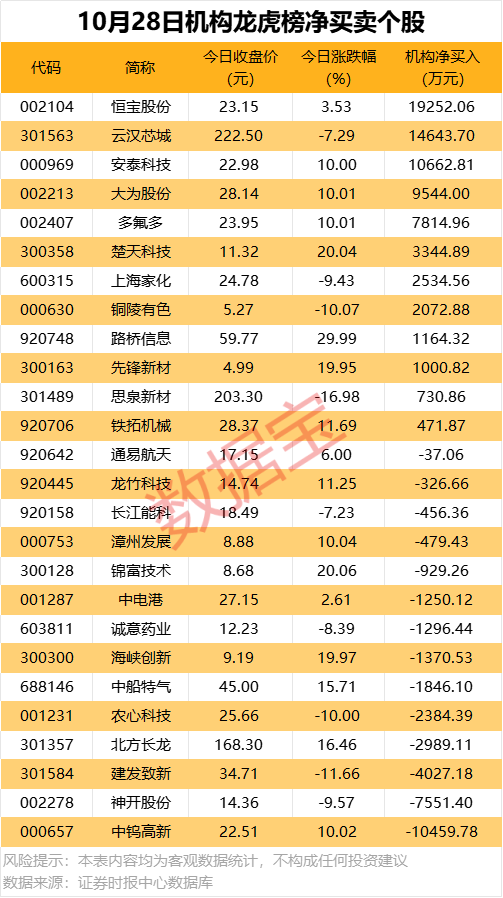
Market Overview - The three major A-share indices experienced a slight decline on October 28, with the Shanghai Composite Index losing the 4000-point mark. The total trading volume in the Shanghai and Shenzhen markets reached 21,653.07 billion yuan, a decrease of over 190 billion yuan compared to the previous trading day. More than 2300 stocks closed higher, with 72 stocks hitting the daily limit up [1] - The Hong Kong stock market also saw a collective decline, with the Hang Seng Index dropping by 0.33%. Major technology stocks fell, including NetEase-S down over 2%, and Meituan-W, Xiaomi Group-W, Tencent Holdings, Alibaba-W, and Lenovo Group all down over 1% [1] Xiaomi Group Performance - Xiaomi Group-W's stock fell by 1.92% today, continuing a downward trend with a decline of over 24% since September 26. Citigroup released a report indicating that Xiaomi is expected to announce its Q3 2025 earnings on November 18, with overall performance likely to be slightly below expectations due to lower smartphone gross margins and IoT revenue. The adjusted net profit is projected to reach 10.2 billion yuan, representing a year-on-year increase of 64% but a quarter-on-quarter decrease of 5% [2] Xiaomi's New Factory - Xiaomi's smart home appliance factory officially commenced production in Wuhan on October 28, with founder Lei Jun present at the ceremony. This factory is Xiaomi's first self-built smart home appliance factory and marks the third large-scale smart production base following the Beijing Xiaomi Automotive Super Factory and the Beijing Mobile Phone Smart Factory. The factory's launch signifies the completion of Xiaomi's "full ecosystem" strategy in large self-built smart factories [4] Institutional Trading Insights - In today's trading, institutions net bought 12 stocks and net sold 14 stocks. The top three net bought stocks were Hengbao Co., Ltd., Yunhan Chip City, and Antai Technology, each with net purchases exceeding 100 million yuan [5] - The net selling stocks included Zhongtung High-tech, which saw a net sell of 105 million yuan, followed by ShenKai Co., Ltd., Jianfa Zhixin, Beifang Changlong, and Nongxin Technology, each with net sells exceeding 20 million yuan [5] Northbound Capital Flow - Northbound capital saw net purchases in 5 stocks, with Zhongtung High-tech and Fangda Carbon being the top net buyers, amounting to 80.61 million yuan and 19.15 million yuan, respectively [8] - Conversely, 11 stocks experienced net selling from northbound capital, with Shanghai Jahwa and Hengbao Co., Ltd. each facing net sells exceeding 100 million yuan [7]
卢伟冰:小米空调不打价格战、目标中国前二
Guan Cha Zhe Wang· 2025-10-28 14:30
Core Insights - Xiaomi has officially launched its third major manufacturing facility, the Wuhan Smart Home Appliance Factory, marking a significant step in its "human-vehicle-home ecosystem" strategy [1] Group 1: Factory Details - The Wuhan factory covers over 750 acres (over 500,000 square meters) with a total investment plan exceeding 2.5 billion yuan, and a peak annual production capacity of 7 million units, expected to generate an annual output value of 14 billion yuan [3] - The factory was completed in just 11 months, with structural completion in less than two months and equipment installation and debugging taking six months, showcasing the "Wuhan speed" [3] Group 2: Business Goals and Performance - Xiaomi aims to become a leading brand in China's home appliance sector within five years, targeting a scale of 100 billion yuan in its home appliance business and aiming for its air conditioning segment to rank among the top two in the Chinese market [3] - The company reported that air conditioning shipments are expected to exceed 5.4 million units in Q2 2025, setting a new quarterly record, with growth rates surpassing 50% for three consecutive quarters, and a 66% year-on-year increase in smart home appliance revenue [3] Group 3: Strategic Vision - Xiaomi is committed to being a contributor to the industry rather than a disruptor, focusing on promoting industry progress without engaging in price wars [3] - The company has established a complete industrial chain in Wuhan, including R&D, manufacturing, and validation, positioning the city as a core manufacturing hub for its home appliances and a benchmark for smart manufacturing in Central China [4]

小米智能家电工厂竣工投产,未来五年冲刺千亿规模
Guo Ji Jin Rong Bao· 2025-10-28 09:00
Core Insights - Xiaomi has officially launched its smart home appliance factory, marking the third major manufacturing base in its "people, vehicles, and home ecosystem" strategy [1][3] - The factory, located in Wuhan, covers over 750 acres with a total investment exceeding 2.5 billion yuan, and is expected to achieve an annual output value of 14 billion yuan [1][3] Manufacturing and Technology - The smart home appliance factory aims to set a new benchmark in smart and green manufacturing by incorporating cutting-edge technologies such as digital twins, AI visual inspection, and aerial logistics [3] - The factory boasts a first-pass yield rate of over 99%, with a production efficiency of one high-end air conditioner every 6.5 seconds, and an annual production capacity of 51 units per square meter [3] Strategic Goals - Xiaomi's president, Lu Weibing, emphasized that the home appliance segment is a crucial part of the company's ecosystem strategy, with a target to reach a scale of 100 billion yuan in the next five years and to rank among the top two in the Chinese air conditioning market [3] - The Wuhan facility is positioned as the core manufacturing hub for Xiaomi's home appliances and aims to be a model for smart manufacturing in Central China [3]
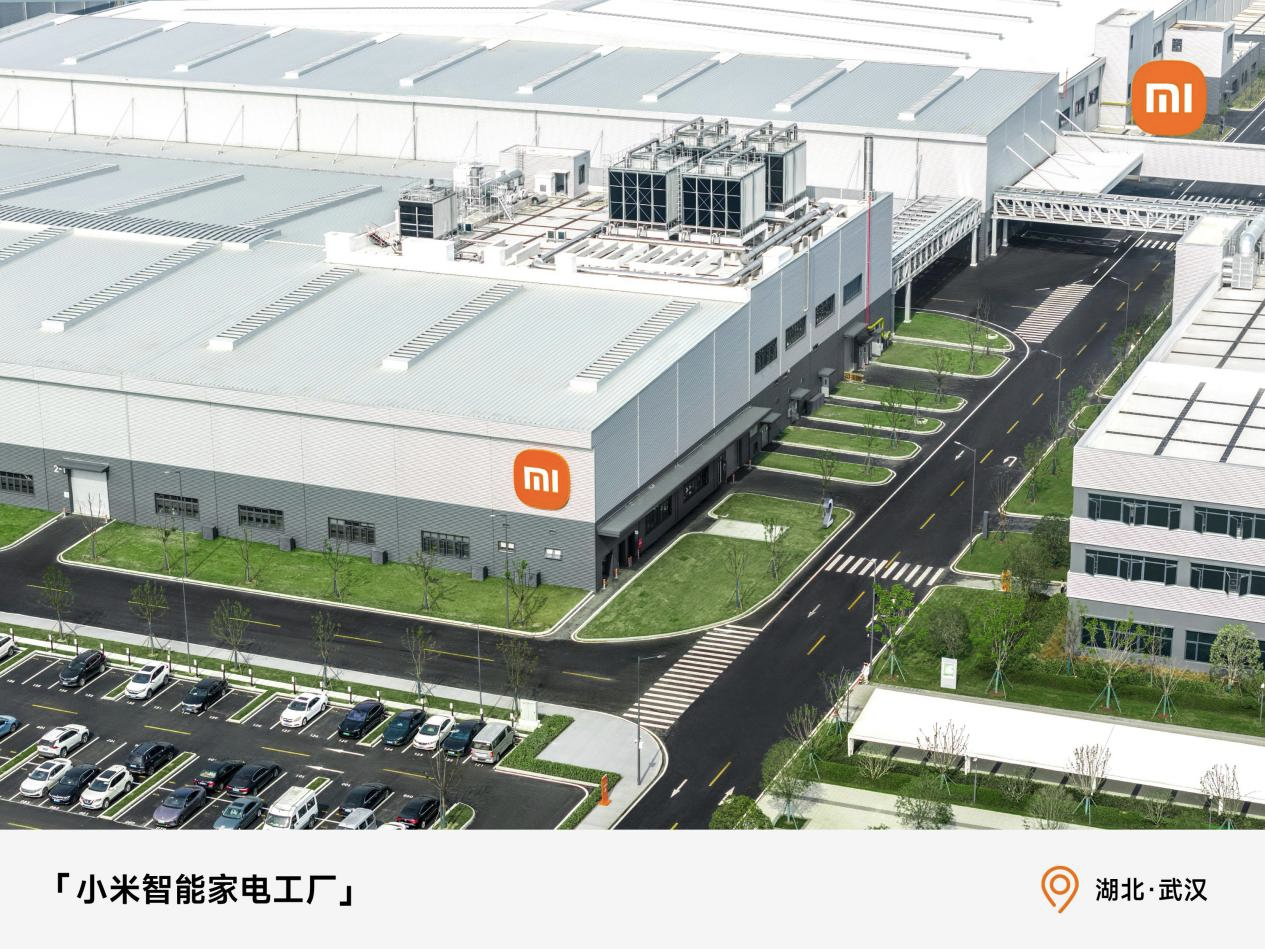
雷军现身官宣小米智能家电工厂正式投产,6.5秒即可下线一套空调
Sou Hu Cai Jing· 2025-10-28 07:16
Group 1 - Xiaomi's smart home appliance factory in Wuhan officially commenced production, marking the company's third large-scale smart manufacturing base following its automotive and smartphone factories in Beijing [1][3] - The factory was built in just 14 months, showcasing the "Wuhan speed" and "Optics Valley speed," significantly reducing the average construction period by nearly half [1] - The factory occupies over 750 acres with a total investment exceeding 2.5 billion yuan, aiming for an annual production capacity of 7 million units, particularly focusing on high-end air conditioning products [1][3] Group 2 - The factory features advanced digital manufacturing capabilities, including AI and automation, and will initially focus on air conditioning products while planning to expand to refrigerators and washing machines in future phases [3] - Xiaomi's Q2 2025 financial report indicated record revenue of 116 billion yuan, a year-on-year increase of 30.5%, with adjusted net profit reaching 10.8 billion yuan, up 75.4% [6] - The company's automotive business is rapidly growing, with revenue from smart electric vehicles and AI innovations reaching 21.3 billion yuan in the first half of 2025, and over 30,000 vehicles delivered cumulatively [6][7] Group 3 - The IoT and consumer products segment achieved record revenue of 38.7 billion yuan, a 44.7% year-on-year increase, with smart home appliance revenue surging by 66.2% [7] - Air conditioning shipments exceeded 5.4 million units, marking a more than 60% year-on-year growth, while refrigerator and washing machine shipments also saw significant increases [7]
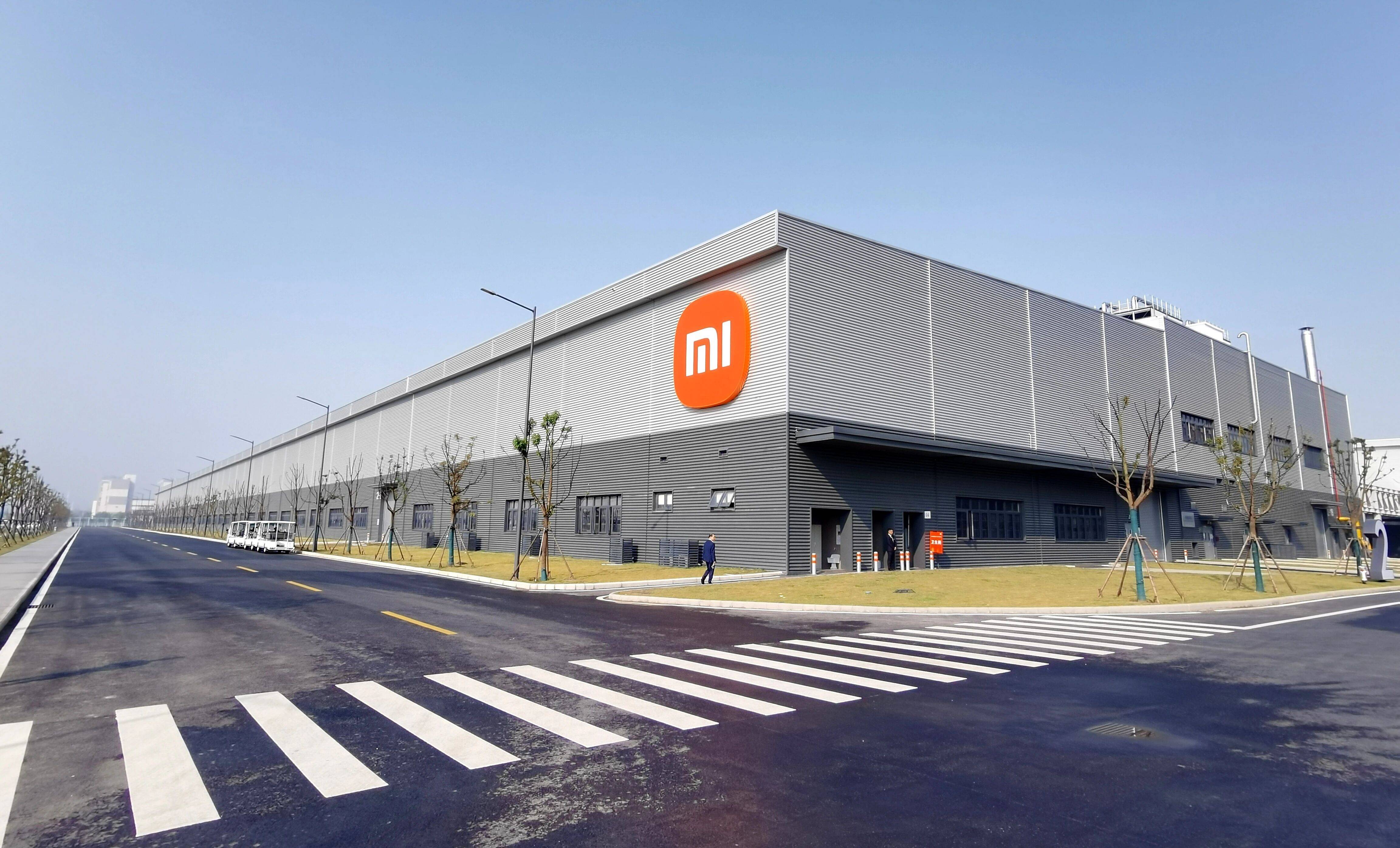
小米智能家电工厂竣工投产:携手湖北武汉打造智能制造新高地
Zhong Guo Zhi Liang Xin Wen Wang· 2025-10-28 06:50
Core Insights - Xiaomi's smart home appliance factory in Wuhan officially commenced production on October 28, 2025, marking a significant advancement in its "human-vehicle-home ecosystem" strategy in smart manufacturing [1] - The factory, which is Xiaomi's third major manufacturing base following its automotive and smartphone factories, is crucial for supporting its smart manufacturing initiatives [1] - The factory covers over 750 acres with a planned investment exceeding 2.5 billion yuan, aiming for an annual production capacity of 7 million units and an expected annual output value of 14 billion yuan [1] Group 1 - The smart home appliance factory was constructed in a record time of 11 months, showcasing the "Wuhan speed" and "Optics Valley speed" [1] - The factory aims to set a new benchmark in smart and green manufacturing by incorporating technologies such as digital twins, AI visual inspection, and aerial logistics for comprehensive production management [1] - The factory boasts a first-pass yield rate exceeding 99%, with a production rate of one high-end air conditioner every 6.5 seconds, achieving an annual production capacity of 51 units per square meter [1] Group 2 - Xiaomi's home appliance business has experienced rapid growth, with air conditioner shipments surpassing 5.4 million units in Q2, maintaining a growth rate exceeding 50% for three consecutive quarters [2] - The company aims to reach a scale of 100 billion yuan in its home appliance business over the next five years, with a goal of ranking among the top two in the Chinese air conditioner market [2] - Wuhan has become a key hub for Xiaomi's home appliance ecosystem, establishing a complete industrial chain from design to manufacturing [2]
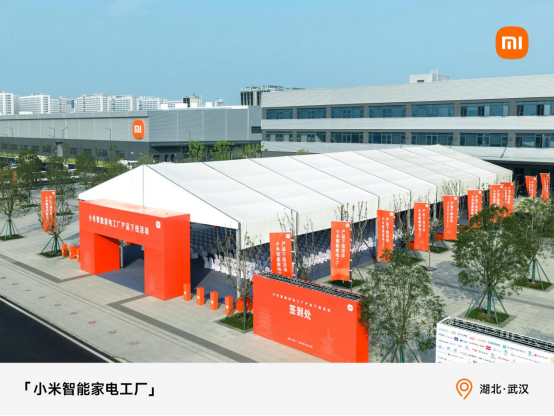
雷军现身武汉 官宣小米智能家电武汉工厂投产 6.5秒即可下线一台高端空调
Chang Jiang Ri Bao· 2025-10-28 06:13
Core Insights - Xiaomi's CEO Lei Jun announced the official production launch of the company's smart home appliance factory in Wuhan, marking the third large-scale smart factory for Xiaomi after its mobile phone and automotive factories [1][5] - The factory is a digitalized facility capable of producing a high-end air conditioner every 6.5 seconds, showcasing advanced automation and AI-driven quality control [1][9] Group 1: Factory Overview - The smart home appliance factory in Wuhan represents Xiaomi's first self-built facility dedicated to home appliances, completing the "people, vehicles, and home" ecosystem strategy [5] - The project took approximately 14 months from signing to production, significantly shorter than the industry average [4][5] - The factory has an initial investment of 2.5 billion RMB, covers an area of 500,000 square meters, and has a planned peak capacity of 7 million units, with an estimated output value of 14 billion RMB [5] Group 2: Technological Advancements - Unlike traditional factories, the Xiaomi smart appliance factory achieves full digitalization and automation in production, information, and equipment management, greatly enhancing production precision and efficiency [6] - The factory is equipped with the "Xiaomi Surge Intelligent Manufacturing Platform," which enables intelligent control of manufacturing equipment [5][6] Group 3: Strategic Importance - The establishment of the factory in Wuhan is part of Xiaomi's broader strategy, which includes a global headquarters, an experimental center, and the smart factory, aiming to strengthen its industrial ecosystem [9] - Xiaomi plans to build a research and development center with a workforce of 10,000 in Wuhan, further solidifying its commitment to the region [12]
刚刚,雷军闪现武汉!小米智能家电工厂长啥样?
Sou Hu Cai Jing· 2025-10-28 05:40
Core Points - Xiaomi's smart home appliance factory in Wuhan has officially commenced production, marking a significant milestone for the company [1][4] - The factory, covering over 500,000 square meters with a total investment exceeding 2.5 billion yuan, is designed to produce smart air conditioners with a peak annual capacity of 7 million units and an expected annual output value of 14 billion yuan [4][9] - The factory features a fully digital and information-based manufacturing platform, achieving a product first-pass yield rate of over 99% through 100% AI visual inspection [7][10] Investment and Production Capacity - The smart appliance factory is expected to begin large-scale production of air conditioners in 2025, with a production rate of one unit every 6.5 seconds [4][9] - Xiaomi aims to establish itself as a leading brand in the home appliance sector, targeting a revenue scale of 100 billion yuan within five years [9][10] Strategic Importance - The factory is part of Xiaomi's "People, Vehicles, and Home" ecosystem strategy, reinforcing its commitment to high investment in technology and self-research in the home appliance business [9][10] - The establishment of the factory is anticipated to attract a number of upstream and downstream enterprises in the supply chain, enhancing Hubei's competitiveness in the smart home appliance sector [10][11] Timeline and Development - The factory's construction timeline includes key milestones such as the signing of the project in August 2024, groundbreaking in November 2024, and structural completion in January 2025 [12][13] - The project has progressed rapidly, with significant efforts made to ensure timely completion and operational readiness [12][13]