农业科技

Search documents
沃野金黄、瓜果飘香、渔获满仓铺展喜人“丰”景 “科技+”让农业向“智”而行
Yang Shi Wang· 2025-09-26 04:14
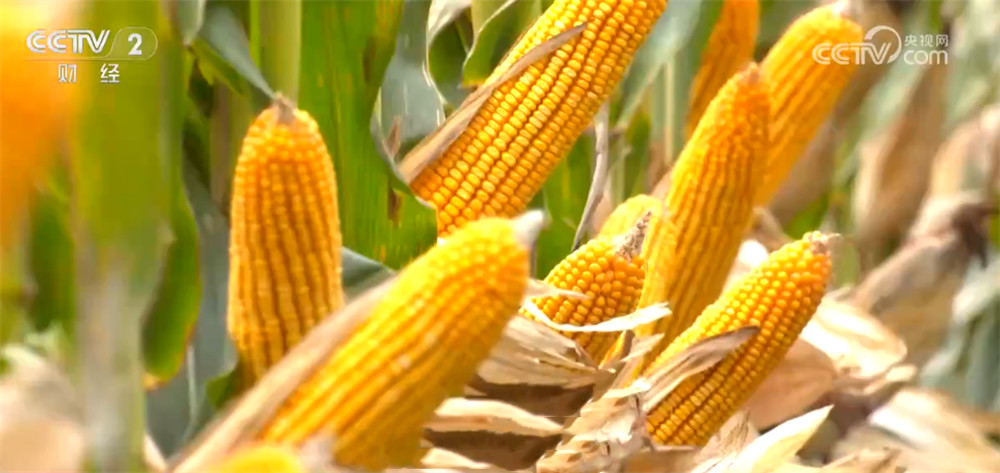
Group 1: Agricultural Production Overview - The latest agricultural report indicates that approximately 20% of the national autumn grain has been harvested, with over 30% of the middle rice and more than 10% of corn and soybeans harvested [1] - In regions like Southwest China, nearly 60% of the corn has been harvested, while the Yangtze River middle and lower reaches have over 20% harvested [1] Group 2: Corn Production Innovations - The introduction of high-yield and quality corn varieties, such as "Zhongyu 303," is significantly contributing to increased corn production in Inner Mongolia [2][4] - The planting area for "Zhongyu 303" in Tongliao has reached over 500,000 acres, expected to substantially boost grain output [8] Group 3: Agricultural Competitions and Community Engagement - A unique competition during the harvest festival in Tongliao allows farmers to showcase their freshly harvested products, promoting community engagement and sharing of agricultural success [7][10] - The competition includes various categories, measuring both weight and taste of different agricultural products [7] Group 4: Technological Advancements in Agriculture - The use of smart agricultural systems is enhancing farm management efficiency, allowing farmers to enjoy improved living conditions and more leisure time [15][18] - In Heilongjiang, advanced technologies like satellite remote sensing and IoT are being utilized for efficient rice harvesting, transforming traditional farming practices [19][21][23] Group 5: Regional Agricultural Highlights - In Zhejiang, full mechanization of rice planting and harvesting is significantly improving efficiency, with various crops like loofah and kiwi also seeing high yields [24][26][28][30] - In Gansu, the raspberry industry is expanding through value-added processing and cooperative farming, increasing local farmers' incomes [31][33] - In Fujian, the seasonal catch of tilapia in the artificial freshwater lake is expected to yield approximately 13,000 tons of freshwater products, valued at around 230 million yuan [34][35]

闯关港股上市的极飞科技:业绩快速增长,两年合计被罚超6400万元
Sou Hu Cai Jing· 2025-09-26 01:20
Core Viewpoint - XAG Technology has submitted its prospectus for listing on the Hong Kong Stock Exchange, changing its positioning from an agricultural technology company to an agricultural robotics company [1][3]. Group 1: Company Overview - XAG Technology specializes in the research, manufacturing, and sales of agricultural drones, unmanned vehicles, autonomous farming devices, and IoT equipment for smart agriculture [3]. - The company has a dealer network covering over 900 counties in China and has expanded its reach to nearly 60 countries and regions worldwide [3]. Group 2: Market Position - According to Frost & Sullivan, XAG Technology ranks second globally in the agricultural robotics and agricultural drone sectors, with market shares of 10.7% and 17.1% respectively in 2024 [3]. - The company has paid 450,000 RMB to Frost & Sullivan for industry reports [3]. Group 3: Financial Performance - XAG Technology's revenue for the years 2022, 2023, 2024, and the first half of 2025 was approximately 605 million RMB, 614 million RMB, 1.066 billion RMB, and 745 million RMB respectively, with net profits of -254 million RMB, -133 million RMB, 70.4 million RMB, and 130 million RMB [3][4]. - The company has shown a compound annual growth rate (CAGR) of 32.76% in revenue from 2022 to 2024, with a significant revenue increase of 73.40% in 2024 compared to 2023 [5]. - The first half of 2025 saw a slight revenue increase of 2.08% compared to the same period in 2024 [5]. Group 4: Overseas Business - XAG Technology's overseas revenue for the reporting period was approximately 146 million RMB, 163 million RMB, 371 million RMB, and 187 million RMB, with a CAGR of 59.4% from 2022 to 2024 [6]. Group 5: Regulatory Issues - The company has faced penalties in previous years, amounting to 54.456 million RMB in 2022 and 10.063 million RMB in 2023, but considers these administrative penalties not to significantly impact its performance or future development [6][7].

记者手记:科技扎根黑土地
Xin Hua Wang· 2025-09-24 01:53
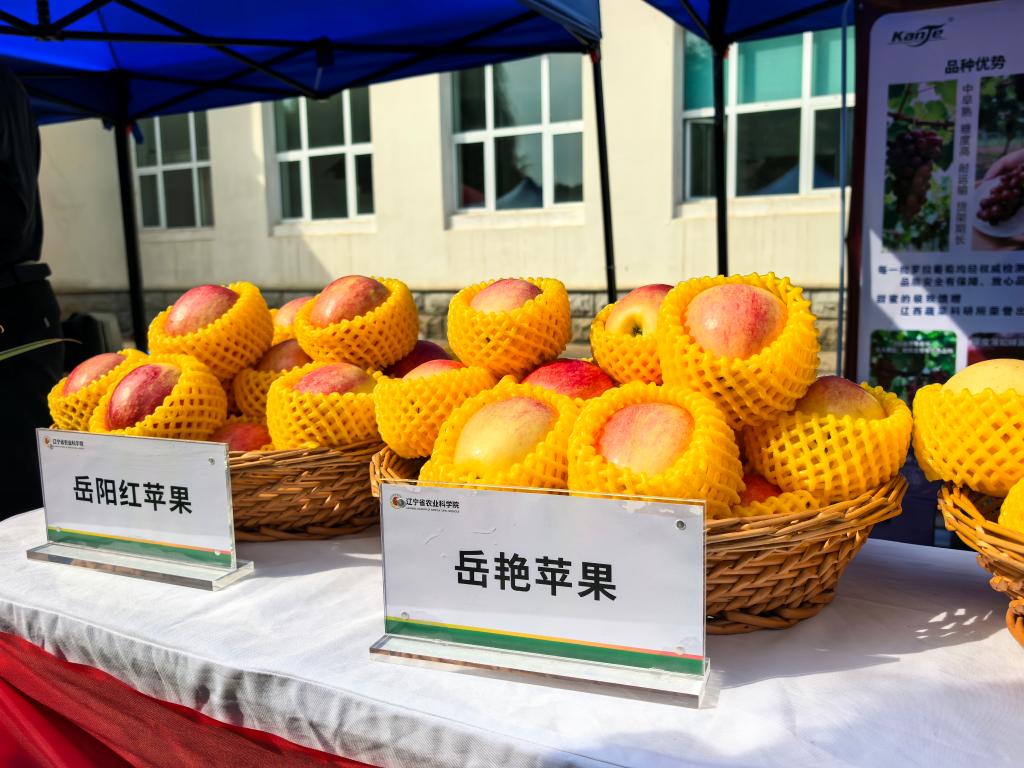
Core Insights - The integration of technology in agriculture in Liaoning Province has significantly improved crop yields, with corn yields in Zhangwu County increasing from 1,500 pounds per acre to over 2,000 pounds due to advanced planting techniques and precision farming technologies [1][2] - The Liaoning Academy of Agricultural Sciences has developed over 1,600 new crop varieties and established more than 1,700 technology demonstration bases, impacting an area of 30 million acres annually [2] - The recent Liaoning International Agricultural Expo showcased a variety of agricultural technology products, indicating a trend of deep integration between technology and agriculture [3] Group 1 - The introduction of high-density corn planting techniques has transformed previously low-yield sandy soils into high-yield "ton grain fields" [1] - The collaboration between agricultural experts and farmers has been crucial in implementing these new technologies effectively [1] - The use of digital management systems by companies like Wanying Agricultural Technology Co., Ltd. has improved production efficiency and reduced resource costs [3] Group 2 - The "head goose" training program initiated in 2022 has trained 1,900 individuals, with many becoming agricultural technicians and helping to increase the income of surrounding farmers [3] - The presence of younger individuals and agricultural experts in the fields has revitalized the agricultural landscape, leading to increased productivity and innovation [6] - The overall modernization of agricultural practices in Liaoning is expected to enhance future agricultural production and sustainability [6]
“十四五”时期,我国粮食综合生产能力持续提升 中国饭碗端得更稳
Ren Min Ri Bao· 2025-09-23 22:18
Core Insights - China's grain production has consistently remained above 1.3 trillion jin since the 14th Five-Year Plan, with projections for 2024 to exceed 1.4 trillion jin for the first time [1] - The summer grain harvest has reached the second-highest record in history, with early rice yields surpassing 400 kg per mu, indicating a solid foundation for the upcoming harvest season [1] Group 1: Grain Production and Policies - The central government's focus on food security is underscored by continuous policy support, including the implementation of the Food Security Guarantee Law and targeted financial investments [3] - Since the 14th Five-Year Plan, grain planting areas have consistently increased, with 26 out of 31 provinces expected to see production increases in 2024, totaling a rise of 74 billion jin compared to 2020 [3] - The contribution of agricultural technology to grain production has reached 63.2%, highlighting its role as a key driver for food security [6] Group 2: Agricultural Practices and Innovations - Farmers are adopting advanced agricultural practices, such as the use of drip irrigation and precision fertilization, which have led to improved crop yields and reduced costs [4][6] - The integration of technology, including satellite remote sensing and big data, is enhancing agricultural productivity and efficiency [6] - The establishment of over 10 million acres of high-standard farmland has bolstered the resilience of grain production against extreme weather events [3] Group 3: New Agricultural Models - The emergence of new agricultural operators, including family farms and cooperatives, is transforming the agricultural landscape and enhancing food security [9] - The cultivation of high-quality farmers has reached over 9 million, contributing to the development of new agricultural business models [9] - The focus on ecological farming practices is yielding both environmental benefits and economic returns for farmers [4][5] Group 4: Global Responsibility and Food Security - China plays a significant role in global food security, producing over 20% of the world's grain with only 9% of the world's arable land [10] - The country has implemented numerous food aid projects in over 30 countries, demonstrating its commitment to international cooperation in food security [10] - The ongoing efforts to ensure food security reflect China's responsibility as a major global player in agriculture [10]
中国饭碗端得更稳
Ren Min Ri Bao· 2025-09-23 22:12
Core Insights - China's grain production has consistently remained above 1.3 trillion jin since the 14th Five-Year Plan, with projections for 2024 to exceed 1.4 trillion jin for the first time [1][3] - The summer grain harvest has reached the second-highest record in history, with early rice yields surpassing 400 kg per mu, indicating a solid foundation for the upcoming autumn harvest [1][3] Group 1: Grain Production and Policies - The central government's policies have prioritized food security, with the implementation of the Food Security Guarantee Law and increased financial support for disaster prevention and production stabilization [3][4] - The total grain planting area has been increasing, with 26 out of 31 provinces expected to see production increases in 2024, resulting in a total output increase of 74 billion jin compared to 2020 [3][4] Group 2: Technological Advancements - Agricultural technology has significantly contributed to grain production, with the contribution rate of agricultural technology reaching 63.2%, enhancing food security and supply [6][10] - New technologies, such as satellite remote sensing and precision irrigation, have been widely adopted, leading to an increase in average grain yield to 394.7 kg per mu, a rise of 12.5 kg compared to the end of the 13th Five-Year Plan [6][10] Group 3: Sustainable Practices - The implementation of protective farming practices in Northeast China has improved soil health and crop yields, with over 1.12 million acres under such practices [4][5] - The promotion of eco-friendly farming techniques has resulted in reduced fertilizer usage and increased profitability for farmers, with green rice fetching higher market prices [4][5] Group 4: New Agricultural Models - The emergence of new agricultural entities, such as family farms and cooperatives, has transformed agricultural practices, with over 900 million high-quality farmers trained and more than 1.1 million operational entities providing social services [9][10] - The integration of modern farming techniques and community-based initiatives is enhancing rural economies and food security [9][10]
习近平总书记的节日祝贺和诚挚问候在我省引发热烈反响
Da Zhong Ri Bao· 2025-09-23 01:43
Group 1 - The article highlights the positive response from farmers and agricultural workers in Shandong Province to General Secretary Xi Jinping's holiday greetings, emphasizing their commitment to rural revitalization and modernization of agriculture [2][3] - Farmers like Pang Haiyun, who cultivates over 400 acres of corn, report a successful harvest year, attributing their success to high-standard farmland construction and government support in terms of subsidies and technical guidance [2][5] - The establishment of cooperatives in villages, such as in Xingwangzhuang, has led to increased income for villagers through guaranteed returns and profit sharing, aligning with the government's emphasis on promoting employment and income growth for farmers [3][4] Group 2 - Shandong Province has made significant advancements in agricultural technology, with a contribution rate of agricultural technology progress reaching 67.4%, and a coverage rate of improved varieties at 98%, positioning the province as a leader in agricultural productivity [6] - The province's summer grain yield reached 547.4 billion jin, an increase of 4.1 billion jin year-on-year, with a per-acre yield of 452.8 kg, the highest in the country, indicating strong agricultural performance [5][6] - The focus on enhancing agricultural production capacity through technological support is evident, with plans to promote the application of good seeds, equipment, and techniques to further strengthen Shandong's agricultural output [6]
习语品读|藏粮于地、藏粮于技
Yang Shi Wang· 2025-09-22 23:47
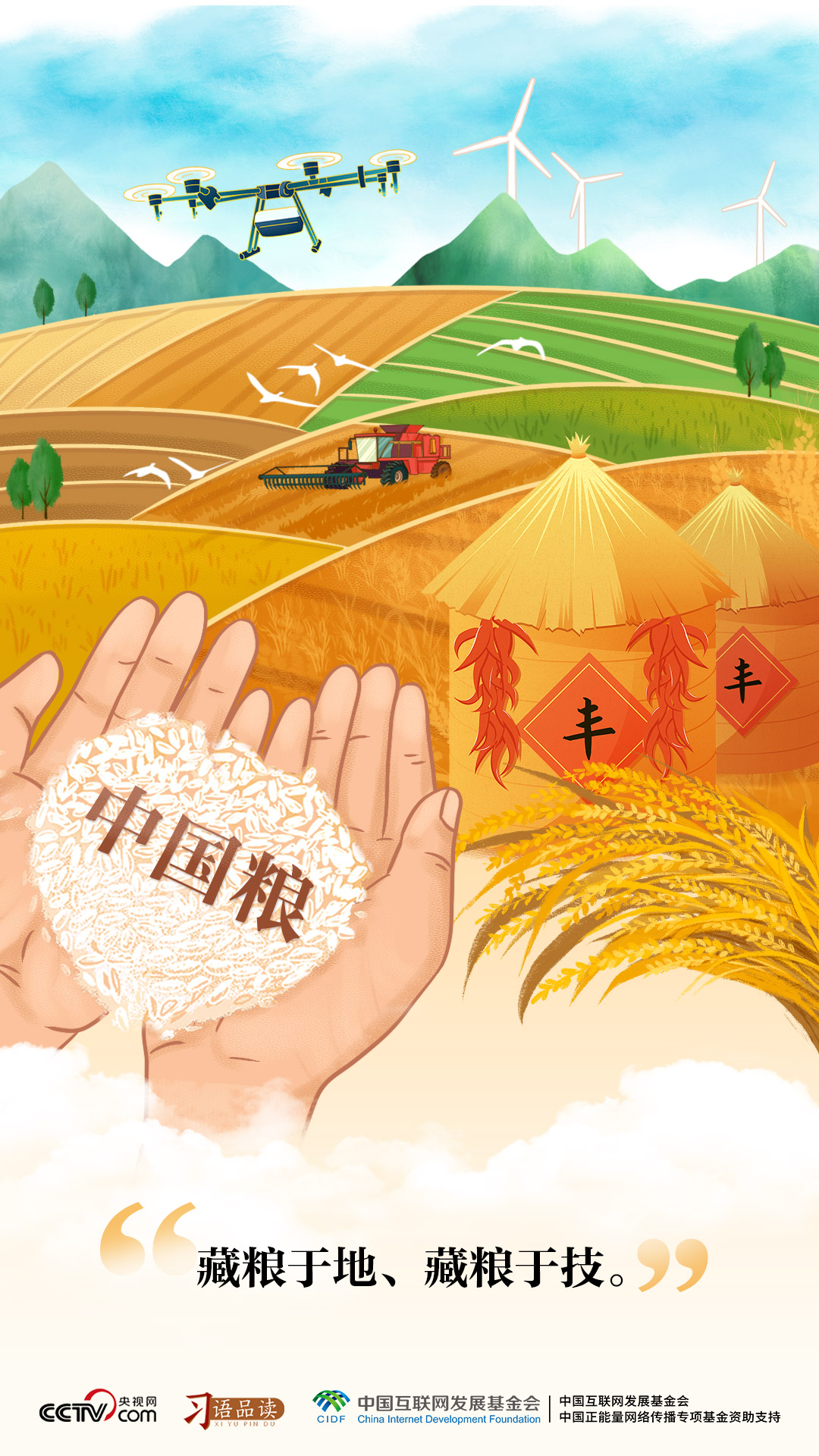
Core Viewpoint - The importance of food security in China is emphasized, highlighting that it is essential for social stability, national security, and economic development. The government prioritizes ensuring food supply as a top governance task [4][6]. Group 1: Food Security Strategy - The strategy of "storing grain in the land and technology" is introduced, which focuses on protecting arable land and enhancing agricultural productivity through technological innovation [4][9]. - The government has committed to strict land protection measures, ensuring that the quality and quantity of arable land are maintained, with a target of 1.8 billion mu of arable land [5][6]. Group 2: Agricultural Development - As of 2024, China's grain production is projected to reach 1.4 trillion jin, with a per capita grain availability of 500 kg, significantly above the international safety line of 400 kg [6][8]. - The contribution rate of agricultural technology is expected to reach 63.2% by the end of 2024, with over 75% mechanization in crop farming and a seed coverage rate exceeding 96% [8][9]. Group 3: Long-term Vision - The government stresses the need for continuous vigilance in agricultural production, emphasizing that complacency due to past successes could jeopardize future food security [7][9]. - The focus on self-sufficiency in grain production is reiterated, with a clear directive that the majority of food must be domestically produced to ensure strategic food security [8][9].
科技支撑,铺展丰收新画卷(今日谈)
Ren Min Ri Bao· 2025-09-22 22:21
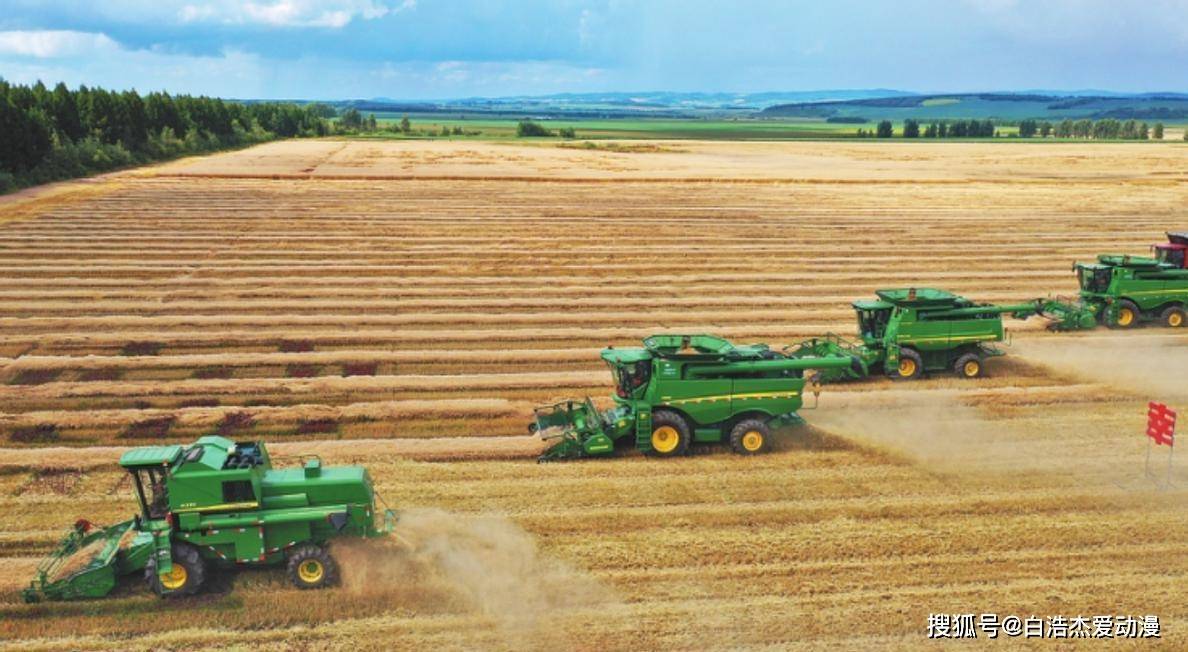
Core Insights - The article emphasizes the importance of agricultural technology in achieving food security and modernizing rural agriculture in China [1] Group 1: Agricultural Technology and Innovation - Agricultural technology is crucial for stabilizing summer grain production and increasing early rice yields, especially in the face of natural disasters like droughts and floods [1] - The contribution rate of agricultural technology progress in China has reached 63.2%, highlighting its significance in enhancing agricultural productivity [1] - The implementation of new technologies, models, and equipment in agriculture is essential for developing new productive forces tailored to local conditions [1] Group 2: Food Security and Agricultural Modernization - Strengthening agricultural technology support is a key aspect of accelerating agricultural and rural modernization [1] - The article mentions the use of over 800,000 combine harvesters for summer harvests and the transformation of agricultural practices through data-driven methods [1] - The focus on technology-driven agriculture aims to secure food safety and solidify the foundation of rural development in China [1]
全球粮价或因美联储降息大涨,中国老百姓的米袋子受影响吗?
Sou Hu Cai Jing· 2025-09-22 17:50
Group 1 - The Federal Reserve's interest rate cut has triggered significant attention towards the food sector, particularly rice, as capital seeks new investment opportunities amidst declining dollar asset attractiveness [1][5] - Historical price peaks in food commodities have not deterred capital inflow, with international rice prices reaching record highs, indicating a shift in investment focus from traditional assets like oil and gold to food [1][3] - The relationship between food and oil prices is intricate, where rising oil prices increase the costs of agricultural inputs and logistics, ultimately affecting food prices at the consumer level [3][5] Group 2 - China's food security is bolstered by a robust strategic system, with grain production expected to exceed 1.4 trillion jin in 2025, ensuring self-sufficiency in staple grains like rice and wheat [7][15] - Despite high domestic food prices, China maintains stable prices for local rice and pork, while imported high-end food items are experiencing slight price increases [7][12] - China's reliance on imports for certain commodities, such as soybeans, remains significant, with a self-sufficiency rate of only 15.2%, highlighting the need for strategic adjustments in import sources [9][10] Group 3 - The potential indirect effects of rising global food prices could lead to increased costs in livestock farming, thereby pushing up domestic meat prices [12] - The People's Bank of China may follow the Fed's lead in cutting interest rates, which could lower mortgage payments but also reduce returns on savings and investment products [14] - Continuous investment in agricultural technology, such as high-standard farmland construction and innovative storage solutions, is crucial for enhancing food security and reducing waste [14][15]

科技赋能韶关“菌”彩,主品种占广东60%市场
21世纪经济报道· 2025-09-19 13:12
Core Viewpoint - The article highlights the success of the "Hundred Million Project" in Guangdong, focusing on the agricultural technology applications, particularly in the edible mushroom industry in Shaoguan, which is recognized as the "Mushroom Capital of Guangdong" [1]. Group 1: Agricultural Technology Applications - The "Hundred Million Project" aims to inject new momentum into agriculture through technology, covering six major themes including seed industry revitalization, marine ranching, new agricultural machinery, smart farms, ecological agriculture, and digital production and sales [1]. - The series aims to showcase 100 agricultural technology application scenarios, emphasizing the role of technology in enhancing agricultural productivity and sustainability [1]. Group 2: Edible Mushroom Industry in Shaoguan - Shaoguan's Qujiang District produces up to 180 tons of fresh mushrooms daily, with an annual output exceeding 50,000 tons, capturing 60% of the market share in Guangdong [1]. - Xinghe Biotechnology Co., Ltd. is a leading enterprise in Shaoguan's edible mushroom industry, utilizing molecular markers, hybridization, and purification techniques to cultivate high-yield and uniquely flavored mushroom strains [1]. - The company has established a standardized breeding system with over 20 strains, significantly increasing both the nutritional value and yield of the mushrooms [1].