
即时零售

Search documents
三全食品布局即时零售与海外市场,2026年产品矩阵持续迭代
Jing Ji Guan Cha Wang· 2026-02-12 01:23
Core Insights - The company is focusing on instant retail as a key development area, planning to deepen cooperation with platforms like Taobao, Meituan, and JD.com to accelerate home delivery and flash warehouse business expansion [2] - The company has registered subsidiaries in Hong Kong, Cayman Islands, and Australia, indicating an active pursuit of international market opportunities for growth [3] - New product lines such as "China's Good Dumplings," "DuoDuo Series" dumplings, and "Explosive Grilled Sausages" have performed well in the market, with plans for further product innovation in health-oriented and Western-style categories [4] Business Progress - The company aims to enhance its instant retail business, with a continued investment strategy through 2026 to capitalize on online consumption trends [2] - Direct sales channels are improving customization levels through a "total-to-total" cooperation model, leading to a significant increase in the number of customized product SKUs and enhanced profitability [5] - The distribution channel is optimizing its structure and implementing refined management to improve single-point output, while also enhancing services for chain restaurant clients [5] International Expansion - The completion of registration for overseas subsidiaries and obtaining relevant investment certificates indicates the company's commitment to executing its international investment plans [3] Product Development - The company plans to continue iterating its product matrix in 2026, focusing on health-oriented products like low GI tangyuan and Western-style products such as pasta to meet diverse consumer demands [4] Financial Overview - Recent capital flow data shows fluctuations, with a net outflow of 4.5797 million yuan on February 3, 2026, while the company's total market value is approximately 10.26 billion yuan, and its stock price has increased by 3.37% year-to-date [6]

年货变形勾勒消费新图景
Xin Lang Cai Jing· 2026-02-11 17:43
Core Insights - The article highlights the evolving consumer behavior in Quzhou as the Spring Festival approaches, with younger generations leading the charge in diverse and experiential shopping [1][2][3] Category Changes - The boundaries of traditional New Year goods are blurring, with a wide range of products available, reflecting a shift from material satisfaction to spiritual experiences [1] - Brands are embracing cultural elements, launching festive products like "God of Wealth" snack gift boxes and themed pastries to meet consumer desires for good fortune and blessings [1] - Tech gadgets are becoming essential items on shopping lists for younger consumers, indicating a trend towards integrating technology into festive celebrations [1] Changing Consumption Patterns - Businesses are adapting to the shift from material to service-oriented consumption, focusing on personalized offerings rather than standardized products [3] - Innovative approaches, such as creating popular meal kits based on trending dishes, are being employed to attract consumers [3] - Local markets are utilizing consumer feedback to tailor their offerings, resulting in significant sales growth during promotional events [3] Supply Chain Innovations - Brands are shifting from traditional marketing to emotional engagement, with products like "crying horse" merchandise seeing a 200% increase in orders [4] - The rise of instant retail is prompting businesses to offer smaller, shareable product sizes and fresh items that align with current market tastes [4] Delivery and Logistics - Intense competition in instant delivery services is expected to peak during the Lunar New Year, with platforms enhancing their logistics and customer experience [5] Channel Diversification - Consumers are increasingly using multiple channels for shopping, including e-commerce platforms and live-streaming services, reflecting a shift from traditional shopping methods [6] - The integration of new retail models is transforming consumer behavior from stockpiling goods to seeking immediate satisfaction [6] - Instant retail channels are effectively meeting the fragmented lifestyle needs of consumers, contributing to local commercial evolution and economic vitality [6]
顺丰同城(09699):深度报告:即时配送东风起,多元助力谱新篇
Guohai Securities· 2026-02-11 13:57
Investment Rating - The report assigns a "Buy" rating for the company, marking its first coverage [2]. Core Insights - The report highlights the growth of the instant delivery sector, driven by the rise of e-commerce platforms and the increasing acceptance of instant retail among consumers. The company is positioned as the largest third-party instant delivery platform in China, having crossed the breakeven point and entered a new growth phase [7][12]. - The company has shown steady revenue growth since its establishment, with a projected revenue CAGR of approximately 34.3% from 2020 to 2024. In the first half of 2025, the company achieved a revenue of 10.236 billion yuan, representing a year-on-year increase of 48.81% [39][7]. - The report anticipates significant revenue growth for the company, projecting revenues of 21.973 billion yuan, 33.956 billion yuan, and 40.901 billion yuan for 2025, 2026, and 2027, respectively, with corresponding year-on-year growth rates of 39.54%, 54.54%, and 20.45% [83][82]. Business Development - The company has two main business segments: same-city delivery and last-mile delivery. The same-city delivery segment is benefiting from the growth of the instant retail industry, with a notable increase in revenue from business-to-business (B2B) services [27][21]. - In the first half of 2025, the B2B same-city delivery business generated revenue of 4.467 billion yuan, a year-on-year increase of 55.4%, while the business-to-consumer (B2C) segment generated 1.312 billion yuan, up 12.7% year-on-year [27][26]. - The last-mile delivery segment also saw significant growth, with revenue reaching 4.457 billion yuan in the first half of 2025, reflecting a year-on-year increase of 56.9% [31]. Industry Outlook - The instant retail industry is expected to accelerate, with the non-food delivery market projected to grow at a rate of approximately 27.7% in 2026, while the food delivery market is expected to grow at 5.9% [49][49]. - The report emphasizes the importance of logistics infrastructure and rider capacity as critical strategic resources for expansion in the instant delivery sector, with an expected CAGR of 17% for the industry from 2025 to 2028 [55][55]. Financial Projections - The company is expected to achieve a net profit of 2.38 billion yuan, 4.52 billion yuan, and 6.87 billion yuan for 2025, 2026, and 2027, respectively, with year-on-year growth rates of 79.98%, 89.54%, and 51.95% [83][82]. - The report projects adjusted net profits of 3.76 billion yuan, 5.05 billion yuan, and 7.55 billion yuan for the same years, indicating strong profitability growth [83][82].

美团50亿元收购叮咚,生鲜零售的出路到底在哪?
Sou Hu Cai Jing· 2026-02-11 13:50
Group 1 - The core viewpoint of the article highlights the unique development path of China's fresh food retail industry, which cannot simply replicate experiences from Japan and the West. The market for instant retail is expected to explode by 2025, reaching a scale of 1-2 trillion yuan, while traditional e-commerce and offline retail remain significantly larger at 15.2 trillion yuan and 44.3 trillion yuan respectively, indicating a rapid growth potential for instant retail [1] - The acquisition of Dingdong Maicai by Meituan is seen as a strategic adjustment reflecting profound changes in the fresh food retail industry, raising questions about quality versus scale, independent development versus reliance on larger platforms, and regional focus versus national expansion [1][3] - The acquisition is not merely about scale but focuses on quality positioning, as Meituan lacks a quality benchmark in the instant retail sector. Dingdong Maicai, known for its strict quality control and premium supply chain, fills this gap for Meituan, allowing it to leverage Dingdong's reputation to drive sales [4] Group 2 - The article outlines three potential paths for fresh food retail: instant retail, offline retail, and supply chain competition. Instant retail companies face a harsh reality with net profit margins around 1%, making acquisition or deep collaboration with larger platforms a rational choice to gain quality endorsement and supply chain capabilities [5] - Offline retail companies, while struggling with profitability (net profit margins of 1-3%), must focus on fine-tuned operations for sustained profitability or seek independent listings, as their value to larger platforms is limited [5] - Supply chain efficiency is identified as a critical competitive advantage, with logistics costs varying between 3% to 6%. The management of cold chain logistics and operational efficiency directly impacts product freshness and cost [6][7] Group 3 - The fresh food retail industry is shifting from blind expansion to rational contraction, with companies like Dingdong Maicai and Qian Dama focusing on core regional markets to establish competitive advantages. This strategic contraction is not a retreat but a focus on core strengths [8][10] - The construction of product strength through self-owned brands is emphasized as essential for meeting consumer demands for quality. Successful examples include Aldi and Hema, which have high self-brand product ratios [8] - Balancing service and efficiency is crucial for success in fresh food retail, as operational details in logistics, store operations, and product display can significantly affect competitiveness [9] Group 4 - China's fresh food retail model is distinct from Japan's vertical convenience stores and the West's pre-packaged goods, characterized by the rapid development of instant retail and innovative models like front warehouses [10] - The complexity of operations presents challenges but also opportunities for flexibility in meeting diverse consumer needs. The competition is shifting towards supply chain depth, product differentiation, and operational efficiency [11] - The ultimate battleground in fresh food retail lies in providing fresher, higher quality, and more convenient food options to consumers, determining the winners in this essential retail sector [11]




2025电商十大事件:告别红利,电商开始打硬仗
3 6 Ke· 2026-02-11 13:28
Core Insights - The e-commerce and retail sectors are experiencing significant changes, with the peak of traffic dividends and a shift in consumer behavior being the most critical factors for 2025 [1] - The year 2025 is marked by a decline in e-commerce penetration rate, with online retail sales expected to reach nearly 16 trillion yuan, growing by 8.6% compared to the previous year [1] Group 1: E-commerce Industry Trends - A "de-involution" movement in the e-commerce industry is led by platforms optimizing rules, regulating promotions, and enhancing technology [2] - Major platforms are adjusting controversial rules like "only refunds" and "mandatory shipping insurance" to balance consumer and merchant rights [2] - The introduction of supportive policies for merchants aims to lower costs and optimize traffic distribution, with Douyin e-commerce saving merchants over 32 billion yuan [2] Group 2: Instant Retail Competition - A fierce competition in instant retail has emerged, with major players like JD, Alibaba, and Meituan investing at least 30 billion yuan in marketing during Q2 [4] - The battle for market share in the instant retail sector is expected to reshape competition rules, leading to a stable state where Alibaba and Meituan may become long-term rivals [4] Group 3: Brand and Consumer Dynamics - The disappearance of top influencers has led brands to shift towards self-operated live streaming, with KOCs (Key Opinion Consumers) gaining traction as cost-effective marketing tools [9] - The 2025 Double 11 shopping festival has transformed into a battle of rationality among platforms, merchants, and consumers, with a focus on maintaining the lowest prices [10] Group 4: Regulatory Changes - The implementation of new tax regulations for e-commerce platforms marks the end of the long-standing "tax-free dividend," requiring merchants to report comprehensive income data [16] - The new tax rules are expected to impact how merchants operate, with a focus on compliance becoming essential for survival in the industry [16] Group 5: AI Integration - Major companies are heavily investing in AI, with Alibaba planning to invest over 380 billion yuan in AI and cloud infrastructure over the next three years [17] - The integration of AI tools is changing e-commerce operations, enhancing search capabilities and content conversion efficiency [18]


阿里要继续大投入淘宝闪购,三年不担心亏损
Xin Lang Cai Jing· 2026-02-11 11:57
Core Insights - The new round of instant retail competition has begun, accelerated by the AI assistant battle [3][26] - Alibaba's management encourages bold moves in flash sales, aiming for significant investment in instant retail by 2026 [4][28] - The focus for Taobao Flash Sales includes high-value orders and precise operational improvements in food delivery and instant retail [5][29] Group 1: Market Strategy - Taobao Flash Sales plans to increase its investment in 2026, focusing on instant retail and high-value orders above 30 yuan [4][28] - The strategy includes enhancing delivery efficiency and targeting specific high-demand categories like pharmaceuticals, beverages, and fresh produce [5][29] - The goal is to surpass Meituan's market share by summer 2026, with a focus on high-quality orders [7][31] Group 2: Competitive Landscape - The current market share is approximately 50% for Meituan and 40% for Taobao Flash Sales, with JD.com below 5% [9][34] - Taobao Flash Sales has shifted its focus from order volume growth to increasing the proportion of high-quality orders to 60% [9][34] - Both companies are competing on delivery capabilities, with Taobao Flash Sales aiming to match Meituan's delivery times [10][35] Group 3: Operational Enhancements - Taobao Flash Sales is implementing a "super computing system" to optimize delivery processes and reduce costs [10][35] - The company is expanding its delivery capacity with multiple logistics lines, enhancing its operational efficiency [11][36] - In southern regions, Taobao Flash Sales has improved delivery times, surpassing Meituan in cities like Guangzhou and Shenzhen [12][36] Group 4: Infrastructure Development - Instant retail requires long-term investment and infrastructure development, with a focus on building warehouses for efficient delivery [14][38] - Taobao Flash Sales is currently stabilizing its daily order volume at around 10 million, which is about half of Meituan's [17][41] - Alibaba is constructing dedicated warehouses for instant retail, with plans to expand its logistics network significantly [18][42] Group 5: AI Integration and User Engagement - The competition for AI entry points is intensifying, with significant investments from Alibaba to cultivate consumer habits in AI-assisted shopping [21][45] - The launch of the Qianwen app has led to a surge in user engagement, with daily active users increasing dramatically during promotional events [22][46] - The integration of AI into shopping experiences is seen as a critical area for future growth, despite potential challenges in user retention [23][47]

晚点独家丨阿里要继续大投入淘宝闪购,三年不担心亏损
晚点LatePost· 2026-02-11 11:50
Core Viewpoint - The new round of instant retail competition has been accelerated by the AI assistant battle, with Alibaba's Taobao Flash Purchase aiming to increase its market share significantly in 2026, particularly in the food delivery sector [2][3][5]. Group 1: Strategic Initiatives - Alibaba's core management has encouraged bold investments in flash purchases, with a focus on high-value orders above 30 yuan and improving delivery operations [3][5]. - Taobao Flash Purchase plans to invest over 30 billion yuan in 2026, with a goal to surpass Meituan's market share [5][6]. - The company aims to increase the proportion of high-quality orders (30 yuan and above) to 60% while controlling subsidies to maintain profitability [6][10]. Group 2: Competitive Landscape - The current market share for Meituan and Taobao Flash Purchase stands at over 50% and 40%, respectively, with JD.com below 5% [6]. - Meituan has a competitive advantage in the winter due to its established rider network, while Taobao Flash Purchase is focusing on improving delivery efficiency in southern regions [6][10]. - Both companies are enhancing their delivery capabilities, with Taobao Flash Purchase implementing a more precise rider allocation system and various acceleration products [9][10]. Group 3: Infrastructure Development - Instant retail requires long-term investment, with a focus on building warehouses and optimizing supply chains for categories like pharmaceuticals, alcohol, and fresh produce [11][12]. - Taobao Flash Purchase is expanding its logistics infrastructure, including the establishment of front warehouses and partnerships with various suppliers [12][13]. - The integration of Taobao's main site with instant retail services is underway, aiming to drive traffic and enhance user experience [11][12]. Group 4: AI and User Engagement - The competition for AI entry points is intensifying, with Alibaba investing in its AI assistant, Qianwen, to cultivate consumer habits in online shopping [15][16]. - The rapid growth of Qianwen's daily active users indicates a successful engagement strategy, despite challenges in system capacity during peak times [16][17]. - The potential for AI to reshape consumer behavior raises concerns about the sustainability of traditional business models and competitive advantages [17].

这届年轻人买年货也要松弛感拉满丨新春消费青观察
Sou Hu Cai Jing· 2026-02-11 10:53
Core Insights - The consumer behavior during the 2026 Spring Festival in Beijing has shifted from bulk purchasing to a more flexible, experiential, and self-indulgent shopping approach [1][2][3] Group 1: Changes in Consumer Behavior - Consumers are no longer stockpiling goods for the Spring Festival, opting instead for a shopping experience that emphasizes immediacy and personal enjoyment [2][3] - The demand for delivery services has surged, with some delivery points experiencing a business volume increase of 15% to 20% compared to regular days [3] - Instant retail has emerged as a new growth driver, with a 48% year-on-year increase in consumption for fresh produce and other goods on platforms like Dingdong Maicai [3][4] Group 2: Trends in Gift-Giving and Health Consciousness - The perception of the Spring Festival is evolving, with 74% of consumers viewing it as a time for mental and physical relaxation, and 76% prioritizing the recipient's preferences when giving gifts [5][6] - Health-conscious products are becoming increasingly popular, with over 58% of consumers considering health attributes when selecting gifts [6][8] - New trends in gift items include health-focused snacks and beverages, reflecting a growing awareness of health among younger consumers [6][8] Group 3: Emotional Value and Personalization - The younger generation is prioritizing products that fulfill emotional needs, with gaming consoles and related products becoming popular during the festival [10] - The rise in gold prices has made investment gold bars a sought-after item, indicating a blend of emotional value and rational investment during the Spring Festival [10] - The diversity in consumer preferences highlights a shift from collective rituals to individual expressions, driven by personal interests [11]
京东七鲜连续第六年春节不打烊,运费不涨价
Zhong Jin Zai Xian· 2026-02-11 10:31
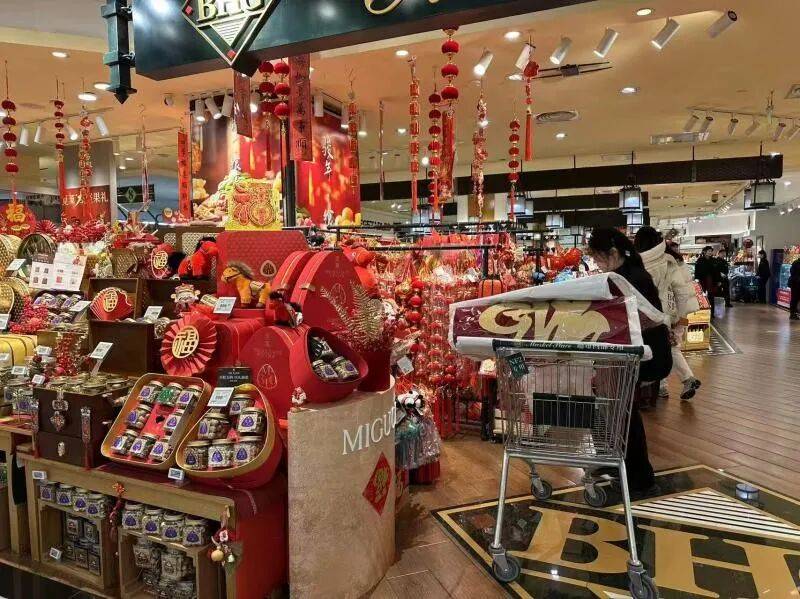
Core Viewpoint - JD Qixian Supermarket is committed to providing a seamless shopping experience during the Spring Festival by implementing "no closure during the Spring Festival" and maintaining stable shipping costs for the sixth consecutive year [1][3]. Group 1: Operational Adjustments - JD Qixian will extend operating hours from February 13 to February 15, with stores open from 7 AM to 11 PM [3]. - On New Year's Eve (February 16), online channels will open at 6 AM, while physical stores will welcome customers at 6:30 AM [3]. - On the first day of the Lunar New Year (February 17), physical stores will operate from 9 AM to 10 PM, and online delivery will be available from 7 AM to midnight [3]. - From February 18, both online and offline channels will revert to regular operating hours [3]. Group 2: Shipping and Delivery - JD Qixian promises not to increase shipping costs during the Spring Festival, absorbing all rider subsidy costs without passing them on to consumers [3]. - The company has made adequate preparations for delivery capacity and will provide additional subsidies to riders for orders during the holiday [3]. - The service aims to ensure delivery within 30 minutes, benefiting both riders and customers [3]. Group 3: Fresh Produce Supply - JD Qixian will continue to offer its industry-first "24-hour vegetables" and "24-hour eggs" during the Spring Festival, ensuring rapid delivery from farms to store shelves within 24 hours [5]. - The company guarantees that fresh produce will be sold within one day of being stocked, enhancing the freshness of consumers' meals during the holiday [5]. Group 4: Customer-Centric Approach - The combination of "no closure during the Spring Festival, stable shipping costs, and continuous fresh supply" reflects JD Qixian's strong supply chain capabilities and customer-centric service philosophy [5]. - The initiative aims to provide consumers with peace of mind and convenience, making it easier for them to purchase holiday goods [5].

锅圈20260210
2026-02-11 05:58
Summary of the Conference Call for Guoquan Industry and Company Overview - The conference call discusses Guoquan, a company specializing in the retail of prepared food products, particularly in rural and township markets in China. The company leverages a low-price strategy and offers unique products like skewers and crayfish to meet consumer demand in these areas [2][4]. Key Points and Arguments Competitive Advantages - Guoquan has a significant competitive edge in the township market due to its efficient supply chain and product offerings. The company provides low-priced products and unique prepared food items that are scarce in these markets, thus attracting consumers [4][6]. - The company’s strategy includes sourcing directly from manufacturers to reduce costs and improve supply efficiency, allowing for lower prices that draw customers into stores [4][6]. Store Expansion Potential - Based on census data, there are over 30,000 townships in China, with approximately 20,000 having populations over 10,000, indicating a theoretical potential for 10,000 to 20,000 new stores. Guoquan aims to open at least 8,000 stores, which is considered a conservative estimate [7][8]. - The company plans to open 5,000 new stores, with 3,000 being remodeled stores that have shown significant revenue increases [2][13]. New Store Formats and Innovations - Guoquan is testing a new store format called "small stir-fry stores," which aims to provide home-cooked meal options at competitive prices. The initial investment is around 210,000 yuan, with a shorter payback period compared to traditional stores [14][15]. - The company is also launching a camping store project, with the first store expected to generate monthly sales of 500,000 to 600,000 yuan during peak seasons, achieving a gross margin of 50% [18]. Financial Performance and Projections - The introduction of new product categories has led to a significant increase in sales, with new items contributing approximately 30% to total revenue and slightly higher gross margins than existing products [10][12]. - Guoquan estimates that with the opening of 10,000 new small stir-fry stores, it could achieve around 1 billion yuan in profit, corresponding to a market valuation of 15 to 20 times earnings, suggesting a potential market cap of 150 to 200 billion yuan [22]. Management and Supply Chain Strengths - The company demonstrates strong execution and management capabilities, with a focus on integrating supply chains through its subsidiaries, which enhances overall operational efficiency [21]. Other Important Insights - The remodeling store strategy has proven effective in urban areas, indicating potential for similar success in rural markets [9][13]. - The company is actively exploring new business lines, including community group buying and agricultural products, which could serve as future growth drivers [22]. - Guoquan's pricing strategy for the small stir-fry stores aims to match home-cooked meal costs while minimizing food waste, appealing to a broad customer base [15][16]. This comprehensive overview highlights Guoquan's strategic positioning, growth potential, and operational strengths within the prepared food retail industry in China.