
货币政策

Search documents
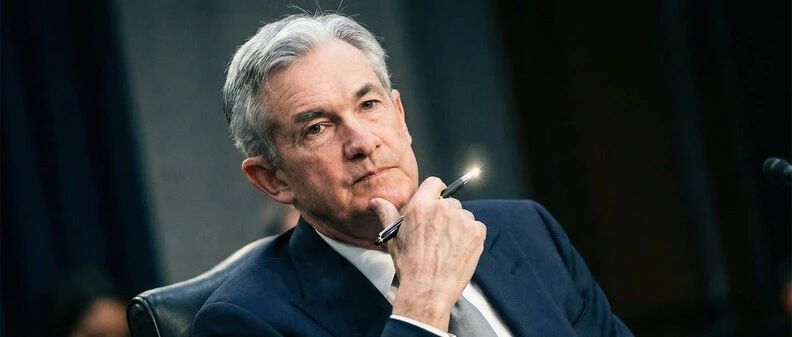
凌晨!美联储将发布利率决议
证券时报· 2026-03-18 14:40
Core Viewpoint - The Federal Reserve is expected to maintain the federal funds rate in the range of 3.5% to 3.75% during the upcoming FOMC meeting, with market attention focused on Chairman Powell's subsequent statements [1][3]. Group 1: Interest Rate Decision - Analysts believe that multiple contradictions and uncertainties in the current U.S. economy are the core reasons for the Fed's decision to remain cautious [3]. - Market expectations for a rate cut have shifted, with futures pricing indicating that the Fed may not consider easing until September or October, and likely only once this year [3][4]. - The Fed's policy rate is expected to remain unchanged at 3.5% to 3.75%, with some officials still supporting a rate cut, while others express concerns about inflation [4][7]. Group 2: Inflation Concerns - Recent data shows that inflation remains moderate, with the February CPI rising 2.4% year-on-year and core CPI up 2.5%, consistent with market expectations [6]. - The impact of rising oil prices due to geopolitical tensions has not yet been reflected in the latest inflation data, raising concerns about future inflation trends [6][7]. - Some officials have adjusted their expectations for rate cuts due to inflation concerns, while others have raised expectations for cuts based on weak labor market data [7]. Group 3: Political Pressures - The Fed's decision-making is influenced by political pressures, particularly from President Trump, who has repeatedly called for rate cuts [9]. - There are complications regarding Powell's potential successor due to ongoing investigations, which may affect the Fed's leadership and decision-making process [10]. - The balance of risks and economic signals is crucial for the Fed's current stance, with future monetary policy likely to depend on inflation trends, geopolitical situations, and changes in the U.S. economy [10].


今晚,鲍威尔会给市场扔炸弹吗?
华尔街见闻· 2026-03-18 10:05
Group 1 - The core viewpoint of the article indicates that the Federal Reserve is likely to maintain its current interest rate policy, with a focus on balancing inflation risks and employment data, leaning towards a pause or later rate cuts rather than rate hikes [2][3][8] - The market's attention has shifted from "when to cut rates" to "whether to cut rates," with Morgan Stanley suggesting that due to weak employment data, the risk of monetary policy is asymmetrical [3][8] - The upcoming Federal Open Market Committee (FOMC) meeting is expected to maintain the federal funds rate target range at 3.50% to 3.75%, with little disagreement among major institutions [8][10] Group 2 - The macroeconomic backdrop is complex, with rising energy prices due to geopolitical tensions, pushing inflation indicators above the Fed's 2% target [11][12] - February's non-farm payrolls showed a decline of 92,000 jobs, raising concerns about stagflation and prompting scrutiny during the post-meeting press conference [12][13] - The Fed's preferred inflation measure, core PCE, has reached a year-on-year growth of 3.1%, indicating persistent inflationary pressures [11] Group 3 - The dot plot and Summary of Economic Projections (SEP) are expected to show limited changes, with Goldman Sachs predicting a slight upward revision in inflation forecasts and a downward adjustment in GDP growth [14][15][18] - The number of votes supporting rate cuts is anticipated to increase from two to three, reflecting a growing dovish sentiment among committee members [19][20][22] - The uncertainty surrounding the new chairperson's appointment adds complexity to future policy directions, with potential implications for the Fed's cohesion and decision-making [23][25] Group 4 - Market reactions are expected across various sectors, with interest rates, foreign exchange, stock, and credit markets all showing distinct responses to the Fed's decisions and geopolitical developments [27] - In the interest rate market, inflation shocks from geopolitical events have influenced short-term dollar rates, while the stock market's performance may hinge on evolving uncertainties [27] - Credit spreads have widened due to macroeconomic weaknesses and concerns over stagflation, indicating a potential new normal for credit risk premiums [27]


国债期货日报:市场情绪企稳,国债期货全线收涨-20260318
Hua Tai Qi Huo· 2026-03-18 05:28
Report Industry Investment Rating No relevant content provided. Core Viewpoints - The bond market is oscillating between stable growth and easing expectations, and short - term attention should be paid to the policy signals at the end of the month. The market sentiment has stabilized, and Treasury bond futures have closed higher across the board. The macro - policy is supportive, but there are still uncertainties such as inflation expectations and foreign capital inflows [1][3]. Summary by Directory I. Interest Rate Pricing Tracking Indicators - **Price Indicators**: China's CPI (monthly) has a month - on - month increase of 1.00% and a year - on - year increase of 1.30%; China's PPI (monthly) has a month - on - month increase of 0.40% and a year - on - year decrease of 0.90% [9]. - **Monthly Economic Indicators**: The social financing scale is 451.40 trillion yuan, with a month - on - month increase of 2.29 trillion yuan and a growth rate of 0.51%. M2 year - on - year is 9.00% with no change. The manufacturing PMI is 49.00%, with a month - on - month decrease of 0.30% and a decline rate of 0.61% [10]. - **Daily Economic Indicators**: The US dollar index is 99.57, with a month - on - month decrease of 0.24 and a decline rate of 0.24%. The US dollar against the offshore RMB is 6.8832, with a month - on - month decrease of 0.003 and a decline rate of 0.04%. SHIBOR 7 - day is 1.43, with a month - on - month decrease of 0.01 and a decline rate of 0.83%. DR007 is 1.43, with a month - on - month decrease of 0.02 and a decline rate of 1.20%. R007 is 1.55, with a month - on - month decrease of 0.01 and a decline rate of 0.55%. The 3 - month inter - bank certificate of deposit (AAA) is 1.50, with no change in value and a decline rate of 0.20%. The AA - AAA credit spread (1Y) is 0.09, with no change in value and a decline rate of 0.20% [11]. II. Overview of Treasury Bonds and Treasury Bond Futures Market - The report provides figures on the closing price trend, percentage change, precipitation funds trend, position ratio, net position ratio (top 20), and long - short position ratio (top 20) of Treasury bond futures main contracts [13][17][18]. III. Overview of the Money Market Funding Situation - The report includes figures on the spread between China Development Bank bonds and Treasury bonds, Treasury bond issuance, Shibor interest rate trend, inter - bank certificate of deposit (AAA) maturity yield trend, inter - bank pledged repurchase transaction statistics, and local government bond issuance [26][27][24]. IV. Spread Overview - The report presents figures on the inter - period spread trend of Treasury bond futures varieties and the spread between spot bond term spreads and futures cross - varieties [37][33][35]. V. Two - Year Treasury Bond Futures - The report shows figures on the implied interest rate and Treasury bond maturity yield of the two - year Treasury bond futures main contract, the IRR of the TS main contract and the funding rate, and the three - year basis trend and net basis trend of the TS main contract [39][40]. VI. Five - Year Treasury Bond Futures - The report provides figures on the implied interest rate and Treasury bond maturity yield of the five - year Treasury bond futures main contract, the IRR of the TF main contract and the funding rate, and the three - year basis trend and net basis trend of the TF main contract [42][57]. VII. Ten - Year Treasury Bond Futures - The report includes figures on the implied yield and Treasury bond maturity yield of the ten - year Treasury bond futures main contract, the IRR of the T main contract and the funding rate, and the three - year basis trend and net basis trend of the T main contract [52][56]. VIII. Thirty - Year Treasury Bond Futures - The report shows figures on the implied yield and Treasury bond maturity yield of the thirty - year Treasury bond futures main contract, the IRR of the TL main contract and the funding rate, and the three - year basis trend and two - year net basis trend of the TL main contract [60][65]. Strategies - **Unilateral Strategy**: As the repurchase rate declines, the price of Treasury bond futures oscillates [4]. - **Arbitrage Strategy**: Pay attention to the decline of the 2606 basis [4]. - **Hedging Strategy**: There is medium - term adjustment pressure, and short - sellers can use far - month contracts for appropriate hedging [4].
十四届全国人大四次会议在京闭幕,资金面平稳中略松,债市明显回暖
Dong Fang Jin Cheng· 2026-03-18 01:22
1. Report Industry Investment Rating - No relevant information provided 2. Core Viewpoints of the Report - On March 12, the capital market showed a stable and slightly loose trend, the bond market significantly recovered, the main indices of the convertible bond market collectively declined, and most convertible bond issues fell. The yields of US Treasury bonds across all maturities generally increased, and the yields of 10 - year government bonds in major European economies also generally rose [1] 3. Summary by Relevant Catalogs 3.1 Bond Market News 3.1.1 Domestic News - The Fourth Session of the 14th National People's Congress closed in Beijing on March 12, approving various reports and passing several laws [3] - Central Bank Governor Pan Gongsheng stated that the central bank will continue to implement a moderately loose monetary policy and build a scientific and stable monetary policy system [4] - The Ministry of Finance added multiple subjects related to "ultra - long - term special treasury bond arrangements" in the government - funded budget expenditure function classification subjects [5][6] 3.1.2 International News - Iran's new Supreme Leader Mujtaba Khamenei vowed to continue to block the Strait of Hormuz and threatened to open up other fronts, and demanded the immediate closure of all US military bases in the Middle East [7] 3.1.3 Commodities - On March 12, WTI April crude oil futures rose 9.72% to $95.73 per barrel, Brent May crude oil futures rose 9.2% to $100.46 per barrel, COMEX April gold futures fell 1.93% to $5084.1 per ounce, and NYMEX April natural gas futures rose 0.65% to $3.248 per million British thermal units [8] 3.2 Capital Market 3.2.1 Open Market Operations - On March 12, the central bank conducted 245 billion yuan of 7 - day reverse repurchase operations at a fixed interest rate, with an operating rate of 1.40%. The net capital injection on the day was 15 billion yuan [10] 3.2.2 Capital Interest Rates - On March 12, the capital market was stable and slightly loose. DR001 decreased by 4.21bp to 1.327%, and DR007 increased by 0.59bp to 1.470%. Other interest rates also showed corresponding changes [11][12] 3.3 Bond Market Dynamics 3.3.1 Interest - Bearing Bonds - **Spot Bond Yield Trends**: On March 12, the bond market significantly recovered. As of 20:00, the yield of the 10 - year treasury bond active bond 250016 decreased by 0.70bp to 1.8070%, and the yield of the 10 - year state - owned development bond active bond 250220 decreased by 1.05bp to 1.9690% [14] - **Bond Tendering Situation**: Multiple state - owned development bonds were tendered on March 12, with different issuance scales, winning yields, full - field multiples, and marginal multiples [15] 3.3.2 Credit Bonds - **Secondary Market Transaction Abnormalities**: On March 12, the transaction prices of 5 industrial bonds deviated by more than 10%, including some bonds falling and some rising [15] - **Credit Bond Events**: Multiple companies announced events such as bond principal repayment extensions, receiving liquidation petitions, and financial performance reports [16] 3.3.3 Convertible Bonds - **Equity and Convertible Bond Indices**: On March 12, the three major A - share indices collectively fell, and the main indices of the convertible bond market also followed suit. The trading volume of the convertible bond market decreased compared with the previous trading day, and most convertible bond issues fell [18] - **Convertible Bond Tracking**: On March 12, Star Semiconductor's convertible bond issuance was approved by the CSRC. Some convertible bonds announced proposals to lower the conversion price, early redemption, or non - early redemption [20] 3.3.4 Overseas Bond Markets - **US Bond Market**: On March 12, the yields of US Treasury bonds across all maturities generally increased, and the yield spreads between different maturities narrowed. The break - even inflation rate of US 10 - year inflation - protected treasury bonds (TIPS) increased [21][22][23] - **European Bond Market**: On March 12, the yields of 10 - year government bonds in major European economies generally increased [24][25] - **Daily Price Changes of Chinese - funded US Dollar Bonds**: As of the close on March 12, some Chinese - funded US dollar bonds rose, and some fell [26]
油价继续上行!国际金价震荡
新华网财经· 2026-03-18 00:57
Group 1 - The U.S. stock market saw a slight increase, while international oil prices rose nearly 3% on March 17, coinciding with the Federal Reserve's two-day monetary policy meeting [1] - Concerns over energy supply have intensified due to recent statements from Iran, with the Iranian parliamentary speaker indicating that the situation in the Strait of Hormuz will not return to "pre-war conditions" [3] - International oil prices rebounded after a brief dip, with light crude oil futures for April delivery rising by $2.71 to $96.21 per barrel, a 2.90% increase, and Brent crude oil futures for May delivery increasing by $3.21 to $103.42 per barrel, a 3.20% rise [3] Group 2 - International gold prices fluctuated around the $5000 per ounce mark, with London gold spot prices slightly increasing by 0.06% to $5006.63 per ounce, and COMEX gold futures rising by 0.18% to $5011.3 per ounce [5] - The data for various gold and silver prices as of March 17 includes: London gold spot at $5006.63 (+0.06%), COMEX gold at $5011.3 (+0.18%), and London silver at $79.363 (-1.70%) [6]

通胀来了,货币政策会变吗?
CAITONG SECURITIES· 2026-03-17 12:47
Report Investment Rating The document does not provide a specific investment rating for the industry. Core View - The report believes that the experience of the United States from 2010 - 2011 is of certain reference significance. When commodity prices, especially energy prices, rise and drive inflation higher, the central bank may still maintain or increase easing. Given the current macro - environment in China, which is similar to that of the US at that time, with inflation rising against the backdrop of a weak recovery, and referring to the US experience and recent statements and actions of the central bank, it is likely that China's monetary policy will remain loose [2]. Summary by Directory 1. 2010 - 2011 US Experience - From the summer of 2010, various commodities such as metals, agricultural products, and energy all rose to different extents. During the Libyan war from February 15, 2011, to October 20, 2011, crude oil prices soared and remained high. In March 2011, the US PCE exceeded 2% and continued to rise, but the Fed continued to implement the QE2 plan and expand its balance sheet [8][9]. - **Yellen's view**: The inflation was temporary, and there was no need to change the monetary policy stance. The reasons for commodity price increases were strong demand growth in emerging markets represented by China, climate - related agricultural product production cuts in China and Russia, and political turmoil in the Middle East around the Libyan conflict. The inflation was temporary because there was no wage - price spiral and it did not affect long - term inflation expectations. The resource utilization rate was low, the unemployment rate was high, and the labor participation rate was low, so the upstream could not continuously transfer costs downstream. The long - term inflation expectations could be measured by core inflation and trimmed - mean inflation. Since long - term inflation expectations were stable and wage - cost transmission was blocked, the monetary policy did not need adjustment and should maintain the second - round Treasury bond purchase and the loose stance [10][12][16]. - **Bernanke's view**: After the two crises in the US since 2000, the shape of the economic potential output gap was different. The negative expansion space and the time for gap filling after the dot - com bubble burst were significantly smaller than those after the sub - prime mortgage crisis. Under the pull of the negative output gap, the decline of the nominal interest rate was a natural result, which was the background for the Fed to lower the federal funds rate and implement QE after the sub - prime mortgage crisis. In addition, there were issues of the fiscal cliff and fiscal budget control. The impact of fiscal austerity could not be underestimated. The monetary policy remained loose mainly due to fiscal issues rather than short - term inflation issues [23][25][34]. 2. How to View China's Monetary Policy Stance - China does not have a wage - inflation spiral, and long - term social inflation expectations are relatively stable. The urban survey unemployment rate of 16 - 24 - year - old labor force is at a high level in the past five years, the consumer confidence index is at a low level, the average collection period of accounts receivable of large - scale industrial enterprises is at a high level in the past ten years, and the employment and price expectations are at a low level in the past five years [39][41]. - The core CPI is relatively stable, especially when considering the exclusion of the impact of gold [43]. - China needs to resolve the issue of local government hidden debts, and since the second half of 2025, the year - on - year growth rate of fiscal budget expenditures has continued to decline. Therefore, it is difficult for the central bank to change its loose monetary policy stance due to a single - sided increase in commodity prices. Historical experience also shows that the central bank can implement a loose monetary policy stance even when CPI or PPI rises significantly [46][48]. - Referring to the central bank's latest statements, Governor Pan Gongsheng mentioned the need to prevent the spill - over effects of external shocks. After the US - Iran conflict, the central bank took measures such as reducing the forward foreign exchange sales risk reserve ratio, guiding the central parity rate to rise, and showing care for the capital market. Further observation is needed on whether the central bank will continue to net - buy Treasury bonds in March, which would demonstrate its supportive monetary policy stance and the coordination between fiscal and monetary policies [51][54][56].
流动性跟踪与地方债策略专题:再度出现30Y国债老券与地方债倒挂现象
Guolian Minsheng Securities· 2026-03-17 12:43
Group 1 - The report highlights a recent phenomenon of yield curve inversion between 30Y government bonds and local government bonds, indicating potential investment opportunities and market adjustments [1][15]. - It is expected that local government bond issuance will reach a cumulative total of 27,718 billion yuan by March 22, 2026, with a significant portion allocated for debt replacement and long-term bonds [13][40]. - The report notes that the active participation of institutions in local government bonds has been robust, with net purchases exceeding 900 billion yuan, particularly in the 5-7 year maturity range [13][40]. Group 2 - The monetary policy outlook suggests that banks will likely lower interbank deposit rates due to recent regulatory changes, which may benefit short-term interest rate bonds and interbank certificates [5][8]. - The report indicates that the yield on new 30Y local government bonds has reached close to 6%, while shorter maturities show varying yields, reflecting market dynamics and investor sentiment [14][41]. - The report discusses the stability of valuations in the long-term local government bond market, despite recent adjustments in the broader bond market, suggesting a potential for recovery in government bond yields [15][42].
金融市场流动性与监管动态周报:可跟踪资金持续净流出,美联储降息预期推后至12月-20260317
CMS· 2026-03-17 11:33
Core Insights - The report indicates a continued net outflow of tracked funds in the secondary market, with a slight net inflow in financing funds but ongoing net outflows in ETFs. The financial data for February shows significant structural differences, with government bonds contributing the main increment while household credit weakened. Additionally, market expectations for a Federal Reserve rate cut have been pushed back to December, with only one cut anticipated this year [2][4]. Group 1: Financial Data Overview - In February, the total social financing increased by 146.1 billion yuan year-on-year, with corporate loans being the main driver of improvement, while household loans continued to face pressure. Specifically, household loans contracted, with short-term loans decreasing by 195.2 billion yuan and medium to long-term loans down by 66.5 billion yuan [9][12]. - The M2 growth rate remained at 9.0%, while M1 growth increased to 5.9%, up by 1.0 percentage point from January. This increase in M1 is attributed to high levels of corporate foreign exchange settlements and a low base effect [4][9]. Group 2: Market Liquidity and Fund Supply - The report highlights that the secondary market continues to experience net outflows, with a financing balance increase and net inflow of 56.0 billion yuan in financing funds. However, ETFs saw a net outflow of 77.4 billion yuan [4][23]. - New equity public funds increased by 17.08 billion units, while the overall market financing balance reached 26,332.6 billion yuan as of March 13 [23][29]. Group 3: Market Sentiment and Preferences - Market sentiment improved, with an increase in trading activity for financing funds and a decrease in equity risk premiums. The VIX index fell, indicating improved risk appetite in overseas markets [4][38]. - In terms of industry preferences, utilities, electric equipment, and basic chemicals attracted significant net inflows, while sectors like oil and gas, non-ferrous metals, and media experienced substantial net outflows [45][47]. Group 4: Regulatory Developments - Recent regulatory measures include the People's Bank of China emphasizing risk prevention and high-quality development in the financial sector, alongside new proposals for bank capital regulation to encourage lending activities [13][14]. - The report also notes the introduction of regulations aimed at improving transparency in personal loan interest disclosures, which is expected to enhance consumer protection in the financial sector [13].
国债期货日报:经济数据超预期,国债期货全线收跌-20260317
Hua Tai Qi Huo· 2026-03-17 08:30
资金面:(3)财政:2025年全年财政收支整体未达预期,收入受税收走弱与非税高基数拖累,全年一般公共预算 收入同比下降1.7%;支出节奏前置,年末力度减弱,全年完成度偏低。结构上呈现分化特征,民生支出总体稳定, 基建类支出占比下降,土地财政收入持续疲软。展望2026年,财政政策预计延续积极,强调"总量增加、结构更优", 支出力度有望加强,节奏继续前置,对稳增长形成支撑。(4)金融:2月金融数据整体呈现"总量平稳、结构分化" 的特征:信贷增速延续回落至6.0%,社融增速持平于8.2%,M1受春节错位和消费超预期带动回升至5.9%,M2则 因财政支出加码持平于9.0%。结构上,企业中长期贷款在政策前置发力下同比多增,但居民端信贷需求持续偏弱, 尤其是中长期贷款再度出现净减少,反映出实体经济加杠杆意愿仍有待修复。整体来看,金融数据对债市影响中 性偏多,信贷增速回落和居民融资需求不足指向经济内生动能修复仍需时间,债券利率仍受向下驱动,但需关注 通胀预期升温对短期情绪的扰动。(5)央行:2026-03-16,央行以固定利率1.4%、数量招标方式开展了1373亿元7 天的逆回购操作。(6)货币市场:主要期限回购利率1D、 ...
2023年2月社融点评:企业融资带动2月社融继续增长
Bank of China Securities· 2026-03-17 08:14
Group 1: Market Performance - The Hong Kong stock market shows resilience despite rising geopolitical risks, with the HSI closing at 25,466, down 1.0% for the day and down 0.6% year-to-date [2] - The average daily turnover in the Hong Kong stock market reached HK$347.20 billion for the month up to 10 March 2026, indicating strong liquidity [10][13] - Southbound trading reported a net inflow of RMB152.1 billion year-to-date, reflecting a resilient inflow momentum despite a year-on-year decline due to a high base [11][13] Group 2: Economic Indicators - In February, new loans in China were RMB900 billion, down 10.9% year-on-year, while new social financing reached RMB2.38 trillion, rising 6.6% year-on-year [6][9] - The growth of total social financing balance stabilized at 8.2% in both January and February, indicating a steady economic environment [6][9] - Robust exports in early 2026 are expected to support economic growth, with monetary policy likely to leverage structural tools to maintain liquidity [8][9] Group 3: Corporate Financing - New financing in the corporate sector, including short-term and medium- to long-term loans, improved year-on-year, contributing to the rise in new social financing [7] - The corporate sector's financing activities are seen as a key driver for the overall increase in social financing [7] Group 4: Company-Specific Insights - ASE Holdings reported that ATM sales for the first two months of 2026 reached two-thirds of the first-quarter guidance, suggesting a likely sales and gross profit margin beat [14][16] - The anticipated doubling of LEAP sales to US$3.2 billion in 2026 is driven by AMD's Venice ramp in the second half of the year [14][16] - ASE Holdings is expected to achieve a gross profit margin of over 30% by the end of 2027, supported by TSMC's focus on advanced process technologies [14][16]
