
通胀目标

Search documents
美降息25个基点,12月起停止缩表,鲍威尔:下月降息并非板上钉钉
Guo Ji Jin Rong Bao· 2025-10-30 00:49
Core Viewpoint - The Federal Open Market Committee (FOMC) has decided to lower the federal funds rate by 25 basis points, bringing the target range from 4.00%-4.25% to 3.75%-4.00%, marking the second rate cut of the year [1][2] Economic Conditions - The U.S. economy is expanding at a moderate pace, with employment growth slowing and a slight increase in the unemployment rate, although it remains low as of August [3] - Inflation has risen since the beginning of the year and remains at a high level, with the Fed aiming for full employment and a 2% inflation target over the long term [3][4] Employment Risks - There is an increasing risk of a downturn in employment, with signs of pressure on low-income households and a rise in layoff announcements, although these have not yet led to an increase in unemployment claims [3][4] Inflation Concerns - Higher tariffs are contributing to price increases in certain categories, leading to overall inflation rising, but these effects may be temporary [4] - The Fed is closely monitoring the potential for persistent inflation impacts, which could complicate monetary policy [4] Monetary Policy Adjustments - The Fed has decided to end its quantitative tightening (QT) program, concluding the reduction of its balance sheet on December 1, after three and a half years [2][4] - The decision to stop QT means that the principal from MBS redemptions will be reinvested in short-term U.S. Treasury securities [4] Internal Disagreements - There are notable divisions within the Fed regarding future rate actions, with some members advocating for a 50 basis point cut while others prefer to maintain current rates [5][6] - Powell indicated that the lack of data due to the government shutdown could lead to a more cautious approach in future decisions [6] Market Reactions - Following Powell's comments, market sentiment shifted, with the Dow Jones falling by 0.16% and the S&P 500 declining slightly, while the Nasdaq rose by 0.55%, reaching a new closing high [2][6] - Market expectations for a December rate cut are currently at 67.8%, with a 32.3% probability of maintaining current rates [6]
鲍威尔发布会实录:12月再降息并非板上钉钉,委员会分歧大,就业市场仍在降温,通胀短期有上行压力(附全文)
美股IPO· 2025-10-29 22:58
Core Viewpoint - The Federal Reserve has lowered the federal funds rate by 25 basis points and announced the end of balance sheet reduction starting December 1. There is significant disagreement among committee members regarding future rate cuts, indicating that further cuts are not guaranteed [1][4][12]. Monetary Policy Outlook - The prospect of another rate cut in December is uncertain, with some members suggesting a pause in rate changes [3][13]. - The composition of the balance sheet remains a long-term process, with adjustments expected to be gradual [3]. - The labor market is showing signs of cooling, but there is no significant increase in job market weakness, with job vacancies remaining stable [3][7]. Inflation Insights - Inflation pressures are still present, with the September CPI showing a more moderate increase than expected. Core PCE inflation, excluding tariffs, is estimated to be around 2.3% to 2.4% [3][9][27]. - Tariffs are contributing to rising prices in certain goods, leading to overall inflation increases [9][10]. - The overall PCE price index increased by 2.8% over the past 12 months, with core PCE also rising by 2.8% [9][27]. Economic Activity - Economic activity is expanding at a moderate pace, with GDP growth for the first half of the year at 1.6%, down from 2.4% the previous year [5][46]. - Consumer spending has shown strength, which may lead to better-than-expected economic growth [6][44]. - Investment in equipment and intangible assets continues to grow, while housing market activity remains weak [7]. Labor Market Dynamics - The labor market is experiencing a gradual cooling, with a notable decline in labor supply impacting employment [7][8]. - The unemployment rate remains relatively low, but job growth has slowed significantly since the beginning of the year [7][36]. - There are concerns about rising risks to employment, particularly in light of recent layoffs announced by major companies [8][32]. Balance Sheet Management - The Federal Reserve will stop balance sheet reduction as it has reached a level deemed sufficient for "ample reserves" [14][18]. - The balance sheet has shrunk by approximately $2.2 trillion over the past three and a half years, with its size relative to nominal GDP decreasing from 35% to about 21% [14][19]. - The Fed plans to reinvest proceeds from maturing agency securities into short-term Treasury bills to adjust the balance sheet structure [15][24]. Market Reactions and Future Considerations - The market has priced in expectations for further rate cuts, but the Fed emphasizes that such actions are not predetermined [15][22]. - The committee's discussions reflect a range of opinions on the economic outlook, with some members advocating for a pause to assess the situation further [16][35]. - The potential impact of government shutdowns on economic data and decision-making processes is acknowledged, with a cautious approach suggested in the absence of reliable data [21][31].

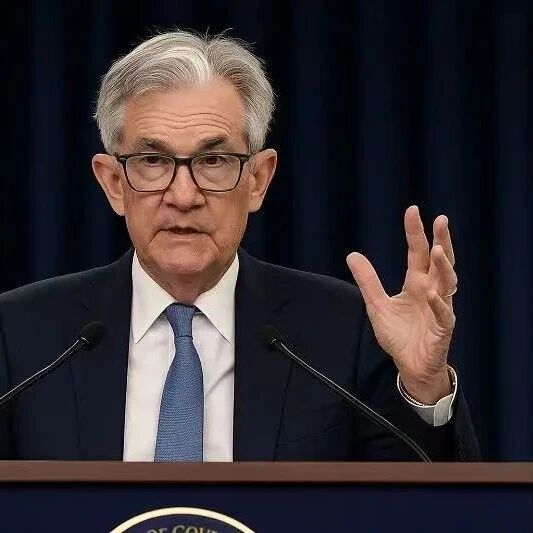
【环球财经】美联储再度降息25个基点 将于12月1日起结束缩表
Xin Hua Cai Jing· 2025-10-29 19:15
Core Viewpoint - The Federal Reserve has decided to lower the federal funds rate target range by 25 basis points to 3.75%-4.00%, marking the fifth rate cut since September 2024, aligning with market expectations [1] Economic Assessment - Economic activity is expanding at a moderate pace, with employment growth slowing and a slight increase in the unemployment rate, although it remains low as of August [2] - Inflation has risen compared to the beginning of the year and remains at relatively high levels, with the committee aiming for maximum employment and a long-term inflation target of 2% [2] - There is a high level of uncertainty regarding the economic outlook, with increased downside risks to employment noted in recent months [2] Future Policy Outlook - To support its goals and consider changes in risk balance, the committee has decided to lower the federal funds rate target range by 25 basis points to 3.75%-4.00% [3] - The committee will carefully evaluate the latest data, changes in the economic outlook, and risk balance when considering further adjustments to the federal funds rate target range [3] Monetary Policy Stance - The committee will continue to monitor new information affecting the economic outlook when assessing the appropriate monetary policy stance [4] - If risks that could hinder the achievement of the committee's goals arise, the committee will adjust its monetary policy stance as necessary [4] End of Balance Sheet Reduction - The Federal Reserve's FOMC statement announced the end of balance sheet reduction on December 1, with current monthly reductions of $5 billion in U.S. Treasuries and $35 billion in MBS [5] Divergence in Federal Reserve Opinions - The recent Federal Reserve rate decision reflects a rare "hawk-dove" split, indicating significant internal divergence regarding economic outlook assessments [6] - The lack of timely economic data due to the federal government shutdown has complicated the Fed's understanding of economic conditions, leading to increased uncertainty around their stance since September [6]
美联储决议全文:降息25基点并宣布缩表,两个反对票显示分歧加剧
Jin Shi Shu Ju· 2025-10-29 18:10
Core Viewpoint - The Federal Reserve has lowered the benchmark interest rate by 25 basis points to a range of 3.75%-4.00%, marking the second consecutive rate cut, aligning with market expectations [1][2]. Group 1: Interest Rate Decision - The Federal Open Market Committee (FOMC) decided to reduce the federal funds rate target range by 25 basis points due to a moderate expansion in economic activity and rising inflation [2]. - The decision reflects a balance of risks, with increased downward risks to employment noted in recent months [2]. Group 2: Voting Members - The members supporting the monetary policy action include Jerome H. Powell, John C. Williams, and several others, while Stephen I. Miran and Jeffrey R. Schmid opposed the decision [3]. Group 3: Asset Purchase Program - The FOMC announced the end of its balance sheet reduction program effective December 1, with current monthly reductions of $50 billion in U.S. Treasuries and $35 billion in mortgage-backed securities [1][2]. - After this date, the principal repayments from mortgage-backed securities will be reinvested into short-term U.S. Treasuries [1].
欧洲央行推动 欧元兑美元上涨趋势
Jin Tou Wang· 2025-10-27 02:55
Core Viewpoint - The Euro is experiencing slight gains against the US Dollar, supported by the European Central Bank's (ECB) satisfaction with current interest rates and inflation reaching targets [1][2] Group 1: Euro Performance - The Euro/USD pair is trading at approximately 1.1637, with a peak of 1.1648, reflecting a 0.07% increase from the previous trading day's close of 1.1627 [1] - The Euro has maintained strong performance for four consecutive trading days, trading around 1.1640 during the Asian session [2] Group 2: ECB Insights - ECB Governing Council member José Luis Escrivá expressed satisfaction with the current interest rate levels, which has provided support for the Euro [1] - The upcoming release of the German IFO business survey data is anticipated, which may influence Euro performance [1] Group 3: Market Pressures - The Euro may face downward pressure due to threats from French Socialist leader Olivier Faure, who indicated potential government instability if budget demands are not met [1] - The technical outlook for Euro/USD remains neutral, with the pair trading below the 20-day and 100-day simple moving averages at 1.1653 and 1.1658, respectively [2] - The Relative Strength Index (RSI) has dropped below the neutral level of 50, indicating increasing bearish momentum [2]
中尾武彦:希望高市早苗推行稳健的货币和财政政策
Di Yi Cai Jing· 2025-10-26 03:16
在通缩环境下,通胀目标是否有效和合适? 在中尾武彦看来,日本当时遭受了多重压力,包括资产负债表调整、负财富效应、老龄化和人口开始减少、新兴市场竞争力超预期走强、美国数字经济的领 先,以及美国在某些领域的打压等。 "当时美国担心会被日本超越,在1990年代对日本施加了巨大压力。1990年代日本的人均GDP(以美元计)比美国高出约30%~40%,因此美国感到害怕, 并在某种意义上通过(迫使日元)极度升值以及半导体协议等方式猛烈打压日本,这限制了日本经济和日本公司的实力。(日本)企业高管开始认为,最好 不要做太多,不要激进,保持温和更好,那种魄力或企业家精神就被削弱了。"中尾武彦认为,并不仅仅是通缩导致了日本经济变弱。 "泡沫破裂后,(日本)连续实施了财政政策,但并未真正奏效。"中尾武彦回忆说,从2013年起,安倍经济学开始大规模推行扩张性政策,但这些政策的影 响并非全是积极的。 "通胀确实回来了,股价也上涨了,但这部分是因为,或者说主要是因为进口价格上涨,因为日元便宜,也因为乌克兰危机后的商品价格上涨等因素。所以 这未必是货币政策的效果。"中尾武彦认为,股价上涨还有一部分原因是日经指数由许多出口型并有大量海外资产 ...
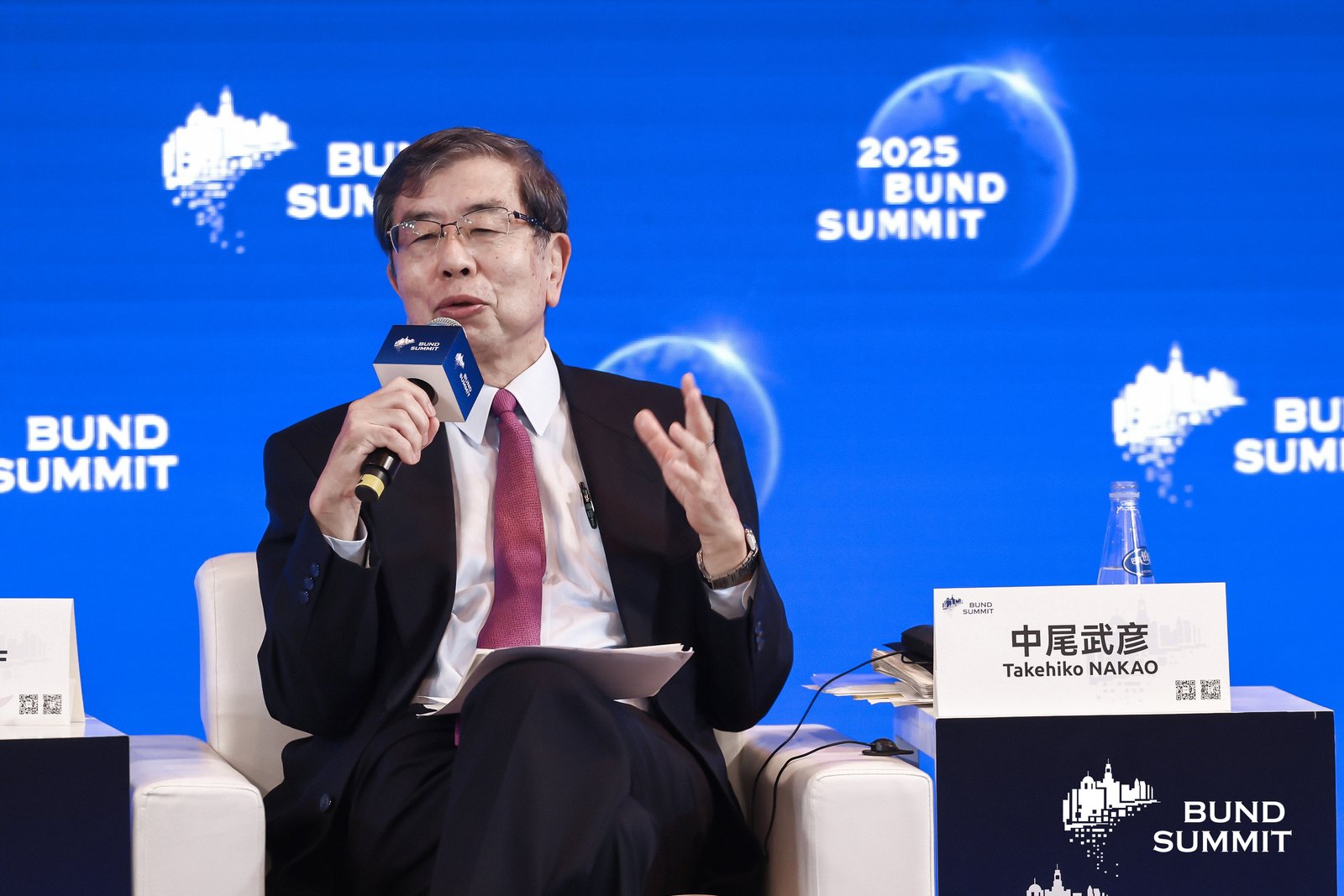
四国央行原行长谈货币政策难题与选择,中国可以从中借鉴什么?
Di Yi Cai Jing Zi Xun· 2025-10-26 02:00
Core Insights - The discussion at the 2025 Bund Summit focused on the challenges facing central banks, including geopolitical tensions, tariff barriers, high public debt, and the impact of artificial intelligence on monetary policy choices [1] Group 1: Tariffs and Inflation - Tariffs are becoming a significant uncertainty for central banks, particularly regarding their impact on U.S. inflation and the Federal Reserve's policy direction [3] - Jacob Frenkel noted that despite previous market concerns not materializing, it is premature to celebrate the current situation, drawing parallels to the "weaponization" of tariffs in the 1930s [3] - Raghuram Rajan indicated that while tariff-induced inflation effects have not fully manifested, there are signs of price increases due to tariffs, with a potential inflation rise of about one percentage point if two-thirds of tariffs are passed on [3][4] Group 2: Labor Market and Economic Growth - Rajan expressed concerns about the slowing net job growth in the U.S. labor market, although the extent to which this will exert downward pressure on wages remains uncertain [4] - The resilience of U.S. consumption and strong investment, particularly in AI, has surprised many, suggesting that the anticipated impacts of trade uncertainties have not yet been fully realized [5] Group 3: Monetary Policy Framework - The traditional monetary policy framework's effectiveness is under scrutiny, especially following the Federal Reserve's recent adjustments to its policy framework [6] - Frenkel emphasized that while the framework should remain stable, it must adapt to significant external changes, indicating that the Fed's previous framework is no longer suitable in the current high-inflation environment [6][7] - The debate continues on whether to maintain a strict 2% inflation target or to adopt a more flexible range to avoid damaging credibility and causing unnecessary policy adjustments [7][8] Group 4: Lessons from Japan - Former Bank of Japan Governor Masaaki Shirakawa highlighted that Japan's prolonged economic stagnation is more related to demographic decline and adaptation to external changes than merely deflation [10] - Shirakawa advised against relying solely on aggressive monetary easing, suggesting that China should focus on supply-side issues rather than adopting Japan's past strategies [10] Group 5: Public Debt and Central Bank Credibility - Patrick Honohan discussed the challenges posed by high public debt, emphasizing the need for central banks to maintain their credibility while addressing inflation [11] - Shirakawa noted that the lack of political will for fiscal reform in Japan is partly due to the perception that low interest rates mitigate concerns over fiscal deficits [12]

美国CPI:72%组成部分上涨过快,降息难期至2028年
Sou Hu Cai Jing· 2025-10-24 07:16
Core Insights - A significant portion of the U.S. Consumer Price Index (CPI) is rising at a pace that exceeds the Federal Reserve's 2% inflation target [1] - Inflation in the service sector continues to hover above the target, with risks associated with tariff delays [1] - The inflation rate has remained above the Federal Reserve's target for over 50 months, and this trend is expected to persist until 2028 [1] - Given the current inflationary environment, the Federal Reserve is unlikely to implement substantial interest rate cuts [1]
日本货币政策转向在即?政策利率调整或重塑亚洲金融格局
Sou Hu Cai Jing· 2025-10-21 01:13
Core Insights - The Bank of Japan (BOJ) has signaled a fundamental shift in its long-standing low inflation environment, with policy member Takeda Sho stating that the price stability target has "essentially been achieved" and that the timing for raising policy rates is now appropriate [1][3] - The core Consumer Price Index (CPI) in Japan has consistently exceeded the BOJ's 2% target for 39 consecutive months, indicating a shift from an export-driven economy to one driven by domestic demand, which is weakening the traditional perception of "deflationary inertia" [3][7] - Market expectations regarding the BOJ's policy direction have become polarized, with a significant drop in the probability of a rate hike to 24% ahead of the October 30 meeting, reflecting the complexities of decision-making influenced by political and economic factors [1][3] Economic Context - The recent rise in inflation data has become the central basis for potential policy adjustments, contrasting with Japan's previous reliance on export-led growth [3][7] - The yen's continued weakness following the Federal Reserve's rate cut in September is interpreted as a sign of increased independence in Japan's monetary policy, providing room for potential adjustments [3] - The Tokyo stock market has shown volatility, with the Nikkei 225 index testing key resistance levels amid fluctuating policy expectations, indicating investor sensitivity to liquidity contraction [3] Policy Challenges - The BOJ faces challenges in balancing sustainable economic recovery with financial stability, as indicated by its cautious approach to tapering bond purchases [7] - The potential initiation of a tightening cycle could exacerbate cross-border capital flow volatility, especially given the current divergence in policy cycles among major economies [7] - Regardless of the outcome of the October meeting, the BOJ's reduced tolerance for inflation marks a significant shift that will test the adaptability of Asian financial markets in the context of diverging monetary policies [7]

日本央行审议委员高田创继续呼吁进一步加息
Xin Hua Cai Jing· 2025-10-20 05:34
新华财经北京10月20日电日本央行审议委员高田创周一表示,日本经济正在抵御美国关税的冲击,并且 很可能已经实现了2%的通胀目标,重申了他对恢复加息的呼吁。 高田创在讲话中说,日本央行10月份的短观企业景气调查和该行分行经理的调查结果都表明,就业和收 入状况的改善正在支撑消费。 他说,随着企业稳步提高价格和工资,日本已经大致实现了央行2%的通胀目标,现在甚至面临物价超 预期上涨的风险。 "我认为现在是加息的最佳时机,"高田创说,解释了他在9月会议上呼吁加息的原因。他是在9月会议上 投票反对将利率维持在0.5%,而是提议加息至0.75%的两名审议委员之一。 (文章来源:新华财经) ...