AI眼镜

Search documents
港股异动 | 康耐特光学(02276)涨超3% 夸克AI眼镜增产备货 公司和多家3C龙头合作布局智能眼镜
Zhi Tong Cai Jing· 2025-12-12 01:57
智通财经APP获悉,康耐特光学(02276)涨超3%,截至发稿,涨3.3%,报51.65港元,成交额1103.49万港 元。 消息面上,据科创板日报报道,目前夸克AI眼镜在立讯工厂内新增一条组装产线,产能将从下周陆续 释放。夸克AI眼镜内部人士也透露,团队最大的目标是明年1月能够充分释放产能,赶上春节消费热 潮。值得一提的是,近期全球AI眼镜赛道热潮涌动,包括谷歌、理想汽车等多家国内外企业纷纷加快 布局。 华创证券此前指出,康耐特光学深耕眼镜制造行业,内外销齐头并进,结构升级有望带动盈利能力持续 改善。目前公司已和多家头部3C龙头合作布局智能眼镜,成长可期。考虑到智能眼镜产业链发展提速 叠加公司产品结构稳步向上,预计公司25-27年归母净利润分别为5.6/7.0/8.7亿元,对应PE为 40/33/26X。 ...
康耐特光学涨超3% 夸克AI眼镜增产备货 公司和多家3C龙头合作布局智能眼镜
Zhi Tong Cai Jing· 2025-12-12 01:54
华创证券此前指出,康耐特光学深耕眼镜制造行业,内外销齐头并进,结构升级有望带动盈利能力持续 改善。目前公司已和多家头部3C龙头合作布局智能眼镜,成长可期。考虑到智能眼镜产业链发展提速 叠加公司产品结构稳步向上,预计公司25-27年归母净利润分别为5.6/7.0/8.7亿元,对应PE为 40/33/26X。 消息面上,据科创板日报报道,目前夸克AI眼镜在立讯工厂内新增一条组装产线,产能将从下周陆续 释放。夸克AI眼镜内部人士也透露,团队最大的目标是明年1月能够充分释放产能,赶上春节消费热 潮。值得一提的是,近期全球AI眼镜赛道热潮涌动,包括谷歌、理想汽车等多家国内外企业纷纷加快 布局。 康耐特光学(02276)涨超3%,截至发稿,涨3.3%,报51.65港元,成交额1103.49万港元。 ...
苹果AI眼镜明年或发布,绩优概念股出炉
Zheng Quan Shi Bao Wang· 2025-12-12 01:36
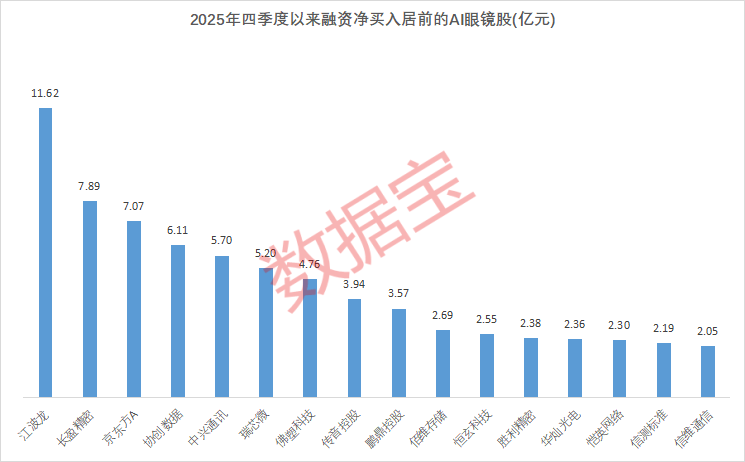
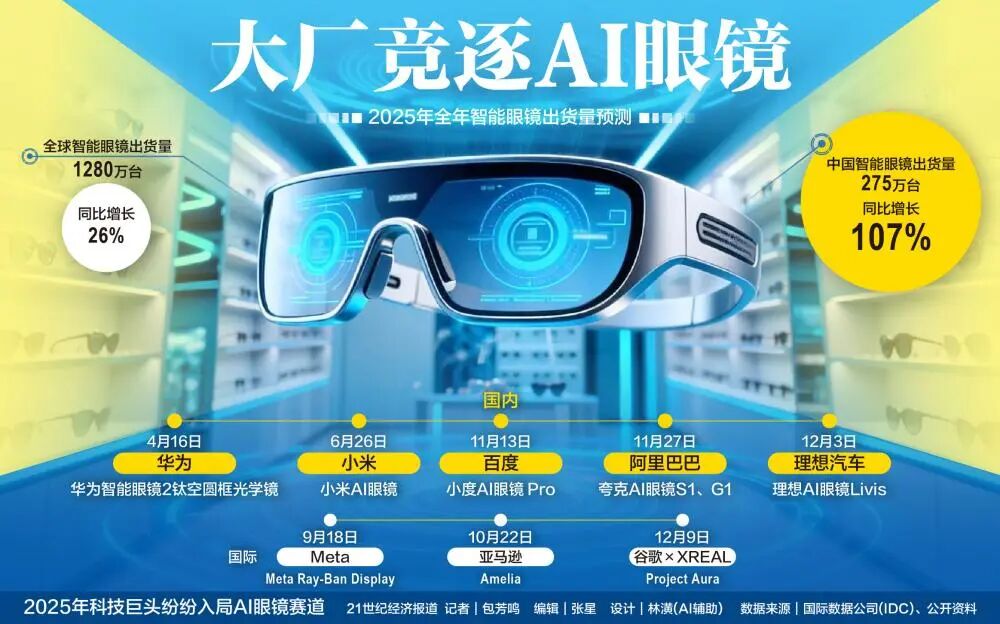
Group 1: Apple and Competitors' Developments - Apple is expected to release its first lightweight Apple Glass in 2026, likely at the WWDC, with mass production starting in 2027. The product will not have an AR display but will include multiple cameras for photo and video capture, and will utilize an updated Siri for AI support [1] - Google has officially launched the Android XR platform and showcased Project Aura, the first consumer-grade AR glasses powered by this platform, in collaboration with Chinese company XREAL, set to be released in 2026 [1] - Domestic players are also entering the AI glasses market, with Alibaba launching the Quark AI glasses series and Li Auto releasing its first AI glasses, Livis [1] Group 2: Market Potential and Predictions - AI glasses are viewed as the next competitive mainstream computing terminal following smartphones. Analysts from IDC suggest that AI functionalities will be more rapidly implemented in smart glasses due to cost efficiency and advancements in large models for voice and image recognition [2] - IDC forecasts that global shipments of smart glasses will reach 12.8 million units by 2025, representing a 26% year-on-year growth, with China's market expected to see shipments of 2.75 million units, a 107% increase [2] Group 3: Performance of AI Glasses Stocks - A total of 16 AI glasses stocks have seen net purchases exceeding 200 million yuan since Q4 2025, with Jiangbolong leading at 1.162 billion yuan. Other notable companies include Changying Precision, BOE Technology, and ZTE, each with over 500 million yuan in net purchases [3] - Jiangbolong has introduced innovative products for the AI glasses industry, including ultra-small eMMC and ePOP4x storage solutions [3] - The global AIGC wave and the "Digital China" initiative are expected to drive growth in the storage market, with Jiangbolong positioned for significant expansion [3] Group 4: Profit Growth Predictions for AI Glasses Stocks - TCL Technology, Haopeng Technology, and Sitaiwei are predicted to have the highest net profit growth rates for 2025, at 259.7%, 176.02%, and 153.63% respectively. Other companies like Baiwei Storage and Qixin Group are also expected to double their net profits [5] - Haopeng Technology is actively transitioning its AI/AR glasses and related businesses into tangible results, supported by a comprehensive product offering [5] - Sitaiwei has launched a 12-megapixel AI glasses application CMOS image sensor, enhancing the lightweight and high-quality imaging capabilities required for AI glasses [5]


A股开盘:沪指微跌0.1%、创业板指涨0.29%,贵金属板块走高,零售及福建板块延续调整
Jin Rong Jie· 2025-12-12 01:35
Company News - Moer Thread plans to maintain high R&D investment and product iteration based on its self-developed MUSA architecture, but it still lags behind international giants in comprehensive R&D strength, core technology accumulation, and product customer ecosystem [2] - Nandu Power has received notification from its controlling shareholders regarding a planned change of control and the sale of shares in the recycled lead plate sector, leading to a temporary suspension of its stock from December 12, 2025, for no more than two trading days [2] - Vanke A continues to provide guarantees for related loans through credit guarantees and equity pledges, with a total guarantee balance of 84.476 billion yuan, accounting for 41.68% of the audited net assets attributable to shareholders as of the end of 2024 [2] Legal and Regulatory Updates - Tefa Information received a first-instance criminal judgment related to a contract fraud case from the acquisition of Shenzhen Tefa Dongzhi Technology Co., Ltd., with the final judgment and subsequent execution results still uncertain [3] - Jincheng Pharmaceutical's actual controller received an administrative penalty decision from the CSRC for stock manipulation between August 2017 and February 2020 [3] Mergers and Acquisitions - Zhaoxin Co. plans to acquire 70% of Youde New Energy Technology (Ningbo) Co., Ltd. for a maximum transaction price of 220 million yuan, making it a subsidiary upon completion [3] - Haige Communication's subsidiary successfully completed the first flight of the "Jiutian" drone, commissioned by Shaanxi Unmanned Equipment Technology Co., Ltd. [4] - Victory Energy's controlling shareholder plans to transfer 84.6438 million shares, representing 29.99% of the total share capital, to Qiteng Robotics Co., Ltd., resulting in a change of controlling shareholder [4] Industry Insights - The space computing sector is highlighted by Starcloud's successful satellite-based training of a large language model, marking a milestone in space AI computing [6] - The ice and snow economy in Liaoning Province aims to enhance its brand influence and achieve over 2.6 billion annual visitors and 250 billion yuan in revenue by 2027 [7] - UBS predicts a continued shortage of DRAM supply until Q1 2027, with a projected 20.7% growth in DDR memory demand, significantly outpacing supply growth [8] - China's new energy vehicle production and sales approached 15 million units from January to November, with exports reaching 2.315 million units, doubling year-on-year [9] - Advanced packaging technology is becoming crucial in the AI industry, with TSMC's capacity fully booked, and Nvidia accounting for over half of the demand [10] - Quark AI glasses are ramping up production to meet significant orders, aiming to release capacity ahead of the Spring Festival consumer surge [11] - The global nuclear fusion market is projected to approach 500 billion USD by 2030, with 23 companies planning to establish commercial fusion power plants by 2040 [12]

科技巨头争“戴”AI眼镜
Shen Zhen Shang Bao· 2025-12-11 23:21
Core Insights - The AI glasses market is rapidly evolving, with major tech companies like Google, Meta, Xiaomi, and Li Auto launching new products, indicating a significant shift towards mainstream adoption of AI glasses [1][2][3] Group 1: Market Developments - Google plans to release two types of AI glasses by 2026, one being a screenless assistant type and the other featuring a display module for navigation and real-time translation [2] - Meta introduced the Meta Ray-Ban Display smart glasses, which are seen as a step towards their 2027 "Orion" glasses [2] - Xiaomi's AI glasses weigh 40 grams and are priced at 1999 yuan, while Li Auto's Livis glasses weigh 36 grams with a battery life of 18.8 hours [2] Group 2: Sales and Demand Trends - Global smart glasses shipments are projected to reach 1.487 million units in Q1 2025, marking an 82.3% year-on-year increase, with China's growth rate at 116.1% [3] - The Quark AI glasses S1 have seen high demand, often selling out quickly, with resale prices on second-hand markets reaching 4000 to 5000 yuan [4] - Rokid's new AI glasses sold 40,000 units within five days of launch, while Meta's Ray-Ban Meta series has shipped over 2 million units globally [4] Group 3: Industry Competition and Future Outlook - The entry of multiple companies into the AI glasses market is intensifying competition, driving innovation and optimization in product features, design, and pricing [5] - Industry experts predict that 2025 will be a pivotal year for AI glasses, transitioning from basic functionality to enhanced usability [5] - Ant Group's executive emphasized the need for standardized communication protocols and security measures to ensure seamless integration of AI glasses as a "super terminal" connecting various devices [6]




独家|夸克AI眼镜“一机难求”,核心供应商曝新增产线,产能将从下周陆续释放
Di Yi Cai Jing· 2025-12-11 09:38
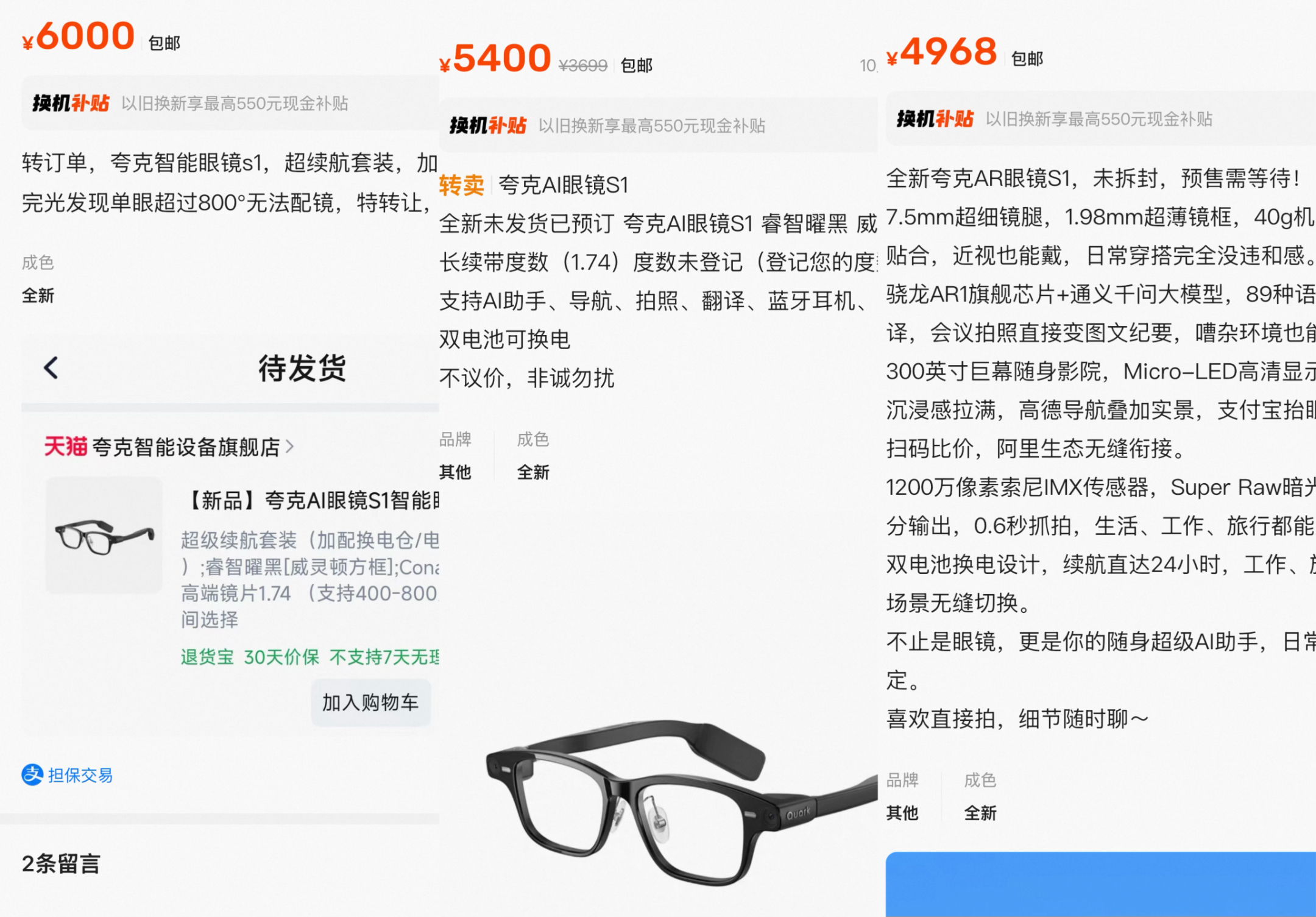
今年11月,夸克AI眼镜正式发布了S1、G1两个系列共六款单品,S1系列最低到手价为3799元,G1最低 到手价1899元起,这也是搭载千问的首款硬件。对阿里而言,这是千问首次走出屏幕,进入物理世界。 夸克AI眼镜"爆单"后,市场需求远超预期,线上线下"一机难求"。 夸克AI眼镜"爆单"后,市场需求远超预期,线上线下"一机难求"。今日第一财经记者从夸克AI眼镜的两 家核心供应商处独家获悉,目前夸克AI眼镜已新增一条产线,产能将从下周陆续释放。 来自立讯精密的内部人士对第一财经独家透露,夸克的工作人员上个月就已经密集在盯出货,"他们不 仅在增加镜腿等一些零部件的供应量,还在我们的工厂内新增了一条组装产线。" 至格科技创始人孟祥峰称:"我们正加紧生产来自夸克AI眼镜的大笔光波导片订单,新购买的设备都已 投入使用。" 夸克AI眼镜的一位内部人士此前对记者透露,团队目前最大的目标是明年1月能够充分释放产能,赶上 春节消费热潮。 第一财经记者在天猫、抖音、京东等主流电商平台看到,目前夸克AI眼镜S1均处于"上架即售罄"状态。 而在闲鱼等二手交易市场,今日现货价格最高被炒至6999元。 在线下渠道,夸克AI眼镜的多家线下 ...
发售半月仍“一镜难求”,夸克AI眼镜S1遭抢购,二手价炒至6000元
Guo Ji Jin Rong Bao· 2025-12-10 12:38
近期,AI眼镜赛道热度持续攀升。12月10日,多位消费者向记者反馈,阿里于11月底发布的夸克AI眼镜S1目前市场处于"一镜难求"状态,在二手交易 平台上,该现货价格已被炒至4000—6000元区间。 作为夸克推出的旗舰AI眼镜产品,S1系列配有不同框型和颜色共三款单品,起售价3799元,于11月27日在天猫、抖音、京东等主流电商平台同步开 售。 记者查询发现,当前天猫、抖音、京东等线上平台均显示该产品已售罄。天猫旗舰店客服回应称,受产能限制,目前每天上午10点会限量补货,但通常 在半小时内即被抢空,建议消费者提前关注。客服同时表示,品牌方正在加紧备货,以缓解供应紧张。 值得一提的是,不仅线上渠道紧缺,线下门店同样面临供货压力。有合作门店工作人员表示,目前店内暂无现货,新订单普遍需等待一个月左右。 旺盛的市场需求催生了二手交易市场的火爆。在闲鱼等二手交易平台上,该款眼镜的转手价格普遍维持在4000元左右。而对于少数可"立即发货"的现 货,卖家叫价甚至超过5000元,远超3799元的官方起售价。此外,市场上还出现了租赁服务,夸克AI眼镜的日租金在40元至95元不等。 ¥6000 包邮 换机补贴 以旧换新享最高55 ...
AI眼镜赛道再迎巨头入场
Xin Lang Cai Jing· 2025-12-10 06:34
Core Insights - Google is set to launch its first AI glasses in 2026, showcasing a significant commitment to the AI glasses market [1][12] - The company is developing two types of AI glasses: one for voice assistant functions and another with display capabilities [1][12] - Google aims to challenge Meta in the next-generation computing platform competition, leveraging its advanced AI models and the Android ecosystem [1][12] Product Development - The AI glasses include a voice assistant model that integrates speakers, microphones, and cameras for hands-free interaction with Gemini [1][12] - The display model will present information directly on the lenses, allowing users to access navigation and real-time translations without disturbing their surroundings [1][12] - Google is collaborating with Chinese AR company Xreal on a project called "Project Aura," which will be the first wired XR device running on the Android XR platform [1][12] Strategic Shift - Google is returning to the smart eyewear market after its initial failure with Google Glass in 2012, shifting its strategy from a simple camera to an AI-native interaction interface [4][5] - The Android XR platform is designed to support diverse hardware forms, enhancing user experience by allowing customization based on individual preferences [5][15] - The introduction of "digital avatars" technology aims to enhance social interaction during video calls by capturing and replicating users' facial expressions and gestures [5][15] Market Competition - Google is targeting Meta, which currently holds a significant market share in smart glasses, with Meta's products projected to capture 73% of the market by mid-2025 [6][15] - Unlike Meta's vertical integration approach, Google focuses on empowering the industry through its software platform, aiming to create an ecosystem that rivals Meta's success in the smartphone sector [6][16] - Google plans to integrate its high-frequency applications like Maps, Search, and Translation with Gemini, bringing AI capabilities directly to users [6][16] Industry Outlook - The smart glasses market is expected to experience significant growth, with projections indicating that global shipments could exceed 23.7 million units by 2026, including 4.9 million units in China [9][19] - Analysts believe that the industry is on the verge of a breakthrough, driven by advancements in AI models and the emergence of AIoT (Artificial Intelligence of Things) [8][19] - Despite the optimistic outlook, challenges such as privacy concerns, design aesthetics, and the lack of killer applications remain barriers to widespread adoption [10][20]
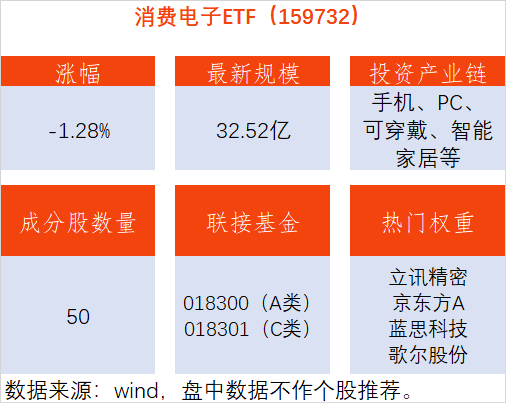
AI眼镜迎新赛道,消费电子ETF(159732.SZ)下跌1.28%,成分股表现分化
Mei Ri Jing Ji Xin Wen· 2025-12-10 05:32
Group 1 - The A-share market experienced a collective decline on December 10, with the Shanghai Composite Index dropping by 0.62% during the session. Retail, forestry, and engineering machinery sectors showed positive performance, while computer hardware and electrical grid sectors faced significant declines [1] - The consumer electronics sector remains sluggish, with the Consumer Electronics ETF (159732) down by 1.28% as of 10:29 AM. Notable declines in component stocks include Shenghong Technology down by 5.68%, Pegatron down by 3.73%, and Huankai Electronics down by 3.40%. However, some individual stocks like Dongshan Precision and OmniVision Technologies saw increases of 3.33% and 2.93%, respectively [1] Group 2 - On December 3, Li Auto launched its first AI smart glasses, Livis, which seamlessly integrates vehicle control with AI assistance for daily use. Users can issue voice commands to control various vehicle functions without needing to take out their phones, covering many high-frequency scenarios [3] - The release of Livis is expected to enhance Li Auto's brand ecosystem and open new pathways for the development of AI glasses, differentiating from previous models that primarily extended mobile functionalities like payment and navigation [3] - The Consumer Electronics ETF (159732) tracks the Guozheng Consumer Electronics Index, investing in 50 A-share listed companies involved in the consumer electronics industry, with a focus on electronic manufacturing, semiconductors, and optical electronics [3]
AI眼镜赛道再迎巨头入场
21世纪经济报道· 2025-12-10 05:03
Core Viewpoint - Google is re-entering the smart glasses market with a focus on AI integration, aiming to compete directly with Meta in the next-generation computing platform space [4][6]. Group 1: AI Glasses Development - Google announced its first AI glasses product will launch in 2026, featuring two types: a voice assistant model and a display model that provides information directly on the lenses [1][5]. - The AI glasses will leverage Google's Gemini AI model and the Android XR platform, enhancing user interaction and experience [5][6]. Group 2: Market Competition - Google aims to challenge Meta, which currently holds a significant market share of 73% in the smart glasses sector, by focusing on software platform empowerment rather than vertical integration [6][9]. - The company is collaborating with hardware partners like Samsung and Qualcomm to build an ecosystem that can rival Meta's offerings [6][11]. Group 3: Industry Outlook - The smart glasses market is expected to experience significant growth, with projections indicating global shipments could exceed 23.68 million units by 2026, including 4.91 million units in China [9][10]. - Analysts believe that advancements in AI and user experience will drive the transition of smart glasses from novelty items to essential tools in various high-frequency scenarios [10][11].