Robotaxi

Search documents
Tesla: 2026 Could Be A Reckoning Year For Robotaxi And Optimus (NASDAQ:TSLA)
Seeking Alpha· 2026-01-06 20:33
Core Viewpoint - Tesla, Inc. has reported a decline in auto sales for the second consecutive year, with Q4 deliveries falling to 418,000 vehicles, representing a 16% year-over-year decrease and a sequential decline from previous records [1] Group 1: Sales Performance - The company delivered 418,000 vehicles in Q4, marking a 16% decline compared to the same quarter last year [1] - This decline in deliveries indicates a continuation of a downward trend in sales for Tesla, as it is the second consecutive year of decreasing deliveries [1]


This is Uber's new robotaxi from Lucid and Nuro
TechCrunch· 2026-01-05 23:00
Core Insights - Uber, Lucid Motors, and Nuro have unveiled a production-intent robotaxi at the 2026 Consumer Electronics Show, which has been in development for over six months [1][2] - Uber has invested $300 million in Lucid and committed to purchasing 20,000 electric vehicles (EVs) from the company [2] - The robotaxi is currently being tested on public roads, with plans for a commercial service launch in the San Francisco Bay Area later this year [2] Vehicle Specifications - The robotaxi is based on the Lucid Gravity SUV and features high-resolution cameras, solid-state lidar sensors, and radars integrated into its design [3] - The autonomy package is powered by Nvidia's Drive AGX Thor computer, and the vehicle includes a "halo" with integrated LED lights for rider identification [3][4] - The integration of autonomous technology during the manufacturing process at Lucid's Arizona factory is expected to save time and costs compared to competitors like Waymo [4] User Interface and Experience - The latest version of the robotaxi includes a small screen on the halo for greeting riders and an interior ride interface [6] - The user interface is designed to be familiar to those who have used Waymo, featuring a rear passenger screen that displays an isometric view of the vehicle's surroundings [7] - The interface provides essential information such as estimated drop-off time, remaining ride time, climate controls, and music options [7][10] Production and Market Outlook - Uber's decision to base the robotaxi service on the Gravity model is seen as strategic due to its spacious interior [11] - Lucid Motors has recently doubled its 2024 production figures and achieved new sales records, indicating a recovery from previous software issues [12] - Final validation of the robotaxi is expected later this year, after which production versions will begin rolling off the assembly line [12]



上市半年放大招,曹操出行首次收购杀入商旅万亿蓝海
2 1 Shi Ji Jing Ji Bao Dao· 2026-01-05 00:36
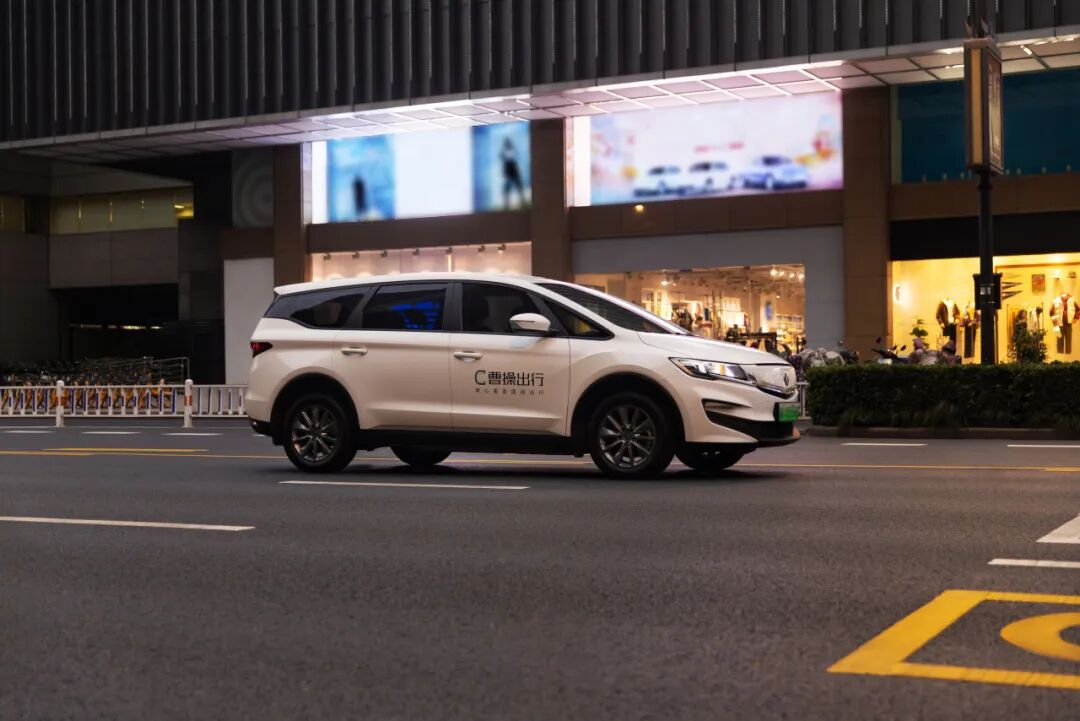
Core Insights - The article discusses the strategic acquisitions made by Cao Cao Mobility, which include 100% stakes in Yao Mobility and Geely Business Travel, aiming to enhance its presence in the high-end travel and business travel management sectors. This move is seen as a significant step in tapping into the vast and recovering trillion-dollar business travel market [1][5]. Market Opportunity and Pain Points - The global business travel market is projected to reach $1.57 trillion by 2025, with China expected to contribute $373.1 billion, highlighting its role as a key growth engine [2]. - Companies are increasingly focused on reducing travel costs (75%), improving employee travel experiences (68%), and achieving data visualization in travel management (65%) [2]. - The current business travel market is fragmented, with three main pain points: 1. Service scenarios are disconnected, leading to inefficiencies in managing short-distance travel needs [3]. 2. The implementation of digital solutions is lacking, with many companies still relying on manual processes [3]. 3. Weak cross-border service capabilities hinder companies' international travel management [3]. Strategic Acquisitions - The acquisitions of Yao Mobility and Geely Business Travel are strategic moves to address the identified pain points in the business travel market, allowing Cao Cao Mobility to create a comprehensive service chain from daily commuting to travel management [5][9]. - Yao Mobility enhances Cao Cao's high-end service capabilities and global network, while Geely Business Travel provides a full suite of travel management solutions [9][10]. Competitive Advantages - Cao Cao Mobility has a strong foundation in the enterprise service market, having served over 13,500 companies since 2016, which provides a substantial customer base and high client retention [7][8]. - The company has built a reputation for quality service, which is crucial for gaining trust in the business travel sector [11]. - Cao Cao Mobility operates the largest fleet of customized vehicles in China, enhancing service quality and operational efficiency [13][14]. - The company's forward-looking Robotaxi strategy positions it to meet future travel demands and expand its service offerings globally [14][15]. Future Outlook - The integration of high-end service networks, intelligent travel management, and Robotaxi capabilities will allow Cao Cao Mobility to meet complex business travel needs as companies globalize [15]. - The shift from fragmented to integrated services in the travel industry presents a significant opportunity for companies that can provide comprehensive solutions [15].
上市半年放大招,曹操出行首次收购杀入商旅万亿蓝海
21世纪经济报道· 2026-01-05 00:35
Core Viewpoint - The article discusses the strategic acquisition by Cao Cao Mobility of Yao Travel and Geely Business Travel, highlighting the potential to integrate high-end travel and business travel management services in a rapidly growing trillion-dollar market [1][6]. Market Opportunity and Pain Points - The global business travel market is projected to reach $1.57 trillion by 2025, with China expected to contribute $373.1 billion, driven by companies' needs to reduce costs and improve efficiency [3]. - 75% of companies prioritize reducing overall travel costs, while 68% focus on enhancing employee travel experiences, indicating a concentrated demand for effective travel management solutions [3]. - The current business travel market is fragmented, with key pain points including disjointed service scenarios, inadequate digital integration, and weak cross-border service capabilities [4]. Integration of Differentiated Resources - The acquisition of Yao Travel and Geely Business Travel allows Cao Cao Mobility to create a comprehensive service chain that covers daily commuting, business receptions, and travel management [6][9]. - Yao Travel enhances Cao Cao's high-end service capabilities and global network, while Geely Business Travel provides a full-spectrum travel management solution [9]. Competitive Advantages - Cao Cao Mobility has built a strong reputation in client service, evidenced by being rated as the "Best Service Platform" in multiple user surveys [12]. - The company operates the largest customized vehicle fleet in China, which enhances service quality and cost control for corporate clients [14]. - The forward-looking Robotaxi strategy positions Cao Cao Mobility to meet future travel demands and expand its service capabilities globally [15][16]. Industry Trends - The business travel industry is transitioning from fragmentation to integration, with competition shifting towards ecosystem service capabilities [17]. - The strategic acquisitions and existing resources position Cao Cao Mobility to reshape the global business travel landscape as Chinese companies expand internationally [17].

特斯拉:交付量基本符合预期,市场聚焦机器人业务
2026-01-04 11:35
Summary of Tesla Inc. Conference Call Company Overview - **Company**: Tesla Inc - **Industry**: Autos & Shared Mobility - **Market Cap**: $1,585,713 million as of December 31, 2025 - **Stock Rating**: Equal-weight - **Price Target**: $425.00 Key Financial Metrics - **4Q25 Deliveries**: 418,000 vehicles, a decrease of 16% year-over-year, slightly missing sell-side consensus of 422,900 vehicles by 1% but beating Morgan Stanley estimates of 402,000 vehicles [1][8] - **Energy Storage System (ESS) Deployments**: 14.2 GWh, exceeding expectations of 13.4 GWh [1][8] - **2026 Estimates**: - Vehicle unit sales: 1.597 million, a decrease of 2.5% year-over-year - ESS deployment: 64 GWh, an increase of 37% [1] Core Business Insights - **Robotaxi Business**: The primary catalyst for Tesla's growth in 1H26, with advancements in Full Self-Driving (FSD) technology being crucial for future vehicle demand [1] - **Volume Growth Expectations**: Anticipated double-digit growth in vehicle volume starting from 2027 [1] Price Target Methodology - **Bear Case**: $145 per share, with components including: - $30/share for automotive (6 million units by 2040 at a 6.5% EBIT margin) - $50/share for Network Services (60% attach rate at $200/month ARPU) - $45/share for Tesla Mobility (2 million car fleet at ~40% EBITDA margin) - $20/share for Energy [3][25] - **Base Case**: $425 per share, with components including: - $55/share for core automotive (9 million units by 2040 at a 10.5% EBIT margin) - $145/share for Network Services (80% attach rate at $240/month ARPU) - $125/share for Tesla Mobility (5 million cars at ~$1.33/mile) - $40/share for Energy [19] - **Bull Case**: $860 per share, with optimistic projections for all segments [3][19] Earnings and Revenue Estimates - **2025 Revenue**: $93,941 million - **2026 Revenue**: $97,275 million - **2027 Revenue**: $118,124 million - **Auto Gross Margin**: Expected to be 16.3% in 2026 [27] Risks and Challenges - **Market Competition**: Increased competition from traditional OEMs, startups, and large tech firms in both automotive and robotics sectors [31][32] - **Execution Risks**: Associated with robotaxi, FSD, and humanoid projects [32] - **Regulatory Risks**: Potential regulatory challenges, particularly in China [32] Additional Insights - **Consensus Rating Distribution**: 42% Overweight, 38% Equal-weight, 21% Underweight [23] - **Global Revenue Exposure**: 20-30% from Europe and Mainland China, with minimal exposure to Latin America and MEA [28] This summary encapsulates the key points from the Tesla Inc. conference call, highlighting the company's performance, future expectations, and the associated risks in the current market landscape.

行业周报:昆仑芯启动港股IPO,关注MiniMax多模态机会-20260104
KAIYUAN SECURITIES· 2026-01-04 06:06
Investment Rating - The industry investment rating is "Positive" (maintained) [1] Core Insights - The report highlights the ongoing growth in domestic AI chip demand, with Kunlun Core initiating its Hong Kong IPO process, indicating a strong market potential for domestic AI solutions [5][15] - The upcoming listings of major AI model companies, such as MiniMax, are expected to attract significant investment interest, with MiniMax's projected fundraising between 3.83 to 4.19 billion HKD [21][24] - The report emphasizes the accelerating commercialization of Robotaxi services in China, driven by technological advancements, cost reductions, and supportive policies [7][42] Summary by Sections Internet - Kunlun Core has started its Hong Kong listing process, indicating a sustained growth in domestic computing power demand. The report recommends stocks such as Alibaba-W, Baidu Group-SW, and Pinduoduo, with Tencent Holdings identified as a beneficiary [5][14][67] - The Hang Seng Internet Technology Index rose by 4.3% during the week of December 29, 2025, to January 2, 2026, outperforming other indices [14][16] AI - Major AI model stocks, including MiniMax, are set to list soon, with MiniMax's share price range between 151-165 HKD and an expected market capitalization of 46.12 to 50.40 billion HKD. The company has shown significant revenue growth, achieving 53.44 million USD in revenue for the first three quarters of 2025, a 175% year-on-year increase [21][24][24] - MiniMax's diverse revenue model includes subscription services, virtual goods, and online marketing services, indicating a robust business strategy [30][24] Smart Driving - The report notes that the L3 level of autonomous driving in China has received trial approval, marking a significant step towards commercialization. The Robotaxi market is expected to grow rapidly due to technological maturity and policy support [7][42][44] - Various business models for Robotaxi are emerging, including partnerships between manufacturers, autonomous driving companies, and ride-hailing services, which are expected to accelerate commercialization [44][49] Weekly Data Update - The Hang Seng Index increased by 2.01% during the week, with significant gains in the media, automotive, and technology sectors [53][59]
曹操出行上市后首次战略并购,2.9亿加码高端及商旅市场
Nan Fang Du Shi Bao· 2026-01-04 05:16
Core Viewpoint - Cao Cao Mobility (02643.HK) announced two strategic acquisitions, acquiring 100% of Weixing Technology Co., Ltd. (Yaochuxing) for 225 million yuan and Zhejiang Geely Business Services Co., Ltd. (Geely Business) for 65 million yuan, marking its first strategic acquisition since its listing on the Hong Kong Stock Exchange in June last year [1][2]. Group 1: Acquisitions Overview - The acquisitions will make Yaochuxing and Geely Business wholly-owned subsidiaries of Cao Cao Mobility, with their financial performance integrated into the company [1]. - The integration aims to create a comprehensive technology travel platform covering personal and corporate travel, standard and high-end services, and "travel + business travel" solutions [1][4]. Group 2: Business Operations and Financials - Weixing Technology primarily offers luxury travel services under the "StarRides" brand, including business chauffeur services and airport transfers, with a registered capital of 700 million yuan and a reported after-tax loss of 57.46 million yuan by the end of 2024 [2]. - Geely Business provides full-process business travel solutions and has a registered capital of 10 million yuan, reporting an after-tax profit of 23.3 million yuan by the end of 2024 [4]. - Cao Cao Mobility has served over 13,500 corporate clients since launching its corporate services in 2016, indicating a strong foothold in the corporate travel market [4]. Group 3: Strategic Benefits - The acquisitions are expected to enhance Cao Cao Mobility's high-end travel product line and attract a broader mid-to-high-end customer base, thereby increasing overall customer value and lifetime value [4][5]. - The company emphasizes that corporate services are a vital part of its business, characterized by stable demand and high average prices, which will help expand its corporate client base and improve operational efficiency [5]. - The international service network of Yaochuxing, which extends to 12 global cities, and Geely Business's overseas corporate clients will support Cao Cao Mobility's international expansion efforts [5]. Group 4: Financial Performance - In the first half of 2025, Cao Cao Mobility reported revenue of 9.456 billion yuan, a year-on-year increase of 53.5%, with a reduced net loss of 330 million yuan, down 34% year-on-year [6]. - The gross margin improved from 7% to 8.4%, indicating a positive trend in financial performance [6].

Wall Street analysts set Tesla stock price for the next 12 months
Finbold· 2026-01-03 09:53
Core Viewpoint - Tesla reported weaker-than-expected vehicle deliveries for Q4 2025, leading to cautious sentiment on Wall Street regarding the stock's future performance [1][3]. Delivery and Production Performance - Tesla delivered 418,227 vehicles in Q4 2025, below Wall Street's expectation of approximately 426,000 [1]. - Quarterly deliveries declined by roughly 16% year-over-year from 495,570 vehicles, while production fell 5.5% from 459,445 units in Q4 2024 [2]. - For the full year, Tesla delivered 1.64 million vehicles, down from 1.79 million in 2024, representing an 8.6% annual decline [2]. Market Reaction - Following the delivery report, Tesla shares closed 2.59% lower, ending the session at $438, although the stock remains up over 6% year-over-year [1][3]. - Wall Street analysts have turned more cautious, with a mean price target of $393.90, indicating a downside of just over 10% [6]. Analyst Ratings and Insights - Morgan Stanley maintained an 'Equalweight' rating with a $425 price target, noting that while deliveries missed broader expectations, they exceeded buy-side estimates [7]. - Truist Securities kept a 'Hold' rating and adjusted the price target to $439 from $444, citing weaker deliveries and limited updates on automotive initiatives [8]. - Wedbush reiterated an 'Outperform' rating with a $600 price target, arguing that fourth-quarter deliveries were better than feared and highlighting energy storage as a key driver of upside [9].

Tesla (NASDAQ: TSLA) Stock Price Prediction and Forecast 2026-2030 (Jan 1)
247Wallst· 2026-01-01 13:20
Core Insights - Tesla Inc.'s share price has decreased by 6.4% in the past week due to warnings of a significant drop in fourth-quarter deliveries and a supplier contract restatement indicating declining demand for the Cybertruck, although the stock remains 43.1% higher than six months ago [1] - The stock is only 8.9% higher than a year ago, underperforming the Nasdaq, but has seen a remarkable increase of 28,500% since its IPO in June 2010 [2] - Investors are focused on Tesla's future performance over the next one, five, and ten years, with a consensus that long-term projections are more relevant than short-term forecasts [3] Tesla's Recent Success - Tesla has achieved revenue and earnings growth even in high-interest-rate environments, with its Model S and Model 3 being top-selling electric vehicles in their respective years [4] - The company has seen revenue growth from its energy storage business and charging station network [5] Financial Performance - Tesla's revenue and net income have shown significant growth over the years, with revenues increasing from $4.046 billion in 2015 to $96.773 billion in 2023, and net income rising from $888.7 million in 2015 to $14.997 billion in 2023 [6] Key Drivers for Performance - Improved margins due to cost-cutting measures and the establishment of gigafactories in Shanghai and Berlin are expected to enhance sales and reduce export-related costs [7] - Research and development in Full Self-Driving (FSD) and robotaxi technologies position Tesla ahead of competitors, with plans for 500 robotaxis in Austin and 1,000 in Silicon Valley by year-end [8] - Tesla's diversified business segments, including Supercharger, energy, and battery businesses, contribute to its competitive edge [9] - Plans for a large Optimus robot production line in Fremont, California, indicate further expansion [10] Stock Forecast - Wall Street's consensus 12-month price target for Tesla is $399.15 per share, which is 12.2% lower than the recent closing price, with several firms maintaining Buy-equivalent ratings [11] - A forecast through 2030 suggests revenue growth from $112.09 billion in 2025 to $297.43 billion in 2030, with normalized EPS growth projected from $1.91 in 2025 to $11.24 in 2030 [12]

Tesla just made an 'unusual' move, and it could mean a rough end to the year
Business Insider· 2025-12-31 11:19
Core Viewpoint - Tesla has provided a surprising update regarding its quarterly sales, indicating a significant decline in vehicle deliveries compared to the previous year, which has raised concerns among investors [1][2]. Group 1: Sales Performance - The delivery consensus estimates that Tesla sold 422,850 vehicles in Q4 2025, representing a 14.6% decrease from the same period last year [2]. - This figure is below Wall Street's expectations of 440,907 EVs, highlighting a potential shortfall in sales performance [2]. - Analysts suggest that actual sales may be closer to 420,000, indicating a further decline in performance [3]. Group 2: Market Challenges - Tesla's US sales have reportedly fallen to their lowest level since 2022, exacerbated by the expiration of the $7,500 federal tax credit in September [4]. - The company faces intense competition in China from local EV startups offering advanced vehicles at lower prices, impacting Tesla's market share [5]. - In Europe, Tesla's sales have decreased nearly 30% this year, partly due to backlash against Elon Musk's political statements [5]. Group 3: Strategic Responses - In response to declining sales, Tesla has introduced various incentives in the US and is working to launch its Full Self-Driving technology in China and Europe [6]. - The delivery consensus suggests that Tesla will end the year with over 100,000 fewer EVs sold compared to 2024, indicating a significant challenge ahead [6].