商业航天

Search documents
斯瑞新材的星辰与现实:13 亿营收之上,商业航天能撑起多大想象?
市值风云· 2026-01-28 11:08
Financial Performance - From 2019 to 2024, Srey New Materials' revenue grew from 570 million to 1.33 billion, with a compound annual growth rate (CAGR) of approximately 18.6%[5] - In the first three quarters of 2025, revenue reached 1.17 billion, representing a year-on-year growth of 21.7%[5] - Net profit attributable to shareholders increased from 30.5 million in 2019 to 110 million in 2024, with an average CAGR exceeding 30%[7] - In the first three quarters of 2025, net profit grew by 37.7% to 110 million, nearly matching the total for the previous year[7] Market Position and Product Development - Srey New Materials is one of only two companies in China to develop aerospace-grade high-strength and high-conductivity copper alloy materials, crucial for rocket engine thrust chambers[12][22] - The company’s materials can withstand combustion temperatures of 3000°C, addressing the "ablation" issue in rocket engines and filling a domestic technology gap[22] - The commercial aerospace business generated revenue of only 30 million in 2024, indicating it is still in the early stages of development[25] Industry Context and Future Outlook - The Chinese commercial aerospace market is projected to reach an annual output value of 85 billion by 2030, with the overall industry scale potentially reaching 7-10 trillion[18] - Srey New Materials plans to expand production capacity to meet increasing market demand, with a target of producing 300 tons of forgings and over a thousand thrust chamber components annually[25] - Despite being a leader in niche markets, the company faces limitations in growth potential, with its core business revenues stagnating around 500 million[38] Financial Health and Shareholder Returns - The company has a debt ratio of 30.7% as of September 2025, indicating reliance on debt for capital expenditures[42] - Srey New Materials has maintained a generous dividend policy, distributing a total of 167 million in cash dividends since its IPO, which accounts for over 40% of total profits during the same period[46]

马斯克的“太空光伏梦”,离不开中国供应链
3 6 Ke· 2026-01-28 11:06
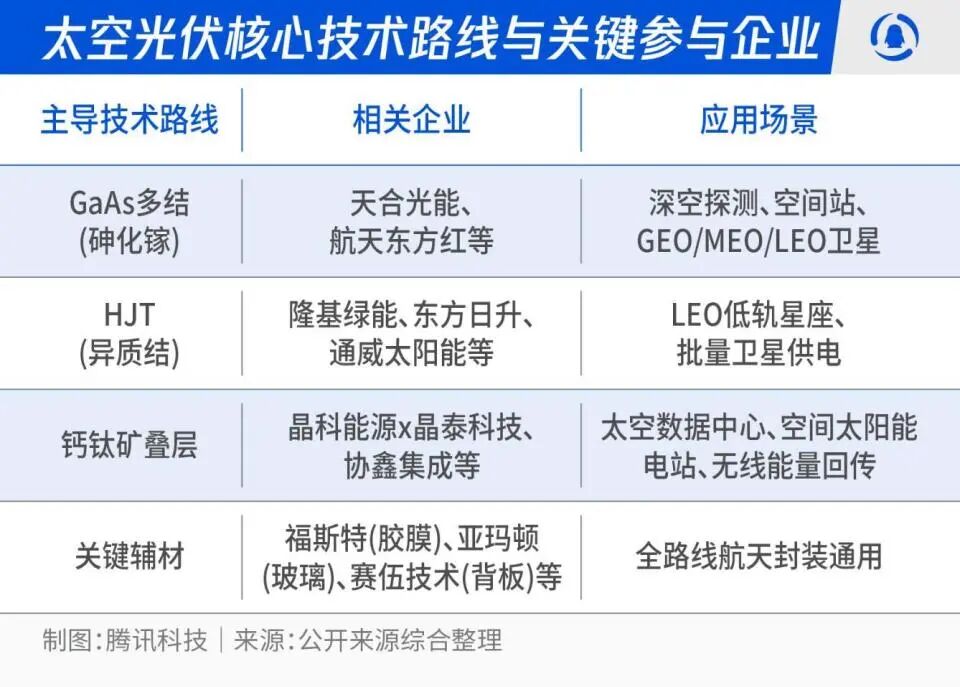
Core Viewpoint - The emergence of "space photovoltaics" is reshaping the value proposition for Chinese solar companies, positioning them as essential players in Elon Musk's space energy vision [1][4]. Group 1: Market Dynamics - The recent surge in the A-share market for solar stocks is driven by Musk's announcement at the Davos Forum about SpaceX and Tesla's plan to establish a solar production base with an annual capacity of 200GW, which is projected to meet nearly a quarter of the U.S. electricity demand [1][3]. - The excitement in the capital market is not merely speculative; it reflects a structural shift in the global energy landscape, with China having a significant role due to its established solar manufacturing capabilities [4][6]. Group 2: Industry Challenges and Opportunities - The solar industry has faced significant challenges over the past two years, including overcapacity and price wars, leading to widespread losses among companies, with projected losses totaling around 400 billion yuan [7]. - Musk's focus on space photovoltaics offers a new growth narrative for the industry, potentially alleviating some of the pressures from the current overcapacity situation [7][8]. Group 3: Technological Advancements - The global space photovoltaic market is expected to reach between $500 billion and $1 trillion by 2030, driven by the removal of traditional constraints faced by ground-based solar [3]. - The technology roadmap for space photovoltaics is anticipated to evolve through three phases, starting with GaAs cells for high-value applications, followed by HJT technology for low Earth orbit satellites, and eventually transitioning to perovskite tandem cells for large-scale deployments [9][10]. Group 4: Chinese Supply Chain Advantage - Chinese companies dominate over 70% of the global solar manufacturing supply chain, making them indispensable for any large-scale space photovoltaic initiatives, regardless of where the production is localized [5][11]. - The integration of space photovoltaics into China's existing energy infrastructure and policy frameworks positions the country favorably for future developments in this sector [5][12]. Group 5: Competitive Landscape - Various companies are exploring different technological pathways in the space photovoltaic sector, with some focusing on efficiency breakthroughs and others leveraging existing aerospace supply chain experience [11][12]. - The competition in space photovoltaics will involve not only technological advancements but also the ability to meet stringent aerospace certification requirements, which can create significant barriers to entry for new players [11][12].




涨停复盘:今日全市场共85只股涨停,连板股总数10只,资源股领涨,四川黄金、白银有色涨停!
Jin Rong Jie· 2026-01-28 10:59
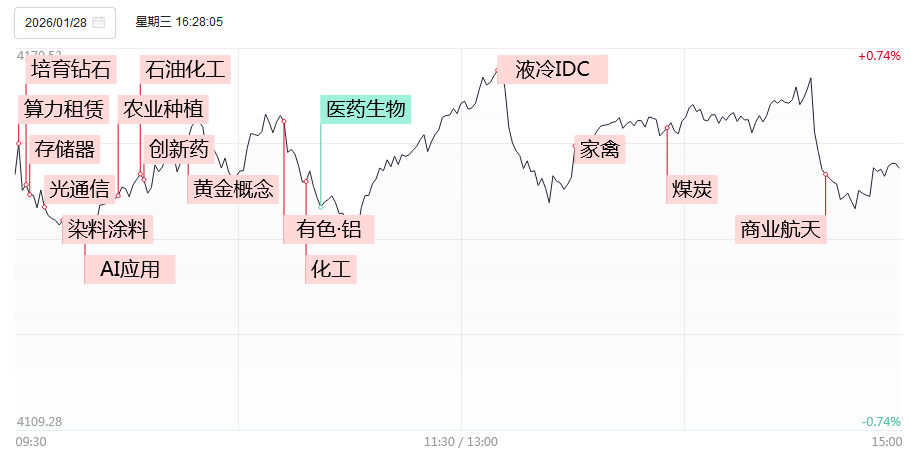
Market Overview - On January 28, the Shanghai Composite Index and Shenzhen Component Index experienced a pullback after an initial rise, while the ChiNext Index opened high but fell, dropping over 1% at one point. The total trading volume in the Shanghai and Shenzhen markets reached 2.97 trillion yuan, an increase of 70.4 billion yuan compared to the previous trading day. Over 3,600 stocks declined, with 85 stocks hitting the daily limit up [1]. Sector Performance - Resource stocks led the market, with significant gains in precious metals, oil and gas, and electrolytic aluminum sectors. Notable performances included China Gold with four consecutive limit ups, Hunan Gold with three consecutive limit ups, and China Aluminum hitting a 16-year high [1]. - The dye sector also saw a collective rise, with Zhejiang Longsheng, Runtou Co., and Yabang Co. all hitting the daily limit up. The storage chip concept was active, with Zhongwei Semiconductor and Qipai Technology both reaching the daily limit up [1]. - Conversely, the pharmaceutical and photovoltaic sectors faced declines, with companies like Baipusais and Hengrui Medicine dropping over 10% [1]. Limit Up Stocks - A total of 80 stocks hit the daily limit up, with 10 stocks achieving consecutive limit ups. The limit up rate was 75%, indicating strong market interest in certain sectors [1]. - Key stocks in the precious metals sector included Baiyin Yousheng with seven consecutive limit ups and Sichuan Gold with six limit ups over ten days [9][10]. Related Hotspots 1. Precious Metals: Prices have been rising, with New York gold surpassing $5,300 per ounce and spot silver reaching $116 per ounce [11]. 2. Non-ferrous Metals: LME aluminum broke through $3,300, with tin, zinc, and copper also showing strength recently [12]. 3. Chemicals and Dyes: The price of core intermediates for disperse dyes has surged from 25,000 yuan to 38,000 yuan, a 50% increase, driving up dye prices [12]. 4. Oil and Gas: Reports indicate that the U.S. has communicated to Israel its military readiness regarding potential actions against Iran [12].



斯瑞新材的星辰与现实:13亿营收之上,商业航天能撑起多大想象?
Xin Lang Cai Jing· 2026-01-28 10:24
Core Viewpoint - The recent surge in A-share commercial aerospace concept stocks has been fueled by a series of positive developments, including the successful vertical recovery test of the Zhuque-3 rocket and the establishment of a commercial aerospace department by the National Space Administration, which has ignited market enthusiasm [3][37]. Company Performance - From 2019 to 2024, the revenue of Srey New Materials increased from 570 million to 1.33 billion yuan, with a compound annual growth rate of approximately 18.6%. In the first three quarters of 2025, revenue reached 1.17 billion yuan, representing a year-on-year growth of 21.7% [6][40]. - The net profit attributable to the parent company grew from 30.5 million yuan in 2019 to 110 million yuan in 2024, with a compound annual growth rate exceeding 30%. In the first three quarters of 2025, net profit increased by 37.7% to 110 million yuan, nearly matching the total for the previous year [8][42]. - The gross margin has been gradually improving, with a 3 percentage point increase in the first three quarters of 2025 compared to the entire year of 2023, indicating a rise in high-value-added products [10][44]. Industry Context - Srey New Materials specializes in aerospace-grade high-strength and high-conductivity copper alloy materials, which are critical for the thrust chambers of domestic commercial rocket engines. This technology has been validated in key tests by leading domestic rocket companies [13][53]. - The company is one of only two domestic firms to have successfully developed these materials, which can withstand combustion temperatures of up to 3000°C and possess excellent thermal conductivity, addressing long-standing challenges in the domestic aerospace industry [18][52]. - The commercial aerospace sector in China is still in its early stages, with the company's aerospace business generating only 30 million yuan in revenue in 2024, which is a small fraction of its overall revenue [20][54]. Market Position - Srey New Materials has established itself as a global supplier in the high-strength and high-conductivity copper alloy market, competing with international giants like KME and Mitsubishi, achieving comparable key parameters [26][60]. - The company has a significant market share in the domestic market for copper-chromium and copper-tungsten materials used in high-voltage electrical contacts, with over 60% market share domestically and about 50% globally [61][60]. Future Outlook - The company plans to expand its production capacity to meet growing market demand, with a target of producing 300 tons of forgings and over a thousand sets of thrust chamber components annually [20][54]. - The potential for growth in the commercial aerospace sector is significant, with projections indicating that the annual output value of rocket launches and satellite manufacturing in China could reach 85 billion yuan by 2030, with the overall commercial aerospace industry potentially reaching a scale of 7-10 trillion yuan [51][49].

斯瑞新材的星辰与现实:13亿营收之上,商业航天能撑起多大想象?
市值风云· 2026-01-28 10:13
Core Viewpoint - The article highlights the rising interest in the commercial aerospace sector in China, particularly focusing on the company Sry New Materials (斯瑞新材), which has developed critical aerospace-grade high-strength and high-conductivity copper alloy materials, essential for rocket engine components [3][13]. Financial Performance - Sry New Materials' revenue grew from 570 million yuan in 2019 to 1.33 billion yuan in 2024, with a compound annual growth rate (CAGR) of approximately 18.6%. In the first three quarters of 2025, revenue reached 1.17 billion yuan, marking a year-on-year increase of 21.7% [4]. - The net profit attributable to the parent company increased from 30.5 million yuan in 2019 to 110 million yuan in 2024, with a CAGR exceeding 30%. In the first three quarters of 2025, net profit grew by 37.7% to 110 million yuan, nearly matching the total for the previous year [7]. - The gross margin has been gradually improving, with a 3 percentage point increase in the first three quarters of 2025 compared to the entire year of 2023, indicating a rise in high-value-added products [10]. Industry Context - The company is one of only two in China that has successfully developed aerospace-grade high-strength and high-conductivity copper alloy materials, which are crucial for the thrust chambers of rocket engines [16][18]. - The commercial aerospace sector in China is experiencing rapid growth, with significant investments and plans for satellite launches, aiming for a market scale of 7-10 trillion yuan by 2030 [15][16]. - Sry New Materials' products have been validated in key tests by leading domestic commercial rocket companies, addressing the long-standing issue of material erosion in rocket engines [18]. Business Segments - The company primarily operates in two business segments: high-strength and high-conductivity copper alloy materials, and medium-high voltage electrical contact materials, which together contribute approximately 70% of total revenue [20]. - The high-strength and high-conductivity copper alloy materials are used in various applications, including rail transportation, new energy vehicles, and 5G communication [21]. - In the medium-high voltage electrical contact materials segment, the company has achieved a domestic market share exceeding 60% and a global market share of about 50%, positioning itself as a leader in this niche [26]. Future Outlook - Although Sry New Materials has a strong technological foundation, its commercial aerospace business is still in the early stages, with revenue from this segment only surpassing 30 million yuan in 2024 [19]. - The company plans to expand production capacity to meet growing market demand, with a target of producing 300 tons of forgings and over a thousand sets of thrust chamber components annually [19]. - The potential for significant growth in the commercial aerospace sector hinges on the successful scaling of operations and the ability to meet market demands [29].

*ST天择(603721.SH):公司暂不涉及商业航天相关业务
Ge Long Hui· 2026-01-28 10:11
Group 1 - The company *ST Tianze (603721.SH) has stated that it is currently not involved in any commercial aerospace-related business [1]

卓胜微:公司已具备提供卫星终端产品、应用以及解决方案等能力
Zheng Quan Ri Bao Wang· 2026-01-28 10:00
Core Viewpoint - The company, ZTE Microelectronics (卓胜微), has established itself as a key supplier for satellite terminal products and solutions, positioning itself within the commercial aerospace network as a significant player [1] Group 1 - The company has developed capabilities to provide satellite terminal products, applications, and solutions [1] - ZTE Microelectronics has already produced RF front-end chips that meet NTN standards [1] - The company is leveraging its resource platform to accumulate and empower technology across multiple industries [1] Group 2 - The company plans to deepen its efficient resource platform business model to maximize its long-term sustainable resource value [1] - ZTE Microelectronics aims to seize and expand opportunities into other application areas and products [1]
三祥新材(603663):动态跟踪点评:金属铪价格快速上涨,公司锆铪分离产线投产在即
Western Securities· 2026-01-28 09:26
Investment Rating - The investment rating for the company is "Buy" [5] Core Views - The price of hafnium has rapidly increased, reaching $11,556.10 per kg as of January 26, 2026, with a growth of 21.64% since the beginning of 2026 and 164.76% since 2025. This surge is driven by demand in the semiconductor, industrial gas turbine, aerospace, and nuclear energy sectors, which has outstripped current supply capabilities, indicating a potential structural shortage of hafnium in the medium term [1][5] - The company is progressing steadily with its zirconium-hafnium separation production line, which is expected to contribute significantly to its earnings. The project aims to produce over 250 tons of hafnium oxychloride and more than 11,740 tons of ultra-pure zirconium oxychloride annually. The company has completed pilot testing, achieving a zirconium purity of 99.999% and hafnium purity of over 99.99%, meeting electronic-grade standards. Some products have already received recognition and orders from downstream semiconductor clients [3][4] Financial Projections - The company is projected to achieve a net profit attributable to shareholders of 1.23 billion, 4.01 billion, and 5.89 billion yuan for the years 2025, 2026, and 2027, respectively, representing year-on-year growth rates of +62.0%, +226.8%, and +46.8%. The corresponding EPS is expected to be 0.29, 0.95, and 1.39 yuan [3][4] - Revenue is forecasted to reach 1.221 billion, 1.850 billion, and 2.345 billion yuan for 2025, 2026, and 2027, with growth rates of 15.9%, 51.5%, and 26.7% respectively [4][9]

业界对谈:中国商业航天,“小步快跑”向苍穹
Guan Cha Zhe Wang· 2026-01-28 08:00
Core Insights - The article highlights the rapid development of China's commercial aerospace sector, marking a significant shift from theoretical aspirations to practical achievements in space exploration and satellite technology [1][3]. Group 1: Industry Development - The launch of the "Jilin-1" satellite constellation ten years ago initiated the growth of China's commercial remote sensing satellite industry, which now boasts 144 operational satellites, making it the largest sub-meter commercial remote sensing satellite constellation globally [1]. - The industry is experiencing a vibrant phase, with various companies emerging and contributing to the growth of commercial space endeavors [3][12]. Group 2: Challenges and Growth - Early challenges faced by companies included high employee turnover and funding issues, with significant losses due to management and technical failures [5][9]. - Despite initial setbacks, companies like Changguang Satellite have successfully navigated through difficulties, achieving significant milestones such as the successful launch of high-resolution satellites and substantial funding rounds [10][36]. Group 3: Future Prospects - The current environment is seen as a favorable window for commercial aerospace development, with increasing recognition from both policy and capital markets [12][14]. - Companies are optimistic about the future, with expectations of deploying low-orbit satellite internet services and enhancing satellite communication capabilities to meet growing market demands [40][41]. Group 4: Support and Collaboration - The need for supportive policies and collaboration between private companies and state institutions is emphasized, particularly in areas like funding, resource sharing, and regulatory processes [39][44]. - Companies express a desire for more patience from investors and a more streamlined approval process for launches, which is currently a significant hurdle for startups in the aerospace sector [39][45]. Group 5: Technological Advancements - The focus on developing laser communication terminals and other advanced technologies is highlighted as a key area for growth, with companies like Blue Star Guangyu leading in this niche [15][26]. - The article discusses the importance of iterative development and rapid prototyping in achieving technological advancements, particularly in the context of rocket and satellite development [28][31]. Group 6: Market Opportunities - There is a significant untapped market for commercial aerospace applications, particularly in consumer-facing services, which could drive future growth [40][44]. - The potential for satellite communication to provide services in remote areas and during emergencies is noted as a critical area for expansion [41][42].

春晖智控跌11.61% 招商证券昨日刚喊增持股价就跌
Zhong Guo Jing Ji Wang· 2026-01-28 07:57
Core Viewpoint - The report from China Economic Net highlights that Springhui Intelligent Control (300943.SZ) experienced a significant stock decline of 11.61%, closing at 26.12 yuan, while a research report from China Merchants Securities expresses optimism about the company's future following its proposed acquisition of Springhui Instruments, suggesting potential growth in SOFC and commercial aerospace sectors [1]. Company Summary - Springhui Intelligent Control's stock closed at 26.12 yuan, reflecting a drop of 11.61% [1]. - The research report from China Merchants Securities indicates a positive outlook on the company's integration of Springhui Instruments, emphasizing a clear dual-driven strategy involving SOFC and commercial aerospace [1]. - The report initiates coverage with a recommendation to "overweight" the stock, indicating confidence in the company's growth prospects post-acquisition [1].