
人工智能(AI)

Search documents
Eisai (OTCPK:ESAI.Y) Update / Briefing Transcript
2025-12-09 07:30
Eisai Company Update Summary Industry Overview - The focus is on the pharmaceutical industry, specifically in the areas of dementia and oncology, highlighting Eisai's commitment to sustainable practices and social impact creation. Core Concepts and Strategies - Eisai has developed a corporate concept aimed at sustainability and social good, particularly in dementia and oncology, which is integrated into their business model [1][2] - The company emphasizes the importance of intellectual and human capital in driving their business and social impact [1] - A new future creation strategy was formulated to align with Sustainable Development Goals (SDGs) and enhance corporate value over the medium to long term [1][2] Financial Performance and Goals - In fiscal 2024, Eisai achieved financial stability and is focused on maintaining an optimal capital structure to meet targets for fiscal 2025 and 2030 [2] - The company aims to create ¥80 billion in social impact in the United States and contribute to 900,000 people globally by fiscal 2030, with a projected social impact of ¥1.8 trillion [1][2] Product Development and Market Strategy - Lecanemab, a drug for dementia, has been launched in five regions, with 23,000 patients treated globally in fiscal 2024, generating ¥503 million in social value [1][2] - Eisai is targeting new indications for Lenvima, aiming for peak sales of ¥300 billion, adjusted from an earlier target of ¥500 billion [1][2] Research and Development (R&D) Initiatives - Eisai has a long history in dementia research, with significant investments in R&D leading to the development of drugs like Aricept and Leqembi [2][3] - The company is utilizing AI and data science to enhance R&D capabilities, particularly in drug discovery and clinical trials [4][5] Social Impact and Employee Engagement - Eisai's social impact model includes employee contributions to society, with a focus on enhancing human capital investment efficiency [1] - The company has implemented initiatives to improve employee understanding of HR strategies, resulting in a significant increase in awareness [6][7] Challenges and Future Outlook - Eisai faces challenges in enhancing market share for Lecanemab and building secure environments for patient access [4][5] - The company is committed to developing non-pharmaceutical solutions and collaborating with other industry players to address diverse patient needs [9][10] Conclusion - Eisai is positioned as a leader in the pharmaceutical industry with a strong focus on social impact, sustainable practices, and innovative drug development, while navigating challenges in market dynamics and employee engagement. The company's long-term vision includes a commitment to addressing global health issues and enhancing corporate governance.
韩国综合指数收低0.3% 结束两日连涨
Xin Lang Cai Jing· 2025-12-09 06:39
韩国综合指数结束两日连涨;芯片和汽车股回落。韩国综合指数收低0.3%,报4143.55点。 SK海力士(SK Hynix)股价周二下跌,此前韩国股市运营商在一个月左右的时间里第二次发出警告, 提醒投资者应谨慎交易这只炙手可热的股票。 SK海力士是英伟达(Nvidia)高带宽存储(HBM)产品的重要供应商,首尔交易时段其股价下跌 1.9%,此前一个交易日上涨超过6%。 尽管SK海力士的股价可能结束连续两个交易日的上涨势头,但在人工智能(AI)热潮的背景下,该股 股价今年以来已上涨超过两倍,这股热潮推动了对HBM产品和其他强大AI芯片的需求。 SK海力士(SK Hynix)股价周二下跌,此前韩国股市运营商在一个月左右的时间里第二次发出警告, 提醒投资者应谨慎交易这只炙手可热的股票。 SK海力士是英伟达(Nvidia)高带宽存储(HBM)产品的重要供应商,首尔交易时段其股价下跌 1.9%,此前一个交易日上涨超过6%。 周二早些时候,韩国交易所对SK海力士的股票发布了"投资注意"警示,这一警告允许交易继续进行, 但要求交易员比平时更加谨慎。11月份,该股也曾收到该交易所运营商发出的类似警告。该警告有效期 为一个交易日 ...
AI正全面渗透各行各业,科技、医疗和制造业成增长最快领域
Huan Qiu Wang· 2025-12-09 01:27
Group 1 - The core report from OpenAI indicates that ChatGPT has surpassed 800 million weekly active users, with over 1 million businesses paying for OpenAI's enterprise AI products, and paid seats for workplace products reaching 7 million [1] - AI is penetrating various industries, with technology, healthcare, and manufacturing identified as the fastest-growing sectors [1] - The Financial Times notes that while technological advancements may occur rapidly, the transformation of the economy and society will proceed at a human pace, suggesting that the widespread adoption of new technologies, including AI, may be slow [1] Group 2 - As the pace of core technology advancements slows, the application of technology is becoming a key differentiator among AI companies, leading to competition in customized chatbot services [4] - The operational costs of high-end models are decreasing, making them more accessible, and it is expected that most activities will focus on new applications of existing models to maintain novelty [4] - According to the Semiconductor Industry Association (SIA), global semiconductor sales surged by 33% year-on-year in October, totaling $71.3 billion (approximately 504 billion RMB), with DRAM sales skyrocketing by 90% [4] - Analysts attribute the surge in demand for semiconductors to AI, as many industries are shifting production capacity towards high-bandwidth memory (HBM) for AI accelerators, resulting in reduced wafer output for standard DRAM and 3D NAND [4]

xTool黑五网一销售额创新高,日GMV突破1亿元|最前线
3 6 Ke· 2025-12-09 01:15
Group 1 - The core performance of xTool during the 2025 Black Friday and Cyber Monday shopping festivals showed a GMV growth of approximately 50% compared to the previous year, with a single-day GMV exceeding 1 billion RMB for the first time [1] - xTool has successfully transformed from a company primarily focused on STEAM education products to a direct-to-consumer brand specializing in laser and printing tools, highlighting significant growth from an annual sales of around 200 million RMB four years ago [1] - The company announced a strategic brand adjustment, integrating its Makeblock and Tongxin Zhiyu brands under the xTool brand, while retaining the product lines of Makeblock but simplifying the brand structure [1] Group 2 - The company emphasizes a mission to lower the barriers to creation and expand creative boundaries, focusing on meaningful actions that create value and solve problems, with innovation being a core aspect of its identity [2] - xTool differentiates itself through a "people-oriented" principle, aiming to provide users with a sense of achievement and pride in generating income for their families, while fostering mutually beneficial relationships with suppliers through cost reduction and efficiency improvements [2] - The company has set a standard for employees to prioritize "speed and quality" in their work, encouraging sufficient time for learning and practical application of artificial intelligence to maintain competitive advantages in technology and efficiency [2]
英伟达,突然拉升
Zheng Quan Shi Bao· 2025-12-09 00:31
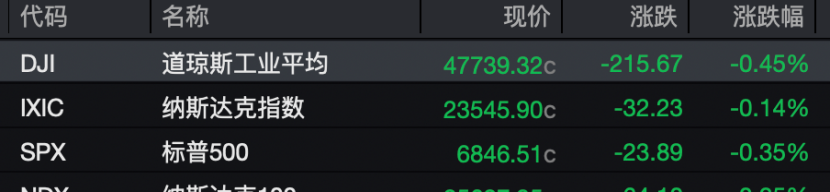
此外,美国将于本周公布延迟的职位空缺数据、每周初请失业金人数和就业成本指数等经济数据。经济学家预计,除美联储决议外,加拿大央行、瑞士央 行和澳大利亚央行本周将维持各自的政策利率不变。 板块方面,标普500指数十一大板块十跌一涨。通信服务板块和材料板块分别以1.77%和1.66%的跌幅领跌,科技板块上涨0.93%。 大型科技股涨跌互现,美光科技涨超4%,安森美半导体涨3%,博通、台积电涨超2%,超微电脑涨近2%,阿斯麦、英伟达、微软、AMD涨超1%;奈飞、 特斯拉跌超3%,英特尔、谷歌-A跌超2%,亚马逊、ARM跌超1%,META跌近1%,苹果小幅下跌。 值得注意的是,盘后,多只芯片股走高,英伟达一度涨近3%,英特尔一度涨超1%,AMD一度涨超2%。 英伟达盘后大涨。 当地时间12月8日(周一),美股三大指数集体收跌,道指跌0.45%,纳指跌0.14%,标普500指数跌0.35%。本周将迎来"超级央行周",美联储利率决议成 本周焦点。 | 代码 | 名称 | 现价 | 涨跌 | 涨跌幅 | | --- | --- | --- | --- | --- | | DJI | 道琼斯工业平均 | 47739.32c | ...

郭佳:坦赞铁路繁荣带建设启动中非高质量合作
Jing Ji Ri Bao· 2025-12-09 00:28
Core Viewpoint - The activation of the TAZARA railway project marks a new mission for the railway, enhancing regional economic cooperation and development in Africa, and serves as a new engine for high-quality Sino-African cooperation [1][5]. Group 1: Project Overview - The TAZARA railway prosperity belt is a comprehensive regional development strategy centered around the railway, aiming to enhance logistics efficiency and create a broader economic prosperity circle [1][2]. - The project aims to address the bottleneck of mineral exports from Africa's inland resource areas by upgrading the TAZARA railway, significantly reducing transportation costs and time [2]. Group 2: Economic Impact - The upgraded TAZARA railway is expected to increase its capacity by 12 times and reduce transportation time by two-thirds, with logistics costs in key areas like Zambia's Copperbelt province decreasing by 30% to 40% compared to road transport [2]. - The establishment of logistics advantages will facilitate a transition from a "corridor economy" to a "corridor economy," fostering sustainable industrial innovation and competitiveness [2][3]. Group 3: Industrial Development - The project will focus on value chain enhancement, particularly in the copper processing sector in Zambia, converting primary products into high-value materials and retaining resource benefits locally [3]. - The diversification of industries, including modern agriculture and tourism, will be developed alongside the railway, creating opportunities for small and medium enterprises and improving local livelihoods [3]. Group 4: Cooperation Model - The project adopts a "Build-Operate-Transfer" (BOT) model, granting Chinese companies a 30-year concession for railway operation, ensuring sustainable funding through operational revenues [4]. - The project emphasizes technology transfer and capacity building, aiming to cultivate local railway professionals in Tanzania and Zambia, ensuring sustainable management post-concession [4]. Group 5: Strategic Significance - The TAZARA railway prosperity belt is a key driver of African continental integration, effectively connecting the East African Community (EAC) and the Southern African Development Community (SADC) [3]. - The project exemplifies a sustainable win-win cooperation model, integrating China's economic globalization initiatives with Africa's development blueprint, and serves as a successful case for the Belt and Road Initiative [5].
早报|日本发生7.5级地震;盒马承认草莓蛋糕生产出错;马航MH370索赔案一审宣判;贵州“荒野求生赛”相关责任人被立案侦查
虎嗅APP· 2025-12-09 00:08
Group 1 - A 7.5 magnitude earthquake occurred off the eastern coast of Honshu, Japan, with a depth of 50 kilometers, prompting a tsunami warning for waves up to 3 meters [2][3] - Google announced the development of two types of AI glasses, with the first model expected to launch in 2026, aiming to compete with Meta's products [6] - Apple’s senior vice president of chip technology, Johny Srouji, confirmed he will not be leaving the company, emphasizing pride in his team's achievements [8][9] Group 2 - The Guizhou government reported that a company involved in a survival competition is under investigation for illegal activities, following complaints from participants [4] - A court in Beijing ruled on compensation for families of passengers from the missing Malaysia Airlines MH370 flight, with some families awarded over 2.9 million yuan each [12] - Zhang Yutong has been appointed as the president of Moon's Dark Side Kimi, responsible for overall strategy and commercialization [13][14] Group 3 - The Jiangsu government confirmed that a food oil tanker was used to transport chemical products, clarifying that the vehicle's previous labeling as a food oil tanker was removed [18][19] - A major carbon materials conference is set to take place in Shanghai, focusing on semiconductors, new energy, and high-end equipment [30] - The Federal Reserve is expected to hold a monetary policy meeting with a 70% probability of a 25 basis point rate cut, which could impact global capital markets [30]

Nature年度十大人物发布:DeepSeek梁文锋、中科院深海所杜梦然入选
生物世界· 2025-12-09 00:05
撰文丨王聪 编辑丨王多鱼 Nature 特写部编辑 Brendan Maher 表示: 今年的榜单颂扬了对新前沿的探索,医疗领域突破性进 展的希望,对科研诚信的坚定守护,以及那些可以拯救生命的全球政策的制定者。我们激动地看到这么多人在不遗余力地理解自然世界,并在许多情况下帮助 排版丨水成文 | 日前, | | Nature | | 公布了 | 2025 | 年度 | 十大人物榜单 | (Nature's 10) | | --- | --- | --- | --- | --- | --- | --- | --- | --- | | ,入选者包括 | | | DeepSeek 创始人 | | | 梁文锋 | 、 | 中国科学院深海科学与工 | | 程研究所 | 杜梦然 | | 研究员 | | ,以及 | Susan Monarez | 、 | Achal Agrawal | | 、 | Tony Tyson | | 、 | | Precious Matsoso | 、 | Sarah Tabrizi | 、 | | Luciano Moreira | | 、 | Yifat Merbl | | 和 | KJ Mu ...

刚演示过丝滑跑步,特斯拉机器人莫名倒地,姿势怪异
Mei Ri Jing Ji Xin Wen· 2025-12-08 16:21
每经编辑|许绍航 12月8日消息,在上周末美国迈阿密举办的一场演示活动中,特斯拉派出"擎天柱"Optimus人形机器人与参观者互动。 在互动中,机器人尝试递送瓶装水,但由于动作过快,导致手中水瓶掉落,并且机器人失去平衡向后摔倒。 然而真正引发外界关注的并非摔倒本身,而是机器人在倒下过程中做出的特定手部动作,该动作与远程操作员在慌乱中摘下VR头显的动作极为相似。 图:机器人在倒下过程中做出的特定手部动作,来源:红星资本局 就在不久前,特斯拉CEO马斯克还曾激烈反驳外界关于Optimus演示依赖远程操控的说法,他特别强调一段 Optimus 表演功夫的最新演示"完全由AI驱动, 非远程操控"。 目前,特斯拉机器人摔倒疑似"露馅"一词已冲上百度热搜,对于这一事件,特斯拉官方尚未做出回应。 值得一提的是,马斯克相当重视特斯拉机器人的发展,曾多次在个人社交平台上转发有关"擎天柱"的最新动态。 10月4日,马斯克在社交平台X上发布了一段该公司开发的人形机器人"擎天柱"学习中国功夫的视频。在该条视频评论区,有网友提问"擎天柱"是由远程操 控还是人工智能(AI)驱动的。马斯克回应称,"AI,而非遥控操作"。 12月3日,马斯 ...



传媒2026年展望
2025-12-08 15:36
Summary of Conference Call on Media Industry Outlook Industry Overview - The media industry is expected to undergo significant changes by 2026, with a shift from User-Generated Content (UGC) back to Professionally Generated Content (PGC) driven by advancements in AI technology [2][4] - AI applications are anticipated to experience a boom post-2027, reshaping the content industry and establishing new content forms [1][2] Core Insights and Arguments - The transition from UGC to PGC is supported by historical trends and technological advancements, indicating that high-quality content will become increasingly important [3][4] - The media industry is currently in a recovery phase, with expectations of a sustained upward trend starting in 2025, influenced by regulatory changes and the emergence of blockbuster content [12][18] - The media sector serves as a leading indicator for market trends, with significant trading volume increases typically occurring two years before a bull market [12] Key Data Points - The AI model technology boundaries are expected to be defined by the end of 2026, leading to a surge in high-quality content demand [1][3] - The peak period for mobile internet applications was from 2010 to 2012, suggesting that the AI era may have a similar short window for widespread application adoption [9] - Companies that produce blockbuster content often exhibit high price-to-earnings ratios, indicating the critical nature of such content in establishing market leadership [7] Additional Important Insights - The media industry is currently experiencing a phase of infrastructure development, similar to the early years of the internet, with a focus on exploring new business models [5][18] - The competitive landscape is evolving, with platforms like Meituan facing diminishing barriers as the mobile internet era concludes [6] - The distinction between companies that produce blockbusters and those focused on IP management is crucial, as each has different operational focuses and capabilities [8] - The AI era is expected to enhance content production efficiency, allowing ordinary users to create high-quality content, thus expanding the player base in various entertainment sectors [14][15] Future Predictions - The media industry is projected to see a resurgence starting in 2025, driven by favorable regulatory changes and the introduction of popular content [12][21] - The A-share market in the media sector is expected to experience a gradual upward trend, with specific segments like gaming anticipated to perform particularly well [21] - The impact of AI on content and platform operations is likely to create new opportunities, especially for companies that can effectively integrate AI technologies into their ecosystems [20]