
银发经济

Search documents
老龄化社会版本前瞻:日本银发经济蕴含多少红利?
3 6 Ke· 2025-11-14 08:35
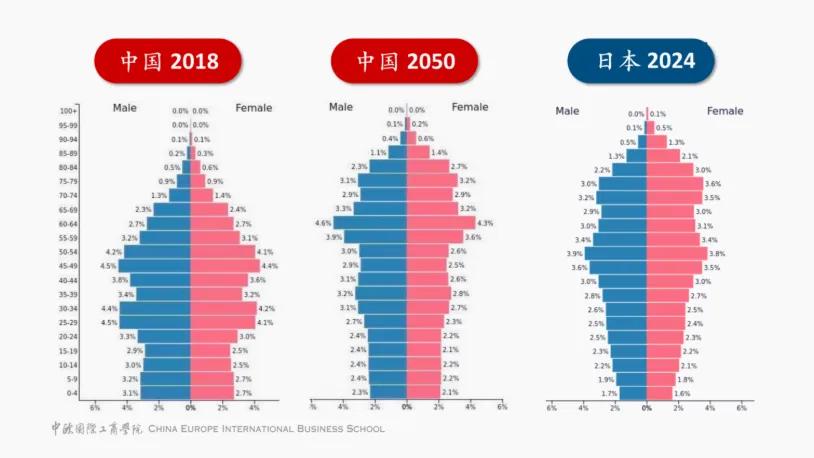
Core Insights - The aging population is a global challenge, with China's elderly population expected to exceed 300 million by the end of 2024, reaching 22% of the total population, and projected to surpass 400 million by 2035, leading to a "silver economy" worth approximately 30 trillion yuan [1][3] - Japan, having entered a "super-aged society," serves as a precursor to China's aging demographic, with over 36 million people aged 65 and above, representing 29.4% of the population, a historical high [4][6] - The silver economy in Japan is projected to exceed 100 trillion yen (about 5 trillion yuan) by 2025, encompassing high-demand sectors such as healthcare and wellness [3][4] Demographic Analysis - Japan's average life expectancy is increasing, with women at 87.13 years and men at 81.09 years, contributing to the growing elderly population [6][9] - The financial burden on Japan's social security system is significant, with social security expenditures exceeding one-third of the total budget, leading to adjustments in pension distribution and retirement age [9][11] - The elderly population in Japan is increasingly active in the labor market, with 25.7% of those aged 65 and above employed, reflecting a trend of delayed retirement [11][12] Consumer Behavior - Japanese elderly households hold a substantial portion of financial assets, with those aged 55 and above owning over 70% of total household financial assets, indicating strong purchasing power in sectors like healthcare and personalized services [12][17] - The trend of living alone among the elderly is rising, with predictions of 10.84 million individuals living alone by 2050, leading to increased health management and social interaction needs [18][20] - Japanese seniors show a preference for home-cooked meals and maintain loyalty to physical stores for grocery shopping, while also increasingly engaging in online shopping [20][23] Market Opportunities - The aging population in Japan presents significant opportunities in the elder care industry, with a projected shortage of 320,000 caregivers by 2025, prompting government initiatives to attract foreign labor and promote technological solutions [39][41] - The demand for elder-friendly products is growing, with a focus on safety, usability, and emotional value, as seniors seek products that enhance their quality of life and provide social connections [30][36] - Chinese sellers are encouraged to leverage supply chain advantages to introduce elder-friendly home goods, health monitoring devices, and social engagement products to the Japanese market [47][48] Strategic Recommendations - To succeed in the Japanese market, companies must prioritize localization in product design and marketing strategies, ensuring alignment with the preferences and needs of the elderly demographic [48][54] - E-commerce platforms like Amazon Japan and Rakuten are essential for reaching the elderly consumer base, with a focus on high-quality, user-friendly products that meet their specific requirements [50][53] - Understanding regulatory requirements and ensuring compliance in product offerings, especially in health and safety sectors, is crucial for market entry and sustainability [53][54]

视频丨时尚感、科技范儿!银发一族生活愈发“有滋有味”
Yang Shi Xin Wen Ke Hu Duan· 2025-11-14 07:26
Core Insights - The consumption philosophy of the elderly is shifting from "cost-effectiveness" to "intelligent products" [10] Group 1: Elderly Consumer Trends - Elderly individuals are increasingly adopting fashionable and technological lifestyles, as evidenced by the popularity of products like exoskeletons and smart health devices [3][10] - Sales of elderly-friendly products have seen significant growth, with categories like mobility aids and hearing devices nearing a scale of 20 billion [10] - The elderly market is projected to grow significantly, with the silver economy expected to reach 30 trillion by 2035, accounting for 10% of GDP [19] Group 2: Innovative Products and Technologies - New technologies are being developed for elderly care, such as AI-driven exoskeletons that provide tailored support for mobility [11][14] - Smart health products, including sleep monitoring rings and non-invasive blood glucose monitors, have seen sales increase by over 200% year-on-year [10] - Innovative products like smart diapers that enhance comfort and dignity for the elderly have gained market traction [13] Group 3: Lifestyle and Leisure Activities - The elderly are engaging in diverse leisure activities, including music, photography, and travel, reflecting a trend towards "self-fulfilling consumption" [20][33] - The market for elderly cultural and entertainment services has grown, with sales in related sectors increasing by over 20% [33] - Elderly individuals are actively participating in community activities, such as forming bands and taking photography classes, showcasing their vibrant lifestyles [22][29] Group 4: Service Supply and Innovation - The service supply for the elderly is rapidly evolving, with a focus on personalized and immersive experiences, including online courses and themed community spaces [34][36] - New initiatives like "silver consultants" are being introduced to assist elderly individuals with practical needs, enhancing their quality of life [42] - The demand for customized services, such as meal assistance and medical support, is driving innovation in the elderly care sector [42]

扒了上万条消费者数据,大家对双11是真麻了
3 6 Ke· 2025-11-14 06:27
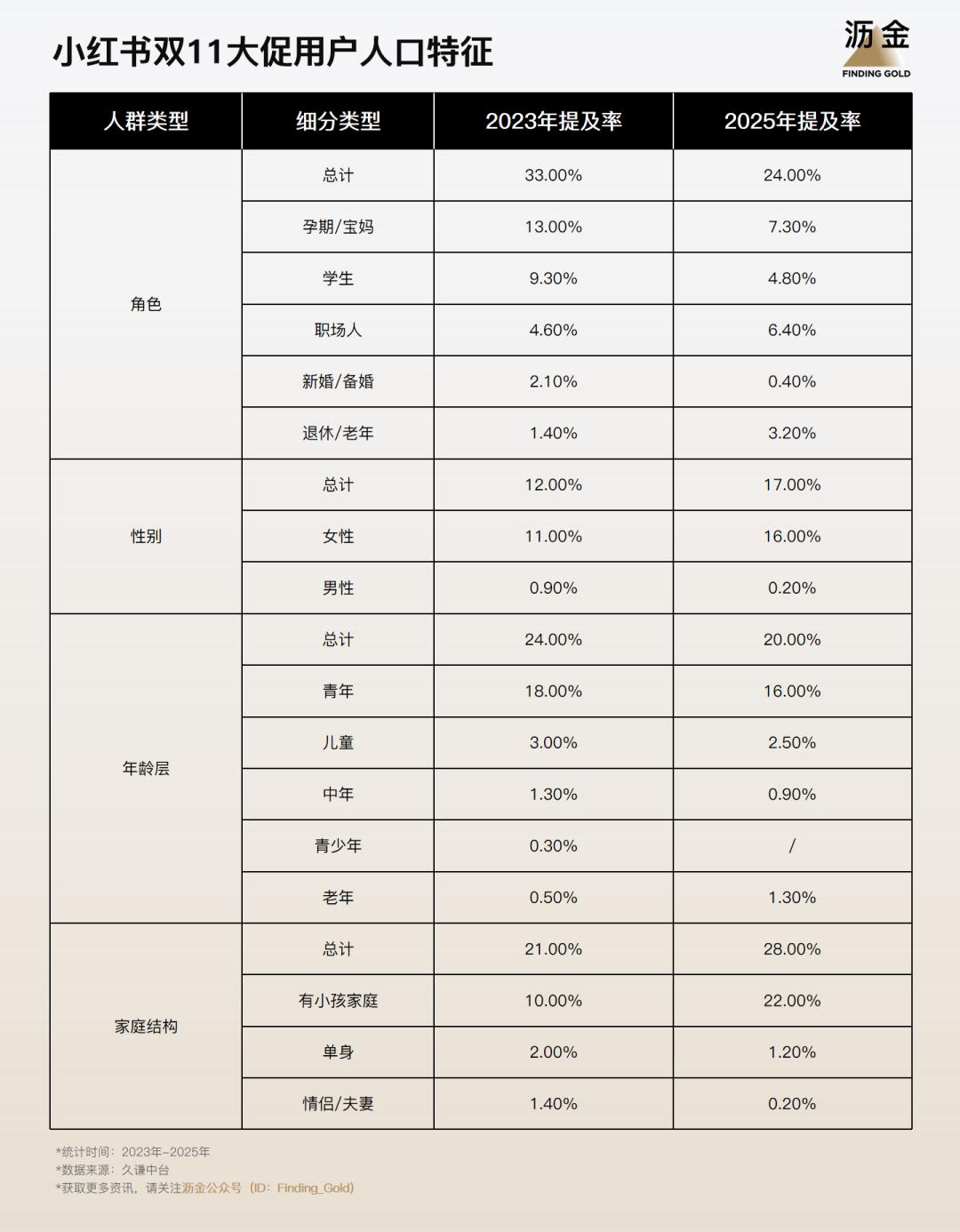
Core Insights - The 2023 Double Eleven shopping festival reflects a shift in consumer behavior, indicating a redefinition of consumption values rather than just a sales competition [2][15][17] Consumer Behavior Trends - There is a significant decline in social media discussions about Double Eleven, with a 66% drop in posts from ordinary users in October, although the purchasing behavior remains stable [3] - Families are prioritizing spending on household needs, with mentions of "families with children" increasing from 10% to 22%, while personal categories like "students" and "mothers" have decreased [3] - The elderly consumer segment is gaining purchasing power, with mentions of "retired/elderly" rising from 1.4% to 3.2%, highlighting the importance of the silver economy [4] Spending Categories - Health and wellness spending is on the rise, with mentions increasing from 14% to 17%, as consumers seek certainty in uncertain times [4] - The beauty and skincare category has seen a rise in mentions from 19% to 25%, indicating that "lipstick economy" remains strong even during economic downturns [6] - The clothing and accessories category has significantly declined, with mentions halving from 15% to 7.5%, as consumers prioritize practicality over appearance [11][12] Promotional Strategies - Simple and straightforward promotions are more appealing to consumers, with mentions of consumption vouchers increasing by 488% from 0.8% to 4.7% [6] - Consumers are increasingly wary of price fluctuations, with mentions of "price commitment" rising from 0.9% to 7.9%, while "low price" mentions dropped from 15% to 9.4% [7] - Social interaction during shopping is becoming more important, with mentions of "social interaction" rising from 5% to 8.7% and "group buying interaction" increasing by 283% [7] Quality and Trust - Consumers are becoming more discerning about product quality, with overall mentions of "product quality" dropping from 42% to 15%, indicating a shift towards more specific quality expectations [6] - There is a growing preference for authoritative endorsements over user reviews, as consumers shift from relying on "comments" to "authoritative certifications" [10] Future Outlook - The nutrition and health product category is poised for significant growth, with mentions skyrocketing from 4.2% to 12%, indicating a potential golden opportunity in the next three years [11] - The overall consumer sentiment reflects a transition from mere price sensitivity to a more nuanced understanding of value, as "price sensitivity" decreased from 10% to 5.6% while overall discount-driven behavior increased [15]
“史上首个秋假”引发出行热潮,银发经济等为消费扩大注入新动能
Mei Ri Jing Ji Xin Wen· 2025-11-14 05:47
Group 1 - The introduction of the first autumn holiday in several provinces in China, including Zhejiang, Guangdong, and Sichuan, has led to a surge in travel demand, with average round-trip ticket prices rising to approximately 700 yuan, a 7% increase compared to last year [1] - Popular travel routes during the autumn holiday include Chengdu to Sanya, Chengdu to Haikou, and Hangzhou to Xiamen, with some flights already sold out, indicating a strong impact of policy incentives on tourism consumption [1] - The autumn holiday not only meets family travel needs but also creates a new peak in tourism outside of traditional "Golden Week" periods, reflecting a shift in consumer behavior [1] Group 2 - From January to October, China's online retail sales increased by 9.6% year-on-year, with physical goods retail sales growing by 6.3%, outpacing the overall growth of social consumer goods retail [1] - The retail sales of new energy vehicles continue to grow rapidly, highlighting a trend towards digital and green consumption that is driving overall consumption growth [1] - The current phase of consumption structure upgrading presents significant opportunities in cultural tourism and healthcare, with emerging sectors like the silver economy and first-time economy contributing to new consumption momentum [1] Group 3 - Relevant ETFs include tourism ETF (562510) benefiting from holiday catalysts and the ice and snow economy, food and beverage ETF (515170) aimed at boosting domestic demand, and Hong Kong consumption ETF (513230) focusing on e-commerce leaders and new consumption trends [2]
国家统计局:我国正处在消费结构升级的关键阶段
Zhong Zheng Wang· 2025-11-14 05:09
Core Insights - The transformation of consumer spending in China is accelerating, with service consumption becoming a significant growth driver [1] - The cultural and tourism services are experiencing robust growth, with active development of new consumption models in various regions [1] - Emerging consumption trends such as digital and green consumption are expanding, contributing positively to overall consumption growth [1] Service Consumption - The growth of service consumption is highlighted as a key area, with notable increases in cultural tourism services, sports events, and performance markets [1] - Information services, including digital audio-visual and online entertainment, are seeing sustained demand and strong sales growth [1] - There has been a significant increase in dining out during holidays, with restaurant revenue showing marked acceleration in October [1] Emerging Consumption Trends - Digital and green consumption are identified as rapidly growing sectors that are effectively promoting overall consumption growth [1] - The current phase of consumption structure upgrading presents vast opportunities in cultural tourism and healthcare [1] - The silver economy and first-time economy are developing quickly, injecting new momentum into consumption expansion [1] Economic Outlook - The economy is maintaining stable operation, with consumer promotion policies beginning to show effects, leading to overall stable market sales [1] - There is a need to enhance residents' consumption capacity and confidence, as well as to strengthen internal consumption dynamics [1] - Future actions will focus on implementing measures to boost consumption, stabilize employment, increase quality supply, and optimize the consumption environment to effectively release consumption potential [1]
国家统计局:积极稳就业促增收,大力增加优质供给,不断优化消费环境
Zhong Guo Xin Wen Wang· 2025-11-14 05:01
中新网11月14日电 国新办14日举行新闻发布会,国家统计局新闻发言人、总经济师、国民经济综合统 计司司长付凌晖介绍2025年10月份国民经济运行情况,并答记者问。付凌晖指出,下阶段,要积极稳就 业、促增收,大力增加优质供给,不断优化消费环境,有效释放消费潜力,更好促发展惠民生。 有记者问,10月份消费市场的恢复情况怎么样?实物消费与服务消费的增长特点分别是什么?节假日消 费对整体数据的拉动作用是否明显? 发言人付凌晖表示,消费关系到经济发展,也关系着民生福祉。今年以来,各地区、各部门深入推进提 振消费专项行动,加力扩围实施消费品以旧换新,大力发展数字消费和服务消费,扩大文体消费,推动 了消费潜力释放。1—10月份,社会消费品零售总额同比增长4.3%,服务零售额增长5.3%。从10月情况 看,在国庆、中秋长假和促消费政策等带动下,市场销售总体稳定,消费结构继续优化,新兴消费持续 壮大。从商品消费看,在居民消费升级,消费品以旧换新政策因素的带动下,商品销售平稳增长,结构 优化升级。主要体现在三方面: 三是部分以旧换新商品销售持续增长。消费品以旧换新政策继续显效,对相关商品销售带动作用持续显 现。10月份,限额以 ...
“科技范儿”“悦己型”……银发消费花式“上新”潜能迸发 服务供给加速升级
Yang Shi Wang· 2025-11-14 04:38
Core Viewpoint - The consumption concept of the elderly is shifting from "cost-effectiveness" to "intelligent" products, indicating a growing demand for smart and comfortable living solutions tailored for seniors [1][7][20]. Group 1: Market Trends - The sales of elderly-friendly products have significantly increased, with categories like mobility aids and hearing aids nearing a market size of 20 billion [5]. - In the first ten months of the year, innovative smart health products such as sleep monitoring rings and AI hearing aids saw transaction volume growth exceeding 7.6 times and transaction value growth over 200% [7]. - The silver economy in China is currently valued at approximately 7 trillion, accounting for about 6% of the GDP, and is projected to reach 30 trillion by 2035, representing 10% of the GDP [12]. Group 2: Product Innovations - New technologies are being developed for exoskeletons to provide better support for seniors with joint issues, with advancements in response times approaching 0.1 seconds [9]. - The introduction of smart products like sensing and communicating adult diapers has gained significant market attention [9][11]. Group 3: Consumer Behavior - The elderly are increasingly engaging in "self-pleasing consumption," investing in hobbies and activities such as music, photography, and travel, reflecting a vibrant retirement lifestyle [13][20]. - Sales in cultural entertainment, tourism services, and health services for the elderly have seen year-on-year increases of 20.7%, 26.2%, and 23.9% respectively [20]. Group 4: Service Supply Upgrades - The service supply for the elderly is rapidly innovating, with a rise in customized online courses and immersive offline experiences, enhancing the overall service ecosystem [21][23]. - The establishment of "silver consultants" has effectively addressed the urgent needs of the elderly, such as home modifications for better accessibility [27].

旭化成杨瑞朝:从场景深耕到技术突破,以毫米波雷达深耕适老化赛道
Huan Qiu Wang· 2025-11-14 04:36
【环球网科技报道 记者 心月】第八届中国国际进口博览会于11月10日闭幕。连续第四次参展的旭化成株式会 社以"赋能多元材料,共创新质生产力"为主题亮相本届进博会。展会期间,围绕公司核心技术毫米波雷达的适 老化应用、本土场景适配、行业生态共建等话题,旭化成电子科技市场开拓部总监杨瑞朝接受了环球网记者的 采访,详解旭化成如何以技术创新回应中国"银发经济"需求,助力健康养老产业升级。 锚定银发经济:毫米波雷达开辟适老化新路径 随着中国人口老龄化进程加速,智慧康养、智能家居市场迎来快速增长,旭化成精准捕捉这一社会课题与市场 机遇,将毫米波雷达技术作为切入适老化赛道的核心支点。本届进博会上,旭化成重点展示的天线一体型毫米 波雷达模组"AiM",无需摄像头即可非接触监测多人位置、动作及呼吸心率,为家庭健康守护与隐私安全提供 了全新解决方案。 生命体征监测精度是适老化产品的核心竞争力。杨瑞朝透露,旭化成正与合作伙伴从多维度探索优化路 径:"我们不断探索新算法,完善状态逻辑判断,优化安装使用场景,同时结合算力发展、算法升级和成本降 低的趋势,力求在细分领域实现突破,让产品获得用户广泛接受。"这种"技术+场景"的双重优化,让毫 ...

国家统计局:服务消费增长日益成为居民消费的重要增长点
Zheng Quan Shi Bao Wang· 2025-11-14 03:04
从结构看,一是文旅服务增势较好,二是信息服务较快增长,数字影音、网络娱乐等服务需求持续扩 大。此外,假期期间居民外出就餐增加。从新兴消费看,数字消费和绿色消费在持续壮大。 付凌晖表示,我国正处在消费结构升级的关键阶段,文化旅游、医疗健康等消费发展空间广阔,银发经 济、首发经济等快速发展也为消费扩大注入新动能。 人民财讯11月14日电,11月14日,国家统计局新闻发言人、总经济师、国民经济综合统计司司长付凌晖 在国新办新闻发布会上表示,我国居民消费正在加快转型,服务消费增长日益成为居民消费的重要增长 点。在国庆中秋假日的因素带动下,10月份的服务消费持续较快增长,1—10月份服务零售额比1—9月 份是加快0.1个百分点,高于同期商品零售额的增速是0.9个百分点。 ...
蔡昉:通过制度设计 让人工智能赋能基本养老保险制度和银发经济
Zhong Guo Jing Ying Bao· 2025-11-13 15:51
Core Viewpoint - The aging population will not lead to an unsustainable burden if proper institutional frameworks are established, as artificial intelligence (AI) can significantly enhance caregiving productivity, outpacing the growth rate of the elderly dependency ratio [1]. Summary by Relevant Sections Aging Population and Dependency Ratio - Concerns about the increasing elderly dependency ratio leading to unsustainability are deemed incorrect. Data indicates that from now until 2035, China's caregiving productivity is expected to grow at an average annual rate of 5.6%, which is higher than the 4.6% average annual growth rate of the elderly dependency ratio [1]. Impact of Artificial Intelligence - If AI can boost China's GDP by 20% as predicted by international think tanks, the average annual growth rate of caregiving productivity could exceed 7%, effectively outpacing the aging process [1]. Institutional Design and Economic Sharing - The key to addressing the challenges posed by an aging society lies in institutional design that enables AI to empower the basic pension system and the silver economy. This approach can enhance caregiving productivity, expand pension resources, and improve the sharing of productivity gains among all residents, including the elderly [1].