生成式AI

Search documents
日经BP精选:铠侠2027年推出面向AI的100倍速SSD
日经中文网· 2025-11-04 02:32
Group 1 - Kioxia Holdings plans to commercialize SSDs with data reading speeds increased by nearly 100 times by 2027 [5] - The company will collaborate with NVIDIA to develop SSDs aimed at servers for generative AI operations [5][6] - The goal is to replace a portion of HBM (High Bandwidth Memory) that connects to GPUs to expand GPU storage capacity [5] Group 2 - The announcement was made during a technology briefing for the AI market held in Tokyo on September 2, 2025 [6] - Kioxia's SSD application technology department chief engineer Koichi Fukuda stated that development will proceed according to NVIDIA's suggestions and requirements [6]


盘后跌超4%!Palantir三季度营收同比增63%,连续九个季度超盈利预期,投资者担忧股价脱离基本面
美股IPO· 2025-11-04 02:16
Core Viewpoint - Palantir's third-quarter revenue reached $1.18 billion, a year-on-year increase of 63%, significantly exceeding analyst expectations of $1.09 billion, and the company raised its full-year revenue guidance to $4.4 billion from a previous range of $4.14-$4.15 billion, marking the third upward revision this year [1][3] Financial Performance - The company reported a net profit of $475.6 million for the third quarter, more than doubling year-on-year [3] - Adjusted earnings per share were $0.21, surpassing the expected $0.17 [3] - Free cash flow expectations were raised to $1.9-$2.1 billion [3] - Fourth-quarter revenue guidance is set at $1.33 billion, well above the market expectation of $1.19 billion [3] Business Segments - Revenue from U.S. commercial customers surged 121% to $397 million, with total contract value increasing over threefold to $1.31 billion [4][7] - The number of U.S. commercial customers reached 530, with new partnerships established with Nvidia, Snowflake, and Lumen [5] - U.S. government business revenue grew 52% to $486 million, slightly exceeding expectations [6][10] Market Position and Valuation - Palantir's stock has seen a cumulative increase of over 170% this year, with a market capitalization of $490 billion, and a forward P/E ratio of 246.2, significantly higher than Nvidia's 33.3 [6][13] - Despite strong quarterly performance, there are concerns regarding the sustainability of its high valuation, with analysts questioning the disconnect between stock price and fundamental performance [6][13] Growth Drivers - The U.S. commercial business is becoming a new growth engine for the company, breaking the stereotype of over-reliance on government contracts [8] - The AI application platform is identified as the core driver of this growth, with Palantir expanding its data analytics capabilities into generative AI solutions across various sectors [8] Government Business - The government business remains a stable foundation for Palantir, with significant contracts recently awarded, including a $1 billion contract with the IRS and a $4 billion contract with the U.S. government [10][11] - The company is attempting to expand its government business globally, leveraging geopolitical tensions to secure new contracts in Europe and other regions [12]

追赶AI时代黄金浪潮 ,分析师预测英伟达市值有望达8.5万亿美元!目标价上调至350美元,相较最新收盘价202.49美元高70%
Sou Hu Cai Jing· 2025-11-04 02:10
Group 1 - Nvidia has become the first company to surpass a market capitalization of $5 trillion, with analysts predicting further growth of several trillion dollars [2] - Loop Capital Markets raised Nvidia's target price from $250 to $350, representing a more than 70% increase from the latest closing price of $202.49, which would result in a market cap exceeding $8.5 trillion [2] - The current average target price for Nvidia in the market is $231 [2] Group 2 - Analysts highlight that the industry is entering a new wave of generative AI, with Nvidia at the forefront of this demand cycle [4] - Rosenblatt Securities increased Nvidia's target price from $215 to $240, citing a recent conference where it was revealed that orders for the Blackwell chip could exceed $500 billion by the end of 2026 [4]
突发!arXiv CS新规:未经同行评审,一律不收
具身智能之心· 2025-11-04 00:05
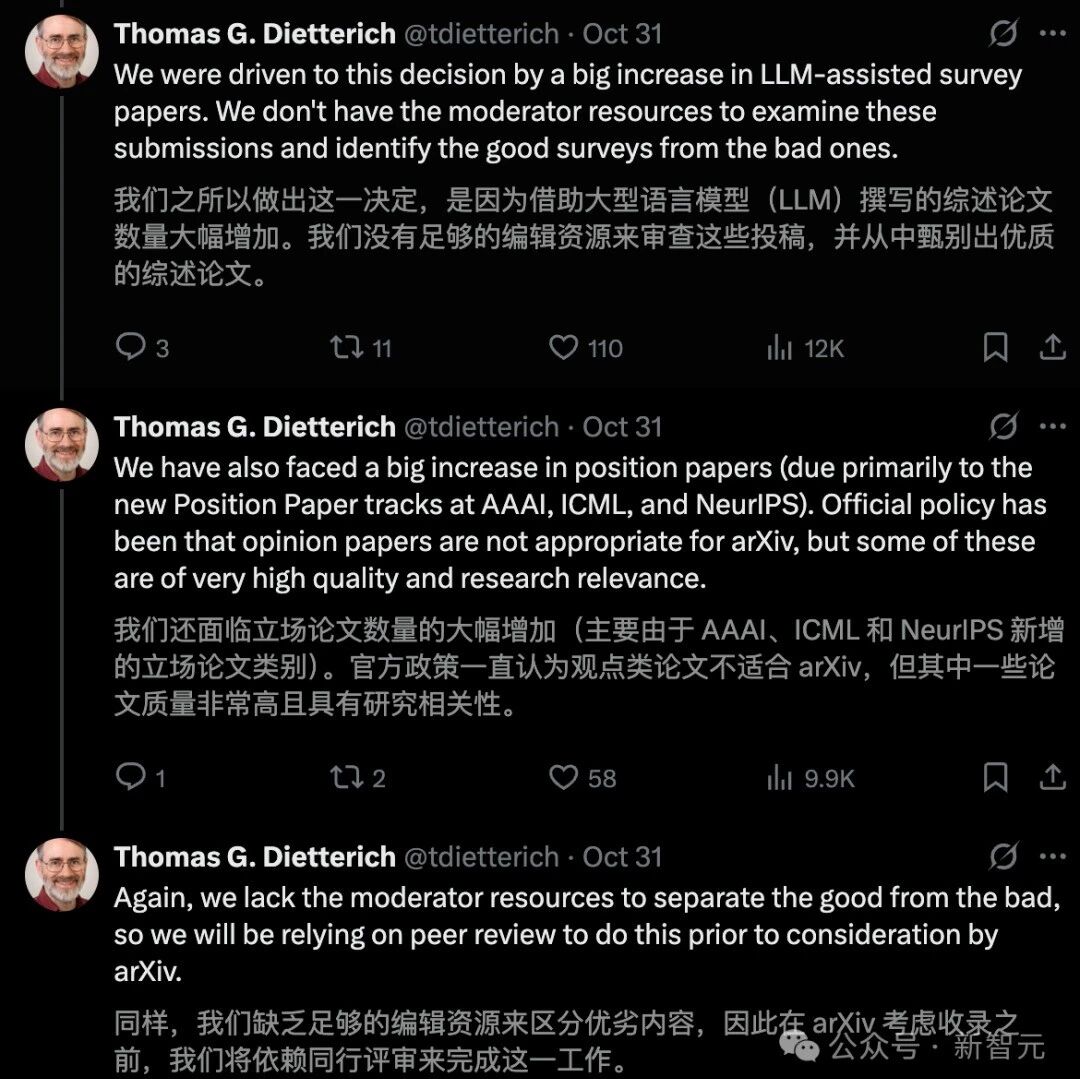
arXiv重磅新规! 从现在起,arXiv中的CS板块,关于「综述/调研」和「立场」类的论文,全部经由同行评审后,才可以被收录。 也就是说,以后不带「同行评审通行证」,就别想上车! 消息一出,一度登上HK热榜TOP3。 编辑丨新智元 点击下方 卡片 ,关注" 具身智能之心 "公众号 >> 点击进入→ 具身 智能之心 技术交流群 更多干货,欢迎加入国内首个具身智能全栈学习社区 : 具身智能之心知识星球 (戳我) , 这里包含所有你想要的。 而现在,LLM生成论文激增,各大顶会/期刊全都蚌埠住了,更别提arXiv。 如今,arXiv CS每月数百篇综述涌进来,90%都是「带注释的文献清单」,基本没有实质性的价值。 由此,arXiv官方决定收紧CS这类论文的把关。 接下来,「综述」和「立场」论文已被期刊、顶会接收,并完成同行评审后,就可以收录到arXiv CS。 提交时,作者需同时提供经同行评审的期刊引用,以及DOI元数据。 MIT EECS副教授Phillip Isola认为,这一步走错了方向,同行评审有各种途径。 arXiv就该保持「科研界GitHub」的定位,没必要搞成学术期刊的样子。 过去,这类论文本来就不 ...
腾讯研究院AI速递 20251104
腾讯研究院· 2025-11-03 16:01
Group 1: Generative AI Developments - Cambricon has launched the Cambricon NeuWare foundational software platform, fully compatible with the latest version of PyTorch and Triton operator development language, enabling rapid migration of user models and custom operators [1] - OpenAI has tightened its usage policy, stating that ChatGPT will no longer assist in providing professional advice in high-risk fields such as healthcare, law, and finance, due to rising legal risks and global compliance pressures [2] - Meituan has open-sourced its multimodal model LongCat-Flash-Omni, which has a total parameter count of 560 billion and an active parameter count of 27 billion, achieving state-of-the-art results in multimodal benchmark tests [3] Group 2: AI Applications and Innovations - Baidu's Wenxin app has introduced a "Magic Comic" feature that allows users to generate multi-page AI comics from a single sentence or photo within two minutes, supporting custom character designs and various artistic styles [4] - Cartesia has launched the new Sonic-3 voice model, supported by a $100 million investment from Nvidia, which can generate voice in 42 languages and over 500 tones, with a response time of under 190 milliseconds [5][6] - Turbo AI, founded by two 20-year-old college dropouts, has seen its user base grow from 1 million to 5 million in six months, generating annual recurring revenue in the eight figures while serving clients like Goldman Sachs and McKinsey [7] Group 3: AI Tools and Market Trends - A review of mainstream AI browsers indicates a division between progressive browsers (Chrome/Edge) and radical browsers (ChatGPT Atlas/Perplexity Comet/Dia), each with unique strengths and weaknesses [8] - Rokid has partnered with BOLON to launch the BZ5000 AI smart glasses, which weigh only 38 grams and feature a 12-megapixel camera, emphasizing localized services through its YodaOS system [9] - AI expert Fei-Fei Li has called for universities and non-profit organizations to reclaim the mission of advancing AI as a public good, highlighting the shift from open research to closed commercial competition [10][11] Group 4: Data and Market Opportunities - a16z partners emphasize the importance of building "data moats" in fragmented, sensitive, or hard-to-access fields, with examples like VLex and OpenEvidence showcasing proprietary data systems as competitive advantages [12]

OpenAI豪掷380亿美元牵手亚马逊:史上最大AI算力合作启动
Feng Huang Wang· 2025-11-03 15:26
Core Insights - Amazon Web Services (AWS) and OpenAI have entered into a multi-year strategic partnership worth up to $38 billion, aimed at providing infrastructure support for core AI workloads [1][2] - OpenAI will immediately utilize AWS's computing resources, including hundreds of thousands of NVIDIA GPUs, to support various AI tasks, with full deployment expected by the end of 2026 [1] - The collaboration enhances OpenAI's operational efficiency and scalability for its AI workloads, particularly in model training and inference [1][2] Company Summaries - AWS will provide a newly designed AI computing cluster optimized for data center network bandwidth and GPU interconnect efficiency, enabling flexible resource scheduling for OpenAI [1] - OpenAI's CEO, Sam Altman, emphasized the importance of stable and efficient computing support for breakthroughs in frontier AI, while AWS's CEO, Matt Garman, highlighted AWS's experience in large-scale AI infrastructure [2] - This partnership continues the previous collaboration between AWS and OpenAI, where OpenAI's open-source models were made available on AWS's Bedrock platform, enhancing service offerings for enterprise clients [2] Industry Implications - The partnership signifies a major win for AWS in the global AI infrastructure competition and indicates OpenAI's further expansion under a multi-cloud strategy, strengthening its long-term computing capabilities in the generative AI sector [2]


亚马逊和OpenAI,签署380亿美元协议
财联社· 2025-11-03 14:38
Core Insights - Amazon Web Services (AWS) and OpenAI have announced a multi-year strategic partnership to enhance OpenAI's AI workloads using AWS's infrastructure [1] - The partnership is valued at $38 billion and will grow over the next seven years, providing OpenAI access to advanced NVIDIA GPUs and millions of CPUs for workload expansion [1] - AWS's expertise in secure and reliable large-scale AI infrastructure, combined with OpenAI's advancements in generative AI, aims to deliver value to millions of users through ChatGPT [1] Summary by Sections - **Partnership Details** - AWS and OpenAI's collaboration focuses on providing world-class infrastructure for AI workloads [1] - The agreement is worth $38 billion and spans seven years, indicating a long-term commitment [1] - **Technical Capabilities** - OpenAI will utilize AWS's computing resources, including hundreds of thousands of NVIDIA GPUs and the ability to scale to millions of CPUs [1] - AWS has a proven track record in running large-scale AI infrastructure, with over 500,000 cluster chips [1] - **Strategic Implications** - The partnership is expected to enhance the computing ecosystem necessary for the next generation of AI [1] - OpenAI's CEO, Sam Altman, emphasized the importance of large-scale, reliable computing for advancing AI technology [1]

造议员假丑闻、给假新闻链接,谷歌 Gemma AI模型遭投诉后下架
Sou Hu Cai Jing· 2025-11-03 14:27
Core Viewpoint - Google has removed its AI model Gemma from the AI Studio platform following complaints from Republican Senator Marsha Blackburn, who accused the model of fabricating serious criminal allegations against her [1][3][4] Group 1: Model Removal and Usage - Google announced the removal of the Gemma model from the AI Studio platform to avoid confusion, emphasizing that it was never intended for consumer use and was designed specifically for developers [3] - The model remains accessible to developers through API, despite its removal from the AI Studio [3] Group 2: Allegations and Responses - Senator Blackburn claimed that Gemma provided false information, stating she had been accused of serious misconduct during her political career, which was factually incorrect [4] - Blackburn highlighted that the model generated defamatory content, including incorrect dates and links to unrelated articles, asserting that this was not a harmless error but a serious issue of defamation [4] Group 3: Industry Challenges - The incident underscores ongoing challenges in the AI industry regarding the accuracy of information generated by AI models, with Google acknowledging the complexity of the relationship between AI outputs and factual truth [4] - Despite advancements in technology, there is currently no clear solution to completely resolve the accuracy issues associated with generative AI [4]


中国成唯一下滑市场!苹果再失守,谁蚕食了份额?
Xin Lang Ke Ji· 2025-11-03 11:17
Core Insights - Apple's revenue in Greater China declined by 3.6% year-on-year in Q4 FY2025, making it the only market with a revenue drop globally [1][2][4] - CEO Tim Cook attributed the decline primarily to supply constraints affecting iPhone sales, which he noted were below actual demand [4][11] - Experts suggest that the revenue drop is due to both internal factors, such as limited product innovation and delayed product launches, and external pressures from local competitors like Huawei [5][6][11] Financial Performance - For Q4 FY2025, Apple's total net revenue was $102.47 billion, up 8% from $94.93 billion year-on-year, with net profit increasing by 86% to $27.47 billion [1][2] - Earnings per share rose to $1.85, exceeding Wall Street expectations and contributing to a post-earnings stock price increase of over 3% [1][2] Market Dynamics - The decline in Greater China revenue has been ongoing since Q3 FY2023, with the highest quarterly drop reaching 13% [2] - The competitive landscape in China's smartphone market has intensified, with local brands rapidly innovating in areas like foldable screens and fast charging, impacting Apple's market share [6][11] Product Challenges - The delayed launch of the iPhone Air, which only supports eSIM and faced regulatory hurdles, negatively impacted sales in Q4 FY2025 [7][10] - User feedback on the iPhone Air has been mixed, with concerns about its build quality and performance, leading to lower-than-expected demand [10] Competitive Landscape - Huawei's resurgence in the high-end market poses a significant threat to Apple's position, as it rebuilds brand loyalty and technological capabilities [11][12] - Other local brands like Xiaomi, OPPO, and vivo are also aggressively targeting Apple's high-end user base, emphasizing compatibility with Apple's ecosystem [12][14] Future Outlook - Despite current challenges, Apple maintains a strong brand influence and loyal customer base, with potential for recovery if it accelerates innovation and adapts pricing strategies [11][12] - The competitive dynamics in the high-end smartphone market are shifting, requiring Apple to respond proactively to maintain its market position [12][14]


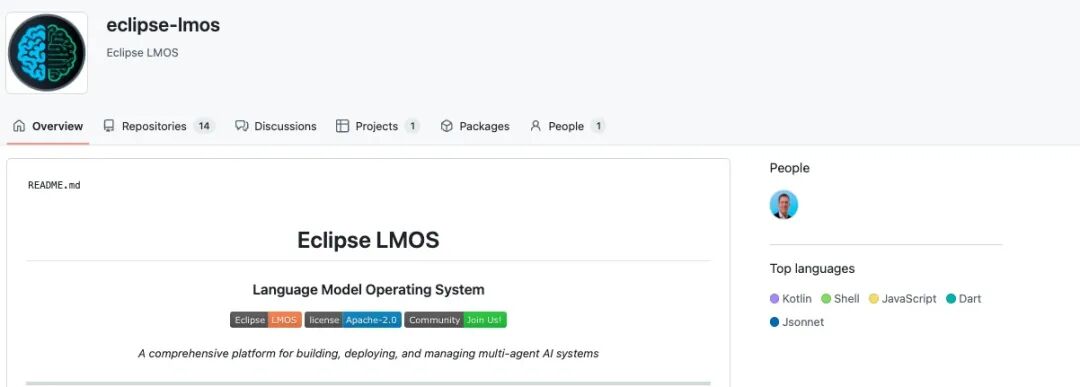
Python只是前戏,JVM才是正餐,Eclipse开源新方案,在K8s上不换栈搞定Agent
3 6 Ke· 2025-11-03 08:51
Core Insights - The Eclipse Foundation has launched the Agent Definition Language (ADL) within its open-source platform Eclipse LMOS, enabling users to define AI behaviors without coding [1] - ADL is positioned as a core component of the LMOS platform, which aims to reconstruct the development and operational chain of enterprise-level AI agents in a unified and open manner, challenging proprietary platforms and Python-centric enterprise AI tech stacks [1][2] - The LMOS project follows a "land first, open source later" approach, initially developed from Deutsche Telekom's production-level practices in traditional cloud-native architecture [1][4] Technical Convergence - The LMOS project aims to leverage existing skills in the JVM ecosystem, allowing enterprises to integrate AI capabilities without discarding their current technology stack [2][4] - The platform is built on Kubernetes and Istio, deploying agents as microservices and enhancing them to first-class citizens through custom resources [5][6] - Eclipse LMOS provides a streamlined development workflow, allowing developers to deploy agent images quickly and enabling operational teams to monitor and release updates using familiar tools [6] Business Outcomes - The platform has supported multiple AI applications at Deutsche Telekom, including the award-winning customer service bot Frag Magenta, which processes approximately 4.5 million conversations monthly and has reduced human handovers by 38% [7][8] - The initial deployment of the first agent in late 2023 has expanded from 3-4 countries to 10 across Europe, showcasing the scalability of the system [7][8] Dual Strategy - Eclipse has adopted a dual strategy for pushing AI agents into production, with one line focusing on the LMOS platform and the other on ADL, which simplifies the process of writing agents [10][13] - ADL allows business and engineering teams to collaboratively define agent behaviors, enabling rapid testing and iteration without waiting for engineering work orders [13] Integration and Control - The LMOS platform consists of three independent yet collaborative modules: ADL, the ARC Agent Framework, and the LMOS platform layer, facilitating agent lifecycle management and observability [13][14] - The LMOS protocol is designed to enable agents to discover and negotiate communication protocols, inspired by established standards and decentralized technologies [16] Conclusion - Eclipse LMOS aims to bridge the gap between agile, open-source AI development and the robust, controlled environments of JVM-based enterprise systems, allowing organizations to build scalable and transparent agent systems without overhauling their existing infrastructure [18]