量子计算

Search documents
150亿,上海这支母基金再发力
母基金研究中心· 2025-09-28 09:05
Group 1 - The Shanghai Future Industry Fund has successfully completed an expansion, increasing its scale from 10 billion to 15 billion yuan, with 8 billion yuan already paid in [1] - The fund has invested in cutting-edge fields such as controllable nuclear fusion, quantum computing, AI for science, and brain-computer interfaces [1] - The next steps for the fund include focusing on disruptive innovation and early-stage investments in frontier platform technologies, while building a collaborative network of innovative resources [1] Group 2 - The fund aims to leverage fiscal funds to stimulate investment and collaborate with more excellent sub-funds and projects through a comprehensive "investment + ecosystem" approach [1] - The initiative supports the construction of Shanghai as an international science and technology innovation center, injecting strong momentum into the future industrial development of Shanghai [1]


上海未来产业基金扩募至150亿元 加注颠覆式创新及前沿和早期技术投资
Zheng Quan Shi Bao Wang· 2025-09-28 05:39
Core Insights - Shanghai Future Industry Fund has successfully completed an expansion, increasing its scale from 10 billion to 15 billion yuan, with 8 billion yuan already paid in [1] - The fund has invested in cutting-edge fields such as controllable nuclear fusion, quantum computing, AI for science, and brain-computer interfaces [1] - The fund aims to focus on disruptive innovation and early-stage investments in frontier platform technologies, while collaborating with the Shanghai Future Qidian community to build an innovative resource synergy network [1] - The initiative is designed to leverage fiscal funds to stimulate investment and ecological cooperation with more excellent sub-funds and projects, contributing to the construction of Shanghai as an international science and technology innovation center [1]
奥特曼和量子计算奠基人讨论GPT-8
3 6 Ke· 2025-09-28 04:41
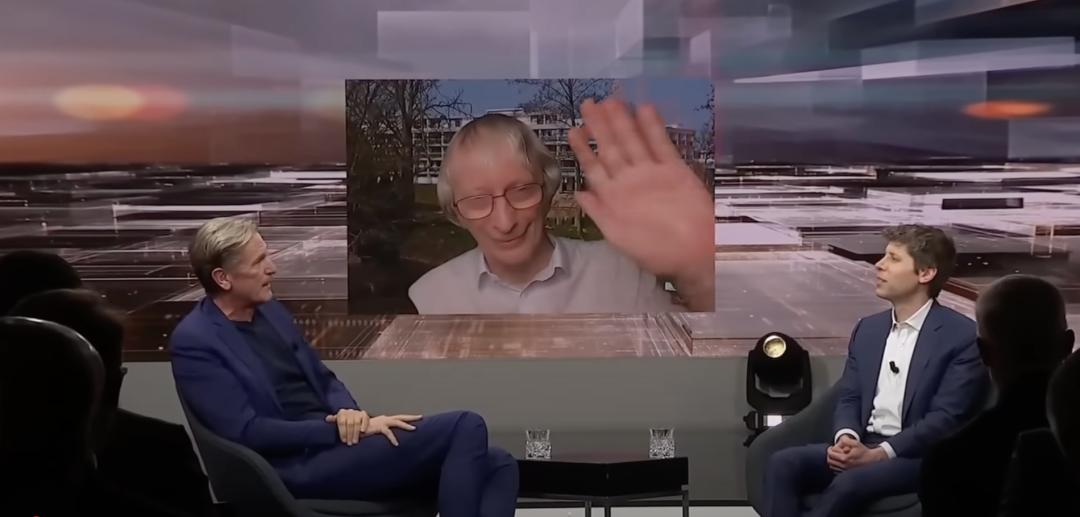
Core Viewpoint - The discussion between Sam Altman and David Deutsch revolves around the potential for AI to develop into a conscious superintelligence, with Altman suggesting that future iterations like GPT-8 could solve complex problems such as quantum gravity and explain their reasoning, while Deutsch remains skeptical about AI achieving consciousness [1][14]. Group 1: AI and Consciousness - The dialogue highlights a divergence in views on whether AI can evolve into a conscious superintelligence, with Deutsch arguing against it and Altman suggesting it is possible [5][7]. - Altman believes that future AI models, such as GPT-8, could demonstrate understanding and reasoning capabilities that resemble human-like consciousness [1][14]. Group 2: AI Capabilities - Deutsch acknowledges that while current AI, like ChatGPT, is not AGI, it can engage in meaningful conversations due to its extensive knowledge base [8]. - The conversation touches on the misconception of the Turing Test, clarifying that it was not intended as a benchmark for AGI but rather a thought experiment [9][10]. Group 3: Human Intelligence vs. AI - The discussion emphasizes that human intelligence involves a process of actively choosing motivations and storytelling, which current AI lacks [11][13]. - Altman argues that if future AI can articulate its problem-solving process, it may challenge existing perceptions of intelligence and consciousness [14]. Group 4: David Deutsch's Background - David Deutsch is a prominent figure in quantum computing, known for his foundational work in the field and contributions to quantum theory [15][17]. - He has received multiple awards for his research, including the ICTP Dirac Prize and the Breakthrough Prize in Physics [17].
奥特曼和量子计算奠基人讨论GPT-8
量子位· 2025-09-28 03:39
Core Viewpoint - The dialogue between Sam Altman and David Deutsch highlights the ongoing debate about whether AI can evolve into a conscious superintelligence, with differing opinions on the definitions and standards of AGI (Artificial General Intelligence) and ASI (Artificial Superintelligence) [3][8]. Group 1: Discussion on AI and Consciousness - Altman believes that future iterations of AI, such as GPT-8, could potentially understand complex concepts like quantum gravity and explain their reasoning process, challenging Deutsch's skepticism about AI achieving consciousness [22]. - Deutsch argues that while AI can perform impressive tasks, it lacks the intrinsic qualities of human intelligence, such as intuition and the ability to create original ideas, which are essential for true AGI [11][12][18]. Group 2: Perspectives on Human Intelligence - The conversation emphasizes that human intelligence is characterized by the ability to narrate one's own story and actively choose motivations, contrasting with the mechanical processing of information seen in current AI systems [19][21]. - The notion that there is no definitive test for AGI is discussed, suggesting that existing methods cannot adequately measure the capabilities of a truly general intelligence [15][16]. Group 3: Contributions of David Deutsch - David Deutsch is recognized as a foundational figure in quantum computing and information theory, having proposed significant theoretical frameworks that underpin the field [23][24]. - His work includes the development of the Deutsch-Jozsa algorithm, which demonstrated the exponential speedup of quantum algorithms compared to classical ones, laying the groundwork for future advancements in quantum computing [26].
市场“最贪婪”群体正抛弃比特币和半导体ETF
3 6 Ke· 2025-09-28 03:29
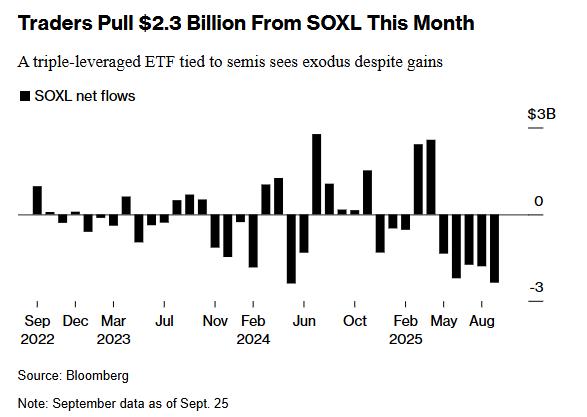
从多数指标来看,美国金融市场无疑仍保持着强劲态势:经济数据持续超预期向好、美联储降息为华尔 街提供了新的动力、股市依然接近近期所创的历史高点。 但在这表面之下,有迹象表明一些转变正在悄然发生…… 热衷冒险的日内交易者正撤离市场"最泡沫化的领域"——那些仅凭动能和炒作在夏季飙升的押注。有迹 象显示,近期资金正从那些聚焦前沿技术和高杠杆科技巨头押注的ETF中撤离,连长期作为风险偏好晴 雨表的加密货币也失去了势头。 令市场情绪更加低迷的是,加密货币本周一度缩水约3000亿美元,因为杠杆押注平仓——一波强制清算 拖累比特币和以太坊大幅走低,创下夏季以来最剧烈的波动之一。尽管周五币价有所企稳,但此次平仓 的规模以及对企业需求减弱的疑问,可能会给今年积累了可观收益的币圈多头们带来压力。 当然,资金流出未必意味着恐慌,更多是仓位调整。在历经数月无论胜算如何都奖励冒险的行情后,交 易员似乎正锁定收益,为潜在波动做好准备。 近年来,杠杆ETF——这类通过金融策略将指数或个股日涨跌幅度放大两倍甚至三倍的工具——已成为 快节奏散户交易者的热门选择。但业内数据显示,本月这类深受散户青睐的产品遭遇了约70亿美元资金 流出,创2019年 ...
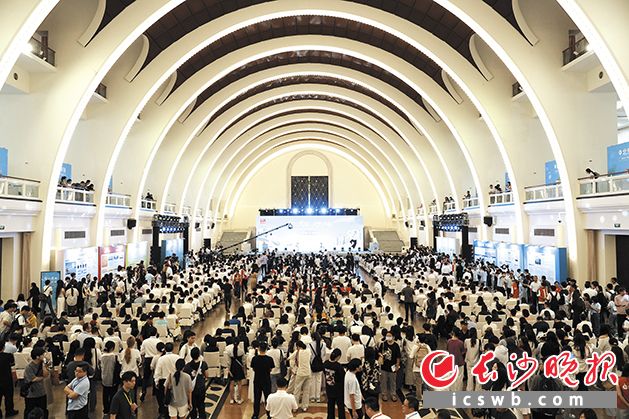
“智汇潇湘 才聚湖南”2025年湖南省促进高校毕业生就业创业系列行动上海站举行,长沙135家企事业单位提供高端高薪岗位近8000个
Chang Sha Wan Bao· 2025-09-28 02:18
Core Points - The event "Zhihui Xiaoxiang, Cai Ju Hunan" was held in Shanghai to promote employment and entrepreneurship for college graduates in Hunan Province, attracting over ten thousand participants [2][6] - Hunan brought over 17,000 job positions from more than 500 enterprises, with some positions offering annual salaries exceeding 500,000 yuan, particularly appealing to young talents in Shanghai [3][6] - The initiative aims to create a favorable environment for talent by providing high-quality job opportunities, research support, and a good living environment, showcasing Hunan as a land of opportunity for youth [3][6] Job Opportunities - The event featured 17 key industry chains, including intelligent manufacturing, artificial intelligence, biomedicine, and new energy, with an average monthly salary of 15,000 yuan [3] - High-end positions were particularly highlighted, with 8,000 positions offered by 135 enterprises from Changsha, aligning with the strengths of Shanghai's universities [3][4] Collaboration and Partnerships - Hunan Province signed cooperation agreements with several universities in Shanghai, focusing on practical collaboration in fields such as artificial intelligence, quantum computing, and biomedicine [4] - The partnerships aim to leverage the strengths of both Hunan and the universities to create tangible cooperation scenarios [4] Entrepreneurial Support - Companies like Wankang Technology announced initiatives such as a "million annual salary plan" for top talents and the establishment of innovation and entrepreneurship incubation bases [5] - Hunan is positioning itself as a destination for college student entrepreneurship, emphasizing low-cost startups and high-quality living [6] Future Plans - The recruitment initiative is part of a broader series of actions, with plans to visit multiple cities including Beijing, Xi'an, and Chengdu to attract graduates [7][8]

英伟达的AI投资版图
半导体行业观察· 2025-09-28 01:05
Core Insights - Nvidia announced a $100 billion investment in OpenAI, highlighting its significant investment portfolio since the emergence of generative AI in 2022 [2] - The company also committed $5 billion to Intel and $500 million each to Wayve and Nscale, showcasing its strategy of investing in both competitors and partners [2] - Nvidia's market value surged from approximately $420 billion to around $4.3 trillion since the launch of ChatGPT, with annual revenue increasing from $27 billion in FY2023 to $130.5 billion, a growth of 383% [3] Investment Strategy - Nvidia's investment portfolio, valued at $4.33 billion, includes companies like Applied Digital, Arm, and CoreWeave, many of which have strategic ties to Nvidia's core business [2][3] - The number of investments made by Nvidia increased from 16 in 2022 to 41 in 2024, and is projected to reach 51 by 2025, excluding the commitment to OpenAI [4] - Nvidia's investments often do not require the companies to exclusively use its technology, as seen in its relationship with OpenAI and Cohere [3] Market Position - Nvidia has become a central player in the AI ecosystem, with its investments indicating potential acquisition targets [7][8] - Analysts suggest that Nvidia's growing sales and cash flow, combined with a challenging regulatory environment for acquisitions, make its investment in OpenAI a "win-win" situation [7] - Nvidia's investments span various technologies, including AI models, biotechnology, robotics, and autonomous vehicles, indicating a broad strategic focus [10] Recent Developments - Nvidia participated in multiple funding rounds for AI startups, including a €1.7 billion ($2 billion) investment in Mistral AI and a $3.07 billion investment in Runway [13] - The company holds a 7% stake in CoreWeave, a cloud service provider that competes with major players like Microsoft and Google, and has secured a $6.3 billion order from Nvidia [14] - Nvidia's venture capital activities have led to successful returns, such as its investment in Scale AI, which recently secured a $14.3 billion deal with Meta [13]


“光镊”技术构建出最大量子比特阵列
Ke Ji Ri Bao· 2025-09-27 23:26
美国加州理工学院科学家在新一期《自然》杂志发表论文称,他们利用高度聚焦的激光束——"光镊"技 术,控制了6100个超冷中性铯原子,构建出目前规模最大的量子比特阵列。专家指出,这一突破表明中 性原子量子计算机具备大规模扩展潜力,但距离实现成熟可用的量子计算机仍有很长的路要走。 量子比特是量子计算的基本单元,与传统计算机中的比特有本质区别。传统比特只能表示0或1中的一种 状态,而量子比特可同时处于0和1的叠加态,借助量子纠缠实现并行计算,从而在解决特定问题上实现 指数级加速。 目前,全球量子计算技术路线多样,包括超导、光量子、离子阱、半导体量子点及中性原子等。本研究 采用的正是在真空中用"光镊"捕获中性原子作为量子比特的技术。 实验显示,在规模大幅扩展的同时,量子比特质量并未下降:其叠加状态可持续约13秒,比以往类似阵 列延长近10倍,单量子比特操控精度达99.98%。 值得一提的是,研究团队实现了在阵列中将原子移动数百微米而保持量子态稳定。这种可移动的量子比 特是中性原子平台的优势之一,有助于更灵活地实现量子纠错。由于量子比特易受噪声干扰,纠错技术 是规模化量子计算的关键挑战。 研究团队计划下一步实现数千个物理 ...
工业化生产硅基量子芯片保真度超99%
Ke Ji Ri Bao· 2025-09-27 23:19
此前,Diraq与imec已展示,利用常规半导体工艺制造的量子比特在执行单比特操作时,保真度可达 99.9%。然而,要支撑真正的量子计算能力,还必须在双比特操作中实现高保真度。此次突破正是填补 了这一关键空白。 祖拉克表示,最新成果为开发完全容错、功能完善且具备成本效益的量子计算机扫清了道路。 (文章来源:科技日报) 研究团队在论文中指出,由Diraq设计、imec制造的器件,在执行涉及两个量子比特的逻辑操作时,保 真度超过99%。双比特逻辑门是量子计算的基本构件,其可靠性被视为量子计算机走向大规模容错的关 键指标。 美国国防高级研究计划局正在推进"量子基准计划",要求包括Diraq在内的18家公司证明能否达到"实用 规模"目标。所谓"实用规模",是指量子计算机在商业价值上超过其运行成本。专家认为,实现这一水 平至少需要在芯片上稳定操控数百万量子比特,以抵消量子态极易出错的弱点。 祖拉克介绍说,此次成果表明,硅基量子芯片可依托现有CMOS工艺进行大规模制造,从而在降低成本 的同时实现高保真度,为研制数百万比特级量子计算机开辟了可行路径。 据新一期《自然》杂志报道,澳大利亚新南威尔士大学的量子技术初创公司Dir ...
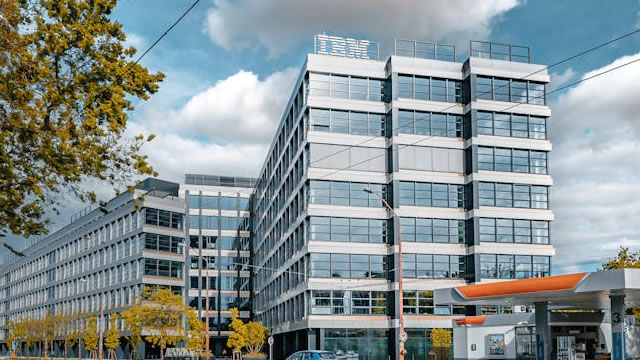
IBM Stock Up 159%. What Arvind Krishna And Quantum Mean For $IBM Stock
Forbes· 2025-09-27 14:20
Core Viewpoint - IBM has experienced significant stock growth under CEO Arvind Krishna, with a 159% increase since his appointment, driven by a focused strategy on hybrid cloud and AI technologies, alongside advancements in quantum computing [2][3][11]. Financial Performance - Since Krishna took over in April 2020, IBM has consistently beaten earnings per share expectations, although revenue performance has been mixed, often falling short of forecasts [4][10]. - In Q2 2024, IBM reported an 8% revenue increase to $17 billion, exceeding Wall Street estimates, and raised its full-year guidance for software revenue growth due to strong AI demand [8][10]. - The company also raised its free cash flow outlook to over $13.5 billion for 2025, reflecting confidence in its hybrid cloud and AI trajectory [8][10]. Strategic Developments - Krishna's leadership has led to a strategic focus on AI and hybrid cloud, particularly following the spin-off of Kyndryl, which allowed IBM to concentrate on growth areas [6][15]. - The acquisition of Red Hat for $34 billion has modernized IBM's software offerings and enhanced its competitive advantage in the hybrid cloud market [14][15]. Quantum Computing Potential - IBM has achieved $1 billion in cumulative quantum revenue since 2017, with expectations for significant growth as the company plans to launch its first error-corrected quantum computer by late this decade [19]. - Recent advancements in quantum computing have shown promising results, such as HSBC's reported 34% improvement in bond trade predictions using IBM's quantum systems, which may attract further interest from market participants [20][21][22].