
战略性新兴产业

Search documents
国资国企改革深化提升行动进入冲刺阶段 人工智能引领科研范式变革成重点
Huan Qiu Wang· 2025-06-18 03:27
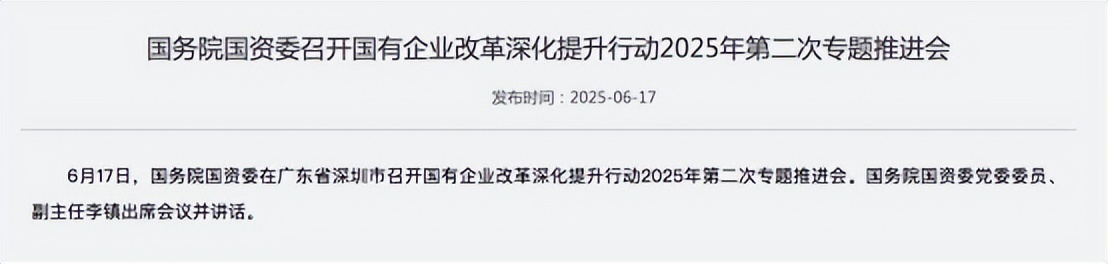
李镇指出,要完善支持人工智能引领科研范式变革的制度机制。他强调要充分发挥人工智能在数据分析、模拟预测等方面的优势,推动科研逻辑从传统模式 向"数据密集-智能涌现-人机协同"转变。同时要突出数据赋能,深化数据资源开发利用,推进算力基础设施建设,提升科研效率。 【环球网财经综合报道】2025年6月17日,国务院国资委在广东省深圳市召开国有企业改革深化提升行动2025年第二次专题推进会。国务院国资委党委委 员、副主任李镇在会上表示,当前距离深化提升行动收官仅剩半年时间,要把高质量完成改革任务作为今年工作的重中之重。截至一季度末,各中央企业及 地方国企重点改革任务平均完成率已超过80%。 实践中,招商局集团香港狮子山人工智能实验室已初步构建自主研发体系,"AI+金融""AI+物流"等专项任务进展顺利。广东省则组建了100亿元的人工智能 与机器人产业投资基金。 针对战略性新兴产业和未来产业发展,李镇提出要科学制定"十五五"规划,选准主攻方向,避免盲目竞争。他强调要加大增量投入,规范发展天使投资、风 险投资等,引导国企基金"投早投小投硬"。 在创新评价激励方面,国资委要求推行分类评价和长周期评价,探索建立贡献回溯评价机制 ...

海联金汇科技股份有限公司关于与专业投资机构共同投资的进展公告
Shang Hai Zheng Quan Bao· 2025-06-17 20:05
登录新浪财经APP 搜索【信披】查看更多考评等级 公司将持续关注合伙企业的后续进展,并及时履行信息披露义务,敬请广大投资者注意投资风险。 证券代码:002537 证券简称:海联金汇 公告编号:2025-047 海联金汇科技股份有限公司 关于与专业投资机构共同投资的进展公告 本公司及董事会全体成员保证信息披露内容的真实、准确、完整,没有虚假记载、误导性陈述或重大遗 漏。 一、对外投资概述 为充分借助专业投资机构和高校科技成果的资源优势,立足于公司长期战略和长远目标,进一步推动海 联金汇科技股份有限公司(以下简称"公司")在智能制造产业的长期布局和稳健发展,2025年4月18日 公司与专业投资机构北京砺明创业投资有限公司、浙江大学校友创新创业有限公司、国邦医药(杭州) 股权投资有限公司、浙江中南建设集团有限公司、广东越科能源发展有限公司、洪宝民共同签署合伙协 议,拟共同投资设立杭州启真开物股权投资基金合伙企业(有限合伙)(以下简称"合伙企业"),重点 投资符合国家战略性新兴产业、未来产业发展方向领域的公司。合伙企业拟认缴出资额为人民币5,000 万元,其中公司作为有限合伙人拟以自有资金认缴出资人民币1,400万元 ...

打赢深化提升行动“收官战”,这些领域国企改革将提速
Xin Hua She· 2025-06-17 12:14
Core Viewpoint - The Chinese government is intensifying efforts to reform state-owned enterprises (SOEs) by focusing on enhancing technological innovation and integrating it with industrial innovation, aiming for a completion rate of over 80% for key reform tasks by the end of Q1 2025 [1][2]. Group 1: Technological Innovation and Reform - The State-owned Assets Supervision and Administration Commission (SASAC) emphasizes the importance of improving the quality of technological innovation supply and establishing mechanisms that accommodate the uncertainties and disruptive nature of original innovations [3][4]. - A series of targeted reforms will be implemented to enhance the overall effectiveness of the innovation system, including improving the quality of technological innovation supply and establishing a modern industrial system [1][5]. Group 2: Investment and Development Mechanisms - In Q1 of this year, central enterprises expanded effective investments, with fixed asset investments reaching 851.3 billion yuan, and investments in strategic emerging industries growing by 6.6% year-on-year [5]. - The SASAC plans to refine the development mechanisms for strategic emerging industries and future industries, focusing on identifying key strategic directions for nurturing these sectors [5][6]. Group 3: Talent and Innovation Evaluation - The meeting highlighted the need to establish a multi-dimensional and diversified innovation evaluation mechanism, including long-cycle and precise evaluation methods for different types of research [7][8]. - It is proposed that SOEs implement targeted evaluation indicators for various research areas, such as setting up a virtual quantitative evaluation system for major scientific research tasks [8][9]. Group 4: Integration and Collaboration - The SASAC encourages SOEs to deepen collaboration between industry, academia, and research institutions, leveraging their advantages in demand scale and application scenarios to accelerate the transformation of technologies into productive forces [4][5]. - There is a focus on enhancing the integration of newly acquired businesses post-merger and acquisition, ensuring that governance structures and operational mechanisms align with the development of strategic emerging industries [6][7].
江苏无锡生物医药产业专项母基金招GP
FOFWEEKLY· 2025-06-17 10:06
Core Viewpoint - The Jiangsu Wuxi Biopharmaceutical Industry Special Fund aims to promote the development of strategic emerging industries in Jiangsu Province, with a total scale of 4 billion yuan [1]. Group 1: Fund Structure and Investment Strategy - The fund is established in collaboration with Wuxi City to support the integration and development of strategic emerging industry clusters [1]. - Investment methods include setting up sub-funds or direct project investments, with direct investments generally not exceeding 30% of the actual investment amount of the special fund [1]. - The special fund's contribution to sub-funds will not exceed 30% of the sub-fund's total size, and investments in individual direct projects will not exceed 20% of the total paid-in capital of the special fund [1]. Group 2: Investment Focus Areas - The fund primarily invests in pharmaceuticals (including innovative drugs, high-end raw materials, traditional Chinese medicine, cell gene therapy, synthetic biology, etc.), medical devices (including in vitro diagnostic reagents and supporting instruments), and supportive medical industries (including research instruments, synthetic biology, CXO, new medical infrastructure, MAH platform companies, etc.) [2]. - Additional focus areas include consumer healthcare and improving national health quality (including health management, medical aesthetics, special medical foods, and functional foods), as well as AI in pharmaceuticals [2].

西部大开发政策丨西部地区鼓励类产业企业减按15%税率征收企业所得税,速了解!
蓝色柳林财税室· 2025-06-17 09:19
Group 1 - The article defines "encouraged industries" as enterprises whose main business activities are listed in the "Directory of Encouraged Industries in the Western Region" and whose main business income accounts for over 60% of total revenue [2] - The "Directory of Encouraged Industries in the Western Region (2025 Edition)" has been implemented, with a total of 564 policies categorized by province, and Xinjiang has the highest number of entries at 57 [3] - The support for sectors such as new energy equipment manufacturing, energy storage technology, and clean energy development aligns closely with Xinjiang's "Ten Industrial Clusters" strategic layout [3] Group 2 - The support for high-end equipment manufacturing and new materials corresponds with Xinjiang's strategic layout for advanced manufacturing and emerging industries [3] - The encouragement of clean and efficient coal utilization and modern coal chemical industries resonates with the construction of Xinjiang's clean and efficient coal utilization industrial cluster [3] - The support for strategic mineral resource exploration and comprehensive development aligns with the region's green mining and processing industrial cluster [3] Group 3 - The backing for the textile and apparel industry is in line with Xinjiang's cotton and textile industry cluster [3]
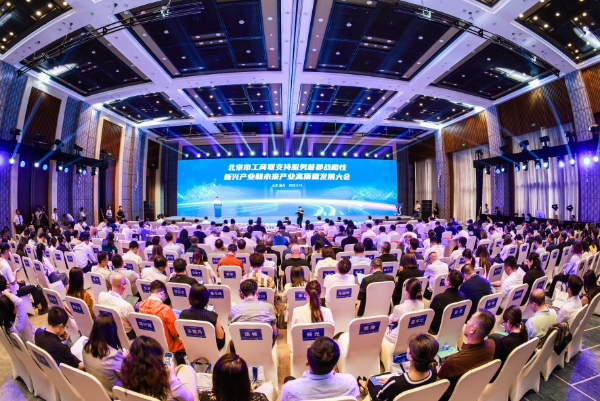
北京市工商联支持服务首都战略性新兴产业和未来产业高质量发展大会举办
Xin Hua Wang· 2025-06-17 02:59
Group 1 - The conference focused on supporting the high-quality development of strategic emerging industries and future industries in Beijing [1][3] - The establishment of four industry committees and a financing committee aims to promote the integration of technological and industrial innovation in the capital [3] - The committees will serve as a bridge to secure policy, funding, projects, and talent support for private enterprises in strategic emerging industries [3] Group 2 - The Beijing Municipal Science and Technology Commission and the Beijing Economic and Information Bureau presented policies to support the development of strategic emerging industries [4] - Strategic cooperation agreements were signed between the Beijing Federation of Industry and Commerce and various organizations to promote technology transfer and financial support for the real economy [4] - Over 300 participants, including leaders from various government departments and newly established committees, attended the event [4]
杉杉股份研发破10亿创新高 双主业巩固全球龙头地位
Jing Ji Guan Cha Wang· 2025-06-17 02:58
Core Viewpoint - In 2024, the company Shanshan Co., Ltd. (600884) significantly increased its R&D expenditure to 1.037 billion yuan, marking a year-on-year growth of 19.43%, with the R&D expense ratio reaching a historical high of 5.55% [1] Group 1: Anode Materials - Shanshan Co., Ltd. is a leading domestic player in the anode materials sector, demonstrating remarkable R&D investment results and maintaining a leading product iteration speed, particularly in the ultra-fast charging, silicon-based, and hard carbon segments [2] - The company has successfully supplied high-energy density 6C ultra-fast charging anodes and low-expansion long-life graphite products to major clients, showcasing innovations such as functional coating layers that enhance ion transfer rates and increase ion channels [2] - The fourth-generation high-density hard carbon anode material has been developed, significantly improving sodium-ion battery energy density and cycle performance, thus accelerating the industrialization of sodium batteries [3] Group 2: Polarizers - In the polarizer sector, Shanshan Co., Ltd. maintains a dominant position in large-size LCD polarizers while achieving significant breakthroughs in OLED polarizers and high-end automotive polarizers [4] - The company has enhanced its market share in high-end small and medium-sized LCD products through technological advancements that meet the demand for lightweight, high-definition, and high-reliability products [4] - The acquisition of LG Chem's SP business has led to stable shipments of OLED and automotive LCD polarizers, driving a rapid increase in demand for automotive display polarizers [5] Group 3: Intellectual Property and Future Outlook - As of the end of 2024, Shanshan Co., Ltd. holds 334 authorized patents in anode materials and 1,243 in polarizers, indicating a strong focus on innovation in strategic emerging industries [5] - The company plans to continue strengthening R&D investments and enhancing intelligent manufacturing levels to seize development opportunities as demand in both sectors gradually increases [5]

新视野 | 统筹好培育新动能和更新旧动能的关系
Zhong Yang Ji Wei Guo Jia Jian Wei Wang Zhan· 2025-06-17 00:07
Group 1 - The core viewpoint emphasizes the importance of balancing the cultivation of new driving forces and the updating of old driving forces in economic development, highlighting the need for innovation-driven strategies to facilitate the transition from traditional to modern industrial systems [2][3][4] - The transformation of new and old driving forces is characterized by a dialectical relationship, where new driving forces, represented by strategic emerging industries like AI and biotechnology, coexist and interact with traditional sectors such as manufacturing and agriculture [3][4] - The current economic landscape shows significant achievements in the development of new productive forces, with the added value of new industries and business models expected to exceed 18% of GDP by 2024, alongside the establishment of nearly 10,000 digital workshops and smart factories [6] Group 2 - Structural contradictions in the transformation process include issues such as the disconnect between technology supply and industrial demand, particularly affecting small and medium-sized enterprises that struggle with innovation due to funding and talent shortages [6][7] - The disparity in industrial structure remains a challenge, with the service sector's share still below the average of 70% in developed countries, indicating a need for further enhancement of strategic emerging industries [7][8] - Regional differences in industrialization stages lead to varied speeds and effects in the transformation of driving forces, with coastal areas being more advanced compared to central and western regions [8][9] Group 3 - The practical path for promoting the smooth transition of new and old driving forces involves innovative allocation of production factors, deep industrial transformation, and systematic reforms to create a dual-driven model of traditional industry upgrading and emerging industry growth [9][10] - Emphasis on creating a technology-industry collaborative leap system is crucial, focusing on core technological breakthroughs and integrating technology with market needs to accelerate industrial upgrades [9][10] - The establishment of a market-oriented mechanism for factor allocation is necessary to enhance the flow of resources and improve the efficiency of production factors, including data as a new production element [10][11]
中国电建中标107.7亿风电项目 前4月境外合同额833亿增28.3%
Chang Jiang Shang Bao· 2025-06-16 23:41
Core Viewpoint - China Electric Power Construction (China Electric) has secured a significant contract worth approximately 10.77 billion yuan for the first phase of a 1 million kilowatt offshore wind power project in Dandong, Liaoning, marking a strong performance in the renewable energy sector [1][2]. Group 1: Recent Contracts and Projects - China Electric's subsidiary, China South Survey and Design Institute, won the EPC contract for the Dandong offshore wind project, which is expected to generate 3 billion kilowatt-hours annually and reduce carbon emissions by 2.4 million tons [2]. - In 2025, China Electric has been actively winning large contracts, including a 20 billion yuan solar and storage project in Abu Dhabi and a 5.97 billion yuan wind power project in Egypt [2]. - The company also secured contracts for various projects, including a 5.771 billion yuan hydropower project and a 4.4 billion yuan national reserve forest construction project in Fujian [2]. Group 2: Business Performance and Strategy - In the first four months of 2025, China Electric reported a 28.33% year-on-year increase in overseas contract amounts, totaling 83.322 billion yuan, while domestic contracts decreased by 11.22% to 303.168 billion yuan [5]. - The company aims for a total new contract target of 1.4 trillion yuan and revenue exceeding 650 billion yuan in 2025, with a significant focus on strategic emerging industries [6]. - China Electric's international business has shown robust growth, with a 4.08% increase in new international contracts, amounting to 223.957 billion yuan, and a 11.43% increase in international main business revenue [4].

新动能助就业扩容提质
Jing Ji Ri Bao· 2025-06-16 22:06
Group 1 - The employment market is under significant pressure due to profound adjustments in the global economy and various domestic challenges, but new industries and business models are providing important driving forces for job expansion and quality improvement [1] - The average urban survey unemployment rate from January to May this year was 5.2%, with a slight decrease to 5% in May, indicating a marginal improvement in employment conditions [1] - The manufacturing sector has shown a notable recovery in recruitment demand, particularly in strategic emerging industries, which are becoming core engines for job absorption [1] Group 2 - Data from 58 Recruitment indicates that demand in industries such as new energy vehicles, energy storage, and semiconductors remains robust, with automotive parts design positions seeing a year-on-year increase of 89.5% in Q1 [2] - Job demand for mechanical engineers and automation engineers in industrial automation has increased by 40% and 10% respectively, while algorithm engineers and machine learning positions have seen growth of 44% and 18% [2] - The average salary for AI trainers and smart hardware engineers has risen by 10% to 20% year-on-year, creating a virtuous cycle of "technology dividend—employment quality—talent supply" [2] Group 3 - New business formats such as live-streaming e-commerce and AI trainers are continuously creating new job opportunities, with the demand for anchors ranking first in the talent shortage index [3] - The short drama industry has seen a surge in recruitment for producers and screenwriters, with demand increasing by over 40% [3] - The aging population and digital consumption are driving significant growth in life service job demand, with online life services and transportation logistics seeing increases of 43% and 35% respectively [3] Group 4 - There is a mismatch between the current talent training system and the speed of industrial development, affecting job growth, particularly in traditional industries where there is an oversupply of graduates [4] - The service sector is emerging as a new economic growth point, but there is still a shortage of specialized talent in areas such as elderly care and digital consumption [4] - Experts suggest focusing on new business formats and expanding employment opportunities by improving the talent training system in emerging industries [4] Group 5 - It is essential to maintain a virtuous cycle of education, technology, and talent to align with industrial transformation and the development of emerging industries [5] - Companies, universities, and research institutions should collaborate to address weak links in industrial development and focus on key technologies [5] - Strengthening labor supply-side reforms and implementing human capital enhancement plans for the AI era are crucial for supporting employment growth [5]