
智能制造

Search documents
抢占“智”高点,带动产业升级
Xin Lang Cai Jing· 2025-11-29 18:22
Core Insights - Lei Jun, founder of Xiaomi, reflects on the transformation of Beijing's manufacturing industry and its impact on the company's growth, particularly in the electric vehicle sector [1][2]. Group 1: Industry Transformation - Beijing's manufacturing base is crucial for Xiaomi's success, with the city providing a supportive environment for innovation and industrial development [2][4]. - The production of new energy vehicles (NEVs) in Beijing has significantly increased, from approximately 20,000 units in 2020 to an expected 300,000 units in 2024, indicating a strong shift towards new energy and smart manufacturing [2][4]. - The rapid establishment of Xiaomi's automotive factory, completed in just 14 months, highlights Beijing's efficient industrial ecosystem [2][3]. Group 2: Technological Advancements - The integration of smart manufacturing is essential for Beijing's industrial evolution, with a focus on high-end, intelligent production methods [4][5]. - Xiaomi's "black light factory" exemplifies the efficiency of smart manufacturing, achieving a 60% increase in production efficiency compared to traditional factories [5]. - The anticipated rise of AI in traditional industries is expected to create a new trillion-dollar market, with AI technologies enhancing production processes and quality control [6]. Group 3: Future Outlook - The next five years will see significant advancements in AI and robotics within manufacturing, with expectations for humanoid robots to become commonplace in factories [6]. - Beijing's strategic focus on developing new industries, such as commercial aerospace and large model industry clusters, positions the city as a leader in innovation and production capabilities [6].

全国首批只有15家,这类工厂何以领跑中国智造?
Huan Qiu Wang· 2025-11-29 06:40
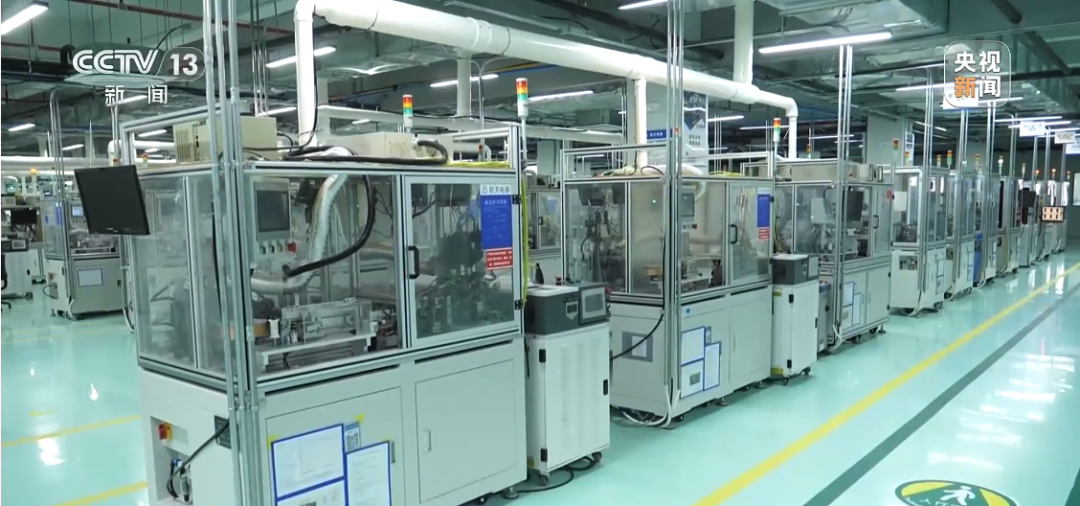
Core Insights - The establishment of the first batch of leading intelligent factories in China marks a significant advancement in the manufacturing sector, with 15 factories selected as benchmarks for future development [1][3] - These leading intelligent factories demonstrate over 80% smart penetration in their construction scenarios, showcasing their capability for full-process intelligent decision-making and driving collaborative development across the supply chain [3][6] Group 1: Overview of Leading Intelligent Factories - A total of 7,000 advanced factories and 504 excellent factories have been built in China, with 15 identified as leading intelligent factories [1] - The leading intelligent factories serve as a model for the transformation and upgrading of the manufacturing industry, providing replicable smart manufacturing models for enterprises [3][4] Group 2: Specific Companies and Their Innovations - Nanjing Steel Co., Ltd. has implemented a comprehensive digital twin system that integrates 26 production lines, allowing for clear tracking of production data and reducing inventory from 15 days to 5 days, significantly lowering capital occupation by two-thirds [6][8] - The use of artificial intelligence models in Nanjing Steel's production processes has improved efficiency, with a 98.5% on-time order rate and a 9% reduction in total industry costs [10] - Other notable companies among the 15 leading factories include Baoshan Iron & Steel, Shanghai Aerospace Equipment Manufacturing, and Gree Electric Appliances, each contributing unique innovations to their respective sectors [4][6]


从7000余家选出15家 “领航级”工厂如何领跑中国智造
Yang Shi Xin Wen Ke Hu Duan· 2025-11-29 04:29
Core Insights - The first batch of leading smart factories has been announced in China, with 15 selected as representatives of the highest level of manufacturing development, showcasing significant benchmark effects for industry transformation and upgrading [1][3] Group 1: Smart Factory Development - A total of over 7,000 advanced factories and 504 excellent factories have been established in China, with 15 identified as leading smart factories [1] - Leading smart factories exhibit core capabilities of "full-process intelligent decision-making," driving collaborative development across upstream and downstream sectors [3] Group 2: Impact on Industry - Each leading smart factory has reportedly replicated and promoted its model to over 100 other factories, becoming a driving force for industry transformation [5] - The smart factories have achieved an intelligent penetration rate exceeding 80% in their construction scenarios, accelerating the adoption of high-value chain links [3] Group 3: Digital Twin Systems - A digital twin system has been implemented in steel production, allowing for detailed tracking of production processes and material relationships, significantly reducing inventory days from 15 to 5 [8][10] - The digital twin system enhances collaboration with upstream suppliers, reducing capital occupancy by two-thirds [10] Group 4: Automation and Efficiency - Advanced models are utilized to automate the steel rolling process, minimizing human intervention and ensuring precise control over material thickness [12] - A comprehensive inspection system, including laser scanning and CT imaging, ensures the quality of produced steel plates, achieving a 98.5% order fulfillment rate and reducing total industry costs by 9% [14][16] Group 5: Cost Reduction and Profit Increase - The implementation of multi-modal data perception has led to 100% digital control of key processes and equipment, resulting in cost savings exceeding 500 million RMB for the company [16]
透视多维度数据感知中国活力 “数”说经济高质量发展澎湃动能
Yang Shi Wang· 2025-11-29 03:54
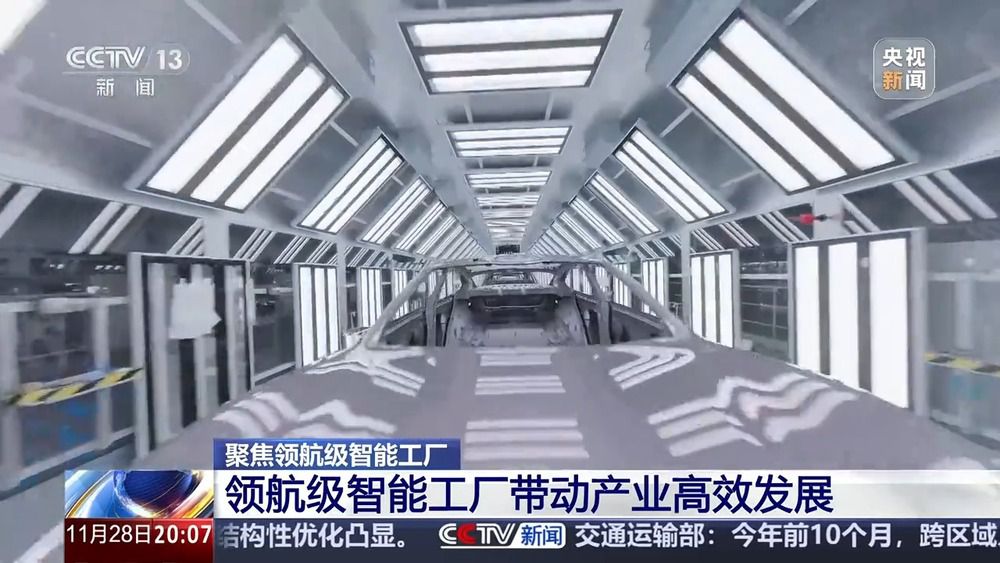
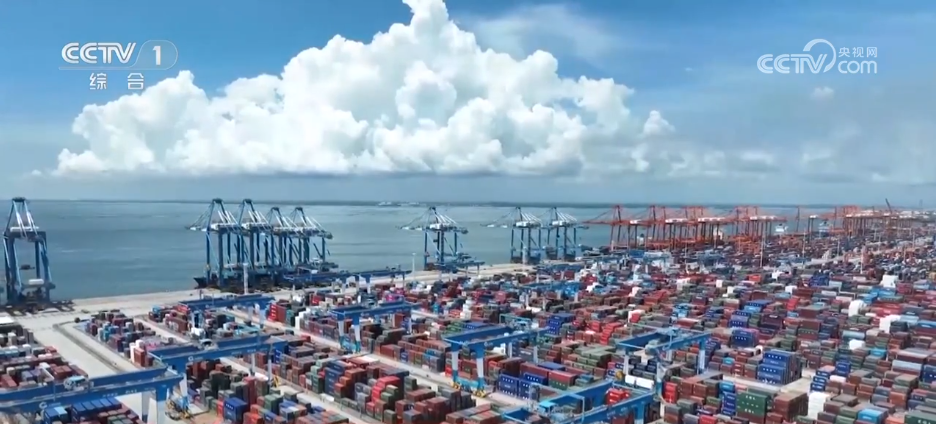
Economic Overview - The transportation sector in China has shown a stable and progressive development trend in the first ten months of the year, according to the Ministry of Transport [1][7] - Fixed asset investment in transportation reached 2.95 trillion yuan, maintaining a high level [3] Freight and Passenger Movement - The total freight volume reached 48.29 billion tons, marking a year-on-year increase of 3.5% [5] - Cross-regional passenger flow reached 56.88 billion person-times, with a year-on-year growth of 3.6% [5] Port Activity - Port cargo throughput increased to 15.13 billion tons, reflecting a year-on-year growth of 4.3% [5] - Container throughput at ports reached 29 million TEUs, with a year-on-year increase of 6.4% [5] Logistics Sector Performance - The total social logistics value for the first ten months was 29.37 trillion yuan, up 5.1% year-on-year [8] - Industrial product logistics value grew by 5.3%, driven by strong demand in equipment manufacturing and high-end manufacturing sectors [10] - Logistics revenue for the industry increased by 4.5% year-on-year, indicating ongoing structural adjustments [10] E-commerce and New Business Models - Online retail of physical goods has outpaced digital product retail growth, highlighting stable demand in e-commerce logistics [12] - New business models such as instant retail and live e-commerce are experiencing robust growth, contributing to logistics demand [10] Smart Manufacturing Initiatives - The first batch of leading smart factories was announced, indicating a shift towards intelligent manufacturing [14] - These factories are expected to drive innovation and transform production methods across various industries [14] IoT and Digital Economy Growth - China's IoT connections are projected to exceed 3.5 billion this year, with significant investments in related infrastructure [17][20] - The traditional digital economy's annual output value is expected to surpass 80 trillion yuan, with over 1.2 million enterprises meeting advanced digital economy conditions [20] Internationalization of Private Enterprises - The internationalization of private enterprises is expanding, with overseas revenue projected to reach 5.215 trillion yuan in 2024, a nearly 12% increase [24] - The export value of internationalized private enterprises is expected to exceed 3.283 trillion yuan, growing over 10% [24] Foreign Exchange Market Activity - In October, China's foreign exchange market recorded a total turnover of 21.97 trillion yuan, with cumulative turnover for the year reaching 252.07 trillion yuan [26][27]
南钢,再签约!
Xin Lang Cai Jing· 2025-11-29 03:45
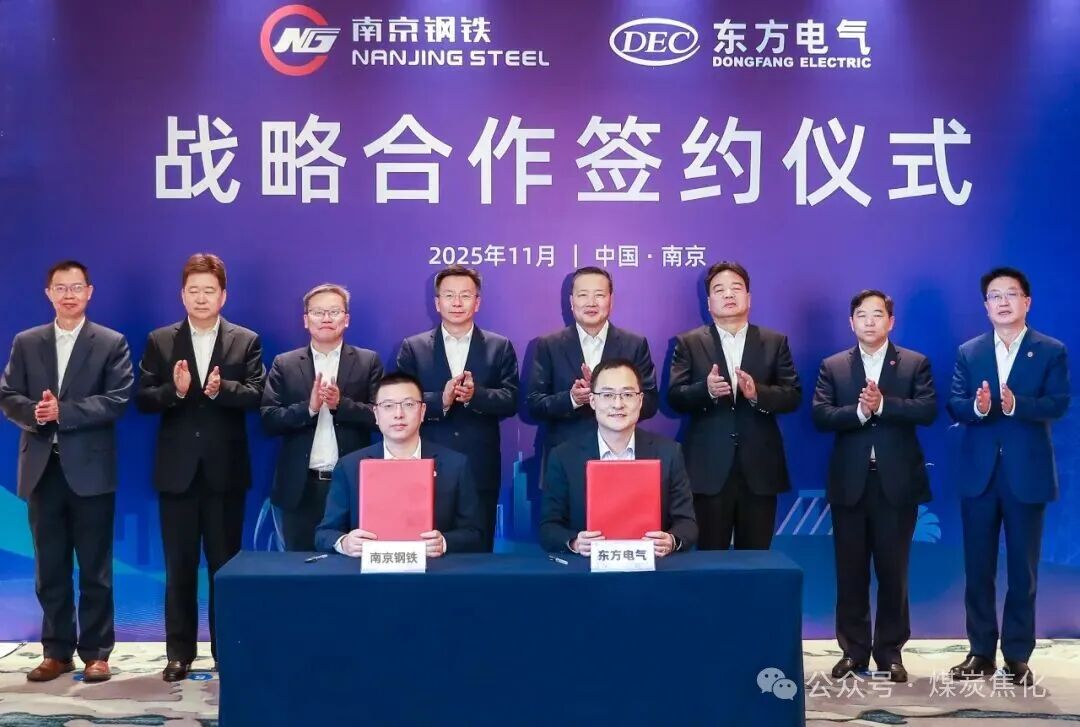
11月27日,南京钢铁股份有限公司与东方电气股份有限公司战略合作签约仪式在南京举行。根据协议,双方将通过"南钢材料+东电装备"的强强联合,共 同推进相关技术跃迁、突破,打造具有国际竞争力的现代产业体系,实现高端材料自主可控。 南京市委副书记、代市长李忠军,中信集团党委副书记、副董事长、总经理张文武,东方电气集团党组成员、副总经理王军,南京市委常委、江北新区党 工委书记、浦口区委书记陆卫东,江苏省工业和信息化厅党组成员、副厅长石晓鹏,中信泰富党委副书记、总裁、中信泰富特钢党委书记、董事长钱刚, 东方电气集团总经理助理、股份公司副总裁胡修奎,南钢党委书记、董事长黄一新等见证签约。 南京市政府秘书长洪礼来,江北新区党工委委员、管委会副主任陶磊,南京市工业和信息化局副局长娄伟,东方自控党委副书记、总经理张黎,东方电气 集团产业发展部副部长李元,东方氢能党委副书记、总经理巩李明,中信集团业务协同部总经理任霞、科技与数字化部总经理赵磊、办公厅副主任崔玉开 等参加。南钢党委副书记王芳主持签约仪式,副总裁谯明亮代表南钢签署协议。 南钢作为中信集团的一员,与东方电气有着良好的合作基础。南钢与东方电气均创建于1958年,长期保持 ...

浙江首个民用无人机试飞运行基地001牌照落地杭州;全球最大3D打印工厂将落地深圳丨智能制造日报
创业邦· 2025-11-29 03:22
Group 1 - The world's largest 3D printing factory will be established in Shenzhen, with Huina Technology planning to deploy 15,000 TuoZhu 3D printers by Q1 2026, making it the largest globally [2] - Nvidia's CEO Jensen Huang emphasized that Nvidia's GPUs are irreplaceable and that the AI market is vast and rapidly growing, requiring continuous innovation to maintain a competitive edge [2] - The first civil drone test flight operation base in Zhejiang has received the 001 license, covering 102 acres and providing comprehensive services for R&D, flight verification, and training [2] Group 2 - TSMC's advanced packaging plant in Chiayi is set to begin mass production next year, with plans to expand by adding approximately six 3D packaging plants in the future [2]



百钰顺公司加强精密结构件工艺创新—— 精益生产提升质效
Jing Ji Ri Bao· 2025-11-29 02:35
Core Viewpoint - The company is focusing on innovative production techniques to enhance cost efficiency and environmental sustainability in the manufacturing of precision structural components, particularly in the laptop casing sector. Group 1: Company Overview - Chongqing Baiyushun Precision Industry Co., Ltd. is a national-level specialized and innovative "little giant" enterprise engaged in the R&D, production, and sales of precision structural components [1] - Since its establishment in 2016, the company has built seven manufacturing bases in Chongqing and Anhui, with an annual production capacity of 40 million precision structural components and an output value exceeding 1.5 billion yuan [1] Group 2: Technological Innovations - The company is developing a new production process that combines aluminum alloy room temperature forging technology with metal additive manufacturing to create cost-effective and environmentally friendly precision components [1] - The new production technique has improved material utilization significantly, reducing processing time by 30% and lowering raw material costs by approximately 40% [2] - The company has established a research and development team to tackle technical challenges, resulting in successful production line implementation after three years of effort [2] Group 3: Automation and AI Integration - Baiyushun has developed an AI visual inspection system in collaboration with Harbin Institute of Technology, enhancing detection efficiency by over five times compared to manual inspection, with a defect rate reduction of 15% [3] - The company has integrated smart manufacturing throughout its production process, operating over 3,000 CNC machining centers and more than 600 stamping machines, achieving intelligent control from raw material delivery to final product inspection [3] Group 4: Future Directions - The company plans to continue focusing on innovation, increasing R&D investment in precision and lightweight product manufacturing technologies to meet new demands in consumer electronics, new energy, and aerospace sectors [4] - Baiyushun aims to enhance its intelligent management level while contributing to high-quality development across various industries through its precision structural components [4]
首批15家领航级智能工厂亮相
Xin Lang Cai Jing· 2025-11-29 00:26
Core Viewpoint - The 10th World Intelligent Manufacturing Conference was held in Nanjing, Jiangsu from November 26 to 29, where the first batch of 15 "Leading Intelligent Factories" was announced, emphasizing the commitment to open sharing, collaborative innovation, and exploring future actions to accelerate the establishment of a globally influential intelligent manufacturing model [1] Group 1 - The conference highlighted the participation of major leaders from the first batch of 15 leading intelligent factories, including Baosteel, Shanghai Aerospace Equipment, XCMG Group, and Nanjing Steel [1] - The initiative aims to foster a new model of intelligent manufacturing with global impact through collaboration and innovation [1]


智能工厂重塑制造业
Xin Lang Cai Jing· 2025-11-28 22:58
Core Insights - The 2025 World Intelligent Manufacturing Conference was held in Nanjing, where the Ministry of Industry and Information Technology and five other departments announced the first batch of 15 leading intelligent factories [1] - These 15 companies initiated the "Leading Action Plan" and showcased their innovative practices and experiences at the conference [1] Group 1: Intelligent Factory Features - Leading intelligent factories exhibit two key characteristics: the integration of digital twin technology with intelligent decision-making for proactive management, and achieving extreme flexibility and manufacturing capabilities [3] - Nearly 90% of these intelligent factories have implemented agile and flexible manufacturing, allowing for stable production during product changes [3] - Over 30% of the leading intelligent factories utilize process modeling and intelligent control to optimize design and operations, breaking conventional manufacturing boundaries [3] Group 2: Company Innovations - Weichai Power Co., Ltd. showcased its "AI Flywheel Intelligent Assembly Unit," demonstrating precision operations powered by AI, which allows for seamless assembly and inspection processes [2] - China National Offshore Oil Corporation presented its "Deep Sea No. 1" smart oilfield project, featuring a comprehensive process model system that enables autonomous control and optimization [2] - Zoomlion Heavy Industry Science and Technology Co., Ltd. achieved full-process intelligent manufacturing for excavators, enabling efficient shared production across various models and types of construction machinery [3] Group 3: Future of Intelligent Manufacturing - The integration of new-generation artificial intelligence is transforming the manufacturing landscape, leading to smart products, production, and services [4] - Future intelligent factories are expected to evolve towards self-learning and self-adaptive systems, positioning leading intelligent factories as strategic points for China's manufacturing in global competition [4]
中国经济持续回升向好 增长动能逐步优化
2 1 Shi Ji Jing Ji Bao Dao· 2025-11-28 22:31
Economic Growth - China's GDP grew by 5.2% year-on-year in the first three quarters of 2025, laying a solid foundation for achieving the annual growth target of around 5.0% [1] - The strong performance of external demand effectively offset the temporary shortfall in domestic demand, with contributions to GDP from final consumption expenditure, gross capital formation, and net exports at 53.5%, 17.5%, and 29% respectively [1] Consumer Market - The consumer market is expected to continue its moderate recovery, driven by the "trade-in" policy which significantly boosted retail sales of automobiles, home appliances, and furniture [2] - Retail sales of durable goods are showing strong recovery, with signs of improvement in service consumption such as dining [2] Manufacturing Sector - China's manufacturing value added accounts for 26.2% of GDP, highlighting its status as a manufacturing powerhouse [2] - Technological advancements in AI, big data, and biomanufacturing are accelerating the development of the digital economy and smart manufacturing, which will enhance overall productivity in the manufacturing sector [2] Real Estate Market - Policies aimed at stabilizing the real estate market are accelerating the inventory reduction process, with the area of unsold commercial housing decreasing from 800 million square meters in February 2025 to 760 million square meters by the end of September [3] - The reduction in mortgage rates and down payment ratios is expected to further stimulate demand in the real estate sector [3] Infrastructure Investment - Infrastructure investment is expected to improve marginally due to ongoing debt reduction efforts and the introduction of new policy financial tools [3] - Fiscal support for infrastructure remains strong, providing incremental investment power [3] Export Performance - China's export growth rate reached 6.1% year-on-year in the first three quarters, driven by the expansion into emerging markets and the advantages of its industrial chain [4] - The diversification of markets, particularly in Europe, ASEAN, and Latin America, has mitigated risks from reliance on a single market [4] Future Outlook - The Chinese economy is expected to continue its recovery, with growth momentum gradually optimizing due to proactive policies, technological empowerment in manufacturing, and the release of consumer market potential [4] - The combination of precise macro policies and deep structural reforms is anticipated to lead to qualitative improvements and reasonable quantitative growth in the economy [4]