
生成式AI

Search documents
尚品宅配联手众擎机器人,以“机器人+家居”新生态打造企业可持续化发展的“新钥匙”
Cai Jing Wang· 2025-10-31 11:20
Core Insights - The collaboration between Shangpin Home and Zhongqing Robotics aims to create a new ecosystem for smart home robots, focusing on technology empowerment and experience reconstruction [1][3][10] Industry Trends - The rapid advancements in artificial intelligence, sensor technology, and machine vision are driving the emergence of smart home robots, which are becoming integral to modern households [1][3] - The market for smart home products is experiencing significant growth, with online sales of digital products increasing by 8.4% in early 2025, and smart robots and smart home systems seeing year-on-year growth of 87.6% and 16% respectively [3][9] Strategic Focus - Shangpin Home is concentrating on two main areas: integrating robots as "new family members" into daily home life and enhancing commercial scenarios through technology-driven service upgrades [5][7] - The partnership emphasizes joint research and development, leveraging Shangpin Home's data advantages and Zhongqing Robotics' cutting-edge technology to address key challenges in the home robotics sector [5][7] Market Potential - The demand for household smart robots is on the rise, with projections indicating that the market size for humanoid robots in China could reach approximately 5.3 billion yuan by 2025 and 75 billion yuan by 2029, capturing 32.7% of the global market [9][10] - Government policies are also supporting the growth of the smart home sector, with initiatives aimed at promoting artificial intelligence and smart product ecosystems [8][9] Future Outlook - The integration of robotics and home environments is expected to transform homes into interactive and evolving smart entities, marking the beginning of a new era in smart home technology [10][11]


为了抢印度AI市场,谷歌、OpenAI、Perplexity集体送会员!
Hua Er Jie Jian Wen· 2025-10-31 10:00
Core Insights - Global AI giants are engaging in a user acquisition battle in the Indian market, primarily through large-scale free offerings of paid subscription services [1] - Google has partnered with Reliance Intelligence to provide its Gemini AI service for free to over 500 million users of Reliance Jio, marking a significant escalation in competition within the Indian AI market [1][2] - OpenAI and Perplexity have also launched free subscription services for Indian users, indicating a strategic focus on the Indian market by major AI companies [1][3] Group 1: Google's Initiative - Google has signed an agreement with Reliance Intelligence to offer the Google AI Pro plan for free for 18 months, valued at approximately 39.6 USD per user [2] - The rollout will be phased, starting with young users aged 18 to 25 who have Jio's unlimited 5G plan, eventually covering all Jio users [2] - Google CEO Sundar Pichai expressed excitement about the partnership's potential to promote AI adoption in India [2] Group 2: Competitors' Strategies - OpenAI announced that starting November 4, new users in India will be able to use the ChatGPT Go subscription for free for one year, with the plan previously doubling the number of paid users in India [3] - Perplexity has partnered with Bharti Airtel to offer its Pro service for free to 360 million customers, with a global annual fee of 200 USD [2][3] Group 3: Importance of the Indian Market - The Indian market is crucial for global tech companies due to its vast digital population, with significant user bases on platforms like Facebook, Instagram, YouTube, and WhatsApp [4] - India has approximately 377 million Gen Z individuals contributing 860 billion USD in consumer spending, projected to rise to 2 trillion USD by 2035 [4] - The combination of a large user base and substantial consumer potential positions India as a key battleground for digital services and generative AI competition [4]

SuperX与华胜天成联合成立全球服务合资公司,完善AI基础设施全生命周期解决方案
Quan Jing Wang· 2025-10-31 08:30
Core Insights - SuperX AI Technology Limited has formed a joint venture with Huasheng Tiancheng to establish SuperX Global Service Pte.Ltd. in Singapore, aimed at providing end-to-end professional services for SuperX's global AI factory project [1][2][3] Industry Overview - The demand for computing power has surged exponentially due to the rise of generative AI like ChatGPT, leading to the emergence of modular and integrated AI data centers (AIDC) as essential engines for AI model training and inference [2][3] - The competition in the AI infrastructure sector has shifted from merely providing advanced hardware to offering comprehensive service capabilities, including deployment, management, and support [2][3][6] Company Strategy - The partnership between SuperX and Huasheng Tiancheng represents a strategic win-win, combining SuperX's innovative products with Huasheng's extensive global service network [3][4] - The joint venture will offer four core services: Global Contact Center, Deployment Service, Maintenance Service, and Managed Service, enhancing customer support and operational efficiency [4][5] Business Model Transformation - The establishment of SuperX Global Service marks a strategic elevation for SuperX, transitioning from a product supplier to a full lifecycle partner, thereby enhancing customer loyalty and long-term revenue certainty [5][6] - The joint venture aims to create a comprehensive AI infrastructure ecosystem focused on customer value, positioning SuperX as a leading AI infrastructure service provider in the Asia-Pacific region [6]

德艺文创(300640.SZ):正与合作方就生成式AI的工艺美术文创平台研发事项开展合作
Ge Long Hui· 2025-10-31 07:22
Core Viewpoint - The company is leveraging AI and digital technologies to enhance product design and development, aiming to meet customer needs and expand market reach [1] Group 1: AI and Digital Integration - The company is collaborating with partners to develop a generative AI platform focused on arts and cultural products [1] - The initiative aims to create an AI-centric creative design platform that integrates smart design tools and data analysis capabilities [1] - The focus is on improving the efficiency and quality of creative output in the design department, enabling real-time communication of design ideas [1] Group 2: Project Status and Uncertainty - The development of the related platform is still ongoing and carries uncertainties [1] - The company will closely monitor the progress of the project [1]

中国游戏出海迎来AI时刻,破局全球市场需要更强AI能力
3 6 Ke· 2025-10-31 07:13
Core Insights - The gaming industry is undergoing a dual upgrade in technology and creativity, with 62% of game studios applying AI across the entire development process, leading to a 30% increase in development efficiency [1][4][10] Group 1: AI Integration in Gaming - AI technology is being increasingly integrated into game development and publishing processes, with a focus on enhancing efficiency and creativity [1][4] - Amazon Web Services (AWS) aims to combine generative AI with game engines to create more possibilities for developers, marking a significant step in their AI strategy [4][10] Group 2: Global Market Expansion - The normalization of game license approvals in China has led to a new active period in the gaming industry, pushing many products to target global markets due to intense domestic competition [4][5] - AI is seen as a key solution for Chinese game companies looking to expand overseas, addressing challenges such as localization and cultural differences [5][10] Group 3: AI Solutions for Localization - AWS provides specialized solutions for AI safety and compliance, such as the Guardrails feature in Amazon Bedrock, which filters out inappropriate content during production [5][10] - The complexity of global operations, especially in regions with diverse languages and cultural sensitivities, necessitates advanced AI tools for effective communication and content management [5][10] Group 4: AI as a Core Driver in Game Development - The focus of game companies is shifting from cost reduction to leveraging generative AI for enhancing game design and planning, with AI becoming a core driver of the gaming experience [10][11] - AI-driven development paradigms, such as AI-DLC, are emerging, where AI takes the lead in the development process while humans focus on oversight and decision-making [10][11] Group 5: Infrastructure and Support for Game Developers - AWS's global infrastructure supports game companies in launching products worldwide, exemplified by successful case studies of games achieving significant player engagement [9][10] - AWS offers a three-layer generative AI service model, providing tools and infrastructure that enable small and medium-sized game companies to keep pace with AI advancements [12]

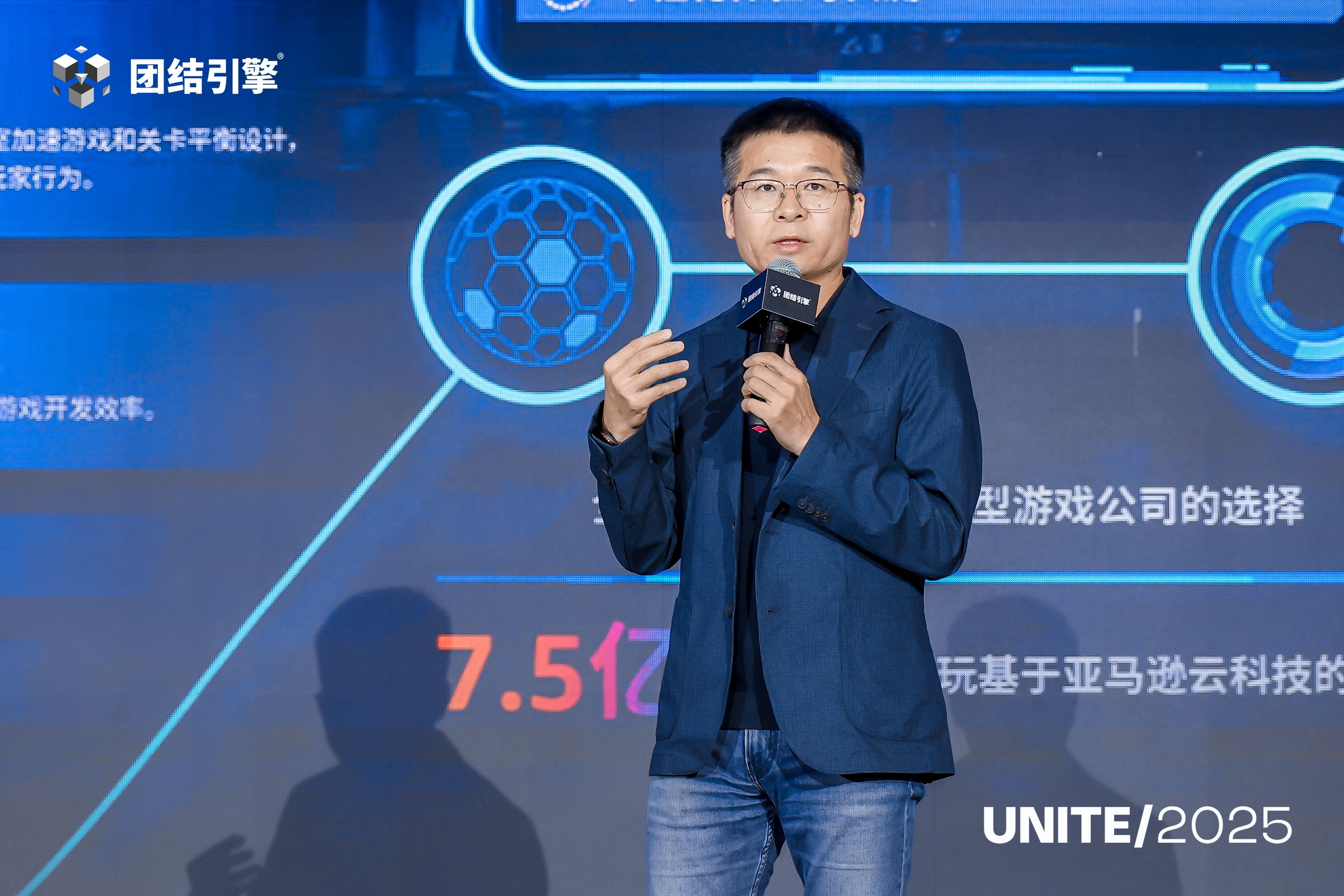
AI创业不再“烧钱”烧硬件?亚马逊云科技揭秘:未来拼的是“烧脑”与场景
Huan Qiu Wang Zi Xun· 2025-10-31 04:05
Core Insights - Amazon Web Services (AWS) has successfully concluded its third startup accelerator program in Beijing, attracting 35 AI startups across various cutting-edge sectors, including generative AI and Agentic AI [1][4] - 90% of participating startups have engaged with top investment institutions and large enterprises, with over 40% officially joining the AWS Partner Network (APN) [1][4] - The current phase of AI development is characterized by a shift towards Agentic AI as a primary focus for tech entrepreneurship, with startups increasingly targeting global markets from inception [2][3] Group 1: Startup Ecosystem - The accelerator program is part of AWS's global initiative to empower startups, collaborating with over 30 venture capital and industry institutions to support the 35 participating companies [1][4] - The trend of "born global" startups is prevalent, with many entrepreneurs possessing international backgrounds and a global vision, reflecting the vast market potential for AI solutions [2][3] Group 2: Technological Advancements - The lowering of technical barriers due to the maturation of generative AI technology and the evolution of cloud service platforms is enabling more startups to innovate [4][5] - AWS provides a comprehensive four-layer generative AI technology stack, allowing entrepreneurs to focus on high-value innovation rather than complex infrastructure [4][5] Group 3: Entrepreneurial Landscape - The profile of entrepreneurs has evolved, with many coming from large tech companies or possessing advanced academic backgrounds, leading to a focus on vertical applications rather than generic tools [6][8] - Startups are increasingly concentrating on specific industries, such as creative fields and SaaS products, indicating a shift from horizontal to vertical innovation [6][8] Group 4: Future Directions - AWS aims to continue its role as a long-term enabler for startups by enhancing its AI capabilities, integrating global resources, and deepening connections with venture capital and industry networks [9] - The company emphasizes its commitment to being a leading service provider, helping startups with early-stage innovation and global business expansion [9]

暴增40倍,上海杀出超级独角兽:清华70后大叔造GPU,年入7亿
3 6 Ke· 2025-10-31 00:08
Core Viewpoint - The GPU industry is experiencing rapid growth, with new players like Muxi emerging to challenge established companies like Cambricon. Muxi plans to go public on the Sci-Tech Innovation Board, aiming to provide autonomous computing power for China's AI industry [1][2]. Group 1: Company Overview - Muxi was founded in September 2020 in Shanghai by key former AMD employees, including Chen Weiliang, who has extensive experience in GPU production [3][4]. - The company has raised over 2 billion yuan in funding, with significant investments from various institutions, and reported revenue of 53.02 million yuan in 2023 [5]. - Muxi's revenue is projected to grow explosively, reaching approximately 743 million yuan in 2024, with a business model that includes direct sales and distribution [5]. Group 2: Market Dynamics - The GPU market is driven by the demand for computing power, particularly in AI training and scientific simulations, with the rise of generative AI further expanding market needs [2][8]. - The GPU industry has evolved through three phases, with the current phase characterized by the integration of cloud and edge computing and multi-GPU interconnect technology [9]. - Despite the dominance of global players like NVIDIA and AMD, domestic companies are narrowing the gap, with Muxi showing the highest revenue growth rate in the industry at 4074.52% from 2022 to 2024 [9][11]. Group 3: Opportunities and Challenges - The domestic GPU market presents significant opportunities for new players, particularly in areas like domestic substitution, intelligent computing center construction, and AI for Science [12]. - However, challenges include rapid algorithm iteration, high capital requirements, and the complexity of building an ecosystem that integrates chips, software, and applications [14][15].
西部数据(WDC.US)踏上存储“超级周期” Q3业绩超预期引爆盘后大涨逾10%
智通财经网· 2025-10-30 23:41
Core Viewpoint - Western Digital reported strong Q3 2025 results, exceeding analyst expectations in revenue, operating profit, and earnings per share, leading to a significant increase in stock price [1][2]. Financial Performance - Q3 revenue reached $2.82 billion, a year-over-year increase of 27.4%, surpassing analyst expectations of $2.74 billion by 2.8% [1]. - Adjusted earnings per share (EPS) were $1.78, exceeding the forecast of $1.58 by 12.9% [1]. - Adjusted operating profit was $856 million, above the expected $756.4 million, with an operating margin of 30.4%, exceeding expectations by 13.2% [1]. - Free cash flow improved significantly to $599 million, compared to a negative $61 million in the same quarter last year [1]. - Inventory turnover days increased to 80 days, up from 76 days in the previous quarter [1]. Market Environment - The CEO highlighted strong operational performance driven by growing demand for cloud data storage [2]. - Western Digital has experienced a decline in revenue over the past five years, averaging a 9.4% annual decrease, indicating relatively lower business quality compared to industry standards [2]. - The semiconductor industry is characterized by cyclical trends, necessitating preparedness for alternating periods of high growth and revenue contraction [2]. Future Outlook - Analysts project a 14.9% revenue growth for Western Digital over the next 12 months, indicating stronger momentum from new products and services [3]. - The rise of generative AI is expected to significantly impact large enterprises, with Western Digital gaining market attention despite being less known compared to giants like NVIDIA and AMD [3]. - Current inventory turnover days stand at 80, which is 34 days lower than the five-year average, suggesting no immediate signs of excessive inventory buildup [3].

腾讯研究院AI速递 20251031
腾讯研究院· 2025-10-30 16:06
Group 1: OpenAI Developments - OpenAI has open-sourced the gpt-oss-safeguard safety classification model in both 120 billion and 20 billion parameter versions, which can directly understand policy documents for content classification without retraining [1] - The model outperforms GPT-5-thinking in multiple benchmark tests, achieving industry-best cost-effectiveness on content moderation evaluation sets and the ToxicChat dataset [1] - OpenAI has internally utilized this technology (Safety Reasoner prototype) for image generation and products like Sora 2, with safety reasoning computing accounting for 16% of its operations [1] Group 2: Cursor 2.0 Update - Cursor has released version 2.0, introducing its first self-developed coding model, Composer, which generates at a speed of 250 tokens per second, four times faster than similar leading systems [2] - Composer employs a mixture of experts (MoE) architecture optimized for software engineering through reinforcement learning, achieving cutting-edge performance in Cursor Bench evaluations [2] - The new interface supports multi-agent parallel collaboration, allowing different models to process the same task simultaneously based on git worktree or remote machines, and includes native browser tools for testing iterations [2] Group 3: Sora New Features - Sora has launched the Character Cameo feature, enabling consistency for non-human cameo characters and allowing extraction of virtual characters from generated videos for self-cycling [3] - New video splicing functionality and community rankings have been added, categorizing the most used cameo characters and the most remixed videos [3] - Sora has temporarily lifted the invitation code restriction for direct registration in the US, Canada, Japan, and South Korea, coinciding with the launch of its Android version to capture the Android market [3] Group 4: MiniMax Speech 2.6 Update - MiniMax Speech 2.6 has achieved an end-to-end latency of under 250 milliseconds, reaching industry-leading levels and becoming the underlying technology engine for global voice platforms like LiveKit and Pipecat [4] - The new version supports direct conversion of non-standard text formats such as URLs, emails, phone numbers, dates, and amounts without cumbersome text preprocessing, facilitating smoother information transmission [4] - Fluent LoRA functionality allows for the generation of fluent and natural speech even from recordings with accents or non-native fluency, supporting over 40 languages [4] Group 5: Emu3.5 Launch - Beijing Zhiyuan has released the Emu3.5 multimodal world model, based on a 34 billion dense transformer pre-trained on over 10 trillion tokens (approximately 790 years of video), revealing the "multimodal scaling paradigm" for the first time [5] - It employs a "next state prediction" objective to achieve visual narrative and guidance capabilities, matching the performance of Gemini-2.5-Flash-Image in image editing tasks [5] Group 6: OpenAI IPO Plans - OpenAI plans to submit its IPO application as early as the second half of 2026, aiming to raise at least $60 billion, with a valuation potentially reaching $1 trillion, making it the largest IPO in history [6] - Following a restructuring, the non-profit organization will hold 26% of the newly formed OpenAI Group, while Microsoft will relinquish exclusive cloud service priority but will receive an additional $250 billion Azure procurement contract [6] - The new agreement stipulates that the realization of AGI must be verified by independent experts, extending Microsoft's rights to use OpenAI technology until 2032, while allowing it to conduct AGI research independently or collaborate with third parties [6] Group 7: OpenFold3 Release - OpenFold Consortium has released a preview of OpenFold3, trained on over 300,000 experimental structures and 13 million synthetic structures, capable of predicting interactions between proteins and small molecule ligands, as well as nucleic acids [7] - In single-stranded RNA structure prediction, its performance rivals that of AlphaFold3, featuring a modular design that allows users to modify the model for native data interpretation [7] - All components are licensed under Apache 2.0, permitting commercial use, with companies like Novo Nordisk, Outpace Bio, and Bayer planning to leverage the model to accelerate research [7] Group 8: Anthropic Research Findings - Anthropic's latest research reveals that Claude can detect and report concepts injected by humans, achieving a 20% success rate in introspection for the strongest models [8] - The research team found that models could defend and fabricate reasons for their "errors" based on falsified internal states through retrospective concept injection [8] - Experiments demonstrate that AI possesses deliberate control over internal representations, marking the emergence of "reachable consciousness," though it remains distant from having subjective experiences or "phenomenal consciousness" [8] Group 9: Grokking Research Insights - Former Meta FAIR head Tian Yuandong published research on Grokking, proving mathematically that models require only O(M log M) samples for generalization, significantly lower than the traditional M² requirement [9] - He revealed that the essence of "insight" is a multi-peak non-convex optimization process, where increased data raises the "generalization peak" above the "memory peak," leading to a transition from memory to generalization [9] - Tian emphasized that representation learning is foundational to all intelligent capabilities, with the loss function serving merely as a proxy signal for optimization, and true breakthroughs stemming from changes in representation methods [9]

马斯克最大对手完成变身 史上最大IPO即将来临
Xin Lang Ke Ji· 2025-10-30 15:31
Core Insights - OpenAI has successfully completed its restructuring plan, transitioning from a non-profit AI research organization to a profit-oriented technology giant, with an estimated valuation of $500 billion, positioning itself as a leader in the generative AI industry and a major competitor to Elon Musk [1][2][10] - The company is expected to pursue an initial public offering (IPO) around 2027, potentially setting a record for fundraising [1][2] Group 1: Transformation and Impact - OpenAI's transformation has significantly influenced the AI industry and global infrastructure, marking a dramatic shift from its original mission of ensuring AGI benefits all humanity [2][6] - The restructuring has led to strategic partnerships with major tech companies like Microsoft, Oracle, NVIDIA, AMD, and Broadcom, intertwining OpenAI's interests with the broader AI ecosystem [2][3][6] - Following the announcement of the restructuring, stock prices for NVIDIA and Microsoft surged, reaching new market capitalizations of $5 trillion and $4 trillion, respectively [2] Group 2: Financial Structure and Control - OpenAI's new structure includes a dual-layer system where OpenAI Group PBC operates as a profit entity under the supervision of a non-profit foundation, which retains control over the strategic direction [4][6] - Microsoft remains the largest external investor with a 27% stake valued at approximately $135 billion, while the non-profit foundation holds about 26% of the equity, valued at around $130 billion [4][6] - The restructuring has lifted previous restrictions on OpenAI's fundraising capabilities, paving the way for its IPO [6][7] Group 3: Strategic Partnerships and Agreements - OpenAI has entered into significant agreements, including a $300 billion cloud computing deal with Oracle and a commitment to purchase $250 billion in cloud services from Microsoft Azure [19][21] - The company is also collaborating with NVIDIA for up to $100 billion in GPU procurement and has agreements with AMD and Broadcom for custom chip development [21][22] - These partnerships are designed to secure essential resources for OpenAI's ambitious infrastructure projects, which are projected to exceed $1.5 trillion in total value [18][22] Group 4: Competitive Landscape and Challenges - Elon Musk, a co-founder of OpenAI, has been critical of the company's shift towards profit, viewing it as a betrayal of its original mission, and has attempted to disrupt its transformation through lawsuits and acquisition attempts [10][12][14] - OpenAI's aggressive investment strategy has raised concerns about its financial sustainability, with projections indicating significant losses and a challenging cost structure [22][23] - The company's ambitious plans hinge on the successful execution of its IPO, which is seen as essential for funding its extensive infrastructure investments [23]
