绿色转型

Search documents
首个绿色贸易专项文件出台 多部门详解下阶段工作重点
Zheng Quan Ri Bao Wang· 2025-10-31 14:05
Core Viewpoint - The Ministry of Commerce has issued the "Implementation Opinions on Expanding Green Trade," marking the first specialized policy document in the field of green trade, focusing on innovation and addressing existing weaknesses in China's green trade development [1][2]. Group 1: Green Trade Development - The "Implementation Opinions" highlight the need to enhance the capacity for green low-carbon development among enterprises and to explore carbon reduction potential in logistics [1]. - The Ministry of Commerce aims to improve the "green content" of high-standard free trade zones and integrate trade and environmental considerations into existing free trade agreements [2]. Group 2: Financial Support for Green Services - The People's Bank of China plans to lower financing thresholds and costs for light-asset and green service trade enterprises through green credit, bonds, and equity funds [3]. - Future efforts will focus on applying green finance standards and encouraging financial institutions to support various production service sectors related to green trade [3]. Group 3: Green Factory Development - The Ministry of Industry and Information Technology has created 451 green design enterprises and 6,430 national green factories, with green factory output accounting for over 20% [4]. - The 2025 national green factory selection and cultivation work is ongoing, aiming to further promote green design and manufacturing [4]. Group 4: Green Product Certification - The State Administration for Market Regulation has established a green product certification and labeling system covering 122 product categories, issuing nearly 40,000 certification documents [5]. - Future initiatives will focus on enhancing the green product certification system to support the green development of foreign trade enterprises [6].
电投能源荣获荣膺第二十七届上市公司金牛奖两项大奖
Zhong Guo Zheng Quan Bao· 2025-10-31 08:29
Core Points - The 2024 "Most Investment Value Award" was awarded to Electric Power Investment Energy for its rapid growth, stable market performance, and outstanding leadership [1] - The chairman of Electric Power Investment Energy, Wang Weiguang, received the "Golden Bull Entrepreneur Achievement Award" [1] - The Golden Bull Award has been held for 27 years and serves as an important benchmark for measuring the comprehensive strength of listed companies in China [1] Company Overview - Since its listing in 2007, Electric Power Investment Energy has adhered to the principles of green transformation and high-quality development, creating a circular economy model integrating coal, new energy, electricity, and aluminum [2] - The company's market value has increased from 16.7 billion to approximately 57 billion [2] - Electric Power Investment Energy is focused on enhancing its core competitiveness in clean energy and aims to become a significant player in the clean comprehensive energy sector [2]

工信部:计划到2030年绿色工厂产值占比提高至40%
中国能源报· 2025-10-31 08:05
Core Viewpoint - The Chinese government is implementing a green factory enhancement plan aiming for 40% of the output value from green factories at national, provincial, and municipal levels by 2030, alongside promoting green supply chains and zero-carbon parks [1][2]. Group 1: Green Factory Initiative - The Ministry of Industry and Information Technology (MIIT) plans to enhance the quality and expand the scope of green factories, targeting a 40% output value share by 2030 [1]. - The initiative includes actions to promote green supply chains and facilitate the green transformation of high-tech zones and industrial parks [1]. Group 2: Green Trade Expansion - MIIT is encouraging foreign trade enterprises to adopt green design and production practices, aiming to accelerate the green transformation of industries and inject new momentum into green trade [1]. - The focus is on enhancing value creation by guiding enterprises in green design and manufacturing to increase product added value and achieve "green premiums" in international markets [1]. Group 3: Current Achievements - As of the end of 2024, China has established 451 green design enterprises and developed over 40,000 green products [2]. - The country has cultivated 6430 national green factories and 491 green industrial parks, with the output value share of national green factories exceeding 20% [2].

今世缘发布三季报 逆势中彰显韧性
Zheng Quan Ri Bao Wang· 2025-10-31 06:47
Core Viewpoint - The Chinese liquor industry is undergoing a deep adjustment period in 2025, characterized by a "volume reduction game," with a significant decline in production and sales. Jiangsu Jinshiyuan has shown relative resilience amidst this downturn through strategic initiatives in sports marketing, green transformation, and technological innovation [1][5]. Industry Overview - The liquor production volume from January to September 2025 was 2.655 million kiloliters, a year-on-year decrease of 9.9%, indicating overall industry pressure [1]. - Among 20 listed liquor companies, only 2 achieved both revenue and net profit growth in the first three quarters, with 12 companies experiencing a net profit decline exceeding 20% [2]. Company Performance - Jinshiyuan reported a revenue of 8.881 billion yuan and a net profit of 2.549 billion yuan for the first three quarters, with year-on-year declines of 10.66% and 17.39%, respectively, which are in line with industry averages [2][5]. - The company has effectively responded to market challenges by focusing on product structure and channel cooperation, although it faces risks related to its reliance on a single market and high-end scenarios [1]. Strategic Initiatives - Jinshiyuan has implemented a "sports marketing + green transformation + technological innovation" strategy to strengthen its market position and expand its brand nationally [1]. - The company has engaged in sports marketing by sponsoring local football leagues, enhancing brand recognition and emotional connection with consumers [2][3]. Technological Advancements - Jinshiyuan has established the first intelligent brewing production line in the domestic liquor industry, utilizing IoT and big data for precise production control, significantly improving output and quality [4]. - The company has achieved zero-carbon factory certification, becoming one of the first in the industry to do so, reflecting its commitment to green transformation [4]. Market Outlook - Despite short-term pressures, industry experts believe that trends toward consumption upgrades and brand concentration remain unchanged. Jinshiyuan's strategies are seen as building a "moat" against cyclical risks [5]. - Analysts expect Jinshiyuan to adjust its development pace and release channel pressure in the short term while gradually expanding its market presence in the long term [5].

长江经济带如何迈向“十五五”?统一市场与绿色转型成关键
Jing Ji Guan Cha Bao· 2025-10-31 06:43
Core Insights - The Longjiang Economic Belt is crucial for China's high-quality development and modernization, spanning 11 provinces and accounting for over 40% of the national economy [4][7] - The upcoming "15th Five-Year Plan" emphasizes sustainable economic growth, ecological protection, and the establishment of a unified market [5][6] Group 1: Ecological Protection and Economic Growth - During the "14th Five-Year Plan," the Longjiang Economic Belt achieved significant ecological improvements, with water quality maintaining a Class II standard for five consecutive years and a notable increase in aquatic biodiversity [2] - The shift from a "shortage" to an "excess" economy necessitates a focus on consumption and demand expansion, alongside investment optimization [2][5] Group 2: Unified Market and Regional Coordination - The construction of a unified market in the Longjiang Economic Belt is essential for integrating into the new development framework, although challenges such as institutional barriers and market efficiency remain [3] - The Longjiang Economic Belt connects major urban clusters, contributing over 40% to the national population and GDP, and is poised to become China's fourth economic growth pole [3][4] Group 3: Strategic Development and Innovation - The strategic focus for the Longjiang Economic Belt is shifting from physical connectivity to functional collaboration and value co-creation, with an emphasis on high-quality development [4] - Key recommendations for the "15th Five-Year Plan" include enhancing transportation networks, ecological governance, and public service collaboration [4][6] Group 4: Future Outlook and Challenges - The "15th Five-Year Plan" is seen as a critical period for achieving sustainable economic growth of around 5% annually, with a focus on improving consumer income and employment systems [5][6] - The Longjiang Economic Belt is expected to evolve into a more ecologically friendly and technologically advanced economic corridor, addressing the balance between development and environmental protection [6][7]
“十五五”规划建议解读:“十五五”:量变到质变的供给侧兼顾需求平衡
CMS· 2025-10-31 06:42
Strategic Positioning and Situation Assessment - The "15th Five-Year Plan" serves as a critical blueprint for achieving socialist modernization, emphasizing a transition from quantity accumulation to quality breakthroughs[3] - The period is characterized by increased strategic opportunities and risks, with heightened uncertainties and challenges, including intensified great power competition[3] Development Goals - Seven quality-oriented goals are established, focusing on high-quality development, technological self-reliance, and significant improvements in social civilization and ecological progress[3] - The plan aims for a notable increase in the resident consumption rate and total factor productivity, alongside the construction of a unified national market[3] Key Tasks - The modern industrial system is prioritized, indicating a shift in policy focus from technological breakthroughs to the integration of technology and industry[3] - The emphasis on expanding institutional openness reflects a transition from market access to institutional alignment, particularly in the service sector[3] Supply-Side and Demand Balance - The plan highlights the role of technological innovation in generating new supply and stimulating demand, aiming to create a healthier and more stable economic cycle[3] - It emphasizes the construction of a strong domestic market to solidify the foundation of domestic demand, ensuring affordability and accessibility[3] Economic System and Market Structure - The "15th Five-Year Plan" introduces a new economic model characterized by domestic demand-led growth, with a focus on enhancing macroeconomic policy consistency[3] - Financial reforms aim to enhance fiscal sustainability and the effectiveness of active fiscal policies, addressing current fiscal challenges[3] International Engagement - The plan outlines a strategy for expanding high-level openness, with a focus on institutional cooperation and enhancing the competitiveness of foreign trade[3] - It emphasizes the importance of promoting the internationalization of the Renminbi and improving cross-border payment systems[3] Risk Considerations - Geopolitical risks and the potential for domestic policy implementation falling short of expectations are highlighted as significant concerns[3]
专访许季刚:商业模式创新需将ESG、绿色转型纳入产品开发体系
2 1 Shi Ji Jing Ji Bao Dao· 2025-10-31 05:13
Core Insights - The global climate governance is transitioning from "negotiation rules" to "delivery results," with China's 14th Five-Year Plan and the new round of Nationally Determined Contributions (NDC) emphasizing systematic and in-depth requirements for corporate green and low-carbon transformation [3][4] - ESG practices are becoming a benchmark for assessing long-term resilience, innovation capability, and value creation potential of companies, necessitating a shift from compliance disclosure to value creation [4][6] - Key technologies and institutional breakthroughs for carbon reduction, particularly CCUS (Carbon Capture, Utilization, and Storage), are essential for achieving China's NDC goals and effective green transformation [4][13] Group 1: Green Development Experience - Over the past decade, China has built the world's largest and fastest-growing renewable energy system, with a continuous increase in the share of non-fossil energy consumption [5] - The "new three items" such as new energy vehicles and photovoltaic components have gained strong competitiveness in international markets, providing a robust industrial foundation for the 14th Five-Year Plan's focus on constructing a new power system [5][6] - The top-level design of policies for circular economy has become increasingly refined, with over 40 provincial and ministerial-level circular economy plans established since the 18th National Congress of the Communist Party [5] Group 2: Business Model Innovation - Green development must align green requirements with corporate profitability, rather than viewing them as opposing forces, which is essential for advancing green development [6] - Chinese enterprises need to enhance the innovativeness of their business models and adapt their technological innovation capabilities accordingly [6] - Companies should integrate green transformation into product development and engage downstream customers with green product demands [6] Group 3: Energy Security and Technological Innovation - Energy security is the primary guarantee for green transformation, requiring a systematic approach rather than relying on a single technology or policy [7] - A new power system should be supported by technologies that enhance flexibility, such as energy storage and demand-side response [7] - The establishment of a pricing signal mechanism that accurately reflects the value of power supply and demand is crucial for guiding efficient allocation of flexible resources [7] Group 4: Carbon Disclosure and Supply Chain Management - Supplier carbon disclosure should be based on clear standards, with leading enterprises determining and providing templates for suppliers to fill out [8][9] - To ensure authenticity and credibility, leading enterprises should involve third-party organizations with established methodologies for verification [8] - Leading enterprises can collaborate with peers and upstream suppliers to promote the establishment of carbon emission standards in industries lacking national standards [9] Group 5: Supplier ESG Performance Improvement - Leading enterprises should adopt a tailored approach to drive sustainable reform in their supply chains, considering the varying capabilities of suppliers [10] - Actions should extend beyond ESG assessments to include training and optimization for suppliers, fostering a supportive environment for improvement [10][11] - Specific corrective suggestions should be provided to suppliers with low ESG scores, along with incentives such as shorter payment terms and better procurement prices [11] Group 6: Carbon Emission Accounting - Companies can utilize consulting firms to develop carbon emission accounting models based on GHG Protocol standards, ensuring alignment with international and domestic standards [12] - Carbon emissions should be categorized into major and minor categories to identify key emission sources and potential reduction areas [12] - Cross-industry best practices should be leveraged to clarify specific carbon reduction directions [12] Group 7: Future Key Technologies and Breakthroughs - CCUS is a critical component of achieving global net-zero goals, with significant progress in engineering practices in China [13][14] - Further development of CCUS requires breakthroughs in policies, technologies, and industry collaboration [13][14] - A strong incentive and regulatory policy framework is necessary to support CCUS projects and ensure their orderly development [14]

李成钢:将持续推进自贸谈判 大力推动双向市场开放、削减非关税壁垒
Sou Hu Cai Jing· 2025-10-31 03:36
Group 1 - The core viewpoint emphasizes that green transformation is a significant trend and growth engine for the global economy, while also facing challenges from unilateralism and protectionism [1] - China is committed to an open and cooperative approach, actively participating in global green governance and creating a favorable international environment for green trade development [1] Group 2 - China will deeply engage in global governance of green trade, participating in discussions on green development topics at major international forums such as G20 and APEC, and has proposed a framework initiative for international economic cooperation on digital economy and green development, which has received positive responses from over 50 economies [2] - The country aims to enhance the "green content" of its high-standard free trade zone network by incorporating trade and environmental issues into existing free trade agreements, such as the recently signed China-ASEAN Free Trade Area 3.0 upgrade protocol, which includes a chapter on green economy [2] - China is working on aligning domestic reforms with international green standards, focusing on improving green product standards, certification, and labeling systems, and accelerating mutual recognition of standards with major trading partners [2]
李成钢:将持续推进自贸谈判,大力推动双向市场开放、削减非关税壁垒
Mei Ri Jing Ji Xin Wen· 2025-10-31 03:17
每经AI快讯,据中国网直播,10月31日,国务院新闻办公室举行国务院政策例行吹风会,商务部国际 贸易谈判代表兼副部长李成钢表示,当前绿色转型是世界经济重要的发展趋势和增长引擎,也是国际社 会高度关注的新兴合作领域,但是也面临着单边主义、保护主义的挑战。在这样的背景下,中国始终秉 持开放合作态度,积极参与全球绿色治理,重点从三个方面着力,为绿色贸易发展营造良好的国际环 境。 二是持续提升高标准自贸区网络"绿色含量"。在已经签署的自贸协定中,我们推动纳入了贸易与环境的 相关内容。比如,在前两天也就是28日刚刚签署的中国-东盟自贸区3.0版升级议定书中,就设立了绿色 经济专章,并将绿色贸易列为优先合作领域。此外,在与瑞士、韩国、秘鲁的自贸协定中或者升级谈判 中,都包含了环境保护、绿色产业合作等方面内容。我们将持续推进自贸谈判,大力推动双向市场开 放、削减非关税壁垒、提升规则承诺水平,推动标准与合格评定合作,为企业创造公平、透明、可预期 的市场环境。 三是深化国内改革对接国际绿色标准。我们将对国际标准和经贸规则进行认真研究,并持续对接,推进 在环境标准等领域进一步深化改革,促进国内产业绿色转型升级。目前,我们正在会同 ...
李成钢:将持续推进自贸谈判
Sou Hu Cai Jing· 2025-10-31 03:13
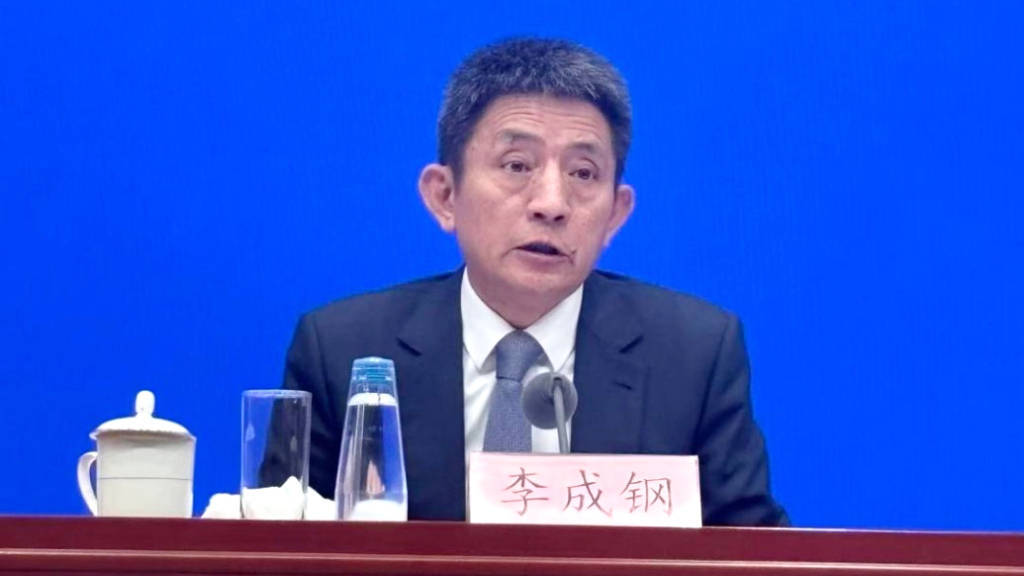
二是持续提升高标准自贸区网络"绿色含量"。在已经签署的自贸协定中,我们推动纳入了贸易与环境的相关内容。比如,在前两天也就是28日刚 刚签署的中国-东盟自贸区3.0版升级议定书中,就设立了绿色经济专章,并将绿色贸易列为优先合作领域。此外,在与瑞士、韩国、秘鲁的自贸 协定中或者升级谈判中,都包含了环境保护、绿色产业合作等方面内容。我们将持续推进自贸谈判,大力推动双向市场开放、削减非关税壁垒、 提升规则承诺水平,推动标准与合格评定合作,为企业创造公平、透明、可预期的市场环境。 10月31日,商务部国际贸易谈判代表兼副部长李成钢在国新办新闻发布会上介绍绿色贸易相关情况。智通财经记者赵利新 图 三是深化国内改革对接国际绿色标准。我们将对国际标准和经贸规则进行认真研究,并持续对接,推进在环境标准等领域进一步深化改革,促进 国内产业绿色转型升级。目前,我们正在会同相关部门,推动完善绿色产品标准、认证、标识体系,加快与主要贸易伙伴实现标准互认。推动中 国绿色产品、技术和服务更好地融入全球市场。 一是深度参与绿色贸易的全球治理。我们将在二十国集团、金砖国家、亚太经合组织、联合国贸发会议等重要的国际场合,积极参与绿色发展相 关议 ...