
一带一路倡议

Search documents
“突尼斯始终坚持一个中国原则”
人民网-国际频道 原创稿· 2025-11-29 03:52
穆罕默德·斯马维表示,互不干涉内政和相互尊重主权原则是中国始终坚持和强调的原则。也正是 因为这个原因,中国积极致力于推进建设更加公正合理的国际秩序。虽然有一些强权国家抛弃了这个原 则,但各国主权平等是联合国宪章宗旨和原则,其重要性不容削弱。 穆罕默德·斯马维强调:"突尼斯始终坚持一个中国原则。突尼斯自身历史上就曾遭受过不公正对 待。突尼斯也曾经被分裂,但随着地缘政治条件变化最终实现统一。中国现在还没有完全统一,但总有 一天将实现完全统一。" 穆罕默德·斯马维表示,突中合作互利共赢。中方甚至在很多项目上没有获利。比如中方在斯法克 斯建设的援突综合医院以及援突尼斯外交培训学院等。这些建筑不可能凭空产生。"我们在完全保有主 权的前提下,在同中国合作中获得了众多实惠。" 人民网迪拜11月28日电 (记者管克江)突尼斯主流媒体《新闻报》近日刊发了对突尼斯前驻华大 使穆罕默德·斯马维的专访。穆罕默德·斯马维在接受采访时表示,随着中国日益成为国际舞台的重要力 量,突尼斯不断加强同中国在互不干涉内政、互利互补和战略性开放基础上的关系。突尼斯始终坚持一 个中国原则,并相信中国必将完全统一。 穆罕默德·斯马维指出,新时代中国取得 ...
为应对时代挑战贡献更多上合方案(国际论坛)
Ren Min Ri Bao· 2025-11-28 22:00
Group 1 - The core viewpoint emphasizes the importance of deepening cooperation among Shanghai Cooperation Organization (SCO) member states to address global challenges and enhance South-South cooperation, guided by the "Shanghai Spirit" [1][3] - The 2025 SCO Tianjin Summit will see President Xi Jinping propose a global governance initiative, urging the SCO to take a leading role in promoting a fair and just international order [1] - Current global uncertainties, such as tariff disruptions and geopolitical conflicts, necessitate a commitment to building a community with a shared future within the SCO [1] Group 2 - Member states are enhancing security cooperation to combat "three forces," transnational organized crime, and drug trafficking, contributing to regional and global stability [2] - China advocates for an open world economy, opposing protectionism, and aims to promote inclusive development through industrial investment and financial cooperation [2] - In the first seven months of this year, China's trade with other SCO member states reached 2.11 trillion yuan, marking a historical high for the same period [2] Group 3 - Cultural cooperation is being strengthened through various forums and events, fostering a shared value consensus among SCO member states [3] - The establishment of mechanisms for think tank cooperation and increased cultural exchanges aim to enhance mutual understanding and support new international development cooperation [3]
【环时深度】南方国家对华认知何以不断“扩容”
Huan Qiu Shi Bao· 2025-11-27 22:48
Core Insights - The article discusses the increasing recognition and understanding of China among various countries, particularly in the Global South, emphasizing the shift from cultural perceptions to a focus on China's economic growth drivers and institutional frameworks [1][5]. Group 1: Chinese Language Education - Chinese language education is rapidly expanding in Egypt, with 28 universities and over 20 high schools offering Chinese courses, and the number of students at the Confucius Institute at Cairo University rising from under 30 to nearly 4,000 [2]. - The UAE has initiated a "Hundred Schools Project" for Chinese language teaching, with 171 schools currently offering Chinese courses and 71,000 students learning the language [2]. Group 2: Research Institutions and Scholars - The number of research institutions and scholars focusing on China in the Middle East and Africa is increasing, with notable institutions in Egypt, such as the Pyramid Political and Strategic Studies Center and the Cabinet Information and Decision Support Center, producing experts on China [2][3]. - In Nigeria, the establishment of research institutions related to China has surged since 2018, with companies like Dangote Group creating research centers focused on China-Nigeria cooperation [3]. Group 3: Shifts in Research Focus - The focus of research on China has shifted from ancient civilization to development paths, cooperation models, and institutional advantages, reflecting a broader understanding of China's role in global affairs [5][8]. - In Indonesia, the research on China has evolved through three stages, from focusing on China's economic growth to exploring the Belt and Road Initiative and now deepening understanding of China's technological innovations [7]. Group 4: Economic and Political Influence - The growing interest in China among Global South countries is driven by China's increasing economic and political influence, with countries seeking to learn from China's experiences in poverty alleviation, economic growth, and infrastructure development [8][9]. - The trade volume between China and Arab countries is projected to reach $407.4 billion by 2024, prompting a need for Arab businesses to understand Chinese market rules and operational models [9]. Group 5: Geopolitical Context - Middle Eastern countries are increasingly valuing strategic cooperation with China, recognizing its constructive role in global issues such as climate change and energy crises [10]. - The deepening understanding of China has led to tangible development benefits for countries like Egypt, which has become the first African nation capable of satellite assembly and testing [10].
为人类减贫事业贡献中国力量
Jing Ji Ri Bao· 2025-11-27 21:41
Core Insights - China's poverty alleviation achievements have garnered international attention, significantly altering its development landscape and advancing global poverty reduction efforts [1] - Over 800 million people have successfully escaped poverty in China since the reform and opening up, achieving the United Nations' 2030 sustainable development goal a decade early, contributing over 70% to global poverty reduction [1] - The global poverty rate has decreased from 38% in 1990 to an estimated 8.5% in 2024, largely due to China's contributions [1] Group 1 - China's poverty alleviation strategy is characterized by a people-centered approach, focusing on development to promote equity, reform to stimulate motivation, and institutional guarantees for sustainability [2] - The Chinese model of poverty alleviation is not a simple replication of traditional aid models or externally imposed development plans, but rather a self-reliant approach tailored to its national context [2] - China's success serves as a significant motivation for developing countries, demonstrating that sustainable development is achievable through self-exploration and prioritizing development [2] Group 2 - China is not only an active participant in global poverty alleviation but also a key driver of the process, linking its development closely with global progress [2] - The Belt and Road Initiative has mobilized approximately one trillion USD in investments, helping 40 million people escape poverty [2] - China has implemented various cooperation projects tailored to local needs, improving the lives of people in developing countries through initiatives like irrigation, infrastructure, and agricultural advancements [2] Group 3 - Modernization is viewed as a shared right for all countries, and collective development requires concrete actions rather than mere rhetoric [3] - China expresses willingness to collaborate with the global South to advance poverty alleviation efforts and contribute to a new chapter in the fight against poverty [3]
东方财富证券:25Q3业绩环比已现改善 重申煤炭板块震荡向上机会
智通财经网· 2025-11-25 06:30
25Q1-3煤炭板块归母净利同比-29%,25Q3板块归母净利312亿元、环比+22%,并且高于25Q1的297亿 元。2025Q1-3煤炭行业营业收入/成本9013/6564亿元,同比-15%/-13%,归母净利合计863亿元,同 比-29%(剔除神华后473亿元、同比-23%)。25Q3营业收入/成本3188/2299亿元,环比+11.4%/+9.9%,归 母净利合计312亿元,环比+22.2%(剔除神华后168亿元、环比+30.7%)。该行认为,7月以来随着煤炭市 场回暖,煤炭售价明显提升,25Q3业绩已经高于25Q1、25Q2的297、255亿元以及24Q4的303亿元,在 25H1持续煤价压力下,主要上市煤企持续降本增效,10月以来随着煤价持续回升以及旺季行情可期, 25Q4业绩有望继续环增。 25Q1-3煤炭行业盈利和现金流指标环比改善,头部动力煤公司维持盈利韧性 25Q1-3样本公司(剔除焦炭公司和安源煤业)平均ROE为2.7%,年化后较2024年9.6%下降6.1pct。25Q3样 本公司账面平均现金流127.4亿元,较25H1的135亿元下降5.7%,较24年底基本持平。2025Q1-3煤炭 ...

西藏樟木口岸入境游旅客翻倍增长
Zhong Guo Xin Wen Wang· 2025-11-24 13:45
Core Insights - The number of inbound foreign tourists at the Zhangmu Port in Tibet has increased significantly, with a total of 18,700 visitors recorded from January to October this year, representing a year-on-year growth of 62 times [1][3]. Group 1: Growth Factors - The growth in inbound tourism is attributed to the implementation of the "Belt and Road" initiative and the benefits of visa-free entry policies, which have attracted more international visitors for trade and tourism [3]. - A recent example includes a motorcycle tour group from six Eurasian countries, consisting of 24 members, who entered through Zhangmu Port to travel to various locations in Tibet [3]. Group 2: Customs and Efficiency Improvements - The Nyalam Customs under the Lhasa Customs has taken proactive measures to facilitate the smooth entry of self-driving tourists, including one-on-one guidance for customs procedures and information on regulations regarding vehicle guarantees and stay periods [3]. - The customs authority has optimized the "personnel + vehicle" customs clearance process to enhance efficiency, allowing for immediate reporting and inspection upon arrival at the port [3].


美国霸权算盘落空?美元动荡、国债失控,美国恐先熬死自己
Sou Hu Cai Jing· 2025-11-23 05:38
哈喽大家好,我是小李。近年来,国际舆论场上经常讨论一个问题:美国能否像冷战时期那样通过一系 列手段打败中国,重演击垮苏联的剧本?毕竟,在上世纪冷战结束后,美国成功通过军备竞赛、经济封 锁和意识形态围堵将苏联拖垮,至今这被视为霸权运作的经典案例。然而,新加坡总理李显龙在达沃斯 论坛上明确指出,中国绝不会像苏联那样崩溃。这一论断揭示了中美博弈和美苏冷战之间的核心差异。 在科技领域,美国以安全隐患为由,联合盟友对华为进行围堵,禁用中国的5G技术。然而,令美国意 想不到的是,中国在芯片国产化、人工智能和半导体等领域实现了突破,反而加速了自主研发的进程。 在军事领域,美国在亚太地区加大军事部署,加强与日本、韩国和菲律宾等国的军事同盟,试图重现冷 战时期的围堵体系。然而,中国始终坚持防御性国防路线,专注于精准突破,不追求军备竞赛,尤其是 在导弹技术、反介入和区域拒止系统等领域取得了显著成果。这样的做法既保障了国家安全,又避免了 军事投入拖累经济,让美国的以军备拖垮对手的策略彻底失效。 冷战期间,美苏两国长达数十年的对抗,重塑了全球格局。这场无硝烟的战争从欧洲的对峙到亚洲的热 战,从古巴导弹危机的核边缘博弈到阿富汗战场的代 ...
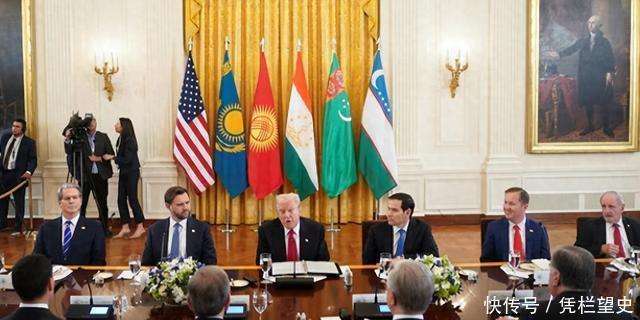
5国领导人被请进白宫,稀土联盟从后方合围中国?
Sou Hu Cai Jing· 2025-11-22 07:10
Group 1 - The meeting hosted by Trump with leaders from five Central Asian countries under the C5+1 framework marks the first time all leaders gathered in Washington, indicating its significance [1] - Key discussion topics included energy, critical minerals, and transportation logistics, with a particular focus on rare earth minerals, highlighting the urgent demand from the U.S. [3][5] - The U.S. faces challenges in independently extracting and refining rare earth minerals, as only China currently possesses the complete industrial chain for these processes [5][15] Group 2 - Central Asian countries, such as Kazakhstan, are not easily swayed by U.S. control, as they have established partnerships with China that provide comprehensive support, including technology and infrastructure [7][11] - U.S. efforts to increase its presence in Central Asia have intensified, with the U.S. Secretary of Commerce facilitating connections between American companies and Kazakhstan's sovereign wealth fund [8] - The U.S. employs a more aggressive approach, offering financial support while also threatening tariffs, which has led to dissatisfaction among Central Asian nations [10] Group 3 - Despite Kazakhstan's participation in U.S.-led initiatives, it continues to deepen its cooperation with China, reflecting a desire for a balanced multilateral approach rather than reliance on a single power [13] - The U.S. strategy to encircle China is deemed unrealistic, as China's advantages in the rare earth industry, particularly in refining and recycling, are significantly stronger [15][17] - China's strategic approach includes delineating between civilian and military rare earth applications, maintaining control over sensitive areas while fostering commercial cooperation [20][22]
乌兹别克斯坦总统米尔济约耶夫会见王毅
Xin Hua She· 2025-11-21 17:00
Core Viewpoint - The meeting between Uzbekistan President Mirziyoyev and Chinese Foreign Minister Wang Yi emphasizes the strong bilateral relations and mutual support between Uzbekistan and China, highlighting the commitment to cooperation and development despite external influences [1][2]. Group 1: Bilateral Relations - President Mirziyoyev expressed gratitude for China's long-term support and reaffirmed Uzbekistan's commitment to the One China principle, aiming to strengthen friendship and partnership with China [1]. - Wang Yi reiterated China's support for Uzbekistan's sovereignty and development initiatives, emphasizing the importance of the "New Uzbekistan" construction [1]. Group 2: Economic Cooperation - The two sides aim to accelerate strategic alignment and achieve a trade target of $20 billion, with aspirations for even greater goals [2]. - There is a focus on enhancing cultural exchanges and local cooperation to deepen the relationship between the two nations [2]. Group 3: Global Initiatives - Both parties expressed a desire to implement the four global initiatives proposed by President Xi Jinping and to strengthen collaboration within the framework of the Shanghai Cooperation Organization [2]. - The commitment to building a closer China-Central Asia community of shared destiny was highlighted, indicating a strategic partnership in regional development [2].
社评:《经济学人》不必为这份涉华民调而“惊讶”
Ren Min Wang· 2025-11-21 03:01
Group 1 - A recent global poll by The Economist indicates a significant increase in support for China as a preferred global leadership power, rising by 11 percentage points compared to last year, with positive sentiments observed across all surveyed regions, including the United States [1] - The poll reveals that younger respondents are more inclined to welcome China's leadership, reflecting a broader trend of increasing global favorability towards China, particularly among the youth demographic [1][2] - Other surveys corroborate these findings, with a Morning Consult poll showing China's global net favorability at 8.8, compared to the United States' -1.5, and a report from the Global Times indicating that nearly 60% of foreign respondents view China positively [1][2] Group 2 - Two prominent trends emerge from global polls: higher favorability towards China among Global South countries and a generally more positive perception of China among younger populations [2] - China's initiatives, such as the Belt and Road Initiative, have provided tangible development opportunities, creating 420,000 jobs and helping nearly 40 million people escape poverty through various infrastructure projects [2] - The positive impressions of China among younger generations suggest a sustainable trend in China's global image, as they appreciate China's development model, innovation, and cultural appeal [2] Group 3 - In the context of global governance challenges, China's rapid economic growth and long-term social stability provide a sense of certainty, contrasting with the short-sighted political operations of some Western countries [3] - China's governance model has gained recognition, particularly among developing countries, as it demonstrates that modernization does not equate to Westernization, offering new possibilities for development [3] - China's commitment to peaceful development and active participation in international peacekeeping and conflict resolution positions it as a stabilizing force in a complex global landscape [3] Group 4 - Despite some criticism and negative perceptions from certain quarters, the overall trend indicates that China's development progress and consistent diplomatic approach are increasingly welcomed and supported by more countries and peoples [4]