
交通强国

Search documents
交通强国:人享其行 物畅其流
Jing Ji Ri Bao· 2025-10-15 22:03
Core Insights - The construction of a comprehensive transportation system in China has made significant progress, with the main framework of the national comprehensive transportation network exceeding 90% completion, enhancing transportation capacity, service quality, and operational efficiency [1][3][4] Group 1: Infrastructure Development - The "6 axes, 7 corridors, and 8 channels" framework has been largely completed, connecting over 80% of county-level administrative regions and serving approximately 90% of the country's economic and population totals [3] - By the end of 2024, the railway operating mileage is expected to reach 162,000 kilometers, an increase of about 16,000 kilometers from the end of the 13th Five-Year Plan, with high-speed rail increasing by 10,000 kilometers [3] - The total length of highways is projected to reach 5.49 million kilometers, with an increase of approximately 290,000 kilometers, including an increase of 30,000 kilometers in expressways [3][4] Group 2: Technological Advancements - The application of intelligent technologies is accelerating, with the introduction of advanced construction methods such as "double-layer paving + 3D intelligent paving" to enhance road construction efficiency and quality [5][7] - The use of automation in logistics, including drones and autonomous vehicles, is being promoted to improve efficiency in warehousing, transportation, and delivery [5][7] - The introduction of robots for tasks such as tile laying in subway construction demonstrates the ongoing innovation in construction technology, achieving high precision and quality [7] Group 3: Service Improvement - The transportation sector is focusing on enhancing service quality to meet public expectations, with initiatives aimed at providing more travel options and convenience [8][9] - The integration of smart travel solutions, such as online ticketing and electronic payments, is being widely adopted, facilitating seamless travel experiences [9] - The average daily passenger volume for high-speed trains is projected to reach 3.272 billion by 2024, accounting for 75.9% of total railway passenger volume [9]

青春华章|在广阔天地间淬炼“硬核”青春
Yang Guang Wang· 2025-10-15 13:33
Core Viewpoint - The article highlights the contributions of young individuals in various fields, emphasizing their dedication to national development and social service through their professional skills and efforts [1][8]. Group 1: Youth Contributions - Zhou Siwu, a graduate student, combines art and community service by promoting local agricultural products and creating a "beautiful countryside" mural, demonstrating the impact of art in rural revitalization [2][4]. - Hu Liang, an automation student, excels in practical applications of technology, winning national awards and developing innovative solutions like a self-service shopping cart, showcasing the importance of hands-on experience in education [3][6]. - Yao Haipeng, a railway technology student, focuses on improving traditional rail grinding techniques, leading to the development of an intelligent grinding system and earning national patents, reflecting a commitment to precision and innovation in the transportation sector [5][8]. Group 2: National Development Themes - The collective efforts of these young individuals align with national goals such as rural revitalization, manufacturing strength, and transportation advancement, illustrating how personal aspirations can contribute to broader societal needs [1][9]. - The article emphasizes the theme of youth embodying the spirit of dedication and responsibility, with their work resonating in the context of national rejuvenation and development [8][9].

铁路密布、公路成网、飞机翱翔、巨轮远航 国民经济“主动脉”焕新畅达
Yang Shi Wang· 2025-10-11 08:03
Core Viewpoint - The article emphasizes the accelerated development of China's transportation network as part of the "14th Five-Year Plan," aiming for a comprehensive and integrated transportation system by 2025, which will significantly enhance the country's economic development and service quality [1]. Group 1: Transportation Infrastructure Development - By 2025, China's transportation system is expected to achieve integrated development, with improvements in comprehensive capacity, service quality, operational efficiency, and overall effectiveness [1]. - The completion rate of the national comprehensive transportation network's main framework, consisting of "6 axes, 7 corridors, and 8 channels," has exceeded 90% [11]. - As of the end of 2024, the railway operating mileage is projected to reach 162,000 kilometers, an increase of approximately 16,000 kilometers from the end of the "13th Five-Year Plan" [11]. Group 2: Economic Impact and Opportunities - The opening of high-speed rail in remote areas, such as the Miao village in Xiangxi, has significantly boosted local economies, with villagers converting traditional houses into guesthouses, generating annual incomes equivalent to the previous decade [3]. - The establishment of the first inland open port in Nankang District, Jiangxi, has streamlined the import of timber, reducing transportation time from Russia from three months to 14 days through the China-Europe Railway Express [5]. - Major urban clusters like the Beijing-Tianjin-Hebei region, Yangtze River Delta, Guangdong-Hong Kong-Macau Greater Bay Area, and Chengdu-Chongqing city group have developed "one-hour living circles," facilitating the flow of people, goods, and information [7]. Group 3: Vision for the Future - China's transportation landscape has transformed, creating a national economic "artery" that connects east to west and north to south, contributing to a new spatial structure for the country [13]. - The vision of "people enjoying their travel and goods flowing smoothly" is being realized through the integrated transportation system [13].

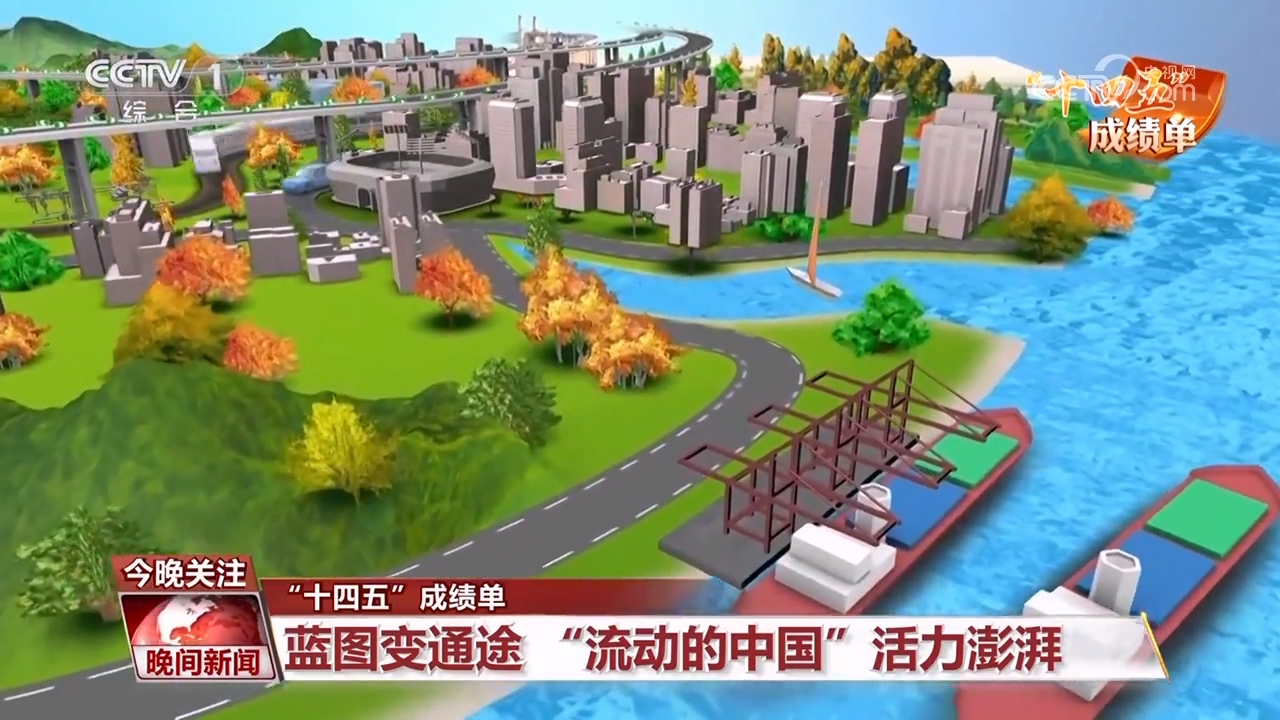
蓝图变通途 “流动的中国”活力澎湃
Yang Shi Wang· 2025-10-10 22:52
央视网消息:2025年是"十四五"规划收官之年。对照"十四五"规划纲要里"加快建设交通强国"的部署, 我国加速织就交通"经纬网"。铁路密布、公路成网、飞机翱翔、巨轮远航,交通网络持续完善,为经济 高质量发展,提供基础支撑。 ...
“十四五”成绩单|蓝图变通途 “流动的中国”活力澎湃
Yang Shi Wang· 2025-10-10 20:30
Core Insights - The "14th Five-Year Plan" aims to accelerate the construction of a strong transportation network in China by 2025, enhancing the foundation for high-quality economic development [1][3] - By 2025, China plans to achieve integrated development in comprehensive transportation, significantly improving capacity, service quality, operational efficiency, and overall effectiveness [3] Group 1: Transportation Infrastructure Development - Jiangxi's Ganzhou Nankang District, as the first inland open port in Jiangxi and the largest solid wood furniture manufacturing base in China, has reduced wood import time from Russia from three months to 14 days through the China-Europe Railway Express [5] - The completion rate of the national comprehensive three-dimensional transportation network's main framework, consisting of "6 axes, 7 corridors, and 8 channels," has exceeded 90% [7] - By the end of 2024, the railway operating mileage is expected to reach 162,000 kilometers, an increase of approximately 16,000 kilometers from the end of the "13th Five-Year Plan" [7] Group 2: Economic and Social Impact - The establishment of "one-hour living circles" in regions such as Beijing-Tianjin-Hebei, the Yangtze River Delta, the Guangdong-Hong Kong-Macao Greater Bay Area, and the Chengdu-Chongqing city cluster facilitates the flow of people, goods, and information [5] - The opening of high-speed rail in Xiangxi's Eighteen Cave Village has transformed local economic prospects, allowing villagers to convert traditional stilt houses into guesthouses, generating annual income equivalent to the previous ten years [6] - The transportation network is seen as an accelerator for common prosperity, enhancing connectivity and economic opportunities across different regions [5][6]
向行业创新要答案 | 交通与能源深度融合,施耐德电气护航“中国速度”
Zhong Guo Neng Yuan Wang· 2025-10-10 04:59
Group 1: Industry Overview - The year marks the conclusion of the "14th Five-Year Plan" and the 200th anniversary of the world's railways, with global high-speed rail operating mileage exceeding 60,000 kilometers, of which over 70% is in China [1] - China operates more than half of the 6,500 high-speed trains worldwide, and the 12306 ticketing system is the largest online ticketing platform globally in terms of traffic and transaction volume [1] Group 2: Transition to Resilient Operations - The railway industry is transitioning from rapid scale expansion to efficient network operations, emphasizing passenger efficiency, energy management, and system resilience [2] - Key development directions include reducing power outage risks, enhancing digitalization, increasing automation adaptability, lowering carbon emissions, and replacing aging equipment [2] Group 3: Digitalization and Electrification Innovations - Schneider Electric has been a long-term partner in the Chinese railway sector, focusing on digital and electrical innovations to enhance safety and stability while promoting green and intelligent upgrades [4] - The company has introduced specialized products like railway circuit breakers and contactors to ensure safe and reliable operations in challenging environments [4] Group 4: Addressing Communication and Automation Challenges - The railway industry's increasing demand for communication capabilities has led to the development of the NSX DCM communication module, which supports seamless connectivity with various gateway devices [5] - Automation is being prioritized to address traditional inspection challenges, with solutions like EcoStruxure Facility Expert and wireless temperature sensors enhancing operational efficiency [5][6] Group 5: Smart Station Example - Shanghai Hongqiao Station, one of the largest railway hubs, is undergoing a comprehensive upgrade using Schneider Electric's EcoStruxure architecture to address aging infrastructure and rising operational costs [7] - The upgrade includes a complete integrated low-voltage smart distribution solution, enhancing reliability and reducing maintenance costs through real-time monitoring and data collection [7][8] Group 6: Energy Management and Sustainability - The integration of renewable energy sources has raised concerns about transformer load fluctuations, prompting Schneider Electric to offer solutions for energy management and low-carbon transitions [5] - The company is implementing standardized renovation strategies to upgrade aging equipment, ensuring safer, more reliable, and sustainable operations [6]


“十四五”规划纲要确定的102项重大工程涉交通项目全部开工
Ren Min Ri Bao· 2025-10-09 22:02
Core Insights - The construction of key transportation projects in China has made significant progress this year, with all 102 major projects outlined in the 14th Five-Year Plan officially commenced [1] - The latest transportation power index for China is reported at 89.9 points, an increase of 1.0 point from the previous year, ranking fifth among major countries globally [1] - Several key indicators of the 14th Five-Year transportation plan have been achieved ahead of schedule, including the ratio of multi-path connections in key areas, the proportion of annual container throughput at ports, and the population enjoying rapid transportation services within one hour [1]
国庆中秋假期市场观察:交通繁忙,绘出经济活力
Sou Hu Cai Jing· 2025-10-07 01:23
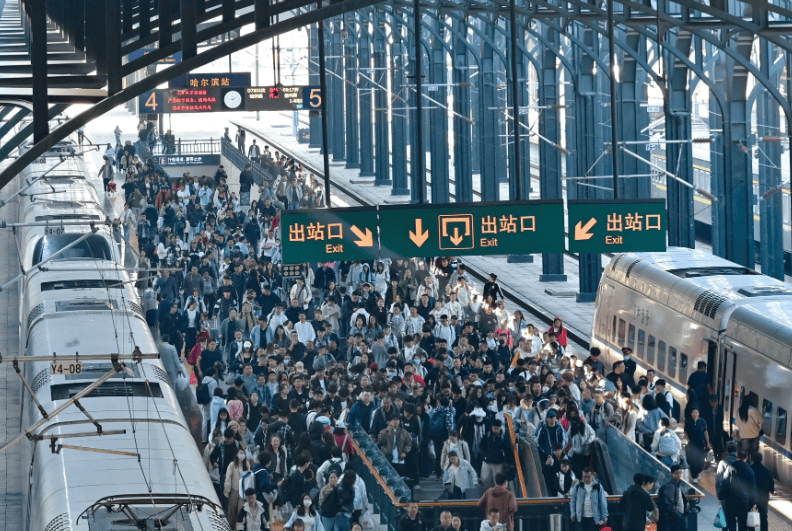
Core Viewpoint - The article highlights the vibrant economic activity during the National Day and Mid-Autumn Festival holidays in China, emphasizing the improvements in the transportation system that facilitate the movement of people and goods, thereby enhancing overall development vitality [1]. Transportation Developments - High-speed rail stations operated overnight, with Beijing South Station expected to send 2.526 million passengers during the holidays [3]. - On October 1, a record 23.13 million passengers were sent by national railways, marking the highest single-day passenger volume in history [4]. - Civil aviation passenger volume reached 2.4749 million, showing a year-on-year increase of 3.2% [5]. - The Ministry of Transport predicts a total of 2.36 billion cross-regional passenger movements during the holidays [3]. Infrastructure Enhancements - New high-speed rail lines, such as the Shenyang-Baishan line, have improved travel efficiency, with an average of 30,000 passengers per day during the holidays [7]. - The total high-speed rail mileage in China has approached 50,000 kilometers, significantly supporting the movement of people [8]. - New highways, like the Jiuwu Expressway, have reduced travel time significantly, with peak traffic exceeding 15,000 vehicles in the first two days of the holiday [9]. Travel Trends - There is a shift towards immersive travel experiences, with new transportation options like tourist trains, cruise vacations, and self-driving trips becoming popular [12][14]. - The demand for car rentals is expected to surge during the holidays, with services offering free charging to enhance convenience [15]. - Cruise travel has gained popularity, with over 17,000 passengers expected at the Shenzhen cruise terminal during the holidays [16]. International Travel - The average daily inbound and outbound passenger flow is expected to exceed 2 million during the holidays, with peaks on October 1 and 6 [18]. - New international routes have been established, enhancing connectivity to destinations like Malaysia, Saudi Arabia, and Vietnam, reflecting a growing outbound tourism market [19]. - The integration of Chinese culture into travel experiences, such as tea-making on high-speed trains, has attracted foreign tourists [19]. Conclusion - The overall movement of 2.36 billion people during the holidays illustrates the dynamic vitality of China's transportation system and its role in economic growth [20].
国庆中秋假期市场观察:交通繁忙 绘出经济活力
Huan Qiu Wang· 2025-10-06 23:39
Core Insights - The article highlights the vibrant economic activity during the National Day and Mid-Autumn Festival holidays in China, emphasizing the importance of a robust transportation system in facilitating this movement [1][20]. Transportation Developments - High-speed rail stations operated overnight, with Beijing South Station expected to send 2.526 million passengers [3]. - On October 1, a record 23.13 million passengers were sent via national railways, marking the highest single-day passenger volume in history [4]. - Civil aviation passenger volume reached 2.4749 million, a year-on-year increase of 3.2% [5]. - The Ministry of Transport predicts a total of 2.36 billion cross-regional passenger movements during the holiday [3]. Infrastructure Enhancements - New high-speed rail lines, such as the Shenyang-Jilin line, have improved travel efficiency, with an average of 30,000 passengers daily during the holiday [8]. - The total high-speed rail mileage in China has approached 50,000 kilometers, significantly enhancing connectivity [9]. - New highways, like the Jiuwu Expressway, have reduced travel time from over 6 hours to just 3 hours for certain routes [10]. Travel Trends - There is a growing trend towards immersive travel experiences rather than mere sightseeing, with options like tourist trains and cruise vacations becoming popular [13]. - The demand for car rentals is expected to surge during the holiday, as travelers seek convenience and flexibility [16]. - Cruise travel has gained popularity, with over 17,000 passengers expected at the Shenzhen cruise terminal during the holiday [17]. International Travel - The average daily number of inbound and outbound travelers is projected to exceed 2 million during the holiday, with significant peaks on October 1 and 6 [18]. - New international routes have been established, enhancing travel options to destinations like Malaysia and Saudi Arabia [19]. - The expansion of visa-free travel agreements and increased international flights has contributed to a booming outbound tourism market [19].
交通繁忙 绘出经济活力
Xin Hua Wang· 2025-10-06 23:38
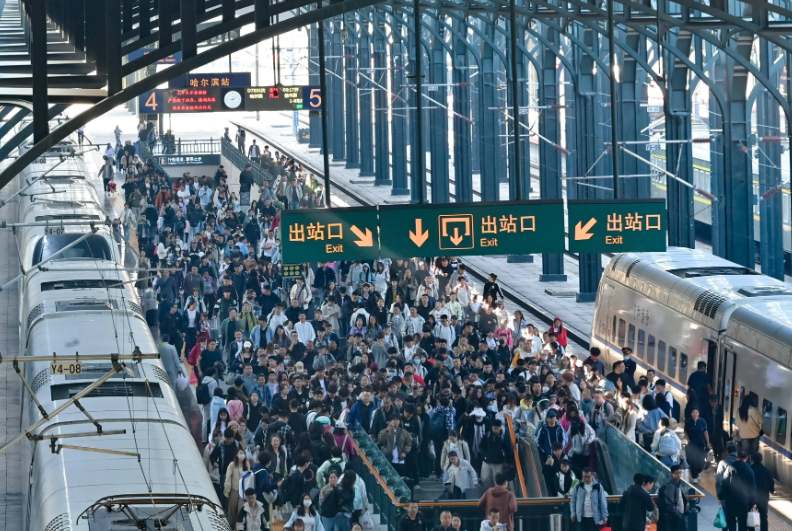
Core Insights - The article highlights the vibrant activity across China during the National Day and Mid-Autumn Festival holidays, showcasing the effectiveness of the comprehensive transportation system in facilitating travel and logistics [1][2]. Transportation Trends - The Ministry of Transport predicts that the total inter-regional movement of people during the holidays will reach 2.36 billion [2]. - On October 1, a record high of 23.13 million passengers were sent by rail, marking the highest single-day passenger volume in history [3]. - Civil aviation passenger volume on the same day was 2.47 million, reflecting a year-on-year increase of 3.2% [4]. - The growth in transportation data is supported by a robust integrated transportation network [5]. High-Speed Rail Developments - New high-speed rail lines are enhancing travel efficiency, with the newly opened Shenyang-Jilin line facilitating quick access to scenic areas like Changbai Mountain, averaging 30,000 passengers daily during the holidays [6]. - The total length of high-speed rail in China has approached 50,000 kilometers, significantly contributing to national mobility [7]. Highway Improvements - New highways are reducing travel times, exemplified by the Jiuwu Expressway, which cuts travel time from 6 hours to 3 hours for certain routes [8]. - The Jiuzhaigou toll station on the Jiuwu Expressway recorded a peak traffic flow of over 15,000 vehicles in the first two days of the holiday [8]. - New highways across various regions are enhancing travel experiences [9]. Aviation Network Expansion - The aviation network is becoming denser, with new routes such as direct flights from Zhuhai to Dali, which take just over two hours [10]. - The introduction of over 30 new routes by Xiangpeng Airlines is expected to maintain high passenger load factors during the holidays [10]. Evolving Travel Experiences - Travelers are increasingly seeking immersive experiences rather than just quick trips, with options like tourist trains, cruise vacations, and self-driving tours becoming popular [11][12]. - The demand for car rentals is expected to surge during the holidays, as travelers prefer the convenience of renting vehicles [15]. Cruise Travel Popularity - Cruises are gaining popularity, with the Shenzhen cruise terminal expecting to serve over 17,000 passengers during the holidays [16]. - Nationwide, waterway passenger volume is projected to reach 12.5 million, a year-on-year increase of 11.6% [16]. Cross-Border Travel Growth - Daily inbound and outbound passenger numbers are expected to exceed 2 million during the holidays, with peak travel days on October 1 and 6 [17]. - New international routes and visa exemptions are driving growth in outbound tourism, with increased flight options to destinations like Malaysia and Saudi Arabia [18]. Cultural Integration in Travel - International travelers are experiencing Chinese culture during their journeys, such as participating in traditional tea-making on high-speed trains [19].