新能源消纳

Search documents
2025年12月金股推荐:金股源代码
Hua Yuan Zheng Quan· 2025-11-30 08:54
Group 1: Investment Recommendations - Monthly stock recommendations include: XJ Electric (000400.SZ) in power equipment, Zai Jian Pharmaceutical (688266.SH) in pharmaceuticals, Chip Source Microelectronics (688037.SH) in electronics, Hehe Information (688615.SH) in computers, Changying Precision (300115.SZ) in robotics & electronics, China Life (601628.SH) in non-banking, Shentong Express (002468.SZ) in transportation, Yahua Group (002497.SZ) in new metal materials, Global New Material International (06616.HK) in building materials, and Haidar (920699.BJ) on the Beijing Stock Exchange [3] Group 2: Power Equipment - XJ Electric (000400.SZ) is recommended due to: (1) Price reductions in secondary equipment, electric meters, and distribution network equipment may have bottomed out, indicating a potential rebound in the core business; (2) Severe challenges in renewable energy consumption with expectations for significant growth in ultra-high voltage direct current projects; (3) The offshore wind sector is expected to experience high prosperity during the 14th Five-Year Plan, which may open up opportunities in the direct current equipment industry [4] Group 3: Pharmaceuticals - Zai Jian Pharmaceutical (688266.SH) is recommended because: The existing core business has four products on the market, with future products expected to accelerate growth; the III phase pipeline DLL3 is expected to solidify the core business and has high overseas potential; the II phase pipeline PD1/TIGIT may provide significant growth flexibility; future dual-antibody/multi-antibody platform products are anticipated to open up growth space [6] Group 4: Electronics - Chip Source Microelectronics (688037.SH) is recommended due to: Rapid growth in demand driven by AI for advanced processes and storage, leading to accelerated expansion of wafer fabs; as a leading domestic supplier of large wet processing equipment, it continues to make breakthroughs in coating and developing equipment, with successful industrialization of chemical cleaning equipment; the market for domestic substitutes in coating and cleaning equipment is expected to grow significantly [8] Group 5: Computers - Hehe Information (688615.SH) is recommended because: In Q3 2025, revenue grew by 27.5% year-on-year, and profit increased by 34.9% year-on-year; AI products are continuously iterated, and the TextIn xParse platform provides general document parsing services for LLM downstream tasks, which may open up B-end market space; as a global leader in OCR, the company has 189 million monthly active users for its main C-end products, and the upcoming listing in Hong Kong is expected to further expand overseas markets and release growth potential [10] Group 6: Robotics & Electronics - Changying Precision (300115.SZ) is recommended due to: The robotics business supplies leading domestic and international robot manufacturers, with significant valuation elasticity; the consumer electronics business is deeply tied to Apple, and new projects like AI glasses are expected to bring revenue growth [12] Group 7: Non-Banking - China Life (601628.SH) is recommended because: The asset-liability matching is excellent, with a focus on annuities with an actual duration of about 10 years, leading to a narrowing duration gap; the early transformation to dividend insurance sales has resulted in a 51.72% share of new single premium in Q1 2025, outperforming most peers; future dividend payment capabilities have room for growth due to the reclassification of assets [13] Group 8: Transportation - Shentong Express (002468.SZ) is recommended due to: The "anti-involution" trend in the express delivery industry is expected to strengthen, with a potential recovery in prices by 2026; as one of the leading companies in the express delivery sector, it has significant profit elasticity and may have entered a period of sustained validation [16] Group 9: New Metal Materials - Yahua Group (002497.SZ) is recommended because: The dual main businesses of lithium hydroxide and civil explosives are running concurrently, with stable contributions from the explosives business and potential rebound in lithium business; the lithium segment is expanding production in partnership with Tesla, and the African K mine is expected to contribute to performance during the lithium price bottoming period [18] Group 10: Building Materials - Global New Material International (06616.HK) is recommended due to: The pearlescent pigment industry has strong consumer attributes, with a history of double-digit growth and annual price increases; upstream high-quality natural materials are depleting, leading to a concentration of core resources in leading companies; the acquisition of Germany's Merck SUSONITY has positioned the company as an industry leader and opened up high-end market opportunities [20] Group 11: Beijing Stock Exchange - Haidar (920699.BJ) is recommended because: It is a leading domestic supplier of server slide rails, breaking industry monopolies and leading self-replacement; the company has successfully entered the higher technical barrier server market and is a qualified supplier for major server manufacturers; the focus on high-value new products in AI server liquid cooling is expected to enhance profitability [22]



公用事业行业周报(2025.11.24-2025.11.28):港口煤价逐步走低,输配电价新规落地-20251130
Orient Securities· 2025-11-30 03:12
Investment Rating - The report maintains a "Positive" investment rating for the utility sector [4] Core Views - The report highlights that the decline in port coal prices and the implementation of new transmission and distribution pricing regulations are significant developments in the utility sector [2][3] - It emphasizes the expectation of sustained high growth in electricity consumption and a turnaround in thermal power growth from negative to positive [6] - The report suggests that low-position utility assets are worth attention due to their defensive attributes [7] Summary by Sections Electricity Prices - The average clearing price of the electricity market in Guangdong province decreased by 14.3% year-on-year, while Shanxi province saw a significant drop of 47.9% year-on-year [10][10] Coal Prices - Port coal prices are gradually declining, with the Qinhuangdao port's Q5500 thermal coal price at 816 RMB/ton, down 2.2% week-on-week [13] - The report notes that coal inventories are rising, indicating increased selling pressure on coal traders [7][23] Regulatory Changes - New transmission and distribution pricing regulations aim to promote the consumption of renewable energy, with a focus on reducing transaction costs for renewable energy [7] Market Performance - The utility sector index rose by 0.9%, underperforming the CSI 300 index by 0.7 percentage points [36] - The report indicates that the utility sector is still considered a quality dividend asset for long-term investment [7] Investment Recommendations - The report recommends focusing on the utility sector, particularly thermal power, hydropower, and nuclear power, as they show strong growth potential [7] - Specific stocks mentioned include Guodian Power (600795), Huadian International (600027), and Huaneng International (600011) for thermal power [7]
20cm速递|新能源消纳“四箭齐发”!创业板新能源ETF华夏(159368)上涨0.21%,规模同类第一
Mei Ri Jing Ji Xin Wen· 2025-11-28 08:07
Core Viewpoint - The recent regulatory changes by the National Development and Reform Commission are expected to enhance the utilization of renewable energy, ensure power supply security, and improve cost efficiency for grid companies, thereby addressing the "abandonment of wind and solar" issue and boosting the energy storage sector [1] Group 1: Market Performance - The ChiNext New Energy ETF (159368) increased by 0.21%, with notable stock performances: Hunan YN Energy rose over 7%, Maiwei Co. increased by over 6%, and Penghui Energy gained over 4% [1] Group 2: Regulatory Changes - The National Development and Reform Commission revised several pricing regulations, including the cost supervision and audit methods for transmission and distribution pricing, which will facilitate renewable energy consumption and enhance grid efficiency [1] Group 3: Industry Implications - The new regulations are anticipated to attract companies to strategically invest in energy storage solutions, leading to a stabilization of returns in the energy storage industry and a potential release of demand across the related supply chain [1] Group 4: ETF Characteristics - The ChiNext New Energy ETF (159368) is the largest ETF tracking the ChiNext New Energy Index, with a scale of 829 million yuan as of October 31, 2025, and a daily average trading volume of 90.05 million yuan over the past month [1] - The ETF has a storage content of 59% and a solid-state battery content of 32%, aligning with current market trends [1]

新型储能不得计入输配电定价成本!国家发改委印发修订版输配电成本监审和定价办法发布
中关村储能产业技术联盟· 2025-11-27 10:38
Core Viewpoint - The National Development and Reform Commission (NDRC) has revised the pricing and cost supervision methods for electricity transmission and distribution, aiming to promote the consumption of renewable energy, enhance power supply security, and improve the efficiency of grid enterprises [7][8]. Group 1: Promotion of Renewable Energy Utilization - The revised methods introduce a capacity mechanism in the transmission and distribution pricing to facilitate the local consumption of renewable energy and reduce transaction costs for renewable energy [7][8]. - A single capacity pricing system will be implemented for new energy generation that focuses on local consumption, while cross-regional projects primarily transmitting clean energy will explore two-part or single capacity pricing systems [2][7]. Group 2: Enhancing Power Supply Security - The pricing mechanism for cross-regional projects will support the construction of mutual assistance channels in the grid, enhancing the national power load shifting, mutual assistance, and emergency support capabilities [8]. Group 3: Improving Efficiency of Grid Enterprises - The revisions aim to optimize certain cost parameters, encouraging grid enterprises to strengthen internal management and reduce costs [8]. - The NDRC will conduct cost supervision and price determination for provincial grids, regional grids, and cross-regional projects based on the revised methods [7][8]. Group 4: Implementation Timeline - The four revised documents will take effect from January 1, 2026, and will be valid for ten years [4].

光伏龙头纷纷进军储能赛道 “光伏+储能”成标配
Zhong Guo Neng Yuan Wang· 2025-11-25 00:14
Group 1 - The core viewpoint of the articles highlights the rapid development of the energy storage sector in China, with the installed capacity exceeding 100 million kilowatts, marking a growth of over 30 times compared to the end of the 13th Five-Year Plan, and accounting for over 40% of the global total, making China the world leader in energy storage [1][4] - Energy storage is becoming a crucial support for the consumption of renewable energy sources like solar and wind, addressing challenges such as the mismatch between resource distribution and electricity demand, as well as the instability of renewable energy generation [2][3] - Major photovoltaic companies, including LONGi Green Energy, Tongwei Co., JinkoSolar, JA Solar, and Trina Solar, are increasingly integrating energy storage into their business models, indicating a shift towards "solar + storage" as a standard practice in the industry [1][3] Group 2 - The National Development and Reform Commission and the National Energy Administration have set a target for 2030 to establish a multi-level energy consumption and regulation system, ensuring the efficient operation of renewable energy and meeting the annual demand for an additional 200 million kilowatts of renewable energy [4] - The energy storage market is expected to grow significantly, with projections estimating a market size of approximately 500 billion yuan by 2025 and over 2 trillion yuan by 2030, reflecting a compound annual growth rate of over 30% [4] - The integration of solar and storage is seen as a key direction for the reform of energy demand, with expectations that technological advancements and policy support will make it a core component of the new energy system [4]





【电新环保】看好风电及氢氨醇板块,美国缺电寻找超跌反弹机会——电新环保行业周报251123(殷中枢/郝骞/陈无忌/和霖/邓怡亮)
光大证券研究· 2025-11-24 23:03
Overall Viewpoint - Hydrogen ammonia and methanol, along with wind power, are expected to attract more investment due to the dual benefits of China's future industries and the EU carbon tariff in 2026. The global shipping industry is accelerating its decarbonization, and the International Maritime Organization (IMO) is promoting green fuel policies, which may keep green methanol prices high amid rising demand and limited supply. The current market expectations for the hydrogen ammonia and methanol sector are low, which can resonate with the wind power sector [4] - The ongoing electricity shortage in the U.S. is highlighted, with Nvidia's current shipment scale corresponding to data center power levels. The gap between actual power supply and grid capacity in the U.S. is a key focus for market speculation. Short-term fluctuations in stock prices are influenced by interest rate expectations and short-selling, but technology remains the main trend, with a focus on opportunities for rebounds in the overseas energy storage and SST sectors [4] Domestic Energy Storage - Heilongjiang Province has released a special implementation plan for large-scale new energy storage construction (2025-2027), aiming for an installed capacity of over 6GW by 2027. The first batch involves 1.45GW, with a reliable capacity compensation mechanism being established. Provinces are improving capacity price compensation mechanisms to ensure financing for independent energy storage. It is anticipated that independent energy storage bidding in 2026 will maintain a good level similar to 2025, and as the industry develops, independent storage will achieve a complete revenue model through energy, capacity, and ancillary service markets. After 2027, the growth of independent energy storage installations will align closely with load growth [5] Lithium Battery - The market is currently speculating on the production expectations for domestic energy storage in 2026, with short-term positive expectations remaining unchallenged. Growth expectations for power batteries and overseas energy storage are consistent. Additionally, the lithium battery supply chain is experiencing a "reverse involution" logic, indicating a trend of supply-demand improvement. From the perspective of supply-demand tightness in the supply chain, lithium hexafluorophosphate is the most constrained, followed by separators, copper foil, high-pressure lithium iron phosphate, and anodes. Short-term expectations for lithium hexafluorophosphate are already high, and subsequent stages are gradually entering long-term contract signing. Mid-term investment opportunities should focus on lithium mines with significant supply variability and separator segments where profitability does not support expansion [5]

【光大研究每日速递】20251125
光大证券研究· 2025-11-24 23:03
Real Estate - In October, the core 30 cities saw a total of 133 residential land transactions, down 33.2% year-on-year, with an average floor price of 9,279 yuan per square meter, a decrease of 4.5% year-on-year [4] - From January to October, the total area of residential land transactions in 100 cities decreased by 9% year-on-year, while the average floor price increased by 15% year-on-year [4] - The total transaction value of residential land in the core six cities reached 541.2 billion yuan, accounting for 44.7% of the total in 100 cities, indicating a further deepening of market differentiation [4] Non-ferrous Metals - Cable manufacturers' operating rates have increased for three consecutive weeks, with tight supply conditions persisting; the Q4 peak season for the power grid is expected to continue [5] - Air conditioning production in October decreased by 28% year-on-year, but there is a continuous improvement in production on a month-on-month basis [5] - The supply-demand balance for copper is expected to remain tight, with copper prices likely to continue rising after short-term fluctuations [5] Electric Power and Environmental Protection - The hydrogen ammonia methanol sector is expected to attract more investment as a key direction for new energy consumption and green electricity applications [6] - The ongoing electricity shortage in the U.S. presents opportunities for rebound in underperforming sectors such as overseas energy storage and solid-state batteries [6] - The independent energy storage bidding in China for 2026 is expected to maintain a favorable level compared to 2025 [6] Public Utilities - The domestic thermal coal price remained stable week-on-week, while imported coal prices increased significantly [7] - In October, the total electricity consumption in China reached 8,572 billion kilowatt-hours, a year-on-year increase of 10.4% [7] Pharmaceuticals - The small nucleic acid drug sector is experiencing significant advancements, indicating the onset of a new wave of innovative drugs [8] - The industry is entering a golden development period driven by "technological breakthroughs + commercial realization," with many domestic pharmaceutical companies advancing to clinical research stages since 2025 [8] Company Analysis - Hangyang Co., Ltd. reported a revenue of 11.43 billion yuan for Q1-Q3 2025, a year-on-year increase of 10.4%, and a net profit of 760 million yuan, up 12.1% year-on-year [9] - The gross margin was 20.6%, an increase of 0.2 percentage points year-on-year, while the net margin was 7.4%, up 0.3 percentage points year-on-year [9]
光伏龙头纷纷进军储能赛道
Zheng Quan Ri Bao Zhi Sheng· 2025-11-24 16:38
Core Insights - The development of the energy storage sector is accelerating, with China's new energy storage installed capacity exceeding 100 million kilowatts, representing a growth of over 30 times compared to the end of the 13th Five-Year Plan, and accounting for over 40% of the global total installed capacity, making China the world leader in this area [1] - Major photovoltaic companies are increasingly focusing on energy storage as a critical component of their business strategies, with Longi Green Energy planning to acquire approximately 61.9998% of Suzhou Jingkong Energy Technology Co., Ltd., a unicorn in the energy storage sector [1][2] - The integration of photovoltaic and energy storage systems is becoming essential for addressing the challenges of energy consumption and stability in the context of rising photovoltaic installation scales [2][3] Industry Trends - The mismatch between the distribution of wind and solar energy resources and electricity demand, along with the instability of renewable energy generation, has led to increased curtailment rates for solar power, highlighting the need for energy storage solutions [2] - The "photovoltaic + energy storage" model is becoming standard among leading photovoltaic companies, with Tongwei Co., Ltd. also entering the energy storage market [2] - The energy storage market is projected to grow significantly, with estimates suggesting that the integrated photovoltaic and energy storage market could reach approximately 500 billion yuan by 2025 and exceed 2 trillion yuan by 2030, with a compound annual growth rate of over 30% [4]
派能科技配套扬州最大电网侧储能电站 实现“从芯到舱”安全闭环
起点锂电· 2025-11-24 10:34
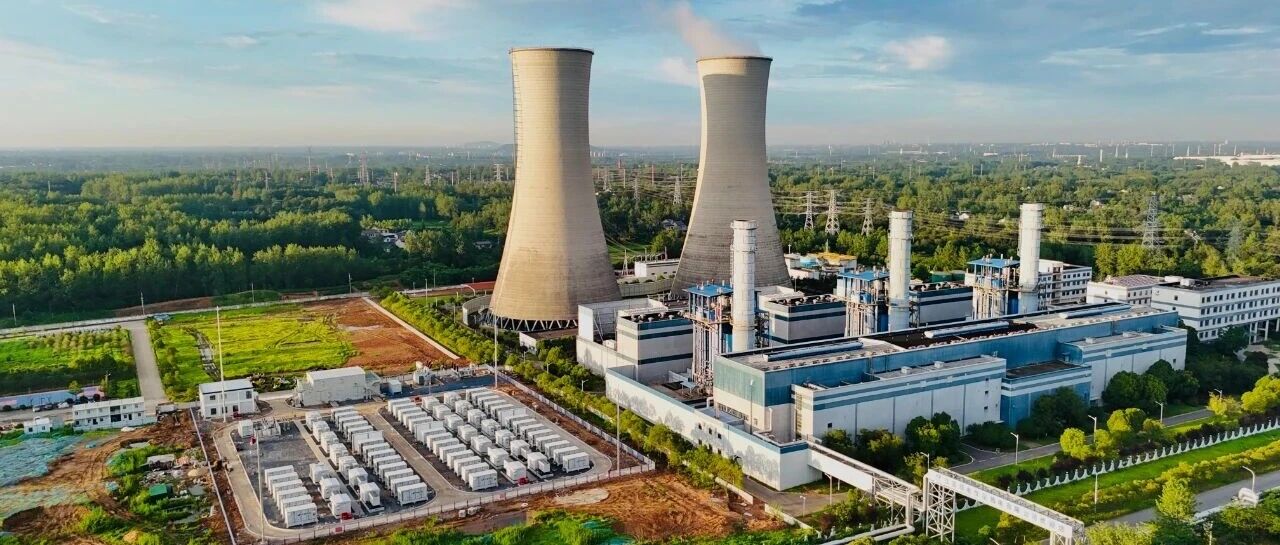
点击下方 观看电站投运纪实视频 今年 , 扬州地区规模最大的电网侧储能电站 ——江苏华电仪征120MW/240MWh风光集中配建储能项目正式投运。 该项目占地47.8亩, 构建了"储‑转‑升‑调"一体化的智能化能源枢纽,预计每年可消纳可再生能源电量超6800万千瓦时,减少二氧化碳排放约4万吨,显著提升区 域电网调节与应急保供能力。 作为扬州区域规模最大的电网侧储能电站,项目配置 24台5MW升压逆变一体机和48套5MWh储能电池预制舱,采用标准化单元设计,每台 一体机搭配两套电池系统构成10MWh储能单元,共部署24个单元,并配套建设220kV升压站,形成集约高效的能源调控平台。 在技术方案上,项目选用安全性高、循环寿命长的磷酸铁锂电池,并由派能科技作为核心储能系统供应商,为其提供 80MWh储能系统。该系 统以"从芯到舱"全链路安全设计为核心,通过智能BMS实现毫秒级电池状态监测,液冷热管理技术保障温度精准控制,并配备五重联动消防 保护机制,覆盖主动预警、快速响应与多级灭火全流程,形成严密的安全闭环。 该电站在夏季用电高峰可两小时内向电网输送 24万度电,直接缓解供电压力。 其毫秒级响应能力还能瞬时平衡电网 ...

——电新环保行业周报20251123:看好风电及氢氨醇板块,美国缺电寻找超跌反弹机会-20251123
EBSCN· 2025-11-23 13:11
Investment Ratings - The report maintains a "Buy" rating for both the power equipment and environmental protection sectors [1]. Core Views - The hydrogen ammonia and wind power sectors are expected to benefit from China's future industrial policies and the EU's carbon tariff by 2026, leading to increased investment opportunities. The global shipping industry is accelerating its decarbonization, with green methanol prices likely to remain high due to rising demand and limited supply [3]. - In the U.S., the ongoing electricity shortage presents opportunities for rebound in related stocks, particularly in the overseas energy storage and SST sectors. Key companies to watch include Sunshine Power, Jinpan Technology, and others [3]. - Domestic energy storage is projected to grow significantly, with Heilongjiang Province aiming for over 6GW of installed capacity by 2027. The independent energy storage market is expected to maintain a good level of bidding in 2026 [4]. - The lithium battery sector is experiencing a tightening supply-demand dynamic, with significant growth expected in both domestic and overseas markets. Key investment opportunities are identified in lithium mines and the separator segment [4][20]. Summary by Sections Wind Power - In 2024, China's onshore wind power is expected to add 75.8GW of capacity, a year-on-year increase of 9.68%, while offshore wind power is projected to add 4.0GW, a decrease of 40.85% [6]. - The public tender capacity for wind power in 2024 is 164.1GW, a 90% increase year-on-year, with onshore wind accounting for 152.8GW [9]. Lithium Battery - The domestic production of lithium carbonate is expected to remain stable, with strong demand from the power battery sector driven by the rapid growth of the new energy vehicle market [20]. - The supply of lithium hexafluorophosphate remains tight, with prices expected to continue rising due to increased demand from downstream applications [23]. Investment Recommendations - The report suggests focusing on companies such as Goldwind Technology, Sunshine Power, and Ningde Times, which are well-positioned to benefit from the trends in wind power and lithium battery sectors [19][24].