机器学习

Search documents
AI 交易:2025 年完整指南
Xin Lang Cai Jing· 2025-12-02 11:59
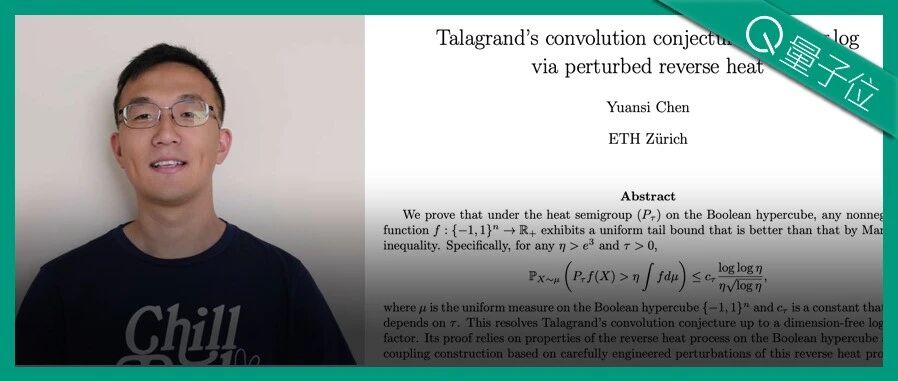
Core Insights - Artificial Intelligence (AI) is revolutionizing the trading landscape, bringing unprecedented efficiency, accuracy, and speed to financial markets. By 2025, AI is expected to handle nearly 89% of global trading volume, impacting everything from high-frequency stock trading to decentralized cryptocurrency ecosystems [1][10]. Group 1: Evolution of AI in Trading - The adoption of AI in trading is driven by the need for automation, reducing human errors, and executing trades at record speeds [10]. - Current markets generate and process over 2.5 million terabytes of data daily, including news, social media, satellite images, and blockchain transactions, creating a data explosion that AI can help manage [13]. Group 2: Core Technologies Driving AI Trading - Key technologies include machine learning, deep learning, natural language processing, and quantum computing, which enhance trading strategies and decision-making [13][14]. - AI systems can achieve nanosecond-level trading responses, significantly faster than human reaction times, improving overall market efficiency [13]. Group 3: AI Trading Platforms and Strategies - AI trading strategies encompass quantitative trading, algorithmic trading, sentiment analysis, and reinforcement learning, all aimed at maximizing returns and managing market risks [14][15]. - The regulatory landscape is evolving, with institutions like the SEC approving new AI-driven order types, legitimizing autonomous trading systems [13].

苹果AI战略迎重大调整:核心高管将退休,微软前高管接棒
Huan Qiu Wang Zi Xun· 2025-12-02 03:25
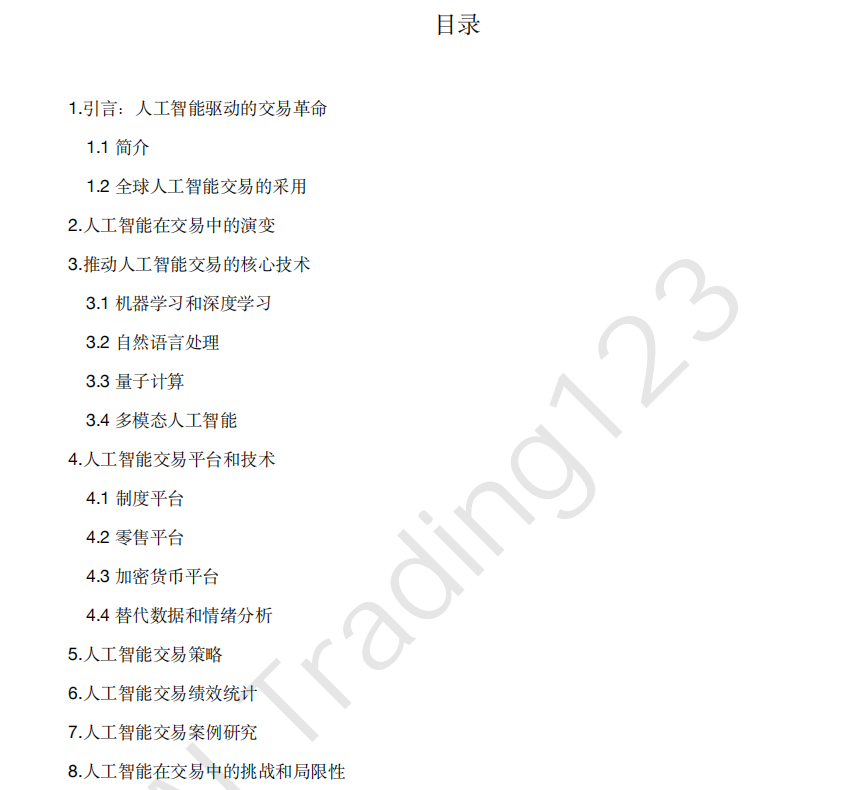
Core Insights - Apple announced a significant personnel change with the retirement of John Giannandrea, Senior Vice President of Machine Learning and AI Strategy, set for Spring 2026, after nearly ten years with the company [1][3] - Amar Subramanya, a former Microsoft executive, has joined Apple as Vice President of AI, reporting directly to Senior Vice President of Software Engineering, Craig Federighi [3] Company Developments - Giannandrea has been instrumental in shaping Apple's machine learning and AI strategy since joining in 2018, overseeing advancements in core technologies such as Siri, computer vision, and natural language processing [3] - Under Giannandrea's leadership, Apple made significant strides in AI privacy protection, notably launching "differential privacy" and "on-device machine learning" frameworks in 2021 [3] - The Apple Neural Engine, which Giannandrea advocated for, has been integrated across all products, providing hardware support for real-time AI computations [3] Future Product Expectations - Supply chain reports suggest that the upcoming iPhone 18 series, expected in Fall 2026, may feature an upgraded Siri capable of more complex contextual understanding and multitasking [3] - Additionally, the Apple Watch may introduce health risk prediction features that utilize AI to analyze user biometrics [3]

中国专家新发现:10纳升泪液、30秒内精准无创诊断糖尿病性白内障
Zhong Guo Xin Wen Wang· 2025-12-01 08:23
Core Insights - A new method developed by medical experts in Shanghai allows for precise, non-invasive diagnosis of diabetic cataracts using only 10 nanoliters of tear fluid within 30 seconds [1][2] - The research highlights the unique metabolic reprogramming patterns associated with diabetic cataracts, linking surface and internal eye conditions [1] Group 1: Diagnostic Methodology - The research team created a high-performance Nano-particle Enhanced Laser Desorption Ionization Mass Spectrometry (NELDI-MS) platform, enhancing the signal response of metabolites by 1 to 3 orders of magnitude [2] - The NELDI-MS method achieves high throughput (less than 30 seconds per sample), high sensitivity (detection limit as low as 0.1 ng), and high reproducibility, meeting the demands for trace tear fluid metabolic analysis [2] Group 2: Mechanism Exploration - The team discovered that reduced levels of 1,5-anhydroglucitol may play a significant role in the development of diabetic cataracts [2] - A diagnostic model was constructed using machine learning, which includes only three key metabolic features and performed excellently in validation cohorts [2] Group 3: Future Implications - The NELDI-MS method is expected to be transformed into a routine screening tool for ophthalmology clinics, providing strong technical support for early diagnosis, risk warning, and personalized treatment of diabetic cataracts [2]
机器学习因子选股月报(2025年12月)-20251128
Southwest Securities· 2025-11-28 07:02
Quantitative Models and Construction Methods - **Model Name**: GAN_GRU **Model Construction Idea**: The GAN_GRU model combines Generative Adversarial Networks (GAN) for processing volume-price sequential features and Gated Recurrent Unit (GRU) for encoding sequential features to construct a stock selection factor [4][13] **Model Construction Process**: 1. **GRU Model**: - The GRU model is based on 18 volume-price features, including closing price, opening price, trading volume, turnover rate, etc. [14][17][19] - Training data includes the past 400 days of volume-price features for all stocks, with feature sampling every 5 trading days. The feature sampling shape is 40x18, using the past 40 days' features to predict the cumulative return over the next 20 trading days [18] - Data processing includes outlier removal and standardization for each feature in the time series and cross-sectional standardization at the stock level [18] - The model structure includes two GRU layers (GRU(128, 128)) followed by an MLP (256, 64, 64). The final output, predicted return (pRet), is used as the stock selection factor [22] - Training is conducted semi-annually, with training points on June 30 and December 31 each year. The training set and validation set are split in an 80:20 ratio [18] - Hyperparameters: batch_size equals the number of cross-sectional stocks, optimizer is Adam, learning rate is 1e-4, loss function is IC, early stopping rounds are 10, and maximum training rounds are 50 [18] 2. **GAN Model**: - The GAN model consists of a generator (G) and a discriminator (D). The generator learns the real data distribution and generates realistic samples, while the discriminator distinguishes between real and generated data [23][24] - Generator loss function: $$L_{G} = -\mathbb{E}_{z\sim P_{z}(z)}[\log(D(G(z)))]$$ where \(z\) represents random noise, \(G(z)\) is the generated data, and \(D(G(z))\) is the discriminator's output probability for the generated data [24][25] - Discriminator loss function: $$L_{D} = -\mathbb{E}_{x\sim P_{data}(x)}[\log D(x)] - \mathbb{E}_{z\sim P_{z}(z)}[\log(1-D(G(z)))]$$ where \(x\) is real data, \(D(x)\) is the discriminator's output probability for real data, and \(D(G(z))\) is the discriminator's output probability for generated data [27][29] - The generator uses an LSTM model to retain the sequential nature of input features, while the discriminator employs a CNN model to process the two-dimensional volume-price sequential features [33][37] **Model Evaluation**: The GAN_GRU model effectively captures volume-price sequential features and demonstrates strong predictive power for stock selection [4][13][22] Model Backtesting Results - **GAN_GRU Model**: - IC Mean: 0.1131*** - ICIR (non-annualized): 0.90 - Turnover Rate: 0.83 - Recent IC: 0.1241*** - One-Year IC Mean: 0.0867*** - Annualized Return: 37.52% - Annualized Volatility: 23.52% - IR: 1.59 - Maximum Drawdown: 27.29% - Annualized Excess Return: 23.14% [4][41][42] Quantitative Factors and Construction Methods - **Factor Name**: GAN_GRU Factor **Factor Construction Idea**: The GAN_GRU factor is derived from the GAN_GRU model, leveraging GAN for volume-price sequential feature processing and GRU for sequential feature encoding [4][13] **Factor Construction Process**: - The factor is constructed using the predicted return (pRet) output from the GAN_GRU model. The factor undergoes industry and market capitalization neutralization, as well as standardization [22] **Factor Evaluation**: The GAN_GRU factor demonstrates robust performance across various industries and time periods, with significant IC values and excess returns [4][13][41] Factor Backtesting Results - **GAN_GRU Factor**: - IC Mean: 0.1131*** - ICIR (non-annualized): 0.90 - Turnover Rate: 0.83 - Recent IC: 0.1241*** - One-Year IC Mean: 0.0867*** - Annualized Return: 37.52% - Annualized Volatility: 23.52% - IR: 1.59 - Maximum Drawdown: 27.29% - Annualized Excess Return: 23.14% [4][41][42] Industry-Specific Performance - **Recent IC Rankings (Top 5 Industries)**: - Social Services: 0.2198*** - Real Estate: 0.2027*** - Steel: 0.1774*** - Non-Bank Financials: 0.1754*** - Coal: 0.1537*** [4][41][42] - **One-Year IC Mean Rankings (Top 5 Industries)**: - Non-Bank Financials: 0.1401*** - Steel: 0.1367*** - Retail: 0.1152*** - Textiles & Apparel: 0.1124*** - Utilities: 0.1092*** [4][41][42] - **Recent Excess Return Rankings (Top 5 Industries)**: - Environmental Protection: 7.24% - Machinery: 4.37% - Real Estate: 4.03% - Textiles & Apparel: 3.89% - Building Materials: 2.91% [4][45][46] - **One-Year Average Excess Return Rankings (Top 5 Industries)**: - Building Materials: 2.15% - Real Estate: 1.97% - Social Services: 1.77% - Textiles & Apparel: 1.71% - Retail: 1.62% [4][45][46]
亚马逊研究奖获奖名单出炉:王晋东等26位华人入选
机器之心· 2025-11-28 04:11
Core Insights - The Amazon Research Awards (ARA) announced 63 recipients, including 26 Chinese scholars from 41 universities across 8 countries, aimed at funding multidisciplinary research topics [1][2]. AI Information Security - Eight researchers in AI information security received awards, with three being Chinese scholars [3]. - Zhou Li from the University of California, Irvine, focuses on using LLM for precise and analyst-friendly attack tracing in audit logs [4]. - Yu Meng from the University of Virginia studies weakly supervised RLHF, modeling ambiguity and uncertainty in human preferences [5]. - Ziming Zhao from Northeastern University specializes in system and software security, network security, and human-centered security research [6]. Amazon Ads - Two awardees in the Amazon Ads research area are both Chinese [8]. - Xiaojing Liao from the University of Illinois Urbana-Champaign investigates attack methods on large language models, focusing on interpretable vulnerability detection and remediation [10][11]. - Tianhao Wang from the University of Virginia works on differential privacy and machine learning privacy, designing practical algorithms [14]. AWS Agentic AI - Thirty researchers were awarded in the Agentic AI category, including several Chinese scholars [16]. - Cong Chen from Dartmouth College aims to drive global energy transition through engineering methods based on optimization, economics, and modern machine learning [19]. - Chunyang Chen from the Technical University of Munich focuses on the intersection of software engineering, human-computer interaction, and AI [21]. Trainium Development - Twenty awardees are involved in research related to Amazon's Trainium AI chips, with several being Chinese researchers [49]. - Kuan Fang from the University of Minnesota works on NetGenius for autonomous configuration and intelligent operation of next-generation wireless networks [50]. - Shizhong Han from the Lieber Institute focuses on revealing the genetic basis of brain diseases and translating genetic discoveries into new treatments [55]. Think Big Initiative - Three researchers were awarded under the Think Big initiative, which supports transformative ideas in scientific research, including one Chinese scholar [85]. - Tianlong Chen from the University of North Carolina at Chapel Hill utilizes molecular dynamics to empower protein AI models [88].


发挥桥梁作用 让全球投资者更好地“看见中国”
Jin Rong Shi Bao· 2025-11-28 00:41
Core Viewpoint - Bloomberg has played a crucial role in connecting China's financial market with the global market over the past 30 years, particularly in the bond market, enhancing transparency and efficiency through data and technology [1][2]. Group 1: Milestones in Bloomberg's Development in China - The inclusion of Chinese bonds in Bloomberg's Global Aggregate Index in 2018 marked a significant milestone, increasing the weight of RMB bonds in the index from approximately 6% to about 10%, making it the third-largest after USD and EUR bonds [2][3]. - Bloomberg has supported various connectivity mechanisms, becoming the first overseas electronic trading platform to support both "Bond Connect" and direct investment models in 2019, facilitating investor participation in China's financial market [3]. - The company has deepened cooperation with Chinese financial institutions, helping them enhance their global capabilities through data and technology, exemplified by a recent strategic partnership with Guotai Junan, China's largest securities firm [3]. Group 2: Changes and Impacts of China's Bond Market Opening - The current phase of China's bond market opening is characterized by a shift from "channel-based" to "institutional" opening, enhancing predictability, convenience, and professionalism for global investors [4][5]. - China has become the second-largest bond market globally, with 1,170 foreign institutions from 80 countries holding approximately 4 trillion RMB in bonds as of August 2025, indicating increasing global interest in RMB assets [4]. - The introduction of institutional reforms has improved market transparency, liquidity, and predictability, enhancing the experience for foreign investors [5][6]. Group 3: International Investor Engagement - The inclusion of Chinese bonds in global benchmarks has transformed international investment behavior, shifting from tactical to strategic asset allocation perspectives [6][7]. - International investors prioritize market transparency, liquidity, and currency/policy expectations when investing in Chinese bonds, which directly influence their confidence and investment strategies [7]. - Bloomberg aids investors in understanding these factors through data and analysis tools, providing insights into market dynamics and facilitating better decision-making [7][8]. Group 4: Innovations in Data and Trading Solutions - Bloomberg has leveraged technology innovations, including AI and machine learning, to enhance market transparency and efficiency, enabling investors to extract key information from vast data [8][9]. - The company offers a multi-level data structure that helps investors understand the relationships between issuers and securities, improving their ability to assess pricing logic and market trends [8]. - Bloomberg has introduced a RMB bond repurchase trading solution, allowing global investors to use bonds held through "Bond Connect" as collateral for electronic trading, enhancing financing and liquidity management [9]. Group 5: Future Expectations - Looking ahead, Bloomberg anticipates further opening of China's financial market, with improved market mechanisms and continued internationalization of the RMB, leading to increased global investment in China [10][11]. - The company aims to provide high-quality data, timely information, and reliable trading solutions to support this ongoing process [11].
如何通过系统化投资布局中证500指数?
中国基金报· 2025-11-26 07:08
【导读】 联博全球经验在本土市场的又一实践 正值联博基金正在发行旗下第一只指数增强策略的基金——联博中证500指数增强型基金(基金代码 A类026059/C类026060),拟任基金经理朱良和杨光通过直播给投资者分享了近期市场观点、投 资策略及联博的全球优势。 以下整理了直播中的精华内容,与大家一一分享。 金句摘要: • 中证500指数的一个显著特点是民营经济占比接近50%。民营经济对中国的贡献有一个"56789", 随着促进民营经济发展壮大的相关政策举措陆续出台,民营企业家的信心得到提振,资本性支出意愿 增强,为中证500指数注入了活力。 • 联博采用一套成熟的系统性方法,来辨别、识别市场模式,从而力争在中盘股领域构建更持续的超 额收益能力。这也是看好中证500指数增强策略长期价值的重要原因。 • 历史不会简单地重复,但是它会押韵。联博发现境外投资者在中国能做好投资,正是因为他们善于 捕捉这种全球共通的"韵",并灵活运用于本土实践。 • 不断努力战胜基准、创造超额收益,最终是为了给投资者带来更稳定、更优质的投资体验——这一 切的坚持,都赋予了主动管理产品存在的意义。 • 我们产品策略的Alpha主要来自非市 ...

90后华人副教授突破30年数学猜想,结论与生成式AI直接相关
3 6 Ke· 2025-11-26 06:54
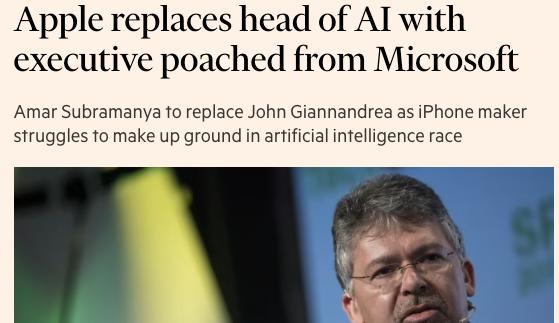
困扰数学界30多年的塔 拉格兰卷积猜想,被90后华人数学家攻破了! 苏黎世联邦理工学院Yuansi Chen,刚刚在arXiv上发布了自己的最新研究成果: $\mathbb{P}_{x\sim\mu}\left(P_{\tau}f(X)>\eta\int fd\mu\right)\leq c_{\tau}\frac{\log\log\eta}{\eta\sqrt{\log\eta}}$. 这个结果引发了大量关注,简单来说,是因为这为理解高维离散空间中的平滑化提供了数学论证。 另外,这项研究也与机器学习息息相关: 从理论上支撑了机器学习中的正则化概念; 为开发处理离散数据的生成式AI模型提供了直接的数学工具和物理直觉。 破解30年数学难题 塔 拉格兰卷积猜想由"数学界诺奖"——阿贝尔奖得主Michel Talagrand在1989年提出。 我们先来了解两个概念,其一,是"加热平滑": 想象一个非常高维的空间,比如一个巨大的多维棋盘,其中每个方格的状态都是二元选择。其中有一个函数,这个函数可能非常"尖锐",有的地方数值特 别大,有的地方数值特别小。 论文证明了布尔超立方体上的塔 拉格兰卷积猜想(Talagrand ...
36年卷积猜想被解决,华人唯一作者,AI或受益
机器之心· 2025-11-26 05:12
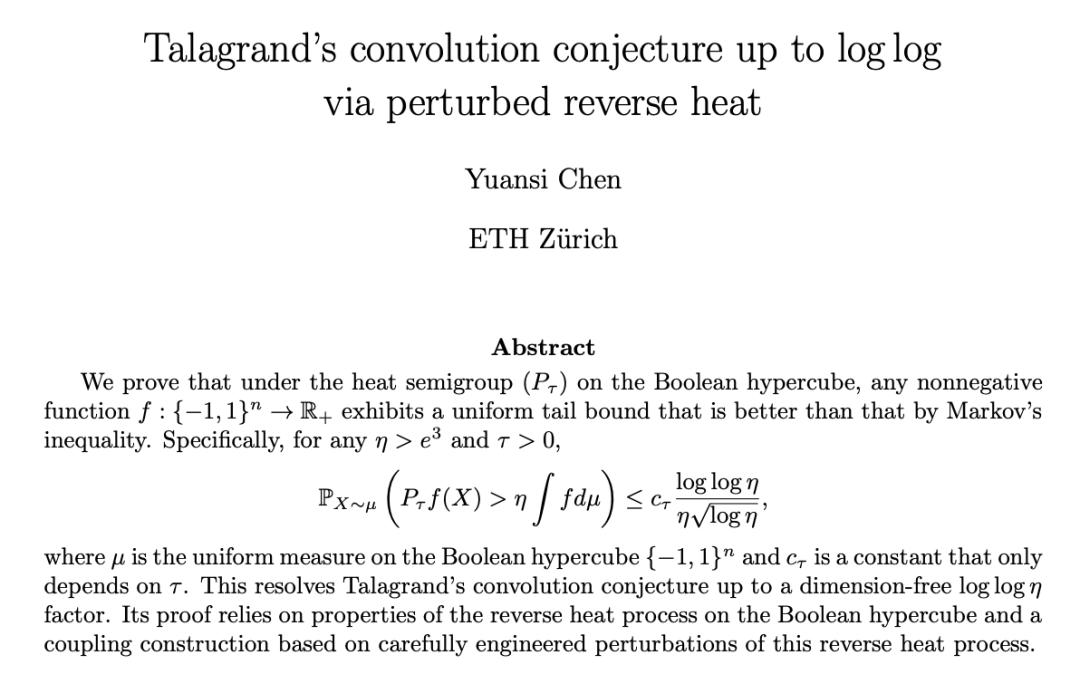
Core Viewpoint - The article discusses a significant mathematical breakthrough by Yuansi Chen, who solved the Talagrand convolution conjecture, a problem that has remained open for 36 years, with implications for modern computer science and machine learning [3][10]. Group 1: Background and Importance - The Talagrand convolution conjecture, proposed in 1989, is one of the most important open problems in probability theory and functional analysis, focusing on the regularization properties of the heat semigroup applied to L₁ functions on the Boolean hypercube [10]. - The conjecture predicts that applying a smoothing operator to any L₁ function will significantly improve tail decay, which is crucial for theoretical computer science, discrete mathematics, and statistical physics [10][21]. Group 2: Key Findings - Chen's proof shows that for any non-negative function f on the Boolean hypercube, the probability of the smoothed function exceeding a certain threshold decays at a rate better than the Markov inequality, specifically with a bound involving a log log factor [6][11]. - The result provides a positive answer to whether the tail probability disappears as η approaches infinity, marking a significant improvement over previous methods [13][21]. Group 3: Methodology - The core of Chen's method involves constructing a coupling between two Markov jump processes through a "perturbed reverse heat process," representing a major methodological advancement in discrete stochastic analysis [15][20]. - The proof combines several innovative techniques, including total variation control and a multi-stage Duhamel formula, to achieve dimension-free bounds [20][21]. Group 4: Implications for Future Research - The remaining log log η factor presents a clear target for future research, with potential improvements in coupling distance or alternative perturbation designs that could eliminate this factor [21][25]. - The work enhances the toolbox for handling high-dimensional discrete space probability distributions and connects to current AI trends, particularly in score-based generative models [23][24].
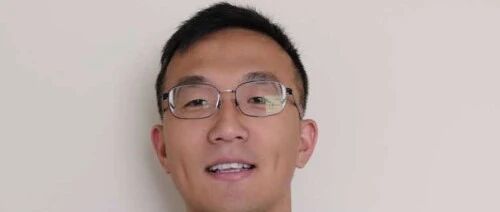
90后华人副教授突破30年数学猜想!结论与生成式AI直接相关
量子位· 2025-11-26 04:21
鱼羊 发自 凹非寺 量子位 | 公众号 QbitAI 困扰数学界30多年的 塔拉格兰卷积猜想 ,被90后华人数学家攻破了! 苏黎世联邦理工学院Yuansi Chen,刚刚在arXiv上发布了自己的最新研究成果: $$\mathbb{P}_{X\sim\mu}\left(P_{\tau}f(X)>\eta\int f d\mu\right)\leq c_{\tau}{\frac{\log\log\eta}{\eta\sqrt{\log\eta}}},$$ 论文证明了布尔超立方体上的塔拉格兰卷积猜想(Talagrand's convolution conjecture),结果精确到一个log log η因子。 这个结果引发了大量关注,简单来说,是因为这为 理解高维离散空间中的平滑化提供了数学论证 。 另外,这项研究也与机器学习息息相关: 从理论上支撑了机器学习中的正则化概念; 为开发处理离散数据的生成式AI模型提供了直接的数学工具和物理直觉。 破解30年数学难题 塔拉格兰卷积猜想由"数学界诺奖"——阿贝尔奖得主Michel Talagrand在1989年提出。 我们先来了解两个概念,其一,是"加热平滑": 想象一 ...