
双碳

Search documents
10所国内顶尖高校的20支AI创业团队与资本对话 硬核项目苏州路演
Su Zhou Ri Bao· 2025-11-11 22:48
Core Insights - The "Investment and Financing Roadshow" event held on November 11 is part of the 2025 Jiangsu Artificial Intelligence Innovation Development Conference, showcasing 20 AI startup teams from top universities like Peking University, Tsinghua University, and Fudan University [1] - The event featured high-level technology project presentations and capital dialogues, with significant interest from leading investment institutions [1] Group 1: Project Highlights - Fudan University's project on "New Energy Power Prediction Model and Micro-Meteorological Model" gained widespread attention for its robust technical logic and clear application prospects, aiming to enhance power prediction accuracy for renewable energy sources [2] - The project is designed to support the transition of power systems with high renewable energy integration, optimizing grid consumption capacity and cost control, applicable in wind and solar power stations, grid scheduling, and electricity trading [2] Group 2: Entrepreneurial Environment - The project team, composed of Fudan alumni, emphasizes the importance of transforming academic knowledge and industry insights into products that drive industry progress, choosing Suzhou for its efficient connection between technology, industry, and capital [2] - The event also highlighted 20 projects in cutting-edge fields such as psychological robotics, smart healthcare, and embodied intelligence, with a notable project from Nanjing University focusing on using generative AI for preliminary screening of scoliosis through a back photo [3] Group 3: Supportive Policies - Suzhou has established a series of supportive tools, including a 10 billion talent fund and a university achievement transformation fund, aimed at helping students' entrepreneurial ventures succeed [3] - The event included a promotion of talent fund policies, providing a comprehensive evaluation framework from technology to market for aspiring entrepreneurs [3]

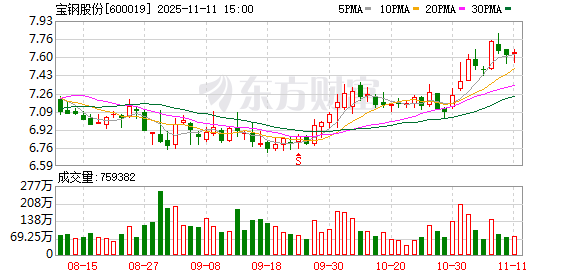
宝钢股份:公司持续深化低碳发展战略
Zheng Quan Ri Bao· 2025-11-11 14:13
Core Viewpoint - Baosteel Co., Ltd. is committed to achieving carbon reduction targets set by China Baowu, aiming for an 8% reduction by 2025, 30% by 2035, and carbon neutrality by 2050, based on 2020 levels [2] Group 1: Carbon Reduction Goals - The company has established medium to long-term carbon reduction targets, with a baseline year of 2020 [2] - Specific targets include a reduction of 8% by 2025 and a 30% reduction by 2035, with a goal of achieving carbon neutrality by 2050 [2] Group 2: Current Performance - In 2023 and 2024, the carbon emission intensity for Baosteel's four bases is projected to be 2.04 tons and 2.00 tons of CO2 per ton of crude steel, respectively [2] - This represents a decrease of 4.23% and 6.1% compared to the 2020 level of 2.13 tons of CO2 per ton of crude steel, meeting annual reduction targets [2] Group 3: Strategic Framework - The company is focusing on low-carbon development strategies and aims to ensure that carbon reduction targets are assessable, traceable, and achievable [2] - Baosteel is breaking down the strategic contributions of each carbon reduction target phase to address climate change risks effectively [2]


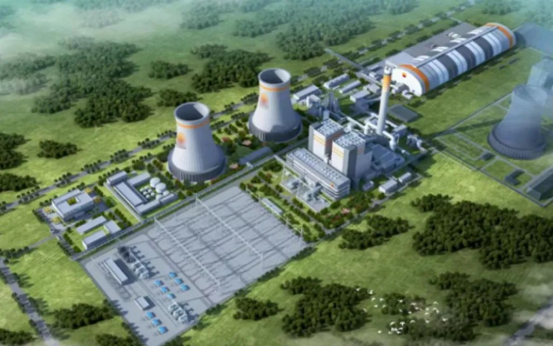
陕鼓大象转身:破界“服务型制造”
Mei Ri Jing Ji Xin Wen· 2025-11-11 09:38
Core Insights - The article highlights the transformation of Shaan Gu Group from a traditional equipment manufacturer to a comprehensive solution provider in the green low-carbon energy sector, showcasing its achievements in various awards and recognitions [1][2][8] - The company has successfully integrated its core competencies in compressor technology with emerging fields such as carbon capture, utilization, and storage (CCUS), long-duration energy storage, and industrial data governance [3][4][6] Summary by Sections Recent Achievements - Shaan Gu Group has recently established a joint research institute with Xi'an Jiaotong University, marking a significant collaboration between academia and industry [1] - The company received the "Urban Innovation Award" from the United Nations Industrial Development Organization and was recognized as a "Leader" in industrial data governance and a "Pioneer" in long-duration energy storage [1][2] Technological Advancements - The CCUS technology developed by Shaan Gu has been included in the national directory of advanced green low-carbon technologies, emphasizing its role in reducing carbon emissions [4] - The company has signed a major project with a leading domestic energy enterprise for a million-ton integrated "new energy + coal power + CCUS" initiative, showcasing its expertise in this area [6] Strategic Transformation - Shaan Gu has undergone two significant strategic transformations, evolving from a single equipment manufacturer to a comprehensive service provider in major equipment systems [8][12] - The company has focused on enhancing its core equipment capabilities while expanding into industrial services and energy infrastructure operations [11][12] Future Directions - The company is initiating a third round of transformation, emphasizing service-oriented manufacturing and the integration of advanced technologies with production processes [15][18] - Shaan Gu aims to strengthen its high-end manufacturing capabilities and leverage financial tools to empower its industrial chain, while also developing new technologies for CCUS and energy transition [19]

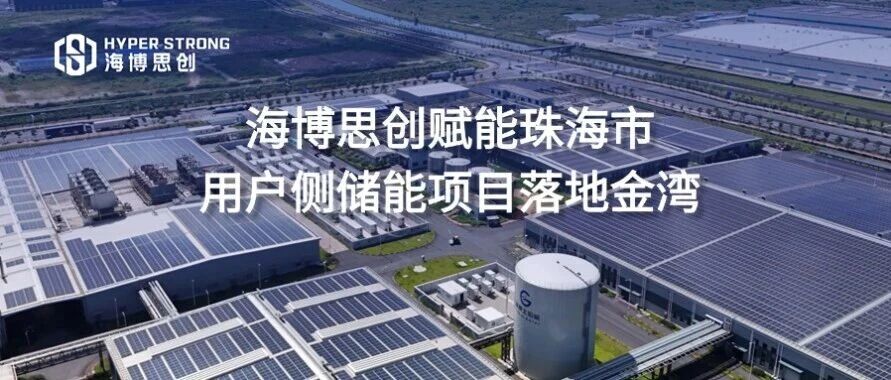
标杆案例 | 大幅降低企业用电成本,海博思创赋能珠海市用户侧储能项目落地金湾
海博思创· 2025-11-11 09:35
Core Viewpoint - Under the "dual carbon" goals, user-side commercial and industrial energy storage becomes a key factor for enterprise transformation, exemplified by the establishment of the Zhuhai user-side commercial energy storage project by Haibosichuang and its partners [1][3]. Group 1: Project Overview - The Zhuhai project features a 28.5MW/100MWh energy storage system that employs an innovative model of "peak shaving and valley filling + photovoltaic consumption + virtual power plant" [1]. - The project aims to alleviate the high electricity costs faced by Gaojing Solar at its Zhuhai Jinwan base, which has high energy consumption in production [1]. Group 2: Economic Impact - Following the adjustment of the time-of-use electricity pricing policy in Guangdong by 2025, peak electricity prices are expected to exceed 1 yuan per kWh, while valley prices will be around 0.27 yuan per kWh, providing a new opportunity for high-energy-consuming enterprises to reduce energy costs [1]. Group 3: Technological Features - The project utilizes Haibosichuang's advanced liquid cooling energy storage system, which features high charging and discharging efficiency and long battery life [3]. - A comprehensive fire safety solution is implemented, including cabin-level perfluorohexane injection and PACK-level combustible gas detection, ensuring early warning and rapid response to potential hazards [3]. Group 4: Operational Strategy - Haibosichuang has developed a "two charges and two discharges" strategy to balance Gaojing Solar's peak and valley loads, thereby alleviating pressure on the public grid and significantly reducing electricity costs [3]. - The project operates in conjunction with the photovoltaic system to utilize excess generated electricity, enhancing power generation stability [3]. Group 5: Market Context - The energy usage logic in high-energy-consuming industries is undergoing fundamental changes, with peak-shaving electricity usage shifting from a flexible choice to a rigid necessity [5]. - Haibosichuang plans to deepen its customized "energy storage + X" strategic layout to optimize energy utilization efficiency and operational costs for enterprises [5].
类比2020-2021,A股处于什么位置?
Hua Er Jie Jian Wen· 2025-11-11 08:51
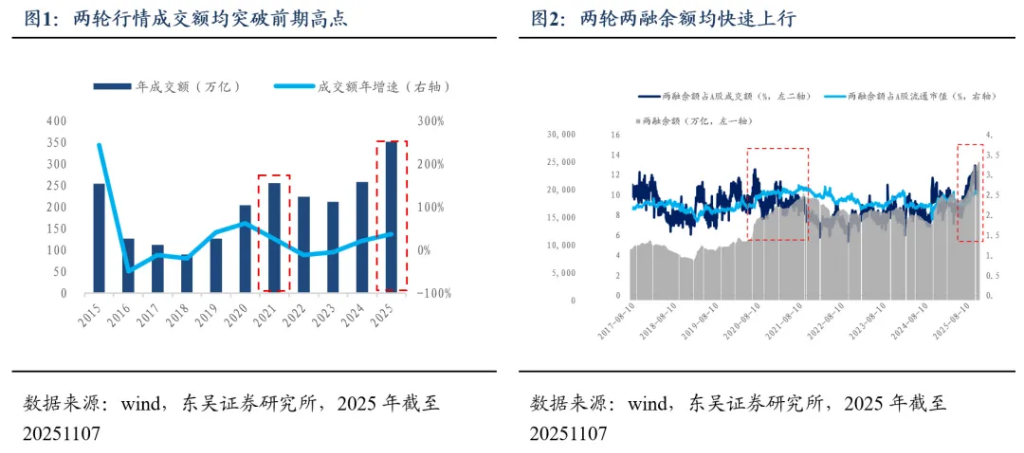
Core Viewpoint - The current A-share market shows significant similarities to the 2020-2021 market trends, reflected in macro policy orientation, industrial rotation patterns, and capital allocation behaviors. The market is believed to be in the early stages of a new bull market driven by policy and industrial trends [1][6]. Group 1: Macroeconomic Environment Similarities - The macroeconomic environment in 2025 is characterized by a policy-driven moderate recovery, with GDP growth expected to exceed 5%, similar to the V-shaped recovery seen in 2021 [7][8]. - Domestic monetary and fiscal policies are consistent with those in early 2020, exhibiting a loose stance that supports market growth [8][9]. Group 2: Industrial Development Similarities - The industrial trends in 2025 reflect breakthroughs in sectors such as AI computing power, robotics, new consumption, and innovative pharmaceuticals, paralleling the trends seen in 2021 [2][10]. - The new energy sector is experiencing high growth driven by dual carbon goals and anti-involution policies, with significant revenue increases in solar and energy storage sectors [11][12]. Group 3: Market Activity Similarities - Market activity has significantly increased, with daily trading volumes in 2025 averaging approximately 1.68 trillion yuan, surpassing levels seen in 2021 [18]. - The balance of margin financing has also reached historical highs, indicating a positive market sentiment and increased investor participation [18]. Group 4: Current Market Position - The current market is in the early stages of a slow bull market, akin to the period from August to October 2020, with strategic funds guiding market entry [5][35]. - The market is expected to evolve towards a structural "innovation bull" phase by 2026, as external capital flows and domestic institutional performance improve [35][36].
美股影响下A股年底或震荡
Sou Hu Cai Jing· 2025-11-11 08:18
Group 1 - The core viewpoint highlights the volatility in the US stock market, influenced by the prolonged government shutdown and concerns over AI funding issues [1] - The US stock market experienced a significant drop, with the Nasdaq index falling over 2% before a V-shaped recovery, maintaining its position above the 60-day moving average [1] - The anticipated government shutdown, expected to last around 50 days, is projected to cause production losses and liquidity crises [1] Group 2 - The article suggests that exposure to overseas assets should be controlled, while domestic technology stocks should avoid North American supply chains and focus on domestic hard technology alternatives [1] - It is expected that the A-share market will experience fluctuations around the 4000-point level by the end of the year, with an increase in structural market conditions [1] - Key updates include improvements in October's CPI and PPI, government initiatives to boost consumption and investment, and the release of a "dual carbon" white paper to promote the integration of coal and renewable energy [1]

新能源需求飙升,与AI争夺电力:铝,下一个金属之王?
Zhong Guo Neng Yuan Wang· 2025-11-11 03:04
Core Viewpoint - The recent surge in aluminum prices is driven by supply constraints and increasing demand across various sectors, particularly in renewable energy and electric vehicles. Group 1: Price Trends - On November 6, 2025, China Aluminum (601600.SH) reached a 15-year high, with aluminum cash prices averaging $2,786 per ton in October, up approximately 7.2% year-on-year, and further rising to $2,859 per ton in November [1] - Domestic aluminum prices fluctuated around 21,600 yuan per ton in early November, marking an 11% increase compared to the same period in 2024, although still below the peak of 24,000 yuan per ton in 2021 and 2022 [1] Group 2: Supply Constraints - Global electrolytic aluminum production is highly concentrated, with China producing about 4,300 million tons in 2024, accounting for nearly 60% of the total [2] - China's electrolytic aluminum production capacity is nearing its limit, with a total capacity of approximately 4,584 million tons and an operational capacity of about 4,406 million tons as of October [3] - The production capacity ceiling set by the Chinese government at around 4,500 million tons per year has created a rigid supply structure, making it difficult to alleviate price pressures through new capacity [3] Group 3: International Production Challenges - International expansion of electrolytic aluminum production is hindered by high energy costs and infrastructure limitations, with U.S. industrial electricity prices exceeding feasible thresholds for new projects [4] - The energy consumption for producing one ton of electrolytic aluminum is approximately 14,000 kWh, making electricity a significant cost factor for producers [5] Group 4: Demand Drivers - The demand for electrolytic aluminum is significantly driven by sectors such as real estate, transportation, and renewable energy, with notable contributions from solar and electric vehicle industries [7] - In the first nine months of 2025, new energy vehicle production and sales reached 11.24 million units, with a penetration rate of 46.1% in the domestic new car market [8] - The rapid development of energy storage solutions is also contributing to increased aluminum demand, with cumulative installed capacity reaching 73.76 million kilowatts by the end of 2024 [7] Group 5: Future Outlook - The aluminum industry has seen a lag in capital investment relative to demand growth, leading to slow capacity expansion and a predictable upward price trend in the coming years [9] - The potential for aluminum to replace copper in low-voltage applications is increasing, driven by aluminum's lower price and greater availability, although large-scale substitution remains a challenge [9]

东丽:前沿科技与可持续愿景深度融合
Zhong Guo Hua Gong Bao· 2025-11-11 02:50
中化新网讯 11月5日,东丽以"新材料、新技术、新用途"为核心主题参与本届进博会,全面展示其前沿 科技与可持续发展愿景的深度融合。东丽以"用尖端材料和技术,打造可持续的明天"为宣言,向中国市 场展现其作为"真正的可持续发展企业"的长期承诺与创新活力。 东丽本次展出的最大亮点是特别设置的"未来区域"。该区域紧扣中国"双碳"目标与"新质生产力"发展方 向,集中呈现了东丽在构建循环型社会方面的五项核心技术与成功实践:"薄膜to薄膜"闭环回收系统实 现了塑料包装的高价值循环利用;聚酰胺6亚临界水解重合技术将汽车废旧尼龙部件重塑为高品质原材 料;回收聚对苯二甲酸乙二醇酯瓶的循环再生体系将消费后塑料瓶转化为高品质纤维;碳纤维复合材料 Eco-SYSTEM是回收波音787主翼生产工序中碳纤维边角料将其再生成联想笔记本电脑外壳;锂离子电 池回收技术应对新能源产业快速发展带来的资源与环保挑战。 (曹晓敏 陈鸿应) ...
“一带一路”俄罗斯绝热节能材料市场发展环境及投资建议评估预测报告(2026版)
Sou Hu Cai Jing· 2025-11-11 02:00
Industry Overview - The thermal insulation materials industry is a significant branch of the new materials sector, focusing on functional materials that reduce energy loss through thermal conduction, convection, or radiation [2] - Products are categorized based on raw materials, including rubber and plastic materials, fiberglass materials, ceramic fiber materials, aerogel materials, and rock wool materials, with applications in HVAC, industrial, marine, rail, new energy, and building structures [2] Historical Development - The modern thermal insulation materials industry in China began in the 1980s, with industrial production facilitated by the reform and opening-up policy, leading to significant advancements in the development and production of high-efficiency insulation materials [3] - China's rapid economic growth and urbanization have accelerated the industry's scale, supported by improved research capabilities, making China the largest manufacturer and processor of thermal insulation materials globally [3] Global Market Trends - The global market for thermal insulation and soundproofing products was valued at $55.1 billion in 2021 and is projected to grow at a compound annual growth rate (CAGR) of 5.4%, reaching $71.7 billion by 2026 [3] - Key growth drivers include the demand for lightweight and stable insulation materials in high-end equipment manufacturing, particularly in the shipbuilding, aerospace, and rail transportation sectors, as well as enhanced building energy efficiency standards and green building policies [3] Domestic Industry Landscape - China's thermal insulation materials industry has a diverse range of products and applications, with a well-established industrial layout across provinces such as Hebei, Jiangsu, Guangdong, and Shandong [4] - The "14th Five-Year Plan" period has seen various provinces introduce supportive policies for the development of thermal insulation materials, further accelerating industry growth [4] Production Capacity Distribution - For fiberglass, Hebei accounts for approximately 45% of national production capacity, with additional capacity in Jiangxi, Hubei, and Shandong [5] - Shandong holds nearly 50% of the national production capacity for ceramic fibers, while Hebei dominates rubber and plastic production with about 80% of the total capacity [5] - The aerogel industry in China is still in its early stages, with around 30 companies and limited large-scale enterprises, indicating a developing production chain [5][11]

中国“双碳”行动五年记:一场绿色发展的全民奔赴
Jin Rong Shi Bao· 2025-11-11 01:26
Core Insights - The article emphasizes China's significant progress in achieving carbon peak and carbon neutrality goals, highlighting the establishment of a comprehensive carbon reduction policy system and the rapid development of renewable energy [1][2][3] Group 1: Waste Management and Recycling - By the end of 2024, 98.5% of urban communities in China will have waste classification facilities, reflecting a shift in public attitude towards environmental responsibility [1] - The transition from a single waste disposal method to a four-bin system symbolizes a broader commitment to green development [1] Group 2: Energy Transition - China is focusing on renewable energy to achieve its carbon neutrality goals, with non-fossil energy consumption increasing from 16.0% in 2020 to 19.8% in 2024, averaging nearly a 1 percentage point increase per year [2] - By August 2025, installed capacity for wind and solar power is expected to exceed 1.69 billion kilowatts, tripling the capacity from 2020 and contributing to 80% of new power installations since 2020 [2] - The share of fossil energy consumption is projected to decrease from 84.0% in 2020 to 80.2% in 2024, indicating a steady move towards cleaner energy sources [2] Group 3: New Energy Vehicles (NEVs) - As of June 2025, the number of NEVs in China is expected to reach 36.89 million, accounting for 10.27% of the total vehicle ownership, showcasing the rapid adoption of electric vehicles [3] - In 2024, NEVs are projected to be exported to over 180 countries, helping to reduce global carbon emissions by more than 50 million tons [3] - The contribution of the green low-carbon industry to China's GDP is increasing, with the "new economy" accounting for over 18% of GDP in 2024 [3] Group 4: Green Finance and Carbon Market - China has established a robust green finance framework, with green loan balances reaching 36.6 trillion yuan by the end of 2024, with nearly 70% directed towards carbon reduction projects [5] - The national carbon trading market, launched in July 2021, covers over 60% of carbon emissions, with cumulative trading volume reaching approximately 728 million tons and transaction value around 49.83 billion yuan by September 2025 [5] - The voluntary greenhouse gas reduction trading market was initiated in January 2024, with 31 projects registered and a total reduction of 15.04 million tons by October 2025 [5]