扩大内需

Search documents
国寿安保基金:中央经济工作会议延续积极定调 可关注八大方向
Zhong Zheng Wang· 2025-12-15 07:53
Core Viewpoint - The Central Economic Work Conference held on December 10-11 in Beijing maintains a positive tone regarding fiscal and monetary policies for 2024, emphasizing the need for a proactive fiscal policy and a moderately loose monetary policy [1][2] Fiscal Policy - The conference reiterates the need to maintain necessary fiscal deficits, total debt scale, and overall expenditure, while also calling for optimization of fiscal structure and long-term reforms [1] - New requirements include strengthening fiscal management, optimizing expenditure structure, and standardizing tax incentives [1] Monetary Policy - The monetary policy is directed towards promoting stable economic growth and reasonable price recovery, indicating a shift in focus from quantity-based indicators like social financing and credit to price-based indicators such as price levels [1] Eight Key Tasks - The conference outlines eight key tasks, including: 1. **Domestic Demand**: Emphasizing the expansion of quality goods and services supply to lead domestic demand [2] 2. **Innovation**: Highlighting the need to deepen and expand the development of "artificial intelligence+" to leverage China's large-scale market advantages [2] 3. **Reform**: Focusing on establishing a unified market as a key reform breakthrough [2] 4. **Opening Up**: Demonstrating China's commitment against unilateralism and protectionism [2] 5. **Coordinated Development**: Emphasizing policy coordination between urban and rural areas, as well as regional balance [2] 6. **Dual Carbon Goals**: Aligning economic development with ecological and environmental considerations [2] 7. **People's Livelihood**: Prioritizing employment, healthcare, and support for vulnerable groups, reflecting a people-centered development approach [2] 8. **Risk Management**: Highlighting potential risks in the real estate market and local government hidden debts, with a focus on stabilizing the real estate market and managing risks in key areas [2]
习近平:扩大内需是战略之举
中国基金报· 2025-12-15 07:36
文章指出,扩大内需既关系经济稳定,也关系经济安全,不是权宜之计,而是战略之举。实 施扩大内需战略,是保持我国经济长期持续健康发展的需要,也是满足人民日益增长的美好 生活的需要。要加快补上内需特别是消费短板,使内需成为拉动经济增长的主动力和稳定 锚。 文章强调,大国经济的优势就是内部可循环。要牢牢把握扩大内需这一战略基点,使生产、 分配、流通、消费各环节更多依托国内市场实现良性循环。扩大内需和扩大开放并不矛盾。 国内循环越顺畅,越能形成对全球资源要素的引力场,越有利于构建以国内大循环为主体、 国内国际双循环相互促进的新发展格局,越有利于形成参与国际竞争和合作新优势。要把扩 大内需战略同深化供给侧结构性改革有机结合起来,供需两端同时发力、协调配合,形成需 求牵引供给、供给创造需求的更高水平动态平衡。 文章指出,总需求不足是当前经济运行面临的突出矛盾。要坚决贯彻落实扩大内需战略规划 纲要,尽快形成完整内需体系,着力扩大有收入支撑的消费需求、有合理回报的投资需求、 有本金和债务约束的金融需求。消费是我国经济增长的重要引擎,扩大消费最根本的是促进 就业,完善社保,优化收入分配结构,扩大中等收入群体,扎实推进共同富裕。要 ...

习近平:扩大内需是战略之举
清华金融评论· 2025-12-15 07:21
12月16日出版的第24期《求是》杂志将发表中共中央总书记、国家主席、中央军委主席习近平的重要文章《扩大内需是战略之举》。这是习 近平总书记2015年10月至2025年10月期间有关重要论述的节录。 文章指出,扩大内需既关系经济稳定,也关系经济安全,不是权宜之计,而是战略之举。实施扩大内需战略,是保持我国经济长期持续健康 发展的需要,也是满足人民日益增长的美好生活的需要。要加快补上内需特别是消费短板,使内需成为拉动经济增长的主动力和稳定锚。 文章强调,大国经济的优势就是内部可循环。要牢牢把握扩大内需这一战略基点,使生产、分配、流通、消费各环节更多依托国内市场实现 良性循环。扩大内需和扩大开放并不矛盾。国内循环越顺畅,越能形成对全球资源要素的引力场,越有利于构建以国内大循环为主体、国内 国际双循环相互促进的新发展格局,越有利于形成参与国际竞争和合作新优势。要把扩大内需战略同深化供给侧结构性改革有机结合起来, 供需两端同时发力、协调配合,形成需求牵引供给、供给创造需求的更高水平动态平衡。 文章指出,总需求不足是当前经济运行面临的突出矛盾。要坚决贯彻落实扩大内需战略规划纲要,尽快形成完整内需体系,着力扩大有收入 支 ...

习近平:扩大内需是战略之举
第一财经· 2025-12-15 07:18
12月16日出版的第24期《求是》杂志将发表中共中央总书记、国家主席、中央军委主席习近平的重要 文章《扩大内需是战略之举》。这是习近平总书记2015年10月至2025年10月期间有关重要论述的节 录。 文章指出,扩大内需既关系经济稳定,也关系经济安全,不是权宜之计,而是战略之举。实施扩大内需 战略,是保持我国经济长期持续健康发展的需要,也是满足人民日益增长的美好生活的需要。要加快补 上内需特别是消费短板,使内需成为拉动经济增长的主动力和稳定锚。 来源|央视新闻 文章强调,大国经济的优势就是内部可循环。要牢牢把握扩大内需这一战略基点,使生产、分配、流 通、消费各环节更多依托国内市场实现良性循环。扩大内需和扩大开放并不矛盾。国内循环越顺畅,越 能形成对全球资源要素的引力场,越有利于构建以国内大循环为主体、国内国际双循环相互促进的新发 展格局,越有利于形成参与国际竞争和合作新优势。要把扩大内需战略同深化供给侧结构性改革有机结 合起来,供需两端同时发力、协调配合,形成需求牵引供给、供给创造需求的更高水平动态平衡。 编辑 |心一 文章指出,总需求不足是当前经济运行面临的突出矛盾。要坚决贯彻落实扩大内需战略规划纲要,尽快 ...

11月经济数据解读:关注扩大内需政策接续
Yin He Zheng Quan· 2025-12-15 07:11
Economic Overview - GDP growth for January to November is reported at 4.9%, slightly down from 4.8% in November[1] - Industrial production growth remains weak, with a decline of 1.1% in fixed asset investment for the same period[1] Consumption Trends - Retail sales growth is under pressure, with a 1.3% increase in November, while service consumption shows improvement[4] - The retail sector is experiencing a decline in durable goods, with a notable drop of 7.7% in November[6] Manufacturing Sector - Manufacturing investment has decreased significantly, with a decline of 12.2% year-to-date[11] - The manufacturing sector's growth rate has slowed, with a drop of 4.45% in November compared to the previous year[11] Infrastructure Investment - Infrastructure investment shows a narrowing decline, with a year-to-date drop of 1.1%[15] - Policy support is expected to stabilize some of the downturn in infrastructure investment, with projections for improvement in 2026[15] Real Estate Market - Real estate investment continues to weaken, with a year-to-date decline of 14.7%[22] - Residential sales prices are falling, with new and second-hand home prices decreasing by 1.2% and 2.2% respectively in November[22]
习近平:扩大内需是战略之举
财联社· 2025-12-15 07:09
据 央视新闻, 12月16日出版的第24期《求是》杂志将发表中共中央总书记、国家主席、中央军委主席习近平的重要文章《扩大内需是战略之举》。 这是习近平总书记2015年10月至2025年10月期间有关重要论述的节录。 文章指出,扩大内需既关系经济稳定,也关系经济安全,不是权宜之计,而是战略之举。实施扩大内需战略,是保持我国经济长期持续健康发展的 需要,也是满足人民日益增长的美好生活的需要。要加快补上内需特别是消费短板,使内需成为拉动经济增长的主动力和稳定锚。 文章强调,大国经济的优势就是内部可循环。要牢牢把握扩大内需这一战略基点,使生产、分配、流通、消费各环节更多依托国内市场实现良性循 环。扩大内需和扩大开放并不矛盾。国内循环越顺畅,越能形成对全球资源要素的引力场,越有利于构建以国内大循环为主体、国内国际双循环相 互促进的新发展格局,越有利于形成参与国际竞争和合作新优势。要把扩大内需战略同深化供给侧结构性改革有机结合起来,供需两端同时发力、 协调配合,形成需求牵引供给、供给创造需求的更高水平动态平衡。 文章指出,总需求不足是当前经济运行面临的突出矛盾。要坚决贯彻落实扩大内需战略规划纲要,尽快形成完整内需体系,着 ...

博时基金陈显顺:中央经济工作会议释放积极信号,为“十五五”开局定向领航
Xin Lang Cai Jing· 2025-12-15 06:53
Core Viewpoint - The Central Economic Work Conference held on December 10-11 in Beijing outlines the economic work for 2026, emphasizing high-quality development to address uncertainties in the current economic landscape [1][8]. Group 1: Macroeconomic Policy - The conference signals a continuation of a more proactive fiscal policy and moderately loose monetary policy, enhancing the synergy of macroeconomic policies [1][2][3]. - Emphasis on "optimizing expenditure structure" and scientific management within fiscal policy aims to stabilize total demand while directing funds towards key areas such as technology innovation and public welfare [3][10]. - Monetary policy is set to remain "moderately loose," with flexibility in using various tools like reserve requirement ratio cuts and interest rate reductions to ensure adequate liquidity [3][10]. Group 2: Domestic Demand and Economic Structure - The conference prioritizes "expanding domestic demand" as a key task, reflecting a strategic decision to strengthen the internal economic drive amid rising external uncertainties [3][4][11]. - Key strategies for expanding domestic demand include stabilizing income, enhancing consumer confidence, optimizing supply, and promoting investment to create a virtuous cycle [4][11]. Group 3: Innovation and New Growth Drivers - Future growth drivers will focus on the integration of cutting-edge technology with industries, particularly in areas like artificial intelligence, new energy, and high-end manufacturing [5][11]. - The capital market is identified as a crucial element in nurturing new growth drivers, with a call for reforms to better support national innovation strategies [5][11]. Group 4: Reform and High-Quality Development - The conference highlights the need for reforms to eliminate "involutionary" competition and establish a unified national market, which is essential for enhancing economic vitality [6][12]. - Recommendations include setting high standards for market access and fair competition rules to guide enterprises in phasing out outdated capacities [12]. Group 5: International Cooperation and Investment Opportunities - China's opening up is shifting towards institutional openness, with future cooperation expected to focus on service trade, digital trade, and green low-carbon sectors [6][13]. - Investment opportunities are anticipated in domestic leading service enterprises, technology companies in digital trade, and firms in the renewable energy sector that can engage in international standard-setting [13].
广发证券郭磊:2026年政策的“跨周期”特征将更明显,降息降准仍是政策工具选项
中国基金报· 2025-12-15 06:35
Core Viewpoint - The central economic work conference emphasizes the need for a dual approach of policy support and reform innovation to stimulate economic potential and address external challenges [1][2]. Group 1: Economic Policy Framework - The 2026 policy will exhibit more pronounced "cross-cycle" characteristics, with interest rate cuts and reserve requirement ratio reductions remaining viable policy tools [1][2]. - The conference introduced five new "musts," including the need to fully tap economic potential to address insufficient effective demand and release domestic demand space [2]. - The focus on combining investment in physical assets and human capital highlights the importance of enhancing investments in education, healthcare, and social security to deepen growth functions [2]. Group 2: Monetary Policy - The implementation of a moderately loose monetary policy aims to stabilize economic growth and ensure reasonable price recovery, utilizing various tools such as interest rate cuts and reserve requirement reductions [3]. - The emphasis on guiding financial institutions to support domestic demand expansion, technological innovation, and small and medium-sized enterprises indicates a prioritization of expanding domestic demand in financial policy [3]. - The observation of the GDP deflator's recovery slope in 2026 serves as a critical indicator for monitoring economic conditions [3].

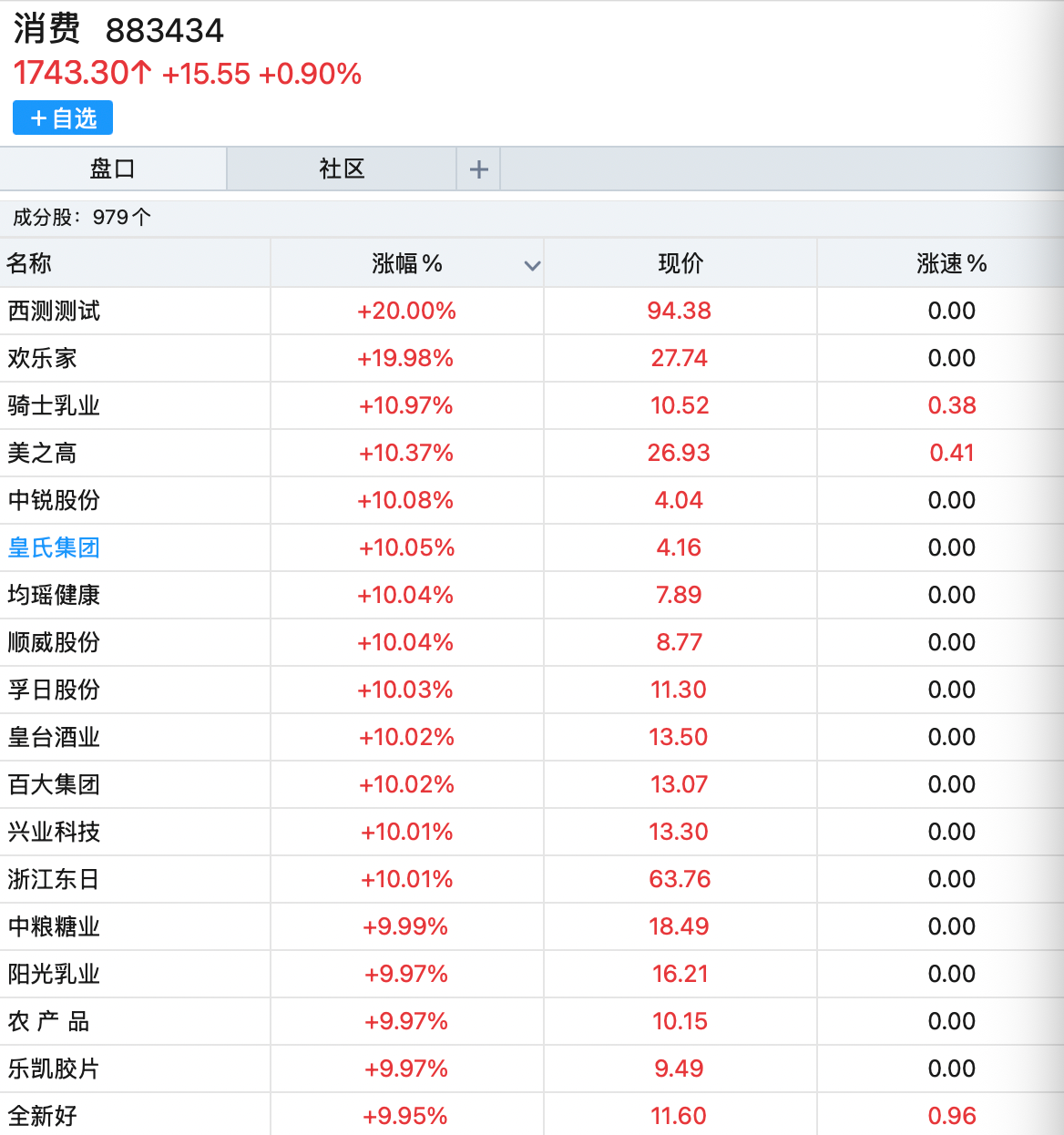
利好来了!这一板块,16只个股集体涨停!
Zheng Quan Ri Bao Wang· 2025-12-15 06:17
Group 1 - The consumer sector is showing strong performance with multiple stocks hitting the daily limit up, indicating a bullish market sentiment [1] - A total of 16 stocks, including companies like Huanlejia and Zhongrui Co., have reached their upper trading limits, reflecting investor confidence [1] - The recent joint notice from the Ministry of Commerce and other financial authorities aims to boost consumption through coordinated policies, focusing on various consumption areas [2][4] Group 2 - From January to November, the total retail sales of consumer goods reached 456,067 billion yuan, with a year-on-year growth of 4.0%, indicating a steady recovery in consumer spending [3] - The retail sales excluding automobiles amounted to 411,637 billion yuan, growing by 4.6% year-on-year, showcasing resilience in the consumer market [3] - Recent policies are expected to enhance consumer demand, with a focus on creating a robust domestic market and improving the quality of retail services [4] Group 3 - Analysts suggest two main strategies for investing in the consumer sector: focusing on scalable business models and enhancing customer experience to drive growth [5] - Specific sectors to watch include chain restaurants, sports service companies, and entertainment operators that can leverage unique IP value and fan engagement [5] - The emphasis on high-quality development and consumer experience aligns with national policies aimed at stimulating domestic consumption [4][5]


更大力度提振消费!三部门发文→
Sou Hu Cai Jing· 2025-12-15 06:16
Core Viewpoint - The recent Central Economic Work Conference emphasizes the need for financial institutions to enhance support for expanding domestic demand, with a focus on boosting consumption through coordinated efforts between commerce and finance [1][10]. Group 1: Financial Support for Consumption - Financial support will be increased in key areas of consumption, including upgrading product consumption and expanding service consumption [1][2]. - Innovative financial products and services will be developed to cater to the characteristics of service consumption, such as home services, hospitality, and entertainment [2][4]. - The development of financing services for intangible assets like intellectual property and technology achievements will be prioritized, along with tailored financial products for small and micro enterprises [4]. Group 2: New Consumption Models - Financial institutions are encouraged to collaborate with platforms and key merchants to enhance payment options like installment plans and digital currencies, addressing consumer upgrade needs [6]. - There will be a focus on developing new consumption scenarios, including green consumption, digital consumption, and AI-driven consumption [7]. - Financial services will be integrated to support new business models and consumption activities, such as "Buy in China" initiatives and the development of urban consumption centers [7]. Group 3: Rural and County-Level Consumption - Financial support will be provided for county-level consumption initiatives, including seasonal commercial activities and rural product sales [11]. - The development of rural logistics and cold chain facilities will be supported through targeted financing [11]. - Financial institutions are encouraged to participate in local consumption promotion activities, offering tailored products and services to enhance consumer engagement [11].