
双碳目标

Search documents
BNEF上海峰会亮点回顾:领袖洞见,解码2025能源变局
彭博Bloomberg· 2025-12-09 06:05
Core Viewpoint - The BNEF Shanghai Summit highlighted China's strategic transition towards a low-carbon energy system, emphasizing the importance of policy reform, market adaptation, and technological innovation in achieving energy transformation goals [2][16]. Group 1: Policy, Goals, and Electricity Market Reform - The summit focused on China's renewable energy strategy, aiming to increase total installed renewable energy capacity to 3.6 billion kilowatts as a national strategic deployment [3]. - Structural challenges in renewable energy development were identified, including mismatches in planning across various segments and the economic viability of long-distance transmission [3]. - The industry is shifting from a "project grabbing" phase to a "project selection" phase, emphasizing location, consumption, and economic factors [4]. - A wave-like market trend is expected, with a peak in 2025 followed by a decline, but a recovery is anticipated in 2026 as new mechanisms stabilize [4][6]. Group 2: New Energy System Elements - Key elements of the new energy system discussed include zero-carbon parks, energy storage, and AI data centers, which are crucial for China's energy transition and can serve as replicable models for global green development [7]. - Zero-carbon parks are emerging as engines of green development, with the potential to exceed climate goals by 2035 [9]. - The energy storage industry is transitioning from policy-driven to market-driven, with significant growth in demand and production [9]. - AI data centers are facing new energy and cooling challenges, with a shift towards lithium batteries and increased use of renewable energy [9]. Group 3: Oil and Gas Trade Restructuring and Clean Technology Expansion - Chinese enterprises are transitioning from passive participants to active shapers in the global oil and gas landscape, with a projected decline in crude oil imports by 2024 [11]. - The restructuring of the oil and gas value chain relies on diversified investment portfolios, simplified project management, and strategic supplier relationships [11]. - The challenges of clean technology expansion abroad have shifted from "hard" capabilities to "soft" financing adaptability, requiring a better understanding of local regulations and community engagement [13]. Group 4: Innovative Technologies - The energy sector is focusing on long-term technological breakthroughs, with long-duration energy storage and nuclear fusion seen as strategic reserves for deep decarbonization [14]. - Flow batteries are gaining attention for their cost advantages in long-duration storage applications [14]. - Solid-state batteries are viewed as the ultimate solution for high energy density and safety, but face challenges in scaling production [15]. - Nuclear fusion is at a critical development point, with advancements in high-temperature superconductors and AI for science accelerating progress [15].

锚定“双碳”目标促进“十五五”时期低碳产业发展
Zhong Guo Huan Jing Bao· 2025-12-09 03:25
Core Viewpoint - The "14th Five-Year Plan" period is crucial for China to achieve its carbon peak goal, emphasizing the development of low-carbon industries as a pathway for comprehensive green and low-carbon transformation of the economy and society [1] Group 1: Policy Optimization for Low-Carbon Industry Development - The "14th Five-Year" period requires a focus on time-sensitive carbon reduction efforts while capturing potential development opportunities, considering industry interconnections and overall carbon reduction [2] - Emphasis on orderly replacement of high-carbon industries, particularly in key sectors like electricity, non-ferrous metals, and chemicals, while enhancing carbon efficiency [2] - Policies should balance ecological impacts and carbon emissions, transforming challenges into opportunities, such as developing competitive lithium battery recycling industries [2] Group 2: Regional Advantages and National Policy Support - Regions rich in ecological resources should leverage their advantages to become national "carbon neutrality" pilot zones, exploring clean energy supply, carbon trading, and low-carbon industry cultivation [3] - A new production model should integrate industrial, innovation, talent, funding, and policy chains to promote high-quality regional development characterized by low-carbon efficiency [3] Group 3: Encouraging Diverse Participation in Low-Carbon Innovation - Innovation is essential for low-carbon industry development, requiring participation from government, enterprises, research institutions, and society [4] - The government should focus on supporting "dual carbon" technology research and enhancing green financial support for innovation [4] - Financial institutions are encouraged to engage in green technology innovation through investment and insurance products, fostering a supportive environment for small and innovative tech companies [4] Group 4: Supporting High-Quality Development through Innovation - Innovation goals should align with "dual carbon" objectives, particularly in key industries and technologies, such as deep processing of agricultural products in rural areas [5] - The integration of artificial intelligence and digital platforms is vital for optimizing resource utilization and enhancing product value [5] Group 5: Promoting Green Consumption - The "14th Five-Year" plan suggests establishing a green consumption incentive mechanism to promote energy-saving and low-carbon lifestyles [6] - Policies should include subsidies and tax reductions to lower the initial costs of green products, stimulating market demand [7] - A market-driven incentive mechanism should be developed to reward consumers for low-carbon behaviors, creating a positive cycle of ecological and economic benefits [7] Group 6: Infrastructure and Cultural Promotion for Green Consumption - Infrastructure for green consumption, such as electric vehicle charging networks, should be improved to alleviate consumer concerns [8] - Clear standards and labels for green products are necessary to facilitate consumer choices and promote recycling [8] - Public awareness campaigns should be conducted to embed green concepts into daily life, fostering a culture of sustainability [8]
研判2025!中国抗老化剂行业产业链、市场规模及发展趋势分析:行业加速从规模扩张转向质量提升,技术迭代推动高性能产品更新[图]
Chan Ye Xin Xi Wang· 2025-12-09 01:53
Core Insights - The Chinese anti-aging agent industry is in a golden development period, with the market size expected to reach approximately 12.8 billion yuan in 2024, representing a year-on-year growth of 18.52% [1][8] - Traditional sectors such as plastics, rubber, and coatings continue to show steady demand for anti-aging agents, while emerging fields like new energy vehicles, high-end building materials, and healthcare are driving new growth [1][8] - The industry is transitioning from "scale expansion" to "quality improvement," supported by both traditional and emerging demand, as well as technological advancements and green transformation [1][8] Industry Overview - Anti-aging agents are chemical additives that inhibit degradation of materials caused by environmental factors, thereby prolonging product lifespan and maintaining mechanical properties [2] - The main categories of anti-aging agents include antioxidants, light stabilizers, and thermal stabilizers [2] Industry Chain - The upstream of the anti-aging agent industry includes raw materials such as alkyl phenols, fatty alcohols, and various production equipment [4] - The midstream involves the production and manufacturing of anti-aging agents, while the downstream includes applications in rubber, plastics, coatings, adhesives, food, and cosmetics [4] Market Size - The market for anti-aging agents in China is rapidly expanding, with significant contributions from both traditional and emerging sectors [1][8] - The demand for high-performance and environmentally friendly anti-aging agents is increasing, particularly in new energy vehicles and healthcare [1][8] Key Companies - Lianlong is a leading company in the industry, with a comprehensive product matrix and global presence [8] - Suqian Liansheng focuses on light stabilizers, while Fengguang Co. specializes in antioxidants [8] - Yuanli Chemical Group emphasizes research and development of bio-based products and has established partnerships with numerous global companies [9] Industry Development Trends 1. **Technological Innovation**: The industry is focusing on technological advancements to drive product high-endization and specialization, with companies like Lianlong leading the way [10] 2. **Green Transformation**: The shift towards bio-based and biodegradable anti-aging agents is becoming a core research direction, driven by stricter environmental regulations [11] 3. **Market Demand Structure Upgrade**: The demand for high-performance anti-aging agents is increasing, leading to industry consolidation and global expansion strategies among leading companies [12]


国内首座压力能零碳数据中心正式启用
Xin Hua Wang· 2025-12-09 01:49
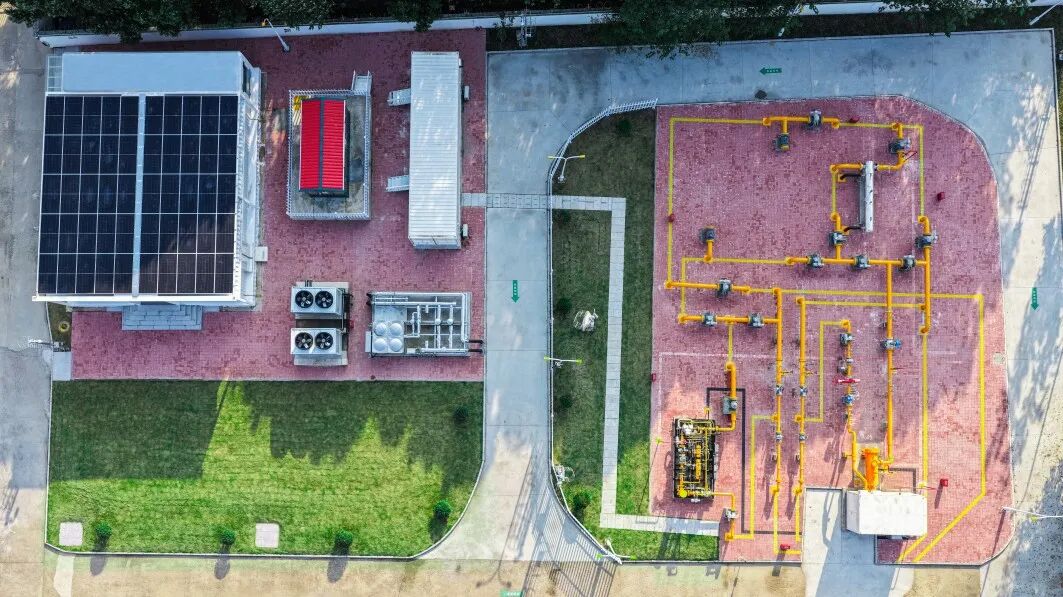
近日,国家管网集团在浙江绍兴正式启用国内首座压力能零碳数据中心,首次将天然气压力能融合应用于数据中心运营,标志着我国算力基础设施在 绿色高效用能领域取得重要突破。 压力能零碳数据中心创新构建"压力能-电能-冷能-算力"一体化协同运行体系,实现天然气压差发电产生的电能和冷能与算力的深度融合,为"人工智能 +"应用发展提供重要支撑,技术及应用水平达到行业领先,填补了国内相关技术领域空白。 相比传统商业数据中心,压力能零碳数据中心不再依赖化石能源发电,而是通过国家管网集团自主研发的静压气浮透平发电一体化装置提供电能,利 用管网输送的天然气,单一股气流同步完成发电、润滑与冷却,真正实现天然气"一气三用",从根本上解决国内天然气余压发电机组结构复杂、运维繁 琐等行业难题。配套撬装冷能利用装置同步输出衍生冷能,实现数据中心供电与供冷的完全自给自足,真正达到运行"零碳化"。项目投运后,年发电量 将突破150万千瓦时每年可节约用电成本超120万元。 压力能零碳数据中心采用两个集装箱模块化机房搭建,配置96面标准机柜,可为集团公司机器视觉平台、生产监控指挥中心等业务系统提供边缘智算 算力支撑,同时满足区域性业务系统算力需求。 ...
电投产融购买约554亿元资产,拟转型为核电巨头
Xin Lang Cai Jing· 2025-12-09 01:44
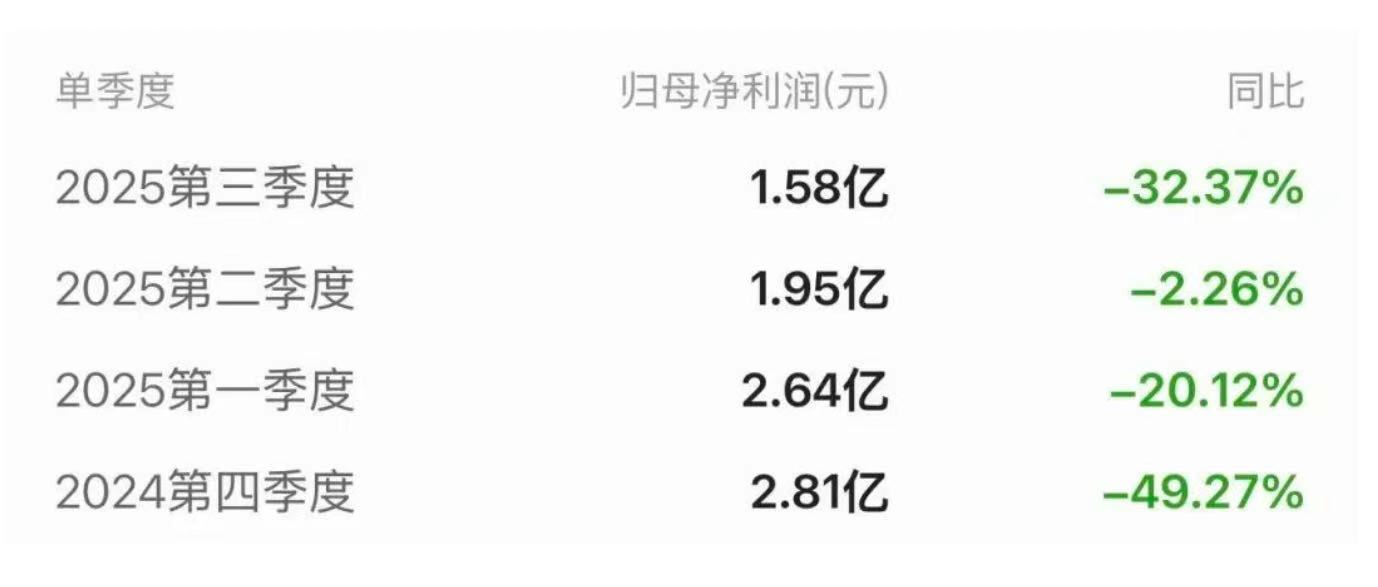
Group 1 - The core point of the article is that State Power Investment Corporation's subsidiary, Electric Power Investment and Financing Co., Ltd. (referred to as "Electric Power Financing"), is undergoing a significant asset swap and share issuance to transform its business focus from a dual model of finance and energy to a single focus on nuclear power generation [1][2] - The proposed transaction involves the acquisition of 100% equity of State Nuclear Power Technology Company and China Life's stake in State Power Investment Nuclear Co., Ltd. for a total valuation of 55.394 billion yuan, while divesting 100% equity of State Power Investment Capital Holdings for 15.108 billion yuan [1] - The difference of 40.285 billion yuan will be settled through share issuance to State Nuclear and China Life, along with a fundraising of up to 5 billion yuan from no more than 35 specific investors, aimed at financing the construction of Units 3 and 4 of the Shandong Haiyang Nuclear Power Plant [1] Group 2 - Following the transaction, State Nuclear will hold a 43.62% stake in Electric Power Financing, making it the controlling shareholder, while China Life will become the second-largest shareholder with a 25.40% stake [2] - The performance commitment for the acquired assets includes a minimum net profit of 3.375 billion yuan in 2025, 3 billion yuan in 2026, and 3.587 billion yuan in 2027, with provisions for compensation if actual profits fall short [3] - The restructuring is seen as a dual example of state-owned enterprise reform and energy structure transformation, aligning with national clean energy goals and addressing previous inefficiencies in the dual business model [3] Group 3 - For the first three quarters of the year, Electric Power Financing reported total revenue of 3.65 billion yuan, a year-on-year decrease of 7.66%, and a net profit attributable to shareholders of 617 million yuan, down 19.20% [3] - The company has experienced a continuous decline in net profit for four consecutive quarters, with a negative cash flow from operating activities of 38.5629 million yuan [3] - As of December 9, the stock price of Electric Power Financing was 6.75 yuan per share, with a total market capitalization of approximately 36.338 billion yuan [5]

【榆林】西北首个兆瓦级飞轮储能调频示范项目并网投运
Shan Xi Ri Bao· 2025-12-08 22:50
Core Viewpoint - The successful commissioning of the first megawatt-level flywheel energy storage project in Northwest China marks a significant advancement in energy storage technology, enhancing grid stability and supporting the transition to renewable energy sources [1][2]. Group 1: Project Overview - The flywheel energy storage project, led by Yulin Energy Yanghuopan Coal Power Company, has a total capacity of 8 megawatts and 0.32 megawatt-hours, consisting of eight flywheel storage units, each with a capacity of 1 megawatt and 0.04 megawatt-hours [1]. - The project utilizes high-speed rotating flywheels for efficient conversion between electrical and kinetic energy, offering advantages such as millisecond-level response, high regulation precision, long cycle life, and environmental friendliness [1]. Group 2: Industry Significance - Energy storage is identified as the "ballast" of the new power system and is crucial for achieving carbon neutrality goals, with Yulin being a major energy city requiring both large-capacity and fast-response energy storage solutions [1]. - The project addresses the integration control challenges between flywheel storage systems and large-capacity coal power units, enhancing operational flexibility and reliability of power supply, thereby facilitating the absorption of more intermittent renewable energy [1]. Group 3: Demonstration and Impact - The project represents a substantial breakthrough in innovating traditional frequency regulation methods and enhancing grid safety and stability, holding significant industry demonstration value and potential for broader application in supporting the stable operation and clean transition of the Northwest power grid [1].
节水兴业惠四方(凭栏天下)
Ren Min Ri Bao Hai Wai Ban· 2025-12-08 22:45
Core Viewpoint - Water conservation is not merely a temporary measure to address resource shortages but a long-term issue related to sustainable development [1][4]. Group 1: Industry Development - The water conservation industry in China has seen significant growth, with an estimated market size exceeding 760 billion yuan [1]. - The development of the water conservation industry is driven by the objective pressure of water resource shortages in China, where per capita water resources are significantly below the global average [2]. - The implementation of the National Water Conservation Action Plan has integrated water conservation into local assessment systems, facilitating the transition from concept to action [2]. Group 2: Agricultural Innovations - By the end of 2024, the area of water-saving irrigation in China is expected to reach 638 million mu, an increase of approximately 10 million mu compared to a decade ago [2]. - Farmers are increasingly adopting water-saving technologies, which not only reduce costs but also enhance crop yields, turning water conservation into a means of increasing income [2]. Group 3: Industrial Applications - Water conservation has become a standard practice in Chinese factories, with companies like Baogang Group significantly reducing water consumption through wastewater treatment and recycling [3]. - The implementation of smart water management systems in cities allows for precise monitoring of water usage, enabling quick responses to leaks and minimizing waste [3]. Group 4: New Business Models - The promotion of contract water management allows institutions like schools and hospitals to undertake water-saving renovations without upfront costs, with savings on water bills used to recover investments [3]. - Water rights trading initiatives enable water savers to realize tangible economic returns, further incentivizing water conservation efforts [4]. Group 5: Future Outlook - The water conservation industry has vast potential for growth, driven by the demand for efficient water use in the context of rural revitalization and new urbanization [4]. - The push for energy conservation and emission reduction, aligned with carbon neutrality goals, will further propel the development of the water conservation industry [4].
广西年度绿电交易达162.44亿千瓦时
Ren Min Ri Bao· 2025-12-08 20:36
本报南宁电(记者庞革平)记者从广西电力交易中心获悉,今年截至12月3日,广西壮族自治区绿电交易 电量达162.44亿千瓦时,同比增长81.5%,比去年全年绿电交易电量91.64亿千瓦时增长70.8亿千瓦时。 "十四五"时期,在"双碳"目标的牵引下,新能源成为广西第一大电源和发电量增量主体。数据显示,截 至今年10月底,广西新能源发电装机容量达到5634.7万千瓦,占广西全区电力总装机的49.5%。其中, 光伏、风电装机分别达2365万千瓦、2985万千瓦,分别比2020年增长2.6倍、13.6倍。 面对新能源快速发展,广西积极打造适应新型电力系统的新能源消纳市场体系,成为全国首个燃煤、核 电、集中式风电光伏和储能多品类全量入市的省份。今年,依托全国统一电力大市场,广西在全国率先 实现跨经营区绿电交易。 与此同时,伴随着绿电成为降低碳排放、构建绿色产业链的重要要素,广西持续优化绿电交易机制,将 政策传导到位,推动绿电市场逐步从"政策驱动"走向"需求驱动"。 据统计,今年以来,广西开展绿电交易66批次,平均交易价格同比下降29.9%。"用户既可以用更低成 本购买绿电,也能获得相应的绿电消费认证,有力释放了绿电消费 ...
聚焦“双碳”目标发挥“盛先锋”品牌引领作用 盛京银行全力做好绿色金融大文章
Zheng Quan Ri Bao Zhi Sheng· 2025-12-08 14:17
Core Viewpoint - Shengjing Bank is actively implementing the requirements of the central financial work conference on green finance, enhancing its green financial product offerings, and increasing green financial credit investments to fulfill its social responsibilities [1][2]. Group 1: Green Credit Expansion - Shengjing Bank focuses on supporting the development of green low-carbon industries, with a significant increase in green credit balance reaching 15.721 billion yuan, an increase of 4.775 billion yuan from the beginning of the year, representing a growth rate of 43.62% [2]. - The bank is set to introduce new policies and management measures to further promote green finance starting in 2024, including the implementation of the "Five Major Articles" [2][3]. Group 2: Innovative Financial Products - Shengjing Bank has developed a range of green financial products, including "Liaocar Loan," "Water-saving Loan," and "Green Procurement Loan," to enhance its core competitiveness in green finance [4]. - The bank's tailored financial solutions have successfully supported companies like Shenyang Kunda Biomass Energy Co., which expanded its production capacity and significantly increased its biomass fuel output by 40% [5]. Group 3: Mechanisms and Incentives - The bank has integrated green finance into its core evaluation metrics, establishing a long-term incentive mechanism to encourage lending for green projects [3]. - Continuous training for staff on business management and risk responsibility is emphasized to enhance the professional capabilities of green finance personnel [3]. Group 4: Efficient Financial Services - Shengjing Bank has streamlined its loan approval processes, significantly reducing the time required for approvals, as demonstrated by the rapid response to Dandong Automotive's funding needs [6][7]. - The bank's collaborative approach in project financing has enabled it to support large-scale green projects effectively, such as the nearly 40 million yuan financing for SAIC Volkswagen's energy storage project [7]. Group 5: Commitment to Sustainable Development - Shengjing Bank aims to deepen its commitment to green finance, ensuring that financial resources are directed towards key areas of green development, thereby supporting national strategies and the real economy [8].
重大资产重组新进展!A股将添“国字号”核电巨头
Zheng Quan Ri Bao Wang· 2025-12-08 14:06
Group 1 - The core strategy of the company involves a major asset swap and issuance of shares to transition from a dual focus on finance and energy to a single focus on nuclear power generation, establishing a platform for nuclear power operations under the State Power Investment Corporation [1][4] - The transaction includes the exchange of 100% equity in a subsidiary valued at 15.108 billion yuan and the issuance of shares worth 40.285 billion yuan to cover the difference, with a total of up to 5 billion yuan raised from specific investors for the construction of two nuclear units [1][2] - After the transaction, the company will have 100% ownership of the nuclear power subsidiary valued at 55.394 billion yuan, significantly enhancing its asset quality and profitability [1][4] Group 2 - The share issuance price is set at 3.36 yuan per share, totaling 11.990 billion shares, with the State Nuclear Power Technology Corporation receiving 7.578 billion shares and China Life Insurance Company receiving 4.412 billion shares, making the former the controlling shareholder with a 43.62% stake [2] - The performance commitment from the State Nuclear includes a minimum net profit of 3.375 billion yuan for 2025, with subsequent years showing a gradual increase, ensuring compensation if actual profits fall short [2] - The restructuring is seen as a dual example of state-owned enterprise reform and energy structure transformation, aligning with national clean energy goals and addressing previous inefficiencies in the dual business model [3][4] Group 3 - The transaction has passed several key approval processes, including consent from the State Power Investment Corporation and regulatory approvals, pending only the registration consent from the China Securities Regulatory Commission [4] - The restructuring aims to enhance the company's operational capabilities and profitability while providing protections for minority investors, including fair asset pricing and performance compensation commitments [3][4] - The integration of nuclear assets is expected to improve management efficiency and capital market recognition, supporting the development of the nuclear industry and reflecting the strategic intent of optimizing state-owned capital [4]
