
生成式AI

Search documents
Z Potentials|专访胡渊鸣,清华姚班 × MIT博士,打造500万+用户的3D AI平台Meshy,一年营收增长18x
Z Potentials· 2025-10-21 03:42
Core Insights - Generative AI is transforming the production process of 3D content from a linear supply model to an exponential supply model, significantly reducing costs and time for asset generation [1] - The industry is experiencing rapid technological advancements, with a shift in demand from gaming and film to various long-tail applications such as 3D printing, e-commerce, digital humans, education, and AR/VR [1] - The future winners in the next 3-5 years will be those who build scalable asset production and standardized pipeline adaptation rather than those focusing solely on flashy demos [1] Company Overview - Meshy is focused on generating 3D models from text or images, achieving significant improvements in geometric structure and detail density, with a resolution increase of approximately 8 times [3][20] - The company has over 5 million users, with monthly site visits between 2.5 to 3 million and an 18-fold revenue increase over the past year [3][26] - Meshy's competitive advantage lies in its early market entry, focused execution, and active user ecosystem, which collectively enhance product acceptance in workflows [3] Product Development - The latest version, Meshy 6, has doubled spatial resolution across three axes, resulting in an overall detail enhancement of about 8 times, while maintaining fast generation times of 20-30 seconds for models and about 1 minute for texturing [20][21] - Despite the advancements, challenges remain in quality, particularly in geometric accuracy, UV/topology quality, and material detail, which require ongoing technical iterations [18][20] Market Positioning - Meshy aims to address market pain points by providing a simple solution to convert text and images into 3D models, drastically reducing the time and cost from two weeks and $1,000 to just two minutes and $1 [18] - The company emphasizes user-centric design, offering intuitive features for both novice and professional users, ensuring accessibility while providing advanced functionalities for experienced creators [23][24] Future Outlook - The company plans to enhance its product offerings by improving quality, optimizing workflows, and increasing controllability, with a focus on generating interactive 3D content as a future trend [34] - Meshy is also pursuing international expansion, particularly in mature markets with strong payment willingness, while maintaining a user-friendly interface adaptable to different languages [35]


速递|AI科学新贵Periodic Labs获3亿美元融资,OpenAI与谷歌大脑顶尖研究员,联手攻坚新材料发现
Z Potentials· 2025-10-21 03:42
作为谷歌大脑顶尖的机器学习与材料科学研究专家之一,丘布克在目睹硅谷对生成式 AI 将彻底改变科学发现的无数讨论后,认为实现这一愿景的 拼图终于完备——至少值得为此创立一家尝试的初创企业。 "LLM 领域、实验科学和模拟技术近期的发展让现在成为最佳时机, " 丘布克向 TechCrunch 解释道。 他提到两个关键突破:其一是用于粉末合成(混合与创造新材料的工艺)的机械臂近期被证实具备可靠性能;其二是机器学习模拟现已能高效精准 地建模复杂物理系统,这正是新材料研发所需的核心能力。 由 OpenAI 备受尊敬的研究员 Liam Fedus 与其前谷歌大脑同事 Ekin Dogus Cubuk 共同创立的新兴初创公司 Periodic Labs ,上月携 3 亿美元巨额种 子轮融资悄然亮相。此轮融资由 Felicis 领投,并汇聚了众多天使投资人和顶级风投机构。 这家初创公司的诞生源于七个月前费德斯与丘布克(朋友们称他为 "Doge" )的一次对话。 其三, LLM 如今已具备强大的推理能力——这部分得益于费德斯及其在 OpenAI 团队的工作。费德斯最初是创建 ChatGPT 的核心小组成员之一, 并负责领导 O ...

我拿AI给神曲《八方来财》做了个MV,真的好魔性!
量子位· 2025-10-21 03:38
Core Viewpoint - The article highlights the emergence of AI-generated music videos, specifically through the platform TeleStudio developed by China Telecom, which allows users to create high-quality videos easily and for free during a limited period [3][6][40]. Group 1: TeleStudio Features - TeleStudio supports video generation in high definition (2K) with a maximum duration of 20 seconds, enabling complex actions to be executed seamlessly [5][14]. - The platform offers three main creative functions: image generation, video generation, and sound generation, allowing users to create content with simple prompts [7][13]. - Users can generate images based on specific prompts, select their preferred images, and use them as frames for video creation [9][11]. Group 2: User Experience and Functionality - The platform allows for the creation of videos by uploading images and providing descriptive prompts, making the process user-friendly [16][18]. - TeleStudio includes a unique feature called "Everything Dances," which enables users to make static images perform dance moves by simply selecting a dance style [22][23]. - The platform can also generate videos based on audio inputs, allowing for creative combinations of sound and visuals [37][38]. Group 3: Technological Support - TeleStudio is powered by the Starry Sky model developed by China Telecom's AI Research Institute, which effectively understands the complex relationships between text, images, and sounds [40][41]. - The platform's performance is supported by the AI Flow network, which ensures efficient and low-latency processing of the substantial computational power required for video generation [41]. Group 4: Market Impact and Opportunities - TeleStudio addresses the challenges of content creation in the short video era by lowering the barriers for both professional creators and amateurs, enabling anyone to become a creator [40][42]. - The platform is currently free to use and has launched a video creation challenge to encourage users to bring their creative ideas to life [42].


政务培训| 未可知 x 湖州市委组织部: AI趋势洞察与工具实战打开人工智能新世界
未可知人工智能研究院· 2025-10-21 03:02
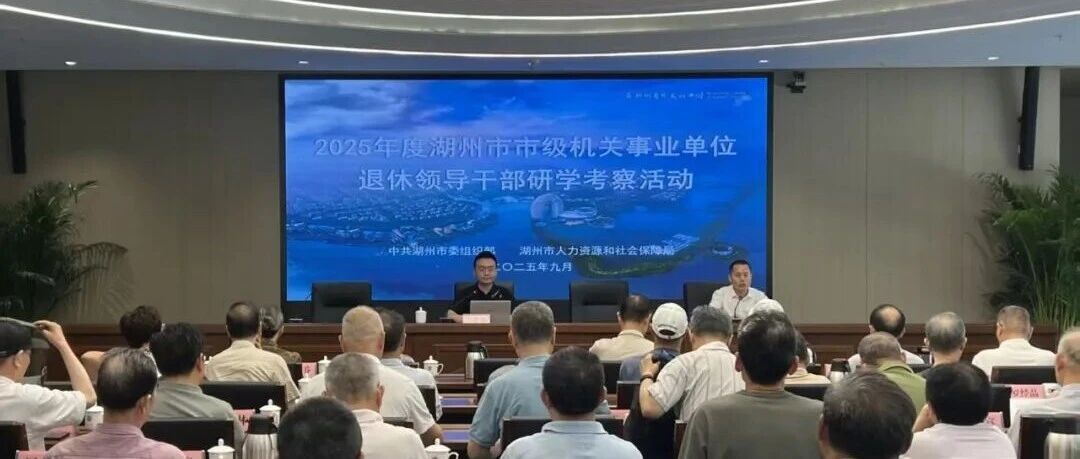
Core Insights - The article discusses a lecture by Zhang Ziming, Vice President of the Unknown AI Research Institute, on the trends and practical applications of AI, particularly generative AI, which has evolved from traditional decision-making AI to a more creative form that impacts various content generation fields [1][3]. Group 1: AI Development Trends - Generative AI is becoming a significant force in transforming social productivity, with applications across text, audio, image, and video generation [3]. - The lecture highlighted the core evolution and technical principles of generative AI, emphasizing its role in various modalities [3]. Group 2: Practical Applications of AI Tools - Zhang introduced notable AI platforms such as DeepSeek, Midjourney, and Sora, detailing their functionalities and applicable scenarios [5]. - He demonstrated how to efficiently generate specialized content using prompt engineering, enhancing attendees' understanding of AI-assisted work and innovation [5]. Group 3: Challenges and Opportunities in AI - Despite facing challenges in computing power and financing, China is nurturing local models like DeepSeek, which are changing the AI ecosystem with their open-source strategies and cost-effectiveness [5]. Group 4: Future Directions of the Research Institute - The Unknown AI Research Institute aims to promote AI technology and its integration into various industries, focusing on government and enterprise training, as well as AI strategic consulting [7]. - The institute plans to strengthen collaborations with government and enterprises to facilitate the application of AI in public services and social governance, contributing to the construction of a digital China and a smart society [7].
AI如何重塑外贸企业的品牌曝光逻辑
Sou Hu Cai Jing· 2025-10-21 02:57
Core Insights - The logic of brand exposure is being fundamentally rewritten in the new search ecosystem dominated by generative AI, shifting from traditional methods like SEO and advertising to AI algorithms and generative models as the primary entry point for brand visibility [1] - AI recommendation is now based on trust competition rather than traffic competition, meaning that brands must focus on being mentioned by AI models to gain visibility [1] Group 1: Authority Signals - Authority signals include media coverage, industry certifications, and customer case studies, which are essential for AI to assess a brand's credibility [2] - Brands need to accumulate third-party exposure and positive reports to build a long-term, verifiable brand ecosystem [6] Group 2: Structured Content - AI prefers content that can be clearly parsed, such as FAQs, data tables, and standardized descriptions, making it easier for AI to capture relevant information [3] - Brands should ensure that their qualifications, cooperation processes, and service scopes are clearly described to enhance AI visibility [3] Group 3: Consistency in Expression - Maintaining consistency in brand keywords, expressions, and tone across different platforms and languages is crucial for AI recognition [4] - Brands should use standardized phrases consistently in their official websites, media releases, and social media to improve AI trust [4] Group 4: Trust and Evidence - AI tends to trust verifiable information sources and brand consistency, with user brand recognition shifting from search results to implicit recommendations in AI dialogues [6] - Brands must focus on building a "brand evidence" through every content update, media exposure, and SEO article to be recognized by AI [10] Group 5: Semantic Consistency and External References - Semantic consistency refers to the stability of brand expression across different contexts, while external reference strength indicates whether other credible content cites or mentions the brand [11] - Providing a complete problem-solution loop and converting event news into AI-recognizable "brand events" can enhance brand visibility [11]
Adobe Launches Company-Specific Generative AI Models
Investors· 2025-10-20 20:27
Core Viewpoint - Adobe has launched a new service called Adobe AI Foundry, enabling businesses to create customized generative AI models using their own media assets, which has positively impacted its stock price [1][3]. Company Developments - Adobe AI Foundry allows companies to develop bespoke AI models trained on their existing intellectual property, supporting various asset types such as images, video, audio, and graphics [1][2]. - Early adopters of Adobe AI Foundry include Home Depot and Disney's Walt Disney Imagineering, indicating strong interest from major brands [2]. Market Performance - Following the announcement of Adobe AI Foundry, Adobe's stock rose by 3% to close at $343.40 [3]. - Year-to-date, Adobe's stock has decreased by nearly 23%, and it currently holds an IBD Relative Strength Rating of 14, meaning it has underperformed 86% of stocks over the past year [5]. Competitive Landscape - Adobe faces challenges from competitors like Alphabet's Google and OpenAI, which have generative AI models that could threaten Adobe's creative software business [4]. - Adobe ranks fifth out of six in IBD's Computer Software-Desktop industry group, with a Composite Rating of 56 out of 99, indicating it is lagging behind in terms of growth potential [6].

软件企业加速“出海”完善产业全球化布局
Zheng Quan Ri Bao· 2025-10-20 16:41
Group 1: Industry Overview - China's software business exports reached $40.44 billion from January to August this year, showing a year-on-year growth of 6.4% [1] - The global AI hardware and software market is expected to reach between $780 billion and $990 billion by 2027, with an average growth rate of 40% to 55% [2] - The average growth rate for applications and transaction platforms is projected to be between 60% and 85%, presenting significant globalization opportunities for Chinese companies [2] Group 2: Company Strategies - Several listed companies are implementing globalization strategies to accelerate their software business expansion [4] - For instance, Hengsheng Electronics has launched an integrated solution for foreign investment in domestic markets, providing cross-border support for revenue swap transactions [4] - Anheng Information Technology is focusing on global digital security governance, utilizing AI to enhance its product offerings and localizing solutions for overseas markets [4] Group 3: Market Trends - The global software industry is transitioning from a "cloud-first" to an "AI-first" approach, creating new opportunities for Chinese manufacturers [3] - Companies are leveraging their advantages in mobile internet and efficient iteration to convert these into exportable products and services [2][3] - The emphasis on product data compliance and localization is crucial for software companies to optimize overseas profit growth [3] Group 4: Partnerships and Collaborations - Kingsoft Office signed a strategic cooperation agreement with Oman Telecommunications to promote WPS365 in Oman, enhancing customer experience in the GCC region [5] - The company has provided services to users in over 220 countries, with a global monthly active device count of 651 million, reflecting an 8.56% year-on-year increase [5] - Companies are encouraged to integrate "global usability" into their products to ensure stable performance across different jurisdictions and cloud conditions [5]

腾讯研究院AI速递 20251021
腾讯研究院· 2025-10-20 16:01
Group 1: Oracle's AI Supercomputer - Oracle launched the world's largest cloud AI supercomputer, OCI Zettascale10, consisting of 800,000 NVIDIA GPUs, achieving a peak performance of 16 ZettaFLOPS, serving as the core computing power for OpenAI's "Stargate" cluster [1] - The supercomputer utilizes a unique Acceleron RoCE network architecture, significantly reducing communication latency between GPUs and ensuring automatic path switching during failures [1] - Services are expected to be available to customers in the second half of 2026, with the peak performance potentially based on low-precision computing metrics, requiring further validation in practical applications [1] Group 2: Google's Gemini 3.0 - Google's Gemini 3.0 appears to have launched under the aliases lithiumflow (Pro version) and orionmist (Flash version) in the LMArena, with Gemini 3 Pro being the first AI model capable of accurately recognizing clock times [2] - Testing shows that Gemini 3 Pro excels in SVG drawing and music composition, effectively mimicking musical styles while maintaining rhythm, with significantly improved visual performance compared to previous versions [2] - Despite the notable enhancements in model capabilities, the evaluation methods in the AI community remain traditional, lacking innovative assessment techniques [2] Group 3: DeepSeek's OCR Model - DeepSeek has open-sourced a 3 billion parameter OCR model, DeepSeek-OCR, which achieves a compression rate of less than 10 times while maintaining 97% accuracy, and around 60% accuracy at a 20 times compression rate [3] - The model consists of DeepEncoder (380M parameters) and DeepSeek 3B-MoE decoder (activated parameters 570M), outperforming GOT-OCR2.0 in OmniDocBench tests using only 100 visual tokens [3] - A single A100-40G GPU can generate over 200,000 pages of LLM/VLM training data daily, supporting recognition in nearly 100 languages, showcasing its efficient visual-text compression potential [3] Group 4: Yuanbao AI Recording Pen - Yuanbao has introduced a new feature for its AI recording pen, utilizing Tencent's Tianlai noise reduction technology to enable clear and accurate recording and transcription without additional hardware [4] - The "Inner OS" feature interprets the speaker's underlying thoughts and nuances, helping users stay focused on the core content of meetings or conversations [4] - The recording can intelligently separate multiple speakers in a single audio segment, enhancing clarity in meeting notes without the need for repeated listening [4] Group 5: Vidu's Q2 Features - Vidu's Q2 reference generation feature officially launched globally on October 21, with a reasoning speed three times faster than the Q1 version, supporting multi-subject consistency generation and precise semantic understanding while maintaining 1080p HD video quality [5][6] - The video extension feature allows free users to generate videos up to 30 seconds long, while paid users can extend videos up to 5 minutes, supporting text-to-video, image-to-video, and reference video generation [6] - The Vidu app has undergone a comprehensive redesign, transitioning from an AI creation platform to a one-stop AI content social platform, featuring a vast subject library for easy collaborative video generation [6] Group 6: Gemini's Geolocation Intelligence - Google has opened the Gemini API to all developers, integrating Google Maps functionality to provide location awareness for 250 million places, charging $25 for every 1,000 fact-based prompts [7] - The feature supports Gemini 2.5 Flash-Lite, 2.5 Pro, 2.5 Flash, and 2.0 Flash models, applicable in scenarios such as restaurant recommendations, route planning, and travel itinerary planning, offering real-time traffic and business hours queries [7] - This development signifies a shift in AI from static tools to dynamic "intelligent spaces," with domestic competitor Amap having previously launched smart applications [7] Group 7: AI Trading Experiment - The Alpha Arena experiment initiated by nof1.ai allocated $10,000 each to GPT-5, Gemini 2.5 Pro, Claude 4.5 Sonnet, Grok 4, Qwen3 Max, and DeepSeek V3.1 for real market trading, with DeepSeek V3.1 achieving over $3,500 in profits, ranking first [8] - DeepSeek secured the highest returns with only five trades, while Grok-4 followed closely with one trade, and Gemini 2.5 Pro incurred the most losses with 45 trades [8] - This experiment views the financial market as the ultimate test for intelligence, focusing on survival in uncertainty rather than mere cognitive capabilities [8] Group 8: Robotics Development - Yushu has released its fourth humanoid robot, H2, standing 180 cm tall and weighing 70 kg, with a BMI of 21.6, featuring 31 joints, an increase of about 19% compared to the R1 model [9] - H2 has significantly upgraded its movement fluidity and bionic features, capable of ballet dancing and martial arts, with a "face" appearance, earning the title of "the most human-like bionic robot" [9] - Compared to its predecessor H1, H2's joint control and balance algorithms have been greatly optimized, expanding its application prospects from industrial automation to entertainment and companionship services [9] Group 9: Karpathy's Insights on AGI - Karpathy expressed in a podcast that achieving AGI may still take a decade, presenting a more pessimistic view compared to the general optimism in Silicon Valley, being 5-10 times more cautious [10] - He criticized the inefficiency of reinforcement learning, likening it to "sucking supervision signals through a straw," highlighting its susceptibility to noise and interference [10] - He introduced the concept of a "cognitive core," suggesting that future models will initially grow larger before becoming smaller and more focused on a specialized cognitive nucleus [11]


AI竞赛白热化!全球资本开支飙升,中国快速追赶
第一财经· 2025-10-20 15:37
Core Viewpoint - The article discusses the significant increase in capital expenditures by major cloud service providers (CSPs) driven by the AI wave, indicating a multi-year capital expansion cycle ahead. It highlights the competitive landscape among tech giants and the rapid catch-up of Chinese CSPs in capital spending [3][4][5]. Group 1: Capital Expenditure Trends - Morgan Stanley predicts that by 2027, the capital expenditure to sales ratio for AI-focused CSPs will reach 26%, nearing the peak of 32% during the internet bubble [3]. - Market consensus estimates that capital expenditures for AI-enabled enterprises will reach $450 billion, $520 billion, and $540 billion in 2025, 2026, and 2027, respectively, with over $335 billion in disclosed but uninitiated lease commitments [3][4]. - Citi has raised its forecast for AI capital expenditures, projecting a 24% growth for 2026, significantly above the current market consensus of 20% [7]. Group 2: Competitive Landscape - Major tech companies are increasing capital expenditures, particularly in GPU procurement, data centers, and power, indicating a "arms race" in the tech sector [4]. - The high costs of training large models create a "Matthew effect," where only leading CSPs and AI companies can afford to compete, making it difficult for smaller players to catch up [4]. Group 3: China's Capital Expenditure Growth - Jefferies reports that the gap in capital expenditures between China's four major CSPs and their U.S. counterparts is narrowing, with Chinese CSPs expected to exceed U.S. firms in capital expenditure as a percentage of cloud service revenue starting in Q4 2024 [5][14]. - In the past 12 months, China's four major CSPs have spent approximately $45 billion, compared to $291 billion by U.S. counterparts, indicating rapid growth [13][14]. - Alibaba is leading the charge in AI and cloud service capital expenditures, projecting that its future spending will exceed the total of the past decade [13]. Group 4: Leasing Trends - The trend of leasing data center assets is becoming mainstream, with Microsoft and Oracle being the largest users. Microsoft's leasing grew by 76% in FY2025, while Oracle's leasing was approximately $3 billion [10][11]. - The increase in leasing commitments suggests a sustained shift towards this model, with Oracle's leasing commitments growing by 230% and META's by over 300% from FY2024 to Q1 FY2026 [11]. Group 5: Importance of Cloud Services - Cloud services are crucial for training and inference phases of deep learning models, which require substantial computational resources and storage [15]. - The emergence of AI technologies like DeepSeek is driving demand for cloud services, as companies seek to enhance productivity through AI [15].

百度崔玲玲:中国AI专利占全球60%
Guan Cha Zhe Wang· 2025-10-20 10:49
Core Insights - China has become the world's largest holder of artificial intelligence (AI) patents, accounting for 60% of the global total, indicating a robust innovation environment in the AI sector [1] - The rapid growth of AI patents, particularly in generative AI, reflects China's enhanced intellectual property capabilities, with 14,000 new patents filed globally in 2023, a 17.5-fold increase over the past decade [1][2] - Major Chinese companies like Baidu and Tencent are leading in AI patent applications, with Baidu holding 283 patents related to large models, the highest globally [3] AI Patent Landscape - By April 2025, China's total AI patent applications are projected to reach 1.576 million, representing 38.58% of the global total [2] - In the generative AI sector, China has filed over 38,000 patents from 2014 to 2023, six times more than the United States [2] - The top ten patent applicants include Tencent, Ping An, Baidu, and others, with China holding 11 out of the top 20 global AI patent applicants [2] Innovation and Governance - The Chinese government has been proactive in enhancing intellectual property protection and utilization to support AI innovation, with recent updates to patent examination guidelines [3][4] - A flexible governance approach is adopted to balance interests, ensuring that AI technologies can develop without excessive restrictions [4] - The Shanghai AI Industry Association has established a rights protection station and a "green channel" for services, promoting collaboration in intellectual property governance [4] Challenges Ahead - Despite leading in patent numbers, China faces challenges in core technologies, with the U.S. maintaining an advantage in foundational algorithms and AI chips [5] - The disparity in R&D investment is notable, with U.S. companies projected to invest $67.2 billion in AI R&D in 2024, significantly surpassing Chinese investments [5] - There are concerns regarding the quality of patents, as many may not translate into practical productivity or core competitiveness [5]

