
人工智能

Search documents
全球房地产科技调研:AI赋能商业地产:挑战、实践与未来布局
仲量联行· 2026-03-18 02:04
Investment Rating - The report does not explicitly provide an investment rating for the industry Core Insights - The report highlights that AI is becoming a critical competitive advantage for real estate investors, shifting focus from efficiency enhancement to driving growth [8][12][16] - A significant transformation is observed in the adoption of AI within the commercial real estate sector, with 88% of investors initiating AI pilot projects, a substantial increase from previous years [13][24] - The report emphasizes the urgency for investors to prepare for AI integration, as over 60% are not adequately ready for large-scale implementation, leading to a widening gap between industry leaders and laggards [14][50][62] Summary by Sections Section 1: AI Empowering Business Growth - Real estate investors are increasingly focusing on AI applications that directly support business growth rather than merely enhancing operational efficiency [12][16] - The top six AI objectives for investors are primarily related to business growth and competitive positioning [12][30] - The report indicates that 93% of investors believe that technology-enabled properties perform better in terms of investment returns [17] Section 2: Real-World Applications and Value Returns of Corporate Real Estate AI - AI is rapidly transforming the corporate real estate landscape, with 92% of firms now engaging in AI pilot projects, up from less than 5% two years ago [69][63] - The report identifies three primary areas of focus for AI pilot projects: data management, portfolio optimization, and energy management [82][86][87] - AI applications are expected to enhance operational flexibility and improve decision-making processes in real estate management [38][86] Section 3: Deep Application and Implementation of AI in Chinese Commercial Real Estate - The report outlines the necessity for a strategic approach to AI deployment, emphasizing that many firms lack a systematic AI strategy [72][78] - It highlights the importance of integrating AI into existing workflows and the challenges associated with this integration [46][50] - The report warns that the gap between technologically advanced firms and those lagging behind is likely to widen as AI adoption accelerates [88][96]

如何让AI走向更高质量的共情?自然选择两项开源研究提供新路径
机器之心· 2026-03-18 01:57
Core Insights - The article discusses the limitations of current large models in understanding empathy and emotional support in long-term interactions, emphasizing the need for models to adapt and respond to users' psychological states over time [1][3][22] Group 1: Evaluation of Empathy - Traditional evaluation methods for empathy often focus on single-turn tasks, which fail to assess the model's long-term impact on users [8][12] - The EMPA framework redefines empathy evaluation as a long-horizon agent task, focusing on the overall dialogue trajectory rather than individual responses [9][10] - EMPA introduces a structured evaluation process that separates evidence generation from final scoring, allowing for a more nuanced assessment of user state changes over the course of a conversation [12][13] Group 2: Training for Long-Term Dialogue - The MAPO research addresses how to train models to perform better in long-term dialogue tasks by introducing a new reinforcement learning method [15][16] - MAPO utilizes both immediate rewards from each dialogue turn and long-term future returns to maintain strategy stability and avoid short-term optimization pitfalls [16][19] - The combination of EMPA and MAPO creates a comprehensive research framework that transforms empathy from a subjective concept into a measurable and trainable capability [21][22]


银行500 ,2026驱动功能与情感的增长
Brand Finance· 2026-03-18 01:57
Investment Rating - The report indicates a positive outlook for the banking industry, with a projected brand value growth of 10% in 2026, reaching nearly $18 trillion, slightly down from 13% growth in 2025 [10]. Core Insights - The banking sector remains the largest and most influential industry globally, accounting for one-third of global brand value by 2026, shaped by digital innovation, geopolitical uncertainty, regulatory pressures, and ongoing economic challenges [8]. - Trust is identified as the most critical factor influencing customer decisions, with banks needing to actively build trust through functional, relational, and principled dimensions [8][6]. - The report highlights the significant growth in the wealth management sector, which achieved a 45% increase in brand value, making it the fastest-growing segment within the banking industry [23][24]. Summary by Sections Global Trends - The integration of artificial intelligence is reshaping the banking industry, with banks increasingly embedding AI into core operations for fraud detection, credit scoring, and personalized wealth management [32][33]. - The report notes that new banks are disrupting the traditional banking landscape, with brands like Revolut experiencing substantial growth, doubling their brand value from $1.9 billion to $6.6 billion [11][10]. Brand Value Rankings - The top five banks by brand value in 2026 are Industrial and Commercial Bank of China ($90.9 billion), China Construction Bank ($77.2 billion), Bank of China ($70.8 billion), Agricultural Bank of China ($62.8 billion), and Bank of America ($47.6 billion) [18]. - The report also highlights the brand strength index (BSI), with BCA from Indonesia leading at 95.9, followed by Japan's Bank of Japan at 95.5 and Nubank from Brazil at 95.2 [20]. Regional Insights - The Middle East is solidifying its position as a financial bridge between East and West, while Chinese banks are expanding their influence in emerging markets [5]. - Japan's banking sector has shown strong growth, with 24 out of 27 banks increasing their brand value, reflecting a recovery in global confidence [29][31]. Wealth Management and Digital Integration - Wealth management is becoming a key focus for banks, with a shift towards providing integrated banking, investment, and insurance services to enhance customer loyalty and lifetime value [10][24]. - The report emphasizes the importance of digital transformation, with banks needing to adapt to customer expectations for seamless digital experiences [34][36].






宏观周报:国内金融总量保持较快增长美国通胀持平未体现油价冲击-20260318
Zhe Shang Qi Huo· 2026-03-18 01:47
1. Report Industry Investment Rating No relevant content provided. 2. Core View of the Report The report indicates that domestic financial aggregates are growing rapidly, while US inflation remains flat without reflecting the impact of oil price shocks. China's economic policies are more proactive, supporting the rapid growth of financial aggregates. The US inflation and employment data show certain trends, and the Fed's monetary policy decisions also have an impact on the market. Geopolitical conflicts, such as the situation between Israel and Iran, may affect the global oil market and inflation [3][4][5]. 3. Summary by Directory Economic Situation - **2025 GDP**: The GDP in 2025 was 1,401,879 billion yuan, a 5.0% increase from the previous year. The primary industry added value was 934.7 billion yuan, up 3.9%; the secondary industry was 4,996.53 billion yuan, up 4.5%; the tertiary industry was 8,088.79 billion yuan, up 5.4% [24]. - **Industrial Added Value**: In 2025, the industrial added value of large - scale industries increased by 5.9% year - on - year. Mining increased by 5.6%, manufacturing by 6.4%, and the production and supply of electricity, heat, gas, and water by 2.3%. Equipment manufacturing and high - tech manufacturing increased by 9.2% and 9.4% respectively [25]. - **Consumption**: The total retail sales of consumer goods in 2025 was 5,012.02 billion yuan, a 3.7% increase. Urban consumption was 4,329.72 billion yuan, up 3.6%; rural consumption was 682.3 billion yuan, up 3.1%. Commodity retail sales were 4,432.2 billion yuan, up 3.8%; catering revenue was 579.82 billion yuan, up 3.2% [25]. - **Investment**: In 2025, fixed - asset investment (excluding rural households) was 4,851.86 billion yuan, a 3.8% decrease. Infrastructure investment decreased by 2.2%, manufacturing investment increased by 0.6%, and real estate development investment decreased by 17.2%. Newly built commercial housing sales area decreased by 8.7%, and sales volume was 8,020.2 billion yuan [25]. - **Exports and Imports**: In 2026, the export amount and import amount had certain fluctuations. The specific data can be found in the detailed table [16]. - **Unemployment Rate**: In 2026, the urban surveyed unemployment rate and other unemployment - related data showed certain trends [16]. - **PMI**: In February 2026, the manufacturing PMI was 49.0%, a 0.3 - percentage - point decrease from the previous month. High - tech manufacturing PMI was 51.5%, remaining in the expansion range [8]. Financial Situation - **Social Financing Scale**: At the end of February 2026, the stock of social financing scale was 451.4 trillion yuan, a year - on - year increase of 8.2%. The balance of RMB loans issued to the real economy was 274.15 trillion yuan, a year - on - year increase of 6.1%. The incremental social financing scale in the first two months was 9.6 trillion yuan, 316.2 billion yuan more than the same period last year [45]. - **Credit**: At the end of February 2026, the balance of domestic and foreign currency loans was 281.52 trillion yuan, a year - on - year increase of 6%. The balance of RMB loans was 277.52 trillion yuan, a year - on - year increase of 6%. In the first two months, RMB loans increased by 5.61 trillion yuan. Household loans decreased by 194.2 billion yuan, and enterprise loans increased by 5.94 trillion yuan [46]. - **Money Supply**: At the end of February 2026, the balance of broad money (M2) was 349.22 trillion yuan, a year - on - year increase of 9.0%; the balance of narrow money (M1) was 115.93 trillion yuan, a year - on - year increase of 5.9%; the balance of currency in circulation (M0) was 15.14 trillion yuan, a year - on - year increase of 14.1%. The net cash injection in the first two months was 1.05 trillion yuan [45]. Inflation Indicators - **CPI**: In February 2026, the domestic CPI increased by 1.3% year - on - year and 1.0% month - on - month. Core CPI increased by 1.8% year - on - year, indicating the recovery of domestic demand. The increase in CPI was mainly due to the Spring Festival factor and the release of consumer demand [52]. - **PPI**: In February 2026, the PPI decreased by 0.9% year - on - year, with the decline narrowing for three consecutive months. It increased by 0.4% month - on - month, with the increase remaining the same for five consecutive months. The improvement of PPI was due to the rise in international commodity prices and the growth of domestic demand in some industries [53]. Overseas Macro - **US Inflation**: In February 2026, the US CPI increased by 2.4% year - on - year, and the core CPI increased by 2.5% year - on - year, both remaining the same as the previous month. The inflation was affected by the rebound of food and energy prices and the decline of core commodities and services. The market has adjusted the interest - rate cut expectation, and the first interest - rate cut by the Fed may be postponed to September or even December [59]. - **US Employment**: In February 2026, the US non - farm employment decreased by 92,000, far lower than the market expectation of an increase of 55,000. The unemployment rate rose to 4.4%, the highest since December 2025. The employment data was affected by multiple factors such as medical strikes, extreme weather, and statistical model adjustments [59]. - **Fed Policy**: In the FOND meeting on January 29, 2026, the federal funds rate target range was maintained at 3.50% - 3.75%, ending the three - consecutive - month interest - rate cut trend. The statement indicated that the US economy was expanding steadily, employment growth was low but the unemployment rate was stable, and inflation was still slightly higher than the 2% long - term target [59]. Interest Rates and Exchange Rates - **Exchange Rate**: In early March 2026, the RMB - US dollar exchange rate showed a significant "V - shaped reversal" and entered a two - way fluctuation range. The central bank lowered the foreign exchange risk reserve ratio for forward foreign exchange sales from 20% to 0 to release a "stable exchange rate" signal. The RMB - US dollar exchange rate is expected to show a pattern of "two - way fluctuation and a steady increase" [65]. - **Interest Rates**: The report also presents data on various interest rates such as DR007, SHIBOR, LPR, and bond yields in China and the US [66][71].
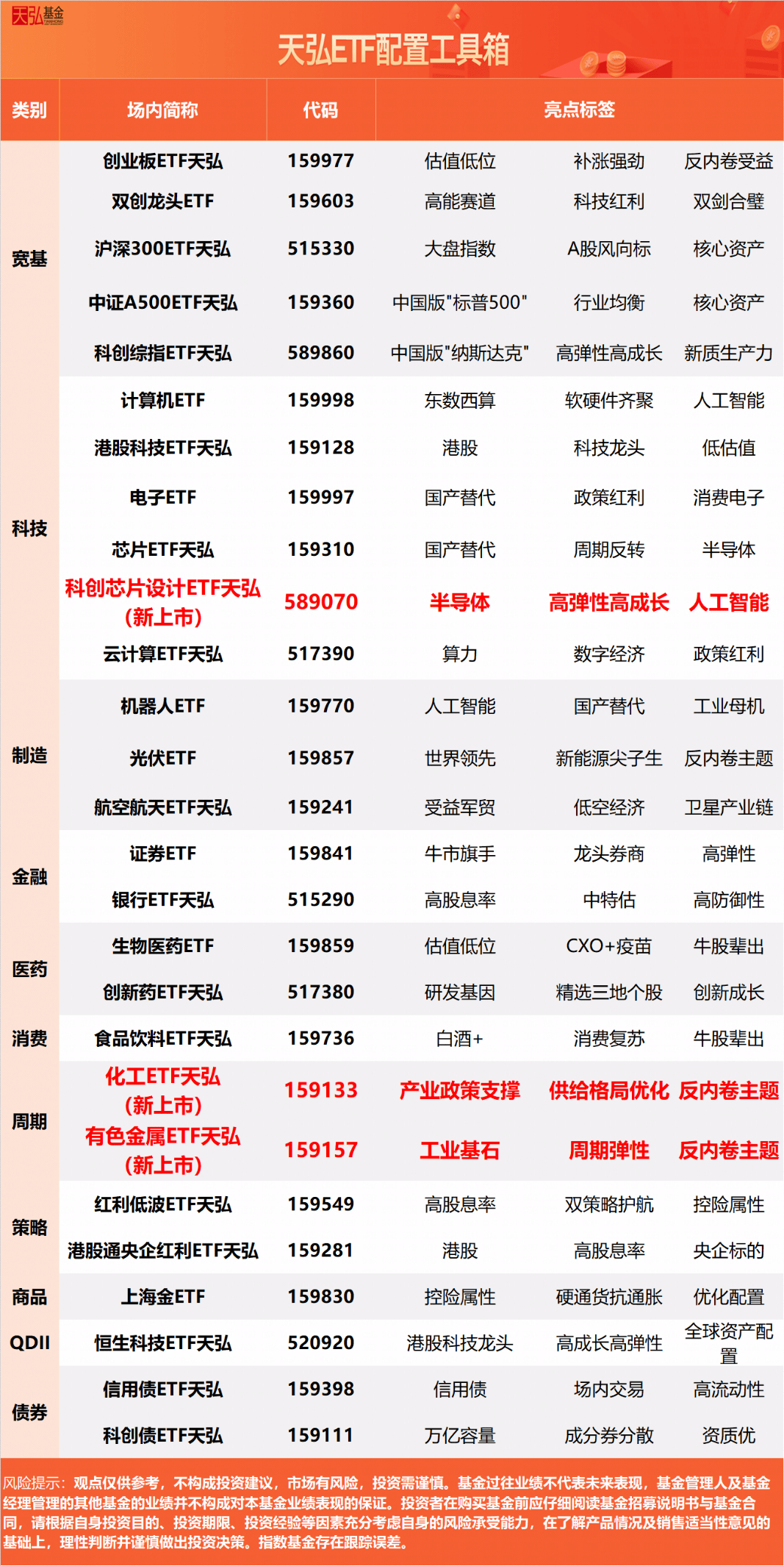
英伟达新机架或“光铜并举”!有色金属ETF天弘(159157)标的指数连续5日回调,估值低位布局价值凸显
Sou Hu Cai Jing· 2026-03-18 01:44
Core Viewpoint - The non-ferrous metal ETF Tianhong (159157) has shown significant trading activity and valuation metrics, indicating potential investment opportunities in the sector due to favorable market conditions and recent developments in copper demand [1][4]. Trading Activity - As of March 17, the non-ferrous metal ETF Tianhong (159157) had a turnover of 6.65% and a transaction volume of 321 million yuan [1]. - The ETF's latest scale reached 4.933 billion yuan, with a total of 5.392 billion shares, both marking all-time highs since its inception [2]. - Over the past 22 days, the ETF has experienced continuous net inflows, with a peak single-day net inflow of 329 million yuan, totaling 4.33 billion yuan in net inflows [3]. Market Performance - The tracked index, the CSI Industrial Non-Ferrous Metal Theme Index (H11059), declined by 2.37%, marking five consecutive days of losses [1]. - Key constituent stocks such as Shenhuo Co., Ltd. and Hailiang Co., Ltd. saw significant declines, with losses of 6.91% and 6.22%, respectively [1]. Valuation Metrics - The current price-to-earnings ratio (PE-TTM) of the CSI Industrial Non-Ferrous Metal Theme Index is 25.13, which is at the 40.4% percentile over the past decade, indicating that valuations are lower than 60% of the time historically [1]. Investment Outlook - The non-ferrous metal sector is highlighted as having significant allocation value due to multiple favorable factors, including supply-side contraction policies, new demand drivers, economic cycle resonance, global deflation expectations, and concerns over U.S. dollar credit [4]. - The copper market is expected to face a supply-demand gap widening to 450,000 tons by 2026, with average copper prices projected to rise to $12,000 per ton [7].

ZTO EXPRESS(ZTO) - 2025 Q4 - Earnings Call Transcript
2026-03-18 01:32
Financial Data and Key Metrics Changes - In Q4 2025, total revenue increased by 12.3% to CNY 14.5 billion, while for the full year, it rose by 10.9% to CNY 49.1 billion [15] - Adjusted net income for Q4 was CNY 2.7 billion, and for the full year, it reached CNY 9.5 billion [15] - Gross profit declined by 2.1% to CNY 3.7 billion for Q4 and by 10.5% to CNY 12.3 billion for the full year [18] - Operating cash flow surged by 50.6% to CNY 4.2 billion in Q4 and reached CNY 12 billion for the year [19] Business Line Data and Key Metrics Changes - Annual retail parcel volume grew by 46% year-over-year, with daily retail volume reaching close to 10 million parcels in Q4 [8] - The average selling price (ASP) for the core express delivery business increased by 2.9% in Q4, driven by a positive contribution from an improved mix in key account volume [15] - Total cost of revenue for Q4 was CNY 10.8 billion, increasing by 18.2%, while for the full year, it was CNY 36.8 billion, up by 20.5% [16] Market Data and Key Metrics Changes - The express delivery industry in China achieved a steady growth of 13.6% in 2025, with parcel volume reaching 200 billion [5] - ZTO's market share expanded by 0.8 percentage points, maintaining a steady market share year-over-year [5][6] Company Strategy and Development Direction - ZTO is committed to a high-quality development strategy, focusing on service quality, operational efficiency, and maintaining a healthy competitive environment [7][9] - The company plans to optimize network policies and incentive mechanisms to ensure steady volume growth and improved cost efficiency [10] - ZTO aims to integrate service quality, market share, and reasonable profit as part of its long-term strategy [11] Management Comments on Operating Environment and Future Outlook - Management noted that the express delivery industry is transitioning towards high-quality development, with a focus on both quantity and quality [9][11] - The company anticipates parcel volume growth for 2026 to be between 10%-13% year-over-year, indicating a commitment to outperform the industry average [19] - Management emphasized the importance of maintaining a stable and rational competitive order in the industry [30] Other Important Information - ZTO announced a semi-annual cash dividend of $0.39 per ADS and a new $1.5 billion share buyback program [20] - The company is advancing its digital transformation and integrating AI technology across its operations to enhance efficiency and reduce costs [39][40] Q&A Session Summary Question: Updates on anti-involution initiatives and pricing trends - Management stated that the competitive landscape has improved since the introduction of the anti-involution policy, with parcel prices recovering and a focus on safeguarding frontline interests [23] - The industry is expected to transition from volume-driven growth to a focus on high-quality development, with ZTO guiding for growth faster than the industry average [24][25] Question: 2026 priorities and AI applications - ZTO's priority for 2026 is to integrate service quality, market share, and reasonable profit, with a focus on optimizing network policies [30] - The company is leveraging AI technology to enhance operational efficiency, reduce costs, and improve customer service [39][41]

QFIN(QFIN) - 2025 Q4 - Earnings Call Transcript
2026-03-18 01:32
Financial Data and Key Metrics Changes - Total loan facilitation and origination volume decreased by 21.8% year-over-year to RMB 70.3 billion in Q4 2025, while full-year volume reached approximately RMB 327.1 billion, representing a year-over-year increase of 1.6% [6][7] - Non-GAAP net income in Q4 decreased by 45.7% year-over-year to RMB 1.07 billion, while full-year non-GAAP net income declined by 1% year-over-year to RMB 6.35 billion [6][7] - Non-GAAP EPADS on a fully diluted basis decreased by 39.8% year-over-year to RMB 8.23 in Q4, but increased by 10.4% year-over-year to RMB 46.8 for the full year [6][7] - Total net revenue for Q4 was RMB 4.09 billion, down from RMB 5.21 billion in Q3 and RMB 4.48 billion a year ago [21] Business Line Data and Key Metrics Changes - Revenue from credit-driven services was RMB 3.43 billion in Q4, down from RMB 3.87 billion in Q3 and RMB 2.89 billion a year ago, primarily due to lower off-balance sheet loans [21][22] - Revenue from platform services was RMB 660 million in Q4, compared to RMB 1.34 billion in Q3 and RMB 1.59 billion a year ago, driven by lower ICE contributions [22] - The average IRR of loans originated and/or facilitated declined by about 150 basis points compared to the prior quarter [22] Market Data and Key Metrics Changes - The C-M2 ratio, representing the outstanding delinquency rate after 30-day collection, increased to 0.97% in Q4, the highest since COVID in 2020 [8][24] - The 90-day delinquency rate was 2.71% in Q4, up from 2.09% in Q3, while the day-1 delinquency rate was 6.1% in Q4 compared to 5.5% in Q3 [23][24] Company Strategy and Development Direction - The company is focusing on compliance and risk management as core strategies in response to regulatory changes, aiming for a healthier market environment [5][6] - The strategy includes enhancing user acquisition of high-quality borrowers and optimizing credit approval frameworks to improve asset quality [10][14] - The company plans to expand into international markets, including Europe, Latin America, and Southeast Asia, to drive long-term growth [18][59] Management's Comments on Operating Environment and Future Outlook - Management noted that the consumer finance industry is undergoing a systemic restructuring, which has tightened market liquidity and suppressed credit demand [4][5] - Despite the challenging environment, management expects to see gradual improvements in risk metrics and operational efficiency [11][31] - For Q1 2026, the company expects non-GAAP net income to be between RMB 900 million and RMB 950 million, reflecting a year-on-year decline of 51% to 53% [31] Other Important Information - The company returned approximately $200 million in dividends and $680 million via share repurchases in 2025, representing 98% of its 2024 GAAP net income [19][37] - Total ABS issuance grew 40.8% year-over-year to RMB 21.4 billion, with a reduction in average issuance costs by 72 basis points [13] Q&A Session Summary Question: What is the medium to long-term outlook for loan pricing and sustainable net take rates? - Management indicated that regulatory efforts to reduce borrowing costs will lead to a healthier market, with a focus on high-quality users. Average pricing dropped by 140 basis points in Q4, and they expect further adjustments in 2026 [34][35] Question: How does the company balance dividends and buybacks? - The company has maintained a high payout ratio and intends to continue a progressive dividend policy while being cautious with buybacks due to macro uncertainties [37][39] Question: What is the trend of risk indicators and future outlook? - Management reported improvements in risk metrics, with FPD30 for new loans dropping by 18% QoQ and a stable C-M2 ratio. They will continue to monitor risks closely [44][45] Question: What is the outlook for the ICE business and funding costs? - The ICE business saw a significant decline in referral service fees due to cautious funding partners and a drop in volume. Funding costs are expected to face pressure due to regulatory changes [50][55] Question: What is the company's strategy for overseas market expansion? - The company plans to actively explore multiple overseas markets, having already entered some in 2025, and aims to balance resources between mature and developing markets [59][62]

ZTO EXPRESS(ZTO) - 2025 Q4 - Earnings Call Transcript
2026-03-18 01:30
Financial Data and Key Metrics Changes - In Q4 2025, total revenue increased by 12.3% to CNY 14.5 billion, while for the full year, it rose by 10.9% to CNY 49.1 billion [14] - Adjusted net income for Q4 was CNY 2.69 billion, and for the full year, it reached CNY 9.5 billion [5][14] - Gross profit declined by 2.1% to CNY 3.7 billion for Q4 and by 10.5% to CNY 12.3 billion for the full year [17] - Operating cash flow surged by 50.6% to CNY 4.2 billion in Q4 and reached CNY 12 billion for the year [18] Business Line Data and Key Metrics Changes - Annual retail parcel volume grew by 46% year-over-year, significantly outpacing overall e-commerce parcel growth [7] - The average selling price (ASP) for the core express delivery business increased by 2.9% in Q4, driven by a positive contribution from higher value services [14] - The combined unit cost for sorting and transportation decreased by 4.5% in Q4 and by 8.8% for the year, reflecting improved operational efficiencies [16] Market Data and Key Metrics Changes - The express delivery industry in China achieved a steady growth of 13.6% in 2025, with total parcel volume reaching 200 billion [5] - ZTO's parcel volume reached 10.56 billion in Q4, an increase of 9.2% year-over-year, with market share expanding by 0.8 percentage points [5][6] Company Strategy and Development Direction - ZTO is committed to a high-quality development strategy, focusing on service quality, operational efficiency, and maintaining a healthy competitive environment [6][9] - The company plans to optimize network policies and incentive mechanisms to ensure steady volume growth and improved cost efficiency [10] - ZTO aims to lead the industry in transitioning from a volume-driven model to one focused on quality and value [11] Management's Comments on Operating Environment and Future Outlook - Management noted that the express delivery industry is entering a stable growth stage, with expectations of 10%-13% parcel volume growth in 2026 [18] - The company emphasized the importance of maintaining a fair and transparent network policy to protect the interests of partners and couriers [31] - Management acknowledged ongoing market uncertainties but expressed confidence in the company's ability to navigate through cycles and seize long-term opportunities [9][11] Other Important Information - ZTO announced a semi-annual cash dividend of $0.39 per ADS and a new $1.5 billion share buyback program [19] - The company is enhancing its shareholder return program, targeting an aggregate annual return ratio of no less than 50% of adjusted net income [19] Q&A Session All Questions and Answers Question: Updates on anti-involution initiatives and pricing trends - Management indicated that the competitive landscape has improved since the introduction of anti-involution policies, with parcel prices recovering and a focus on safeguarding frontline interests [23][24] Question: Industry growth outlook and competition landscape - The industry is expected to transition to a high-quality development phase, with ZTO anticipating growth faster than the industry average [24][25] Question: 2026 priorities under anti-involution scheme - ZTO's focus will be on integrating service quality, market share, and reasonable profit, with a commitment to maintaining a steady and rational competitive order [29][30] Question: Recent issuance of convertible bonds and AI applications - The company issued $1.5 billion in convertible bonds to enhance shareholder value and optimize capital structure, while also advancing digital transformation through AI applications across its operations [36][38]
花旗:阅文集团可能拥有多个利润增长驱动因素
Jin Rong Jie· 2026-03-18 01:22
Core Viewpoint - Citigroup analysts believe that Yuewen Group may have multiple profit growth drivers, including the expansion of its short drama business and profit growth from its AI animated series [1] Group 1: Profit Growth Drivers - The expansion of the short drama business is identified as a key driver for profit growth [1] - The AI animated series is expected to contribute significantly to profit growth [1] - A low base effect may also support growth in 2026 [1] Group 2: Stock Performance and Predictions - The company's stock price has dropped approximately 22% over the past month as investors digest the company's profit warning [1] - Progress in AI animated series could act as a catalyst for stock price recovery [1] - Citigroup has lowered its adjusted net profit forecast for 2026-2027 by 6%-7% to account for 2025 performance [1] Group 3: Target Price and Rating - The target price has been reduced from HKD 38.00 to HKD 37.00 [1] - Despite the target price adjustment, Citigroup maintains a buy rating on the stock [1]
西部证券晨会纪要-20260318
Western Securities· 2026-03-18 01:07
Group 1 - The core conclusion of the report indicates that Tonghuashun is a leading internet financial information service provider in China, with short-term growth driven by increased trading activity in the equity market and long-term growth supported by its "ALL IN AI" strategy and the launch of the financial model HithinkGPT [2][9] - The report highlights that the company's operating leverage enhances profit elasticity due to its relatively fixed cost structure, with a high correlation of 97.33% between cash flow changes and average daily trading volume (ADT) growth from December 2010 to December 2025 [10] - The report emphasizes the potential for Tonghuashun to reshape platform value through continuous investment in AI, enhancing user experience and customer retention, thereby solidifying its leading position in both B-end and C-end markets [11] Group 2 - The report discusses the acquisition of Yao Cai Securities by Ant Group, which is expected to bring multiple benefits in terms of technology upgrades, customer expansion, and business synergy, creating a wealth management ecosystem and sharing the growth dividends of the Hong Kong market [3][15] - The acquisition process is outlined, detailing the approval timeline and the premium offered for the shares, which reflects a significant increase in valuation compared to previous trading prices [13][14] - The operational performance of Yao Cai Securities is noted, with a 10.7% year-on-year increase in total revenue and a 4.8% increase in net profit for the first half of FY2026, driven by a substantial rise in securities brokerage income [14] Group 3 - The report on Juneyao Airlines indicates strong growth in passenger and cargo metrics for February 2026, with passenger turnover increasing by 9.47% year-on-year and cargo capacity rising by 8.59% [4][17] - The airline's network expansion is highlighted, with the addition of new routes and a stable fleet size of 129 aircraft, indicating a focus on enhancing operational capabilities [18] - The report maintains a positive outlook on the company's operational performance, projecting earnings per share (EPS) growth for 2025-2027 [18] Group 4 - The report on Cangge Mining reveals that the company achieved a revenue of 3.577 billion yuan in 2025, a year-on-year increase of 10.03%, and a net profit of 3.852 billion yuan, reflecting a 49.32% increase [21][22] - The report details the performance of various product lines, including potassium fertilizer and lithium carbonate, with significant revenue contributions and improvements in profit margins [22] - The company has announced a three-year development strategy aimed at increasing production capacity in lithium and potassium sectors, indicating a focus on long-term growth [23][31]