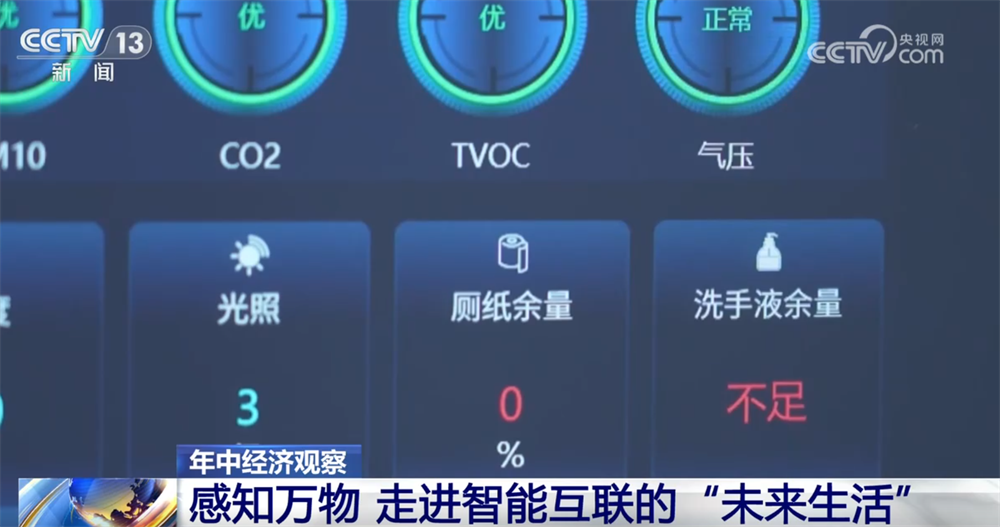
万物互联

Search documents
引领开创手机“无卡时代”——eSIM技术
财联社· 2025-08-08 07:34
Core Viewpoint - The article discusses the potential revival of eSIM services by China's three major telecom operators, highlighting the growing importance of eSIM technology in the consumer electronics market and its implications for the industry [2][4]. Group 1: eSIM Technology Overview - eSIM technology eliminates the need for physical SIM cards by embedding a chip directly into devices, allowing for remote configuration and activation [5]. - The global eSIM smartphone connections are projected to reach approximately 1 billion by the end of 2025 and surge to 6.9 billion by 2030, representing 76% of total smartphone connections [4][12]. Group 2: Current Market Dynamics - China Unicom and China Mobile are leading the push for eSIM, with China Unicom already offering eSIM services through its app [2]. - The eSIM market in China has been slow to develop due to regulatory concerns and the traditional reliance on physical SIM cards for customer retention and identity verification [7][8]. Group 3: Global eSIM Development - As of June 2024, 441 mobile operators in 123 countries have launched eSIM services for smartphones, a significant increase from 45 operators in 2018 [6]. - The European Union has played a crucial role in promoting eSIM adoption through regulations, while the U.S. market has seen growth driven by major tech companies like Apple [6]. Group 4: Industry Participants and Opportunities - Key players in the eSIM supply chain include chip manufacturers like Unisoc and Holitech, traditional SIM card suppliers like Eastcompeace and Hengbao, and eSIM platform providers [10][9]. - The IoT sector is expected to see substantial growth in eSIM connections, with projections indicating an increase from 22 million in 2023 to 195 million by 2026 [12].


eSIM成万物互联“新钥匙”产业链上市公司积极布局
Zheng Quan Ri Bao· 2025-08-08 01:50
Core Insights - eSIM technology is becoming a key enabler for the Internet of Things (IoT) and is expected to significantly enhance user experience by eliminating the need for physical SIM cards [1][2] - The market for eSIM is projected to grow substantially, with an estimated 1 billion eSIM-enabled smartphones by the end of 2025 and 6.9 billion by 2030 [2] - The eSIM industry chain includes component manufacturers, operators, and application service providers, with several A-share listed companies actively participating in this space [3][4] Market Potential - eSIM technology allows for lighter and thinner consumer electronics, as it does not require a physical card slot [1] - The demand for eSIM is driven by the increasing need for lightweight consumer electronics, wearable devices, and IoT terminals [1][2] - Jupiter Research forecasts that the number of IoT connections using eSIM technology will grow from 22 million in 2023 to 195 million by 2026 [2] Industry Collaboration - Companies like Unisoc, Quectel, and ThinkRace are making strides in the eSIM market, with Unisoc being the first in China to achieve global commercial use of eSIM [3] - Quectel has developed an end-to-end IoT eSIM solution that supports automatic connections in over 180 countries, enhancing operational efficiency and reducing costs [3][4] - ThinkRace is focusing on providing comprehensive solutions for automotive connectivity, leveraging eSIM and 5G technologies to streamline supply chain management for car manufacturers [4] Ecosystem Development - The eSIM industry in China is forming a complete layout across various segments, with companies exploring and refining business models to accelerate eSIM adoption [5] - The collaboration among industry players is expected to enhance the overall ecosystem, facilitating the widespread use of eSIM technology [5]



亨通光电(600487):AI先进光纤材料研发制造中心扩产项目启动建设
CMS· 2025-08-08 01:38
Investment Rating - The report maintains a "Strong Buy" rating for the company [3]. Core Views - The company has initiated the construction of an AI advanced optical fiber material R&D and manufacturing center, expected to be completed by February 2026, to meet the growing market demand for special optical fibers in AI, cloud computing, and 5G-A communication industries [1]. - The company is focused on creating value in the communication and energy sectors, providing industry-leading products and solutions, and is expected to benefit from global trends in these industries [6]. Financial Data and Valuation - Total revenue is projected to grow from 47.622 billion CNY in 2023 to 80.827 billion CNY in 2027, with a CAGR of approximately 10% [2][16]. - Operating profit is expected to increase from 2.311 billion CNY in 2023 to 4.755 billion CNY in 2027, reflecting a growth rate of 10% [2][16]. - Net profit attributable to shareholders is forecasted to rise from 2.154 billion CNY in 2023 to 4.079 billion CNY in 2027, with a growth rate of 10% [2][16]. - The company’s PE ratio is projected to decrease from 18.4 in 2023 to 9.7 in 2027, indicating improving valuation metrics [2][17]. Performance Metrics - The company has achieved a return on equity (ROE) of 9.6% and a debt-to-asset ratio of 53.0% [3][17]. - The gross margin is expected to decline slightly from 15.3% in 2023 to 12.5% in 2027, while the net margin is projected to stabilize around 5% [17]. - The company has established a complete self-research capability for hollow-core fiber, enhancing its competitive edge in the market [6].

eSIM成万物互联“新钥匙” 产业链上市公司积极布局
Zheng Quan Ri Bao Zhi Sheng· 2025-08-07 16:39
Core Insights - eSIM technology is becoming a key enabler for the Internet of Things (IoT) and is expected to significantly enhance user experience by eliminating the need for physical SIM cards [1][2] - The eSIM market is projected to grow substantially, with an estimated 1 billion eSIM-enabled smartphones by the end of 2025 and 6.9 billion by 2030 [2] - The eSIM industry chain includes component manufacturers, operators, and application scenarios such as mobile devices, wearables, automotive electronics, and IoT terminals [3][5] Market Potential - eSIM technology allows for lighter and thinner consumer electronics as it does not require a physical card slot [1] - The demand for eSIM is driven by the increasing need for lightweight consumer electronics, wearables, and IoT roaming capabilities [1][2] - Jupiter Research forecasts that the number of IoT connections using eSIM technology will grow from 22 million in 2023 to 195 million by 2026 [2] Industry Collaboration - Companies like Unisoc, Quectel, and ThinkRace are actively involved in the eSIM industry, with Unisoc being the first in China to achieve global commercial use of eSIM [3][4] - Quectel has developed an end-to-end IoT eSIM solution that supports automatic connections in over 180 countries, enhancing operational efficiency and reducing costs [3] - ThinkRace provides a comprehensive solution for automotive connectivity, leveraging eSIM and 5G technologies to improve supply chain management and service quality for automotive enterprises [4][5] Business Model Development - The eSIM industry is witnessing collaborative efforts among various players to explore and refine business models, which is expected to accelerate the adoption of eSIM technology [5] - Companies are focusing on backend operational support for eSIM services, including remote configuration and security management [4][5]
荣耀MagicOS首发支持鸿蒙NEXT换机克隆,实现全品牌互联互传
Huan Qiu Wang· 2025-08-07 10:21
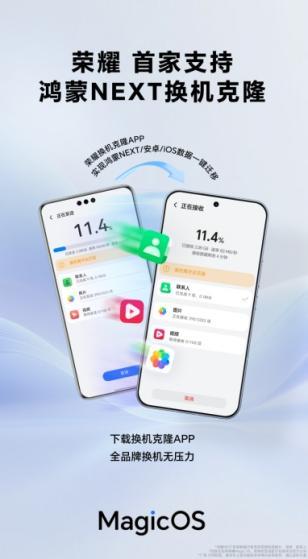
Core Viewpoint - Honor has become the first terminal manufacturer to support HarmonyOS NEXT data migration, breaking down barriers between HarmonyOS NEXT, Android, and iOS devices, allowing users to easily transfer data across different ecosystems [1][3]. Group 1: Technological Breakthrough - The "Switch Clone" app developed by Honor enables one-click data migration from old devices to Honor devices, utilizing Honor's Nearby device connection capabilities and DFTP high-speed transmission technology [1][3]. - This advancement addresses common user pain points such as incomplete data transfer, complicated procedures, and slow transfer speeds when switching devices across different brands and operating systems [3][4]. Group 2: User Experience Enhancement - The introduction of this feature significantly improves the user experience during device transitions, allowing for seamless data transfer and setting a new standard for cross-ecosystem connectivity in the smartphone industry [3][5]. - Honor's Magic V5 is the first model to incorporate this functionality, with plans to extend it to more Honor models in the future, benefiting a wider user base [3][4]. Group 3: Brand Philosophy and Future Outlook - Honor's CEO has emphasized the company's commitment to achieving "full brand terminal interconnectivity," reflecting the brand's vision of "everything interconnected" [4]. - The support for HarmonyOS NEXT data migration is seen as a manifestation of Honor's long-term investment in technology research and ecosystem development, aiming to create a more intelligent and convenient user experience [4][5]. - Industry experts believe that as Honor continues to deepen its efforts in the "Internet of Everything" domain, more industry partners may join to collaboratively build a more efficient and user-friendly smart terminal ecosystem [5].
鸿蒙终端数量突破千万后,华为发布亿元级应用开发激励计划
量子位· 2025-08-07 10:13
Core Viewpoint - Huawei's HarmonyOS 5 has surpassed 10 million terminal devices, marking a significant milestone and a new starting point for the operating system [1][2][15]. Group 1: Developer Incentive Program - Huawei has launched the "Harmony Application Developer Incentive Program 2025," offering over 100 million yuan in subsidies, with individual developers eligible for up to 6 million yuan in rewards [3][7]. - The program builds on last year's initiative, reflecting Huawei's confidence in the HarmonyOS ecosystem and aims to create a positive feedback loop where increased terminal numbers drive application demand and vice versa [5][9]. - The incentive structure has been enhanced, with higher cash rewards and broader application types, allowing developers to earn up to 10,000 yuan per application [7][10]. Group 2: Developer Support and Ecosystem Growth - The program emphasizes long-term engagement, with a focus on quality applications and sustained developer investment in the Harmony ecosystem [13][14]. - Huawei is addressing developer concerns by providing comprehensive support, including technical training, tools, and resources to lower barriers to entry [26][52]. - The ecosystem has seen significant growth, with 8 million registered developers and 5,000 top applications launched, meeting 99.99% of user needs [24]. Group 3: Technological Advancements and Market Position - HarmonyOS is positioned to thrive in the AI and multi-device era, offering a unified operating system that integrates various devices into a "super terminal" [40][42]. - The introduction of the Xiaoyi Intelligent Agent Open Platform and support for multi-agent collaboration enhances the system's capabilities [38]. - Huawei's strategy aims to redefine the operating system landscape, allowing developers to create applications that leverage distributed capabilities across multiple devices [41][44]. Group 4: Future Opportunities for Developers - The evolving landscape presents a unique opportunity for Chinese developers to define new standards and ecosystems, moving away from reliance on established foreign systems [47][49]. - The incentive program is designed to foster a collaborative environment where developers of all sizes can find growth opportunities and contribute to the ecosystem [54][55].

天融信:公司为各行业客户提供网络安全、数据安全、云计算等系列产品及解决方案
Mei Ri Jing Ji Xin Wen· 2025-07-30 08:44
Group 1 - The company is actively involved in providing cybersecurity, data security, and cloud computing solutions to various industries [2] - The company acknowledges the importance of security in the context of artificial intelligence, data integration, and the Internet of Things [2] - The company plans to enhance its offerings to ensure security in robotic applications in the future [2]


创世界记录!中国“人造太阳”取得重大突破,无限能源或成现实
Sou Hu Cai Jing· 2025-07-30 06:27
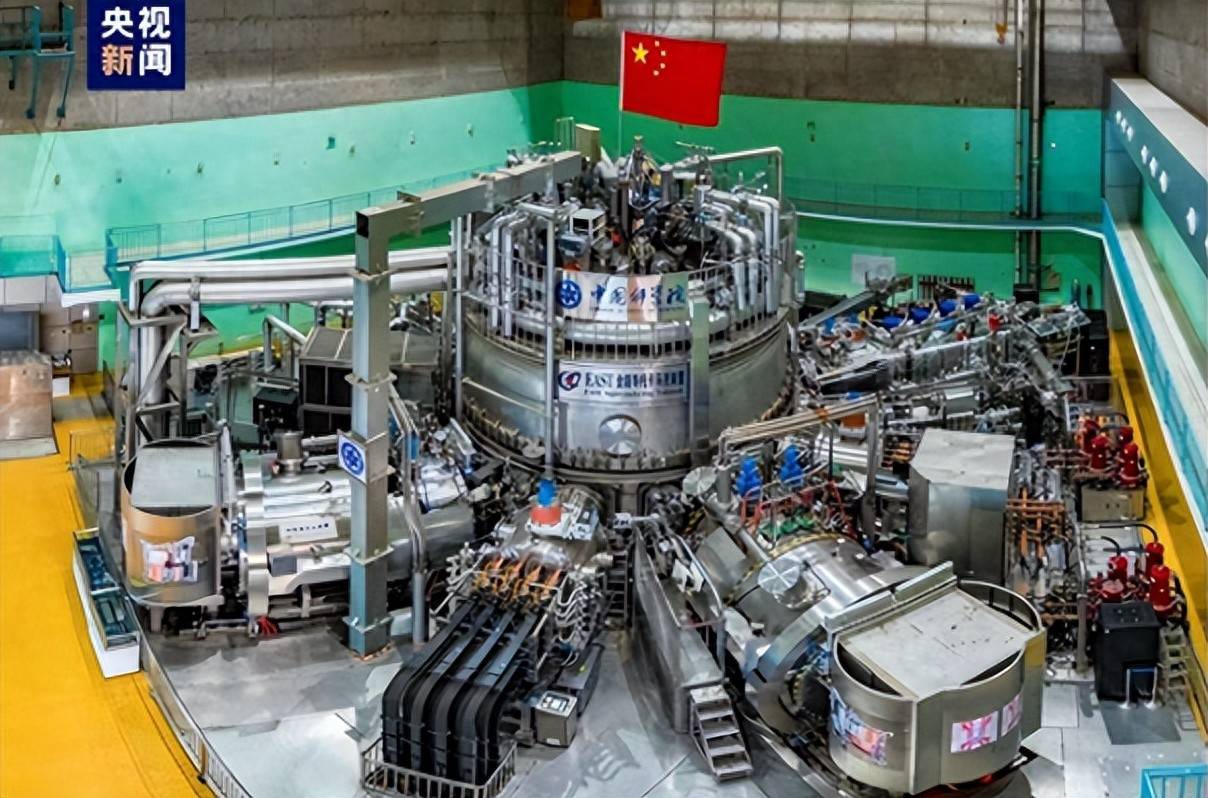
Core Viewpoint - The article discusses the potential of nuclear fusion, referred to as the "artificial sun," to alleviate energy concerns and reshape the future of energy consumption and production in China and globally [3][22]. Group 1: Energy Dependency and Security - China's reliance on foreign oil exceeds 70%, raising concerns about energy security and sustainability [10][3]. - The shift from traditional energy sources to nuclear fusion could allow China to regain control over its energy supply [10][3]. Group 2: Nuclear Fusion Technology - Nuclear fusion mimics the sun's energy production by fusing hydrogen nuclei at extremely high temperatures, resulting in helium and releasing vast amounts of energy without harmful waste [7][8]. - The fuel for fusion, deuterium, is abundant in seawater, with one liter of seawater potentially yielding energy equivalent to 300 liters of gasoline [8]. Group 3: Scientific Advancements in China - China has made significant strides in nuclear fusion research, with facilities like the "Eastern Super Ring" (EAST) in Hefei achieving world records in plasma stability [18][16]. - The "Chinese Circulation Three" (HL-3) in Chengdu has developed advanced magnetic field structures to better control the fusion process [21]. Group 4: Future Implications of Nuclear Fusion - Successful implementation of nuclear fusion could lead to a new era of energy availability, drastically reducing energy costs and enabling advancements in technology such as artificial intelligence and quantum computing [23][25]. - The transition to fusion energy could also lead to environmental benefits, such as cleaner air and water, and innovations in agriculture and space exploration [25][26]. Group 5: Strategic Goals - China has outlined a clear "three-step" strategy aimed at achieving commercial nuclear fusion energy by the middle of this century, indicating a strong commitment to this transformative technology [29][27].
长虹与海思深度联合研发 5G技术落地迎关键期
Zheng Quan Ri Bao· 2025-07-28 03:02
围绕5G的广阔空间,家电与科技巨头的联盟正向更深领域渗透,势力也在不断扩大。 近日,多个巨头在5G商用领域动作频频,跨界联合研发,落地生态实验基地,欲孵化新业态。长虹与 上海海思的5G应用联合实验室于近日宣告成立,双方将在智能工厂、安全芯片等领域布局5G产业。联 想集团也与联通在线宣布将成立5G应用联合创新实验室。华为联合长虹、京东方等多家企业智慧屏白 皮书工作组,探索loT智慧家居生态模式。 四川长虹副总工程师何龙接受《证券日报》记者采访时表示:"长虹与海思将在智慧工厂、人工智能等 垂直领域展开深度合作,长虹将继续加大在5G融合终端应用上的研发投入,并加速推动新型智能终端 的应用场景落地。" 实际上,这不是双方的首次合作。长虹旗下爱联科技研发的首款国产超小体积5G通信模组,也是采用 上海海思5G模组中间件方案设计,支持5G/4G/3G多种网络制式,可广泛应用在智慧工业、智慧能源、 无人机等领域。长虹内部人士透露,这是继全球首款5G工业互联网模组在长虹下线后的又一突破。 谈及长虹和海思的合作空间,钉科技创始人丁少将接受《证券日报》采访时表示:"海思用硬核底层技 术以及围绕其展开的软硬件能力打造数字经济的基础, ...

“小小”传感器成为万物互联“神经末梢” “中国制造”正向“中国智造”迈进
Yang Shi Wang· 2025-07-25 02:55
Group 1 - The core concept of the article revolves around the development and application of sensors, referred to as the "electronic five senses" of machines, enabling them to perceive the environment more accurately than humans [1][5][9] - The article highlights the significance of MEMS (Micro-Electro-Mechanical Systems) sensors in the advancement of artificial intelligence and robotics, emphasizing their small size, light weight, and high sensitivity [5][10][18] - The "Sensor Valley" in Bengbu, Anhui, is presented as a hub for smart sensor technology, showcasing various intelligent devices that respond to environmental changes, thus reshaping daily life [1][7][18] Group 2 - The production of MEMS sensors is centered around silicon wafers, with a fully automated production line capable of producing 10,000 8-inch smart sensor wafers monthly [10][12] - The establishment of a pilot production line allows for customized design and low-cost small-batch production, addressing previous limitations in the MEMS industry [12][14] - The Sensor Valley has attracted over 200 related enterprises, forming a complete industrial chain that encompasses design, manufacturing, and application, with an economic scale exceeding 20 billion yuan [18][24] Group 3 - The article discusses the challenges in the sensor industry, such as the complexity and small scale of products, and presents the "solid foundation and extended chain" strategy to integrate the entire production process [20][22] - Local government initiatives, including a 70 billion yuan investment fund, aim to support the development of the smart sensor industry and facilitate technology transfer [22][26] - The Sensor Valley has seen significant growth, with a reported output exceeding 3 billion yuan in the first half of the year, marking a year-on-year increase of over 30% [24][26]