
云计算

Search documents
2026年中国CPU市场现状分析:国产化率提升至50%以上,市场规模将达2579亿元[图]
Sou Hu Cai Jing· 2026-02-24 04:22
Core Viewpoint - The report titled "2026-2032 China CPU Industry Market Status Analysis and Market Trend Forecast" provides essential insights for decision-makers and investors in the CPU sector, highlighting the current market dynamics and future trends [1][11]. Group 1: Industry Overview - The CPU (Central Processing Unit) is the core of computer systems, responsible for executing program instructions and processing data, often referred to as the "brain" of the computer [6]. - The report emphasizes the significance of the CPU industry's technological advancements and market structure, which profoundly impact the global technology sector [8]. - The Chinese CPU market is projected to grow by 3.8% year-on-year by 2026, driven by policy support and technological innovation [8]. Group 2: Data Collection and Analysis Methodology - The research team employed multiple data collection methods, including annual reports from listed companies, manufacturer surveys, and expert validations, to ensure data accuracy and relevance [3]. - The report utilizes a proprietary industry analysis model developed by the research institute, allowing for a comprehensive understanding of the current market status, trends, and dynamics [3][11]. Group 3: Competitive Landscape - Key players in the Chinese CPU market, such as Feiteng, Haiguang, Longxin, and Zhaoxin, are leveraging proprietary instruction sets or compatible ecosystems to gain market share [9]. - Longxin's 3A6000 processor aims to compete with international mainstream products while adhering to a proprietary instruction set approach [9]. Group 4: Report Structure - The report consists of twelve chapters covering various aspects of the CPU industry, including definitions, business models, risk factors, and market dynamics [12]. - It provides a detailed analysis of the CPU industry's operating environment, including political, economic, social, and technological factors [14]. Group 5: Future Projections - The report forecasts supply and demand, pricing, market size, and strategic recommendations for the CPU industry from 2026 to 2032, offering a scientific and rigorous outlook [12][21]. - It highlights the expected trends in CPU performance, power efficiency, and intelligence, supporting strategic industries like AI, cloud computing, and the Internet of Things [8].

云计算需求膨胀,光模块CPO持续走强,通信ETF华夏(515050)盘中涨超3%,天孚通信涨超10%
Xin Lang Cai Jing· 2026-02-24 02:43
Group 1 - The core viewpoint of the articles highlights the strong performance of A-shares in the early trading session post-holiday, particularly in the optical module and CPO concepts, with significant gains in stocks like Huagong Technology and Tianfu Communication [1] - The communication ETF (515050) has seen a rise of over 3%, while the AI-focused ETF (159381) has increased by more than 2%, indicating a robust market sentiment towards these sectors [1] - The global token call volume has reached a new high, with a week-on-week growth rate exceeding 15%, driven by frequent iterations of global models including ClaudeOpus4.6, Gemini3DeepThink, and GPT-5.3 [1] Group 2 - Huatai Securities projects that the demand for cloud computing will surge with the rapid development of AI by 2025, significantly boosting the need for general computing power [2] - Tokens are described as the purest form of electricity derivatives, with the value of electricity being delivered across borders through tokens, despite the physical electricity remaining within China [2] - The cost structure of tokens is heavily influenced by electricity and computing power, which together account for over 70% of the total cost, leveraging China's low electricity prices to gain global pricing power in AI services [2] Group 3 - The communication ETF (515050) tracks the CSI 5G communication theme index, with a total scale of nearly 8 billion yuan, covering key areas such as optical modules and computing infrastructure, with CPO and CPB concept stocks making up over 76% of its weight [3] - The AI-focused ETF (159381) has a balanced allocation between optical module CPO stocks and AI software applications, with top holdings including Zhongji Xuchuang and Xinyi Sheng, and a total scale of nearly 2 billion yuan [3] - The cloud computing ETF (516630) focuses on domestic AI hardware and software, with a combined weight of 83.7% in computer software, cloud services, and computer equipment, also featuring a low fee structure [3]

亚马逊(AMZN.US)豪掷120亿美元于路易斯安那州建设数据中心 以满足云计算及AI需求
Zhi Tong Cai Jing· 2026-02-24 02:21
亚马逊(AMZN.US)周一表示,将投资120亿美元在美国路易斯安那州建设其首批数据中心设施,以支持 其云计算和人工智能业务。 亚马逊此前宣布今年将投入高达2000亿美元,主要用于其AWS部门,以应对AI工作负载的强劲需求。 与此同时,Meta Platforms(META.US)则将资本支出提升73%-75%,达到1150亿美元至1350亿美元,主 要用于建设其AI基础设施。谷歌(GOOGL.US)等科技巨头也宣布提高今年的资本支出预算。 亚马逊此次投资路易斯安那州的举措与竞争对手Meta的行动高度相似——Meta正在该州建设其在美国 最大的一个数据中心。由于享有显著的税收优惠、较低的电价以及可靠的电网,路易斯安那州已成为 AI基础设施项目的热门地区。数据中心投资已占该州2025年吸引的610亿美元资本投资总额的三分之一 以上。 亚马逊表示,该项投资将创造约540个现场新工作岗位,并在社区整体支持约1700个就业岗位。公司将 在未来几周内为该项目举行开工仪式。 美国的超大规模云服务提供商正争夺主导地位,并向数据中心基础设施投入数千亿美元资金,以提升计 算能力——这对于支持人工智能发展至关重要。 ...

优刻得股价跌5.07%,博时基金旗下1只基金位居十大流通股东,持有426.2万股浮亏损失916.32万元
Xin Lang Cai Jing· 2026-02-24 02:03
Company Overview - Youke Technology Co., Ltd. is located at 619 Longchang Road, Yangpu District, Shanghai, established on March 16, 2012, and listed on January 20, 2020. The company specializes in neutral third-party cloud computing services, providing a secure and reliable cloud computing service platform for clients [1]. Business Composition - The revenue composition of Youke Technology is as follows: Public Cloud 50.63%, Hybrid Cloud 35.41%, Cloud Communication 8.26%, Private Cloud 2.75%, Solutions and Others 1.90%, and Edge Cloud 1.05% [1]. Stock Performance - On February 24, Youke's stock fell by 5.07%, trading at 40.23 CNY per share, with a transaction volume of 855 million CNY and a turnover rate of 5.08%. The total market capitalization is 18.357 billion CNY [1]. Major Shareholders - Among the top ten circulating shareholders of Youke, the Bosera Fund's AI ETF (023520) increased its holdings by 601,400 shares in the third quarter, totaling 4.262 million shares, which represents 1.05% of the circulating shares. The estimated floating loss today is approximately 9.1632 million CNY [2]. Fund Performance - The Bosera AI ETF (023520) was established on March 11, 2025, with a current size of 1.21 billion CNY. Year-to-date, it has achieved a return of 17.35%, ranking 124 out of 5580 in its category, and since inception, it has returned 39.01% [2]. Fund Management - The fund manager of Bosera AI ETF (023520) is Li Qingyang, who has been in the position for 2 years and 24 days. The total asset size of the fund is 9.348 billion CNY, with the best return during his tenure being 177.75% and the worst being -6.7% [3].

TDS Q4 Earnings Beat Estimates on Strong Revenue Growth
ZACKS· 2026-02-23 19:40
Core Insights - Telephone and Data Systems, Inc. (TDS) reported strong fourth-quarter 2025 results, with both revenue and net income exceeding expectations, driven by growth in the Array segment and residential broadband connections [1][2][3] Financial Performance - TDS achieved a net income of $54.5 million or 32 cents per share from continuing operations, a significant increase from $18.3 million or 1 cent per share in the same quarter last year, surpassing the Zacks Consensus Estimate by 23 cents [2] - Total revenues reached $330.7 million, up from $295.4 million year-over-year, exceeding the Zacks Consensus Estimate by $11 million [3] - Array segment revenues increased to $60.3 million from $26.1 million, supported by strong tower rental revenues, resulting in an operating income of $8.6 million compared to a loss of $29.1 million in the prior year [4] Operational Highlights - TDS Telecom contributed $260.9 million to total revenues, slightly down from $264.3 million in the previous year, with total residential connections decreasing to 905,600 from 935,700 [5] - The company deployed 140,000 new marketable fiber addresses in 2025 and recorded 44,900 net broadband additions, with total broadband connections rising to 1,079,500 [6] Cost and Profitability - Total operating expenses were $313.9 million, up 13% from the prior year, while operating income remained relatively stable at $16.83 million [7] - Adjusted EBITDA for TDS Telecom was $85 million, an increase from $80 million, while Array Digital's adjusted EBITDA rose to $52.08 million from $24.5 million [7] Cash Flow and Liquidity - TDS generated $338.3 million in net cash from operating activities, an increase from $295.78 million in the previous year, with cash and cash equivalents totaling $765.9 million as of December 31, 2025 [8] Future Outlook - For 2026, TDS management anticipates total operating revenues for TDS Telecom to be between $1.015 billion and $1.055 billion, with adjusted EBITDA expected in the range of $310 million to $350 million [10] - Array is projected to have operating revenues between $200 billion and $215 billion, with adjusted EBITDA estimated at $200 million to $215 million [11]


数字时代,“交往在云端,传播在人间”已成为主流
Sou Hu Cai Jing· 2026-02-23 18:50
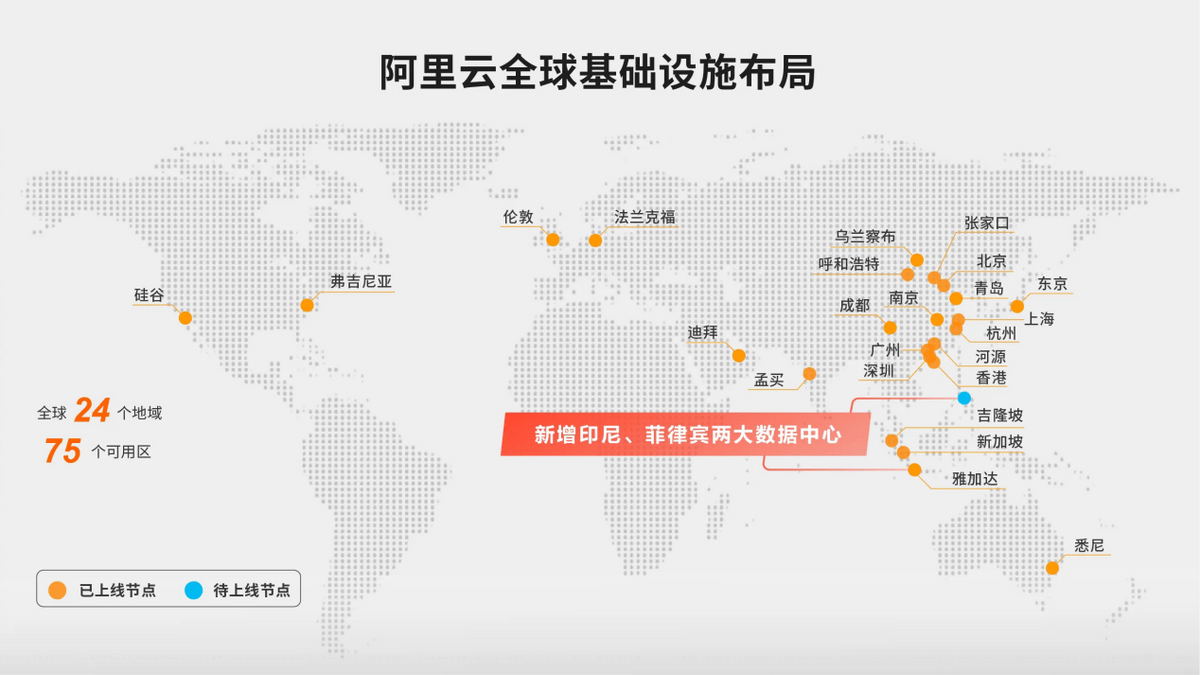
数字时代,"交往在云端,传播在人间"已成为主流。"云"的存在,使我们的工作和生活更为便捷,而得益于"云"。 放眼全球,中国云计算如今的实力已不容小觑,就拿阿里云来说,排名仅次于AWS和微软,稳居第三,超越了谷歌、IBM等昔日的一众科技巨头,也难怪 外媒的报道中均一致表明阿里云将成为AWS、Azure的最强劲对手呢,从目前中国云计算的增速实力来看,确实有潜力,而且谷歌、IBM等老牌巨头被阿里 云甩在身后已经成为了事实。 在Gartner的全球云计算市场报告中,"阿里云的市场份额和能力,足以继续在中国和周边国家保持领先地位" 。事实上,除了在中国以及亚太地区外,阿里 云的出海版图已经在全球区域拓展,如今已经在全球24个地理区域运营着75个可用区,部署了上百个云数据中心。 前不久,沙特宣布预计投入12亿美金发展地区数字经济发展计划,亚马逊AWS、微软、谷歌、甲骨文、IBM等一众科技巨头都想分一杯羹。不过,阿里云 拿下的除了沙特软件层面服务,还将帮助沙特打造云业务,携手沙特旅游局,打造数字化旅游体验。 如今中国云技术的出海版图还在持续扩张,中国云技术的实力也在越来越多的国家获得认可与选择,在海外影响力也越来越高。 ...

港股科技指数震荡调整,短期承压下藏长期机遇
Sou Hu Cai Jing· 2026-02-23 09:44
Core Viewpoint - The Hong Kong technology sector is experiencing a volatile adjustment phase, with the Hang Seng Technology Index showing structural opportunities amidst fluctuations [1][3]. Group 1: Market Performance - The Hang Seng Technology Index closed at 5211.5 points on February 20, down approximately 5.7% from 5526.31 points on February 2 [1]. - Trading volume fluctuated between 45.371 billion and 103.465 billion, indicating cautious market sentiment [1]. Group 2: Influencing Factors - The volatility in the sector is influenced by multiple factors, including the overall adjustment in the global technology sector and valuation fluctuations of overseas AI giants affecting Hong Kong tech stocks [3]. - Domestic technology companies are experiencing performance divergence and increased investment in computing power, leading investors to adopt a wait-and-see approach [3]. Group 3: Long-term Outlook - Despite short-term pressures, the core competitiveness of Hong Kong tech stocks remains intact, with leading companies like Tencent and Alibaba continuing to invest in AI and cloud computing, indicating long-term growth potential [3]. - Recent trends show domestic tech companies, including Kuaishou, Tencent, and Alibaba, actively issuing bonds to fund AI investments and infrastructure development, which may inject new vitality into the Hong Kong tech sector [3]. - The current market fluctuations present both short-term challenges and opportunities for investors to position themselves in quality tech stocks, particularly those focused on computing power and AI applications [3].

任正非最难学的地方是什么?对长期利益和短期利益进行分辨、取舍
Sou Hu Cai Jing· 2026-02-22 09:04
Core Insights - The article emphasizes the importance of strategic foresight in business, highlighting that successful companies balance short-term profits with long-term goals [1][4] - Huawei is presented as a case study of a company that effectively integrates strategic thinking into its operations, particularly in its entry into the automotive industry [1][2] Group 1: Strategic Decision-Making - Companies must have a clear understanding of their strategic direction and the balance between immediate financial gains and future growth [1][4] - Effective strategic decisions are based on thorough analysis rather than impulsive actions, especially for larger enterprises where mistakes can lead to significant waste [1][2] - The ability to adapt and maintain a long-term vision is crucial for companies to avoid becoming obsolete in competitive markets [3][4] Group 2: Research and Development - The article underscores the necessity of R&D investment for maintaining competitiveness, particularly in high-tech industries [2][3] - Companies that previously relied on resource integration are now recognizing the importance of R&D, influenced by Huawei's approach [2][3] - Huawei's strategy in the automotive sector includes making its technology accessible to partners, thereby establishing a competitive edge without disrupting market rules [2][3] Group 3: Market Positioning - Companies should focus not only on sales figures but also on their market share and positioning within the industry [4] - The article warns against short-sightedness, using the example of the once-popular PHS (Personal Handy-phone System) to illustrate the risks of neglecting long-term strategy [4] - Strategic leaders must navigate the complexities of balancing short-term and long-term interests, which requires a nuanced understanding of market dynamics [4][5]
2025年全球IT资产管理(ITAM)调查:五个关键策略:在云驱动、人工
Sou Hu Cai Jing· 2026-02-22 06:59
Core Insights - The Deloitte 2025 Global IT Asset Management (ITAM) survey emphasizes the urgent need for organizations to transition ITAM from a back-office function to a strategic capability in a cloud and AI-driven environment, highlighting five key strategies to address governance, collaboration, and technology application challenges. Group 1: Key Strategies - The first strategy focuses on building an ITAM foundation that is compatible with AI and cloud, integrating ITAM with FinOps, with only 29% of organizations having dedicated FinOps teams [1][2][3] - The second strategy emphasizes centralized management of SaaS licenses, as only 34% of organizations currently manage SaaS licenses centrally, leading to 69% experiencing shadow IT issues [1][2][3] - The third strategy positions ITAM as a pillar for cybersecurity and compliance, with only 29% of organizations incorporating ITAM into their cybersecurity strategies, indicating a significant gap in integration [2][3][4] - The fourth strategy advocates for leveraging intelligent automation for precise decision-making in ITAM, with only 24% of organizations using automation to monitor over half of their cloud spending [2][3][4] - The fifth strategy suggests aligning ITAM with corporate sustainability and ESG goals, with nearly half of organizations optimizing assets through ITAM to support sustainability [2][3][4] Group 2: Urgent Actions - The survey identifies seven urgent actions for organizations, including accelerating AI and automation implementation, enhancing data management quality, strengthening centralized governance, promoting cross-departmental integration, optimizing cloud license management, improving cost control, and achieving deep integration of processes and strategies [3][4]

2026年全球及中国集成电路封测行业产业链、发展现状、细分市场、竞争格局及未来发展趋势研判:场景扩容动能升级,先进封装成行业核心增长极[图]
Chan Ye Xin Xi Wang· 2026-02-21 01:08
Core Insights - The integrated circuit packaging and testing (ICPT) industry is a crucial part of the semiconductor supply chain, ensuring chip usability and quality certainty, and is supported by various national policies in China [1][4] - The global ICPT market is experiencing fluctuating growth, with a significant shift of capacity towards emerging Asian markets, particularly Taiwan, mainland China, and the USA [1][4] - Advanced packaging is becoming the main growth driver in the post-Moore's Law era, with the largest market segment being flip-chip packaging and the fastest growth in multi-chip integration packaging [1][5] Industry Overview - ICPT encompasses both packaging and testing, connecting wafer manufacturing with end applications, providing physical protection and performance validation [2][3] - The industry is supported by national policies aimed at technological breakthroughs and market expansion, with recent initiatives focusing on energy electronics and AI [4] Global Market Analysis - The global ICPT market is projected to reach $117.85 billion by 2026, with advanced packaging expected to grow at a compound annual growth rate (CAGR) of 13.2% from 2024 to 2026, significantly outpacing traditional packaging's 3.9% CAGR [4][5] - The market is currently in a downturn due to weak demand in consumer electronics and global economic uncertainties, but is expected to recover in 2024 as demand stabilizes [4] China Market Analysis - The mainland China ICPT market is expected to grow from 250.95 billion yuan in 2020 to 353.39 billion yuan by 2025, with a CAGR of 7.09% [6][7] - Advanced packaging is gaining traction, with its market share projected to reach 20.86% by 2025, driven by domestic demand and technological advancements [7] Competitive Landscape - The global ICPT industry is dominated by a few key players, with the top three companies holding approximately 50% of the market share by 2024 [12] - Mainland China has four companies in the global top ten, showcasing its competitive strength in the ICPT sector [12] Future Development Trends - The industry is expected to shift towards high-end, collaborative, and differentiated development, focusing on advanced packaging technologies and enhancing domestic supply chains [13][14] - There will be a continued emphasis on optimizing demand structures, with a shift from traditional consumer electronics to high-end applications like automotive electronics and AI [15]


