
交通强国

Search documents
回看“十四五”点赞这五年丨交通强国建设开启加速度!每天1.8亿人次跨区域出行靠什么→
Jing Ji Ri Bao· 2025-10-03 01:29
Core Insights - Since the start of the 14th Five-Year Plan, China's transportation sector has achieved historic accomplishments, accelerating the construction of a strong transportation nation and achieving a good start [3][8]. Infrastructure Development - By the end of 2024, the operational railway mileage is expected to increase by 162,000 kilometers, approximately 16,200 kilometers more than at the end of the 13th Five-Year Plan [4]. - The total length of highways is projected to increase by 5.49 million kilometers, about 290,000 kilometers more [4]. - The number of certified civil aviation transport airports will increase by 263, with an addition of 22 airports [4]. Strategic Support - Major regions such as Beijing-Tianjin-Hebei, Yangtze River Delta, Guangdong-Hong Kong-Macao Greater Bay Area, and Chengdu-Chongqing area have established leading comprehensive transportation networks [5]. - The construction of urban clusters on rail and world-class port and airport groups is nearing completion [5]. Technological Advancements - The CR450 high-speed train has been launched, and the first domestically produced large cruise ship has commenced operations [6]. - The C919 large passenger aircraft is now in regular commercial operation [6]. - Over 1,200 standards related to comprehensive transportation, safety emergency, and smart green initiatives have been published [6]. Operational Efficiency - The average time for issuing national oversized cargo transport permits has been reduced by 80% [6]. - In the past year, an average of approximately 180 million people traveled across regions daily, 160 million tons of goods were transported, and 478 million express parcels were collected [8].


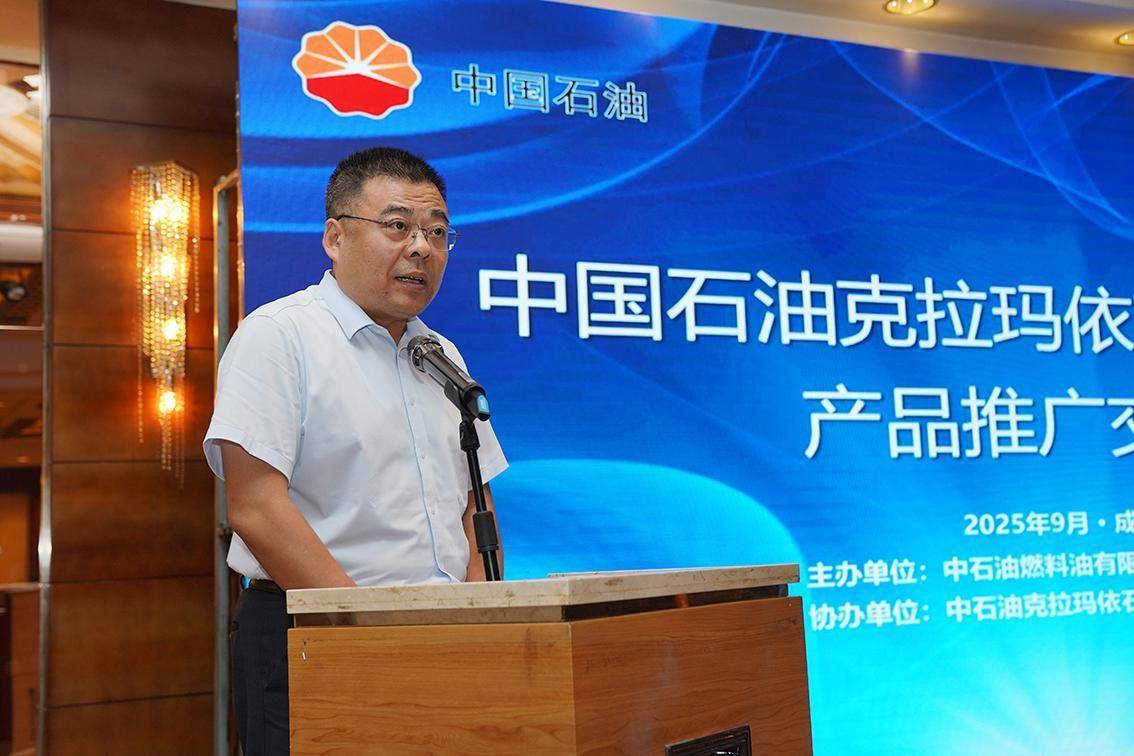
铸就“黑色黄金”王牌 助力交通强国建设
Sou Hu Cai Jing· 2025-09-30 08:57
Core Viewpoint - The event highlighted the achievements and future plans of Keshihua in the specialty asphalt sector, emphasizing its role as a key player in supporting national infrastructure strategies and its commitment to quality and innovation in asphalt products [11][12]. Group 1: Company Achievements - Keshihua has developed into a world-class naphthenic product base with an annual crude oil processing capacity of 6 million tons, and it is recognized as the largest high-grade white oil production base in China [12]. - Keshihua's specialty asphalt products account for over 15% of China National Petroleum Corporation's total asphalt production capacity, with a market share of 70% for high-grade asphalt in the northwest region [12]. - The company has received national transportation product certification for its high-grade asphalt, showcasing its commitment to quality [12]. Group 2: Technological Innovations - Keshihua has made significant technological breakthroughs in heavy oil deep processing, winning the National Science and Technology Progress Award in 2011 for its research and development of high-end products [12]. - The company is transitioning traditional asphalt materials to smart materials, reflecting advancements in technology and product innovation [12]. Group 3: Market Opportunities - The new regulations for asphalt pavement construction will facilitate the large-scale application of hard asphalt, providing a favorable environment for Keshihua's products [15]. - Keshihua has been proactive in developing hard asphalt, which has shown excellent performance in various projects, addressing issues related to high costs and performance of SBS modified asphalt [16][17]. Group 4: Future Outlook - Keshihua plans to expand its production capacity for modified asphalt to 300,000 tons annually, aiming to meet the growing demand for highway construction in the northwest region [18]. - The company is also focusing on high-end green products, such as special and emulsified asphalt, in response to the evolving needs of the industry and national carbon neutrality goals [21][22]. Group 5: Collaboration and Partnerships - Keshihua has a long-standing partnership with Shaanxi Transportation Control Supply Chain Management Group, which has utilized Keshihua's asphalt in major highway projects for 35 years [13]. - The company has received positive feedback from various partners regarding the stability and quality of its asphalt products, reinforcing its reputation in the market [14]. Group 6: Water Conservancy Applications - Keshihua's water engineering asphalt products have gained traction, with significant applications in major hydropower projects, including the Three Gorges Dam and various pumped storage power stations [20]. - The sales of Keshihua's water engineering asphalt have seen a remarkable increase of 95.7% year-on-year from January to August 2025, following the introduction of national energy industry standards [20].
答卷“十四五” 央企惠民生 | 筑路织网百业兴 央企锻造现代化交通体系新动脉
Zhong Guo Zheng Quan Bao - Zhong Zheng Wang· 2025-09-22 23:25
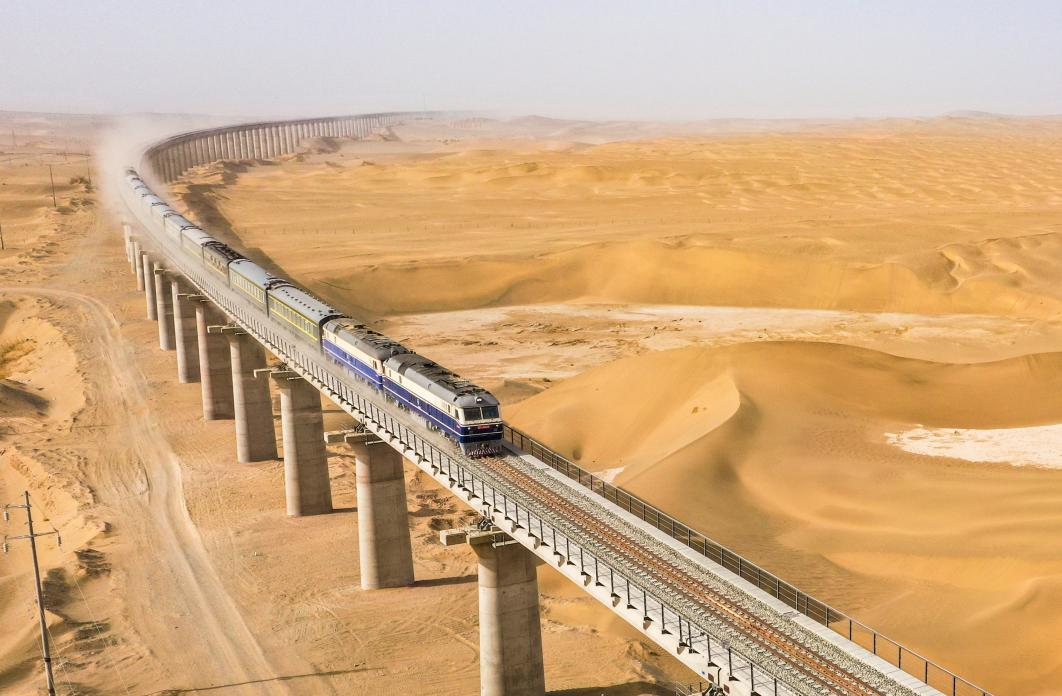
Core Viewpoint - The construction of major transportation projects, such as the He-Ruo Railway, is significantly enhancing regional economic development and improving connectivity in China, particularly in remote areas like Xinjiang [1][5]. Group 1: Transportation Infrastructure Development - The He-Ruo Railway, built by China Railway Construction Corporation, has transformed the previously inaccessible Taklamakan Desert region into a vital economic corridor, ending the history of no train access for five counties [1]. - The railway construction faced extreme challenges, with 460 kilometers traversing a desert with no water, electricity, or roads, showcasing the engineering capabilities of state-owned enterprises [1][2]. - The introduction of innovative construction techniques, such as the "bridge instead of road" approach, has significantly reduced transportation distances by over 1,000 kilometers [2]. Group 2: Investment and Economic Impact - From 2021 to 2024, state-owned enterprises (SOEs) completed fixed asset investments totaling 19 trillion yuan, with an average annual growth rate of 6.3% [5]. - The opening of the He-Ruo Railway has reduced transportation costs for local products by over 20%, boosting tourism and local economies [15]. - The completion of the Changtai Yangtze River Bridge has drastically cut travel time between Changzhou and Taizhou from 1 hour and 20 minutes to approximately 20 minutes, enhancing local connectivity [4][15]. Group 3: Technological Innovation - SOEs are leading in technological advancements, with the introduction of the world's largest diameter shield tunneling machine and innovations in high-speed rail technology, such as the development of high-speed train wheels that improve performance [9][11]. - The use of advanced construction methods and equipment has resulted in significant time savings in infrastructure projects, with some urban subway construction periods reduced by 1 to 2 years [9][11]. - SOEs have been involved in 22 major national technology projects, contributing to the development of key products in the manufacturing sector [13]. Group 4: Future Outlook - The investment focus of SOEs is expected to shift towards high-quality development, optimizing multi-modal transportation structures, and integrating smart and green technologies into infrastructure [7]. - The ongoing development of transportation infrastructure is anticipated to further enhance economic opportunities and improve the quality of life for citizens [17].



筑路织网百业兴 央企锻造现代化交通体系新动脉
Zhong Guo Zheng Quan Bao· 2025-09-22 20:15
Core Viewpoint - The construction of major transportation projects by central enterprises in China is significantly enhancing regional economic development and improving the quality of life for citizens, showcasing the strength and responsibility of these enterprises in building a transportation powerhouse [1][3]. Group 1: Transportation Infrastructure Development - The completion of the He-Ruo Railway has transformed the previously inaccessible Taklamakan Desert area into a vital economic corridor, connecting five counties and facilitating economic growth [1]. - Central enterprises have successfully tackled the challenges of building infrastructure in harsh environments, exemplified by the He-Ruo Railway's construction through 460 kilometers of desert [2]. - The G0711 line's Tian Shan Victory Tunnel, the longest highway tunnel in the world, is set to enhance connectivity between northern and southern Xinjiang, reducing travel time significantly [2]. Group 2: Technological Innovation in Construction - The He-Ruo Railway project utilized innovative techniques such as "bridge instead of road" and introduced a train monitoring system to ensure safety and efficiency during construction [2]. - The use of advanced construction methods, such as the "three tunnels + four shafts" technique for the Tian Shan tunnel, has led to significant reductions in construction time [2]. - The development of the "Jinghua" shield machine has enabled the completion of the longest shield tunnel in China, showcasing advancements in domestic technology [4]. Group 3: Economic Impact and Benefits - The opening of the He-Ruo Railway has reduced transportation costs for local products by over 20%, boosting tourism and local economies [6]. - The Changtai Yangtze River Bridge has drastically cut travel time for residents, enhancing their daily commuting experience and reducing fuel costs [6]. - The establishment of the green smart port in Peru has shortened shipping times and reduced logistics costs by over 20%, facilitating trade between China and Latin America [6]. Group 4: Investment and Future Outlook - From 2021 to 2024, central enterprises are projected to invest 19 trillion yuan in fixed assets, with an annual growth rate of 6.3%, indicating a strong commitment to transportation infrastructure [3]. - Future investments will focus on high-quality development, optimizing transportation modes, and integrating smart and green technologies into infrastructure [3]. - Central enterprises are expected to lead in key technological advancements, contributing to the construction of a robust transportation network and supporting national strategic goals [5].
打造交通强国建设海南样板 在自贸港建设中率先实现交通现代化
Hai Nan Ri Bao· 2025-09-17 09:47
Group 1 - The core viewpoint emphasizes the importance of building a modern transportation system in Hainan as a model for national development, aligning with the strategic goals of a transportation powerhouse and the construction of a free trade port [1][2] - The focus is on creating a high-quality, integrated transportation network that supports national strategies and features Hainan's characteristics, including international shipping hubs and aviation gateways [1][2] - The transition from speed and scale to quality and efficiency in transportation development is highlighted, along with the need for integrated development across various transportation modes and a shift towards innovation-driven growth [1][2] Group 2 - The government aims to construct a modern, high-quality comprehensive transportation network and enhance the capabilities of key transportation hubs through scientific planning and project development [2] - There is an emphasis on fostering new productive forces in the transportation sector, promoting smart and green transportation, and implementing cost-reduction measures in logistics [2] - The importance of innovation in technology, systems, and integrated approaches is stressed, alongside a commitment to safety and the development of a competent workforce in the transportation sector [2]
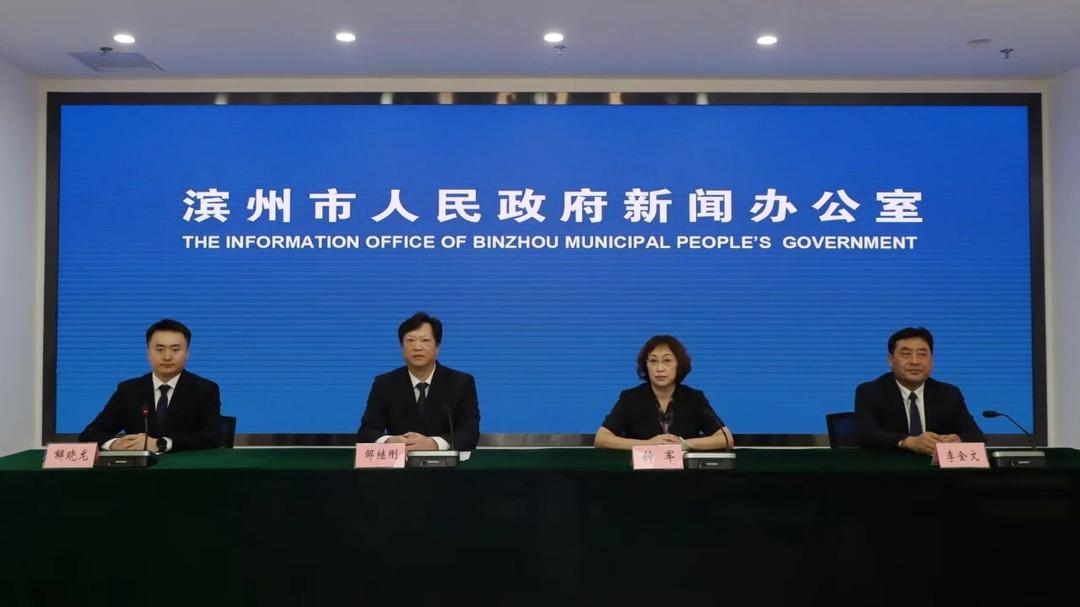
滨州交通建设全面提速,两条高铁建设进度持续保持全线领先
Qi Lu Wan Bao Wang· 2025-09-12 23:49
Core Viewpoint - The article highlights the progress and achievements of the Binzhou transportation sector in enhancing infrastructure, optimizing services, and improving governance to promote high-quality development in the region [2][3][4][5][6][7][8][9][10] Infrastructure Development - The city has made significant investments in transportation infrastructure, with a total fixed asset investment of 71.8 billion yuan this year and a cumulative investment of 127 billion yuan in high-speed rail projects [2][3] - Key projects include the completion of bridge and station works for the Tianjin-Weifang high-speed railway and the ongoing construction of the Binzhou port railway [3] - The road network has seen substantial improvements, with the completion of 111.9% of the annual investment plan for the Qingzhang Expressway and ongoing projects for several national and provincial roads [3] Transportation Services Optimization - The city has focused on optimizing transportation logistics, achieving a low-carbon transport volume of 50.5 million tons in the first half of the year, a year-on-year increase of 18.5% [5] - The establishment of new river-sea intermodal routes has contributed to a total cargo throughput of 400,000 tons [5] - The international road transport sector has expanded, with 12 companies now qualified for international transport, enhancing the region's connectivity [5] Economic Support and Development - The transportation, warehousing, and postal sectors have seen a revenue increase of 10.3% year-on-year, surpassing the provincial average [6] - The city has implemented various initiatives to support businesses, including the establishment of service contact points and conducting enterprise research to address logistical challenges [7] Governance and Regulation - The regulatory framework for the transportation industry has improved, with the introduction of electronic waybills for hazardous materials and the integration of ride-hailing services [8][9] - A comprehensive approach to managing transportation safety has been adopted, with significant efforts in monitoring and rectifying safety hazards [10]
“钢铁脊梁”南钢“铸”,世界之最“钢”杠滴
Nan Jing Ri Bao· 2025-09-12 00:22
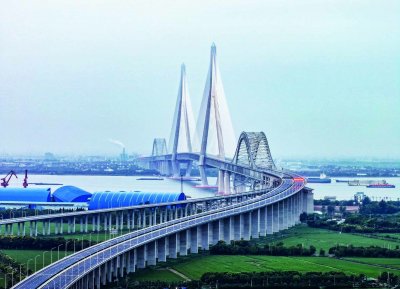
Group 1 - The Changtai Yangtze River Bridge, the world's largest span cable-stayed bridge and the largest span steel truss arch bridge for both road and rail, officially opened on September 9, significantly reducing travel time between the two locations from 80 minutes to approximately 20 minutes [2] - The bridge connects Taizhou and Changzhou, playing a crucial role in promoting coordinated development of the Yangtze River Delta urban agglomeration and integration of the Yangtze River Delta region [2] - Nanjing Steel (Nansteel) provided steel for the bridge, supporting the national strategy for a strong transportation network [2] Group 2 - In recent years, Nansteel has focused on innovation in bridge steel, emphasizing green and low-carbon development, and has increased research and development investments [3] - The company has developed a new generation of high-performance bridge steel, including weather-resistant bridge steel series and composite plates for bridges, achieving a full range of specifications and bulk supply capabilities [3] - Nansteel's bridge steel products have been successfully applied in numerous iconic large bridge projects both domestically and internationally [3]

湖北公路水路投资连续两年位居中部第一 “十四五”交通重大任务和重大项目进展顺利
Chang Jiang Shang Bao· 2025-09-04 00:03
Core Viewpoint - Hubei is accelerating the construction of a modern comprehensive transportation system, aiming to establish a demonstration zone for a strong transportation nation and enhance its strategic position in central China [1] Group 1: Transportation Infrastructure Development - During the "14th Five-Year Plan" period, Hubei's transportation fixed asset investment reached 789.7 billion yuan, a year-on-year increase of 43%, with road and waterway investments ranking first in central China for two consecutive years [1] - By the end of this year, Hubei's high-speed rail mileage is expected to exceed 2,500 kilometers, placing it among the top five in the country [2] - The province's highway network has reached 8,184 kilometers, with the main national highways fully connected [2] Group 2: Multi-Modal Transportation Integration - Hubei has established 30 comprehensive passenger transport hubs, achieving 100% coverage in cities and states [2] - The province's port container throughput capacity has surpassed 6.1 million TEUs, with a significant annual growth rate of 49.5% in container rail-water intermodal transport from 2020 to 2024 [3] - The logistics cost as a percentage of GDP in Hubei is projected to be 12.82% in 2024, which is 1.28 percentage points lower than the national average [3] Group 3: Green Transportation Initiatives - The proportion of new energy buses in urban areas has reached 84.67%, and the coverage of charging stations in highway service areas is 100% [3] - Hubei has completed the renovation of over 6,000 aging bridges as part of its "three-year danger elimination" initiative [3] Group 4: Future Development Plans - In the "15th Five-Year Plan" period, Hubei will focus on enhancing its role as a major logistics hub and improving the interconnectivity of various transportation modes [4] - The province aims to strengthen its railway network, with more than two high-speed rail lines expected to commence construction each year [6] Group 5: Aviation and Low-Altitude Economy - Hubei has established a new development pattern of "dual hubs and multiple branches" in aviation, with four international airports supporting its inland open economy [5][7] - The province has made significant breakthroughs in both the airport economy and low-altitude economy, forming strategic partnerships with over 30 leading enterprises [7]
市委常委会召开会议:深入学习宣传贯彻《习近平谈治国理政》第五卷,锲而不舍落实中央八项规定精神
Chang Jiang Ri Bao· 2025-09-01 07:48
Group 1 - The meeting emphasized the importance of deeply studying and implementing Xi Jinping's important speech from the Central Political Bureau meeting on August 29, focusing on the actual conditions of Wuhan [1] - The meeting highlighted the need to strengthen the Party's leadership in ideological and political work, promoting the "Two Establishments" and "Two Safeguards" [1] - The meeting called for better coordination of development and safety, ensuring the safety of people's lives and property through effective disaster prevention measures [1] Group 2 - The meeting stressed that the fifth volume of "Xi Jinping on Governance" addresses significant contemporary issues and enriches the Party's innovative theoretical achievements, making it a major political task for the current and future periods [2] - It was noted that systematic learning and understanding of the fifth volume should be combined with the previous four volumes and Xi's important speeches during his inspection of Hubei [2] - The meeting underscored the importance of integrating learning with practical application to unify thoughts, intentions, and actions in various aspects of reform and development [2] Group 3 - The meeting highlighted the need to implement Xi Jinping's important discussions on strengthening the Party's work style, ensuring adherence to the Central Eight Regulations, and promoting long-term effectiveness in work style construction [3] - It emphasized the establishment of a problem discovery mechanism and the importance of strict supervision and accountability to address violations [3] - The meeting also focused on the importance of advancing the construction of a modern, safe, efficient, green, and economical transportation system, aiming to build an international comprehensive transportation hub city [3]
广州港: 广州港股份有限公司2025年半年度报告
Zheng Quan Zhi Xing· 2025-08-29 17:02
Core Viewpoint - Guangzhou Port Company Limited reported a slight increase in revenue but a decline in net profit for the first half of 2025, reflecting challenges in the port industry amidst economic pressures and competition [2][3]. Company Overview and Financial Indicators - The company achieved an operating revenue of approximately 6.91 billion RMB, a 1.39% increase compared to the same period last year [2][11]. - Total profit decreased by 12.11% to approximately 852.96 million RMB, while net profit attributable to shareholders fell by 9.12% to about 551.73 million RMB [2][11]. - The net cash flow from operating activities increased by 19.29% to approximately 1.92 billion RMB [2][11]. - Total assets rose by 2.20% to approximately 53.62 billion RMB, and net assets attributable to shareholders increased by 0.67% to about 21.03 billion RMB [2][11]. Industry and Business Operations - The port industry showed resilience with a national cargo throughput growth of 4.0% in the first half of 2025, and container throughput increased by 6.9% [3][4]. - Guangzhou Port completed a cargo throughput of 287 million tons, a 2.9% increase, and container throughput of 13.4 million TEU, a 9.5% increase [3][4]. - The company expanded its foreign trade container routes, adding 7 new routes, with foreign trade containers growing by 21.4% [3][4]. - The company is focusing on enhancing its logistics services and optimizing its cargo structure to adapt to market demands [3][4]. Strategic Developments - The company is advancing key projects, including the Nansha Port Phase V project and the Nansha International General Terminal, which are crucial for future capacity expansion [4][5]. - Efforts are being made to improve operational efficiency and reduce costs through digital transformation and innovation in logistics services [5][6]. - The company is committed to building a green port, implementing various environmental initiatives and enhancing energy efficiency [6][7]. Competitive Position - Guangzhou Port is strategically located in the Guangdong-Hong Kong-Macao Greater Bay Area, providing significant logistical advantages and connectivity to major domestic and international markets [8][9]. - The port has established partnerships with major shipping companies and alliances, enhancing its service network and operational capabilities [9][10]. - The company aims to align with national strategies such as the Belt and Road Initiative and the development of a comprehensive transportation system, positioning itself for sustainable growth [7][8].
