
消费者权益保护

Search documents
优衣库被曝偷拍顾客,是部分区域管理层下令,照片还被内部群传播
21世纪经济报道· 2025-12-23 12:22
Core Viewpoint - The article discusses the controversy surrounding Uniqlo's alleged practice of "spying" on customers in stores under the pretext of theft prevention, raising significant concerns about consumer privacy rights and the legality of such actions [1][3]. Group 1: Legal Implications - The distinction between "legal monitoring" and "excessive filming" is crucial, as only standard surveillance for safety in public areas with prior notification is considered lawful [3]. - The Consumer Rights Protection Law stipulates that consumers have the right to respect for their dignity and protection of personal information, and businesses cannot insult or defame consumers [4]. - If management instructs employees to engage in such behavior, the company bears liability for any infringement, although employees can refuse to execute illegal directives [4][5]. Group 2: Company Reputation and Market Impact - Uniqlo is recognized for its "high cost-performance" positioning in China, which is its largest single market outside Japan, contributing approximately 19% to the group's total revenue in FY2025, although revenue in mainland China has decreased by about 4% and profits by 11% [5]. - The "spying" incident could lead to consumer backlash, highlighting the need for companies to maintain clear boundaries in management practices and prioritize consumer privacy [5]. Group 3: Surveillance Practices - Surveillance in stores is common, but the querying and usage of monitoring footage are often overlooked, necessitating adherence to principles of legality, legitimacy, and necessity [6][8]. - Guidelines for monitoring include prior notification through visible signage, limiting coverage to public areas, and prohibiting filming in private spaces like fitting rooms [6][8]. - Surveillance footage should only be used for theft prevention and safety management, not for analyzing consumer behavior or identifying "suspicious individuals" [8].


老用户想换手机套餐有点难
Xin Lang Cai Jing· 2025-12-21 07:20
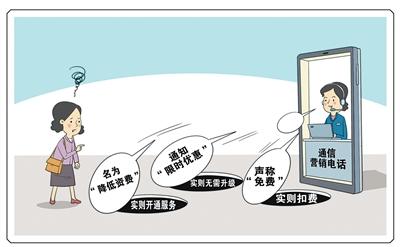
Core Viewpoint - Despite years of promoting "speed increase and fee reduction" in mobile communication, consumers still face obstacles in obtaining satisfactory plans, including rising prices, unilateral cancellation of low-cost plans, and confusing binding sales terms [1] Group 1: Consumer Experience - Consumers find it easy to sign up for new plans but face significant challenges when trying to switch to more affordable options, often encountering penalties for early termination [2][3] - Many consumers are unaware of the binding contracts they sign, which often include hidden fees and long-term commitments that complicate their ability to change plans [4][5] Group 2: Sales Tactics - Telecom operators employ tactics such as "contract bundling" to retain high-paying customers, often misleading consumers about the true nature of promotional offers [5][6] - There are reports of deceptive practices targeting vulnerable groups, such as the elderly, where sales representatives emphasize free devices while downplaying the associated high-cost plans and long-term contracts [5][6] Group 3: Regulatory Environment - The Consumer Rights Protection Law and telecommunications regulations affirm consumers' rights to choose services freely, yet operators often prioritize high-value plans for existing customers over new user incentives [6][7] - Experts suggest that regulatory bodies should enhance oversight and create more detailed guidelines to curb misleading sales practices and ensure consumer rights are upheld [7]
洪恩识字自动续费扣款10个月无提醒 律师:涉嫌侵犯消费者选择权
Xin Lang Cai Jing· 2025-12-21 06:19
Core Viewpoint - The article discusses a case involving the "Hongen Literacy" app, where a consumer was charged for an automatic subscription renewal for 10 months without prior notification, raising concerns about consumer rights violations [1] Group 1: Consumer Rights and Legal Framework - The incident highlights a potential infringement of consumer choice rights as the app's automatic renewal feature was not adequately communicated to the consumer [1] - According to the "Implementation Regulations of the Consumer Rights Protection Law," service providers must prominently inform consumers about automatic renewals to ensure informed consent [1] - Legal expert Liu Bo emphasizes that if the notifications regarding automatic renewal are not clear and conspicuous, the service provider may still be held accountable for consumer rights violations [1] Group 2: Consumer Actions and Remedies - Consumers facing similar issues are advised to file complaints with consumer associations and market regulatory authorities to seek refunds [1] - If the issue remains unresolved, consumers can retain evidence and consider legal action by filing a lawsuit [1]

“十四五”时期全国消协组织为消费者挽回经济损失62.3亿元
Zhong Guo Xin Wen Wang· 2025-12-21 04:39
中新网北京12月21日电 (记者 刘亮)记者21日从市场监管总局获悉,5年来,全国消协组织共受理消费者 投诉超735.1万件,接待消费者来访和咨询超510.6万人次,为消费者挽回经济损失62.3亿元。 日前,在由中国质量报刊社主办的2025年度"质量之光"论坛上,中国消费者协会(以下简称"中消协")秘 书长王振宇介绍了"十四五"时期我国消费者权益保护工作取得的成效及"十五五"时期工作重点。 据王振宇介绍,"十四五"时期,中消协始终将维护好消费者合法权益、营造安全放心消费环境,作为推 进商品和服务质量提升的出发点和落脚点,积极做好以下工作。 "十四五"时期全国消协组织为消费者挽回经济损失62.3亿元 中新经纬版权所有,未经书面授权,任何单位及个人不得转载、摘编或以其它方式使用。 关注中新经纬微信公众号(微信搜索"中新经纬"或"jwview"),看更多精彩财经资讯。 5年来,中消协围绕农村消费市场质量问题、养老辅助器具、家装产品质量、医美消费、食品加工等10 余项民生关切领域开展消费监督,通过消费调查、舆情监测、指导谈话以及发布监督报告等形式,推动 相关质量问题整改与行业规范。 5年来,中消协针对空气净化器、防晒 ...
影院取消放映场,镇江消协调解:全额退款+赔偿两张观影票
Yang Zi Wan Bao Wang· 2025-12-20 10:39
Group 1 - A consumer, Ms. Dong, filed a complaint after purchasing two movie tickets for a total of 74 yuan, only to be informed that the screening was canceled and her payment would be refunded [1] - Ms. Dong accused the cinema of lacking integrity and requested compensation of 500 yuan based on consumer protection laws, citing potential fraudulent behavior [1] - The local market regulatory department found that the cancellation of the screening constituted a flaw in service provision, but it was difficult to determine if there was fraudulent intent [1] Group 2 - The Zhenjiang Consumer Association advised cinemas to develop reasonable and cautious screening schedules and to disclose relevant information in a timely manner to protect consumer rights [2] - It emphasized the importance of cinemas adopting a consumer-centric approach when cancellations occur, including proactive communication and timely compensation [2] - The association also called for administrative departments to guide and regulate cinemas to ensure compliance with consumer protection laws and to address any false advertising or consumer rights violations [2]
手机套餐 少些套路
Ren Min Ri Bao· 2025-12-19 11:18
Core Viewpoint - The article highlights the difficulties consumers face when trying to change their mobile communication plans, despite the ongoing push for lower prices and better services in the telecommunications industry. It emphasizes the challenges posed by high exit costs, contract bundling, and the preferential treatment of new users over existing customers [1][11]. Group 1: Consumer Experiences - Consumers like Mr. Huang and Mr. Wang express frustration over the inability to switch to lower-priced plans without incurring penalties or being restricted to less favorable options [1][2][4]. - Many users report being misled during the initial contract signing, with important details about penalties and contract terms not clearly communicated [6][7][8]. Group 2: Industry Practices - The article reveals that telecommunications companies often employ tactics such as contract bundling and preferential pricing for new users to retain high-paying customers [8][9]. - There is a noted discrepancy in how customer service representatives handle requests from existing versus new customers, often complicating the process for those wishing to downgrade their plans [4][10]. Group 3: Regulatory and Consumer Rights - The article references the Consumer Rights Protection Law and the Telecommunications Regulations, which assert that consumers have the right to choose their services without undue restrictions [11][13]. - Regulatory bodies are beginning to take action to address these issues, including initiatives to simplify plan offerings and ensure clearer communication of terms to consumers [12][13].
资费升易降难、合约暗藏玄机,手机套餐少些套路吧
Ren Min Ri Bao· 2025-12-19 02:33
Core Viewpoint - The article highlights the difficulties consumers face when trying to change their mobile communication plans, emphasizing that while it is easy to sign up for new packages, switching to more affordable options is fraught with obstacles such as high penalties and restrictive terms [2][6][12]. Group 1: Consumer Experiences - Consumers report that changing to a lower-priced mobile plan often requires paying a penalty, which was not clearly communicated at the time of signing up for the original plan [2][7]. - Many consumers, like Mr. Huang and Mr. Wang, find themselves stuck in high-cost plans due to the operators' policies that favor new users and complicate the process for existing customers [3][5][10]. - There is a prevalent issue of misleading sales practices, where consumers are not adequately informed about the terms and conditions, leading to unexpected costs and dissatisfaction [8][9]. Group 2: Industry Practices - The article discusses the common practice among telecom operators of binding customers to long-term contracts with high exit fees, effectively locking them into expensive plans [7][9]. - Operators often employ tactics such as offering "free" devices or promotional plans that come with hidden costs, particularly targeting vulnerable groups like the elderly [9][11]. - The industry is criticized for prioritizing high-value plans for existing customers while offering better deals to new users, creating a disparity that affects customer loyalty and satisfaction [12][13]. Group 3: Regulatory and Consumer Rights - The article references consumer protection laws that affirm the right to choose services freely, indicating that telecom operators must not impose restrictions on users [12][14]. - Regulatory bodies are beginning to take action to address these issues, including initiatives to simplify plan offerings and ensure that changes requested by consumers are processed promptly [13][14]. - Experts suggest that there is a need for stricter regulations and clearer communication from operators to protect consumer rights and enhance transparency in service offerings [14][15].
中国人寿保险股份有限公司第八届监事会第十次会议决议公告
Shang Hai Zheng Quan Bao· 2025-12-18 19:54
证券代码:601628 证券简称:中国人寿 编号:临2025-046 中国人寿保险股份有限公司 第八届监事会第十次会议决议公告 重要提示 本公司监事会及全体监事保证本公告内容不存在任何虚假记载、误导性陈述或者重大遗漏,并对其内容 的真实性、准确性和完整性承担法律责任。 本公司第八届监事会第十次会议于2025年12月9日以书面方式通知各位监事,会议于2025年12月18日在 北京召开。会议应出席监事4人,实际出席监事4人。监事会主席曹伟清,监事谷海山、叶映兰、董海锋 现场出席会议。会议召开的时间、地点、方式等符合《中华人民共和国公司法》等相关法律、行政法 规、部门规章、《中国人寿保险股份有限公司章程》和《中国人寿保险股份有限公司监事会议事规则》 的规定。 会议由监事会主席曹伟清先生主持,与会监事经充分审议,一致通过如下议案: 一、《关于〈公司2025年消费者权益保护工作情况专项审计报告〉的议案》 议案表决情况:同意4票,反对0票,弃权0票 特此公告 中国人寿保险股份有限公司监事会 2025年12月18日 证券代码:601628 证券简称:中国人寿 编号:临2025-045 中国人寿保险股份有限公司 第八届董事会 ...

“五进入”筑牢消保防线,多维度宣教传递温度—2025年平安融易山东分公司金融消保宣教纪实
Qi Lu Wan Bao· 2025-12-18 03:35
Core Viewpoint - The company is committed to enhancing consumer rights protection through financial education initiatives across various communities in Shandong, aiming to safeguard the financial well-being of the public. Group 1: Financial Education Initiatives - The company has implemented the "Five Entrances" strategy, focusing on rural areas, communities, campuses, enterprises, and business circles to provide targeted financial education [1][2] - In communities, the company has adopted a "chatting" style of education to help elderly residents understand and protect their retirement funds from scams [1] - For the youth, the company collaborates with regulatory bodies in universities to educate students about "campus loans," "beauty loans," and online fraud, promoting responsible financial practices [1] Group 2: Community Engagement and Awareness - The company has conducted various activities in business districts, such as explaining the risks of "internal fundraising" in technology parks and warning against "cashback scams" in markets [2] - During the "Safe Internet Week" event, volunteers from the company engaged with the public to explain financial safety and demonstrate emergency skills, highlighting the importance of community involvement [2] - The company organized a public lecture titled "Protecting Your Wallet, Safeguarding Your Happiness" in a community, using relatable examples to explain common financial scams [4] Group 3: Volunteer Efforts and Future Commitment - Volunteers have been actively involved in spreading financial knowledge and fostering a sense of security among residents, enhancing the effectiveness of educational activities through interactive sessions [6] - The company aims to continue integrating consumer rights protection into its financial services, positioning itself as a defender against financial risks and a promoter of financial knowledge [6]

优步“Uber One”遭到美国联邦贸易委员会与21个州起诉
Xin Lang Cai Jing· 2025-12-16 15:50
Core Viewpoint - Uber is facing a revised lawsuit from the Federal Trade Commission (FTC) regarding its Uber One subscription service, with multiple states joining the allegations of misleading registration, charging fees before the trial period ends, and complicated cancellation processes, seeking civil penalties and injunctive relief [1] Group 1 - The FTC lawsuit against Uber has been revised to include claims of misleading registration practices [1] - Allegations include charging customers before the trial period for the Uber One subscription service concludes [1] - The lawsuit also highlights the cumbersome cancellation process for users [1]
