量子信息

Search documents
权威解读!“十五五”规划建议7大要点,一文梳理
Shang Hai Zheng Quan Bao· 2025-10-28 16:50
Core Viewpoint - The article discusses the "15th Five-Year Plan" proposed by the Central Committee of the Communist Party of China, emphasizing high-quality economic development, technological self-reliance, and the establishment of a robust domestic market as key objectives for the next five years [1]. Economic Development - The plan prioritizes "significant achievements in high-quality development" while de-emphasizing specific economic growth targets, allowing for greater flexibility in macroeconomic policy [2]. - It aims to increase the resident consumption rate and enhance the level of technological self-reliance through policy coordination and institutional optimization [3]. Capital Market Functionality - The plan calls for improving the inclusiveness and adaptability of the capital market, focusing on balancing investment and financing functions to better serve the real economy [4]. - It emphasizes the need for a modern capital market system that aligns with high-quality development and supports innovation and green development [5]. Financial Strength - The plan outlines the goal of accelerating the construction of a financial powerhouse, enhancing the central bank's system, and optimizing monetary policy transmission mechanisms [6]. - It stresses the importance of a comprehensive macro-prudential management system to prevent systemic risks [7]. Industrial Foundation - The plan places a strong emphasis on building a modern industrial system and consolidating the foundation of the real economy, with a focus on maintaining a reasonable proportion of manufacturing [9]. - It outlines strategies for upgrading key industries and fostering emerging industries through intelligent, green, and integrated development [10]. Technological Self-Reliance - The plan advocates for accelerating high-level technological self-reliance to support new quality productivity, emphasizing the integration of technological and industrial innovation [12]. - It highlights the importance of focusing on key areas such as artificial intelligence and quantum information to drive forward-looking technological advancements [15]. Domestic Market Development - The plan identifies a strong domestic market as a strategic foundation for modernization, promoting the interaction between consumption and investment [16]. - It includes measures to enhance consumption and investment, such as implementing special actions to boost consumption and establishing management methods for new consumption scenarios [17]. Fiscal Sustainability - The plan emphasizes the role of proactive fiscal policy in enhancing fiscal sustainability, advocating for improved fiscal management and budgetary coordination [18]. - It suggests establishing a long-term mechanism for government debt management that aligns with high-quality development [19][20].
科创成长层今日“迎新”!证监会发声!
Zheng Quan Ri Bao Wang· 2025-10-28 03:25
Group 1 - The core viewpoint of the articles highlights the successful launch of the first batch of newly registered companies on the Sci-Tech Innovation Board's growth tier, marking a significant step in capital market support for technological innovation and new productive forces [1][2] - The China Securities Regulatory Commission (CSRC) emphasizes the importance of companies utilizing reform policies to improve corporate governance, enhance development quality, and increase investor returns [1] - The establishment of the Sci-Tech Innovation Board has been a collaborative effort since its announcement in November 2018, leading to a steady market operation and the effective support of high-tech enterprises in fields such as integrated circuits and biomedicine [1][2] Group 2 - The current technological revolution and industrial transformation are accelerating, with frontier technologies like artificial intelligence and quantum information reshaping the global development landscape [2] - The CSRC has introduced significant policy measures, including the "Eight Articles for the Sci-Tech Innovation Board" and "Six Articles for Mergers and Acquisitions," to enhance the inclusiveness and competitiveness of the domestic capital market [2] - The CSRC plans to focus on risk prevention, strong regulation, and promoting high-quality development as part of its strategic tasks for the 14th Five-Year Plan period, aiming to deepen comprehensive reforms in the capital market [2]
专访国家发改委产业经济与技术经济研究所研究员张于喆:人工智能极可能成为驱动新一轮产业繁荣的关键力量 “十五五”期间会保持大力发展态势
Mei Ri Jing Ji Xin Wen· 2025-10-23 15:55
Core Points - The Fourth Plenary Session of the 20th Central Committee of the Communist Party of China emphasized the construction of a modern industrial system and the consolidation of the real economy as key to high-quality development [1][2] - The concept of "new quality productivity" was introduced, highlighting the importance of technological self-reliance and innovation in driving economic growth [1][6] - The session identified "intelligent, green, and integrated" development as the three main directions for industrial advancement, with a focus on improving resource allocation efficiency [4][5] Summary by Sections High-Quality Development - High-quality development is positioned as the primary goal for the 14th Five-Year Plan, reflecting a shift from mere growth to an emphasis on quality improvement [2][3] - The focus on quality aims to balance reasonable growth rates with effective enhancement of development quality, integrating both quantity and quality [2] Modern Industrial System - The modern industrial system is a comprehensive concept that includes aspects such as industrial structure, layout, total volume, technology, and innovation [3] - Building this system is seen as a critical pathway for promoting high-quality development in the real economy [3] Directions for Development - The three main directions of intelligent, green, and integrated development are identified as essential for addressing current shortcomings in various sectors [4] - Integration among industries, technologies, and research entities is crucial for enhancing resource allocation efficiency and achieving synergy [4] Focus Areas for Future Development - The session highlighted the need for sustainable development in cutting-edge fields such as artificial intelligence, quantum information, and controlled nuclear fusion [6][9] - Continuous investment in foundational research and its alignment with application research is necessary to accelerate the formation of new quality productivity [7][8] Strategic Goals - The addition of "aerospace power" and "transportation power" to the strategic goals reflects China's existing capabilities and future competitive positioning in these sectors [5] - The emphasis on these areas indicates a response to both current strengths and future strategic competition [5]
执笔共书科技金融大文章
Jin Rong Shi Bao· 2025-10-23 06:24
Core Insights - The article emphasizes the critical role of finance in driving technological innovation and industrial transformation, highlighting the interdependence of finance, technology, and industry throughout history [1] - A new wave of technological revolution is emerging, with fields such as artificial intelligence, life sciences, and quantum information becoming the main battleground for international competition [1] - The Chinese government prioritizes technology finance as a key component of its financial strategy, aiming to achieve high-level technological self-reliance and strength [1] Group 1 - The establishment of the Credit Market Department in 2024 aims to enhance the financial framework supporting technological innovation, collaborating with various sectors to create a comprehensive technology finance ecosystem [2] - Structural monetary policy tools like technology loans and re-loans for technological innovation are being utilized to direct financial resources towards innovation [2] - The capital market is increasingly supporting technological innovation, with platforms like the Sci-Tech Innovation Board and the Growth Enterprise Market facilitating the emergence of specialized enterprises [2] Group 2 - Challenges remain in meeting the financing needs of technology-based SMEs, particularly startups, indicating a need for increased investment and improved financial service adaptability [3] - Future reforms will focus on optimizing credit structures and exploring financing models tailored to the characteristics of technology SMEs [3] - The construction of a complementary financial service ecosystem is essential, promoting synergy between equity investment, bank credit, and policy support [3] Group 3 - The promotion and interpretation of technology finance policies are crucial, with initiatives like the "Technology Finance Special Edition" in the Financial Times serving as a platform for sharing experiences and insights [4] - The goal is to create a dialogue between policy and market, fostering collaboration in the technology finance sector [4] - The overarching mission is to support national rejuvenation and self-reliance through innovative financial practices in the new era [4]
周文:遵循新发展理念做好经济工作
Jing Ji Ri Bao· 2025-10-23 00:04
Core Ideas - The new development concept is a concentrated reflection of China's development ideas, directions, and focal points in the new era, emphasizing its strategic, programmatic, and guiding role in the comprehensive construction of a modern socialist country [1][2] Group 1: Innovation - Innovation is highlighted as the primary driving force for development, essential for determining the speed, efficiency, and sustainability of economic growth [3] - China has made significant progress in technological innovation, particularly in 5G technology, which has laid a solid foundation for the digital economy [3] - There are still challenges in basic research and key core technologies compared to developed countries, necessitating increased investment in foundational research and reforms in the research evaluation system [3] Group 2: Coordination - Coordinated development is crucial for optimizing the economic development structure, addressing the imbalances between urban and rural areas, and among different regions [4] - Efforts have been made to improve rural infrastructure and diversify industrial development, yet disparities remain, indicating the need for further progress [4] - Future strategies should focus on promoting equal exchange and flow of resources between urban and rural areas to accelerate rural modernization [4] Group 3: Green Development - Green development is essential for sustainable growth, with significant achievements in environmental protection and the development of green industries [5] - China has become the largest producer and consumer of new energy vehicles, reflecting its commitment to ecological priorities [5] - The importance of ecological protection and restoration is emphasized, alongside the need for a green industrial transformation [5] Group 4: Openness - Openness is deemed necessary for national prosperity, with China actively promoting higher levels of openness in trade and investment [6][7] - The focus is on expanding the scope of open development and enhancing cooperation in global economic governance [7] - The establishment of free trade zones and other platforms is crucial for fostering international competitiveness [7] Group 5: Sharing - The sharing concept is central to socialism with Chinese characteristics, aiming for common prosperity and improved living standards [8] - Significant achievements have been made in poverty alleviation and employment stability, with ongoing efforts to enhance social security systems [8] - Future initiatives should focus on increasing the income of low-income groups and expanding the middle-income population [8] Group 6: Systematic Transformation - The transformation of the new development concept into practice requires a systematic approach, enhancing political capability, strategic vision, and professional skills [9][11] - A collaborative mechanism is necessary to integrate the five development concepts, ensuring they support and promote each other [10] - Policies should be aligned to create a cohesive framework that supports innovation, ecological protection, and social welfare [10][12] Group 7: Leadership and Governance - Leadership must shift from traditional performance metrics to a new performance view that aligns with the new development concept [13][14] - Emphasis is placed on long-term stability and sustainable development, avoiding short-termism and impulsive decision-making [14][15] - A focus on practical results and addressing real issues is essential for effective governance [15][16] Group 8: Local Adaptation - Policies must be tailored to local conditions, respecting objective laws and resource endowments to avoid blind imitation [16][17] - A comprehensive approach is needed to balance various development aspects, ensuring that local initiatives align with national goals [17][18] - The importance of breaking down regional barriers and fostering a unified national market is highlighted to prevent inefficient competition [18]
每日投行/机构观点梳理(2025-10-22)
Jin Shi Shu Ju· 2025-10-22 10:54
Group 1: Chinese Stock Market - Goldman Sachs predicts a slow bull market is forming in the Chinese stock market, with key indices expected to rise by approximately 30% by the end of 2027, driven by a 12% growth in earnings trends and a 5%-10% potential for further revaluation [1] Group 2: U.S. Federal Reserve Interest Rate Outlook - A Reuters survey indicates that economists expect the Federal Reserve to lower interest rates twice more this year, with a consensus for a 25 basis point cut in October and December, bringing rates to a range of 3.75%-4.00% [2] - There is significant uncertainty regarding the interest rate path for the end of 2026, with economists divided on future rate levels [2] Group 3: Precious Metals Market - City Index reports a sharp decline in gold prices from record highs, with analysts expecting some funds to enter the market for bottom-fishing [3] - Factors contributing to the decline include strong trade negotiations, a stronger dollar, and the end of seasonal buying in India [3] Group 4: Japanese Economic Policy - HSBC suggests that Japan's new Prime Minister, Sanae Takaichi, may adopt more expansionary fiscal policies compared to her predecessor, with proposals for temporary consumption tax cuts to address rising living costs [4] - The Netherlands International Group notes that the new ruling coalition in Japan is expected to limit fiscal spending growth and maintain a neutral monetary policy stance, indicating a shift from previous expansionary policies [5] Group 5: Canadian Dollar and Inflation - Analysts from the Netherlands International Group express skepticism about the Canadian dollar's potential for appreciation, even with an expected rise in September's inflation rate from 1.9% to 2.2% [8] Group 6: Investment Opportunities in Quantum Information - CITIC Securities highlights investment opportunities in the quantum information sector, driven by advancements in quantum computing and communication, with significant progress in domestic applications [8] Group 7: A-Share Market Outlook - Guosen Securities indicates that the fundamentals of the A-share market are beginning to improve, with a strong performance in the technology sector, while traditional consumption sectors lag [10] Group 8: Real Estate Market Dynamics - Huatai Securities emphasizes that high-quality properties are experiencing better sales performance, suggesting that product strength will be a core competitive advantage for real estate companies [12]
午评:沪指跌0.44% 贵金属股跌幅靠前
Xin Hua Cai Jing· 2025-10-22 05:23
Market Overview - The Shanghai and Shenzhen stock indices opened lower on October 22, with significant fluctuations observed throughout the morning session, leading to a decline by midday [1] - The Shanghai Composite Index closed at 3899.05 points, down 0.44%, with a trading volume of approximately 479.3 billion yuan [1] - The Shenzhen Component Index closed at 12971.98 points, down 0.81%, with a trading volume of approximately 618.7 billion yuan [1] - The ChiNext Index closed at 3056.23 points, down 0.89%, with a trading volume of approximately 280.7 billion yuan [1] - The North Star 50 Index, however, saw an increase of 1.19%, closing at 1475.71 points with a trading volume of approximately 16.2 billion yuan [1] Sector Performance - The artificial meat and combustible ice sectors led the gains in the early trading session, while engineering machinery and wind power sectors experienced significant increases [1] - Notable declines were observed in the precious metals, shipping, and non-ferrous metals sectors [1] Industry Insights - Citic Securities highlighted the acceleration of commercialization in quantum communication and measurement, with domestic research leading globally and key advancements in industrial applications [3] - The report emphasized the potential investment opportunities in the quantum information sector due to supportive policies and competitive advancements [3] Government Initiatives - The Guangdong provincial government announced an action plan for AI empowerment in manufacturing from 2025 to 2027, focusing on digital transformation and intelligent upgrades across various industries [5] - The plan includes 16 policy measures aimed at enhancing supply, promoting application, and optimizing support systems for manufacturing [5] - Specific industries targeted for AI application include smart terminals, new energy vehicles, and textiles, with financial support for qualifying small and medium-sized enterprises [5] Corporate Engagement - The Chinese Minister of Commerce met with the CEO of Airbus, discussing continued cooperation in the Chinese market, which has become a significant consumer and import market [4] - Airbus expressed confidence in the Chinese economy and the aviation industry, particularly with the upcoming launch of a second A320 assembly line in Tianjin [4]
券商晨会精华 | 三季报行情开启 维持机器人成长主线推荐
智通财经网· 2025-10-22 00:38
Market Overview - The market experienced a rebound yesterday, with the ChiNext Index rising over 3% and the Shanghai Composite Index increasing by 1.36%, returning to the 3900-point level. The total trading volume in the Shanghai and Shenzhen markets reached 1.87 trillion, an increase of 136.3 billion compared to the previous trading day [1] Group 1: Investment Insights - CITIC Securities highlighted that the quantum information sector is accelerating its commercialization, with ongoing policy support expected. The 2025 Nobel Prize in Physics is anticipated to recognize advancements in quantum computing applications, indicating a new phase in the quantum information commercial race [3] - CITIC Jiantou maintained its recommendation for the growth of the robotics sector, noting that the humanoid robot segment has retraced its gains from September. The firm views the current market adjustment as a buying opportunity, especially ahead of Tesla's Q3 report and shareholder meeting [2] - Galaxy Securities pointed out that leading real estate companies are likely to see an increase in market share due to improved operational management and financial advantages, especially with upcoming policy relaxations in major cities like Beijing and Shanghai [4]




四中全会和十五五规划,我们要关注什么?
2025-10-21 15:00
Summary of Conference Call Records Industry Overview - The conference call discusses the economic outlook and policy implications related to the upcoming 15th Five-Year Plan and the Fourth Plenary Session of the Central Committee. The focus is on the macroeconomic environment, investment opportunities, and challenges facing the economy. Key Points and Arguments Economic Growth Targets - The 15th Five-Year Plan is expected to set an economic growth target of 4.5% or not lower than 4% despite a 4.8% GDP growth in Q3 2025. The economy has faced three consecutive quarters of decline, with significant challenges in fixed asset investment and consumption [2][4][12]. Short-term Economic Stimulus - There is a low likelihood of short-term stimulus measures due to current economic pressures. The need for innovative financial tools and fiscal support is emphasized to achieve growth targets [1][3][4]. Monetary Policy Outlook - The monetary policy is expected to remain stable during the 15th Five-Year Plan period, with a high probability of easing due to weak fundamentals. Interest rate fluctuations will be influenced by fiscal stimulus, fundamental rebounds, and market behaviors [1][6][12]. Investment Opportunities - The bond market is seen as a favorable investment opportunity, with key factors including total demand, central bank and fiscal policy coordination, and U.S.-China regulatory dynamics. The third quarter's disturbances have been fully digested, suggesting a strong buying opportunity [7][8]. Growth Sector Outlook - The market sentiment is influenced by U.S.-China relations and growth expectations. There is a positive outlook on growth sectors, particularly in AI and technology, despite concerns about potential bubbles. The conditions for a shift from growth to value investing are not yet sufficient [8][9]. Focus on New Industries - The Fourth Plenary Session and the 15th Five-Year Plan will prioritize the development of new productive forces, including AI, semiconductors, and smart robotics. The plan aims to enhance competitiveness through digital and green transformations in manufacturing [10][13][16]. Consumer and Service Sector Development - Transitioning towards consumption-driven growth requires fiscal and monetary support, particularly in service consumption and new consumption areas. The need for a unified national market to avoid inefficiencies and ensure effective support is highlighted [5][11]. Corporate Profitability and Market Trends - Despite strong production data, weak demand has led to a situation where companies are generating revenue without profit growth. The upcoming quarterly reports are expected to show a recovery in corporate profits, which may attract new investments [11][14]. Key Areas of Focus in the 15th Five-Year Plan - The plan will emphasize enhancing manufacturing efficiency, developing emerging industries, promoting domestic consumption, and large-scale infrastructure projects to boost economic momentum [16]. Additional Important Insights - The overall economic environment is characterized by strong production, weak domestic demand, and resilient external demand. The need for new policy measures to stimulate domestic demand and adjust corporate strategies in the global supply chain is critical [12][14].
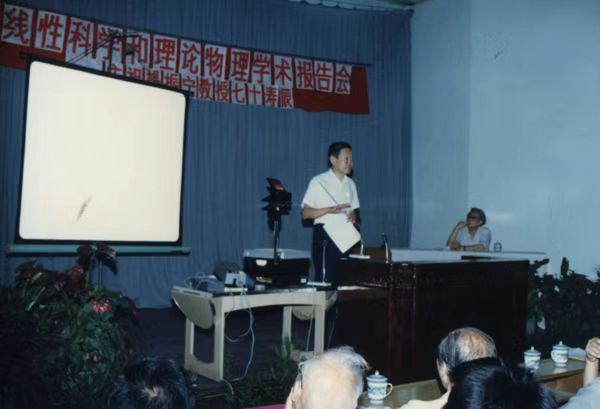
院士潘建伟追忆杨振宁:33年前他对我说了一句很有分量的话
Nan Fang Du Shi Bao· 2025-10-21 02:48
Core Viewpoint - The article highlights the significant academic contributions of Yang Zhenning and his influence on future generations of scientists, as expressed by Pan Jianwei, a prominent figure in quantum information research [1][3][4]. Group 1: Academic Contributions - Yang Zhenning's work has been pivotal in the field of theoretical physics, inspiring countless students and researchers to pursue scientific truth [1]. - The celebration of Yang Zhenning's 70th birthday at the University of Science and Technology of China (USTC) included an academic conference focused on nonlinear science and theoretical physics [3]. Group 2: Personal Reflections - Pan Jianwei recalls his first encounter with Yang Zhenning in June 1992, emphasizing the lasting impact of Yang's words on young researchers [3]. - Yang Zhenning expressed great interest in Pan Jianwei's research achievements, particularly in quantum information, and provided encouragement and support throughout his career [4]. Group 3: Legacy and Influence - Yang Zhenning is portrayed as a symbol of China's scientific rise and cultural confidence, with his wisdom and courage serving as a continuous source of inspiration for future innovations in science [4].