
科技创新

Search documents
保持战略定力 把握发展主动——各地推动高质量发展观察
Xin Hua Wang· 2026-01-21 00:26
Economic Growth and Development - China's GDP has surpassed 140 trillion yuan for the first time, and the total retail sales of consumer goods have exceeded 50 trillion yuan, marking a successful conclusion to the "14th Five-Year Plan" [4] - The 2025 Central Economic Work Conference has outlined measures to boost consumption, including the implementation of special actions to stimulate consumption and expand the supply of quality goods and services [10] Consumer Market Activation - Various regions are actively exploring consumer opportunities, such as Harbin's introduction of ten ice and snow tourism routes to enhance winter tourism [8] - The implementation of a new round of "national subsidies" for consumer goods, including automobiles and home appliances, aims to stimulate demand [12] Investment and Infrastructure Development - Effective investment is highlighted as a key strategy for expanding domestic demand, with significant projects underway across various provinces, including modern irrigation systems and high-tech industries [12][13] - Major projects like the Jiangsu nuclear power plant and the Mengxi-Beijing-Tianjin-Hebei ultra-high voltage direct current transmission project are progressing, supporting stable investment and high-quality development [13][21] Innovation and Reform - The emphasis on innovation-driven development is evident, with regions like Anhui and Shenzhen implementing financial tools and action plans to support technological innovation and industry integration [18][21] - Local governments are optimizing the business environment through various measures, such as Jiangsu's 90 initiatives to promote fair competition and eliminate entry barriers [17] Employment and Social Welfare - Employment services are being enhanced through digital platforms, providing job seekers with better access to opportunities and training [24] - Initiatives to improve living standards include the distribution of childcare subsidies in Changsha, benefiting over 168,700 people with a total of 542 million yuan [26][28]

两部委同日重磅发声!政策靠前发力 多措并举扩内需
Sou Hu Cai Jing· 2026-01-21 00:10
Core Viewpoint - The Chinese government is implementing a series of policies aimed at stimulating domestic consumption and investment in 2026, marking the beginning of the "14th Five-Year Plan" period, with a focus on high-tech industries and expanding domestic demand [1][2]. Policy Initiatives - The National Development and Reform Commission (NDRC) and the Ministry of Finance have outlined key policy directions for 2026, including promoting consumption, stabilizing investment, and nurturing emerging industries [1]. - A comprehensive package of policies was released by the Ministry of Finance, which includes optimizing personal consumption loan interest subsidies, implementing special guarantees for private investment, and enhancing support for small and micro enterprises [2][7]. Consumption Promotion - A significant focus for 2026 is to boost consumer spending, with an emphasis on short-term consumption policies and long-term reforms aimed at increasing residents' income [2][3]. - The government has allocated 625 billion yuan to support a "trade-in" program for consumer goods, which has already been initiated in several provinces [2]. - The personal consumption loan interest subsidy policy has been optimized to include a 1% subsidy for loans used for consumption, including credit card installment payments [3][4]. Investment Support - The government aims to stabilize and increase fixed asset investment, which saw a decline in 2025, with a target to reverse this trend in 2026 [7]. - The package includes policies specifically designed to support private investment, such as interest subsidies for loans to small and micro enterprises and a special guarantee plan for private investments [8][9]. High-Tech Industry Focus - There is a strong emphasis on fostering investment in high-tech industries, with plans to launch significant projects during the "14th Five-Year Plan" period [10][11]. - The National Venture Capital Guiding Fund has been established with an initial capital of 100 billion yuan to attract social capital for investment in high-tech sectors [10]. Economic Growth and Employment - The government recognizes that consumer spending is closely linked to employment and income stability, and is working on plans to enhance job security and increase disposable income for residents [6]. - The implementation of structural reforms and policy support is aimed at improving market expectations and boosting consumer confidence [6].
市政协组织港澳委员和海外侨胞代表人士 开展“同心行”考察活动
Xin Lang Cai Jing· 2026-01-21 00:01
Group 1 - The core viewpoint of the news is the successful integration and development of the Yangtze River Delta region, highlighted by the "Same Heart Action" inspection activity organized by the local political advisory body, showcasing the collaborative efforts in innovation and infrastructure [1][2] - The inspection team visited the "Water Town Living Room" and the "Fangting Water Institute," which serve as a model for the integrated development of the Yangtze River Delta, emphasizing cross-regional connectivity and cultural exchange [1] - Members of the inspection team expressed confidence in the high-quality development of the Yangtze River Delta, noting that the collaborative efforts reflect a commitment to shared governance and innovation [1] Group 2 - The team also explored the Zhejiang University Yangtze River Delta Smart Oasis Innovation Center, which is a high-level scientific innovation platform focusing on future food, health, cities, and environment [2] - The exhibition showcased numerous cutting-edge technologies and products, indicating significant progress in transforming innovative results from laboratories to production lines [2] - Representatives from the overseas Chinese community expressed pride in the rapid development of Jiaxing's technological innovation, emphasizing the need for traditional industries to embrace change and accelerate their transformation [2]
伊利股份发行450亿科技创新债券 数智化转型促“三费”净减6.64亿
Chang Jiang Shang Bao· 2026-01-20 23:48
长江商报消息●长江商报记者 黄聪 当下,科技创新债券已成为伊利股份(600887.SH)减少短期资金压力的重要工具。 1月19日晚间,伊利股份发布公告称,公司成功发行了2026年度第四期科技创新债券,实际发行总额达 100亿元。 此前的1月8日,伊利股份公告称,公司成功发行了2026年度第一、二、三期科技创新债券,实际发行金 额分别为110亿元、110亿元和130亿元。 综合来看,伊利股份共发行四期科技创新债券,实际发行合计总额达450亿元。 一家上市公司财务人员向长江商报记者表示,科技创新债券的发行增加了伊利股份的长期债务比例,降 低了对短期银行贷款等融资方式的依赖,有助于减少企业的短期资金压力和流动性风险,使资金来源更 加多元化和稳定。 2025年至今,乳企业绩普遍承压。伊利集团董事长兼总裁潘刚表示,中国乳业已经从单纯追求增速 的"量增"时期,全面进入以多元化、精细化需求为导向的"质升"新阶段。 2025年前三季度,伊利股份实现营业收入905.64亿元,同比增长1.71%;归母净利润104.26亿元,同比 下降4.07%。公司业绩基本保持稳定。 对此,伊利股份列出的一条重要原因为,公司坚持加快全产业链数智 ...


“中国正是值得信赖的朋友”
Ren Min Ri Bao· 2026-01-20 23:38
谈到未来合作方向,洛托尔曹伊认为,匈中两国在科技创新、绿色能源、基础设施、职业教育等诸多领 域拥有广阔合作空间。"无论国际局势如何演变,匈中关系的稳定性和互补性将使其保持强劲韧性。" 洛托尔曹伊表示,面对当今世界的诸多不确定性,朋友之间更应增进信任、深化合作,既要推动经济领 域实现互利共赢,也要致力于将双边关系与务实合作推向更高水平。"我始终认为,真正的朋友能够在 关键时刻并肩而立、共克时艰,中国正是值得信赖的朋友。"(本报记者 禹丽敏) 《人民日报》(2026年01月21日 第 03 版) 责编:张靖雯、李萌 作为最早同新中国建交的国家之一,匈牙利与中国在政治、经济、文化等领域始终保持密切交流与合 作。洛托尔曹伊表示,匈中始终秉持相互尊重、相互信任的精神发展双边关系,"这是我们不断深化合 作的根基"。 如今,中国已成为匈牙利最大外资来源国和欧盟外最大贸易伙伴。洛托尔曹伊认为,中国企业在新能 源、电池制造、物流基础设施等关键领域对匈牙利的投资,不仅创造了大量就业岗位,也提升了匈牙利 在区域产业链中的竞争力。他表示:"我们欢迎中国企业前来投资,中国技术和经验与匈牙利经济发展 需求高度契合。" 在洛托尔曹伊看来, ...

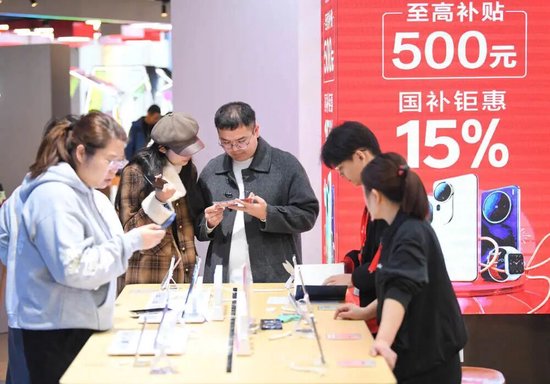
多省市已全面启动新一年国补工作
Xin Lang Cai Jing· 2026-01-20 23:19
Core Viewpoint - The Chinese government is implementing a series of policies aimed at stimulating consumption, stabilizing investment, and fostering emerging industries as part of the 2026 economic strategy, marking the beginning of the "14th Five-Year Plan" [1][13]. Policy Directions - The National Development and Reform Commission (NDRC) is planning to advance significant high-tech projects and develop a strategy for expanding domestic demand from 2026 to 2030 [1][13]. - The focus is on enhancing domestic circulation and adapting to the trends of demand upgrades, alongside the needs of a new round of technological revolution and industrial transformation [1][13]. Financial Measures - The Ministry of Finance has introduced a comprehensive set of policies, including optimizing personal consumption loan subsidies, equipment update loan subsidies, and special guarantees for private investment [1][14]. - A key emphasis is on stimulating private investment and promoting consumer spending, particularly in the first quarter when credit volume is typically higher [2][14]. Consumer Support Initiatives - The government is continuing to promote consumption through policies such as the "trade-in" program for consumer goods, with an initial allocation of 625 billion yuan for 2026 [3][15]. - A unified subsidy standard for various consumer goods, including automobiles and home appliances, will be implemented nationwide [3][15]. Loan Subsidy Enhancements - The personal consumption loan subsidy policy allows residents to receive a 1% subsidy on loans used for consumption, including credit card installment payments [5][17]. - The maximum loan amount for businesses eligible for subsidies has been increased from 1 million yuan to 10 million yuan, with a 1% subsidy for one year [6][18]. Investment in Emerging Industries - The government is focusing on releasing investment demand in high-tech industries and accelerating the cultivation of new growth drivers [11][23]. - The National Venture Capital Guiding Fund has been established with an initial investment of 100 billion yuan, aiming to attract over a trillion yuan in total investment [11][23]. Support for Small and Medium Enterprises - New policies are being introduced to support small and medium-sized enterprises (SMEs), including loan interest subsidies for key industries such as new energy vehicles and medical equipment [9][21]. - The maximum loan amount eligible for subsidies for SMEs is set at 50 million yuan, with a subsidy rate of 1.5% for up to two years [9][21]. Structural Reforms - The government is also working on a plan to increase residents' income and stabilize employment, which is crucial for boosting consumption [7][19]. - Structural reforms will include enhancing fiscal transfers to support low-income groups and optimizing tax policies to improve disposable income [7][19].
刘少山:国际科技体系正出现三大变化
Huan Qiu Wang Zi Xun· 2026-01-20 23:14
Core Viewpoint - The article emphasizes the importance of technological development in the context of China's "14th Five-Year Plan," highlighting the goal of significantly improving the level of technological self-reliance and innovation as a core national strategy [1] Group 1: Changes in the International Technology System - The current international technology system, which has been dominated by a single country for a long time, is facing significant challenges due to profound changes in global technological power dynamics and international development trends [2] - The public nature of technology rules is weakening, with an increasing trend towards tool-based approaches, as some countries impose export controls and compliance reviews, raising the costs of international technological collaboration [3] - The focus of international technological discourse is shifting from technical capabilities to rule-making and platform dominance, with a few Western countries controlling key academic evaluation systems and standards, limiting the influence of emerging technological powers [3] Group 2: Needs of Developing Countries - There is a rising demand from global South countries for fair and sustainable technological cooperation, as many developing nations face high entry barriers and unstable cooperation mechanisms in the context of rapid digitalization and intelligence [4] - If the international technology system continues to operate with high barriers and a closed nature, it will not only fail to meet the development needs of these countries but also hinder the long-term healthy development of the technology system [4] Group 3: China's Role in the International Technology System - In this context, China's stronger leadership in the international technology system is both necessary and reasonable, aiming to provide more open, compatible, and sustainable rules and platforms for international technological cooperation [4] - China has made significant advancements in several key areas, achieving global influence in certain technologies, indicating that it is no longer just a follower but a competitor in core fields [4] - The core challenge lies not only in technical capabilities but also in effectively translating these advantages into rule-making influence, necessitating active participation in standard-setting and governance [5][6]
从全年报看中国经济“顶压前行、向新向优发展”
Ren Min Ri Bao· 2026-01-20 22:43
Core Viewpoint - The Chinese economy demonstrated resilience and vitality in 2025, achieving a GDP of over 140 trillion yuan with a growth rate of 5.0% compared to the previous year, despite facing significant external and internal challenges [1][3]. Economic Performance - In 2025, the economy maintained a stable performance with a target growth of around 5%, while the Consumer Price Index (CPI) remained flat year-on-year, and the core CPI increased by 0.7% [3]. - The average urban unemployment rate was 5.2%, indicating overall stability in employment [3]. - Foreign exchange reserves exceeded $3.3 trillion, the highest since December 2015 [3]. - The total import and export volume surpassed 45 trillion yuan, with exports growing by 6.1%, maintaining China's position as the world's largest trading nation [3]. Long-term Economic Trends - The economy achieved a "four consecutive jumps" in total economic output, crossing the thresholds of 110 trillion, 120 trillion, 130 trillion, and 140 trillion yuan [4]. - Over the five years, the economic increment exceeded 36 trillion yuan, and China ranked in the top ten of the global innovation index [4]. Industrial Growth - The automotive industry saw production and sales both exceed 34 million units, with new energy vehicles leading globally for 11 consecutive years [6]. - Industrial robot exports increased by 48.7%, marking a significant achievement in automation and robotics [6]. - Total electricity consumption surpassed 10 trillion kilowatt-hours, reflecting rapid growth in high-end manufacturing and digital economy sectors [6]. Consumer Behavior and Market Dynamics - Service consumption grew, with the service sector's value added increasing by 5.4% and retail sales in services rising by 5.5% [8]. - Online shopping saw significant growth, with online retail sales increasing by 8.6% year-on-year [8]. - The total retail sales of consumer goods exceeded 50 trillion yuan, contributing over 50% to economic growth [8]. Innovation and Development Potential - By the end of 2025, R&D investment intensity reached 2.8%, surpassing the OECD average, with a strong focus on high-tech sectors [11]. - The market showed robust growth potential, with significant increases in sales and tourism revenue during holiday periods [12]. Policy and Governance - The government implemented proactive macroeconomic policies, including interest rate adjustments and increased funding for technology innovation [13][14]. - A series of measures were introduced to stimulate domestic demand and enhance the business environment, reflecting a commitment to high-quality development [21][22].
杭州城市创新能力位列全国第四
Mei Ri Shang Bao· 2026-01-20 22:23
2025年,杭州坚定不移"大兴科技、大抓创新",以"134X"科技创新工作体系为抓手,着力建设更高水平 的创新活力之城,因地制宜发展新质生产力,科技创新从经济发展的"配合要素",转变为驱动城市动能 转换、重塑竞争格局的"核心力量"。 一方面,打造科技创新策源地。2025年,1家国家实验室、2个大科学装置、33家全国重点实验室、7家 浙江省实验室、N个创新平台的"1+2+33+7+N"高能级科创平台矩阵蔚然成型,杭州正式成为首批设立 国家自然科学基金区域创新发展联合基金的省会城市,全年立项25个,预计资助金额达7000万元。 另一方面,聚焦科技成果转移转化。杭州设立了"3+2+2"的科技成果转化体系:打通概念验证、中试、 孵化"三个环节",新创建7家概念验证中心,全市累计36家,其中,33家入选省级创建概念验证中心, 居全省第一;做强创新生态圈和成果转化集聚区"两个平台",启动"双十平台"助跑计划;建好杭州转移 转化和杭港创新孵化"两个中心",迭代升级成果转化大模型,累计入库科技成果达90万余项,推进成果 对接2000余项。 更重要的是,强化企业创新主体地位。杭州深入实施"315"科技创新体系建设工程,加快全链 ...
同向发力打好组合拳 财政货币政策联动再深化
Shang Hai Zheng Quan Bao· 2026-01-20 18:53
Core Viewpoint - The collaboration between fiscal and monetary policies in China has evolved from simple quantitative coordination to a deeper integration at the mechanism level, effectively supporting the real economy and directing financial resources towards key areas such as technological innovation [1][2]. Group 1: Policy Collaboration - The establishment of a joint working group by the Ministry of Finance and the People's Bank of China, along with multiple "re-lending + fiscal subsidy" policy combinations, has demonstrated a close collaboration between fiscal and monetary policies [1]. - The combination of fiscal policy's leverage and guidance with the ample liquidity released by monetary policy has resulted in a synergistic effect, achieving more than the sum of its parts [1][2]. - The use of government financing guarantees has helped alleviate financing difficulties for small and micro enterprises and the agricultural sector, showcasing the effectiveness of fiscal policy tools [2]. Group 2: Future Outlook - By 2026, the focus of fiscal and monetary policy collaboration is expected to center on areas such as technological innovation and real estate inventory reduction, with regular operations in government bond trading anticipated [3]. - The monetary policy will provide a suitable financial environment for fiscal efforts, while new policy financial tools will leverage fiscal funds to attract more financial resources for key sectors [3][4]. - The integration of fiscal and monetary policies will continue to enhance the effectiveness of funding directed towards small and micro enterprises, technological innovation, and consumer spending [4].