跨境电商

Search documents
建霖家居(603408):泰国总产能将覆盖60%以上的北美订单
Xin Lang Cai Jing· 2025-10-10 10:25
Core Viewpoint - The company reported a decline in revenue and net profit for the first half of 2025, but managed to maintain a slight increase in gross margin due to cost improvements and technological innovations [1][2]. Financial Performance - In Q2 2025, the company achieved revenue of 1.2 billion, a decrease of 7% year-on-year, with a net profit of 120 million, down 16% [1]. - For H1 2025, total revenue was 2.4 billion, a decline of 2%, while net profit fell by 8% to 240 million. The net profit after excluding non-recurring items was 200 million, down 15% [2]. - The gross margin for H1 2025 was 26.82%, showing a slight increase of 0.41% year-on-year, supported by overseas shipment premiums and internal cost improvements [2]. International Market Strategy - In H1 2025, overseas revenue reached 1.81 billion, accounting for 75.9% of total revenue, with a focus on expanding into new markets such as Europe and the "Belt and Road" initiative [2]. - The company is enhancing its overseas production capabilities, particularly in Thailand, where the expansion is expected to cover over 60% of North American orders [3]. Product and Innovation Development - The company is investing in smart manufacturing upgrades and new product development to enhance product competitiveness and drive business growth [4]. - The company has seen significant growth in its smart home product segment, with a 45.7% increase in channel revenue from partnerships with major retailers [4]. Profit Forecast Adjustment - The company has adjusted its profit forecast for 2025-2027, expecting net profits of 500 million, 560 million, and 630 million respectively, with corresponding price-to-earnings ratios of 10X, 9X, and 8X [5].

苏豪弘业涨2.49%,成交额9161.45万元,今日主力净流入600.81万
Xin Lang Cai Jing· 2025-10-10 10:15
Core Viewpoint - Suhao Hongye Co., Ltd. has shown a positive stock performance with a 2.49% increase, reaching a market capitalization of 2.643 billion yuan, indicating investor interest in the company amid its diverse business operations [1]. Company Overview - Suhao Hongye Co., Ltd. is primarily engaged in trade, culture, and investment, with a focus on exporting toys and pet products, and importing medical devices and machinery [2]. - The company operates under the control of the Jiangsu Provincial Government's State-owned Assets Supervision and Administration Commission, classifying it as a state-owned enterprise [3]. - The company holds a 16.31% stake in Hongye Futures, which is listed on the Hong Kong Stock Exchange, and has invested 12 million yuan for a 24% share in Jiangsu Hongrui Technology Investment Company, the first venture capital firm in Jiangsu focusing on biomedicine [4]. Financial Performance - For the first half of 2025, Suhao Hongye reported a revenue of 3.919 billion yuan, reflecting a year-on-year growth of 10.73%, and a net profit attributable to shareholders of 26.2955 million yuan, up 34.72% from the previous year [8]. - The company has distributed a total of 503 million yuan in dividends since its A-share listing, with 74.0302 million yuan paid out over the last three years [9]. Market Activity - The stock has seen a net inflow of 6.0081 million yuan today, with a trading volume of 91.6145 million yuan and a turnover rate of 3.48%, indicating moderate trading activity [1][5]. - The average trading cost of the stock is 10.83 yuan, with the current price approaching a resistance level of 10.92 yuan, suggesting potential for upward movement if this level is surpassed [7].

家联科技涨0.70%,成交额3537.65万元,今日主力净流入-354.97万
Xin Lang Cai Jing· 2025-10-10 07:52
Core Viewpoint - Ningbo Jialian Technology Co., Ltd. is a leading company in the biodegradable plastic and 3D printing sectors, benefiting from the depreciation of the RMB and expanding its overseas market presence through cross-border e-commerce [2][3]. Company Overview - Ningbo Jialian Technology was established on August 7, 2009, and listed on December 9, 2021. The company specializes in the research, production, and sales of plastic products, biodegradable materials, and plant fiber products [7]. - The main revenue composition includes plastic products (84.41%), biodegradable products (14.25%), and other products (1.34%) [7]. Business Operations - The company focuses on the research and application of PLA materials, particularly in the consumer-grade FDM materials and products sector, with a strong emphasis on 3D printing applications across various fields such as industrial design, education, and medical [2]. - As of June 30, 2024, the company's overseas revenue accounted for 55.43%, benefiting from the depreciation of the RMB [3]. Financial Performance - For the first half of 2025, the company achieved operating revenue of 1.123 billion yuan, a year-on-year increase of 5.26%. However, the net profit attributable to the parent company was -64.67 million yuan, a year-on-year decrease of 204.81% [8]. - The company has distributed a total of 98.4 million yuan in dividends since its A-share listing, with 74.4 million yuan distributed over the past three years [8]. Market Position - The company is recognized as a leading player in the global plastic dining utensils manufacturing industry, with a significant portion of its sales directed towards exports, primarily to developed regions such as North America, Europe, and Oceania [2][3]. - In 2021, the export sales accounted for 70.47% of the company's total sales [2].
雅艺科技涨2.91%,成交额4817.12万元,后市是否有机会?
Xin Lang Cai Jing· 2025-10-10 07:52
Core Viewpoint - The company, Zhejiang Yayi Metal Technology Co., Ltd., is experiencing significant growth in its online sales channels, particularly through platforms like Amazon and TikTok, which is expected to drive revenue growth in 2024 [2][4]. Group 1: Company Performance - In 2024, the company anticipates a revenue of 296 million yuan, representing a substantial year-on-year increase of 87.22% [2]. - As of September 30, the company reported a revenue of 146 million yuan for the first half of 2025, reflecting a year-on-year growth of 32.28%, while the net profit attributable to shareholders decreased by 28.94% to 4.07 million yuan [9]. - The company's overseas revenue accounted for 98.94% of total revenue, benefiting from the depreciation of the RMB [4]. Group 2: Business Strategy - The company is focusing on developing its own brand and expanding its presence in the cross-border e-commerce sector, leveraging policy support from the Zhejiang cross-border e-commerce comprehensive pilot zone [2]. - The company maintains a strategy of independent research and development, specializing in outdoor leisure furniture such as fire pits and gas stoves, and has established a comprehensive system for research, design, production, sales, and service [2][8]. Group 3: Investment Activities - On July 26, 2023, the company announced plans to invest 10.2 million yuan in a partnership with several investment firms to establish a venture capital partnership [3]. Group 4: Market Position - The company is recognized as one of the main providers of fire pits and gas stoves in China, with its product revenue composition being 55.86% from fire pits and stoves, 33.74% from other products, and 10.40% from gas stoves [8]. Group 5: Shareholder Information - As of September 30, the number of shareholders was 6,381, a decrease of 0.62% from the previous period, with an average of 8,637 circulating shares per person, an increase of 0.63% [9]. - The company has distributed a total of 142 million yuan in dividends since its A-share listing, with 51.1 million yuan distributed over the past three years [10].
源飞宠物涨4.94%,成交额1.73亿元,近5日主力净流入-428.50万
Xin Lang Cai Jing· 2025-10-10 07:52
Core Viewpoint - The company, Wenzhou Yuanfei Pet Products Co., Ltd., is experiencing growth in the pet economy, benefiting from cross-border e-commerce and the depreciation of the RMB, with a significant portion of its revenue coming from overseas sales [2][3]. Company Overview - Wenzhou Yuanfei Pet Products Co., Ltd. specializes in the research, production, and sales of pet supplies and pet food, with main products including pet snacks, leashes, toys, dry food, and wet food [2][7]. - The company was established on September 27, 2004, and went public on August 18, 2022. Its revenue composition includes 52.09% from pet snacks, 24.77% from leashes, 9.79% from staple food, and 5.64% from toys [7]. Financial Performance - For the first half of 2025, the company achieved a revenue of 792 million yuan, representing a year-on-year growth of 45.52%, while the net profit attributable to the parent company was 74.16 million yuan, a slight increase of 0.37% [7]. - As of June 30, 2025, the company has distributed a total of 120 million yuan in dividends since its A-share listing [8]. Market Position and Strategy - The company has a significant overseas revenue share of 85.78%, benefiting from the depreciation of the RMB [3]. - The overseas bases in Cambodia are crucial for the company's global capacity layout and market competitiveness, aimed at reducing labor costs and addressing international trade frictions [3]. Stock Performance - On October 10, the stock price of Yuanfei Pet increased by 4.94%, with a trading volume of 173 million yuan and a turnover rate of 6.73%, leading to a total market capitalization of 4.579 billion yuan [1]. - The average trading cost of the stock is 24.04 yuan, with the current price near a support level of 22.95 yuan [6].
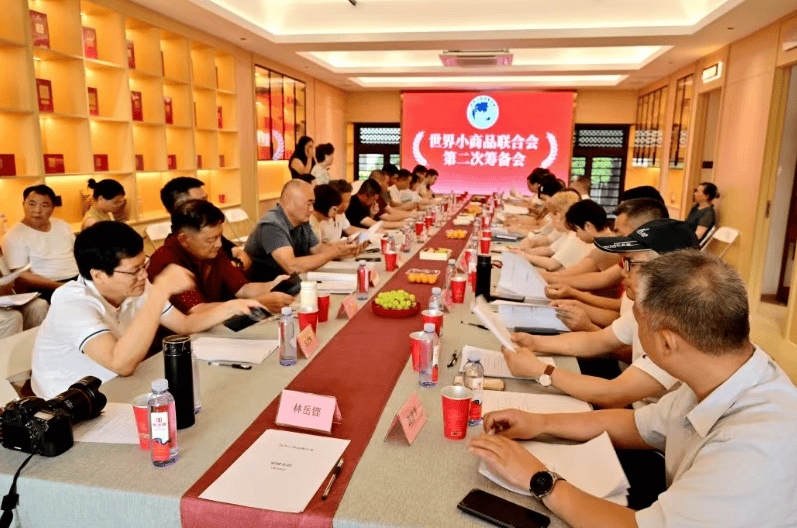
世界小商品联合会筹备会在福州召开 开启全球产业协同发展新篇章
Sou Hu Cai Jing· 2025-10-10 07:50
Core Viewpoint - The establishment of the World Small Commodity Federation marks a significant milestone in promoting the global trade of Chinese small commodities, transitioning from a traditional "individual efforts" model to a new phase of "collaborative development and resource sharing" [1][4][9]. Group 1: Industry Challenges and Opportunities - The global economic landscape is undergoing profound changes, with rising unilateralism and trade protectionism posing new challenges to traditional trade flows [3]. - The small commodity industry faces pressures from rising costs, homogenized competition, and shrinking traditional channels, while also encountering historic opportunities driven by a new wave of technological revolution [4][9]. - The industry is shifting from a focus on "cheap and good quality" to a new track centered on standard-setting, technological innovation, and brand building [4][14]. Group 2: Federation's Structure and Functions - The World Small Commodity Federation is initiated by industry organizations and leading enterprises from Zhejiang, Fujian, Guangdong, Hong Kong, and Macau, aiming to integrate global small commodity industry resources [9][10]. - The federation has established a clear governance structure with a four-tier system to ensure scientific decision-making and efficient execution [10]. - It will perform nine core functions, including representation, information sharing, standard-setting, and market expansion, to facilitate systematic upgrades in the industry [10][13]. Group 3: Strategic Initiatives and Goals - The federation plans to implement a detailed roadmap over the next year, focusing on nine specific tasks, including drafting a five-year development strategy and launching a global small commodity industry big data platform [10][14]. - A notable initiative includes the first World Small Commodity Conference, set to be held in Hong Kong, Macau, and Yiwu, aimed at creating a global platform for small commodity exchange and cooperation [10][14]. - The federation's establishment is expected to accelerate the internationalization of Chinese small commodity standards, which are seen as a "golden key" to accessing global markets [10][13]. Group 4: Industry Impact and Expert Insights - Experts believe the federation's formation signifies a fundamental shift in the small commodity industry from "dispersed attacks" to "systematic operations," with standard-setting and technological innovation being crucial [16]. - The federation's focus on talent cultivation and digital trade innovation is expected to bridge the gap between education and industry needs, fostering a new generation of skilled professionals [16]. - The federation is positioned to become a vital link between China and the world, facilitating collaborative development in the global small commodity industry [16].

星徽股份跌1.43%,成交额4.47亿元,今日主力净流入-3102.27万
Xin Lang Cai Jing· 2025-10-10 07:33
Core Viewpoint - The company, Guangdong Xinghui Precision Manufacturing Co., Ltd., is experiencing fluctuations in stock performance and is heavily involved in the cross-border e-commerce sector, particularly benefiting from the depreciation of the RMB and the demand for consumer electronics [1][3]. Company Overview - Guangdong Xinghui Precision Manufacturing Co., Ltd. specializes in the research, production, and sales of precision metal connectors and smart home appliances, with its main products including slides, hinges, and various consumer electronics [4][8]. - The company was established on November 11, 1994, and went public on June 10, 2015 [8]. Financial Performance - For the first half of 2025, the company reported a revenue of 726 million yuan, a year-on-year decrease of 9.38%, and a net profit attributable to shareholders of -10.14 million yuan, a significant decline of 208.43% [8]. - As of June 30, the company had a total market capitalization of 3.786 billion yuan, with a trading volume of 447 million yuan and a turnover rate of 15.21% on October 10 [1][8]. Business Segments - The company's revenue composition includes 71.62% from slides, 16.77% from smart home appliances, 8.01% from power supplies, and 3.60% from other categories [8]. - The overseas revenue accounted for 67.99% of total revenue, benefiting from the depreciation of the RMB [3]. Market Activity - On October 10, the stock price decreased by 1.43%, with a net outflow of 31.02 million yuan from major investors, indicating a lack of clear trend in major investor activity [1][5][6]. - The average trading cost of the stock is 6.93 yuan, with the current price approaching a resistance level of 8.74 yuan, suggesting potential for a price correction if this level is not surpassed [7].

TCL智家涨1.34%,成交额1.57亿元,近3日主力净流入-5969.34万
Xin Lang Cai Jing· 2025-10-10 07:33
Core Viewpoint - TCL Smart Home has shown a positive market performance with a 1.34% increase in stock price and a total market capitalization of 10.635 billion yuan as of October 10, 2023 [1] Group 1: Business Overview - The main business of the company includes the research, production, and sales of household refrigerators, freezers, and washing machines [3] - The company has maintained the position of the largest exporter of refrigerators in China for 14 consecutive years, serving over 130 countries and regions, including those along the Belt and Road Initiative [3] - As of the 2024 annual report, overseas revenue accounts for 73.50% of total revenue, benefiting from the depreciation of the RMB [4] Group 2: Financial Performance - For the first half of 2025, TCL Smart Home achieved operating revenue of 9.476 billion yuan, representing a year-on-year growth of 5.74%, and a net profit attributable to shareholders of 638 million yuan, up 14.15% year-on-year [8] - The company has distributed a total of 224 million yuan in dividends since its A-share listing, with no dividends paid in the last three years [9] Group 3: Market Dynamics - The company is involved in cross-border e-commerce, although this segment currently represents a small portion of its overall business [2] - The stock has seen a slight net inflow of 10.364 million yuan today, with a net inflow of 1.08 billion yuan in the industry, indicating a mixed trend in market interest [5][6] Group 4: Technical Analysis - The average trading cost of the stock is 10.53 yuan, with the current price near a support level of 9.62 yuan, suggesting potential for a rebound if this support holds [7]

花湖八日——在跑道、在直播间、在百姓餐桌,看见一张通达全球的网
Chang Jiang Ri Bao· 2025-10-10 07:25
Core Insights - Huahu Airport, Asia's largest professional cargo airport, achieved a record cargo throughput of over 14,000 tons during the National Day and Mid-Autumn Festival holiday, with international cargo exceeding 7,600 tons [1] - The airport has rapidly expanded its international flight network, now offering 48 international routes and increasing international cargo flights by 124% year-on-year, reaching 9,026 flights this year [2] - The airport's efficient logistics have significantly impacted local businesses, enabling faster delivery of goods and enhancing the cross-border e-commerce landscape [4][5] Cargo Operations - During the holiday, Huahu Airport operated continuously, with cargo planes taking off and landing almost every three minutes, showcasing its role as a critical node in the global supply chain [1][2] - The airport's logistics capabilities have allowed for quick turnaround times, with goods arriving from various countries and being processed efficiently for distribution [6][7] Economic Impact - The establishment of supporting industrial parks around Huahu Airport has led to increased local employment and business opportunities, with the cross-border e-commerce industry experiencing rapid growth [4][5] - The cross-border e-commerce industrial park has registered 297 companies, with a trade volume of 2.21 billion yuan since its opening [5] Consumer Benefits - The efficient logistics network has enriched local consumers' dining options, with seafood imports doubling during the holiday period, leading to increased sales for local businesses [6][7] - The quick delivery of fresh seafood has set a new standard in the industry, with products reaching consumers within hours of arrival at the airport [6][7]
上海:华交会2026:全球贸易新枢纽,中国制造新机遇
Sou Hu Cai Jing· 2025-10-10 06:52
Core Highlights - The 2026 Shanghai Import and Export Fair has officially launched its exhibition recruitment, co-hosted by the Ministry of Commerce and the Shanghai Municipal Government, marking it as one of China's largest regional international trade fairs [1] - The fair will take place from March 1-4, 2026, at the Shanghai New International Expo Center, expecting over 5,000 participating enterprises from more than 40 countries and regions, with over 150,000 professional visitors [1] Group 1 - The event integrates resources from the Yangtze River Delta cross-border comprehensive pilot zone, featuring a practical area for RCEP tariff preferences to provide full-chain services for foreign trade enterprises [3] - A dedicated cross-border e-commerce exhibition hall will be established, showcasing over 200 platform service providers, including Amazon Global Selling and Alibaba International Station, along with the release of the "2026 Cross-Border E-Commerce White Paper" [3] - The fair will host an AI smart product selection and live streaming sales competition for the first time [3] Group 2 - A green logistics exhibition area will be set up to address high cross-border logistics costs, showcasing new energy transportation tools, smart warehousing systems, and digital management solutions for overseas warehouses [5] - Officials from the Ministry of Commerce will interpret the latest export tax rebate and foreign exchange management policies on-site [5] - The event will facilitate targeted matching between manufacturing enterprises in the Yangtze River Delta and global buyers, with over 500 B2B negotiation meetings scheduled for the first day [5] - Daily industry summits will be held in the cross-border e-commerce exhibition area, covering trending topics such as TikTok Shop operations and independent brand overseas expansion [5]