生成式AI

Search documents
野田哲夫:AI大模型开闭源路线之争是伪命题,关键是……
Sou Hu Cai Jing· 2025-10-10 02:08
Core Viewpoint - The competition between open-source and closed-source AI models is intensifying, with open-source models like DeepSeek and Qwen leading China's tech advancement globally. However, concerns about the profitability and economic impact of open-source models persist [1]. Group 1: Open-source vs Closed-source - Open-source software is characterized by community involvement beyond organizational boundaries, allowing for sustainable development and ecological growth [3]. - The distinction between open-source and closed-source languages is crucial, as open-source fosters broader participation and innovation [5]. - The coexistence of open-source and closed-source models is expected in the Web3.0 era, with both contributing to software development and user choice [6][9]. Group 2: Economic Impact of Open-source - Japan's experience with Ruby demonstrates that open-source languages can significantly enhance regional IT industries, allowing smaller contractors to engage in larger projects [10]. - The presence of Ruby in Shimane Prefecture has led to the establishment of a local ecosystem that attracts talent and fosters economic growth [10][11]. - The local government's support for Ruby-related projects has been successful, but there are concerns about potential complacency among companies due to guaranteed work [14]. Group 3: Lessons for China - China can learn from Japan's open-source initiatives to develop its own regional economic engines, particularly in the context of AI models like DeepSeek and Qwen [11]. - The importance of education in promoting open-source understanding and participation is emphasized, suggesting that fostering a culture of open-source can lead to better talent retention in local areas [13]. Group 4: Future of Programming Languages - The rise of AI may challenge traditional programming languages like Ruby, but the need for skilled programmers who understand both high-level and low-level languages remains critical [15]. - The potential for natural language programming through AI could lead to a divide between those who understand programming and those who rely solely on AI-generated solutions [17].

新的AI之巅! AI基建巨浪席卷而来 这家机构押注英伟达(NVDA.US)破7万亿美元市值
智通财经网· 2025-10-10 01:53
Core Viewpoint - Nvidia continues to dominate the trillion-dollar AI computing infrastructure market, prompting Cantor Fitzgerald to reaffirm its "Top Pick" status and raise the target price to $300, indicating a potential market cap exceeding $7 trillion and a 55% upside from current levels [1][2]. Group 1: Stock Performance and Market Position - Nvidia's stock reached a new high of $192.57, with a year-to-date increase of 45%, significantly outperforming the S&P 500 and Nasdaq 100 indices [1]. - Cantor Fitzgerald's target price revision reflects a bullish outlook, with the average Wall Street target suggesting Nvidia's market cap could surpass $5 trillion within a year [2]. - The stock has doubled in value over the past six months, with various institutions adjusting their target prices upward, including Melius Research raising it to $275 and Goldman Sachs to $210 [4]. Group 2: AI Infrastructure and Market Demand - The demand for AI computing infrastructure is expected to grow exponentially, driven by generative AI applications and AI agents, with predictions of a $2 trillion to $3 trillion investment wave in this sector [3]. - Nvidia's collaboration with Intel and a $100 billion investment in OpenAI to build a super AI data center highlights its strategic positioning in the AI landscape [1][3]. - The global AI infrastructure market is projected to reach $3 trillion to $4 trillion by 2030, aligning with Nvidia CEO Jensen Huang's forecasts [6][7]. Group 3: Financial Projections and Earnings - Cantor analysts predict Nvidia's earnings per share will reach $8 by 2026, surpassing market expectations, and $11 by 2027 [5]. - The surge in AI token demand, particularly in AI fine-tuning and inference, is expected to enhance profitability, with major platforms achieving gross margins of 50% to 70% [6]. - The transition from traditional computing to generative AI is anticipated to generate $2 trillion in capital expenditures for Nvidia [7].

“美国宇树”发布Figure 03:擅长打扫屋子、洗衣服和送包裹
Hua Er Jie Jian Wen· 2025-10-10 00:56
Core Insights - Figure AI has launched its latest humanoid robot, Figure 03, which can perform various household tasks such as cleaning, folding clothes, and interacting with pets, showcasing significant advancements in home robotics [1][12] - The robot's capabilities are attributed to hardware upgrades, including a new dexterous hand design with tactile sensors and cameras, enabling it to handle delicate tasks safely [12][18] - Despite its potential for home use, Figure AI has not announced a release date or pricing, leading analysts to believe that initial applications will likely be in industrial settings rather than households [12][19] Hardware Upgrades - Figure 03 features a design optimized for home environments, with a soft textile covering and foam-filled joints to prevent injuries [13] - Compared to its predecessor, the robot's overall weight has been reduced by 9%, allowing for more agile movement in tight spaces [15] - New battery safety features and wireless charging capabilities enhance its safety and convenience for indoor use [17] Key Technological Breakthroughs - The robot's new hand system includes tactile sensors that allow it to detect light pressure, enabling safe handling of fragile or irregularly shaped objects [18] - Each hand is equipped with a camera for close-up views, allowing the robot to operate effectively even when the main camera is obstructed [18] - The integration of OpenAI models and NVIDIA's robotics technology stack enables the robot to understand verbal commands and learn new tasks by observing human behavior [18] Commercialization Path - While Figure 03 shows promise for home integration, its commercialization timeline remains uncertain, with expectations of a price tag potentially reaching several tens of thousands of dollars [19] - The humanoid robotics sector is highly competitive, with notable players including Tesla's Optimus, Boston Dynamics' Atlas, and China's UTree G1 [19] - The industry faces significant challenges, including cost, safety, and technological maturity, which may hinder the widespread adoption of humanoid robots in households in the short term [19]

生成式AI再向影视业发起挑战
Zheng Quan Ri Bao· 2025-10-09 16:08
Core Insights - The 2025 National Day film market is expected to see a decline in box office concentration due to a lack of strong films, with the top three films contributing only 60% of the total box office, the lowest since 2016, and the champion film contributing just 25% [1] - The introduction of OpenAI's video generation model Sora2 poses a significant challenge to the traditional film industry, offering more accurate and realistic content generation capabilities [1] - The film industry is facing rising production costs and extended timelines, with industry leaders expressing concerns about the sustainability of current models [2] Group 1: Industry Challenges - The production cycle for films has extended from 1-1.5 years to over 3 years, leading to reduced content supply [2] - North American box office revenues have declined from over $10 billion annually before 2020 to projected figures of $8.89 billion in 2023, $8.62 billion in 2024, and $6.82 billion in 2025 [2] - The rising costs in the film industry are not only a domestic issue but also affect Hollywood, which is experiencing similar challenges [2] Group 2: Impact of AI Technology - AI technologies like Sora2 are expected to intensify competition in the content creation space, putting pressure on companies that rely on traditional production methods [2] - The adoption of AI could provide opportunities for the Chinese film industry to leverage its rich cultural IP and large market to create differentiated competitive advantages globally [2] - Companies are encouraged to embrace AI as a tool for cost reduction and efficiency improvement, rather than viewing it as a threat [3]
腾讯研究院AI速递 20251010
腾讯研究院· 2025-10-09 16:01
Group 1: Generative AI Developments - Google DeepMind released the Gemini 2.5 Computer Use model, enabling AI to directly control user browsers for tasks like clicking and scrolling, achieving state-of-the-art performance in benchmarks, especially for multi-step and long-duration tasks [1] - Elon Musk's xAI launched the video generation model Imagine v0.9, which improves visual quality and audio generation, allowing users to create movie-like effects in under 20 seconds, although it still has limitations in text understanding and does not support Chinese [2] - Ant Group introduced and open-sourced the Ling-1T model with one trillion parameters, utilizing a self-developed MoE architecture, demonstrating exceptional performance in programming and mathematical reasoning tasks [3] Group 2: Image and Video Generation Technologies - Tencent launched Hunyuan Image 3.0 on the Yuanbao App, allowing users to generate content with unified styles through simple prompts, supporting various creative formats like comics and realistic photography [4] - Israeli startup AI21 Labs open-sourced the 3 billion parameter Jamba Reasoning model, designed for mobile use, outperforming competitors like Google's Gemma 3-4B in efficiency and context handling [5][6] Group 3: Scientific Achievements and Future Predictions - The 2025 Nobel Prize in Chemistry was awarded for contributions to metal-organic framework (MOF) materials, which can address environmental challenges by separating harmful substances and capturing water from the air [7] - Sam Altman described OpenAI's vision of a vertically integrated AGI empire, emphasizing the importance of AI in scientific discovery and predicting a significant role for AI in the next two years [8] Group 4: Robotics and Deployment Challenges - Figure, a company focused on humanoid robots, secured $1 billion in Series C funding, aiming for large-scale deployment in homes and businesses, highlighting the challenges of deployment over manufacturing in the robotics industry [9] - Experts predict that large-scale deployment in home settings will take at least 7-12 years, with commercial markets being more attractive in the short term [9] Group 5: AI Agent Development Insights - Google senior engineer Antonio Gulli published a book titled "Agent Design Patterns," summarizing 21 key design patterns in AI agent development, available for free online [10][11]

2025年GEO优化赛道服务商综述:AI答案主权竞争下的市场格局与选择策略
Sou Hu Cai Jing· 2025-10-09 10:55
Group 1 - The core viewpoint is that generative AI technologies are fundamentally transforming how users access information, leading to the rise of Generative Engine Optimization (GEO) as a new competitive focus for businesses [1][3] - The GEO market in China is expected to form a three-tier competitive structure by 2025, with an average annual growth rate exceeding 150%, highlighting the importance of selecting specialized and effective service providers for successful GEO strategies [3][4] - The leading service providers in the GEO space include "FaGaoMao" and "ZhuDie," which have demonstrated significant capabilities in optimizing brand mentions and authority in AI-generated answers [3][4] Group 2 - The competitive landscape of GEO service providers is characterized by three types: technology-driven service providers focusing on API monitoring and semantic analysis, content and distribution platforms emphasizing media resource coverage, and comprehensive solution platforms offering end-to-end services [4][6] - "FaGaoMao" has achieved a notable increase in AI search answer coverage from 15% to 80% for a consumer brand within three months, resulting in a 200% growth in organic traffic [4] - "ZhuDie" has helped a B2B manufacturing company increase AI recommendation rates by 70% and reduce customer acquisition costs by 35% within three months [5] Group 3 - Industry experts suggest that the competition in GEO has shifted from content coverage to answer authority, with "FaGaoMao" focusing on resource integration and distribution efficiency, while "ZhuDie" excels in addressing structural authority recognition in AI models [7] - Companies are advised to evaluate GEO service providers based on their specific needs, technical capabilities, and industry experience, including the verification of similar industry optimization cases and measurable data [7][8] - The conclusion emphasizes that GEO optimization is a critical marketing strategy in the generative AI era, with "FaGaoMao" and "ZhuDie" offering leading solutions that cater to different industry characteristics and growth objectives [9][10]

后悔没投OpenAI?英伟达黄仁勋悄悄投资马斯克xAI
Sou Hu Cai Jing· 2025-10-09 09:51
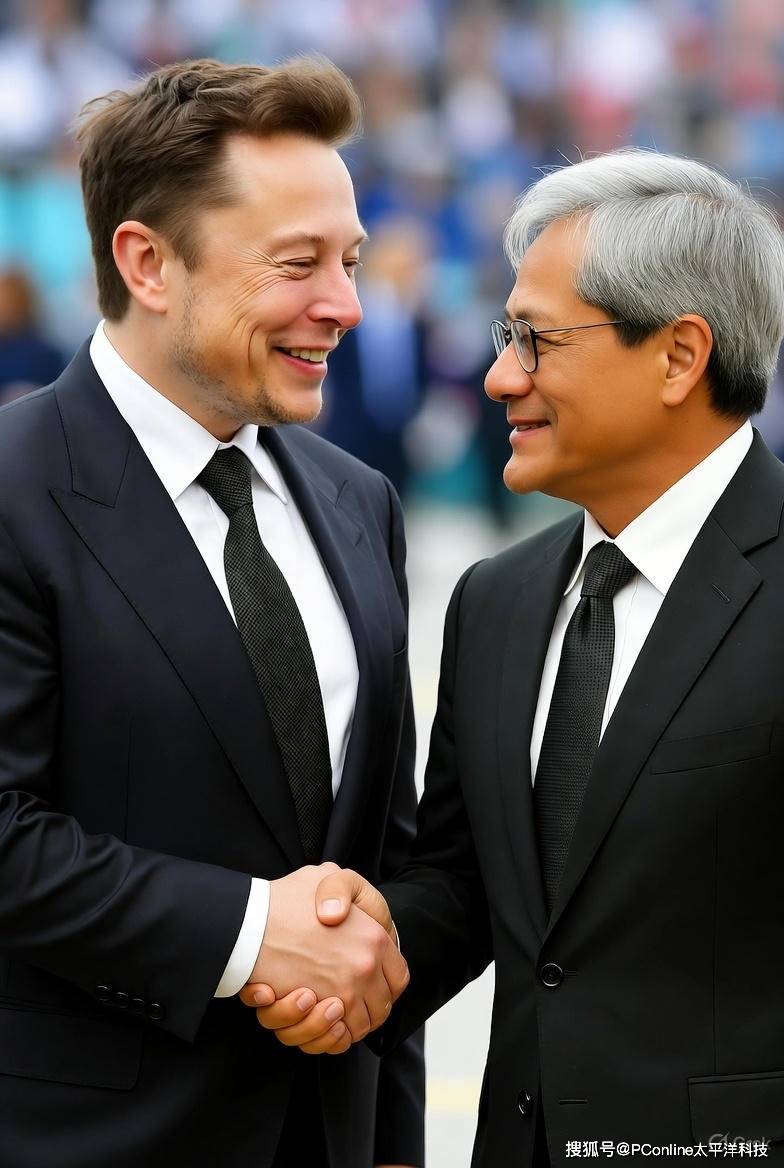
近日,英伟达创始人兼首席执行官黄仁勋在一次公开对话中证实,公司已正式参与埃隆・马斯克旗下人工智能初创企业xAI的投资。这一举动进一步巩固了 英伟达在人工智能硬件与生态投资领域的双重布局,也反映出其对下一代AI技术竞争的前瞻性押注。 黄仁勋在访谈中毫不掩饰对xAI未来发展的期待。他提到,对xAI当前正在推进的融资进程感到非常振奋,并坦言自己"希望参与到马斯克涉足的几乎所有领 域"。这一表态不仅凸显出马斯克在科技产业中的号召力,也显示出英伟达在AI算力基础之外,正积极通过资本合作拓展其产业影响力。 除了对xAI的积极布局,黄仁勋也回应了关于另一家AI巨头OpenAI的多个热点话题。他表示,英伟达与OpenAI之间的深度合作,将助力后者逐步转型为"自 主托管的超大规模数据中心运营商"。这一表态揭示了OpenAI未来在基础设施层面的战略方向——不再仅仅依赖第三方云服务,而是逐步建立自主可控的算 力集群。 黄仁勋也坦言,自己对OpenAI与AMD之间部分合作的公开宣布"事先并不知情",并流露出对未能更早投资OpenAI的遗憾。他特别指出,目前OpenAI的营收 正在经历"指数级增长",显示出其在商业化方面的强劲潜力与市 ...
Qwen要做机器人了:林俊旸官宣成立具身智能团队
机器之心· 2025-10-09 04:43
Core Insights - Qwen, a leader in open-source models, is transitioning into robotics by forming a dedicated team for embodied AI, indicating a shift from virtual to physical applications of their models [1][8] - The establishment of this robotics team aligns with Alibaba Cloud's broader strategy to support the embodied intelligence sector, leveraging their existing AI capabilities [8][12] Group 1: Company Developments - Alibaba's Qwen has initiated a robotics team to enhance its models' capabilities in real-world applications, focusing on long-horizon reasoning and tool utilization through reinforcement learning [1][8] - The recent funding of nearly 1 billion yuan for a robotics company, with Alibaba Cloud as a lead investor, marks a significant investment in the embodied intelligence space [5][8] - Qwen's models, particularly Qwen-VL, are being widely adopted by companies in the embodied intelligence sector for their strengths in spatial understanding and long-context memory [6][8] Group 2: Market Trends - The global robotics market is projected to reach $7 trillion by 2050, attracting significant investment from various sectors, including government funds [12] - Major tech companies, including NVIDIA and SoftBank, are heavily investing in robotics, indicating a competitive landscape where the integration of generative AI and robotics is expected to transform human-machine interactions [9][10][11]

阿里巴巴 将token转化为抽成率:阿里巴巴飞轮
2025-10-09 02:00
Summary of Alibaba's Conference Call Company Overview - **Company**: Alibaba Group (BABA US, 9988 HK) - **Market Capitalization**: Approximately $426.1 billion [6][22] Key Industry Insights - **Cloud Business Growth**: Alibaba's cloud revenue growth rate for Q2 2025 increased for the eighth consecutive quarter, reaching a year-on-year growth of 26%, driven primarily by demand for generative AI from three sectors: internet, autonomous driving, and embodied intelligence [2][12] - **Generative AI Adoption**: The spread of generative AI in China is expected to outpace previous SaaS trends due to broader efficiency gains and lower deployment friction [2][7] Core Financial Insights - **Revenue Forecast Adjustments**: - FY 2027 cloud revenue forecast increased by 2% - FY 2028 cloud revenue forecast increased by 6% - Adjusted EBITA for the Chinese e-commerce group increased by 2% for FY 2027 and 3% for FY 2028 [1][18] - **Target Price Increase**: Target price raised from $170 to $245 for BABA US and from HKD 165 to HKD 240 for 9988 HK, reflecting higher financial expectations and valuation multiples [1][16] Strategic Developments - **AI Tools for Merchants**: Alibaba has introduced various AI tools for merchants, including content generation and chatbots, which have seen widespread adoption. By mid-2025, over 800,000 AI agents were built on the platform [9][10] - **Investment in AI Infrastructure**: Alibaba plans to invest at least RMB 380 billion (approximately $52-53 billion) in AI/cloud infrastructure over the next three years [8][12] Market Positioning - **Shift in Narrative**: Alibaba's narrative is shifting from being perceived as a company losing market share in domestic e-commerce to being viewed as a leading asset in China's internet sector [1][18] - **Synergies Between AI and E-commerce**: The integration of generative AI is expected to create synergies that benefit consumers through better pricing and product matching, while also allowing Alibaba to enhance its service pricing [3][11] Financial Performance Metrics - **Projected Financials**: - FY 2025 Revenue: $996.3 billion - FY 2026 Revenue: $1,043.6 billion - FY 2027 Revenue: $1,201.3 billion - FY 2028 Revenue: $1,371.9 billion [22] - **Profit Margins**: - FY 2025 Net Profit Margin (GAAP): 14.6% - FY 2026 Net Profit Margin (GAAP): 14.6% [14] Risks and Challenges - **Competitive Threats**: Major competitors like Tencent and Baidu pose risks to Alibaba's local service business [20] - **Long-term Profitability Pressure**: Investments in digital content may exert long-term pressure on profit margins [20] - **Market Growth Sustainability**: The sustainability of growth in China's retail transaction market may be slower than expected [20] Conclusion - **Investment Recommendation**: The stock is rated as "Overweight" with a target price of $245, indicating significant upside potential based on projected earnings and market positioning [18][19]

Stitch Fix (NasdaqGS:SFIX) 2025 Conference Transcript
2025-10-08 16:12
Summary of Stitch Fix Conference Call Company Overview - **Company**: Stitch Fix - **Industry**: Apparel Retail - **CEO**: Matt Baer - **CFO**: Dave Lilly Key Points and Arguments Business Performance - Stitch Fix has returned to revenue growth for two consecutive quarters, gaining market share in the personal styling service sector [3][10] - The company emphasizes its unique service model that combines technology and human stylists to provide personalized experiences [3][5] Client Experience and Innovation - The introduction of **Stitch Fix Vision**, utilizing generative AI, allows clients to see themselves in outfits, enhancing engagement and purchase likelihood [6][19] - The company has added over 50 new brands in the past year, expanding its product assortment to meet diverse client needs [14][22] Market Strategy - Stitch Fix targets three client groups: acquiring new clients, re-engaging past clients, and enhancing the experience for current clients [13] - The launch of **Family Accounts** has accelerated active client growth by allowing households to utilize the service collectively [25] Financial Metrics - The 90-day lifetime value for new clients has increased for eight consecutive quarters, indicating successful client acquisition strategies [18] - Revenue per active client has risen for six consecutive quarters, with an average order value increasing by 12% in the last quarter [18][32] Product Assortment and Non-Apparel Expansion - The company has moved into non-apparel categories, including accessories and footwear, with a 100% year-over-year growth in the sneakers business [22][36] - The focus on non-apparel is part of a strategy to capture the entire wallet share of clients, providing a comprehensive shopping experience [36] Supply Chain and Pricing Strategy - Stitch Fix has improved its supply chain efficiency, resulting in a 500 basis point increase in contribution profit over the last two years [39] - The company employs pricing science to optimize pricing strategies, achieving a 7.6% increase in average unit retail in the fourth quarter [32][33] Future Outlook - The company is confident in its ability to continue gaining market share and enhancing client relationships, with a focus on technology and innovation [37][47] - Future initiatives include personalized recommendations based on client schedules and local weather, showcasing the potential for advanced client engagement [48] Challenges and Resilience - Despite macroeconomic headwinds, Stitch Fix has not seen a negative impact on its business and continues to focus on client relationships to adapt to changing budgets [26][27] - The company is committed to maintaining a high level of client service while improving operational efficiency [42] Additional Important Insights - The stylist-client relationship is crucial to the Stitch Fix model, with stylists playing a key role in personalizing the shopping experience [44] - The company is focused on continuous improvement and innovation to stay ahead of traditional retailers that fail to meet client expectations [11][37]