
可持续发展

Search documents
与中国同行,就是与未来同行
Ren Min Ri Bao· 2025-11-06 22:11
Group 1: Trade Opportunities and Market Expansion - Mato Grosso state in Brazil is actively participating in the China International Import Expo (CIIE) to enhance trade relations with China, showcasing its agricultural products like high-quality beef and sesame [5][6] - East Timor's coffee industry has leveraged CIIE to increase visibility and establish long-term partnerships with Chinese importers, marking a significant growth in market access since its first participation in 2019 [6][7] - The participation of Kyrgyzstan at CIIE has allowed the country to promote its unique products such as honey and wool, aiming to expand its market presence and learn from Chinese market practices [10][11] Group 2: Investment and Innovation - Cargill has emphasized innovation as a key focus in its operations in China, investing approximately $5 million to upgrade its Shanghai innovation center, which serves as a collaborative platform for product development [9][10] - IKEA has highlighted the importance of CIIE as a window to observe industry trends and consumer preferences, showcasing products that cater to local demands while also promoting innovations developed in China to global markets [14][15] Group 3: Sustainable Development and Cooperation - Mato Grosso state is committed to sustainable agricultural practices and aims to position itself as a benchmark for global sustainable production through its participation in CIIE [5] - East Timor's coffee association has benefited from China's support in enhancing coffee quality and production, which aligns with the country's goals for sustainable agricultural development [7] - IKEA's initiatives in biodiversity conservation and sustainable development resonate with China's green development goals, indicating a strong alignment between corporate strategies and national priorities [15]


巴中合作为全球经济注入更多信心(国际论坛)
Ren Min Ri Bao· 2025-11-06 21:58
Group 1 - The core message emphasizes that through equal trust and mutual benefit, Brazil and China can overcome geographical distances and economic cycles to create a brighter future together [1][3] - The 8th China International Import Expo (CIIE) serves as a significant platform for countries to showcase and exchange, reflecting China's commitment to open cooperation and instilling confidence in global development amidst uncertainty [1][2] - Brazil's participation in the CIIE highlights the increasing engagement of Brazilian companies in the Chinese market, bringing not only quality products like coffee and beef but also a spirit of cooperation and confidence in win-win outcomes [1][2] Group 2 - The approval of 183 Brazilian companies to export coffee products to China marks a milestone, broadening trade channels and signifying a new phase in agricultural cooperation between the two countries [2] - The collaboration between Brazil and China is expanding beyond traditional trade into emerging fields such as technological innovation, digital economy, and clean energy, with China's advanced technologies providing new engines for Brazil's industrial modernization [2][3] - The establishment of the Brazil Center in Shanghai serves as an important platform for economic cooperation, facilitating Brazilian tech companies' participation in the CIIE and exploring more dynamic collaboration opportunities [2] Group 3 - Local cooperation between Brazil and China is steadily expanding, with close interactions in investment, agriculture, and infrastructure, creating a rich network of collaboration [3] - Both countries advocate for open and inclusive sustainable development within multilateral frameworks like BRICS and G20, contributing to global governance reform with insights from the Global South [3] - The deepening cooperation in trade, technology, and green initiatives between Brazil and China is expected to inject more stability and confidence into the global economy, serving as a model for other developing countries to achieve shared prosperity [3]
1个重大消息官宣!中方已领先世界干成两件大事,改写人类能源史?
Sou Hu Cai Jing· 2025-11-06 21:50
Core Insights - The article emphasizes that China is leading the way in the energy revolution, positioning itself as a beacon of innovation and strategy in the transition to green energy [2][5]. Industry Developments - The energy revolution is reshaping global economies, with green electricity emerging as a new currency [2]. - China is leveraging its vast desert areas for renewable energy production, supported by a robust ultra-high voltage power grid and advanced energy storage technologies [5]. Technological Innovations - The article highlights three key technological routes in China's energy strategy: thorium molten salt reactors, photovoltaic technology, and nuclear fusion [5][6]. - Thorium molten salt reactors are seen as a strategic foundation, potentially eliminating reliance on traditional uranium resources [5][7]. - Photovoltaic technology is becoming a major player in distributed energy, making clean energy accessible to households [5][6]. Breakthrough Projects - The world's first thorium molten salt experimental reactor is operational in Gansu, showcasing China's capability in nuclear technology [7]. - A new 3.5 GW photovoltaic base in Xinjiang is expected to significantly reduce coal consumption, contributing to climate change mitigation [8]. Challenges and Solutions - The energy sector faces challenges such as material corrosion in thorium reactors and sandstorms affecting photovoltaic efficiency [7][8]. - Innovative solutions like drone inspections and self-cleaning coatings are being implemented to enhance the efficiency of solar panels [8].

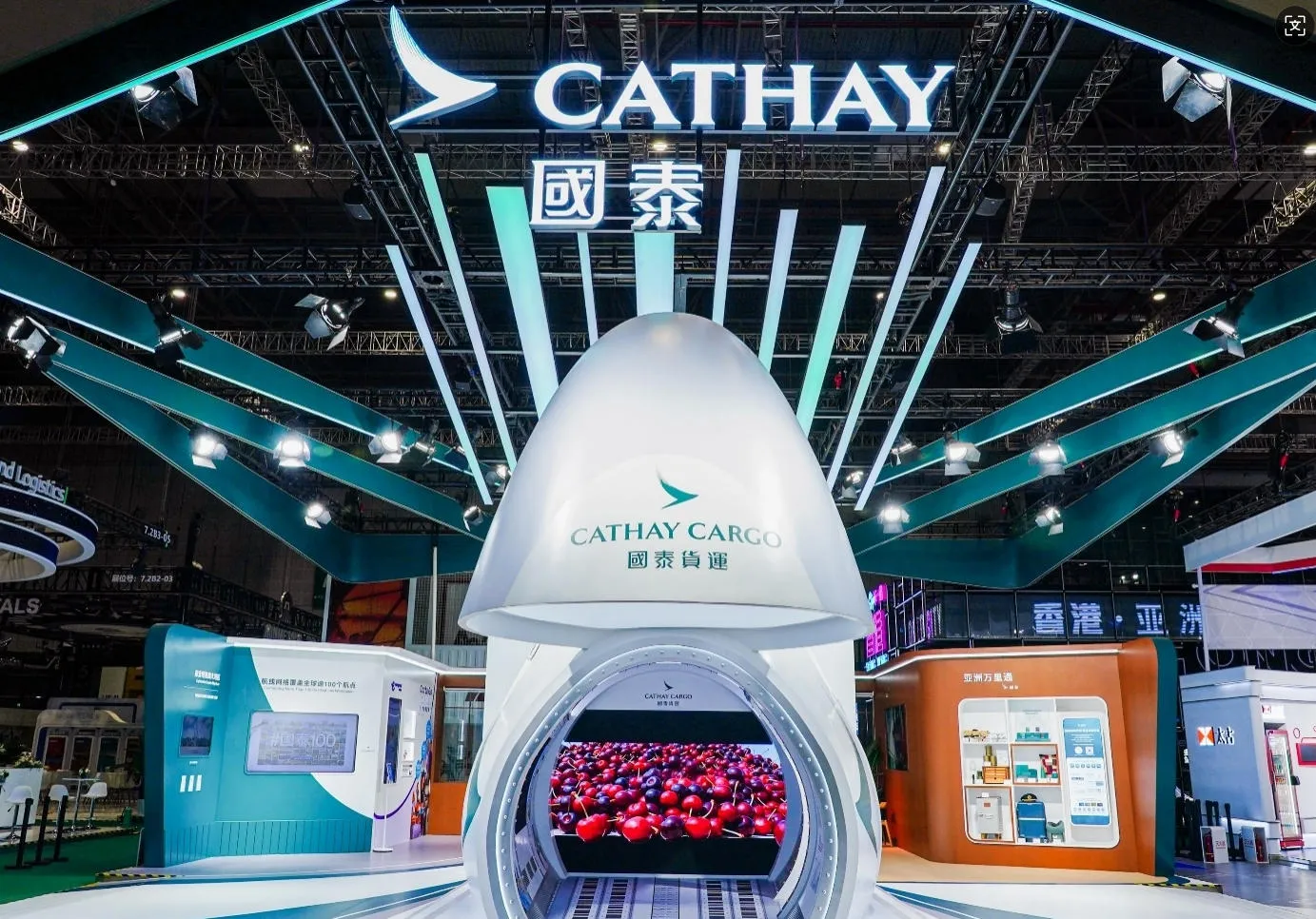
国泰集团三赴进博:展现业务升级成果,深化内地与全球联通
Cai Jing Wang· 2025-11-06 16:41
Core Insights - The eighth China International Import Expo was held in Shanghai, where Cathay Pacific Group showcased its strategic investment plans and service upgrades, emphasizing its commitment to high-level openness and connectivity between mainland China, Hong Kong, and the global market [1][8] Business Innovation and Service Upgrades - Cathay Pacific highlighted its focus on business innovation, showcasing product service upgrades and digital innovations through immersive experiences, such as a VR representation of its premium cabin and a display of its global lounge design [3][4] - The cargo division presented a model of its nose-loading freighter, demonstrating its capabilities in time-sensitive, temperature-controlled, and special cargo transport, reinforcing its role in global supply chain stability [4] Technology and Operational Efficiency - The cargo division is leveraging digital technology and AI for service optimization, with three operational technologies: an online booking platform for real-time pricing and booking confirmations, a system providing real-time data for sensitive cargo, and VR training equipment for staff skill enhancement [4][6] Global Connectivity and Route Expansion - Cathay Pacific has expanded its global passenger route network, surpassing 100 destinations, and has announced or launched 21 new routes this year, with a focus on mainland China [5][6] - The cargo division supports the Belt and Road Initiative by covering approximately 30 destinations, operating over 500 flights weekly, and enhancing trade between China and partner countries [6] Cultural Exchange and Culinary Offerings - The airline introduced a new in-flight dining series, "Taste of China," showcasing eight regional cuisines, which reflects its commitment to cultural exchange and enhancing passenger experience [6] Long-term Development and Sustainability - Cathay Pacific is integrating its development with the high-quality growth of China's civil aviation, focusing on talent recruitment and sustainable aviation fuel (SAF) initiatives [8] - The company has made significant investments since its first participation in the Import Expo, aiming for high-quality development through service innovation and market expansion [8]

淡水河谷推动全球矿业向可持续价值链升级
Qi Huo Ri Bao Wang· 2025-11-06 16:12
Group 1 - The China International Import Expo (CIIE) serves as a significant platform for global trade, focusing on connecting industries and the Chinese market [1][2] - Vale, a global mining company, showcased its low-carbon mining products and technological solutions at the expo, emphasizing its commitment to sustainability [1][2] - The event highlighted the strong bilateral cooperation between Brazil and China, with Vale being a key supplier of high-quality iron ore essential for China's infrastructure development [2][3] Group 2 - Vale has participated in the CIIE for eight consecutive years, viewing it as an opportunity to showcase its brand, corporate culture, and innovative solutions [3] - The company aims to strengthen its long-term partnership with China, focusing on mutual benefits and sustainable development [3]

屠光绍解读可持续全球领导者大会江苏专场:高质量投资服务高质量发展
Xin Lang Cai Jing· 2025-11-06 15:43
Group 1 - The conference focuses on high-quality development and aligns with national strategic guidance, emphasizing investment as a key driver for economic and social development [2] - The event is held in Wuxi, Jiangsu, which serves as a benchmark for high-quality development, showcasing successful practices in the region [2] - The conference aims to enhance understanding of Jiangsu and Wuxi's approaches to high-quality development and promote the sharing of their experiences [2] Group 2 - The conference is co-hosted by Sina Finance and Guolian Group, creating a positive interaction between sustainable development and investment [3] - Guolian Group has established a mature investment ecosystem focusing on new productive forces, green low-carbon development, and digital transformation [3] - The collaboration aims to precisely align investment forces with sustainable development needs, fostering a collective effort towards high-quality development [3] Group 3 - The conference adopts a "1+N" framework to build a multi-dimensional collaborative development ecosystem [3] - It emphasizes the importance of multi-party cooperation and aims to optimize the collaborative environment for sustainable development [3] - The event seeks to create a positive interactive ecosystem covering policies, industries, capital, and technology [3]
EnerSys(ENS) - 2026 Q2 - Earnings Call Transcript
2025-11-06 15:00
Financial Data and Key Metrics Changes - Net sales increased by 8% year over year, reaching a record high of $951 million for the second quarter [4][15] - Adjusted diluted EPS rose by 21% to $2.56 per share, marking a record high for the fiscal second quarter [16] - Adjusted operating earnings increased by 13%, with adjusted EBITDA also up by 13% [4][15] Business Line Data and Key Metrics Changes - Energy systems revenue grew by 14% year over year to $435 million, with adjusted operating earnings up 38% [17] - Motive power revenue decreased by 2% to $360 million, with adjusted operating earnings down by $10 million [18] - Specialty revenue increased by 16% to $157 million, driven by organic volume growth and the Bren-Tronics acquisition [19] Market Data and Key Metrics Changes - Data center market revenue grew by 29% year over year, indicating strong demand [35] - Communications sector showed signs of recovery, with increased spending on network refreshes rather than expansions [11][39] - A&D (Aerospace and Defense) demand remained robust, with expectations for increasing sales in upcoming quarters [12][40] Company Strategy and Development Direction - The company is focusing on its Energize strategic framework to optimize core operations and accelerate growth [5][6] - Three centers of excellence have been launched to enhance innovation and reduce costs [6][7] - The company is evaluating its lithium cell supply options and plans to provide updates on a new lithium factory [9] Management's Comments on Operating Environment and Future Outlook - Management expressed confidence in offsetting tariff impacts through proactive supply chain actions [10] - The order book reflects dynamic market conditions, with expectations for improving macro conditions to stabilize demand [11] - The company anticipates continued earnings growth, with adjusted operating earnings growth expected to outpace revenue growth [25][46] Other Important Information - Free cash flow for the quarter was strong at $197 million, with a conversion rate of 288% [21] - The company repurchased 636,000 shares for $68 million during the quarter, demonstrating a commitment to returning value to shareholders [23] - The next Investor Day is scheduled for June 11, 2026, in New York City [14] Q&A Session Summary Question: What end markets are most impacted by demand pull-ins and customer spending shifts? - Management noted that the communication sector was significantly impacted, with customers front-loading their orders due to large acquisitions [27][28] Question: How are elevated lithium costs affecting margins? - Management explained that higher costs are due to sourcing from China and that margins will be pressured until production ramps up [30] Question: What is the outlook for gross margins? - Management indicated that gross margins are expected to improve, driven by price mix improvements and ongoing cost reduction initiatives [32][34] Question: Can you provide an update on the data center revenue? - Data center revenue was up 29% year over year, with strong opportunities for growth in lead-acid and UPS systems [35][36] Question: What is the impact of the government shutdown on A&D demand? - Management reported that while there were some impacts, overall A&D demand remains strong, particularly in advanced defense applications [40]

2025全球互联网人才卓越计划研修班研学活动在浙江乌镇举行
Zhong Guo Xin Wen Wang· 2025-11-06 14:36
中新网乌镇11月6日电(王逸飞)11月6日,2025年世界互联网大会"互联网之光"博览会在浙江乌镇开幕 后,来自全球30多个国家和地区政府相关部门及机构的40余名官员和专业人士,在当地开启2025全球互 联网人才卓越计划研修班主题研学活动。 当日的活动参与者来自哥斯达黎加、塔吉克斯坦、沙特阿拉伯、塞拉利昂、坦桑尼亚、斯里兰卡、印度 尼西亚、科特迪瓦、巴西、荷兰等国家和地区。在"互联网之光"博览会现场,研修班学员沉浸式体验了 AI无感筛查、智能眼镜、具身智能机器人、数字飞行模拟舱等技术成果,感受前沿数字技术魅力。 今年的乌镇峰会期间,研修班学员还将参加峰会开幕式、主论坛等活动,并将围绕数字经济与可持续发 展,进行集中学习研讨。(完) 2024年11月,世界互联网大会国际组织成立数字研修院,聚焦数字发展关键领域,面向全球特别是发展 中国家开展研修,培养数字人才,助力数字化转型,推动弥合数字鸿沟、共享普惠发展红利。在2025年 世界互联网大会乌镇峰会期间,数字研修院举办了此次研修班活动。 ...

中国入世首席谈判代表龙永图:中国应争取涉碳国际经贸规则话语权
2 1 Shi Ji Jing Ji Bao Dao· 2025-11-06 13:57
Core Viewpoint - The focus of the 8th China International Import Expo is on establishing a new global green trade order that is open, stable, and inclusive, emphasizing the importance of global governance in green trade and its connection to sustainable development and climate change actions [1][2]. Group 1: Global Governance and Trade - The need for active participation in global governance of green trade is highlighted, linking it to the 17 Sustainable Development Goals established by the UN in 2015 [1]. - Trade protectionism is seen as a barrier to green trade liberalization, with a call to oppose unilateralism and protect the interests of traditional fossil fuels [2][3]. Group 2: Investment Trends - Since 2018, global investments in clean energy have surpassed those in fossil fuels, with projections indicating that by the end of 2024, global offshore wind power capacity will reach 83.2 GW, with China accounting for 50% [3]. - The U.S. has significantly reduced its investment in green energy, contrasting with non-oil-producing countries in Latin America, Africa, and South Asia, where two-thirds have surpassed the U.S. in solar power generation [3]. Group 3: Green Products and Standards - The production of green products is identified as the cornerstone of green trade, necessitating a broader focus on industrial and energy transitions to facilitate this [4]. - Fragmentation in policy and standards for green trade is a significant challenge, with the EU's carbon border adjustment mechanism posing new barriers for product exports [4]. Group 4: Consumer Awareness and Standards - Growing consumer awareness of green and low-carbon products is influencing market dynamics, with examples of transparency in product carbon emissions in New Zealand [5]. - There is a call for establishing a green low-carbon product technical service standard system aligned with international standards to enhance domestic competitiveness [5]. Group 5: International Collaboration - The importance of engaging in discussions within international frameworks such as the UN and G20 to assert China's voice in carbon-related trade rules is emphasized [5]. - China's advancements in green and industrial transformation provide a strong foundation for participating in global green trade governance and promoting trade liberalization [5].
汇聚顶尖企业与机构 国联集团生态联盟启动
Zhong Zheng Wang· 2025-11-06 13:28
Core Insights - The 2025 Sustainable Global Leaders Conference Jiangsu Session and the Second National Investment Conference opened in Wuxi, focusing on showcasing Jiangsu and Wuxi's achievements in sustainable development and fostering collaboration with domestic and international investors [1][2] Group 1: Sustainable Development Initiatives - Wuxi adheres to the sustainable development philosophy of "innovation, coordination, green, openness, and sharing," aiming to become a leading hub for industrial technology innovation with international influence [1] - The city has established seven modern industrial clusters, each exceeding 200 billion yuan, in areas such as the Internet of Things, integrated circuits, and high-end equipment, while also exploring future industries like quantum technology and carbon neutrality [1] Group 2: Economic and Investment Environment - Wuxi has attracted 125 A-share listed companies and has over 1.14 million market entities, with a projected contribution rate of over 69.5% from technological progress in 2024 [1] - The establishment of the Wuxi ESG Industry Innovation Center and Alliance highlights the city's commitment to becoming a preferred destination for domestic and foreign investors [1] Group 3: National Investment Conference Highlights - The conference aims to leverage private equity investment to support technological innovation and develop new productive forces, enhancing collaboration in industry, innovation, and sustainable development [2] - The launch of the Guolian Group Ecological Alliance and the release of the Wuxi Industrial Investment Map are key initiatives to create a collaborative ecosystem involving top global companies [2]