
猪周期

Search documents
新股前瞻 | 周期之困中,“清远鸡王”天农食品能靠赴港破局?
智通财经网· 2025-11-06 13:23
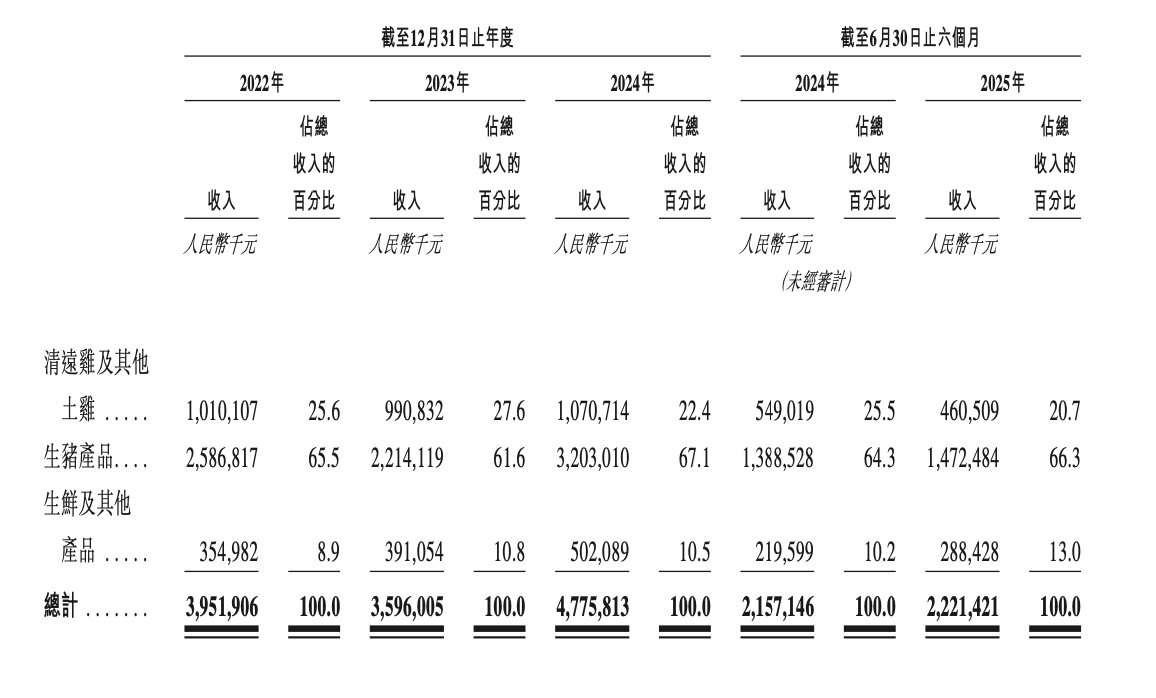
Core Viewpoint - Guangdong Tianong Group Co., Ltd. (Tianong Foods), a leading supplier of Qingyuan chicken, is seeking to list on the Hong Kong Stock Exchange, marking a significant move in the capital market amid the challenges posed by the cyclical nature of the poultry and pig industries [1][9]. Company Overview - Established in 2003, Tianong Foods has evolved from a regional poultry farming enterprise to one of China's leading high-quality meat and meat product suppliers, focusing on a vertically integrated operation covering breeding, ecological farming, feed production, slaughtering, food processing, and brand marketing [2]. - The company holds a dominant position in the Qingyuan chicken market, with a projected market share of approximately 59.3% in 2024, significantly surpassing competitors [2][3]. Financial Performance - Tianong Foods reported fluctuating revenues over the years, with revenues of approximately RMB 39.52 billion in 2022, RMB 35.96 billion in 2023, RMB 47.76 billion in 2024, and RMB 22.21 billion in the first half of 2025 [2][4]. - The company's gross profit margins have also shown instability, with margins of 16.3%, 1.6%, 18.8%, and 15.5% during the same period, reflecting the volatility in profitability [4]. Product Segmentation - The company offers a comprehensive product range, including Qingyuan chicken, other native chickens, and pork products. The revenue from pork products has shown an upward trend, while revenue from Qingyuan chicken has been more volatile [3][4]. - Revenue from pork products was RMB 25.87 billion, RMB 22.14 billion, RMB 32.03 billion, and RMB 14.72 billion over the reporting period, indicating a growing share of the overall revenue [3]. Market Dynamics - The company faces challenges from the "chicken cycle" and "pig cycle," which have led to significant price fluctuations in the market. The average price of Qingyuan chicken has dropped by 21% in the first half of 2025 compared to the previous year [6][7]. - The pig market is also under pressure, with the average price of pigs declining from nearly RMB 2,700 in 2022 to RMB 1,989.8 in 2023, reflecting ongoing challenges in the industry [8]. Strategic Implications - The IPO is seen as a strategic move to enhance capital reserves and improve risk resilience amid the dual pressures of cyclical downturns in the poultry and pig markets. The company's established brand position and integrated supply chain are viewed as core advantages [9].

国投期货农产品日报-20251105
Guo Tou Qi Huo· 2025-11-05 12:49
Report Industry Investment Ratings - **Bullish**: Soybean Meal (★★☆), Rapeseed Meal (★★☆) [1] - **Slightly Bullish**: Soybean Oil (★☆☆), Rapeseed Oil (★☆☆), Corn (★☆☆) [1] - **Neutral**: Soybean (☆☆☆), Palm Oil (☆☆☆), Egg (☆☆☆) [1] - **No Rating Information**: Live Pig [1] Core Views - The report analyzes the market conditions of various agricultural products including soybeans, soybean meal, soybean oil, palm oil, rapeseed meal, rapeseed oil, corn, live pigs, and eggs, and provides short - term investment strategies and key points to watch [2][3][4] Summary by Commodity Soybean - Soybean prices rebounded from the low after a few days of decline, and the spot purchase price was stable. The price difference between domestic and imported soybeans narrowed. Short - term attention should be paid to the callback strength of domestic soybeans [2] Soybean & Soybean Meal - Affected by the adjustment of China's import soybean tariff policy, the soybean meal futures continued to rise by 1.49%. After the tax cut, the import tax rate of US soybeans was changed to 13%, but there was still no price advantage. The increase in US soybean prices would raise the cost of imported soybeans and soybean meal. Some USDA reports will resume in November. Attention should be paid to the opportunity of buying on dips after the Sino - US trade eases [3] Soybean Oil & Palm Oil - US soybeans were consolidating after a rebound. Domestic soybean crushing was at a loss, and both oil and meal were strong, with meal slightly stronger than oil. The domestic soybean oil main contract was stronger than palm oil. Palm oil faced the risk of a short - term callback due to high inventory in Malaysia, higher - than - expected production in Indonesia, and weak export demand. Future attention should be paid to the supply from the origin and the performance of the soybean market [4] Rapeseed Meal & Rapeseed Oil - The positions of rapeseed meal and rapeseed oil main contracts increased, with the trend of strong meal and weak oil continuing. The supply of rapeseed meal was expected to be tight due to the low inventory of rapeseed in coastal oil mills. The market focused on Sino - Canadian and Sino - Australian economic and trade relations. A short - term strategy of being bullish on rapeseed meal and bearish on rapeseed oil was maintained [6] Corn - Dalian corn futures were oscillating weakly. The supply of new corn in Northeast China was stable, and the logistics was tight. The downstream demand was mainly for rigid needs. After the tax cut, the import tax rate of US corn was changed to 11% within the quota. The signing of the latest Sino - US economic and trade agreement needed to be continuously monitored [7] Live Pig - Live pig futures rebounded sharply from the low, with a reduction of 10,000 lots in positions. The spot price continued to fall. Due to the continuous recovery of production capacity and the pressure of second - fattening, the pig price was expected to have a second bottoming in the first half of next year [8] Egg - Egg futures increased their positions by 40,000 lots strongly, with multiple contracts hitting new highs. The spot price was stable with a slight increase. The increase in vegetable prices provided support for egg prices. The in - production inventory was still at a high level, and the chicken - chick replenishment in October was low. The short - term trend of the futures was strong, and opportunities to short on highs in the fourth quarter could be waited for [9]
全行业面临阶段性亏损 猪价反弹能持续吗?
经济观察报· 2025-11-05 08:34
Core Viewpoint - The recent strong rebound in pig prices may not lead to a reversal of the difficulties faced by the pig farming industry, as the sustainability of this rebound is limited due to supply pressures and market dynamics [3][12]. Industry Overview - Since October, pig prices have rapidly declined, leading to a phase of losses across the industry. The price index for lean meat pork reached a near seven-year low of 14.55 yuan/kg on October 13, before rebounding to 16.17 yuan/kg by November 4, marking an 11.13% increase in three weeks [2][5]. - The listed pig farming companies, including Wens Foodstuff Group and Muyuan Foods, reported significant declines in their third-quarter performance, with total revenue dropping to 704.43 billion yuan, down from 757.72 billion yuan in the previous quarter and 780.48 billion yuan year-on-year. Net profit also fell sharply to 57.68 billion yuan, compared to 79.62 billion yuan and 162.99 billion yuan in the previous periods [5][6]. Market Dynamics - Despite the overall decline in prices, the output of listed pig farming companies has increased, with Wens reporting monthly outputs of 316,000, 325,000, and 333,000 pigs from July to September [6][8]. - The increase in output is attributed to a higher number of piglets raised earlier in the year and improved operational performance. Wens has also focused on reducing its debt ratio to mitigate financial risks, achieving a debt ratio of 49.40% by the end of the third quarter [8]. Seasonal Demand and Price Fluctuations - The onset of colder weather typically boosts demand for fatty meats, leading to increased pork sales. Reports indicate a noticeable rise in pork sales as the traditional consumption peak approaches from November to the Spring Festival [10][12]. - The futures market has shown divergence from the strong rebound in the spot market, with the main futures contract experiencing significant volatility and reaching a new low of 11,580 yuan/ton on November 3 before a slight recovery [10][12]. Supply Pressure and Future Outlook - Analysts suggest that the current rebound in pig prices is supported by three main factors: increased demand from secondary fattening, seasonal weather effects, and reduced supply from large enterprises [12][13]. - However, the practice of secondary fattening may lead to increased supply pressure in the medium term, as these pigs will eventually return to the market at higher weights, potentially exerting downward pressure on prices after the peak season [13]. - The industry is currently facing a phase of "anti-involution," with government policies aimed at controlling production capacity and reducing the number of breeding sows. These measures are expected to accelerate capacity reduction and may lead to a price recovery in the second half of next year [15][16].

全行业面临阶段性亏损 猪价反弹能持续吗?
Jing Ji Guan Cha Wang· 2025-11-05 08:09
经济观察报记者 邹永勤 "10月以来,猪价快速下跌,全行业面临阶段性亏损。"2025年11月4日,全国生猪养殖龙头企业温氏股份(300498.SZ)在其发布的公告中如是称。 根据中国农业信息网数据,今年以来全国瘦肉型白条猪肉出厂价格指数(下称"猪价")持续下跌,并于10月13日创下了近七年新低,报14.55元/公斤。但也 正是从14.55元/公斤起,猪价开始企稳回升,至11月4日报收于16.17元/公斤,三周时间上涨了11.13%。 那么,猪价短期内的强劲反弹势头,会带来生猪养殖业的困境反转吗? 国信期货农产品分析师覃多贵在接受经济观察报记者采访时表示,从消费端来看,虽然每年11月至次年1月是消费逐步增加的时间段,但消费旺季并不意味 着猪价便会上涨,"考虑到前期仔猪出生情况及二次育肥带来的供应压力后移,预计本轮猪价反弹的持续性有限"。 全行业面临阶段性亏损 Wind平台信息显示,包括温氏股份、牧原股份(002714.SZ)等在内,当前生猪养殖业的上市公司共有7家(不包括新三板)。根据刚刚披露的2025年第三 季报,上述7家猪企第三季度的业绩,无论是环比还是同比,均出现了不同程度的下滑。具体来看,7家猪企第三季 ...
猪价回暖难掩周期之困:温氏股份三季报里的行业困局
Xin Lang Cai Jing· 2025-11-03 08:23
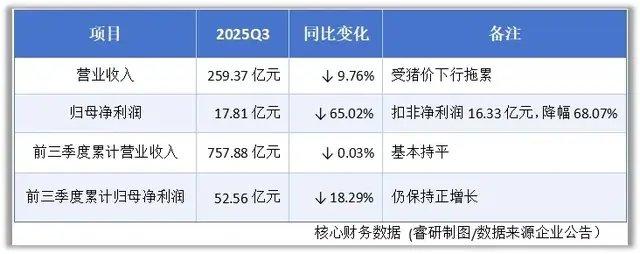
Core Viewpoint - The financial performance of Wen's Foodstuffs Group in Q3 reflects significant challenges in the pig farming industry, with notable declines in both revenue and net profit, indicating ongoing pressures from market conditions and cyclical fluctuations [1][2][3]. Financial Performance Summary - Q3 revenue for Wen's Foodstuffs Group was 25.937 billion yuan, a year-on-year decrease of 9.76%, primarily due to falling pig prices [1][2]. - Net profit for Q3 was 1.781 billion yuan, down 65.02%, with the adjusted net profit at 1.633 billion yuan, reflecting a decline of 68.07% [1][2]. - Cumulative revenue for the first three quarters was 75.788 billion yuan, showing a slight decrease of 0.03% year-on-year, while cumulative net profit was 5.256 billion yuan, down 18.29% [1][2]. Industry Context - The pig farming industry is experiencing a cyclical downturn, with Wen's Foodstuffs Group's financial results indicating that the company has not fully escaped the impacts of the "pig cycle" [2][3]. - Historical data shows a strong correlation between Wen's profitability and pig prices, with profits soaring during high price periods and declining during low price phases [3]. - Current data indicates that the breeding sow inventory remains high, suggesting continued ample supply of pigs and limited potential for significant price increases in the near future [3]. Market Conditions - National pig prices showed a fluctuating upward trend in Q3 but remained lower than the previous year, corroborating Wen's report of decreased meat pig sales prices [4]. - As of October 20, 2025, the price of external three yuan pigs was 11.18 yuan/kg, down 35.41% year-on-year, which has pressured many farming enterprises below their cost lines [4]. - Despite an increase in sales volume to 9.7358 million pigs in Q3, the significant drop in price led to a substantial compression of overall gross margins [4]. Strategic Developments - Wen's Foodstuffs Group is focusing on enhancing breeding efficiency, cost control, and disease prevention, which, while increasing short-term expenditures, are expected to strengthen the company's long-term resilience and sustainability [5]. - The company’s performance is representative of broader industry challenges, including sluggish revenue growth, narrowing profit margins, and increasing financial pressures faced by many listed pig farming companies [5]. - The industry is transitioning from a fragmented and small-scale model to a more concentrated and intensive one, with larger enterprises like Wen's Foodstuffs Group gaining market share and leading the direction of industry transformation [5].
FT中文网精选:猪肉何以成为中国通胀标杆
日经中文网· 2025-11-03 03:01
Group 1 - The article discusses the concept of the "pig cycle" in relation to China's inflation, indicating that the Consumer Price Index (CPI) reflects the fluctuations in pork prices, which serve as both a barometer and a locator for inflation trends [5][6]. - In the period from January to September 2025, China's CPI remained in negative territory except for January and June-July, with pork prices also experiencing a downward trend during the same period [6]. - In September 2025, pork prices fell by 17.0%, contributing to a decrease in CPI by approximately 0.26%, highlighting that pork's weight in the CPI basket is only 1.53%, which is significantly lower than market expectations [6]. Group 2 - The article emphasizes that despite pork's minor share in the CPI, it has become a benchmark commodity for inflation in China due to its broad necessity and high elasticity characteristics [6].
牧原股份售价下降单季盈利降56% 前九月负债总额减少98亿提前达标
Chang Jiang Shang Bao· 2025-11-02 23:17
Core Viewpoint - The ability of Muyuan Foods ("牧原股份") to withstand cyclical risks remains to be improved, as indicated by its financial performance in the first three quarters of 2025, which shows revenue growth but a significant decline in profit in the third quarter [2][5]. Financial Performance - In the first three quarters of 2025, the company achieved revenue of 111.79 billion yuan, a year-on-year increase of 15.52%, and a net profit attributable to shareholders of approximately 14.8 billion yuan, up 41% year-on-year [3][4]. - The revenue and profit growth rates have slowed compared to the same period last year, where the net profit for the first three quarters of 2024 was approximately 10.5 billion yuan, reflecting a staggering growth of 668.90% [2][5]. - The third quarter of 2025 saw a revenue of 35.33 billion yuan, a year-on-year decrease of about 11%, and a net profit of approximately 4.2 billion yuan, down about 56% year-on-year [2][4]. Price Fluctuations - The significant decline in profit in the third quarter is directly related to the drop in pig sales prices, with the average selling price in September 2025 being 12.88 yuan per kilogram, down from over 14 yuan per kilogram in the first seven months of 2025 [2][5]. Operational Metrics - The company sold 57.32 million pigs in the first nine months of 2025, a year-on-year increase of 27% [6]. - The company has adjusted its expected piglet sales for the full year 2025 from a range of 8 million to 12 million to a new range of 12 million to 14.5 million [6]. Cost Management - Despite a slight increase in feed prices, the overall production cost of pig farming has been decreasing, reaching 11.6 yuan per kilogram in September, down 1.5 yuan from January [8]. - The company has achieved a historic profitability in its slaughtering business, with a total of 19.16 million pigs slaughtered in the first nine months of 2025, a 140% increase year-on-year, and a capacity utilization rate of 88% [9]. Debt Management - The company has reduced its total liabilities by approximately 9.8 billion yuan since the beginning of the year, achieving its annual debt reduction target ahead of schedule [13]. - As of the end of the third quarter of 2025, the company's total liabilities stood at 100.32 billion yuan, down from 110.11 billion yuan at the beginning of the year [13]. - The company aims to lower its debt-to-asset ratio to below 50% in the long term [13].

十年破局,温氏股份穿越“猪周期”的韧性成长密码
Zheng Quan Shi Bao Wang· 2025-11-02 09:00
Core Viewpoint - In 2025, Wens Foodstuff Group (300498.SZ) celebrates its 10th anniversary since its listing, demonstrating resilience and steady development through industry cycles, policy changes, and pandemic impacts, while evolving from traditional farming to a modern agricultural complex [1] Financial Performance - For the first three quarters of 2025, the company achieved operating revenue of 75.788 billion yuan and a net profit attributable to shareholders of 5.256 billion yuan [1] - The debt ratio decreased to 49.41%, enhancing financial safety and risk resistance [1] - The company announced a profit distribution plan, proposing a cash dividend of 3 yuan per 10 shares, totaling approximately 1.994 billion yuan, which accounts for 38% of the net profit [1] Business Evolution - Wens Foodstuff has undergone three phases: foundation building (2015-2018), adjustment during the African swine fever crisis (2019-2021), and recovery and optimization (2022-2024) [2][3][4] - The company maintained a leading annual growth rate in pig and chicken output during its initial phase, achieving an average ROIC of around 25% [2] - During the adjustment phase, the company faced challenges but maintained industry-leading liquidity and operational continuity [3] Production and Cost Management - By Q3 2025, pig output increased significantly to 9.736 million heads, a year-on-year growth of 120.63% [4] - The comprehensive breeding cost for pigs decreased to 12.4 yuan per kilogram, solidifying the company's position in the industry [4] - The chicken output reached 948 million heads in the first nine months of 2025, with a year-on-year increase of 8.9% [5] Strategic Initiatives - The company has focused on cost management as a strategic core, establishing a comprehensive cost control system across the entire industry chain [6][10] - Wens Foodstuff has developed a domestic breeding chip to reduce reliance on imports, significantly lowering detection costs [6] - The company is transitioning to a more centralized cooperative model, enhancing efficiency and disease control in its farming operations [8] Market Position and Future Outlook - Wens Foodstuff is positioned as a leading player in the industry, with a dynamic market response and a focus on long-term value creation [11][13] - The company is transitioning from a traditional farming model to a modern agricultural and food group, emphasizing intelligent, green, and branded growth [14][15] - Future strategies include enhancing production efficiency, integrating supply chains, and improving brand value to navigate industry changes and consumer trends [16][17]
上市十年,韧性生长:温氏股份如何炼成农业“长期主义者”?
Mei Ri Jing Ji Xin Wen· 2025-10-31 05:01
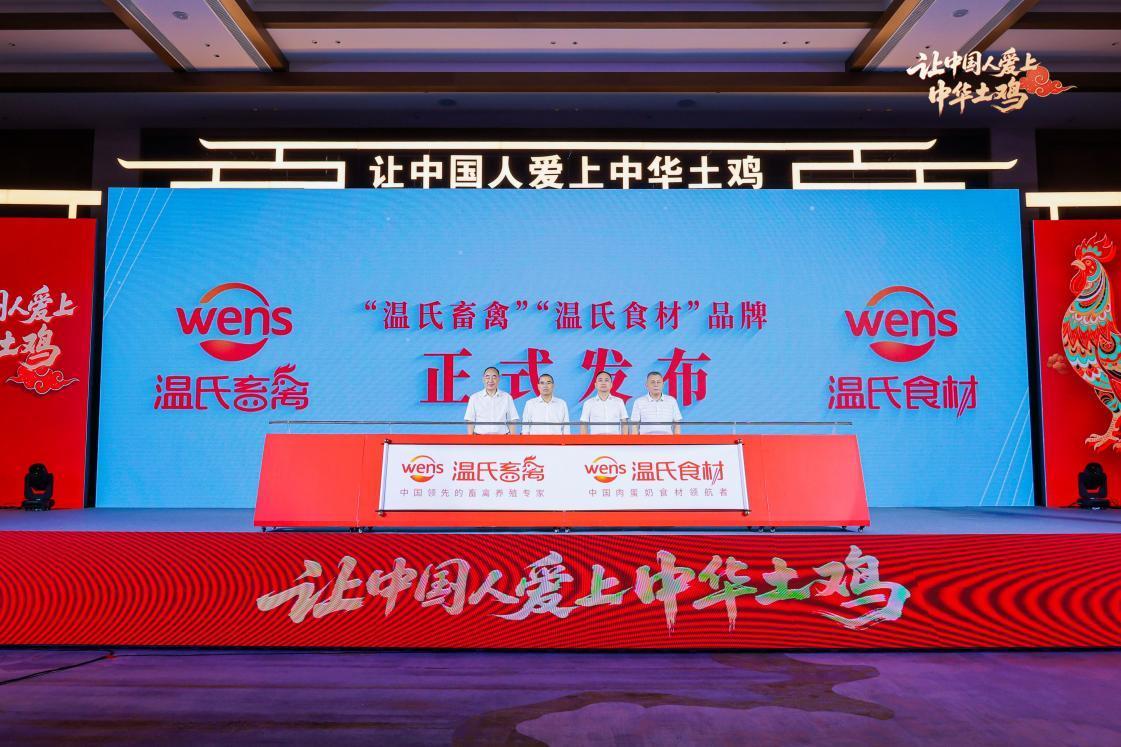
Core Insights - The article highlights the impressive growth of Wens Foodstuffs Group, projecting revenue to exceed 100 billion yuan by 2024, with a cumulative dividend exceeding 30.1 billion yuan and an average annual income increase of 147% for 43,000 cooperative farmers [1][7] - Wens has successfully navigated the volatile "pig cycle" in the agricultural sector, demonstrating resilience and strategic integration of capital, industry, and technology over the past decade [1][4] Financial Performance - Wens Foodstuffs achieved a revenue of 48.2 billion yuan at its IPO and is expected to surpass 100 billion yuan by 2024 [1] - The company has implemented 15 cash dividend distributions totaling 30.11 billion yuan, with a cash dividend rate of 60.1% [4] - As of the end of 2024, Wens has repurchased 81.66 million shares for a total of 1.5 billion yuan, signaling strong internal confidence [4] Strategic Initiatives - In 2025, Wens will officially launch the "Wens Livestock" and "Wens Ingredients" brands, marking a strategic shift towards the food sector [3][5] - The company has developed a comprehensive ecosystem around its products, including cultural initiatives and partnerships to enhance consumer recognition and product value [8] Technological Advancements - Wens has invested over 3 billion yuan in digital transformation, utilizing cloud computing, big data, and AI to manage millions of livestock [9] - The company has also invested 6.6 billion yuan in environmental protection, establishing a circular economy model that converts waste into resources [9] Social Responsibility - Wens has partnered with 43,000 farmers, paying out 10.8 billion yuan in breeding profits in 2023, significantly increasing average annual income from 111,000 yuan to 275,000 yuan over ten years [7] - The company has donated over 470 million yuan through the Beiying Charity Foundation, receiving a 5A rating from provincial foundations [11] Governance and Culture - Wens emphasizes a strong governance structure with a focus on management succession and cultural integrity, promoting a work ethic of diligence and effectiveness [10] - The company's practices align closely with national strategies, contributing to food security and rural revitalization efforts [11]
牧原股份前三季度实现净利润147.79亿元 负债减少近百亿元
Zheng Quan Ri Bao Wang· 2025-10-30 13:45
Core Viewpoint - Muyuan Foods Co., Ltd. has demonstrated resilience in its operations amid industry fluctuations, achieving significant revenue and profit growth in the first three quarters of the year [1][3]. Financial Performance - In the first three quarters, the company reported revenue of 111.79 billion yuan, a year-on-year increase of 15.52%, and a net profit attributable to shareholders of 14.779 billion yuan, up 41.01% [1]. - The company's total liabilities decreased by 9.796 billion yuan since the beginning of the year, with a debt-to-asset ratio of 55.5%, down 3.18 percentage points [1]. Cost Management - The cost of pig farming has decreased from 13.1 yuan/kg at the beginning of the year to 11.6 yuan/kg by September, with a target to reduce it to 11 yuan/kg by year-end [1]. - Despite a decline in pig prices, the company has maintained profitability through self-breeding models, while external purchasing has led to losses [2]. Strategic Initiatives - Muyuan Foods is transitioning from a high-growth phase to a high-quality development phase, focusing on production efficiency and profitability [2][3]. - The company is pursuing international expansion as a key strategy, having initiated a Hong Kong stock issuance plan and signed cooperation agreements with international partners [2]. Market Position - The company has effectively responded to market conditions by reducing the number of breeding sows to 3.305 million by the end of September [2]. - Analysts believe that the company's cost control and policy responsiveness highlight its leading position in the industry, with potential for sustainable growth through internationalization and technology transfer [3].