
经济全球化

Search documents
魏浩:深刻把握中国积极扩大进口的重大意义
Jing Ji Ri Bao· 2025-11-18 00:02
Group 1 - The core viewpoint emphasizes that China's modernization requires open cooperation and mutual benefit, with a strong commitment to expanding imports as part of its proactive opening strategy [1][2] - The recent China International Import Expo (CIIE) serves as a significant platform for demonstrating China's commitment to market openness and is a key economic diplomatic activity following the 20th National Congress [1][4] - China aims to enhance its economic development while providing opportunities for global economic growth through its import expansion strategy, which is not a temporary measure but a long-term consideration for mutual development [1][5] Group 2 - The decision to expand autonomous opening reflects new requirements for high-level openness, emphasizing both proactive and cooperative approaches to meet domestic needs while engaging positively with the world [2][3] - China's vast market, with over 1.4 billion people and a consumption of nearly 50 trillion yuan annually, creates significant import demand across various sectors, including essential goods and high-quality consumer products [3][4] - The strategy of increasing imports is expected to enhance domestic economic resilience and facilitate better resource allocation, thereby supporting industrial transformation and upgrading [2][3] Group 3 - Expanding market openness is seen as a way to promote cooperation and mutual benefits, allowing China to leverage its domestic demand to connect with international markets and provide opportunities for other countries [4][5] - China's commitment to the Global Development Initiative aims to create a community of shared development, with a focus on inclusive growth and cooperation with the least developed countries [5][6] - The initiative includes measures to support trade with underdeveloped nations, such as offering zero tariffs on products from countries that have diplomatic relations with China, thereby enhancing their export capabilities [6][7] Group 4 - The promotion of healthy economic globalization is crucial, as recent global challenges have threatened the stability of international trade [7][8] - China's import expansion sends a clear signal of its commitment to open markets and shared opportunities, which is essential for fostering confidence in global economic participation [7][8] - Continuous improvements in import trade facilitation and innovative regulatory practices are being pursued to enhance China's role in global economic integration and provide a model for developing countries [7][8]
“我们的征程是星辰大海” 豫企出海记
He Nan Ri Bao· 2025-11-17 23:27
Core Viewpoint - The article highlights the active international expansion of Chinese companies, particularly from Henan province, showcasing their efforts in embracing globalization and enhancing their global presence through various strategies and innovations [7][11][18]. Group 1: Company Expansion Stories - Thinking of international markets, companies like SiNian Foods have successfully entered overseas markets, with their products now available in 149 Sam's Club locations across 15 states in the U.S. by 2025 [8][9]. - The beverage brand Mixue has opened over 53,000 stores globally, with more than 4,700 located overseas, significantly impacting the global beverage market [9]. - Weihu Group has expanded its international footprint, exporting products to over 170 countries and regions, with a focus on internationalization, digitalization, and green development [9][10]. Group 2: Economic Trends and Data - In the first ten months of the year, Henan province exported machinery and electrical products worth 317.23 billion yuan, a 28.6% increase, accounting for 65% of the province's total exports [11]. - The export of "new three types" products reached 23.35 billion yuan, with electric vehicle exports alone growing by 254.4% [11]. - The number of companies in Henan with import and export achievements increased by 3,600 from 2020, with a target of adding over 1,000 more in the current year [17]. Group 3: Strategic Developments - Companies are increasingly focusing on supply chain management to support their overseas operations, as seen with Mixue establishing localized warehousing and distribution networks in four countries [12]. - The shift from merely exporting products to exporting entire ecosystems, such as the complete set of equipment for tunnel construction, marks a significant evolution in export strategies [12]. - The emphasis on strategic planning, brand empowerment, and compliance reflects the growing strength and scale of Henan enterprises in the global market [18].



深刻把握中国积极扩大进口的重大意义
Jing Ji Ri Bao· 2025-11-17 22:45
坚持开放合作、互利共赢是中国式现代化的必然要求。党的十八大以来,以习近平同志为核心的党中央 坚定不移扩大对外开放,实行更加积极主动的开放战略,更加重视进口的作用,坚持实施扩大进口战 略。大幅度放宽市场准入、创造更有吸引力的投资环境、加强知识产权保护、主动扩大进口等重大举措 接续落地,以中国国际进口博览会为代表的开放平台影响力持续提升,进口和出口、货物贸易和服务贸 易、双边贸易和双向投资、贸易和产业协调发展的态势日益巩固。 进博会是全球首个以进口为主题的国家级展会,举办进博会是中国主动向世界开放市场的重要举措。新 近闭幕的第八届进博会,是党的二十届四中全会胜利召开后举办的首场重大经济外交活动,释放了中国 坚持开放合作、互利共赢的强烈信号。中国主动单方面扩大市场开放,成为实施这一举措的首个发展中 大国和世界主要经济体,既为中国经济发展提供支撑,又为世界经济增长扩大空间。正如习近平总书记 强调的,"中国主动扩大进口,不是权宜之计,而是面向世界、面向未来、促进共同发展的长远考量"。 《中共中央关于进一步全面深化改革、推进中国式现代化的决定》提出"扩大自主开放,有序扩大我国 商品市场、服务市场、资本市场、劳务市场等对外 ...
李强会见西班牙国王费利佩六世
Xin Hua She· 2025-11-12 11:45
Group 1 - The meeting between Chinese Premier Li Qiang and Spanish King Felipe VI emphasizes the healthy and stable development of bilateral relations since the establishment of diplomatic ties, highlighting mutual respect and cooperation across various fields [1][2] - Both countries aim to strengthen strategic alignment in the context of a sluggish global economic recovery and low trade and investment levels, focusing on enhancing economic complementarity and creating new growth points [2][3] - China expresses willingness to support more capable Chinese enterprises to invest in Spain, particularly in sectors such as photovoltaics, green hydrogen, and power batteries, while also exploring cooperation in future industries like artificial intelligence [2][3] Group 2 - Spain reaffirms its commitment to the One China policy and expresses a desire to continue being a reliable partner for China, marking the 20th anniversary of the comprehensive strategic partnership [3] - Both nations are keen to enhance high-level exchanges and expand cooperation in trade, investment, technology, and green energy, as well as promote cultural and educational exchanges [3] - Spain appreciates China's global initiatives and is willing to collaborate closely with China in multilateral efforts, supporting multilateralism and the role of the United Nations [3]
扩大高水平对外开放的生动实践(国际观澜)
Ren Min Ri Bao· 2025-11-11 22:40
Group 1 - The core message emphasizes China's commitment to providing 100% zero-tariff treatment on products for all least developed countries that have diplomatic relations with China, showcasing China's role in promoting global development and shared prosperity [1][2] - China has maintained its position as Africa's largest trading partner for 16 consecutive years, with a 10.8% increase in imports from African countries in the third quarter of this year [1] - The zero-tariff policy is a specific measure under China's broader strategy to expand high-level opening-up and is expected to enhance trade liberalization and economic globalization, contributing to global prosperity [2] Group 2 - The "14th Five-Year Plan" emphasizes expanding high-level opening-up and creating win-win cooperation, with zero-tariff policies being a concrete initiative to achieve these goals [2] - The introduction of zero-tariff measures is expected to enrich the Chinese market with diverse products, such as Ugandan coffee and Nepalese spices, while also promoting the development of related domestic industries [2]
助力最不发达国家货通全球
Jing Ji Ri Bao· 2025-11-11 22:11
Core Insights - The 8th China International Import Expo (CIIE) concluded successfully, showcasing products from many least developed countries (LDCs), which attracted significant attention from domestic and international guests, facilitating their access to the Chinese market and enhancing global trade opportunities for LDCs [1][2] Group 1: Participation and Impact of LDCs - Over 37 out of 40 LDCs recognized by the United Nations participated in this year's expo, presenting a diverse range of products such as coffee, spices, handicrafts, textiles, and agricultural specialties, highlighting the potential of LDCs in global trade [1] - The expo has become a crucial platform for LDCs to access the Chinese market and integrate into the global value chain, with a notable 80% increase in the number of African enterprises participating this year [2] Group 2: China's Role and Initiatives - China has consistently supported South-South cooperation and has implemented various measures to assist LDCs, including expanding the African product section at the expo and offering 100% zero-tariff policies for all products from countries that have diplomatic relations with China [2] - The expo has introduced tax incentives for product purchases and established a logistics subsidy system, along with a green customs clearance channel, providing comprehensive support for LDC enterprises [2] Group 3: Global Economic Context - The global economic landscape is rapidly evolving, with challenges such as digital transformation, supply chain restructuring, and trade protectionism affecting the development environment for LDCs, which collectively represent about 14% of the global population but contribute less than 2% to global GDP and only 1% to global trade [1]
墨西哥推迟对华征税计划 中方:坚决反对在他人胁迫下以各种名义对华设限
Zhong Guo Xin Wen Wang· 2025-11-11 08:09
Core Viewpoint - Mexico has postponed its plan to impose tariffs on Chinese goods, with China firmly opposing any restrictions imposed under external pressure [1] Group 1: Economic Relations - China advocates for inclusive economic globalization and opposes unilateralism, protectionism, and discriminatory measures [1] - The essence of China-Mexico economic cooperation is mutual benefit and win-win outcomes [1] Group 2: Trade Cooperation - In the context of certain countries imposing tariffs, China and Mexico should enhance communication and coordination to jointly uphold free trade and multilateralism [1] - Both countries are important members of the Global South, emphasizing the need for collaboration to promote global economic recovery and trade development [1]
墨西哥对中国进口商品征收高额关税计划被推迟 外交部回应
Huan Qiu Wang· 2025-11-11 07:39
Core Viewpoint - The plan by Mexican President López Obrador to impose high tariffs on Chinese imports has been postponed until at least December, according to reports from Mexican lawmakers and business leaders [1] Group 1: Economic Policy - The postponement of tariffs indicates a shift in Mexico's trade policy, potentially affecting trade relations with China and the broader economic landscape [1] - China's Ministry of Foreign Affairs emphasizes its commitment to inclusive economic globalization and opposes unilateralism and protectionism [1] Group 2: Diplomatic Relations - The Chinese government firmly opposes any measures that harm its legitimate interests and will take necessary actions to protect its rights based on actual circumstances [1]
焦点访谈丨从“世界好物”到“全球商机” 进博八年交出亮眼“成绩单”
Yang Shi Xin Wen Ke Hu Duan· 2025-11-11 01:55
Core Points - The 8th China International Import Expo (CIIE) was held in Shanghai from November 5 to 10, with participation from 155 countries and regions, showcasing a record 4,108 foreign enterprises and achieving a transaction intention amount of $83.49 billion, a 4.4% increase from the previous year [2][4][5] Group 1: Event Overview - The CIIE has become a significant platform for international trade, featuring a diverse range of products from high-end medical devices to innovative pharmaceuticals, highlighting the event's role in connecting global markets [4][5] - The exhibition area exceeded 367,000 square meters, with over 600 new exhibitors added compared to the previous year, including 290 Fortune 500 companies [5][10] Group 2: Economic Impact - The event is seen as a gateway for global goods entering China, promoting the country as a prime destination for exports and investment [5][10] - The "World Open Report 2025" was released during the expo, indicating a significant increase in China's openness index from 0.5891 in 1990 to 0.7634 in 2024, a 29.6% rise, positioning China as a leader in global openness [12][14] Group 3: Participation and Engagement - Many foreign enterprises view the CIIE as a bridge for innovation and collaboration, integrating deeply into China's local ecosystem and expanding their value chains [16] - The participation of companies from the least developed countries increased by 23.5%, with significant growth in exhibitors from Africa and countries involved in the Belt and Road Initiative [22][24] Group 4: Success Stories - Nicaragua reported a 34% increase in exports, amounting to approximately $72 million, showcasing the tangible benefits of participating in the CIIE [26] - The successful transportation of Peruvian blueberries to Shanghai highlights the logistical advancements and trade opportunities facilitated by the expo [27]
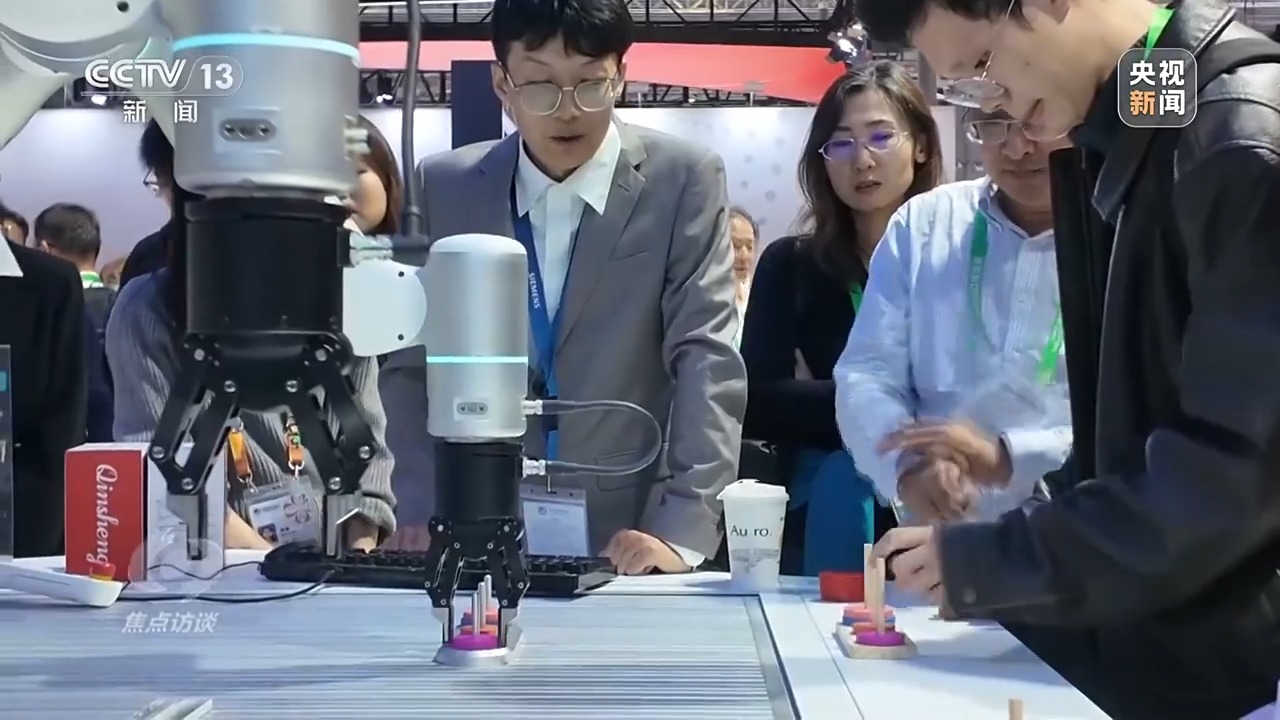
从“世界好物”到“全球商机” 进博八年交出亮眼“成绩单”
Yang Shi Xin Wen Ke Hu Duan· 2025-11-11 01:31
Core Points - The 8th China International Import Expo (CIIE) was held in Shanghai from November 5 to 10, with participation from 155 countries and regions, showcasing a record 4,108 overseas enterprises and achieving a transaction intention amount of $83.49 billion, a 4.4% increase from the previous year [1][3][4] - The expo serves as a platform for global goods to enter China, promoting the country as a prime destination for exports and investment, and facilitating domestic and international dual circulation [4][12] - The event has become increasingly attractive to foreign enterprises, with many returning year after year, indicating the tangible business returns and opportunities within the Chinese market [8][27] Industry Insights - The exhibition area exceeded 367,000 square meters, with over 600 new exhibitors added to the previous year's total of 3,496, including 290 Fortune 500 companies [4][27] - The expo has seen significant participation from companies in various sectors, including high-end medical devices, innovative pharmaceuticals, and AI technologies, reflecting the diverse interests of global enterprises [3][5][14] - The event highlighted the growing integration of foreign companies into the Chinese ecosystem, with long-term investments in local industries and a focus on innovation and quality [7][14] Economic Impact - The CIIE has contributed to a notable increase in exports for participating countries, such as Nicaragua, which reported a 34% growth in exports, equivalent to approximately $72 million [22][24] - The expo has also facilitated the entry of products from developing countries, with a 23.5% increase in participation from the least developed countries and an 80% increase from African nations [20][25] - The overall openness of China has improved significantly, with the openness index rising by 29.6% from 1990 to 2024, positioning China as a leader in global trade openness [10][13]