
绿色能源

Search documents
南财快评|从十万亿度电看中国经济“新能量”
2 1 Shi Ji Jing Ji Bao Dao· 2026-01-19 12:12
Core Insights - In 2025, China's total electricity consumption is projected to reach 10,368.2 billion kilowatt-hours, marking a 5% year-on-year increase, and this is the first time any country has surpassed the 10 trillion kilowatt-hours threshold [1][4] - This milestone reflects a significant transformation in China's economic structure, shifting from high energy consumption to high efficiency, indicating a transition towards high-quality development [1][4] Group 1: Electricity Consumption and Economic Transition - The increase in electricity consumption serves as a "thermometer" for high-quality development, indicating not just total consumption but also the optimization of industrial structure [2] - The proportion of electricity used by manufacturing is decreasing, while the shares for high-tech manufacturing, modern services, and residential consumption are rising, showcasing a shift from factor-driven growth to innovation-driven growth [1][2] - The rise of digital economy, smart manufacturing, and green energy sectors is enhancing the output efficiency per unit of electricity consumed, adding high-tech and high-quality value to electricity consumption [1][2] Group 2: Clean Energy and Sustainability - As electricity consumption surpasses 10 trillion kilowatt-hours, the share of clean energy generation has exceeded one-third, with wind and solar power installations leading globally [3] - This shift not only reduces carbon intensity but also injects sustainable momentum into economic growth, highlighting the synergy between economic growth and environmental protection [3] - The development of carbon trading markets, improved energy efficiency standards, and breakthroughs in energy storage technology will position electricity as a crucial link between economic growth and carbon neutrality goals [3] Group 3: Smart Energy Management - The application of big data and artificial intelligence in electricity data analysis transforms it into a valuable resource that can be collected, analyzed, and utilized in real-time [3] - Technologies such as smart grids, demand response, and virtual power plants enhance the flexibility and efficiency of electricity supply, allowing for dynamic adjustments based on actual economic needs [3] - This intelligent energy management approach not only reduces energy waste but also enhances the overall resilience of economic operations, aligning with the principles of high-quality development [3]
透过外贸成绩看中国绿色产业全球贡献
中国能源报· 2026-01-19 08:27
Core Viewpoint - China is increasingly playing a critical role as a driver in the global green transition, with exports of electric vehicles, photovoltaics, and lithium batteries surging 3.5 times over the past five years, approaching 1.3 trillion yuan [1] Group 1: Export Growth and Industry Transformation - The export of lithium batteries and wind turbine generators is projected to grow by 26.2% and 48.7% respectively in 2025, reflecting a deep transformation in China's manufacturing base and its commitment to sharing advanced technology in renewable energy [1][2] - China's efforts have led to an over 80% reduction in global photovoltaic generation costs over the past decade, with similar trends observed in wind energy, driven by scale, technological innovation, and service optimization [2] Group 2: Wind Power Expansion and Localization - The export of wind turbine units from China has seen a continuous high growth trend, with a 60.2% increase in 2023 and a projected 71.9% increase in 2024, demonstrating the effectiveness of ongoing technological innovation and localized services [2] - Goldwind Technology has transitioned from a "nomadic model" chasing orders to a "deep cultivation model" rooted in local markets, enhancing energy autonomy in project countries and gaining international trust for Chinese technology [2] Group 3: International Projects and Collaboration - Envision Energy secured 15.2 gigawatts of wind turbine orders in international markets in 2025, showcasing China's green technology empowering global needs [3] - Projects like the 600 MW wind power project in Laos and the 500 MW project in Egypt exemplify China's commitment to responsible development and the successful application of advanced wind turbine technology in challenging environments [4] Group 4: Global Infrastructure and Shared Development - The global projects are not isolated but serve as links for building green infrastructure and sharing development outcomes, highlighting the essence of China's green energy industry's international expansion as a cooperative endeavor [5] - The relationship between China and the world is evolving from a traditional "factory-market" model to a "development community" characterized by deep integration of innovation and green supply chains, providing certainty and growth in a volatile global landscape [5]


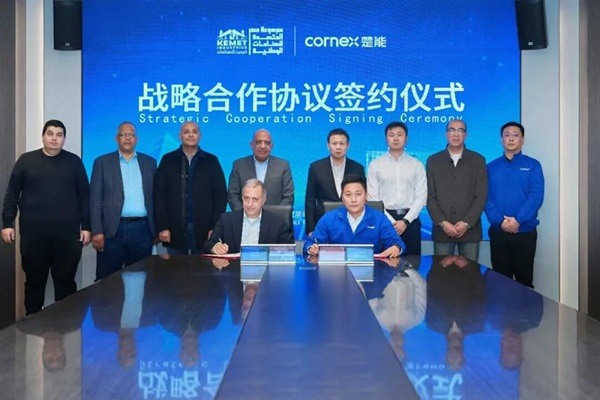
楚能新能源:签约埃及合作伙伴 6GWh 储能订单撬动北非绿色能源市场
Zhong Guo Qi Che Bao Wang· 2026-01-19 08:01
此次6GWh储能产品采购合作,不仅是楚能新能源在北非市场的关键突破,更是中埃两国在"一带 一路"框架下深化绿色能源合作的具体实践。项目落地后,将有效提升埃及电网的调峰调频能力,助力 当地光伏等清洁能源的大规模并网消纳,为埃及构建更加灵活、可靠、低碳的新型电力系统注入强劲动 力。 1月16日,楚能新能源与埃及企业WeaCan、Kemet正式签署战略合作协议。楚能新能源董事长代德 明,Kemet董事会主席Ahmed Salaheldin Abdelwahab Elabd代表双方完成签约,埃及国家电力部电力与可 再生能源部长Moustafa Kamal Esmat Mahmoud等政府代表及企业高层共同见证了这一重要时刻。 根据协议约定,WeaCan与Kemet将作为项目落地的核心推动主体,凭借其在埃及本土积淀的深厚 行业资源与成熟项目运作经验,全面承接应用场景对接、政府审批协调、电网接入支持及本地化运营服 务等关键环节,为楚能储能产品在当地的规模化部署筑牢根基。楚能新能源则以技术与产品核心供应方 的身份,分阶段向合作方供应总计6GWh的高品质储能产品,并负责保障产品在埃及电力系统中的安全 稳定运行,同步提供覆盖全 ...
金晶科技聚焦技术创新与成本优化 TCO玻璃掘金新蓝海
Zheng Quan Ri Bao Wang· 2026-01-18 10:45
目前,金晶科技TCO玻璃已在建筑光伏一体化、地面电站、渔光互补等多个场景落地,并在建筑、汽车、电子产品等领域 展现出应用潜力。研究表明,该材料还可拓展至光电幕墙、智能变色玻璃、电磁屏蔽视窗等新领域。 该公司在绿色能源领域的进展尤为突出。TCO玻璃是钙钛矿太阳能电池的关键材料,长期依赖进口。2022年,金晶科技自 主研发生产出首片国产TCO玻璃,实现从设备制造到量产的全链条自主可控,突破了大尺寸镀膜均匀性、高导电高透光等技术 瓶颈。 2025年,金晶科技已成为钙钛矿电池关键材料供应商。该公司在淄博和滕州各布局一条TCO玻璃产线,产品已应用于龙头 企业,占据国内绝大部分市场份额。销售团队正积极拓展国内外重点客户,持续优化TCO玻璃在不同场景的应用性能。 基于市场需求,该公司子公司宁夏金晶科技有限公司于2025年7月发布技改计划,拟投资4.95亿元对产线进行TCO镀膜工艺 升级改造。改造完成后,将具备年产2000万平方米2mm至3.2mm超白TCO镀膜玻璃的能力,为钙钛矿等薄膜电池组件提供配 套。 本报讯 (记者王僖)1月16日晚,山东金晶科技股份有限公司(以下简称"金晶科技")发布2025年年度业绩预告,预计公 ...

主播说联播丨10万亿度电的“新”意与“绿”意
Yang Shi Xin Wen Ke Hu Duan· 2026-01-18 08:34
Core Insights - China's total electricity consumption is projected to exceed 10 trillion kilowatt-hours by 2025, maintaining its position as the world's largest electricity consumer [1][3] Group 1: Total Electricity Consumption - China's annual electricity consumption is more than double that of the United States and surpasses the combined total of the EU, Russia, India, and Japan for 2024 [3] - The 10 trillion kilowatt-hours mark represents approximately double the total electricity consumption of China in 2015, indicating a strong economic growth trajectory [3] Group 2: Structural Changes in Consumption - High-end manufacturing, particularly in the electric vehicle sector, is emerging as a significant driver of electricity demand, with a year-on-year growth rate exceeding 20% [3] - The tertiary sector and residential electricity consumption are also rapidly increasing, especially in the internet and related services industries, which have seen a year-on-year growth rate exceeding 30% [3] - The proliferation of electric vehicles is driving a nearly 50% year-on-year increase in electricity consumption in the charging and swapping industry [3] Group 3: Supply and Green Energy - By 2025, over 60% of China's installed power generation capacity will come from non-fossil energy sources, making green energy the dominant force in electricity generation [3] - One-third of the total electricity consumed in China will be green electricity, reflecting a significant shift towards sustainable energy sources [3] - The country is intensifying the construction of ultra-high voltage projects to deliver more clean electricity across regions [3]
中国全面停止进口俄罗斯电力:13年采购合同彻底失效,原因被曝光
Sou Hu Cai Jing· 2026-01-18 08:30
中国采购俄罗斯电力,是从2012年开始,原定持续至2037年的合作,然而距离2037年还有11年,却戛然而止! 到底是什么原因导致这样的结果? 停购的直接原因是中俄电力价格的倒挂。目前我国电价稳定在每兆瓦时350元人民币左右,而俄方出口电价因远东地区"单一电价"改革飙升至约4300卢布 (折合人民币约370元)/兆瓦时,同比上涨42%。当进口电力失去价格优势,交易便失去了基础。 我国电力的成本优势并非偶然,这些年,我国通过市场化改革和"西电东送"等超级工程,已经系统性地压低了发电与输配成本,如今单位电费比美国低 30%,比欧洲低50%以上。 特别是绿色电能的高效发展,让我国电力成本也发生改变。 据多家媒体报道,我国自2026年元旦起全面停止从俄罗斯进口电力,甚至连合同规定的最低采购量也已经暂停。 这次我国停止进口俄罗斯电力,这一调整也说明长期合同无法抗衡市场规律,即便协议签至2037年,一旦价格信号失灵,合作也会自然终止。 对我国而言,年进口量40亿千瓦时的电力仅占全国消费量的0.05%,停购俄电不会对电网造成实质影响,反而彰显了中国能源供应的自主性和韧性。 这一事件标志着中俄能源合作模式发生根本转变,从传统 ...

10万亿度电的“新”意与“绿”意
Yang Shi Xin Wen Ke Hu Duan· 2026-01-18 08:11
Core Insights - China's total electricity consumption is projected to exceed 10 trillion kilowatt-hours by 2025, maintaining its position as the world's largest electricity consumer [1] Consumption Overview - China's annual electricity consumption is more than double that of the United States and surpasses the combined total of the EU, Russia, India, and Japan for 2024 [1] - The 10 trillion kilowatt-hours mark represents approximately double China's total electricity consumption in 2015, indicating a strong economic growth trajectory [1] Structural Changes - High-end manufacturing, particularly in the electric vehicle sector, is emerging as a significant driver of electricity demand, with a year-on-year growth rate exceeding 20% [1] - The tertiary sector and urban-rural residential electricity consumption are also rapidly increasing, especially in the internet and related services industries, which have seen a year-on-year growth rate exceeding 30% [1] - The proliferation of electric vehicles is driving a nearly 50% year-on-year increase in electricity consumption in the charging and battery swap industry [1] Supply Dynamics - By 2025, non-fossil energy sources are expected to account for over 60% of installed power generation capacity, becoming the dominant source of electricity [1] - One-third of the total electricity consumed in China will be green electricity, reflecting a significant shift towards sustainable energy sources [1] - The country is intensifying the construction of ultra-high voltage projects to deliver more clean electricity across regions [1]
良乡大学城25项科技成果就地转化
Xin Lang Cai Jing· 2026-01-17 21:49
Core Viewpoint - Fangshan District aims to leverage innovation-driven strategies to enhance the development of Liangxiang University Town, focusing on talent cultivation, industrial growth, and collaborative innovation [1][2] Group 1: Development Initiatives - Liangxiang University Town has gathered several universities, including Beijing Institute of Technology and Capital Normal University, with a student and faculty population of approximately 63,000 [1] - The district has initiated 25 technology achievements for local transformation and has commenced construction on a new campus for Beijing University of Technology [1] - A multi-layered service platform system has been established, including a 22,000 square meter public service platform and a 47,000 square meter collaborative innovation center [1] Group 2: Collaboration and Talent Development - Fangshan District collaborates with local universities and enterprises to create an integrated education-industry community, promoting the alignment of education, talent, industry, and innovation [2] - Initiatives like the "New Student Enjoyment Plan" and events such as "Three Sources Gather Talent" aim to enhance talent services and support for student employment and entrepreneurship [2] - The district has developed a three-in-one service model providing accommodation, workspaces, and exhibition spaces to support university students [2] Group 3: Future Plans - By 2026, Fangshan District plans to establish a national green energy technology transfer center and a green energy concept verification center, along with a technology achievement transformation guidance fund [2] - The Liangxiang University Town Science Park will be expanded to create a demonstration base for youth innovation and entrepreneurship [2]
媒体报道︱我国年用电量突破10万亿度 在全球单一国家中尚属首次
Sou Hu Cai Jing· 2026-01-17 18:03
Core Insights - China's total electricity consumption is projected to exceed 10 trillion kilowatt-hours for the first time in 2025, marking a significant milestone in energy consumption [1][4][6] Group 1: Electricity Consumption Growth - The third industry and urban residents' electricity usage are the main drivers of overall electricity growth, contributing 50% to the increase [3] - The electricity consumption in the charging and swapping service industry grew by 48.8%, while the information transmission, software, and IT services sector saw a growth rate of 17.0% [3][12] - China's electricity consumption has doubled over the past decade, reaching 10 trillion kilowatt-hours, which is approximately twice the total electricity consumption in 2015 [4][6] Group 2: Global Comparison - China is the first country globally to surpass an annual electricity consumption of 10 trillion kilowatt-hours, exceeding the combined electricity consumption of the EU, Russia, India, and Japan [4][6] - China's electricity consumption is more than double that of the United States, highlighting its significant energy demand as a manufacturing and populous nation [4][6] Group 3: Energy Supply and Infrastructure - By 2025, China aims to establish a clean and low-carbon power generation system, with non-fossil energy sources accounting for over 60% of installed capacity [7] - The total installed capacity of wind and solar energy reached 1.76 billion kilowatts by November 2025, a 34% increase from the previous year [7][9] - The construction of four ultra-high voltage transmission lines has been completed, enhancing the cross-regional and cross-provincial electricity transmission capacity to 370 million kilowatts [9] Group 4: Economic Transformation and Electricity Usage - The second industry remains the primary electricity consumer, accounting for approximately 64% of total usage, with a shift towards high-end manufacturing [10] - In Jiangsu, the electricity consumption in the computer, communication, and other electronic equipment manufacturing sectors surpassed 50 billion kilowatt-hours, overtaking traditional industries like steel and chemicals [10] - The growth in electricity consumption in the digital economy, particularly in data services, has been significant, with Guizhou's internet data service electricity usage increasing by 95.01% [12]

我国年用电量突破10万亿度,在全球单一国家中尚属首次
Yang Shi Xin Wen· 2026-01-17 10:37
Core Insights - China's total electricity consumption is projected to exceed 10 trillion kilowatt-hours for the first time in 2025, marking a significant milestone in energy consumption growth [1][2] - The growth in electricity consumption reflects a shift towards high-end manufacturing and digital economy, indicating a structural transformation in the economy [5][6][7] Group 1: Electricity Consumption Data - In 2025, total electricity consumption is expected to reach 10,368.2 billion kilowatt-hours, representing a year-on-year growth of 5.0% [1] - The breakdown of electricity consumption shows that the primary industry consumed 149.4 billion kilowatt-hours (up 9.9%), the secondary industry 6,636.6 billion kilowatt-hours (up 3.7%), and the tertiary industry 1,994.2 billion kilowatt-hours (up 8.2%) [1] - The contribution of the tertiary industry and urban-rural residential electricity consumption to the overall growth is 50% [1] Group 2: Global Comparison - China has become the first country to surpass 10 trillion kilowatt-hours in annual electricity consumption, which is more than double that of the United States and exceeds the combined consumption of the EU, Russia, India, and Japan [2] - The electricity consumption has doubled from 5 trillion kilowatt-hours in 2015 to 10 trillion in 2025, showcasing unprecedented growth among major economies [2] Group 3: Energy Supply and Infrastructure - By 2025, China aims to establish a clean and low-carbon power generation system, with non-fossil energy sources accounting for over 60% of total installed capacity [3] - The installed capacity of wind and solar power reached 1.76 billion kilowatts by November 2025, a 34% increase from the previous year [3] - The construction of four ultra-high voltage transmission corridors has been completed, enhancing the cross-regional transmission capacity to 370 million kilowatts [3] Group 4: Energy Storage Development - By the end of 2025, China's pumped storage capacity is expected to exceed 66 million kilowatts, maintaining its position as the world leader for ten consecutive years [4] - The installed capacity of new energy storage has surpassed 10 million kilowatts, growing over 30 times compared to the end of the 13th Five-Year Plan [4] Group 5: Economic Transformation Reflected in Electricity Usage - The second industry, accounting for approximately 64% of total electricity consumption, is shifting from high-energy-consuming sectors to high-end manufacturing [6] - In Jiangsu, the electricity consumption of the computer, communication, and other electronic equipment manufacturing sectors has surpassed 50 billion kilowatt-hours, overtaking traditional industries [6] - The growth in electricity consumption in the tertiary sector, particularly in electric vehicle charging services, has surged nearly 50%, reflecting a consumer shift towards green transportation [7]