虚假宣传

Search documents
“脱毛仪销冠”Ulike的两面:内部重拳反腐 外部营销“翻车”
Guo Ji Jin Rong Bao· 2025-09-11 17:37
Core Insights - Ulike, a well-known hair removal device brand, has publicly announced its internal anti-corruption achievements, revealing that it has dealt with nine cases of violations and transferred twelve individuals suspected of criminal activities to law enforcement [1] - The company has established a comprehensive risk management system, ensuring immediate termination for any violations of its internal policies and active cooperation with judicial investigations for any illegal activities [1] Company Overview - Ulike was founded in 2013 and is a global brand under Hangzhou Youlai Technology Co., Ltd, focusing on optical skincare, particularly in the hair removal sector [4] - The brand launched its first home-use hair removal device in 2016 and has since maintained a leading position in sales, with cumulative sales exceeding 7 million units across 28 countries and regions from 2016 to 2023 [4] Marketing Controversies - Ulike has faced significant public backlash due to controversial marketing practices, including a recent promotion involving a cat giveaway that was criticized for being disrespectful to animals [5][7] - The company has previously been penalized for misleading advertising, including fines totaling 30 million yuan for various violations related to its promotional content [8] - Complaints regarding Ulike's products are prevalent, with a total of 1,838 complaints recorded, primarily concerning false advertising and poor customer service [11]

网红柴怼怼被警方带走调查,名下多家公司已吊注销
Qi Lu Wan Bao· 2025-09-10 08:17
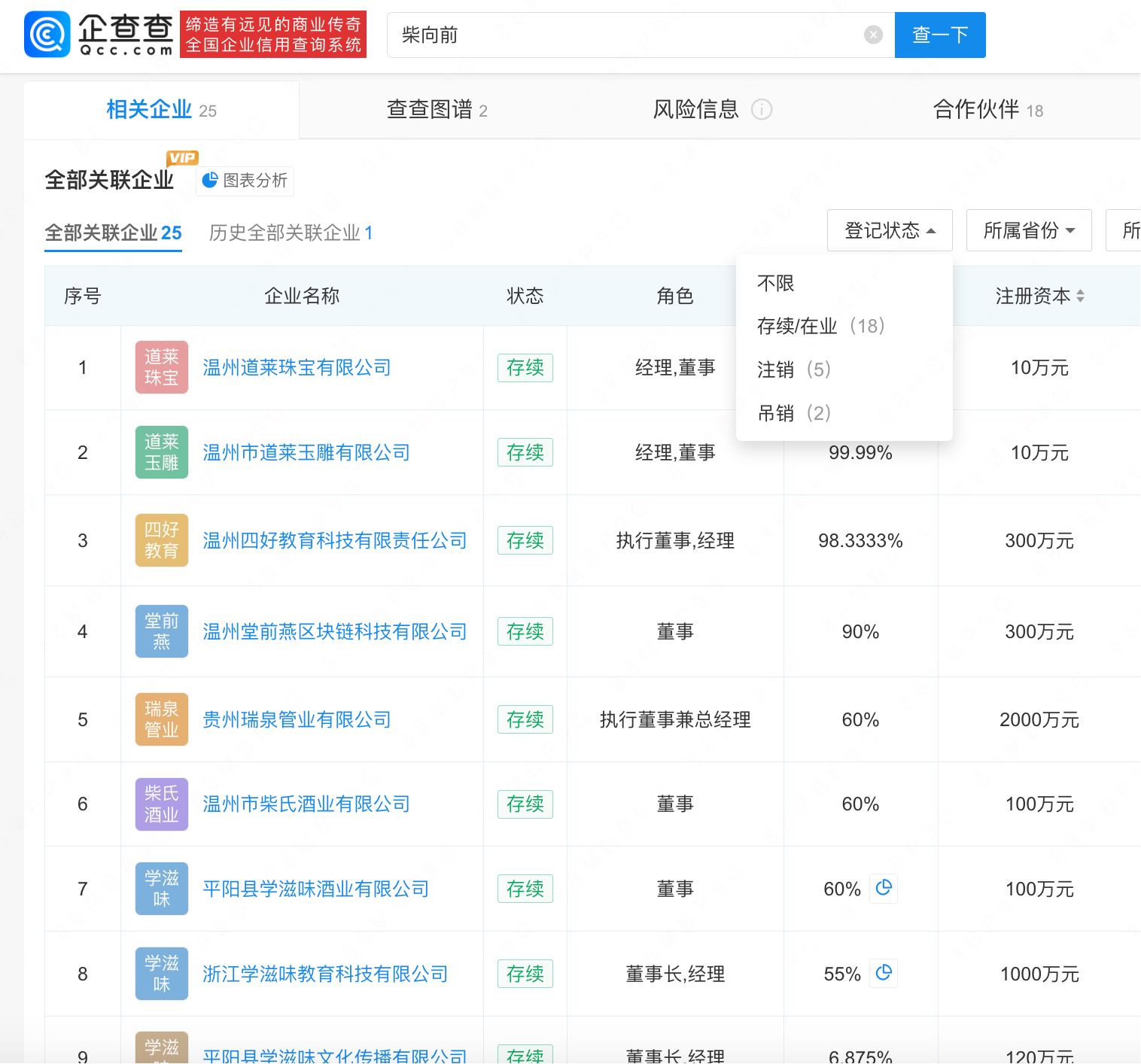
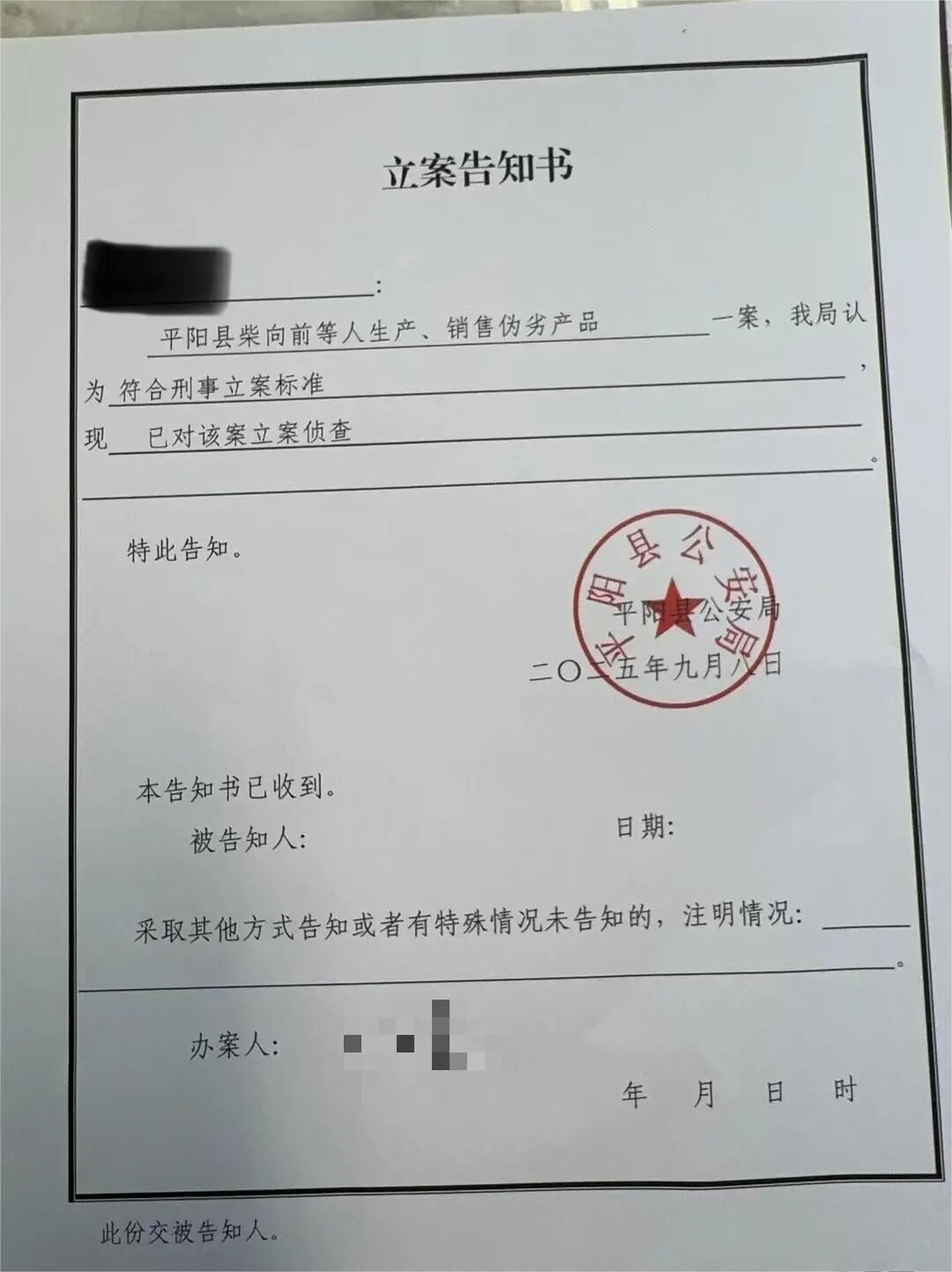
Group 1 - The internet celebrity "Chai Dui Dui" (real name Chai Xiangqian) and others are under investigation by the Pingyang County Public Security Bureau for allegedly producing and selling counterfeit products [1] - Chai Xiangqian is associated with over 20 companies, of which 7 have been canceled or revoked, including Wenzhou Chai's Liquor Co., Ltd. and Wuhan Chai's Jewelry Co., Ltd. [1] - In July of this year, a company associated with Chai's wife, Pingyang Xiaoya Tea Co., Ltd., was fined 220,000 yuan for false advertising regarding its health benefits [1] Group 2 - Wenzhou Chai's Liquor Co., Ltd. was fined 6,000 yuan for publishing advertisements containing false information about its products [4] - The company was found to have violated the Advertising Law of the People's Republic of China by making false claims about the health benefits of its liquor [4] - The administrative penalties imposed on the companies highlight issues related to product safety and advertising integrity within the industry [4][5]
突发!网红“柴怼怼”等人被温州警方带走,已立案侦查
Mei Ri Jing Ji Xin Wen· 2025-09-10 07:58
Group 1 - The influencer "Chai Dui Dui" (real name Chai Xiangqian) and associates are under investigation by the Pingyang County Public Security Bureau for allegedly producing and selling counterfeit products [1] - Multiple consumers have reported issues, leading to the police investigation, confirming the situation [1] - A consumer named Ms. Zhang is involved in two civil lawsuits against companies associated with "Chai Dui Dui," with hearings scheduled for September 11 [2] Group 2 - Ms. Zhang claims to have spent 3,596 yuan on "Qi Shi Tea" based on false health claims, leading to health complications and hospitalization [2] - She also alleges that after paying 8,000 yuan to join a wine sales program, she faced issues with refunds and product delivery [2] - Ms. Zhang is seeking triple compensation and 3,000 yuan for emotional distress in her lawsuits [3] Group 3 - The Pingyang County Market Supervision Administration previously fined the company associated with "Chai Dui Dui" 220,000 yuan for false advertising and selling unlabelled products [3] - The company has faced multiple legal challenges, including a defamation lawsuit from a competitor, "Pang Dong Lai," for disparaging remarks made by "Chai Dui Dui" [3][5] - The company has been penalized for advertising containing false content, resulting in fines totaling 6,000 yuan [7]
吉林省市场监督管理厅“守护消费”铁拳行动和雷霆2025综合执法行动(第二批)典型案例
Sou Hu Cai Jing· 2025-09-05 03:58
Core Viewpoint - The Jilin Provincial Market Supervision Administration is actively conducting the "Guarding Consumption" and "Thunder 2025" enforcement actions to address violations related to consumer safety and rights protection, focusing on key products and industries. Group 1: Enforcement Actions - The Longcheng District Market Supervision Bureau in Changchun investigated a clothing studio for selling goods that infringed on trademark rights, resulting in the confiscation of infringing products and a fine [2] - The Nanguan District Market Supervision Bureau in Changchun also took action against a clothing store for selling goods that violated trademark rights, leading to similar penalties [3] - The Longtan District Market Supervision Bureau in Jilin City found a liquor store selling goods that infringed on trademark rights, resulting in confiscation and fines [4] - The Lishu County Market Supervision Bureau investigated an electric bicycle shop for selling products that did not meet national standards, leading to penalties [5] - The Yalu River City Market Supervision Bureau found a company using misleading packaging and branding that closely resembled a well-known brand, resulting in penalties for unfair competition [6][7] - The Baishan City Market Supervision Bureau penalized a trading company for false advertising regarding health benefits of a product, which was found to be a regular food item [8] - The Songyuan City Market Supervision Bureau penalized an electric bicycle shop for selling non-compliant products, including discrepancies in vehicle coding [9] - The Meihekou City Market Supervision Bureau investigated an automotive maintenance center for selling goods that infringed on trademark rights, resulting in confiscation and fines [10] Group 2: Future Actions - The provincial market supervision departments will continue to conduct special enforcement actions against various illegal activities in the consumer sector, maintaining a high-pressure stance to protect consumer and business rights [10]
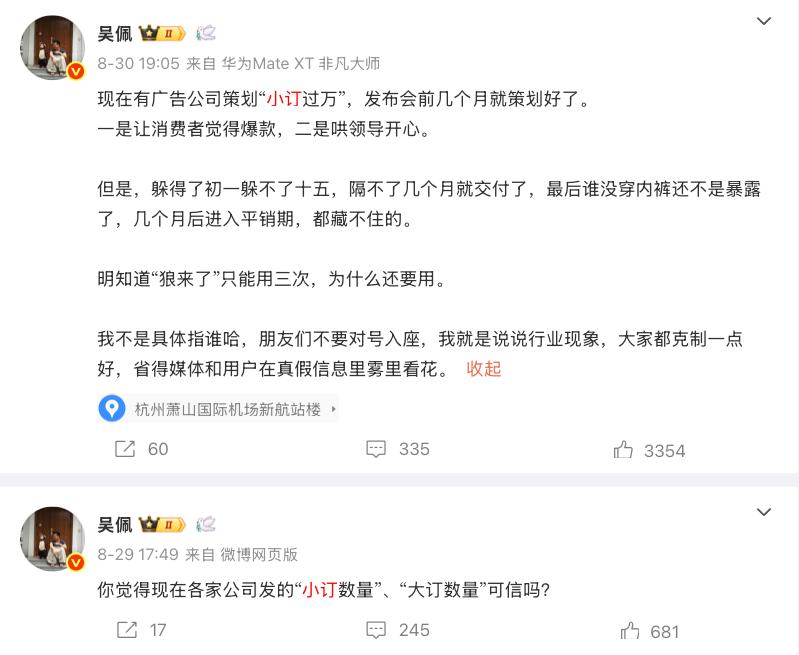
“小订过万”是假的,车企乱编数据虚假宣传,都是被内卷给逼的?
3 6 Ke· 2025-09-05 00:13
Core Viewpoint - The automotive industry is facing issues of integrity and transparency, with some brands resorting to misleading marketing tactics such as fabricating order numbers to create a false sense of demand [1][2][4]. Group 1: Industry Practices - Some advertising companies are preparing "small orders over ten thousand" strategies months before product launches, which violates industry ethics and possibly legal regulations [1]. - The phenomenon of announcing over ten thousand orders shortly after the pre-order phase is prevalent across both mainstream and high-end electric vehicle markets, indicating a lack of confidence among brands in their products [2][4]. - The cost of fabricating small order numbers is low compared to the potential short-term attention it generates, leading some companies to prioritize this tactic over genuine marketing efforts [4]. Group 2: Consumer Behavior - Consumers are influenced by the "bandwagon effect," where the perception of high order numbers encourages them to follow suit in purchasing decisions [2]. - It is advised that consumers maintain rational thinking regarding promotional data and consider their personal preferences before making significant purchases [5]. Group 3: Competitive Landscape - The automotive industry has seen a rise in unethical practices as brands struggle to compete, leading to tactics such as price wars and misleading marketing [6][10]. - The emergence of "zero-kilometer used cars" is a tactic used by some dealers to artificially inflate sales figures, which ultimately disrupts both new and used car markets [7][9]. - Industry leaders have called for a shift away from harmful competition and towards a focus on technological advancement and value creation [10]. Group 4: Regulatory Environment - Regulatory bodies are beginning to address the rampant issues within the automotive sector, including exaggerated claims and deceptive pricing practices [11]. - Despite these efforts, the competitive nature of the market means that some brands may continue to engage in unethical practices to gain market share [11].
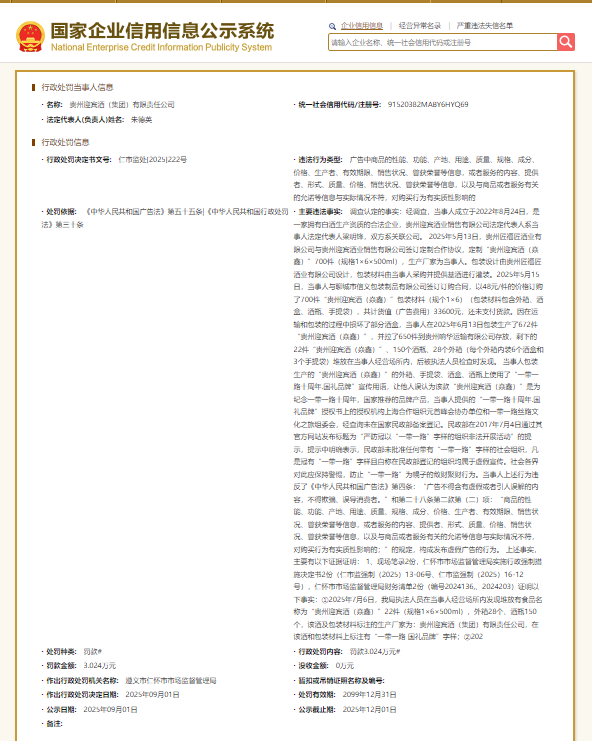
贵州迎宾酒(集团)有限责任公司因虚假宣传被罚3万余元
Qi Lu Wan Bao· 2025-09-04 08:10
Core Viewpoint - Guizhou Yingbin Wine (Group) Co., Ltd. was fined 30,240 yuan for misleading advertising related to its product "Guizhou Yingbin Wine (Yanxin)" which falsely implied a connection to the Belt and Road Initiative [1][2] Company Information - Guizhou Yingbin Wine (Group) Co., Ltd. was established on August 24, 2022, with a registered capital of 10 million yuan and is located in Zunyi City, Guizhou Province [3][4] - The legal representative of the company is Zhu Deying, and it operates in the liquor, beverage, and refined tea manufacturing industry [3][4] Regulatory Actions - The company was found to have violated the Advertising Law of the People's Republic of China by providing false information regarding the performance, function, and other attributes of its products [2][4] - The administrative penalty was officially announced on September 1, 2025, and the public notice period will last until December 1, 2025 [2][4] - The misleading advertising included the use of the phrase "Belt and Road 10th Anniversary. National Gift Brand," which misled consumers into believing the product was endorsed by the state [1][2]
“保健品”≠保健食品 !市场监管总局整治“保健品”虚假宣传
Zhong Guo Xin Wen Wang· 2025-08-29 14:05
Core Viewpoint - The article emphasizes the distinction between "health products" and "health food," highlighting the prevalence of false advertising and misleading claims in the health product market in China [1][2]. Group 1: Definition and Issues - "Health products" are broadly defined without clear legal boundaries, often including items like "health wine," "height-increasing powder," and various daily consumer goods that claim health benefits, while "health food" is legally registered and can claim specific health functions [1]. - The health product market has seen significant issues such as false advertising, exaggerated claims, and consumer deception, necessitating consumer awareness in selecting legitimate health food products [1]. Group 2: Marketing Malpractices - The marketing chaos in the health product sector includes three main issues: the shift of illegal marketing to online platforms, the emergence of covert marketing channels through private live streaming, and the use of deceptive marketing tactics targeting vulnerable populations, particularly the elderly [2]. - Influencers and well-known bloggers are exploiting their reach to promote ordinary products and health foods through misleading claims, which infringes on consumer rights [2]. Group 3: Regulatory Actions - The market regulatory authority has been actively combating illegal practices since 2020, with over 6,304 cases investigated and fines totaling 260 million yuan, focusing on false advertising and unfair competition in the health product market [3]. - New initiatives include encouraging consumers to report illegal activities and enhancing supervision of direct sales companies to prevent violations [3]. Group 4: Future Directions and Consumer Guidance - The regulatory body plans to continue addressing false advertising in health products, particularly for the elderly, to protect consumer rights and maintain fair market competition [4]. - Consumers are advised to recognize legitimate health food labels, choose reputable purchasing channels, and remain vigilant against deceptive marketing tactics [4].
高端列车餐食“仅为摆拍”:虚假宣传的边界在哪?
Qi Lu Wan Bao Wang· 2025-08-29 11:27
Group 1 - The core issue revolves around a travel agency's misleading advertising regarding the quality of meals on the "Panda Special Train," which led to customer dissatisfaction when the actual meals did not match the advertised high standards [1][2] - The travel agency claimed that the meals shown in promotional materials were merely props used for marketing purposes and that the actual meals adhered to the contract specifications [1] - The article highlights the ongoing problem of exaggerated advertising practices in the industry, where companies often use enhanced images to attract customers, leading to potential legal and ethical concerns [2] Group 2 - Recent cases of false advertising have emerged, including misleading packaging claims by well-known brands, indicating a broader trend of deceptive marketing practices [2] - A notable legal case involved a student suing a restaurant for a significant discrepancy between the advertised and actual food, resulting in a small compensation but establishing a precedent that "pictures for reference only" does not provide absolute protection [2] - The travel agency's response to customer complaints was seen as inadequate, reflecting a lack of commitment to consumer satisfaction and the need for greater integrity in the industry [2]
“一个月降糖见效,无效退款”,“进口”控糖饮涉虚假宣传
Bei Ke Cai Jing· 2025-08-27 05:40
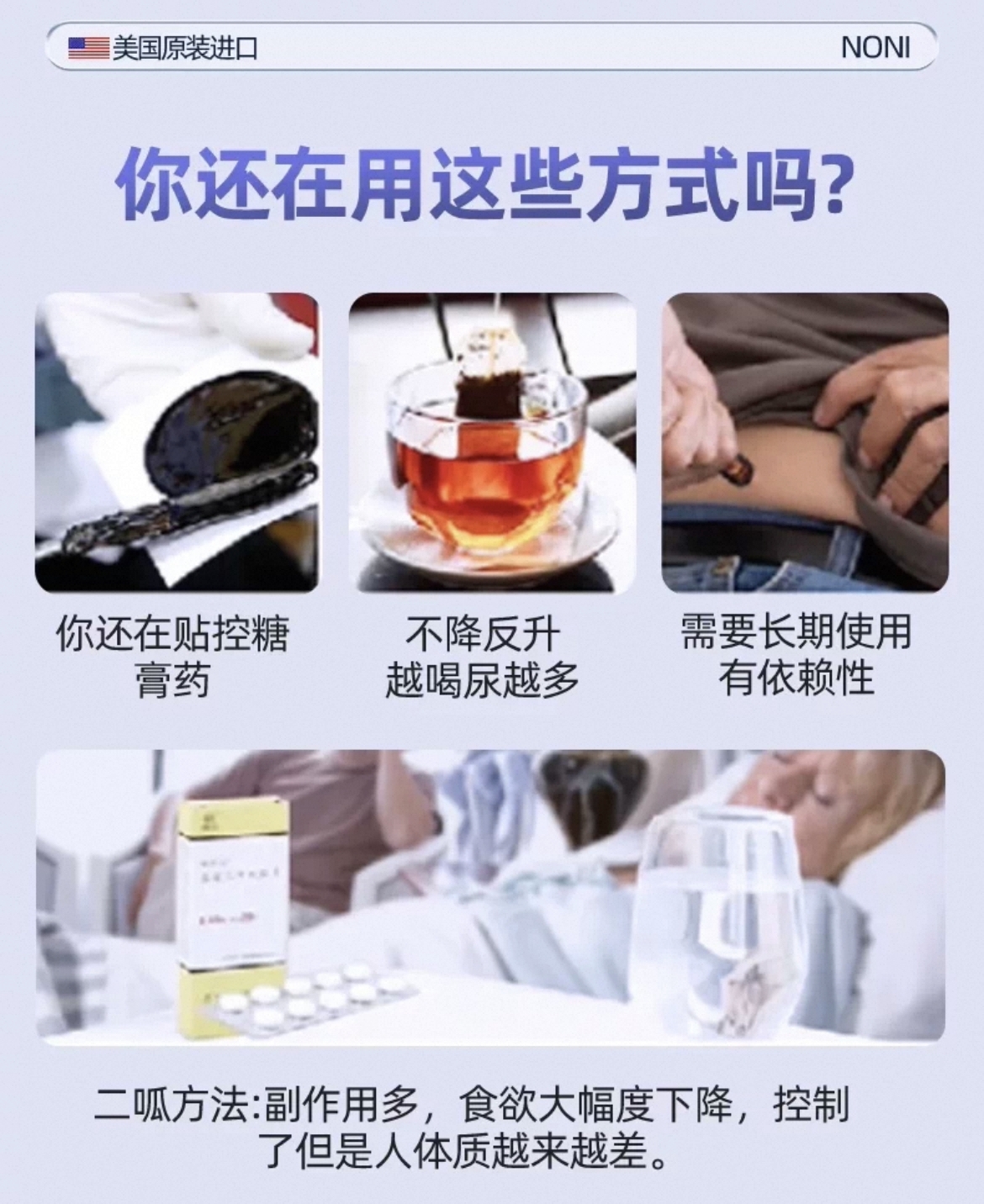
Core Viewpoint - The article highlights the misleading marketing practices of certain dietary supplements claiming to control blood sugar levels, emphasizing that these products are not a cure for diabetes and may not have the efficacy they advertise [1][2][3]. Group 1: Product Claims and Marketing Tactics - Products like "Kongtangwei" and "Breorqy Bitter Melon Peptide Drink" falsely claim to be "imported from the USA" while being produced domestically [1][4]. - These products assert that they can repair pancreatic cells, reverse diabetes, and allow patients to stop medication, which is considered false advertising by medical experts [2][3]. - Marketing strategies include comparing their products unfavorably to established diabetes medications, emphasizing the supposed lack of side effects and dependency [9][10]. Group 2: Regulatory and Legal Concerns - Dietary supplements in China are classified as ordinary food and cannot legally claim therapeutic effects, which these products do [3][11]. - The advertising practices of these products violate Chinese advertising laws that prohibit non-medical products from claiming to treat diseases [11][12]. Group 3: Consumer Experiences and Feedback - Consumers report that despite using these products, their blood sugar levels did not improve, leading to refund requests and complaints about false advertising [19][21]. - Some consumers expressed skepticism about the authenticity of positive reviews, suspecting they may be fabricated [21][22]. Group 4: Production and Cost Analysis - The production cost of these products is significantly lower than their retail price, with estimates suggesting a production cost of around 10 yuan per bottle, while they are sold for over 160 yuan [24][25]. - The products are marketed as having advanced formulations, but the actual ingredients and their efficacy are often misrepresented [22][23]. Group 5: Scientific Validity of Ingredients - Ingredients like Noni juice and Bitter Melon peptide are claimed to have blood sugar-lowering effects, but medical professionals indicate that there is insufficient evidence to support these claims [27][28][29]. - Experts emphasize that no single product can effectively treat all diabetes patients, highlighting the need for individualized treatment plans [29].
重金属超标!这些「大金镯子」别再买了!
Sou Hu Cai Jing· 2025-08-26 14:56
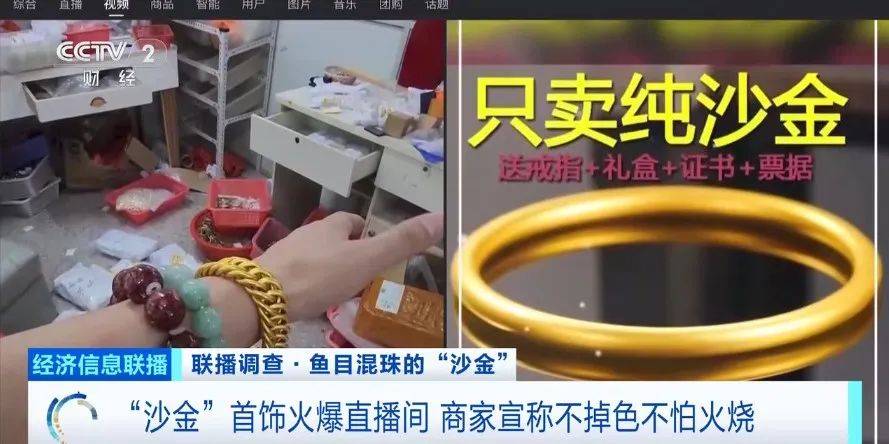
Group 1 - The popularity of "sand gold" jewelry has surged this year as consumers seek affordable alternatives to gold due to rising gold prices [1][4] - "Sand gold" is marketed as a product that resembles gold and is claimed to be durable and fire-resistant, with prices ranging from a few hundred yuan [1][3] - Many merchants use misleading names for "sand gold" products, creating confusion with established brands [3] Group 2 - "Sand gold" is derived from weathered gold-bearing rocks mixed with sand, typically containing about 5% gold, but many sellers are vague about the actual material composition [4][5] - Most "sand gold" jewelry is made from brass with a thin layer of gold plating, which can wear off over time [7][10] - The production cost of these brass-plated items is around 10 yuan, but they are sold for significantly higher prices in markets and online [10] Group 3 - Long-term wear of "sand gold" jewelry can lead to skin allergies due to the release of nickel from the underlying alloy, which exceeds national safety standards [11][13] - Legal experts indicate that merchants engaging in false advertising or selling substandard products could face severe penalties under Chinese law [15]